What Type Of Instrument Is A Drum: Music Guide
A drum is a percussion instrument that makes sound when a stretched membrane vibrates.
What type of instrument is a drum? It is mainly a membranophone, which means its sound comes from a vibrating drumhead. It also belongs to the percussion family because players strike, shake, or sometimes rub it to create sound. From a small hand drum to a full concert drum kit, drums shape rhythm in music across nearly every culture.
What Type of Instrument Is a Drum?
The simplest answer to what type of instrument is a drum is that a drum is a percussion instrument and, more specifically, a membranophone.
A drum has a thin surface called a drumhead or membrane. The head stretches over a hollow shell. When a player hits the head, it vibrates. That vibration moves the air and creates sound.
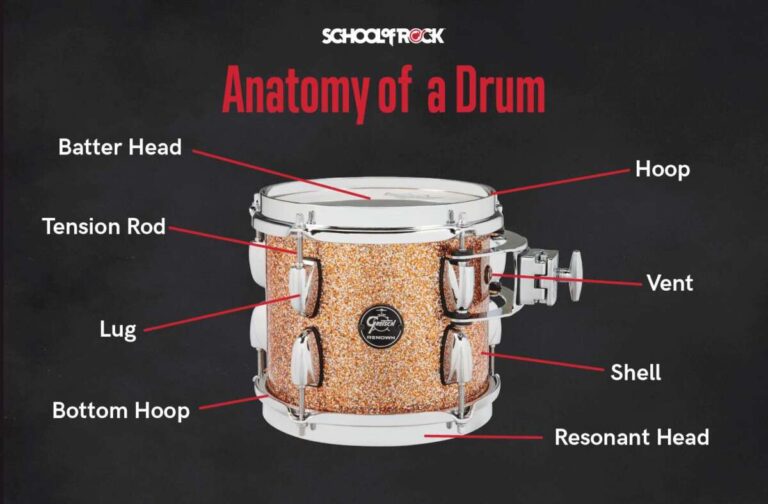
Most drums have these key parts:
• Drumhead: The stretched surface that vibrates.
• Shell: The body that supports the head and helps shape the tone.
• Hoops and tension rods: Parts that hold and tighten the drumhead.
• Bearing edge: The rim where the head rests on the shell.
• Hardware: Stands, pedals, lugs, and other support parts.
The drum shell does not usually make the main sound. Instead, it supports the vibrating head and affects the tone. A deep shell may create a fuller sound, while a shallow shell may produce a sharper and faster response.
Why Is a Drum Called a Percussion Instrument?
A percussion instrument makes sound when someone strikes, shakes, scrapes, or rubs it. A drum fits this definition because players usually strike its head with hands, sticks, mallets, or brushes.
Percussion instruments fall into several broad groups. Drums belong to membranophones because they use a stretched membrane. Instruments such as cymbals, bells, and triangles are often called idiophones because the material of the instrument vibrates itself.
This difference helps answer what type of instrument is a drum:
• Family: Percussion
• Main class: Membranophone
• Sound source: Vibrating drumhead
• Usual playing method: Striking
• Sound type: Rhythmic, resonant, and sometimes pitched
The word “percussion” describes how the sound starts. The word “membranophone” describes what vibrates. Both terms are correct, but they explain different parts of the instrument.

How Does a Drum Make Sound?
A drum makes sound through vibration. When a player strikes the drumhead, the head moves up and down very quickly. This movement pushes nearby air and creates sound waves.
The shell changes how those waves behave. A larger shell often produces a deeper tone. A smaller shell often produces a higher or brighter tone. The shell’s material also matters. Wood, metal, acrylic, and composite shells can each produce a different voice.
Drum sound depends on several factors:
• Head tension: A tighter head usually creates a higher pitch and a quicker response.
• Drum size: Larger drums often produce lower tones.
• Shell depth: A deeper shell can add body and resonance.
• Playing tool: Hands, sticks, brushes, and mallets create different sounds.
• Striking area: The center gives a fuller sound, while the edge often sounds sharper.
• Room shape: A large room may add echo, while a small room may produce a dry sound.
A useful comparison is a jump rope. A loose rope moves slowly and feels soft. A tight rope reacts quickly. A drumhead works in a similar way. Tension changes how fast it vibrates and how high it sounds.
Is a Drum a Melodic or Nonmelodic Instrument?
Many drums are nonmelodic instruments. This means they do not usually play clear notes that fit a melody. Instead, they create rhythm, accents, texture, and energy.
The snare drum, bass drum, and standard tom-toms are common examples. Their pitch can change, but the sound is not usually used to play a tune. Players use them to support the beat and guide the structure of a song.
Some drums can produce clear musical notes. These include:
• Timpani: Concert drums that can be tuned to specific pitches.
• Steel pan style tuned drums: Instruments with defined notes, although they are not traditional drums in the same design.
• Tabla: A pair of Indian drums that can produce detailed and resonant tones.
• Handpan-related instruments: Tuned percussion instruments with drum-like playing methods.
• Rototoms: Tunable drums that can create distinct pitches.
So, what type of instrument is a drum when pitch is considered? It depends on the design. Many drums are mainly rhythmic, but some are tuned and can take part in melody.

Main Types of Drums
Drums come in many forms. Their size, shape, materials, and playing styles vary by region and musical use.
Snare Drum
A snare drum has metal wires called snares stretched across the bottom head. These wires buzz when the top head is struck. The result is a crisp sound that is common in marching bands, orchestras, rock, jazz, and pop.
Bass Drum
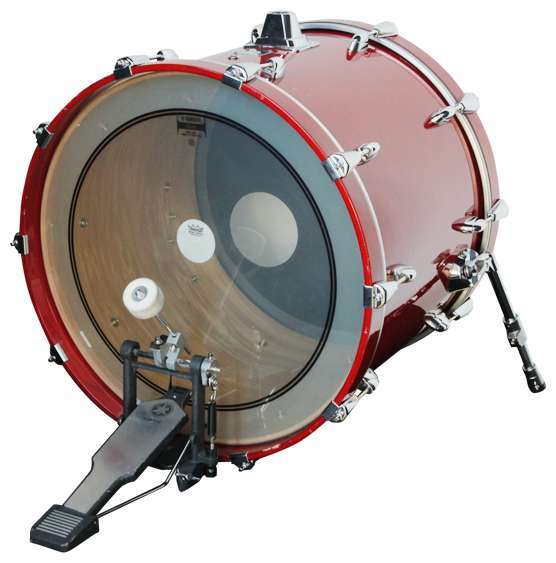
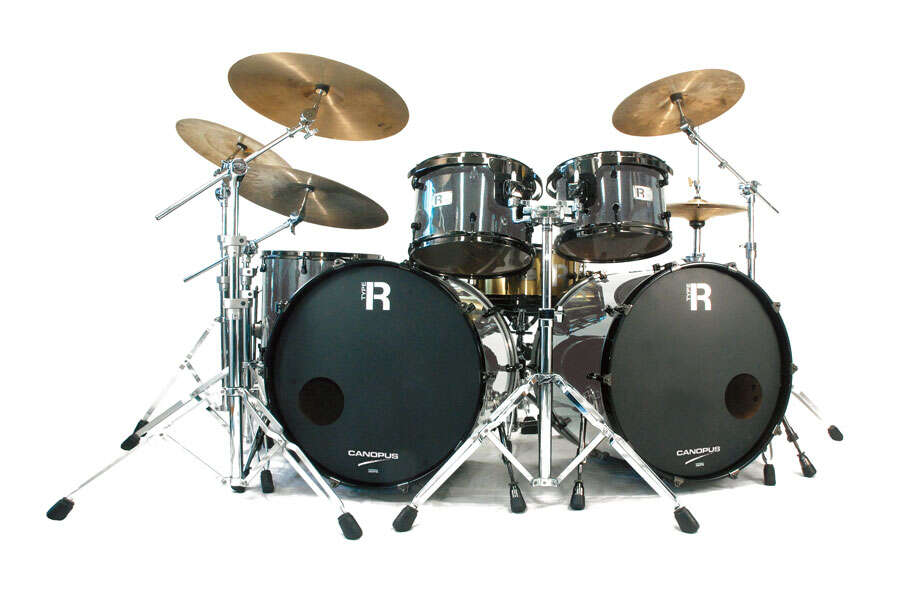
A bass drum is large and produces a low, powerful sound. In a drum kit, the player usually operates it with a foot pedal. Marching bands and orchestras also use larger bass drums for strong accents.
Tom-Tom
A tom-tom is a drum without snare wires. Drum kits often include several toms with different sizes and pitches. Players use them for fills, transitions, and rhythmic patterns.
Timpani
Timpani are large orchestral drums with tunable heads. A pedal or tuning system changes the tension of the head. This allows the player to perform clear pitches and dramatic musical lines.
Conga
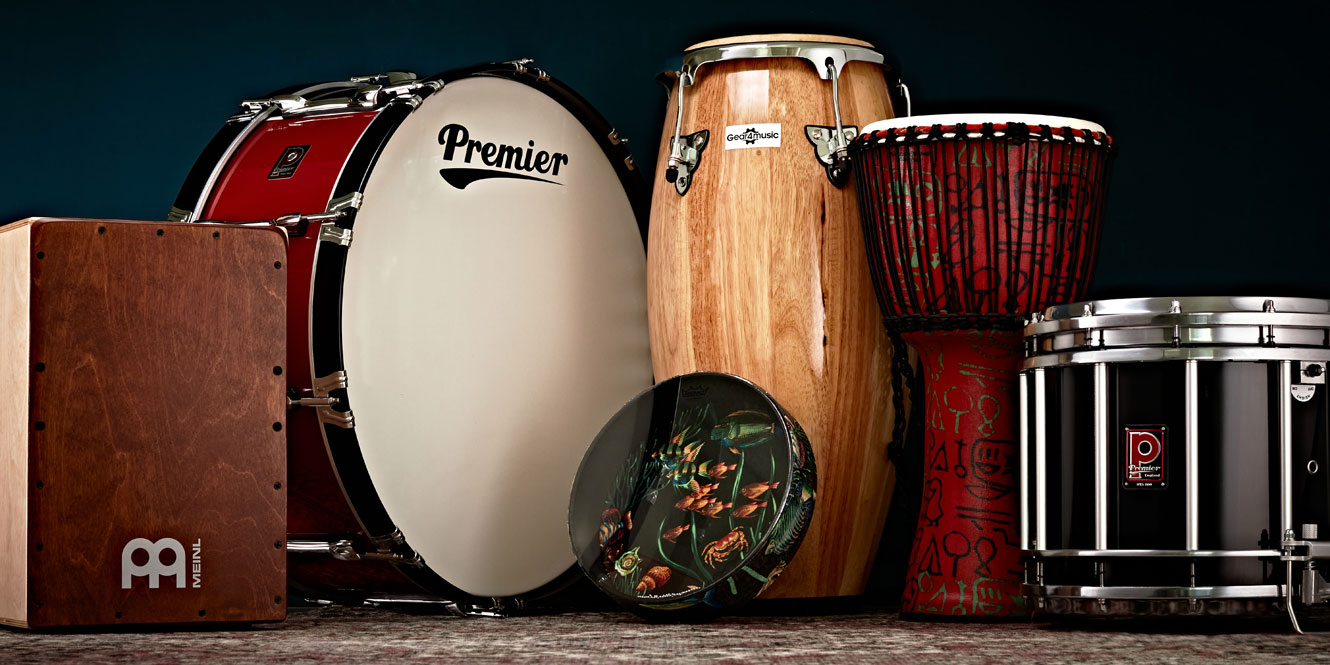
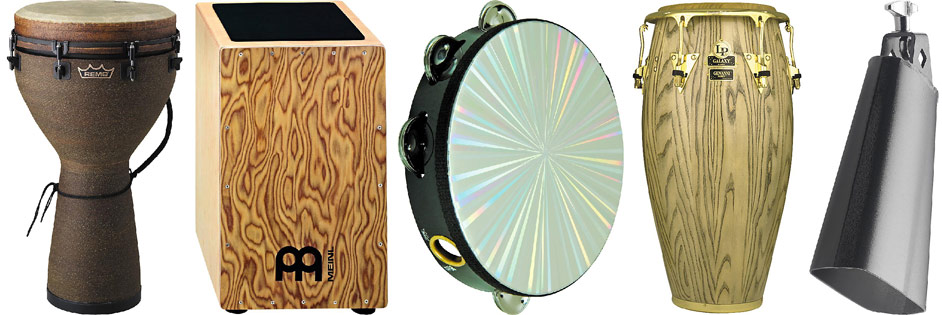
A conga is a tall, narrow hand drum from Afro-Cuban musical traditions. Players use their fingers and palms to create bass tones, open tones, slaps, and muted sounds.
Bongo
Bongos are a pair of small connected drums. They produce bright, high sounds and are common in Latin music and many modern percussion settings.
Djembe
The djembe is a goblet-shaped hand drum from West Africa. It can create deep bass tones, open tones, and sharp slaps with different parts of the hand.
Frame Drum
A frame drum has a shallow frame with a head stretched across one side. Examples include the tambourine, bodhrán, daf, and riq. Some frame drums have jingles, while others have only the drumhead.
What Is the Difference Between a Drum and Other Percussion Instruments?
The main difference is the sound source. A drum uses a stretched membrane. Other percussion instruments may use solid materials, strings, or metal surfaces.
For example, a cymbal creates sound when its metal body vibrates. A triangle also vibrates as a solid metal object. A xylophone uses wooden bars that are tuned to different notes.
Here is a simple comparison:
| Instrument | Main vibrating part | Common classification |
|---|---|---|
| Drum | Stretched membrane | Membranophone |
| Cymbal | Metal body | Idiophone |
| Triangle | Metal body | Idiophone |
| Xylophone | Wooden bars | Idiophone |
| Piano | Strings | Chordophone |
| Flute | Air column | Aerophone |
This table shows why what type of instrument is a drum has more than one useful answer. It is a percussion instrument by playing method and a membranophone by sound source.

Drums in Different Musical Cultures
Drums appear in music around the world. Their role changes with local traditions, materials, and performance styles.
In West African music, drums can support dance, storytelling, ceremonies, and communication. In South Asian music, tabla and mridangam feature complex rhythmic systems. In the Middle East, frame drums and goblet drums help build layered rhythmic patterns.