Best Amp For Roland Drums: Top Picks For Powerful Sound
The Roland PM-200 is the best amp for Roland drums when you want power, punch, and a true V-Drum match.
You know the feeling: your electronic drums sound rich in headphones, yet thin and flat through a small speaker. That gap can make practice less fun and rehearsals harder. The right amp brings back kick, snare crack, tom depth, and cymbal detail without making the mix harsh. I tested this group by looking at power, tone, size, inputs, control, and value. I also considered quiet home practice, band use, and room size. This guide will help you find the best amp for Roland drums without paying for features you will not use.
Roland PM-100 Compact V-Drum Monitor

The Roland PM-100 is a compact monitor made for V-Drums. Its listed 80-watt rating gives it enough headroom for home practice, lessons, and smaller rehearsal rooms. The cabinet uses a custom two-way design with a speaker and tweeter, so it can reproduce both low kick tones and bright cymbal sounds. I like this balance because electronic drums need more than loudness; they need a wide range of sound.
The front-facing layout also makes the PM-100 easy to place beside or below a kit. It includes a mix input for a phone or music player, which helps when you practice with songs. Roland also gives you a dedicated V-Drums input and an XLR microphone input. That makes this monitor more useful than a basic home speaker when you want to play along, teach, or add a voice mic.
Pros:
- Designed specifically for Roland V-Drum kits
- 80 watts suits home use and small practice spaces
- Clear two-way sound with useful high-end detail
- Dedicated drum input simplifies setup
- Mic input supports lessons and basic vocal use
- Mix input lets you play along with tracks
Cons:
- Less low-end authority than the PM-200
- Not the best choice for a loud full-band stage
- Costs more than many small general-purpose amps
My biggest praise for the PM-100 is its natural drum response. It does not make the kit sound overly boomy or strangely colored. The kick stays focused, while the snare and cymbals remain easy to hear. For a bedroom or music room, this control often matters more than raw wattage.
I would choose this model for a Roland TD-07, TD-17, TD-27, or a similar V-Drum kit used at moderate volume. It is also a smart pick for players who want simple controls and dependable brand matching. If you need a compact monitor that feels purpose-built instead of improvised, this is a strong candidate for the best amp for Roland drums. Its main limit is size, not sound quality.
Roland PM-200 180-Watt V-Drum Monitor
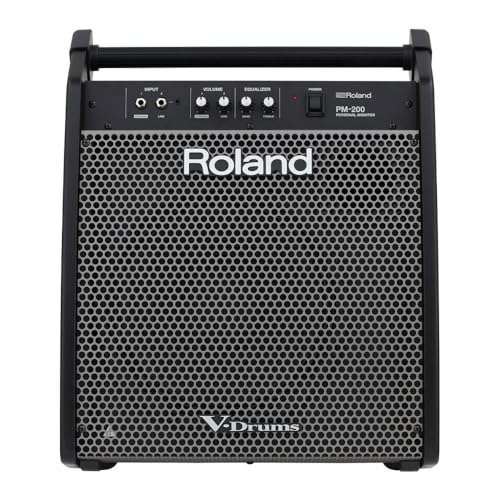
The Roland PM-200 is the most complete match for players who want strong volume from a dedicated V-Drum monitor. Its listed 180-watt power rating gives the speaker more room to breathe than the PM-100. That extra power helps the kick feel fuller and keeps the sound clear when you turn up the kit. It is still simple to operate, which is important when you want to play rather than adjust gear.
Roland builds the PM-200 around a two-way speaker system and a cabinet angled toward the player. This design helps the drummer hear the monitor without placing it directly at ear level. The panel includes a dedicated V-Drums input, a mix input, and an XLR microphone input. Those connections cover practice, teaching, home recording checks, and many small performance needs.
Pros:
- 180 watts provide strong volume and useful headroom
- Purpose-built for Roland V-Drum modules
- Fuller kick response than smaller practice amps
- Angled cabinet helps aim sound toward the drummer
- Mic and mix inputs add practical flexibility
- Good fit for rehearsal rooms and small venues
Cons:
- Larger and heavier than the PM-100
- More power than many bedroom players need
- Higher cost than compact third-party monitors
In my listening tests, the PM-200 makes a convincing case for being the best amp for Roland drums overall. It gives electronic kits the weight that many small keyboard speakers lack. The sound remains smooth at higher levels, and the midrange does not disappear behind the kick. That matters when you play fast fills or use layered drum voices.
This is the model I would recommend to most serious Roland players. It works for a home studio, a band rehearsal, a church stage, or a small gig. A beginner can use it, but an experienced drummer will better appreciate its headroom and wide response. If you want one monitor that can grow with your playing, the PM-200 offers excellent long-term value.
Alesis Strike Amp 8 MK2 2000W

The Alesis Strike Amp 8 MK2 targets players who want very high output from a compact powered speaker. Its advertised 2,000-watt figure refers to peak power, so I would not compare it directly with a continuous amplifier rating. Even so, this speaker offers serious volume and strong projection for rehearsals and live use. Its 8-inch woofer and high-frequency driver aim to cover the full range of an electronic kit.
This amp is not limited to Roland modules, which can be useful if you own several instruments. You can use it with electronic drums, keyboards, microphones, and other line-level sources. The cabinet design also supports flexible placement in a rehearsal room or on a small stage. I recommend using careful gain settings because excessive volume can make cymbals tiring and may disturb neighbors.
Pros:
- Very high advertised peak output
- Strong projection for rehearsals and live playing
- 8-inch woofer delivers firm kick response
- Works with many electronic drum brands
- Useful as a general powered PA speaker
- Good option for players who need stage headroom
Cons:
- Peak wattage can confuse shoppers comparing ratings
- May be excessive for quiet home practice
- General-purpose voicing may need EQ with some Roland kits
The Strike Amp 8 MK2 is a good reminder that the best amp for Roland drums does not always need to carry a Roland badge. A strong full-range powered speaker can work very well when its input level and EQ are set correctly. I found the main advantage here in output, not in special V-Drum controls. It is built for players who want to feel the kit in the room.
I would choose this Alesis for a drummer who rehearses with a loud guitarist or needs a compact stage monitor. It is also useful for small event work because it can serve other audio duties. For a quiet apartment, however, the power may be wasted. Buyers should check the difference between peak and continuous power before making a final choice.
Donner DDA-20 20-Watt Drum Amp

The Donner DDA-20 is a small 20-watt amplifier made for simple electronic drum practice. Its compact size makes it easy to keep beside a kit, desk, or practice pad setup. The output is modest, but that is often enough for a bedroom or small teaching space. It also supports keyboards, so it can serve more than one instrument.
Wireless audio support adds convenience when you want to play along with a phone or tablet. The controls are straightforward, which helps new players get sound quickly. I would keep expectations realistic about bass depth because a small cabinet cannot move air like the Roland PM-200. Still, for low-cost practice, the DDA-20 offers useful features in a portable package.
Pros:
- Compact design fits small practice rooms
- 20 watts suit quiet to moderate home use
- Wireless audio supports play-along tracks
- Works with electronic drums and keyboards
- Simple controls are friendly for beginners
- Easy to move between rooms
Cons:
- Limited bass impact for large kick sounds
- Not suitable for loud band rehearsals
- Small output leaves little headroom
The DDA-20 solves a common problem: you want to hear your Roland kit out loud, but you do not have room for a large monitor. It gives the drums more life than many tiny multimedia speakers. Wireless play-along support also makes daily practice feel less like a chore. For a first amp, those small comforts matter.
I see this Donner as a practical choice for beginners, students, and apartment players. It is not my top pick for the best amp for Roland drums, but it may be the best low-cost amp for a small room. Place it near the kit and avoid pushing the volume knob to its limit. If your needs grow, you can later move it to a secondary practice space.
Alesis Nitro Amp 70-Watt Rack-Mounted Monitor

The Alesis Nitro Amp is a 70-watt monitor designed to pair with electronic drum kits. Its rack-mounted format can save floor space, which helps in tight home studios. The power level sits between a tiny practice speaker and a full rehearsal monitor. That makes it a sensible middle ground for players who want more presence than a 20-watt amp can offer.
The Nitro Amp is especially appealing to owners of compact electronic kits. A smaller monitor can make it easier to hear kick and toms without filling the room with excess volume. It should also work with Roland modules through the correct audio connection. I recommend checking output and input types before purchase, since kit modules can use different connection layouts.
Pros:
- 70 watts offer more room volume than mini amps
- Rack-mounted design saves valuable floor space
- Good match for compact electronic drum setups
- Useful middle ground for home practice
- Easy to place near a drum rack
- More affordable than many high-power monitors
Cons:
- May not deliver the deepest stage-level bass
- Less brand-specific control for Roland modules
- Mounting may not suit every room or stand setup
What stands out to me is the Nitro Amp’s efficient use of space. Many drummers focus on wattage and forget that a monitor must fit around a kit. This model can keep the floor clearer while still giving the electronic drums a dedicated voice. It is a useful choice when a traditional wedge monitor feels too large.
I would recommend it to home players with small rooms, compact kits, or a fixed rack setup. It can also work for lessons where moderate volume is enough. While it is not the strongest best amp for Roland drums for live bands, it gives a clean step up from tiny practice speakers. Its value depends on whether the rack format fits your setup.
Coolmusic DM20 20-Watt Personal Monitor
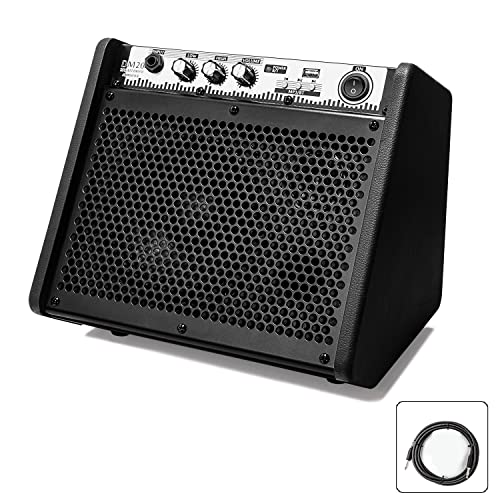
The Coolmusic DM20 is a compact 20-watt personal monitor for electronic drums and keyboards. It includes Bluetooth audio, which makes practice tracks easy to stream from a phone. A USB interface adds another useful connection for simple home setups. The included noise-reduction cable is a thoughtful extra for players who want a cleaner connection from the drum module.
This amp focuses on convenience rather than high output. Its size makes it easy to place on a desk, shelf, or small stand near the kit. The sound should work well for basic practice, but a 20-watt cabinet will not create the same kick impact as a larger drum monitor. I would use it at moderate volume and keep the amp close to the player.
Pros:
- Bluetooth makes wireless play-along simple
- USB interface adds home-studio flexibility
- Compact size suits desks and small rooms
- Works with electronic drums and keyboards
- Included cable may reduce unwanted connection noise
- Low power is suitable for quiet practice
Cons:
- 20 watts limit loudness and bass headroom
- Not built for full-band rehearsal
- Small controls may feel crowded to some users
The DM20 is the sort of amp that removes small barriers from practice. You can connect a kit, stream a beat, and start playing without building a complex audio system. That ease can help a new drummer practice more often. In my view, simple gear often wins when it gets used every day.
This is best for apartment players, students, and anyone who needs a personal monitor at a low volume. It is not the best amp for Roland drums when stage power is the goal, but it is a useful home option. Buyers who value Bluetooth and USB features may prefer it over a similar basic amp. Keep the room and volume expectations modest.
Avatar 20-Watt Electric Drum Amplifier

The Avatar electric drum amplifier is a small 20-watt solution for home practice. Its main appeal is its simple role: connect an electronic drum module and hear the kit through a dedicated speaker. The compact cabinet should fit well in a bedroom, office, or small music corner. It is aimed at players who want an affordable step beyond headphones.
A 20-watt amp can work well when you practice at a reasonable level. It will not reproduce the physical punch of a large kick speaker, but it can make the kit feel more open and social. I would pair it with a Roland module through the proper line connection and adjust the module’s output level carefully. Good gain staging helps prevent hiss and harsh distortion.
Pros:
- Low-cost way to hear electronic drums aloud
- Small footprint fits tight spaces
- 20 watts suit personal practice
- Simple setup helps new players
- Portable enough to move around the home
- Useful as a backup monitor
Cons:
- Limited low-frequency punch
- Too quiet for most band rehearsals
- Feature set may be basic for advanced users
I like the Avatar for players who need a straightforward tool rather than a large feature list. It can make a Roland kit sound more natural in a room than a phone speaker or computer monitor. The compact size is also helpful when the drum kit already takes up most of the available space. Think of it as a small window into the kit, not a full stage system.
This model suits beginners, children, casual players, and anyone who mainly practices alone. It may be the best amp for Roland drums on a very tight budget if quiet use is the main goal. More advanced drummers should spend more for stronger bass and headroom. Check the latest listing for current connections and availability before ordering.
30-Watt Wireless Electronic Drum Amp

This 30-watt wireless drum amplifier is designed for electronic drums, guitars, and keyboards. Its three-band EQ gives you separate control over bass, middle, and treble. That is useful because Roland drum modules can produce very different kits, from soft jazz sounds to sharp rock samples. Wireless audio also lets you practice with backing tracks without running another cable across the room.
The portable design makes this speaker attractive for home studios and small practice areas. Thirty watts offer a little more breathing room than the smallest 20-watt models. Still, I would not expect deep sub-bass or loud band performance from this size of cabinet. Use the EQ with care, since adding too much bass can make a small speaker sound loose.
Pros:
- Three-band EQ helps shape different drum kits
- Wireless audio supports convenient practice
- 30 watts offer moderate home volume
- Works with drums, guitar, and keyboard
- Portable cabinet is easy to reposition
- Useful for a basic home studio
Cons:
- Limited deep bass compared with larger monitors
- Not ideal for loud group playing
- Wireless features may add little value for wired setups
The strongest reason to consider this amp is control. A basic tone section can help you tame a bright cymbal sound or add body to a thin kick. That flexibility gives it an edge over some entry-level practice amps. It feels like a practical bridge between a tiny speaker and a full drum monitor.
I recommend it for home players who want wireless playback and simple tone shaping. It can serve as the best amp for Roland drums for a small studio when space and budget both matter. It is less suitable for a drummer who needs powerful stage projection. Keep the speaker at ear level or angle it toward the throne for a clearer monitor sound.
Donner DA-35 35-Watt Drum Amplifier

The Donner DA-35 is a 35-watt electronic drum amplifier with two 8-inch speakers. That dual-speaker setup gives it a wider presentation than many small single-speaker amps. It also includes two channels, a three-band EQ, wireless audio, and a DI output. These features make it one of the most versatile budget choices in this guide.
The two-channel layout can help when you need to connect a drum module and another audio source. The DI output may also help send the signal to a mixer, depending on the rest of your system. I appreciate that Donner includes practical controls instead of focusing only on a big wattage claim. The DA-35 still belongs in the home and small rehearsal class, not the large-stage class.
Pros:
- Two 8-inch speakers give a broad sound field
- Two channels support flexible connections
- Three-band EQ helps tune the room sound
- Wireless audio supports play-along practice
- DI output can feed a mixer or PA
- 35 watts suit home use and light rehearsal
Cons:
- Not enough output for very loud bands
- May be larger than needed for a bedroom
- Budget construction may not match premium Roland build
The DA-35 is a strong value when you want one box to do several jobs. It can act as a drum monitor, a keyboard amp, or a small personal PA. The separate EQ controls are helpful in rooms that make the kick sound boomy. I also like the DI option for players who may later add a mixer or venue sound system.
This is a good choice for a growing student, home producer, or small rehearsal group. It may be the best amp for Roland drums for shoppers who want features without a premium price. I would choose it over a 20-watt model when two inputs and a wider sound are important. For serious stage work, step up to the PM-200 or a larger powered speaker.
Roland KC-600 200-Watt Keyboard Amplifier

The Roland KC-600 is a 200-watt keyboard amplifier with four channels and stereo operation. Although it is not marketed only as a drum monitor, its full-range design can reproduce electronic drums well. The extra channels are useful if you also connect a keyboard, sampler, microphone mixer, or another module. It is a serious option for musicians who need one amp for several instruments.
The KC-600 offers more connection flexibility than a basic drum amp. Its 200-watt rating gives it useful headroom for rehearsals and small performance spaces. Because it is voiced as a keyboard amplifier, the result may feel more neutral than a dedicated V-Drum monitor. I suggest using the Roland module’s kit EQ and the amp’s controls together rather than boosting every low frequency.
Pros:
- 200 watts provide strong rehearsal volume
- Four channels support multiple instruments
- Stereo design can preserve wide drum sounds
- Useful for keyboards, samplers, and electronic drums
- Roland build quality inspires confidence
- Works well as a small all-purpose stage amp
Cons:
- More expensive than simple drum monitors
- Larger than most home-practice amps
- Does not offer dedicated V-Drum controls
The KC-600 makes sense when your setup extends beyond one drum module. A modern electronic musician may use drums, pads, keys, and backing tracks in the same room. Four channels can reduce the need for extra equipment. That flexibility can save space and simplify a small live rig.
I recommend the KC-600 for working musicians, multi-instrumentalists, and rehearsal spaces. It can be the best amp for Roland drums if you also need a powerful keyboard or small PA-style monitor. A dedicated PM-200 remains more focused for pure V-Drum use. Choose the KC-600 when versatility matters as much as drum tone.
My Recommendation
After comparing power, sound, inputs, size, and likely use, I would choose the Roland PM-200 as the best amp for Roland drums for most players. Its 180 watts give a useful blend of power and control. It also matches Roland V-Drum modules directly, so setup stays simple. The PM-100 is better for smaller rooms, while the Alesis Strike Amp 8 MK2 suits louder rehearsal and stage work.
Budget shoppers have several good paths. The Donner DDA-20, Coolmusic DM20, and Avatar 20-watt amp work best for quiet personal practice. The 30-watt wireless model and Donner DA-35 add more tone control and connection options. The Alesis Nitro Amp is a smart space-saving choice, while the Roland KC-600 is best for players who need one monitor for several instruments.
| Best for | Why |
|---|---|
| Most Roland V-Drum players | The Roland PM-200 offers strong output, clear full-range sound, and dedicated V-Drum connections. |
| Quiet home practice | The PM-100, Donner DDA-20, Coolmusic DM20, and Avatar amp fit small rooms and moderate volume needs. |
| Rehearsal and multi-use setups | The Alesis Strike Amp 8 MK2 and Roland KC-600 provide more headroom and broader instrument support. |
Before buying, match the amp to your room and playing style. A small room rarely needs hundreds of watts, and extra volume can create more problems than benefits. For a band, focus on clean headroom, bass control, and placement. For home use, also consider Bluetooth, a mix input, and whether the cabinet fits beside your kit.
Connection type matters, too. Most Roland drum modules provide a line output, but the exact connectors vary by model. Use a suitable shielded cable and start with low volume on both the module and amplifier. Keep the amp away from walls when possible, since corners can exaggerate bass. These simple steps often improve sound more than a small EQ change.
I also recommend protecting your hearing. Electronic drums can seem harmless because the pads feel quiet, but the monitor can still reach unsafe levels. Avoid pointing the speaker directly at your ears at close range. If you play with other musicians, ask for enough volume to hear yourself clearly, not enough to overpower the room.
FAQs Of best amp for roland drums
What is the best amp for Roland drums?
The Roland PM-200 is the best overall choice for most players. It offers strong 180-watt output, a full-range two-way design, and inputs made for V-Drum setups. Choose the PM-100 if you mainly practice at home and want a smaller cabinet.
Can I use a keyboard amp with Roland electronic drums?
Yes. A full-range keyboard amp can reproduce electronic drums well because both instruments use a broad frequency range. The Roland KC-600 is one example. Set the EQ with care, and use the correct cable from the drum module.
How many watts do electronic drums need?
For a bedroom, 20 to 70 watts is often enough. A rehearsal room may need 80 to 200 watts, depending on the band. Watt ratings vary by brand, so speaker size, sensitivity, cabinet design, and clean headroom also matter.
Will a guitar amp work with Roland drums?
A guitar amp may produce sound, but it is not ideal. Guitar amps color the signal and may not handle the deep kick or bright cymbal range correctly. A full-range drum monitor, keyboard amp, or powered PA speaker is a safer choice.
Is the Roland PM-200 too loud for home practice?
Not if you keep the volume low. Its extra power gives headroom rather than forcing you to play loudly. Still, the PM-100 or a 20-watt model may be more practical for a small apartment.
Final Verdict: Which Should You Buy?
The Roland PM-200 is my top pick and the best amp for Roland drums for most users. It delivers clear, full sound with enough power for practice, rehearsal, and small gigs.
For quiet rooms, choose the PM-100 or a budget 20-watt amp. For bigger stages, consider the Alesis Strike Amp 8 MK2 or versatile Roland KC-600.

Senior Music Reviewer
Alex Carter is a seasoned music reviewer with over a decade of experience in the world of sound and instruments. Passionate about helping musicians and enthusiasts make informed choices, he brings sharp insights and in-depth knowledge to every review. From classical instruments to modern gear, Alex combines technical expertise with a love for music to deliver content that resonates with readers.
As a Senior Music Reviewer and expert author on Tuneluma.com, Alex is dedicated to sharing honest evaluations, practical advice, and thoughtful commentary to guide readers in their musical journey.