Is The Bass A Guitar: Guitar Vs Bass Explained
Yes, the bass is a guitar, but its lower range, longer neck, and musical role make it a distinct instrument.
The question “is the bass a guitar” sounds simple, but the answer depends on how we define a guitar. A bass guitar shares the same basic design, playing methods, and electric parts as a guitar, yet it supports music in a very different way. This guide explains the connection, differences, history, tuning, sound, and best uses of both instruments.
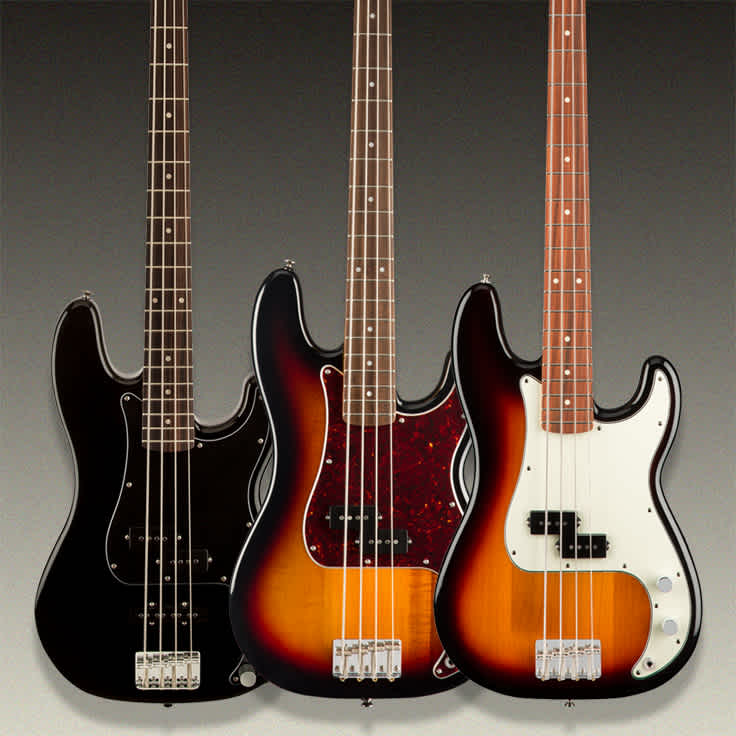
Is the Bass a Guitar?
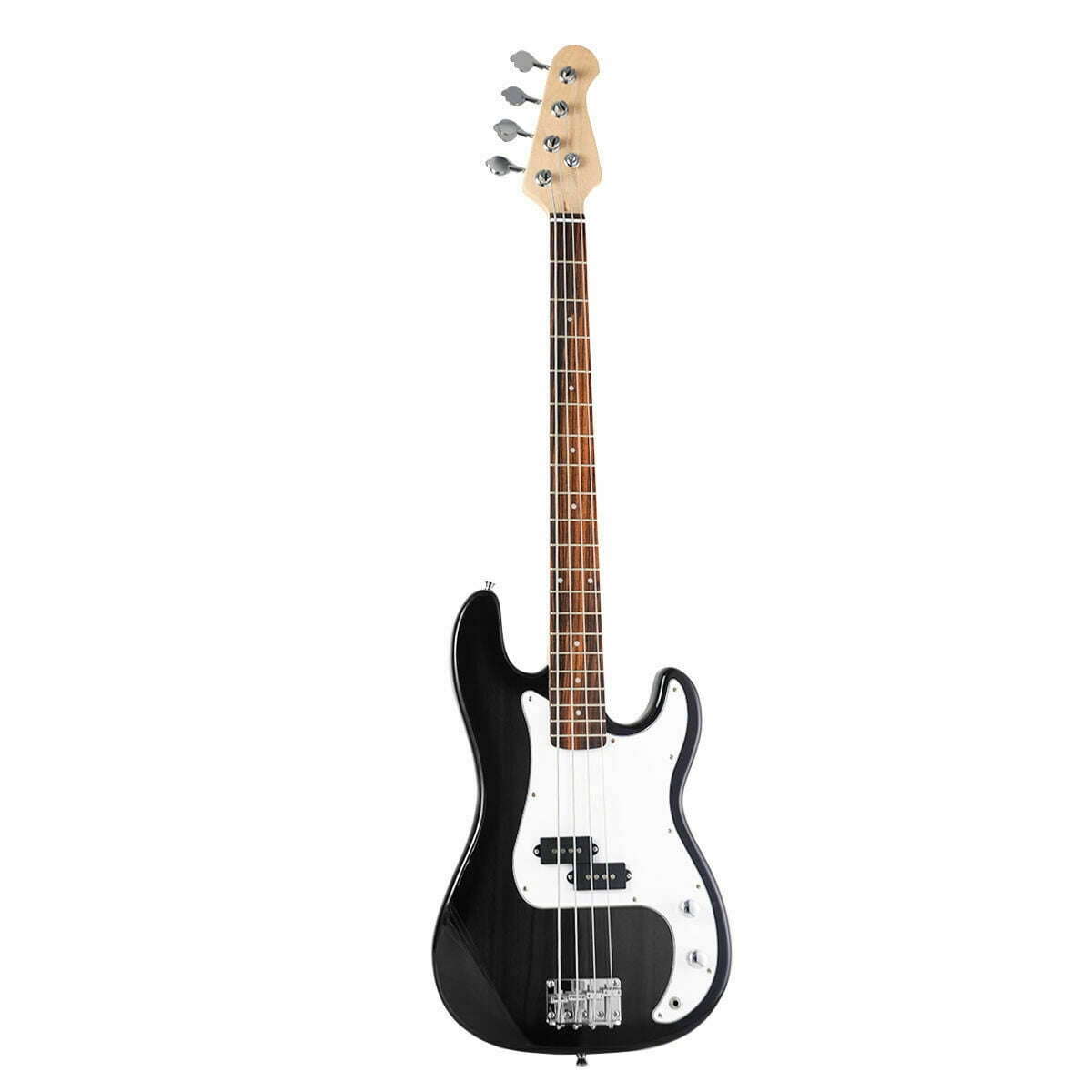
Yes, a bass guitar is a type of guitar. It belongs to the string instrument family and uses a fretted neck, pickups, a bridge, and a body much like an electric guitar.
Still, a bass guitar is not just a regular guitar with thicker strings. It has a longer scale length, larger strings, deeper tuning, and a stronger focus on rhythm and harmony.
A useful comparison is this: a bass guitar is like a truck built from the same basic idea as a car. Both have wheels, an engine, and a steering system. However, the truck is designed to carry a different load.
In the same way, the bass guitar is built to produce low notes and connect the drummer’s rhythm with the guitarist’s chords.
The term “bass” can also cause confusion. It may refer to:
• A bass guitar, usually played with the fingers or a pick
• An acoustic bass guitar, which has a hollow body
• A double bass, also called an upright bass or stand-up bass
• The low musical range in a song or musical group
Only the first two are usually called guitars. A double bass is a related string instrument, but it is not technically a guitar.
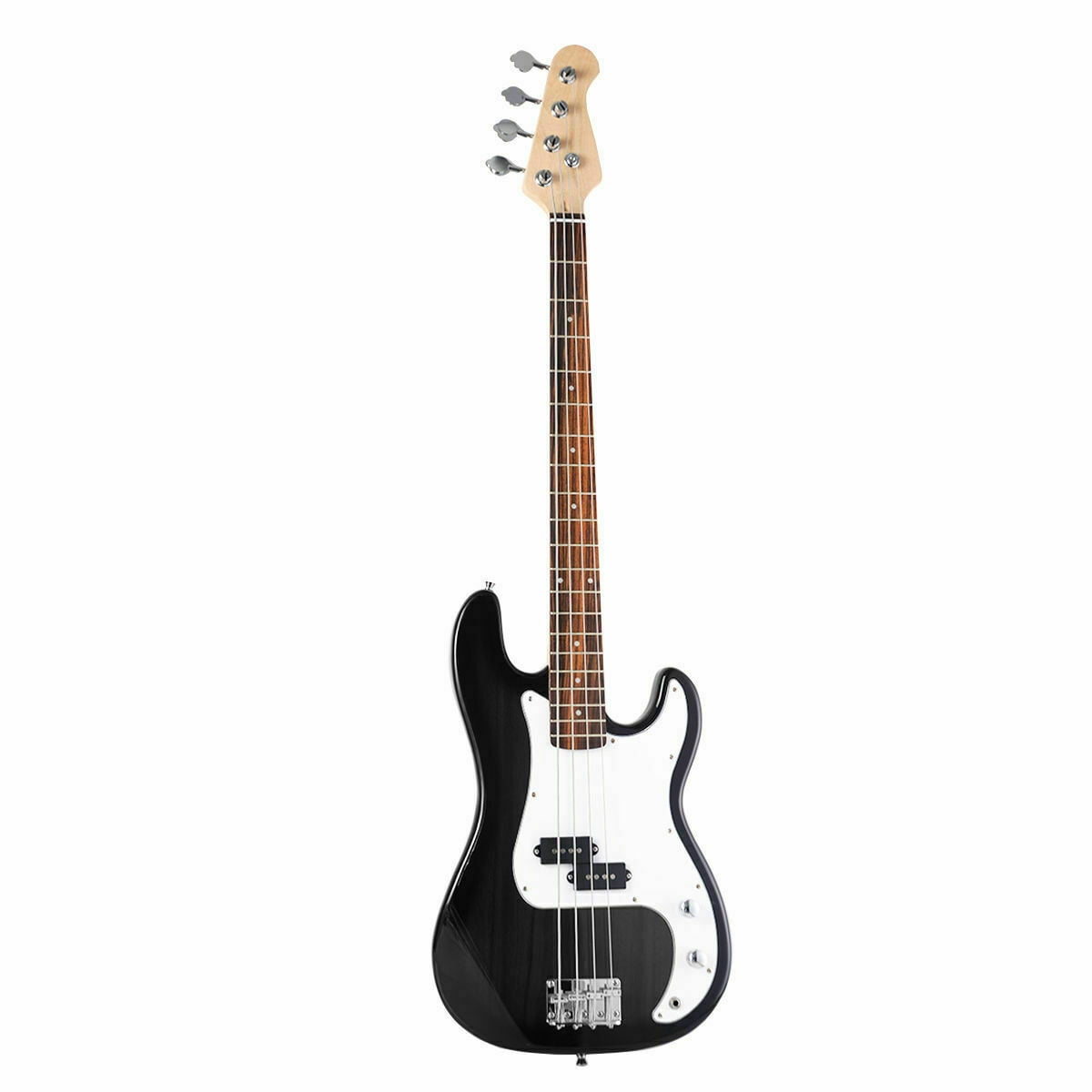
How Is a Bass Guitar Similar to a Guitar?
A bass guitar and a standard guitar share many important features. This is why many guitar players can learn basic bass techniques fairly quickly.
Both instruments usually have:
• A wooden or composite body
• A neck with frets
• Tuners, also called machine heads
• A bridge that holds the strings
• Pickups on electric models
• Volume and tone controls
• A cable connection on most electric instruments
Both instruments also use the same basic note system. Moving one fret higher raises a note by one half step. This makes scales, chords, and music theory easier to transfer from guitar to bass.
The playing posture is also similar. You can sit or stand while holding either instrument across your body. Many bass players use a strap, just as electric guitar players do.
The bass guitar also uses many of the same effects as a guitar. These include distortion, compression, chorus, delay, and octave effects. However, bass effects are often designed to keep the low end strong and clear.
A guitar player may focus on chords and melodies. A bass player often focuses on single notes, groove, timing, and the root notes of chords. Both roles are important, but they serve different musical needs.

How Is a Bass Different From a Guitar?
The biggest differences are pitch, string size, scale length, and musical function.
A standard six-string guitar is commonly tuned from low to high as:
• E2
• A2
• D3
• G3
• B3
• E4
A standard four-string bass guitar is commonly tuned:
• E1
• A1
• D2
• G2
Each bass string is one octave lower than the matching low four strings on a guitar. This gives the bass its deep, powerful sound.
Bass guitars also use thicker strings. These strings need more space to vibrate. As a result, the neck is wider, and the instrument can feel heavier in your hands.
Most bass guitars have a scale length of about 34 inches. Many electric guitars use a scale length near 24.75 to 25.5 inches. This longer neck helps the bass strings produce a clear low tone.
The main differences include:
| Feature | Bass Guitar | Standard Guitar |
|---|---|---|
| Common number of strings | 4, 5, or 6 | 6, sometimes 7 or 12 |
| Common tuning | E1-A1-D2-G2 | E2-A2-D3-G3-B3-E4 |
| String size | Thick | Thinner |
| Scale length | Usually about 34 inches | Usually about 24.75 to 25.5 inches |
| Main role | Groove, low harmony, rhythm support | Chords, melody, rhythm, and solos |
| Typical sound | Deep and full | Higher and brighter |
These are general patterns, not strict rules. A bassist can play chords, and a guitarist can play low notes. The instruments simply make those jobs easier or harder.

Why Does the Bass Sound Lower Than a Guitar?
A bass sounds lower because its strings vibrate more slowly than guitar strings. Slow vibration creates a lower frequency, which our ears hear as a deeper pitch.
String pitch depends on several factors:
• String length
• String thickness
• String tension
• The material used to make the string
A longer and thicker string usually creates a lower note. This is why a bass guitar needs a longer neck and heavier strings than a standard guitar.
The lowest open string on a typical four-string bass is E1. That note vibrates at about 41.2 hertz. The low E on a standard guitar is E2, which is one octave higher at about 82.4 hertz.
An octave means the frequency doubles or halves. So, the low E on a bass guitar is not just slightly lower than the low E on a guitar. It is twice as low in frequency.
This difference gives the bass its physical impact. When played through a good amplifier, low bass notes can make a room feel as well as sound.
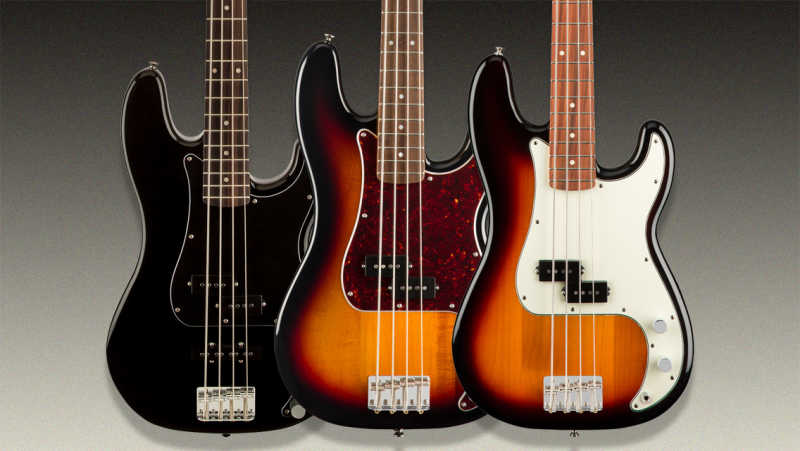
What Role Does the Bass Play in Music?
The bass guitar often acts as a bridge between rhythm and harmony. It connects the drum pattern to the chords played by the guitar, keyboard, or other instruments.
A strong bass line can make a simple song feel exciting. It can also make a busy song sound organized.
The bass often performs these jobs:
• Establishing the root notes of chords
• Supporting the kick drum
• Creating a repeated groove
• Adding movement between chords
• Giving a song weight and depth
• Providing counter-melodies
• Shaping the feel of a music style
For example, in a rock song, the bass may follow the guitar chords while matching the drummer’s kick drum. In funk, the bass may use syncopated patterns that become the main hook. In jazz, the bass may walk through chord changes with smooth quarter notes.
This role explains why bass playing can seem simple from the outside but feel difficult in practice. A bassist must listen closely to several parts at once.
One lesson I often see when helping new players is that timing matters more than playing many notes. A simple bass line played with steady time usually sounds better than a complex line played unevenly.
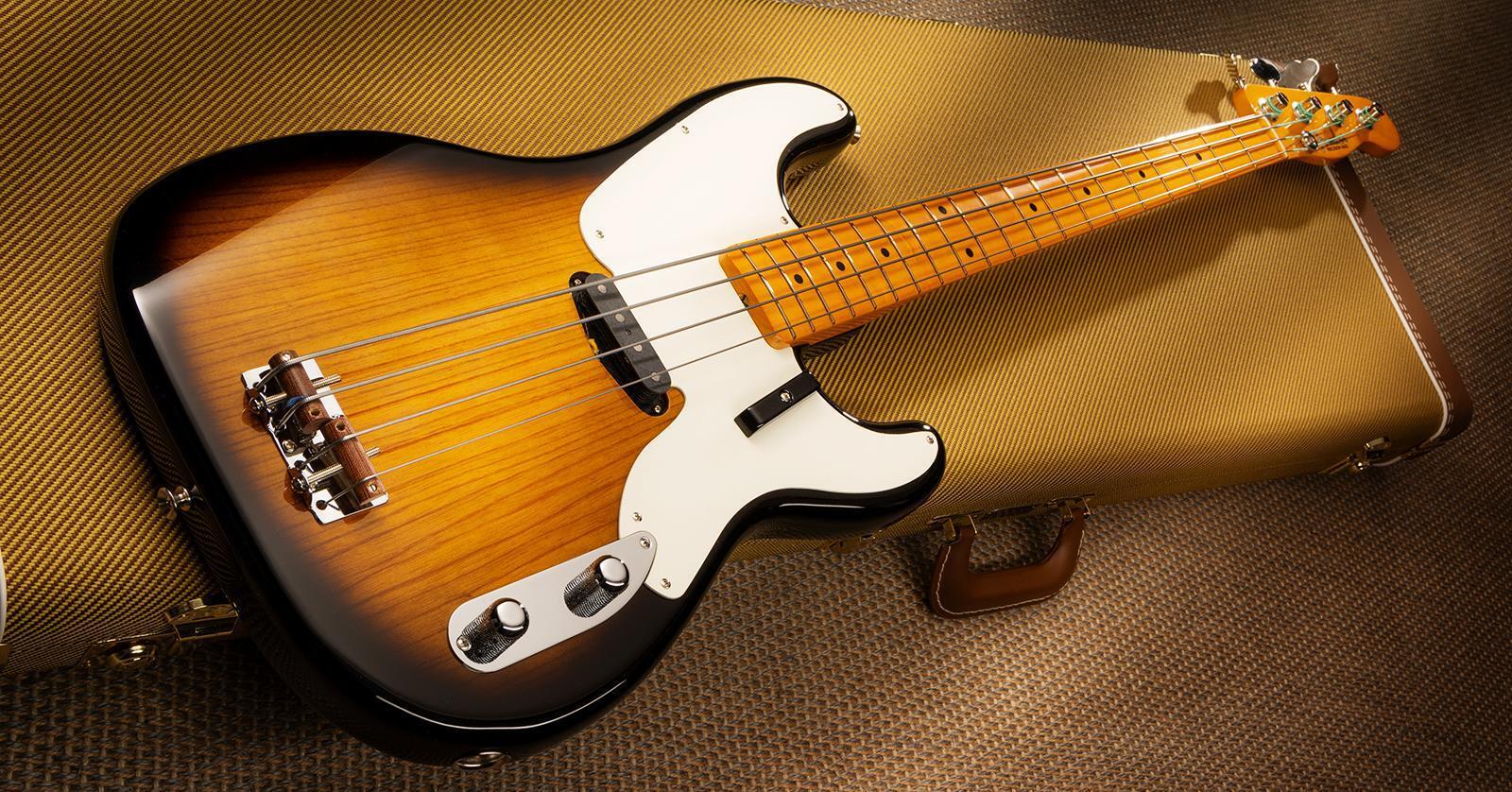
Can You Play a Bass Like a Guitar?
Yes, you can use many guitar techniques on a bass guitar. You can play scales, riffs, melodies, chords, slides, hammer-ons, pull-offs, bends, harmonics, and tapping.
However, the larger size of the bass changes how these techniques feel.
For example, a whole-step bend takes more strength on bass because the strings are thicker. Fast guitar-style solos may also require more finger movement because the frets are farther apart.
Bass players commonly use:
• Fingerstyle playing with the index and middle fingers
• Pick playing for a sharper attack
• Slap and pop techniques
• Palm muting
• Slides between notes
• Hammer-ons and pull-offs
• Muting with both hands
• Harmonics and tapping
A guitarist moving to bass should pay special attention to muting. Thick bass strings can continue ringing for a long time. Unwanted noise can quickly make a clean bass line sound messy.
A practical exercise is to play one note at a time while lightly touching unused strings with your thumb or fretting hand. This builds control before you add speed.
Can a Guitar Player Learn Bass Easily?
A guitar player has a useful head start, but bass still requires a new approach. The note names, fretboard layout, and basic tuning are familiar, especially on a four-string bass.
Guitar players already understand:
• Chord names
• Scales
• Frets
• Rhythm patterns
• String vibration
• Amplifiers and cables
• Basic music theory
The main challenge is learning to think like a bass player. Bass is often less about filling every space and more about choosing the right note at the right moment.
Guitarists sometimes make three common mistakes when they first play bass:
- Playing too many notes
- Ignoring the drummer
- Using too much force
A bass line needs space. Locking in with the kick drum can make a bigger musical impact than playing a fast solo.
I have found that guitarists improve faster when they spend time playing along with drum loops. This practice teaches steady timing and helps the player feel how bass and drums work together.
Start with a slow tempo. Play one note per beat. Then try adding notes only when the groove feels steady.
What Types of Bass Guitars Are Available?
Bass guitars come in several forms. The best choice depends on your music style, comfort, budget, and need for portability.
Four-string bass
The four-string bass is the most common type. It is usually tuned E-A-D-G and works well for rock, pop, blues, country, gospel, jazz, and many other styles.
It has a smaller range than a five-string bass, but many famous bass lines were recorded on four-string instruments. It is often the easiest option for beginners.
Five-string bass
A five-string bass usually adds a low B string below the standard E string. This gives the player more low notes without changing position as often.
Five-string basses are common in metal, modern worship, gospel, jazz, pop, and studio work. The wider neck may take time to learn.
Six-string bass
A six-string bass usually adds both a low B string and a high C string. This offers a wider range and supports advanced solo and chord work.
The extra strings can be useful, but they also create more muting challenges. A six-string bass is not automatically better than a four-string model.
Acoustic bass guitar
An acoustic bass guitar has a hollow body and can produce sound without an amplifier. Even so, it is usually quieter than an acoustic guitar because low frequencies need more body size and air movement.
Acoustic bass guitars often work best for practice, unplugged sessions, and small gatherings. For a full band, they usually need amplification.
Short-scale bass
A short-scale bass has a shorter neck, often around 30 inches. It can feel more comfortable for beginners, smaller players, and guitarists who prefer closer frets.
Short-scale basses can have a warm and rounded sound. They are not only beginner instruments; many experienced players choose them for their tone and feel.
Is a Double Bass the Same as a Bass Guitar?
No. A double bass and a bass guitar are different instruments, although both create low notes.
A double bass is much larger and usually stands on the floor. It is played with a bow or by plucking the strings. A bass guitar is held against the body and is often amplified with an electronic pickup.
The double bass is common in orchestras, bluegrass, jazz, and some older forms of popular music. The bass guitar became especially important in rock, funk, soul, pop, metal, and modern country.
The two instruments also differ in tuning and construction. A standard double bass is commonly tuned E-A-D-G, but it has no frets and sounds an octave lower than written music in many traditional settings.
The phrase “bass guitar” helps separate the electric instrument from the upright bass. Both fill a low musical role, but their techniques and tone are not the same.
Is Bass Easier Than Guitar?
Bass may feel easier at first because beginners often play fewer notes and simpler patterns. It can also be easier to play along with a song using root notes.
That does not mean bass is an easy instrument. Good bass playing requires strong rhythm, clean muting, accurate note choice, and close listening.
Bass can be easier in these ways:
• Fewer strings on a standard model
• Many beginner lines use one note at a time
• Root-note patterns are easy to understand
• The player often uses fewer chord shapes
Bass can be harder in these ways:
• The strings require more finger strength
• The neck is longer and wider
• Timing mistakes are easy to hear
• Muting takes careful control
• Low notes can sound unclear with poor technique
The best way to judge difficulty is to try both instruments. Your hand size, music goals, and preferred sound matter more than general claims about which instrument is easier.
How to Choose Between Bass and Guitar
Choose a guitar if you want to:
• Play chords while singing
• Perform lead melodies
• Learn acoustic songs
• Explore guitar solos
• Play in a role that often carries the main melody
Choose a bass guitar if you want to:
• Build grooves
• Work closely with a drummer
• Support a band
• Feel low notes and rhythm
• Create a song’s foundation
• Play funk, rock, jazz, soul, pop, or metal bass lines
Think about the music you enjoy most. If you hear the bass line first, bass may be the right choice. If you naturally follow the chords or vocal melody, guitar may feel more rewarding.
You should also consider practice space. A bass amplifier can be loud, and low frequencies travel through walls. Headphone amplifiers or audio interfaces can help you practice quietly.
For a first bass, look for:
• A comfortable neck
• Smooth fret edges
• Tuners that hold pitch
• Quiet electronics
• A balanced body
• A usable setup with comfortable string height
Do not choose only by appearance. A beautiful instrument that hurts your hands will likely spend more time in its case.
Common Bass Guitar Mistakes to Avoid
New bass players often focus on the wrong details. These mistakes are normal, but fixing them early makes practice more enjoyable.
Playing too hard
Pressing and plucking with too much force can create sharp, uneven notes. Use only enough pressure to make the note clear.
Skipping a metronome
A metronome may feel boring, but it improves timing. Start with quarter notes, then practice eighth notes and rests.
Ignoring muting
Unused strings can ring and create noise. Use your thumb, palm, and fretting fingers to control them.
Copying guitar technique without adjustment
A bass guitar responds differently from a guitar. Give your fingers more space and use smaller, controlled movements.
Buying too much equipment
You do not need a large pedalboard to begin. A reliable bass, a suitable amplifier, a cable, a tuner, and a strap are enough.
Practicing without listening
Bass is a listening instrument. Play along with recordings and notice how the bass interacts with the kick drum and chords.
These small habits create better results than rushing into advanced techniques.
Frequently Asked Questions About Is the Bass a Guitar
Is a bass guitar technically a guitar?
Yes, a bass guitar is a low-pitched member of the guitar family. It shares the same basic body, neck, fret, bridge, and pickup design, but it is built for lower notes.
Is bass easier to play than guitar?
Bass can be easier to start because many beginner parts use single notes and simple rhythms. It becomes challenging as you develop timing, muting, groove, and advanced technique.
Can you play guitar chords on a bass guitar?
Yes, you can play chords on a bass guitar. However, thick strings and a wide neck can make large chord shapes difficult, and too many low notes may sound muddy.
Is a bass guitar tuned like a guitar?
A four-string bass uses the same interval pattern as the lowest four guitar strings, but it sounds one octave lower. Its standard tuning is E-A-D-G, while a guitar is commonly tuned E-A-D-G-B-E.
Do bass guitar players need an amplifier?
Electric bass guitars need an amplifier or audio system to produce a strong audible sound. You can practice quietly with headphones through a suitable headphone amplifier or audio interface.
Is an acoustic bass guitar the same as an upright bass?
No. An acoustic bass guitar has a guitar-like body and frets, while an upright bass is much larger, usually fretless, and played while standing or sitting on a tall stool.
Can a beginner start with bass instead of guitar?
Yes, a beginner can start with bass. The right choice depends on the music you enjoy, the sound you want, and whether you prefer supporting a band or playing chords and melodies.
Conclusion
A bass guitar is a guitar, but it is designed for a different musical job. Its longer neck, thicker strings, lower tuning, and strong connection to the drums give it a unique voice.
The bass supports harmony, shapes rhythm, and helps a song feel complete. It can be simple to begin but offers deep room for growth through groove, technique, theory, and listening.
If you are unsure, try both instruments and notice which one makes you want to keep playing. Practice with a metronome, learn a few songs, and explore more bass resources to find your sound.

Senior Music Reviewer
Alex Carter is a seasoned music reviewer with over a decade of experience in the world of sound and instruments. Passionate about helping musicians and enthusiasts make informed choices, he brings sharp insights and in-depth knowledge to every review. From classical instruments to modern gear, Alex combines technical expertise with a love for music to deliver content that resonates with readers.
As a Senior Music Reviewer and expert author on Tuneluma.com, Alex is dedicated to sharing honest evaluations, practical advice, and thoughtful commentary to guide readers in their musical journey.