Best Digital Grand Piano For Advanced Pianist: Top Picks
The Yamaha GP-3 is the best digital grand piano for advanced pianists seeking realistic touch, tone, and refined control.
After years of practice, a basic keyboard can start to feel like a thin door between you and the music. Advanced players need a rich piano tone, a full 88-key range, a dependable pedal system, and action that responds to soft trills as well as strong chords. Space, cost, headphones, and late-night practice also matter. I reviewed these options with those needs in mind. This guide compares grand-style digital pianos, upright digital pianos, portable keyboards, and one useful piano book so you can choose with confidence.
Ktaxon Grand Piano 88-Key Weighted Keyboard
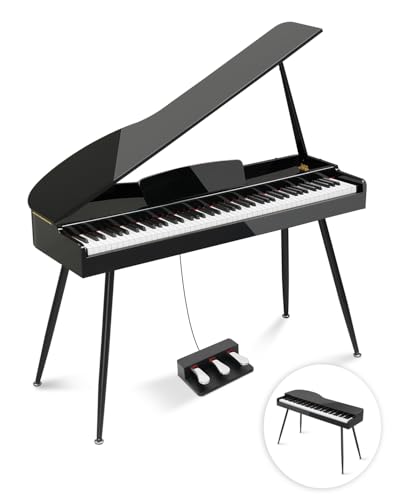
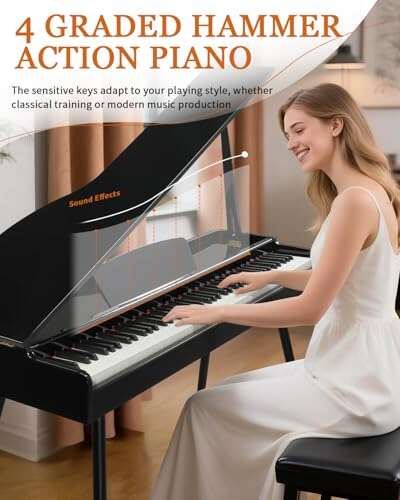
The Ktaxon Grand Piano aims to give players the look of a grand piano without the cost, tuning work, and large footprint of an acoustic instrument. Its 88-key layout gives an advanced pianist the full range needed for serious classical work, chord study, and modern arrangements. The weighted keyboard is the main reason to consider it over a small portable keyboard. It can help your hands keep a more familiar piano feel during daily practice.
This model also makes sense for a home player who wants a visual centerpiece. A grand-style cabinet can make a music room feel more inviting, while built-in features can support quiet practice and casual performance. I would still check the current listing for exact details on polyphony, pedal functions, speaker power, and connectivity before ordering. It is better viewed as an affordable entry to the grand-style format than as a direct rival to premium Yamaha or Roland instruments.
Pros:
- Full 88-key range supports advanced repertoire
- Weighted action feels more piano-like than an unweighted keyboard
- Grand-style cabinet adds a strong visual presence
- Useful choice for home practice and casual performance
- Usually costs far less than a premium digital grand
- Can suit players who want a large, permanent instrument
Cons:
- Touch and tone may not satisfy highly demanding concert pianists
- Large cabinet needs more room than a slab digital piano
- Exact features can vary by current package and listing
I recommend the Ktaxon to developing advanced players who want a grand-piano shape on a controlled budget. It is also a practical choice for a family music room, a church practice space, or a player moving up from a basic keyboard. The full range and weighted keys matter far more than a large sound library when your main goal is piano technique. If you expect detailed escapement, nuanced sensor response, or a highly refined concert voice, you should compare it with a higher-end instrument first.
Yamaha P71 88-Key Weighted Digital Piano

The Yamaha P71 remains one of the safest simple choices for a serious player who values a clean piano setup. It has 88 weighted keys and uses Yamaha’s Graded Hammer Standard action, with a heavier feel in the bass and a lighter feel in the treble. That layout mirrors the basic weight pattern of an acoustic piano. The included sustain pedal and power supply also help you start playing without building a long accessory list.
I like the P71 because it avoids distractions. You get a focused piano instrument rather than a crowded control panel filled with sounds you may rarely use. Its slim form works well on a sturdy stand, and the headphone option supports quiet study in an apartment. It does not have the cabinet, three-pedal system, or deeper control found on expensive home consoles, but it offers a useful foundation for technique and repertoire.
Pros:
- 88 weighted keys encourage proper hand development
- Graded action gives the bass and treble different resistance
- Yamaha piano tone is familiar and easy to place in a mix
- Compact body suits small rooms and mobile setups
- Included sustain pedal improves out-of-box value
- Headphone practice helps protect quiet hours
Cons:
- Basic pedal setup limits half-pedal and sostenuto work
- Built-in controls are simple rather than highly flexible
- It needs a separate stand and bench for a polished home setup
The P71 is best for an advanced pianist who needs a reliable practice board, not a decorative digital grand. It works especially well for students who travel between lessons, teachers who need a second piano, and apartment players who cannot fit a console. I would choose it when touch, portability, and value matter more than cabinet design. For a pianist searching for the best digital grand piano for advanced pianist needs on a lower budget, the P71 is a strong practical alternative, even though it is not shaped like a grand.
Yamaha Arius YDP-146B Digital Piano

The Yamaha Arius YDP-146B takes a more traditional approach than the P71. Its upright cabinet, full keyboard, three-pedal unit, and included bench create a complete home piano station. For an advanced player, that matters because the pedals become part of the musical language. You can work on sustain, soft color, and pedal timing without balancing a loose pedal on the floor.
The Arius line is designed around a familiar Yamaha piano experience, with a grand piano voice and weighted action. The cabinet can also support a better playing posture than a keyboard placed on a lightweight X-stand. It is not a current flagship console, so buyers should confirm the exact model year, app support, polyphony, and included accessories in the live listing. Still, it can be a sensible home instrument for a pianist who wants a stable, furniture-style setup.
Pros:
- Full 88-key weighted action supports serious repertoire
- Three-pedal unit allows broader pedal practice
- Included bench makes the package more complete
- Upright cabinet looks natural in a living room or studio
- Yamaha grand piano sound suits classical and popular music
- Stable design encourages good bench height and posture
Cons:
- Upright cabinet is less portable than the P71
- Older model details may differ from newer Arius instruments
- It lacks the dramatic grand cabinet and premium action of a high-end model
I would suggest the YDP-146B for an advanced pianist who practices mostly at home and wants the feel of a permanent piano. It is a better fit than a portable keyboard when you care about pedal technique, room appearance, and a ready-to-play setup. The bench also removes one common problem: using a chair that is too low or too soft. Check availability closely, because older or limited-stock digital piano models can change price quickly.
Roland GP-3 Digital Grand Piano

The Roland GP-3 is the most direct match for this buying guide. It has a genuine digital grand format, so it delivers the visual presence many pianists want without the tuning, temperature control, and repair demands of an acoustic grand. Roland’s digital piano design focuses on expressive response, and the GP-3 is built for players who want more than a basic keyboard voice. Its compact grand body can turn a corner of a home into a serious practice space.
Advanced pianists often listen for more than a pleasant sample. They notice how the tone changes with attack, how the note fades, and whether the action lets them shape a quiet melody above a large chord. The GP-3 is aimed at that kind of musical control, though the exact action and feature set should be confirmed in the current specifications. It may also offer modern functions such as Bluetooth or app access, depending on the package and regional listing.
Pros:
- Grand cabinet gives the strongest visual match to an acoustic grand
- 88-key action supports advanced classical and jazz repertoire
- Expressive piano response suits detailed dynamic work
- Digital design removes regular tuning costs
- Headphone practice supports late-night study
- Compact grand shape fits more homes than a full acoustic grand
Cons:
- Costs more than simple portable and upright digital pianos
- Grand cabinet still needs a dedicated area
- Some advanced features may require app use or careful setup
The GP-3 is best for the advanced pianist who wants the closest overall blend of image, response, convenience, and home use. It is also a smart choice for a teacher’s studio, a serious hobbyist, or a performer who wants a polished instrument without acoustic maintenance. I would place it first when the phrase best digital grand piano for advanced pianist means a real grand-style cabinet rather than only a grand piano sound. Its price is higher, but the format and feature balance make the cost easier to justify.
88-Key Semi-Weighted Digital Piano Set

This full-size digital piano set focuses on convenience and a low entry price. It includes an 88-key keyboard, stand, built-in speakers, sustain pedal, and functions such as Bluetooth, MIDI, USB, or MP3 support as listed. That combination can appeal to a player who wants one box for practice, basic recording, and home entertainment. The full key count also lets a learner or developing pianist study the complete range of piano music.
The important word here is semi-weighted. An advanced pianist may find the action too light or too uniform for demanding classical work, fast repeated notes, or careful control at very soft volume. However, it can still serve as a useful secondary keyboard, songwriting tool, or first full-size instrument. I would not choose it as my main concert-preparation piano, but I would consider it for a spare room or a player who needs MIDI and Bluetooth features.
Pros:
- Full 88-key range supports broad song and piano study
- Stand and sustain pedal add practical package value
- Bluetooth and MIDI features support modern home use
- Built-in speakers make setup quick
- USB and MP3 functions can support play-along practice
- Light weight may make moving it easier
Cons:
- Semi-weighted action is less authentic than graded hammer action
- Sound and speaker depth may fall short for advanced players
- Included stands may feel less solid during forceful playing
This set is best for a budget buyer who needs flexibility more than a refined acoustic-piano feel. It can help a songwriter sketch parts, a beginner build good habits, or an advanced player keep a second keyboard at another location. I would select it only after deciding that the extra connections matter more than premium key response. For the best digital grand piano for advanced pianist practice, this model is a useful low-cost backup, not my first-choice main instrument.
Yamaha Arius YDP105B Upright Digital Piano

The Yamaha Arius YDP105B is a furniture-style digital piano for home players who want a familiar upright look. It provides 88 weighted keys, a grand piano sound, a three-pedal unit, and a bench in the listed package. These details make it more complete than a bare keyboard. The dynamic response can also help a player hear the link between finger pressure and volume.
For advanced practice, a stable console has a quiet advantage: it keeps your attention on the music. You do not need to unfold a stand, connect a pedal, or find a suitable seat each time you sit down. The YDP105B is aimed at beginner and intermediate players, but an advanced pianist may still value it as a dependable home practice piano. It is especially useful when a premium grand is outside the budget or would overwhelm the room.
Pros:
- Weighted 88-key action supports full-range piano pieces
- Three pedals allow more complete technical study
- Bench and cabinet create a ready-to-use home setup
- Dynamic response supports basic expressive playing
- Classic black finish blends with many rooms
- Yamaha branding offers a familiar service and support network
Cons:
- Action is designed below Yamaha’s premium performance lines
- Large console is not convenient to move often
- Limited sound and control depth may bother advanced users
I recommend the YDP105B for a home pianist who wants an affordable upright console with proper pedals. It suits a student preparing for exams, a family sharing one instrument, or an experienced player who needs a calm practice station. It may not be the best digital grand piano for advanced pianist performance goals, but it offers strong daily value when comfort and setup matter. Confirm the current included bench and pedal package before checkout.
Grand Solos for Piano, Book 3

Grand Solos for Piano, Book 3 is sheet music, not a digital piano. I included it because a good instrument needs useful music, and short solo pieces can help players build control without jumping straight into a long sonata. The book contains 11 pieces aimed at late elementary pianists. That level makes it far below the needs of most advanced players, but it can still serve a teacher, younger family member, or player who wants easy sight-reading material.
Advanced pianists can use simple pieces in a different way. A slow, easy melody can expose uneven tone, poor voicing, or rushed pedal changes more clearly than a dense work. I would not buy this book as a main repertoire source for an advanced pianist. I would buy it as a teaching aid or a gentle warm-up companion for one of the digital pianos in this guide.
Pros:
- Short pieces can support relaxed daily reading
- Late-elementary level suits teaching and family use
- Solo format needs no partner or backing track
- Simple music can reveal tone and rhythm problems
- Useful companion for a teacher’s piano studio
- May encourage younger players to explore grand-style sounds
Cons:
- Not an instrument or piano hardware product
- Pieces are too easy for most advanced repertoire goals
- Book condition and edition may vary by seller
This book is best for teachers, younger students, and families who want extra material beside a new piano. It has little effect on which instrument is the best digital grand piano for advanced pianist use, but it can add structure to a practice routine. I would pair it with the Yamaha P71 or an Arius model for a student who needs both hardware and approachable music. Always check the level before ordering so the book matches the player.
Yamaha YDP105 White Digital Piano

The white Yamaha YDP105 offers the same general appeal as the black YDP105B, but its finish changes the way it fits a room. A light cabinet can make a small space feel open and can work well with modern furniture. It includes the core features many home players want: 88 weighted keys, a grand piano voice, three pedals, an upright cabinet, and a bench according to the product listing.
Color is not just a style choice when a piano stays in view every day. A finish you enjoy may make you more likely to sit down and practice. The YDP105 is still a value-oriented Arius instrument, so I would keep expectations realistic about action detail, speaker size, and advanced editing. It can offer a pleasant and stable home experience, but a demanding concert player may want a more responsive action.
Pros:
- 88 weighted keys provide a complete piano range
- Three-pedal unit supports standard pedal technique
- White finish gives a bright, modern room appearance
- Bench helps create a proper playing position
- Grand piano voice supports classical practice
- Console design keeps the instrument ready at all times
Cons:
- White finish may show marks more easily
- Not designed as a portable stage piano
- Advanced players may want a more detailed action
The white YDP105 is best for a home pianist who cares about room design as much as core piano function. It can suit a student, an adult returning to lessons, or a family that wants a permanent instrument without acoustic maintenance. If you prefer a bright finish, it may be a better daily choice than an otherwise similar black model. For the best digital grand piano for advanced pianist buyers, I would rank it as a practical upright alternative rather than a true grand replacement.
Yamaha Arius YDP105R Rosewood Piano

The YDP105R gives the Arius YDP105 design a rosewood-style finish. That warm look can suit wood furniture, traditional rooms, and players who want a piano to feel like part of the home. Like the other YDP105 versions, it is built around 88 weighted keys, a grand piano sound, three pedals, an upright cabinet, and a bench in the advertised package. The format is simple and familiar.
I see this model as a comfort-first choice. It does not ask the owner to assemble a stage rig or learn a complex menu before playing. The three-pedal layout is valuable for students, while the cabinet keeps the pedals and keyboard in one stable position. Advanced players should test the action if possible, because a value console may not give the same repetition speed and dynamic detail as a premium digital grand.
Pros:
- Warm rosewood-style finish suits traditional interiors
- Full 88-key weighted keyboard supports proper study
- Three pedals improve control over classical pieces
- Included bench makes the setup convenient
- Upright format remains stable during strong playing
- Grand piano tone offers a familiar practice voice
Cons:
- Console format makes relocation difficult
- Value-level action may not satisfy concert-level technique
- Finish availability can affect delivery time and price
The YDP105R is best for an advanced hobbyist who wants a traditional home piano and likes a warm wood finish. It can also be a thoughtful choice for a family room, lesson studio, or adult player returning to serious practice. I would choose it over the other YDP105 finishes only when the cabinet color matters to you. In musical terms, it remains a useful upright digital piano, not the best digital grand piano for advanced pianist performance work.
My Recommendation
After comparing the action, format, pedals, likely use, and overall ownership experience, I would choose the Roland GP-3 as the leading option. It is the only product here that directly delivers a true digital grand presentation while addressing the needs of a serious home pianist. It offers a better match for advanced players who want expressive control, a polished room presence, and less maintenance than an acoustic grand. I would still confirm current specifications, warranty terms, delivery, and return rules before placing the order.
The Yamaha P71 earns my value pick because it gives you 88 weighted keys in a simple, compact format. The Arius models make more sense when you want a complete upright setup with three pedals and a bench. The Ktaxon offers an affordable grand-style look, while the semi-weighted set favors connections and low cost. The piano book belongs in the teaching category, not the instrument category.
| Best for | Why |
|---|---|
| Best overall digital grand | Roland GP-3 combines grand styling, expressive control, and home-friendly digital use. |
| Best portable value | Yamaha P71 offers 88 weighted keys, a simple layout, and an included sustain pedal. |
| Best complete upright setup | Yamaha Arius models add a cabinet, three pedals, and a bench for daily home practice. |
How I Chose the Best Digital Grand Piano
Choosing a digital piano for an advanced pianist takes more than counting voices and buttons. I start with the keys because the action is where your hands meet the instrument. I then look at tone, pedal control, speaker quality, cabinet stability, headphone use, and long-term value. A piano can look impressive and still feel wrong under the fingers.
I also separate a digital grand from a keyboard that only includes a grand piano sound. A grand-style cabinet affects posture, pedal placement, and the way the instrument sits in a room. It does not automatically guarantee better action. On the other hand, a slim keyboard can be a strong tool if its key response suits your playing and your space.
What Advanced Pianists Should Check Before Buying
Key action and repetition
Weighted keys are only the starting point. Advanced pianists should ask how quickly a key resets, how evenly the resistance changes across the keyboard, and whether the action supports quiet repeated notes. Classical music can expose weak action fast. A rapid trill should feel clean, not like pushing through wet sand.
Graded hammer action usually feels heavier in the bass and lighter in the treble. That design follows the broad feel of an acoustic piano. Semi-weighted keys can work for pop, chords, and MIDI parts, but they may not build the same habits. If piano technique is your main goal, choose a true weighted action whenever your budget allows.
Tone and dynamic range
A good piano voice should respond to touch. It should not sound equally loud when you play with a feather or a firm finger. Listen for the middle range, since that is where much melody and harmony live. Also listen to the decay of held notes, not only the first attack.
Headphones can reveal details that room speakers hide. They can also expose harsh treble, weak bass, or a narrow dynamic range. I suggest trying the piano at soft, medium, and strong levels. Play scales, repeated notes, octaves, and a slow melody. These simple tests often tell you more than a flashy demo.
Pedal design
A sustain pedal is useful, but a three-pedal unit gives a more complete piano experience. The damper pedal helps you connect sound. The soft pedal changes color or volume on many instruments. The sostenuto pedal has a more specific role, but advanced players may need it for certain works.
Do not assume that every included pedal offers the same control. Some pedals only switch on and off. Others detect half-pedal positions, which can make a large difference in subtle playing. Check the manufacturer’s current specification if half-pedaling matters to your repertoire.
Polyphony
Polyphony means the number of notes a digital piano can handle at one time. A higher number helps when you use the sustain pedal, layer sounds, play dense chords, or use backing tracks. You may not notice a limit during simple scales. You may notice it during a large Romantic work.
Polyphony is not the only measure of sound quality. A well-tuned instrument with moderate polyphony can feel better than a poor instrument with a large number on the box. Still, advanced players should avoid buying without checking this detail. Current models can differ widely.
Speakers and room sound
Speakers shape your first impression of a digital piano. Small speakers can sound clear at low volume but lose body when you play with force. A larger cabinet may provide more space for speakers, yet cabinet size alone does not prove better sound. Room placement also matters.
Keep the back of an upright digital piano away from a wall if the manual recommends space. Avoid placing speakers in a corner when the bass becomes too strong. If you plan to perform for guests, choose a model with enough headroom to stay clear at the volume you need.
Connectivity and practice tools
Bluetooth audio can let you play along with lessons or backing tracks. Bluetooth MIDI can connect some instruments to apps. USB or MIDI connections can support recording, notation, and music production. These features are helpful, but they should not replace good action and tone.
I advise buyers to choose features they will use. A simple Yamaha P71 may serve you better than a feature-heavy keyboard if your main task is daily piano practice. A modern digital grand may justify app support when you want lesson tools, recording, or sound control. Think of extra functions as tools in a small case, not as proof of quality.
Digital Grand Piano Versus Acoustic Grand Piano
An acoustic grand still offers a unique mechanical response, natural resonance, and sound that fills a room without electronic amplification. It also needs regular tuning and enough space. Humidity, temperature, moving costs, and maintenance can add a large ownership burden.
A digital grand offers quiet practice, volume control, recording, and easier placement. It does not react in exactly the same way as strings, hammers, and a soundboard. The best digital grand piano for advanced pianist use should therefore aim for a convincing compromise. It should help your technique and expression while fitting your real life.
I would choose acoustic when the room, budget, and maintenance plan support it. I would choose digital when practice access matters most. A piano that you can play every day will usually help you more than an acoustic grand that stays closed because the neighbors are sleeping.
How to Test One in Person
Start with a slow scale. Notice whether each key feels even. Then play a soft melody with a simple accompaniment. Try to keep the melody above the chords without forcing your fingers. This test shows how well the piano responds to small changes in touch.
Next, play repeated notes and quick trills. Listen for missed notes and delayed resets. Test the sustain pedal with a slow chord change. If the sound turns muddy too quickly, learn whether the issue comes from your technique, the room, or the piano’s sound engine.
Finally, sit at the piano for at least ten minutes. Check the bench height, knee space, pedal distance, and wrist position. A piano can sound wonderful for two minutes and feel tiring after an hour. Your body gives useful information that a product photo cannot provide.
Digital Piano Placement and Care
Place the instrument on a level surface. Keep liquids away from the keys and control panel. Use a soft, dry cloth for dust. Do not spray cleaner onto the keyboard, since liquid can enter the gaps around the keys.
Keep the piano away from direct sun, heaters, and strong drafts. Digital pianos do not need acoustic tuning, but their electronics still dislike heat and moisture. If you move a cabinet model, use two or more people and follow the maker’s instructions. A damaged pedal or loose cabinet can change the playing experience.
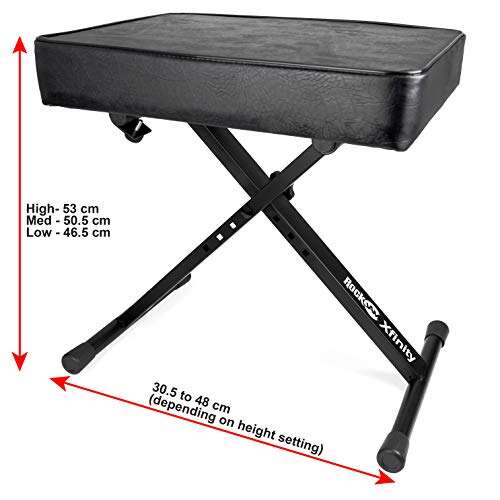
Use a proper piano bench when possible. Bench height affects wrist angle, shoulder tension, and control. The right bench is a small investment that can improve every practice session. It also helps you judge the action fairly because poor posture can make any piano feel difficult.
Which Model Fits Your Playing Style?
If you play classical music and want a grand-style instrument, start with the Roland GP-3. Its format makes the most sense for someone who wants an elegant home piano with digital convenience. If you need to move the piano or store it after practice, the Yamaha P71 is much easier to manage.
If you play mostly at home and want a complete furniture package, choose one of the Yamaha Arius models. The three pedals and included bench create a better long-term setup than a bare keyboard. If you want a low-cost grand look, consider the Ktaxon, but keep your expectations aligned with its price.
If you make beats, record songs, or need Bluetooth and USB tools, the semi-weighted set may offer useful value. Just remember that its key feel is not the same as a serious graded hammer action. Finally, use Grand Solos for Piano only as extra teaching or sight-reading material.
FAQs Of best digital grand piano for advanced pianist
What is the best digital grand piano for an advanced pianist?
The Roland GP-3 is the strongest overall match in this comparison. It provides a true grand-style cabinet and a more performance-focused design. Your final choice should still depend on budget, room size, action preference, and current specifications.
Do advanced pianists need 88 weighted keys?
Yes, most advanced pianists should choose 88 weighted keys. The full range supports standard repertoire and helps maintain natural technique. Semi-weighted or unweighted keys can work as backup tools but may feel limiting for serious study.