What To Look For When Buying A Violin: Smart Buying Guide
When buying a violin, check its sound, setup, condition, size, comfort, maker, and return policy.
Knowing what to look for when buying a violin can save you from costly repairs and years of frustration. A violin may look beautiful yet sound weak, feel hard to play, or hide serious damage. This guide combines practical buying advice, luthier standards, and lessons from testing student, intermediate, and professional instruments.

Set a Clear Budget Before You Shop
The first step in what to look for when buying a violin is setting a realistic budget. A violin is more than a wooden body. You may also need a bow, case, rosin, shoulder rest, strings, and future maintenance.
For a beginner, a complete outfit can range from about $200 to $1,000. Better student violins often cost more, while advanced and professional instruments can cost thousands or much more. Very cheap violins may work for a short time, but poor setup can make learning much harder.
Plan for these extra costs:
• A reliable bow
• A sturdy case
• Fresh strings
• Rosin
• A shoulder rest
• Professional setup or repairs
Avoid spending your entire budget on the violin alone. A $500 violin with a poor $20 bow may feel worse than a $350 violin with a good bow and proper setup.
In my experience, beginners often focus on the violin’s price tag and overlook setup. That is a common mistake. The right setup can make a modest violin feel smooth and responsive.


Choose the Correct Violin Size
Size is one of the most important factors in what to look for when buying a violin. A full-size violin is usually called 4/4. Smaller sizes include 3/4, 1/2, 1/4, 1/8, and even smaller models for young children.
Most adults use a 4/4 violin. Children need a size that matches their arm length and hand reach. A violin that is too large can cause tension, poor posture, and discomfort.
A teacher or violin shop should measure the player. A simple test is to place the violin under the player’s chin and extend the left arm beneath the instrument. The hand should reach around the scroll with some control, but the arm should not feel stretched.
Look for these signs of a good fit:
• The player can reach the scroll without strain
• The left hand can move freely
• The elbow stays relaxed
• The shoulder does not lift
• The player can hold the instrument for several minutes
Do not buy a larger violin just because the child may grow into it. A poor fit can slow progress and create bad habits. Renting may be a better choice for a growing player.

Inspect the Violin’s Construction
Careful construction is central to what to look for when buying a violin. A violin is made from thin pieces of wood that must work together. Small flaws can affect sound, strength, and value.
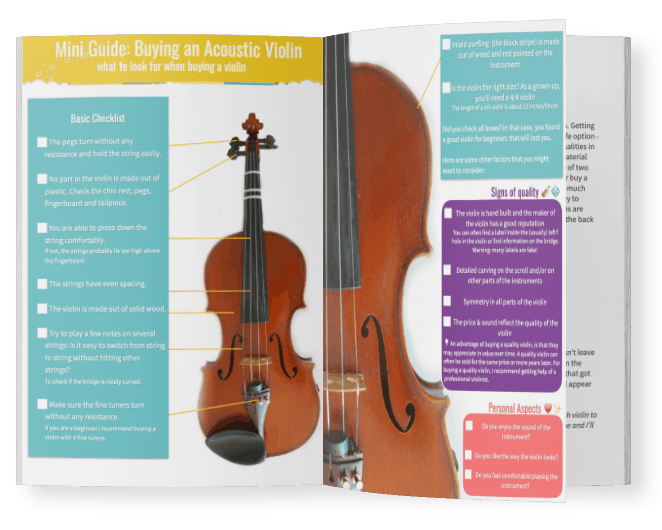
Inspect the body under good light. Look at the top, back, ribs, scroll, bridge, and tailpiece. Some marks are normal on an older violin, but open cracks and loose parts need expert attention.
Check for the following:


• Open cracks in the top or back
• Gaps along the seams
• Loose purfling around the edge
• A warped or leaning neck
• A loose fingerboard
• A bridge that leans forward
• Pegs that slip or refuse to turn
• A tailpiece that touches the top
• Deep dents near the bridge or soundpost
A few repaired cracks do not always make a violin a bad choice. Skilled repairs can preserve an instrument for decades. However, the repair should be clean, stable, and priced fairly.
The neck should meet the body firmly. The fingerboard should be smooth and properly shaped. If the fingerboard is too flat, too high, or uneven, the player may struggle to press the strings and play clean notes.

Examine the Bridge and Soundpost
The bridge and soundpost have a major effect on tone. They are small parts, but they act like the violin’s balance system.
The bridge should stand straight between the f-holes. Its feet should sit flat on the violin’s top. A bridge that leans toward the fingerboard can warp over time and may need replacement.
The soundpost is a small wooden cylinder inside the violin. It sits between the top and back plates, usually near the treble side of the bridge. It helps transfer vibration and supports the instrument’s structure.


Do not move the soundpost yourself. Even a small change can affect the sound, and careless movement may damage the top.
When learning what to look for when buying a violin, ask whether a professional has adjusted the bridge and soundpost. A skilled luthier can improve response without changing the instrument’s basic character.

Test the Violin’s Sound
Sound is often the most personal part of what to look for when buying a violin. A good instrument should produce a clear tone across all four strings. It should respond when you play softly and remain stable when you play with more pressure.
Test each string from the low G to the high E. Listen for:
• A clear low G string
• A warm but focused D string
• A balanced A string
• A bright yet controlled E string
• Similar volume across the strings
• Easy response at both soft and loud levels
• No buzzing, rattling, or choking
Try long, slow bows first. Then play scales, short notes, and a simple song. This reveals more than playing one fast piece.
A violin may sound bright under your ear but warm across a room. Ask another musician to play it while you listen from several feet away. This gives you a better idea of how the instrument projects.
During shop visits, I like to compare two or three violins at the same time. Memory is unreliable. A quick recording can also help, if the shop allows it.


Check the Violin’s Playability
A beautiful tone is not enough if the violin is hard to play. Playability is a key part of what to look for when buying a violin, especially for beginners.
The strings should not sit too high above the fingerboard. High string action can make notes hard to press and may cause hand pain. Action that is too low can create buzzing.
The pegs should turn smoothly and hold their pitch. They should not spin freely or require extreme force. Fine tuners should work without scraping or sticking.
Check the fingerboard by looking down its length. It should have a smooth, even curve. The nut should hold the strings at a comfortable height. The bridge should match the fingerboard’s curve.
A well-set-up violin should feel manageable in these areas:
• The strings respond without heavy pressure
• The pegs stay in tune
• The bow moves without strange resistance
• Shifting feels possible
• Notes speak quickly
• The instrument does not buzz
For a new player, good playability matters more than a rare label or fancy decoration.

Listen for Common Sound Problems
Learning what to look for when buying a violin also means learning what bad sounds can reveal. Some problems come from setup. Others may point to structural damage.
Watch for these sounds:
• Buzzing may come from a loose seam, fine tuner, chin rest, or fingerboard
• A weak sound may come from poor strings or an incorrect bridge
• A harsh sound may result from setup, strings, or the violin’s natural design
• A nasal sound may come from the soundpost, bridge, or body
• A wolf note may appear when one note responds unevenly
• A rattling E string may point to a nut, fine tuner, or loose part
Do not reject a violin based on one short test. Ask a qualified violin maker to identify the cause. A simple repair may solve the issue, but a major repair can change the total cost.
The best violin is not always the loudest one. A strong instrument should also offer color, control, balance, and a pleasant response.
Consider the Violin’s Age and Origin
Age can influence a violin’s value, but older does not always mean better. A well-made modern violin may outperform an old instrument that has been neglected.
The maker, workshop, condition, and sound all matter. Some older violins have unclear labels or copied labels. A printed label inside the violin does not prove who made it.
This is an important point in what to look for when buying a violin: never pay a high price based only on a famous name inside the instrument. Labels can be copied, replaced, or misunderstood.
Ask the seller for:
• The maker’s name and known history
• The approximate date of manufacture
• Previous repair records
• Any appraisal or certification
• The instrument’s ownership history
• A written description of its condition
For expensive violins, request an independent evaluation from a respected luthier. A seller’s opinion may be useful, but it is not fully independent.
Compare New, Used, and Student Violins
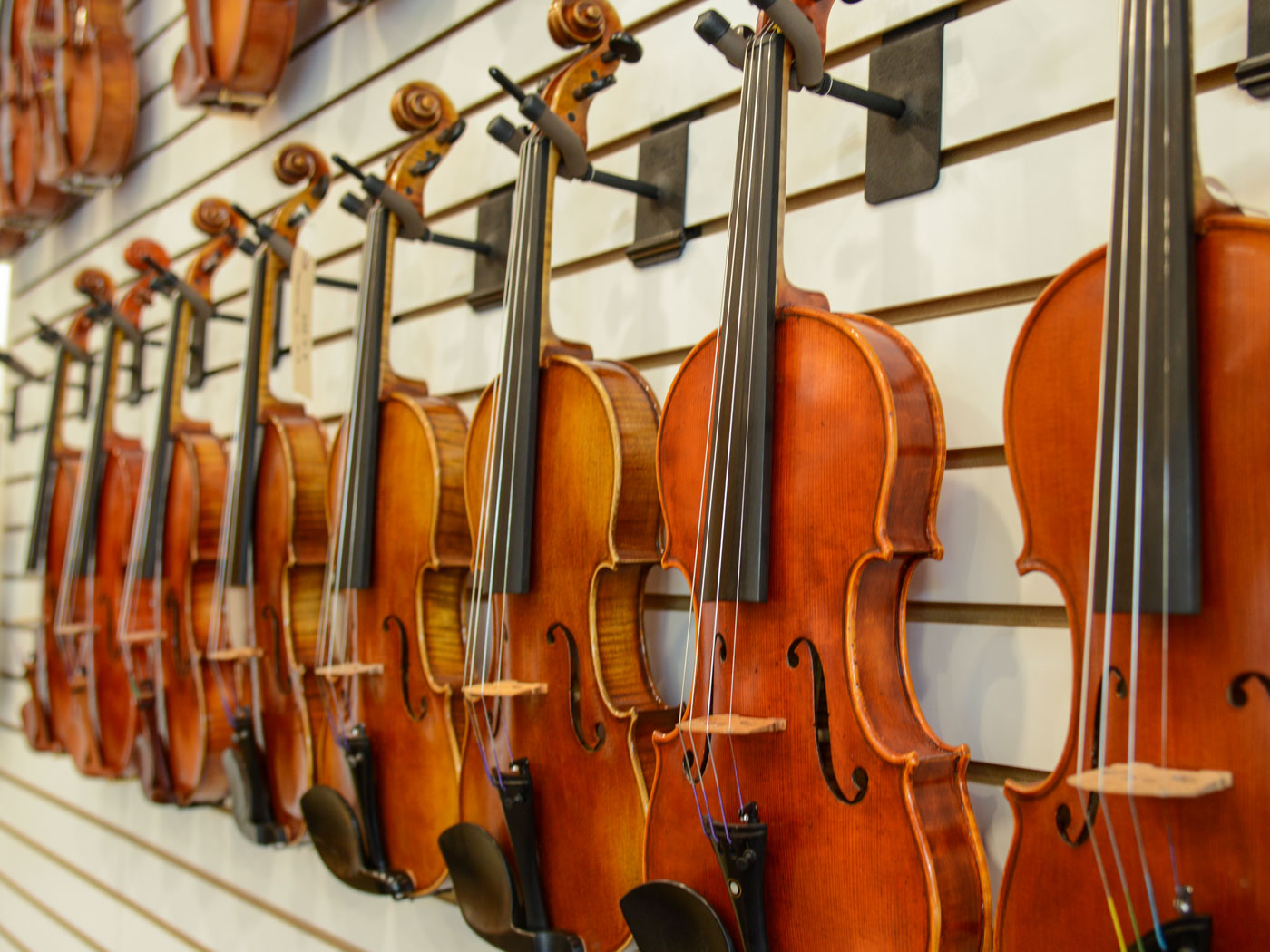
The choice between new and used instruments depends on your goals. Each option has benefits and limits.
A new violin often comes with a warranty and a clear return policy. It may also have fresh fittings and modern setup. However, some factory-made instruments need additional work before they play well.
A used violin may offer better wood, richer tone, or stronger craftsmanship for the price. It may also have hidden wear, old repairs, or a worn fingerboard.
A rental can be a smart option for beginners and children. Many rental programs allow size exchanges or rental credits toward a later purchase.
Consider a new violin when:
• You want a warranty
• You prefer predictable condition
• You are buying from a trusted shop
• You need a simple return process
Consider a used violin when:
• A qualified expert has inspected it
• The price reflects its condition
• You can test it before buying
• Repair records are available
Consider renting when:
• The player is still growing
• You are unsure about long-term interest
• Your budget is limited
Test Several Violins Side by Side
One of the most useful lessons in what to look for when buying a violin is to compare several instruments in the same room. This reduces guesswork.
Use the same bow, music, and playing order when possible. Ask a teacher or experienced player to join you. A second set of ears can notice balance and projection that you miss while playing.
Use a simple comparison chart:
| Feature | Violin A | Violin B | Violin C |
|---|---|---|---|
| Comfort | |||
| Tone | |||
| Response | |||
| Tuning stability | |||
| Condition | |||
| Price |
Give each violin time to settle under your hands. New strings may sound sharp at first. Older strings can hide an instrument’s true voice.
I once saw a player choose the most decorated violin in a room. After a careful comparison, a plain-looking instrument had better response, balance, and projection. The lesson was simple: judge the instrument, not the decoration.
Pay Attention to the Bow
The bow is often overlooked when people study what to look for when buying a violin. Yet the bow creates the sound and controls articulation.
A good bow should feel balanced in the hand. It should not twist badly when viewed from the frog toward the tip. The hair should hold tension, and the stick should respond without feeling weak.
Inspect these parts:
• The stick should not have major cracks
• The frog should fit securely
• The winding should be intact
• The grip should feel comfortable
• The screw should turn smoothly
• The hair should be even and clean
Many beginner outfits include a basic bow. That is fine for starting, but upgrading the bow may improve control more than changing the violin.
Do not judge a bow by appearance alone. A plain pernambuco or carbon fiber bow may perform better than a decorative bow with poor balance.
Inspect the Case and Accessories
A violin case protects your investment. It should close securely and hold the instrument without pressure.
Look for strong hinges, reliable latches, and a neck support. The violin should not move when the case is carried. The case should also have room for the bow, rosin, and music.
Useful case features include:
• A weather-resistant outer shell
• A soft interior lining
• A secure neck strap
• Strong bow holders
• Accessory storage
• Backpack straps
Extreme heat and sudden changes in humidity can harm a violin. A case with some insulation helps, but it does not make the instrument immune to climate changes.
A basic hygrometer can help you monitor humidity. Most violins do best in moderate indoor conditions. Ask a luthier for local advice, since dry winters and humid summers create different risks.
Ask About Setup and Repairs
A professional setup is one of the clearest signs of a trustworthy violin shop. Setup may include bridge fitting, soundpost adjustment, peg fitting, fingerboard work, string replacement, and polishing.
Ask exactly what the price includes. A violin described as “ready to play” should not need immediate major work.
Important questions include:
• Who completed the setup?
• What strings are installed?
• Has the bridge been replaced?
• Are there repaired cracks?
• Has the neck been reset?
• Are the pegs fitted correctly?
• Is the soundpost stable?
• What work may be needed soon?
A luthier may find issues that a beginner cannot see. This is not a reason to panic. It is a reason to understand the true cost before you buy.
When I inspect an instrument, I also check whether the repairs match the violin’s value. A repair can be excellent and still make the purchase poor if the asking price is too high.
Understand Return Policies and Warranties
A return policy protects you when the violin sounds different at home. Shop rooms can have unusual acoustics, and new players may need time to adjust.
Read the policy before paying. Check the return period, restocking fee, shipping rules, and repair obligations. Some shops allow exchanges but not refunds.
For online purchases, ask whether you can test the violin at home. A reputable seller should explain how the instrument is packed and insured.
A written warranty may cover manufacturing defects but exclude normal wear, accidental damage, humidity problems, and setup changes. Keep the receipt and any appraisal.
This practical step is often missed in what to look for when buying a violin. A fair seller should welcome reasonable questions rather than pressure you to decide at once.
Avoid Common Buying Mistakes
Even careful buyers can make errors. Knowing the most common mistakes makes what to look for when buying a violin much easier.
Avoid these problems:
• Buying only because the violin looks old
• Trusting a label without verification
• Choosing the loudest violin
• Ignoring cracks or open seams
• Buying the wrong size
• Skipping a professional setup
• Using a poor bow with a good violin
• Failing to compare instruments
• Buying without a return policy
• Letting a seller rush the decision
Do not assume a high price guarantees quality. Price can reflect age, maker, rarity, condition, market demand, or reputation. It does not always predict how well the violin suits you.
The best choice should fit your body, skill level, ear, budget, and musical goals.
A Simple Buying Checklist
Use this checklist when reviewing what to look for when buying a violin in a shop or online.
Before the visit
-
Set your total budget.
-
Decide whether to buy or rent.
-
Ask your teacher for advice.
-
Learn the correct violin size.
-
Research trusted local shops and luthiers.
During the test
-
Inspect the body for cracks and gaps.
-
Check the bridge, pegs, and fingerboard.
-
Play every string.
-
Test soft and loud bow strokes.
-
Listen for buzzes and weak notes.
-
Compare at least two or three instruments.
-
Ask someone else to play while you listen.
Before payment
-
Confirm the setup.
-
Review repair records.
-
Read the return policy.
-
Confirm what accessories are included.
-
Request an independent opinion for an expensive instrument.
-
Get the final price in writing.
This process may take an afternoon, but it can prevent months of regret.
Frequently Asked Questions About What to Look for When Buying a Violin
What should a beginner look for when buying a violin?
A beginner should focus on correct size, comfortable playability, stable tuning, clear sound, and professional setup. A reliable shop and fair return policy are also important.
How much should I spend on my first violin?
Many beginners find useful instruments in the $200 to $1,000 range for a complete outfit. The right amount depends on your budget, teacher’s advice, and whether you buy, rent, or choose a used instrument.
Is an old violin better than a new violin?
Not always. An old violin may have a beautiful sound, but age does not replace good construction, proper care, and a healthy setup.
Should I buy a violin online?
You can buy online if the seller provides clear photos, condition details, a trial period, and safe shipping. For expensive instruments, have a qualified luthier inspect the violin before the return period ends.
How do I know if a violin is the right size?
Most adults use a 4/4 violin, while children need smaller sizes based on arm length and hand reach. A teacher or violin shop can measure the player and confirm the best fit.
Does the bow matter when buying a violin?
Yes. The bow affects tone, control, and comfort. A weak or poorly balanced bow can make a good violin feel difficult to play.
Can a luthier improve a cheap violin?
A luthier can improve setup, bridge fit, pegs, strings, and soundpost placement. However, setup cannot turn every low-cost factory violin into a high-quality professional instrument.
Conclusion
The best way to understand what to look for when buying a violin is to judge the complete instrument, not just its label or appearance. Check the size, construction, setup, sound, playability, bow, case, repair history, and return policy.
Take your time. Compare several violins. Bring a teacher or experienced player when possible, and ask a luthier for help with costly instruments. A well-chosen violin should make practice feel inviting rather than tiring.
Use this guide during your next shop visit, and explore trusted local violin makers, teachers, and repair experts before you buy.

Senior Music Reviewer
Alex Carter is a seasoned music reviewer with over a decade of experience in the world of sound and instruments. Passionate about helping musicians and enthusiasts make informed choices, he brings sharp insights and in-depth knowledge to every review. From classical instruments to modern gear, Alex combines technical expertise with a love for music to deliver content that resonates with readers.
As a Senior Music Reviewer and expert author on Tuneluma.com, Alex is dedicated to sharing honest evaluations, practical advice, and thoughtful commentary to guide readers in their musical journey.