How To Tune Bongo Drums: Easy Step-By-Step Guide
Tune both heads evenly, raise pitch in small steps, and listen for a clear, lively tone.
Learning how to tune bongo drums is part science, part craft, and part careful listening. The right pitch depends on your drum size, shell, head type, music, and playing style. This guide explains how to tune bongo drums safely, avoid common mistakes, and find a sound that feels bright, warm, and easy to play.
Understand Bongo Drum Tuning
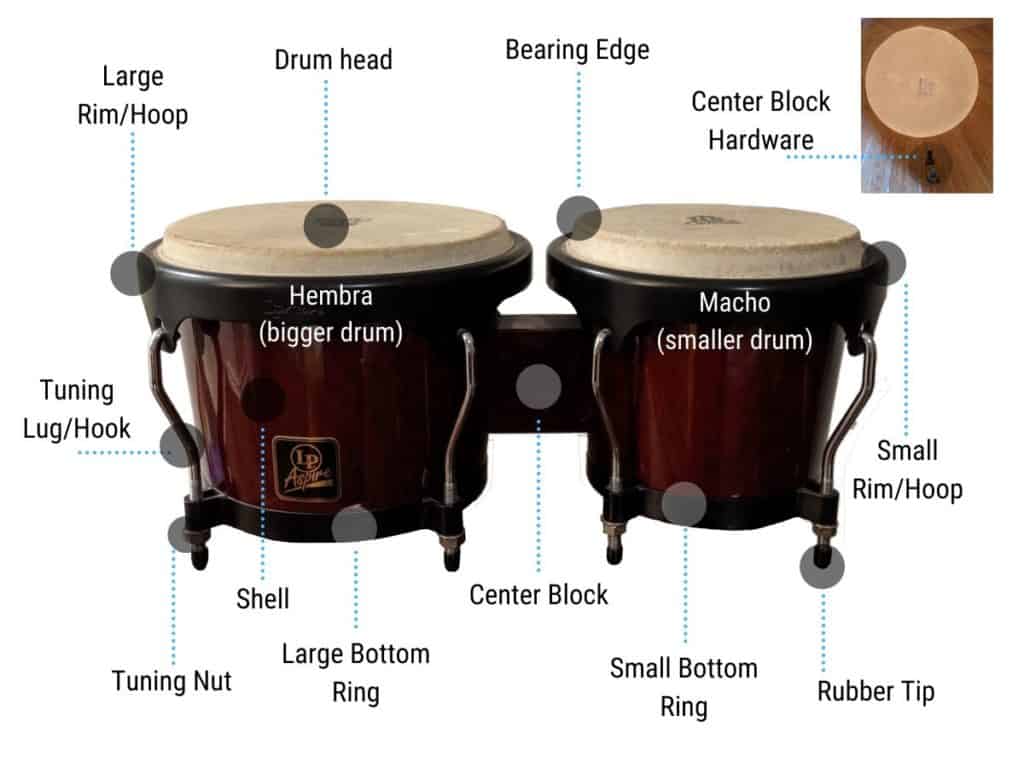
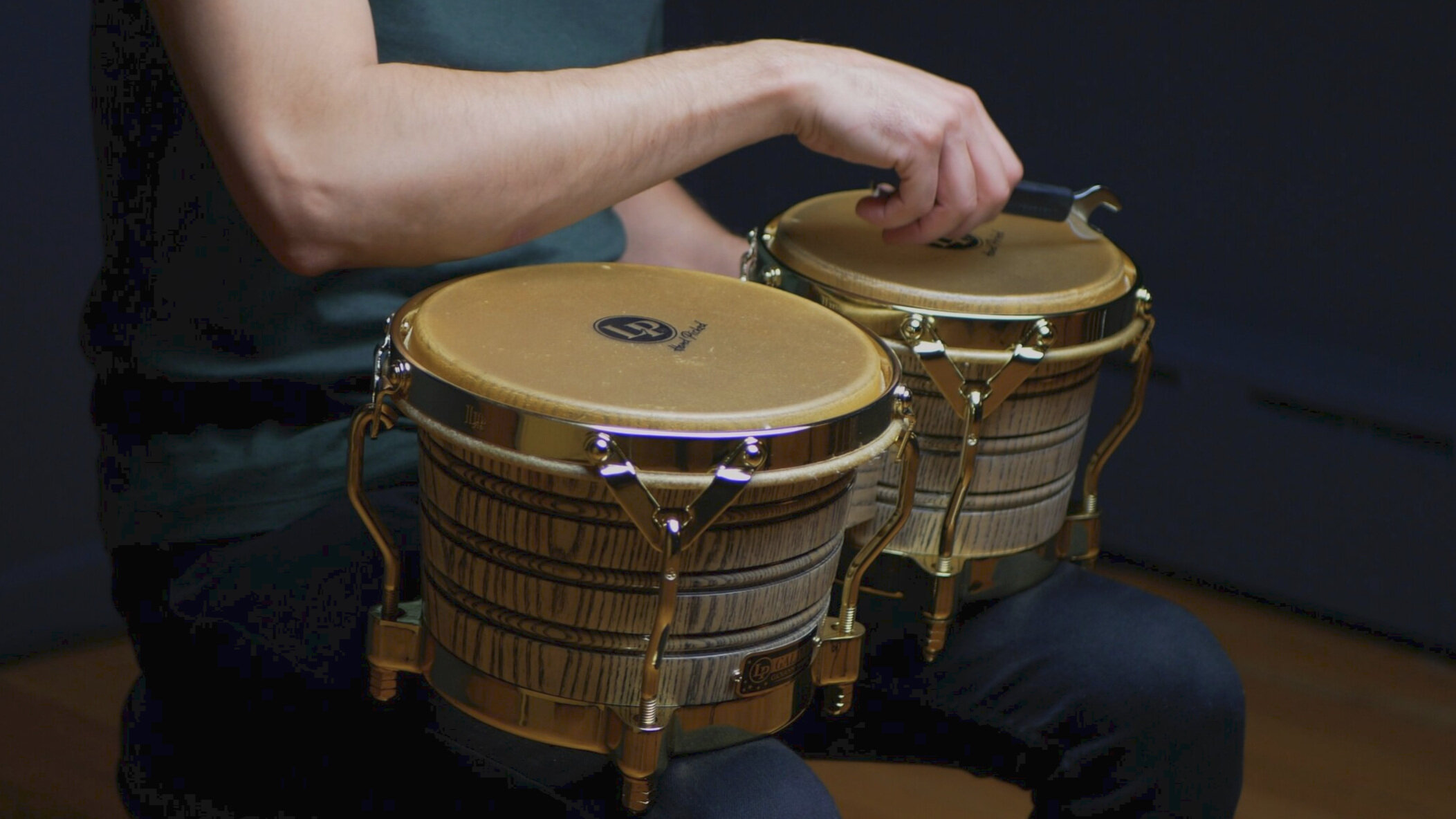
Bongo drums usually come as a pair. The smaller drum is called the macho, or male drum. The larger drum is called the hembra, or female drum. The macho normally has the higher pitch, while the hembra has the lower pitch.
Most bongos use natural rawhide heads or synthetic heads. Each type responds in a slightly different way. Rawhide often gives a warm, complex sound, but it can react to humidity. Synthetic heads stay more stable in changing weather and are often easier for beginners to maintain.
Tuning does not mean setting the drums to one fixed note. Bongos have no universal standard pitch. Instead, you tune them to create a useful relationship between the two drums and a clear sound on each head.
A well-tuned bongo set should have:
• A clear, open tone
• A higher macho and lower hembra
• Even tension around each head
• A sharp slap without a harsh buzz
• A comfortable feel under your fingers
The goal is not simply to make the drums as high as possible. Very high tension can damage a head, bend the hardware, or make the sound thin. Think of tuning like tightening a guitar string: more tension raises pitch, but too much tension creates problems.

Tools You Need Before Tuning
You do not need expensive equipment to learn how to tune bongo drums. Your ears and hands are the most important tools. A few simple items can make the process faster and safer.
Prepare these tools:
• A bongo tuning wrench or correctly sized drum key
• A clean, soft cloth
• A small amount of light lubricant for the tension rods
• An electronic tuner or pitch app, used as a guide
• A quiet room
• A padded surface for the drums
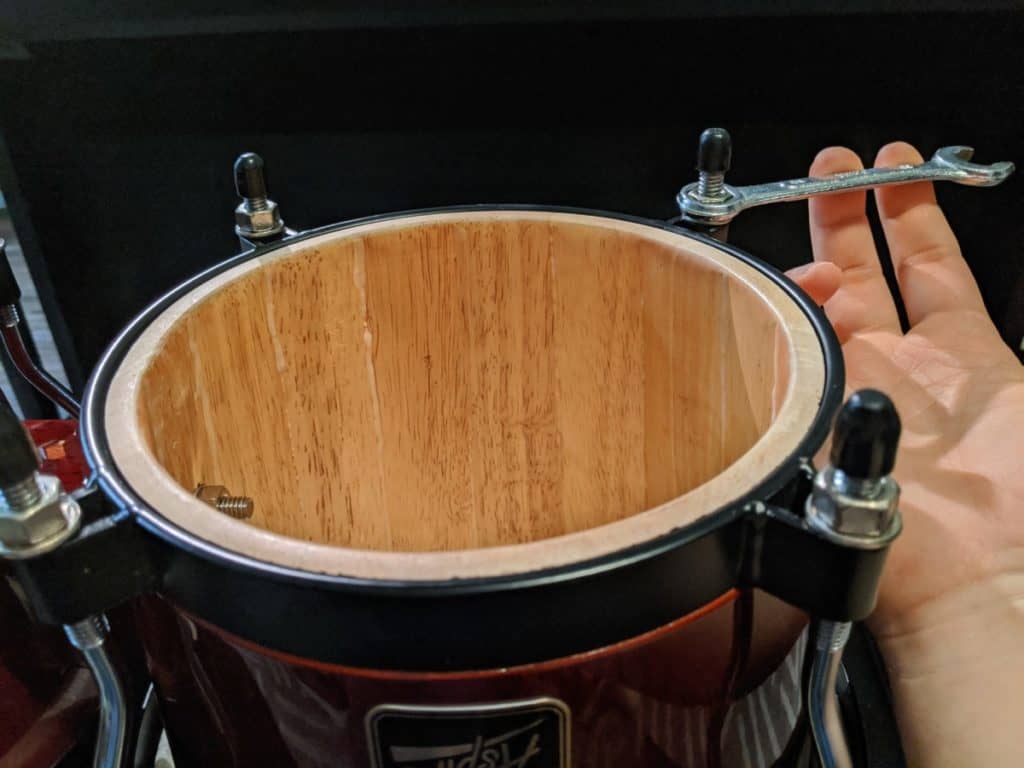
The tuning wrench should fit the tension nuts well. A loose wrench can round the nut and make future tuning difficult. Never force a key that does not fit.
Wipe dust and grit from the tension rods before turning them. Dirt can make the rods feel tight even when the drum is not highly tensioned. If needed, add a tiny amount of suitable lubricant to the threads. Keep oil away from the drumhead and shell.
A tuner can help you compare pitch, but it should not control the whole process. Bongo drums produce several tones, including the fundamental pitch and strong overtones. A phone app may show different notes depending on where and how you strike the head.
Before you start, place the bongos on a stable surface. You can also hold them between your knees in the normal playing position. This helps you judge the final sound in a realistic way.
How to Tune Bongo Drums Step by Step
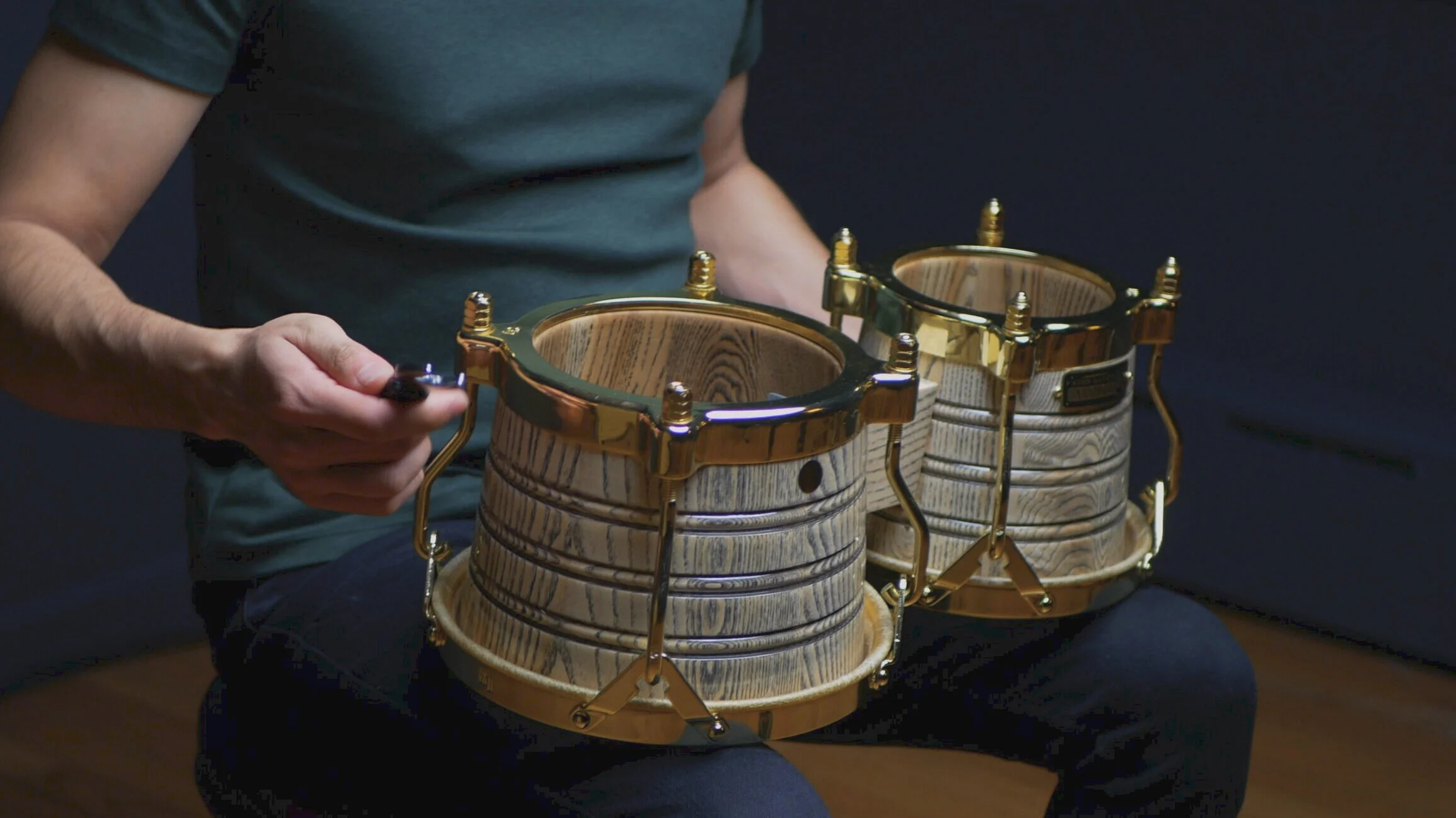
The safest way to tune bongo drums is to make small, even adjustments. Large turns can create uneven tension and may stress the head.
1. Inspect the drum
Check the head, rim, tension rods, and lugs. Look for cracks, deep dents, loose hardware, or signs that the head is pulling away from the flesh hoop.
If the head has a serious tear or the hoop is badly warped, tuning will not solve the problem. Replace the damaged part first.
2. Loosen the drum slightly if needed
If the drum is extremely tight, reduce tension before starting. Turn each tension nut counterclockwise by a small amount, using the same pattern around the drum.
Do not remove all tension at once. A sudden release can shift the head or place stress on the shell.
3. Seat the head
Press gently around the center and outer area of the drumhead with your fingertips. This helps the head settle over the bearing edge.
For a natural skin head, slight stretching is normal. Avoid hard pressing, especially if the head feels dry or brittle.
4. Start with equal tension
Choose one tension nut near the rim. Turn it clockwise by about one-eighth to one-quarter of a turn. Then move to the nut across from it.
Continue in a star pattern rather than moving around the rim in one circle. This spreads tension more evenly across the head.
A simple pattern looks like this:
-
Choose one nut.
-
Tune the nut across from it.
-
Move to the next nut at a quarter-turn position.
-
Tune the nut opposite that one.
-
Repeat until you reach the desired tension.
Most bongo drums have four or five tension rods per drum. The exact pattern is less important than keeping opposite areas balanced.
5. Check the pitch near each rod
Tap the head gently about one inch from the rim, close to each tension rod. Listen to the pitch at every point.
If one area sounds much lower, tighten that rod slightly. If one area sounds much higher, loosen it slightly. Use tiny adjustments, such as one-sixteenth to one-eighth of a turn.
The head should sound fairly even around the rim. It does not need to produce identical notes at every point, but large differences can cause a weak tone or unwanted buzz.
6. Set the macho
The macho should usually have the higher pitch. Tune it until the sound is bright and focused, but not painfully tight.
Play open tones with your fingers. If the drum sounds sharp but has no body, loosen it slightly. If it sounds dull and floppy, raise the tension in small steps.
7. Set the hembra
Tune the hembra lower than the macho. It should have more depth and body while still speaking quickly when struck.
The pitch gap between the drums depends on your music. A modest difference works well for many styles. Some players prefer a close relationship, while others want a strong high-low contrast.
8. Play both drums together
After tuning each drum alone, play simple patterns across both heads. Listen for balance, comfort, and musical contrast.
Try open tones, muted tones, heel-and-toe strokes, and slaps. A drum that sounds good with one stroke may feel wrong with another. The final tuning should support your whole technique.
9. Let the drums settle
New heads can change pitch after playing. Warm rooms, cold rooms, sunlight, and moisture can also affect the tension.
Play for several minutes, then check the tuning again. Make only small corrections. This final step is one of the most useful parts of learning how to tune bongo drums.
How to Choose the Right Bongo Pitch
Many players ask for an exact bongo tuning note. In practice, there is no single correct note for every set. Bongo makers use different shell sizes, head materials, and construction methods, so the safe pitch range can vary.
A useful approach is to tune by function:
• Tune the macho high enough to produce a crisp, clear voice.
• Tune the hembra low enough to provide warmth and contrast.
• Keep both drums comfortable to play.
• Match the bongos to the music when possible.
If you play with a band, listen to the bass and other percussion instruments. A bongo set that sounds excellent alone may compete with a guitar, piano, or low drum in a full mix.
A pitch app can help you track changes. Strike near the center with a consistent open tone, then compare the result after each adjustment. Do not chase a number if the drum sounds worse. The ear remains the best judge because bongo tone includes attack, resonance, overtones, and decay.
For practice at home, a medium-high macho and medium-low hembra is a useful starting point. For recording, tune while listening through microphones or headphones. The room and microphone position can change your impression of pitch and tone.
Professional percussionists often tune by feel and sound rather than by exact notes. That approach is not careless. It reflects the fact that hand drums are expressive instruments, not fixed-pitch orchestral drums.

Tuning Rawhide and Synthetic Bongo Heads
Head material changes how you tune bongo drums. It also changes how often you need to check them.
Rawhide heads
Rawhide heads offer a rich tone and natural variation. They can sound deep, lively, and complex. However, they are sensitive to humidity.
In damp weather, rawhide may absorb moisture and become softer. The pitch can drop, and the drum may feel loose. In dry heat, the head can tighten and become more fragile.
Use these habits with rawhide:
• Tune gently and check the drum before playing.
• Avoid extreme heat and direct sunlight.
• Do not leave the drums in a cold car or damp room.
• Do not over-tighten a dry head.
• Let a wet head dry naturally.
Never use a hair dryer or strong heater to dry a wet natural head. Fast drying can cause the skin to shrink too quickly and split.
Synthetic heads
Synthetic heads are more stable in changing conditions. They often produce a bright and consistent sound. They may also tolerate higher tension better than some natural heads, but they are not indestructible.
Synthetic heads can still stretch, dent, or lose their edge. Check the bearing area and listen for changes in tone. If the head sounds permanently dull after correct tuning, it may be worn.
My practical lesson is simple: rawhide rewards patience, while synthetic heads reward consistency. Neither is automatically better. The best choice depends on your sound, climate, and maintenance habits.
Common Bongo Tuning Mistakes
Many tuning problems come from rushing. Small errors can make a good drum sound weak, harsh, or unstable.
Tightening one rod too much
This creates uneven pressure. The drum may have one bright area and one dull area, and the head can become distorted.
Use small turns and always check the opposite side.
Tuning only by the center tone
The center tone matters, but it is not the whole sound. A drum may have a nice center pitch while the rim areas remain uneven.
Tap around the head after each tuning round.
Making the macho extremely high
A very high macho may sound exciting for a moment. Over time, excessive tension can reduce head life and stress the hardware.
Stop raising the pitch when the tone becomes clear and focused. Higher is not always better.
Ignoring the hembra
Some players focus on the high drum and leave the larger drum too loose. The result is a muddy set with poor contrast.
The hembra should have depth, but it still needs a clear attack and quick response.
Using the wrong wrench
A poor-fitting key can damage the tension nuts. Stop if the wrench slips or feels unstable.
Tuning in a noisy room
Background noise hides subtle differences. A quiet space makes it much easier to hear uneven tension and unwanted buzz.
Forgetting to retune after playing
Hand pressure and repeated strokes can change the head slightly. New heads may need several tuning checks before they become stable.
When I first worked with fresh heads, I made the mistake of tuning them once and assuming the job was finished. The better method is to tune, play, rest the drum, and tune again.

How to Tune Bongo Drums for Different Styles
Your tuning choice should support the role of the bongos in the music.
Salsa and Latin percussion
A clear, lively sound often works well in salsa, son, and related styles. The macho needs a strong voice for martillo patterns, while the hembra should add body without becoming muddy.
Keep the head responsive enough for quick finger strokes. If the drum feels stiff, reduce tension slightly.
Pop and acoustic music
A moderate tuning can blend better with guitars, vocals, and keyboards. Extremely bright bongos may dominate a small arrangement.
Use a balanced tone with enough attack to remain audible but not so much high-end sound that it becomes tiring.
Jazz and soft ensemble music
A warmer, lower tuning may fit better. Focus on touch and control rather than maximum volume.
Muted tones and gentle open strokes can become more expressive when the heads are not excessively tight.
Recording
Tune in the room where you will record. Microphones reveal tones that may be hard to hear from the player’s position.
Record a short test with open tones, slaps, and muted strokes. Listen for harsh overtones, weak sustain, and pitch clashes with other instruments.
Outdoor performance
Weather can change the sound quickly. Natural heads may drop in pitch during damp conditions or rise in dry heat.
Bring a tuning wrench and check the drums during breaks. Small corrections are safer than trying to make one major adjustment.
How to Maintain Bongo Tuning
Good maintenance makes tuning easier and protects the instrument.
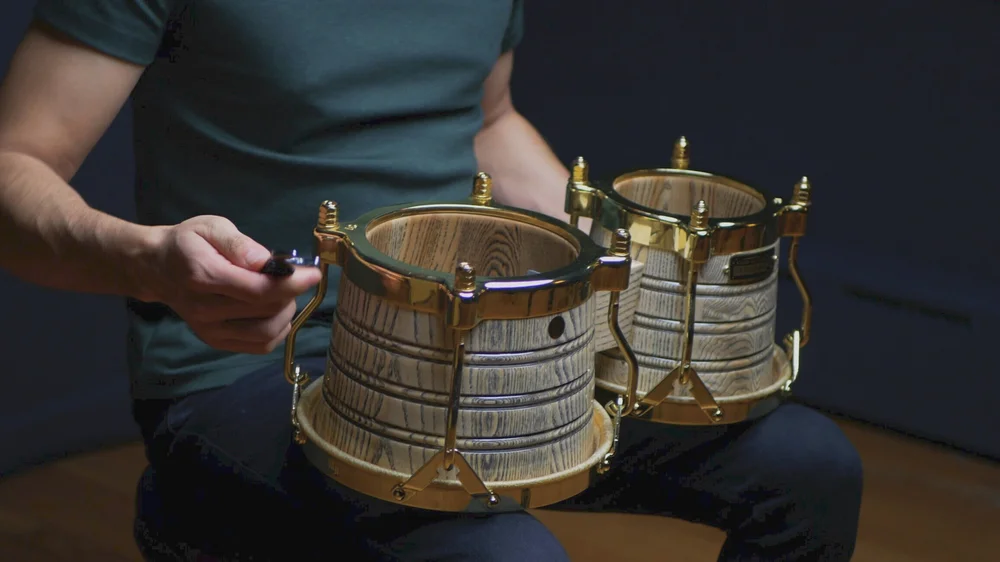
Keep the bongos away from direct heat, radiators, air conditioners, and damp storage areas. A stable indoor environment is usually best. Store the drums in a padded case when you travel.
Clean the shell and hardware with a soft, dry cloth. Do not use harsh household cleaners on the head. If you use lubricant, apply only a very small amount to the tension rod threads.
Check these parts often:
• Head edges
• Flesh hoops
• Tension rods
• Tuning nuts
• Bearing edges
• Shell seams
If a tension rod becomes hard to turn, stop forcing it. Clean the threads and inspect the lug. A damaged thread can make accurate tuning impossible.
Replace a head when it has a tear, severe dent, permanent stretch, or a dull tone that remains after careful tuning. A worn head can lead you to over-tighten the drum while trying to recover its sound.
A simple maintenance routine is enough for most players:
-
Wipe the bongos after playing.
-
Check the pitch before important sessions.
-
Inspect the hardware each month.
-
Protect the drums from extreme weather.
-
Recheck new heads after every practice session.

A Practical Five-Minute Tuning Routine
When you need a fast method, use this routine. It works well before practice, rehearsal, or a performance.
-
Tap around the macho near each tension rod.
-
Correct any clearly low or high areas with tiny turns.
-
Play open tones and set the macho to a clear, comfortable pitch.
-
Tune the hembra lower until it gives a full but controlled sound.
-
Play a basic pattern across both drums.
-
Check slaps and muted tones.
-
Make one final adjustment, then stop.
Stopping matters. Many players continue turning the rods after the drums already sound good. This often leads to over-tightening and a less natural tone.
Use your hands as a guide. If your fingers feel strained after a short practice session, the heads may be too tight, your technique may need adjustment, or both. Comfortable drums encourage better timing and cleaner sound.
Frequently Asked Questions About How to Tune Bongo Drums
What note should bongo drums be tuned to?
There is no universal note for all bongo drums. Tune the macho higher and the hembra lower, then adjust both for a clear tone, even tension, and comfortable playing feel.
How high should I tune the macho?
Tune the macho high enough to sound bright and focused without becoming thin or painfully tight. The correct point depends on the drum, head material, player, and musical setting.
Should the hembra be lower than the macho?
Yes. The hembra is normally the larger, lower-pitched drum, while the macho provides the higher voice. The size of the pitch difference is a personal and musical choice.
Can I tune bongo drums with a phone app?
Yes, a phone tuner can help you compare pitch and track changes. Use it as a guide because hand drums produce overtones that may confuse a digital tuner.
How often should I tune bongo drums?
Check the tuning before each important playing session. Natural skin heads may need more frequent adjustments because temperature and humidity can change their pitch.
Can I tune bongos by hand without a wrench?
You can check the sound by hand, but you need a properly fitted tuning wrench to adjust the tension rods. Never use pliers or a loose tool because they can damage the hardware.
Why do my bongos sound dull after tuning?
The head may have uneven tension, too little tension, excess moisture, or heavy wear. Check the pitch around the rim, inspect the head, and make small adjustments rather than tightening one rod sharply.
Why does my bongo head keep losing pitch?
New heads can stretch as they settle. Temperature, humidity, loose hardware, and worn tension components can also cause pitch loss.
Conclusion
Learning how to tune bongo drums becomes easier when you work slowly and trust both your ears and your hands. Keep the macho higher than the hembra, adjust tension in small opposite turns, check the head around the rim, and avoid chasing extreme pitches.
Head material, weather, music, and playing style all affect the ideal sound. Take a few minutes before each session to listen, play, and make small corrections. With regular practice, how to tune bongo drums will become a natural part of your playing routine.
Try this method on your own bongos today, then share your favorite tuning approach or explore more percussion techniques to keep improving.

Senior Music Reviewer
Alex Carter is a seasoned music reviewer with over a decade of experience in the world of sound and instruments. Passionate about helping musicians and enthusiasts make informed choices, he brings sharp insights and in-depth knowledge to every review. From classical instruments to modern gear, Alex combines technical expertise with a love for music to deliver content that resonates with readers.
As a Senior Music Reviewer and expert author on Tuneluma.com, Alex is dedicated to sharing honest evaluations, practical advice, and thoughtful commentary to guide readers in their musical journey.