Do Violins Need To Be Tuned: Easy Tuning Guide
Yes, violins need regular tuning because string tension changes with use, weather, and temperature.
A violin can sound beautiful one moment and painfully sharp the next. Understanding why violins need to be tuned, how often to tune one, and how to tune safely will help every player make better music and protect the instrument.

Why do violins need to be tuned?
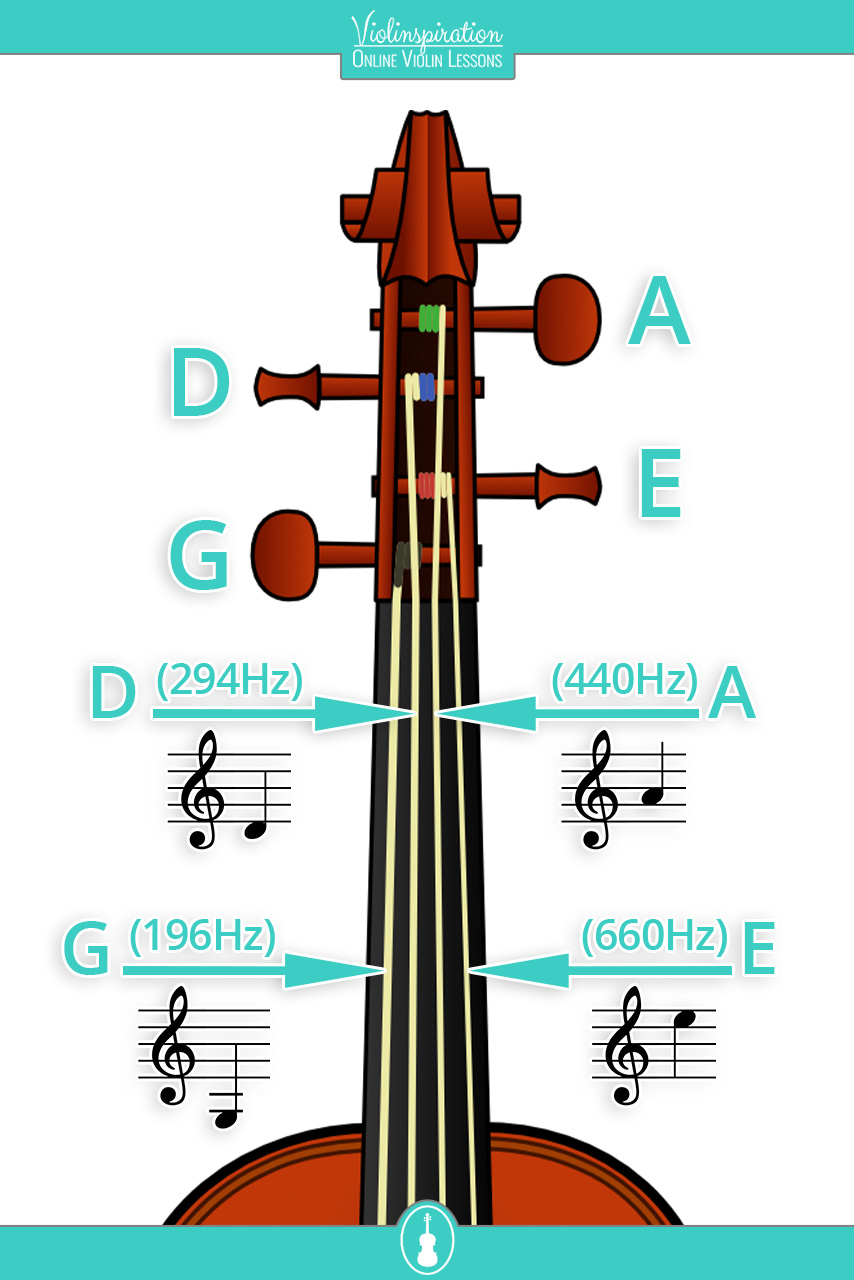
Violins need to be tuned because their strings must reach precise pitches before the instrument can play in tune. Standard violin tuning uses four open strings:
• G3, the lowest string
• D4
• A4
• E5, the highest string
These strings are tuned in perfect fifths. That means each string has a carefully set relationship with the next one. If one string slips out of tune, the whole violin can sound uneven.
String tension is not fixed. It changes when you:
• Play for a long time
• Replace old strings
• Turn the tuning pegs
• Move the violin between rooms
• Expose it to heat, cold, or humidity
• Store it for several days
Even a small pitch change can be easy to hear. This is because the violin has no frets to guide the fingers. Players must place each finger by ear and muscle memory.
A well-tuned violin is like a clean canvas. It lets you focus on tone, rhythm, and expression instead of fighting wrong notes.
How often do violins need to be tuned?
Most violins need a quick tuning before every practice session and performance. Professional players may check tuning several times during a rehearsal or concert.
A beginner may need to tune the violin more often because new strings stretch as they settle. Fresh strings can go flat many times during their first few days. This is normal and does not always mean something is wrong with the instrument.
You should also check the tuning when:
• The violin has been moved to a new room
• The weather changes suddenly
• The instrument has been in its case for a long time
• You install new strings
• The violin sounds rough or unpleasant
• Other musicians say the pitch does not match
A violin may stay close to pitch for a day or two in stable conditions. However, no violin stays perfectly tuned forever. Temperature, humidity, and playing pressure all affect it.
In my experience with beginner violin routines, players often wait until the sound becomes obviously wrong. A better habit is to tune first. It takes only a few minutes and prevents poor pitch from becoming part of your ear training.

What makes a violin go out of tune?
Several common factors can change violin tuning. Some are natural, while others point to a setup problem.
Temperature changes
Warm air makes materials expand. Cold air makes them contract. These small movements can affect the strings, bridge, pegs, and violin body.
Do not leave a violin in a hot car, near a radiator, or beside a fireplace. Extreme heat can damage the varnish and cause serious structural problems.
Humidity changes
Wood responds to moisture in the air. Very dry conditions may increase the risk of cracks. High humidity can make the instrument feel sluggish and may affect tuning stability.
A moderate indoor humidity level is usually best. Many violin owners use a case hygrometer to monitor conditions.
New strings
New strings stretch. They may sound bright at first and lose pitch quickly. Tune them gently and often during the first few days.
Avoid pulling a string hard to “stretch it faster.” That can shorten string life or cause it to break.
Peg movement
Tuning pegs can slip when the pegbox is dry, the strings are wound poorly, or the pegs do not fit well. Pegs can also become too tight in humid weather.
A slipping peg needs careful attention. Do not force it with excessive pressure, since that may damage the pegbox.
Bridge movement
The bridge transfers string vibration to the violin body. It must stand upright and remain in the correct position.
As you tune, the bridge may slowly lean toward the fingerboard. A leaning bridge can affect tone and may warp over time. If you are not trained to adjust it, ask a violin teacher or luthier for help.

How to tune a violin correctly
A digital tuner, tuning app, or electronic instrument tuner can help you find the correct pitch. Many beginners start with an A4 reference pitch of 440 hertz, often written as A=440.
Follow these steps:
-
Place the violin in a stable position. Keep it away from edges and hard surfaces.
-
Check the A string first. This is the main reference string for most players and ensembles.
-
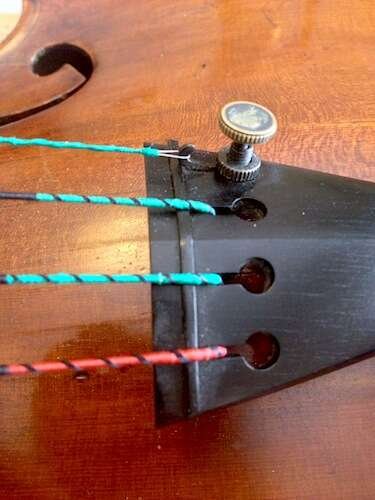
Use the fine tuner if the note is only slightly sharp or flat.
-
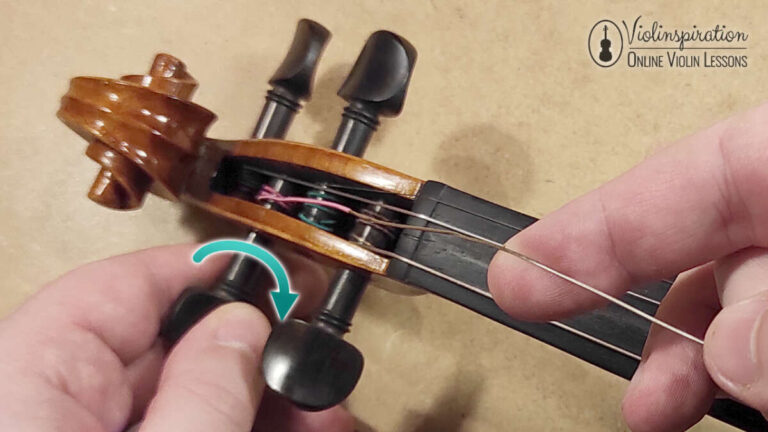
Use the tuning peg if the pitch is far from the correct note.
-
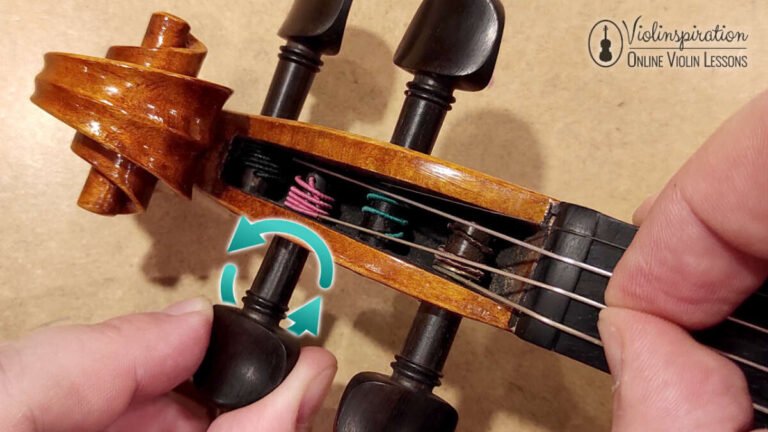
Turn the peg in tiny movements. Small changes can make a large difference.
-
Pluck or bow the string after each adjustment.
-
Tune the other strings in order, usually A, D, G, and E.
-
Check all four strings again. Adjusting one string can change the tension across the bridge.
When turning a peg, push it gently into the pegbox as you turn. This helps it hold its position. Do not twist quickly or force a peg that feels stuck.
New players often turn the peg too far. The string then becomes too tight and may snap. Slow movements are safer.

Should you use fine tuners or tuning pegs?
Both fine tuners and tuning pegs have a useful role.
Tuning pegs make large pitch changes. They are essential when a string is far from the correct note or when you install a new string.
Fine tuners make small pitch changes. They are easy for beginners because they offer more control. Many student violins have four fine tuners, while advanced violins may have only one on the E string.
Fine tuners add a small amount of weight to the tailpiece. Some players feel that four fine tuners slightly change the violin’s response. This difference may matter to an experienced player, but it is usually less important than accurate tuning and good technique.
A good approach is:
• Use pegs for large changes
• Use fine tuners for small changes
• Ask a teacher to show you how to protect the bridge
• Never force a stiff or slipping peg
If tuning feels difficult every day, the violin may need professional adjustment.

Can violins stay in tune without tuning?
Violins can stay close to tune for a while, but they cannot remain perfectly tuned without checks. Some well-set-up instruments are more stable than others.
A violin with good pegs, properly fitted strings, and a straight bridge may hold pitch well. Still, regular playing changes string tension. The instrument can also react to the room around it.
Electric tuners are useful, but your ear matters too. A tuner tells you the pitch of one note. Your ear tells you whether the strings sound balanced together.
Experienced players often tune by using fifths. They compare two open strings and listen for a smooth, ringing sound. Beginners can use a tuner first and slowly develop this skill.
A violin that stays wildly out of tune may have a loose peg, poor string winding, an unstable bridge, or a damaged part. Repeated tuning will not fix the underlying issue.

What happens if you play an untuned violin?
Playing an untuned violin can create several problems.
First, the music will sound wrong. This can make practice frustrating, especially when you are learning songs that depend on clear notes and chords.
Second, your fingers may learn incorrect positions. Since violinists do not have frets, they rely on sound and muscle memory. Practicing with poor tuning can train the hand to reach the wrong places.
Third, playing with others becomes difficult. In an orchestra, ensemble, or lesson, even a small pitch difference can stand out.
An untuned violin will not usually suffer immediate damage simply because you play it. The main concern is musical development. Tuning before practice builds a strong habit and helps your ear become more accurate.
Think of it like learning to speak with a clear voice. Correct pitch gives your musical ideas a clean shape.

How to keep a violin in tune longer
Good care can improve tuning stability.
• Store the violin in a strong, well-fitted case.
• Keep the case away from direct sun, heaters, air conditioners, and damp areas.
• Wipe rosin dust from the strings and instrument after playing.
• Replace worn strings when they sound dull, rough, or unstable.
• Wind each string neatly around its peg, with even coils.
• Keep the bridge upright and centered.
• Use a case humidifier only when needed and follow its instructions.
• Have a qualified luthier inspect persistent tuning problems.
Do not use household oil, glue, or random lubricant on the pegs. Peg compounds are made for this purpose, and even those should be used carefully.
Your violin’s age also matters. Older instruments may respond differently to weather and string tension. That does not mean they are weak, but they may need more careful care.

Common violin tuning mistakes to avoid
Beginners often make the same few errors. Avoiding them makes tuning safer and faster.
Turning the peg too quickly
A small peg movement can change the pitch by a lot. Turn slowly and listen after each adjustment.
Tuning without checking the bridge
The bridge may lean as string tension changes. Look at it from the side. It should stand nearly upright, with its feet flat on the violin top.
Using the wrong octave
A tuner may show the correct letter but the wrong octave. For example, the A string should be A4, not a much lower A. Always consider the string and its normal range.
Ignoring a slipping peg
If a peg will not hold, repeated turning can become frustrating and unsafe. A repair professional can often correct the fit quickly.
Tuning in a noisy room
Background sound can confuse both your ear and a microphone tuner. Move to a quiet place when possible.
Tuning only one string
All four strings work together. After adjusting one string, check the others again.
When should a violin be professionally checked?
You should contact a violin teacher, repair shop, or luthier if:
• A peg slips constantly
• A string breaks again and again
• The bridge leans or moves
• The tailpiece looks damaged
• The violin has a crack
• The fingerboard feels loose
• Tuning changes dramatically within minutes
• The instrument makes buzzing or rattling sounds
A professional can inspect the pegs, bridge, soundpost, tailpiece, strings, and other parts. These components work as a system, so changing one part may affect the rest.
A setup problem is not a personal failure. Many beginners assume they are doing something wrong when the real issue is a poorly fitted peg or bridge. Getting help early can protect the instrument and make learning much easier.
Frequently Asked Questions About Do Violins Need to Be Tuned
Do violins need to be tuned every time they are played?
Yes, it is wise to check the tuning before each practice session or performance. The violin may be close to pitch, but even small changes affect intonation and tone.
How long does violin tuning take?
A basic tuning check often takes two to five minutes. Beginners may need longer until they become comfortable using the pegs and fine tuners.
Can a beginner tune a violin?
Yes, most beginners can learn with a digital tuner and guidance from a teacher. Start with small peg movements and ask for help with the bridge if you feel unsure.
Why does my violin keep going out of tune?
New strings, temperature, humidity, slipping pegs, and bridge movement can all cause tuning problems. If the issue continues, have the violin checked by a qualified professional.
What pitch should a violin be tuned to?
The standard tuning is G3, D4, A4, and E5. Many musicians use A4 at 440 hertz as the reference pitch, although some ensembles use a slightly different tuning standard.
Can I tune a violin with a phone app?
Yes, a reliable chromatic tuner app can work well in a quiet room. Place the phone near the violin and confirm that the app recognizes the correct octave.
Do violins need to be tuned during a performance?
They may need a quick adjustment during a rehearsal or performance, especially when the room temperature changes. Players often tune during pauses or between pieces.
Conclusion
Violins need to be tuned because accurate pitch is essential for good tone, healthy ear training, and confident playing. Check the instrument before each session, use fine tuners for small changes, turn pegs slowly, and watch the bridge as you adjust the strings.
With a little practice, tuning becomes a simple part of your routine rather than a stressful chore. Make tuning your first musical step, then explore more violin care and playing resources to keep improving.

Senior Music Reviewer
Alex Carter is a seasoned music reviewer with over a decade of experience in the world of sound and instruments. Passionate about helping musicians and enthusiasts make informed choices, he brings sharp insights and in-depth knowledge to every review. From classical instruments to modern gear, Alex combines technical expertise with a love for music to deliver content that resonates with readers.
As a Senior Music Reviewer and expert author on Tuneluma.com, Alex is dedicated to sharing honest evaluations, practical advice, and thoughtful commentary to guide readers in their musical journey.