
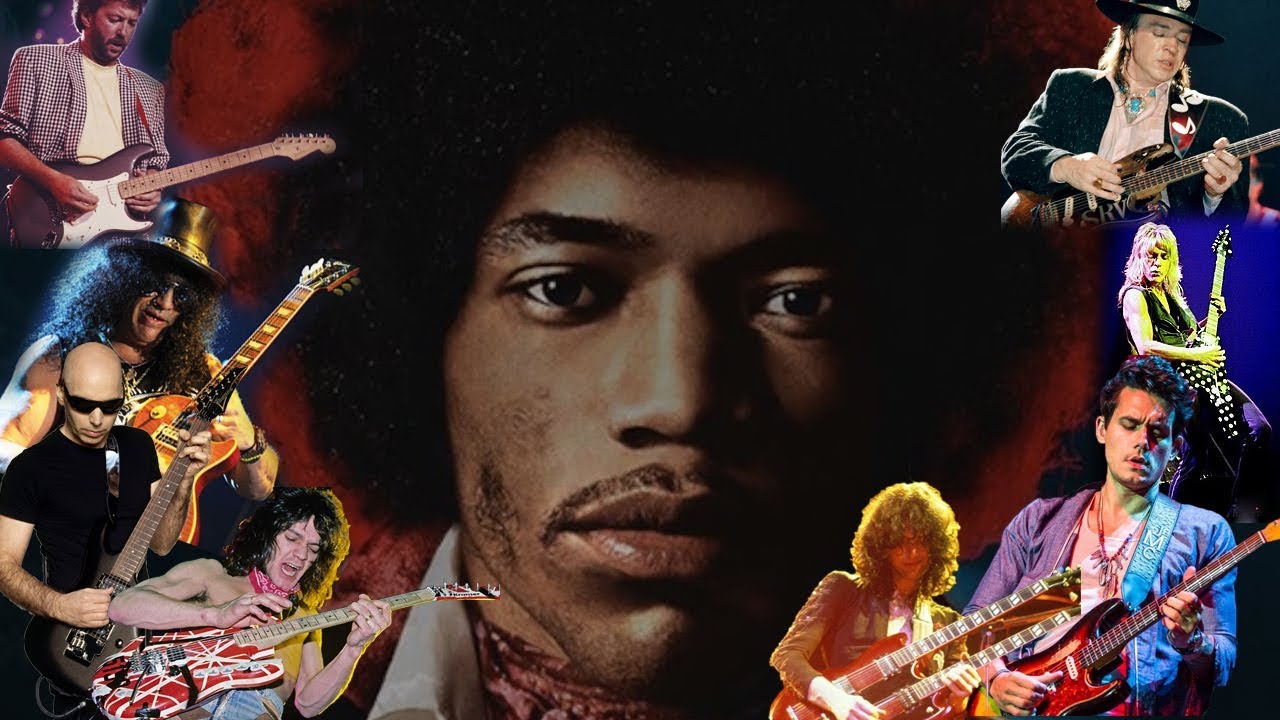
Jimi Hendrix is often called the best guitar player because he changed sound, style, and stage performance.
The question “who is best guitar player” has no single answer that fits every listener. The right choice depends on skill, creativity, influence, tone, speed, songwriting, and emotional impact. After comparing major players across rock, blues, jazz, country, and classical music, Hendrix stands out as the strongest overall choice, while players such as Eric Clapton, Stevie Ray Vaughan, B.B. King, Eddie Van Halen, and Andrés Segovia each lead in different areas.

Who Is the Best Guitar Player?
If one name must be chosen, Jimi Hendrix is the best guitar player for overall influence and innovation. He did not simply play the electric guitar well. He expanded what people thought the instrument could do.
Hendrix used feedback, distortion, whammy bar effects, unusual chord shapes, and studio recording tricks in fresh ways. His playing could sound soft and warm one moment, then wild and explosive the next. Songs such as “Purple Haze,” “Little Wing,” and “Voodoo Child (Slight Return)” still shape guitar music today.
Still, “best” is a personal word. A blues fan may choose B.B. King. A metal player may choose Eddie Van Halen. A jazz listener may prefer Wes Montgomery. A classical student may name Andrés Segovia.
The best guitar player depends on the skill or quality you value most:
• Innovation: Jimi Hendrix
• Blues feeling: B.B. King or Stevie Ray Vaughan
• Rock technique: Eddie Van Halen
• Jazz mastery: Wes Montgomery or Joe Pass
• Classical technique: Andrés Segovia
• Country precision: Chet Atkins or Brent Mason
• Slide guitar: Duane Allman or Derek Trucks
• Songwriting and style: Mark Knopfler
The strongest answer is not always the fastest player. Great guitar playing is more like great speaking. Speed can impress people, but tone, timing, and emotion make them listen.

Why Jimi Hendrix Is Often Ranked Number One
Hendrix changed the role of the electric guitar in popular music. Before him, many guitarists used the instrument mainly for chords, riffs, solos, or backing parts. Hendrix treated it as a complete sound system.
He could play rhythm and lead at the same time. He used his thumb to fret notes, added colorful chord extensions, and filled empty spaces with small melodic ideas. This gave his songs a rich sound even when only a few musicians were on stage.
His influence also came from his fearless approach. Hendrix was willing to take risks during live shows. He pushed his amplifier, guitar, and effects until they created sounds that were loud, rough, and new.
His main strengths included:
• Creative use of distortion and feedback
• Strong rhythm and lead guitar skills
• Unique control of the Fender Stratocaster
• Expressive bends and vibrato
• Memorable songwriting
• Powerful live performances
• A major effect on rock, funk, blues, and heavy metal
Hendrix also understood restraint. “Little Wing” is not built on speed. Its beauty comes from touch, space, and harmony. This is one reason his work remains useful for modern players. He showed that the best guitar player does not need to fill every second with notes.

What Makes Someone the Best Guitar Player?
A useful way to judge the best guitar player is to separate guitar skill into clear areas. This avoids comparing a blues artist with a jazz player as if they follow the same rules.
Technique
Technique includes picking, fretting, bending, tapping, sliding, legato, alternate picking, and control of rhythm. A technically strong player can perform difficult ideas with accuracy and control.
Speed is only one part of technique. A fast solo with poor timing may sound weak. A slow phrase with perfect bends may sound far more powerful.
Tone
Tone is the sound produced by the player, guitar, amplifier, effects, and playing touch. B.B. King could play a simple phrase and make it instantly recognizable because his tone and vibrato were so personal.
Many players spend too much money on new gear when they need to improve their hands. A better pick attack, cleaner bends, and stronger timing often create a bigger change than a new amplifier.
Musical Feel
Feel means the way a player places notes in time and gives them emotion. Blues guitarists often leave space between phrases. Funk players lock tightly with the rhythm section. Jazz players may place notes slightly behind or ahead of the beat.
Feel is hard to measure, but listeners notice it quickly. It is the difference between playing notes and making music.
Creativity
Creative players develop ideas that others do not expect. Eddie Van Halen changed rock guitar with two-hand tapping, wide stretches, and new rhythmic patterns. He did not invent every technique from nothing, but he made them exciting and widely known.
Creativity also means making good choices. A player does not need a strange technique in every bar. One fresh idea in the right place can define an entire song.
Influence
Influence measures how much a guitarist changes other musicians. Hendrix influenced rock, blues, funk, metal, and recording methods. Segovia helped establish the classical guitar as a serious concert instrument.
Influence does not always mean commercial success. Some important players worked outside the mainstream but inspired generations of musicians.

The Best Guitar Players by Genre
There is no universal winner across all guitar styles. Each genre rewards different skills and traditions.
Best Rock Guitar Player
Jimi Hendrix is a leading choice for rock because he combined tone, rhythm, songwriting, improvisation, and performance. His impact reaches from classic rock to modern alternative music.
Eddie Van Halen is another major choice. His playing introduced a new level of speed, tapping, harmonic control, and energy. His solo in “Eruption” helped change the sound of late 1970s rock guitar.
Other leading rock players include:
• Jimmy Page for riffs, studio creativity, and arrangement
• David Gilmour for tone, phrasing, and emotional solos
• Brian May for harmony and distinctive sound
• Jeff Beck for control, touch, and constant reinvention
Best Blues Guitar Player
B.B. King may be the best example of expressive blues guitar. His playing used a small number of notes, but each note had clear purpose. His wide vibrato and vocal-like bends made the guitar sound as if it were speaking.
Stevie Ray Vaughan brought power, precision, and Texas blues tradition to a new generation. His rhythm playing was as strong as his solos.
Other important blues guitarists include:
• Robert Johnson for early blues songwriting and influence
• Buddy Guy for intensity and expressive phrasing
• Albert King for powerful bends
• Freddie King for strong rhythm and vocal-like lines
• Muddy Waters for electric blues leadership
Best Jazz Guitar Player
Wes Montgomery is often considered one of the most important jazz guitarists. He used his thumb instead of a pick and created warm octave melodies that became part of his signature sound.
Joe Pass showed how one guitarist could play bass lines, chords, and melodies at once. Pat Metheny expanded jazz guitar with modern harmony, electronic textures, and broad musical vision.
Grant Green, George Benson, and Django Reinhardt also belong in any serious discussion. Django achieved remarkable results despite losing the use of two fingers in a childhood accident.
Best Classical Guitar Player
Andrés Segovia helped bring classical guitar to major concert halls. He supported new works, refined performance standards, and influenced how musicians viewed the instrument.
John Williams is known for exceptional accuracy, tone, and wide musical range. Julian Bream brought deep expression and a strong connection to older and newer classical works.
Classical guitar differs from electric guitar in technique, tone, and repertoire. Comparing Segovia directly with Hendrix is like comparing a violin soloist with a jazz saxophonist. Both may be great, but they solve different musical problems.
Best Country Guitar Player
Chet Atkins shaped country guitar through clean fingerstyle playing, bass movement, and polished arrangements. His approach influenced country, pop, and studio musicians.
Brad Paisley combines speed, humor, control, and traditional country phrasing. Brent Mason is highly respected for session work and his ability to serve a song without overcrowding it.
Country guitar teaches an important lesson: the best guitar player is often the one who supports the singer and makes the whole track sound better.

Jimi Hendrix vs. Eric Clapton
Jimi Hendrix and Eric Clapton are often compared because both became major figures during the 1960s. They shared a deep connection to blues, but their playing developed in different directions.
Hendrix focused on color, rhythm, feedback, and sound design. Clapton became known for clear blues phrasing, controlled bends, and a strong connection to traditional blues language.
Hendrix may win for innovation and cultural impact. Clapton may appeal more to listeners who prefer classic blues structure and direct phrasing.
The comparison also depends on the period being discussed. Both artists changed over time, and neither player sounds exactly the same across every album. A fair judgment should consider their full careers rather than one famous solo.

Jimi Hendrix vs. Eddie Van Halen
These two guitarists changed rock guitar in different ways. Hendrix expanded the language of tone, rhythm, effects, and performance. Van Halen expanded the language of technique, speed, tapping, and guitar design.
Eddie Van Halen had remarkable control over fast passages. His playing sounded athletic but still musical. He could move from a difficult solo into a simple, catchy riff without losing energy.
Hendrix was more influential across a wider range of sounds and styles. Van Halen was more influential in the development of modern lead guitar technique.
If the question is who is best guitar player for innovation, Hendrix is a strong choice. If the question focuses on technical rock playing, Van Halen may be the better answer.

Why Speed Does Not Decide the Best Guitar Player
Fast playing is exciting, but it does not automatically make someone the best guitar player. Speed must serve rhythm, melody, and emotion.
A fast guitarist needs:
• Clean note separation
• Strong timing
• Even volume
• Relaxed hands
• Musical phrasing
• The ability to slow down
A common mistake is practicing speed before building accuracy. I have seen many players rush through difficult exercises and then struggle to play a simple bend in tune. Slow practice may feel less impressive, but it builds control that lasts.
Try this simple method:
-
Choose a short phrase of four to eight notes.
-
Play it slowly with a metronome.
-
Check every note for clarity and timing.
-
Increase the tempo by a small amount.
-
Stop when tension appears in your hand or wrist.
-
Return to a slower speed and repeat the process.
The best guitar player knows when speed helps and when space sounds better.
The Role of Tone, Gear, and Technique
Guitar gear matters, but it is not the main reason great players sound great. Hendrix used a Fender Stratocaster, loud amplifiers, and effects, but copying his equipment will not automatically create his sound.
Your tone comes from several parts:
• Guitar construction and pickups
• Amplifier settings
• Effects pedals
• Pick thickness and angle
• Finger pressure
• Picking location
• Bending accuracy
• Vibrato control
• Room acoustics
A useful test is to play through a clean amplifier with little effect. If your notes still sound clear and expressive, your core technique is improving. If the sound depends on heavy distortion, work on timing, muting, and note control.
This is one of the most practical lessons from studying the best guitar player: equipment can add color, but your hands create the voice.

How to Find the Best Guitar Player for You
The best guitar player for you may not be the most famous name. Your choice should match your goals and the kind of music you want to play.
Start by asking what you want to improve:
• Choose Hendrix for creative rock rhythm and expressive lead playing.
• Choose B.B. King for bends, vibrato, and blues phrasing.
• Choose Van Halen for tapping, speed, and rock technique.
• Choose Mark Knopfler for fingerstyle control and clean phrasing.
• Choose John Petrucci for precision and progressive metal technique.
• Choose Wes Montgomery for jazz melody and octave playing.
• Choose Segovia for classical tone and fingerstyle discipline.
Study one player for several weeks instead of jumping between dozens of artists. Learn a complete song or solo. Then ask what makes the part work. You may notice timing, dynamics, chord knowledge, or tone choices that were not obvious at first.
A useful exercise is to copy a phrase by ear. This trains your listening and helps you understand how great players build musical sentences.
Lessons Guitarists Can Learn From the Greats
Studying famous guitarists offers more than impressive licks. It teaches habits that apply to nearly every musician.
Learn Complete Songs
Do not study only famous solos. Learn the intro, rhythm part, transitions, and ending. This shows how the guitarist supports the whole arrangement.
Practice With a Metronome
A metronome exposes weak timing. Start slowly and focus on an even pulse. Good rhythm can make a simple part sound professional.
Record Yourself
Your playing may feel smooth while you perform it, but a recording reveals rushed notes, weak bends, and uneven volume. Listen without judging yourself harshly. Use the recording as a map for your next practice session.
Study Phrasing
Ask where a player starts and ends a phrase. Notice pauses, repeated ideas, bends, slides, and changes in volume. Phrasing often matters more than the number of notes.
Build Your Own Voice
Copying a master is useful at first, but it should lead to independence. Combine ideas from several players, then make choices that fit your own taste.
The best guitar player is not always the person with the hardest technique. Often, it is the player whose choices feel natural, honest, and memorable.
Common Mistakes When Comparing Guitarists
Many guitar debates become unfair because people use only one standard. A player known for blues expression may be judged by metal speed, or a classical guitarist may be judged by rock stage presence.
Avoid these mistakes:
• Treating speed as the same as musical quality
• Ignoring rhythm guitar and songwriting
• Comparing players from different genres without context
• Judging a full career by one recording
• Confusing fame with technical skill
• Assuming expensive gear creates great tone
• Copying a famous player without learning basic technique
Historical context also matters. Recording technology, available equipment, audience expectations, and musical traditions all shape a guitarist’s work.
A fair comparison asks what the player tried to do and how well the player achieved it. This approach gives each artist credit for their own strengths.
How Experts Rank the Best Guitar Player
Music polls, magazines, awards, and expert lists can offer useful clues, but they are not final proof. Rankings often reflect the voters’ age, genre preferences, region, and cultural background.
Hendrix regularly appears near the top of major rock guitar rankings. He also received major recognition during his lifetime and after his death, including induction into the Rock and Roll Hall of Fame. Van Halen, Clapton, Beck, Page, and Vaughan also receive frequent praise from musicians and critics.
These rankings support Hendrix’s importance, but they do not prove that he is objectively better than every guitarist. Music has no universal scoring system for emotion, originality, or cultural meaning.
The most reliable approach combines several forms of evidence:
• Listening to complete albums
• Studying live performances
• Comparing influence on later players
• Reviewing technical and musical qualities
• Considering the player’s historical setting
• Noticing how the music affects real listeners
Frequently Asked Questions About Who Is the Best Guitar Player
Who is the best guitar player in the world?
Jimi Hendrix is often named the best overall guitar player because of his innovation, influence, tone, and expressive style. However, the answer changes when the category changes, such as blues, jazz, classical, country, or metal.
Is Jimi Hendrix technically the fastest guitarist?
No. Hendrix was not known as the fastest guitarist in terms of modern speed technique. His greatness came from creativity, rhythm, tone, phrasing, and his ability to make the electric guitar sound new.
Who is the best blues guitar player?
B.B. King is one of the strongest choices because of his unmatched phrasing, vibrato, tone, and emotional control. Stevie Ray Vaughan, Albert King, Buddy Guy, and Robert Johnson are also essential choices.
Who is the best rock guitar player?
Jimi Hendrix is often the best overall rock choice due to his influence and musical range. Eddie Van Halen may be the better choice for advanced rock technique, while David Gilmour may be preferred for emotional tone and phrasing.
Who is the best guitar player for beginners to study?
B.B. King, Mark Knopfler, and David Gilmour are useful choices because their phrasing is clear and their parts often teach timing, tone, and musical space. Beginners should learn simple songs fully before attempting difficult solos.
Does the best guitar player need to read music?
No. Many excellent guitarists developed strong ears and learned by listening. Reading music can help with theory, classical work, and session playing, but it is only one path to mastery.
Can a beginner become as good as famous guitar players?
A beginner can develop excellent skill through steady practice, good instruction, and patience. Reaching the level of a historic master takes years of focused work, but every player can improve with clear goals and consistent habits.
Conclusion
So, who is best guitar player? Jimi Hendrix is the strongest overall answer because he combined technical control, deep musical feeling, bold experimentation, and lasting influence. Yet B.B. King, Eddie Van Halen, Andrés Segovia, Wes Montgomery, and many others may be better choices within specific styles.
The most useful lesson is to stop chasing a single winner and study what makes each great player special. Choose one guitarist, learn a complete piece, practice slowly, record yourself, and apply one new idea to your own music. Explore more players, share your favorite choice, and keep building a guitar voice that sounds like you.

Senior Music Reviewer
Alex Carter is a seasoned music reviewer with over a decade of experience in the world of sound and instruments. Passionate about helping musicians and enthusiasts make informed choices, he brings sharp insights and in-depth knowledge to every review. From classical instruments to modern gear, Alex combines technical expertise with a love for music to deliver content that resonates with readers.
As a Senior Music Reviewer and expert author on Tuneluma.com, Alex is dedicated to sharing honest evaluations, practical advice, and thoughtful commentary to guide readers in their musical journey.


18 Comments