What Is A Classical Guitar: Beginner’s Guide
A classical guitar is a nylon-string acoustic instrument known for its warm tone, wide neck, and fingerstyle technique.
If you have ever heard soft Spanish melodies, lively Latin rhythms, or a gentle solo in a concert hall, you have heard the voice of a classical guitar. This guide explains what is a classical guitar, how it works, where it came from, and how to choose, play, and care for one with confidence.
What Is a Classical Guitar?
A classical guitar is an acoustic guitar with six nylon strings. It has a hollow wooden body that turns string vibrations into sound. Most players use the fingers of the right hand rather than a pick.
The instrument is also called a Spanish guitar. This name comes from its close link to Spain, where many important design features developed. However, musicians use the classical guitar in many styles and countries today.
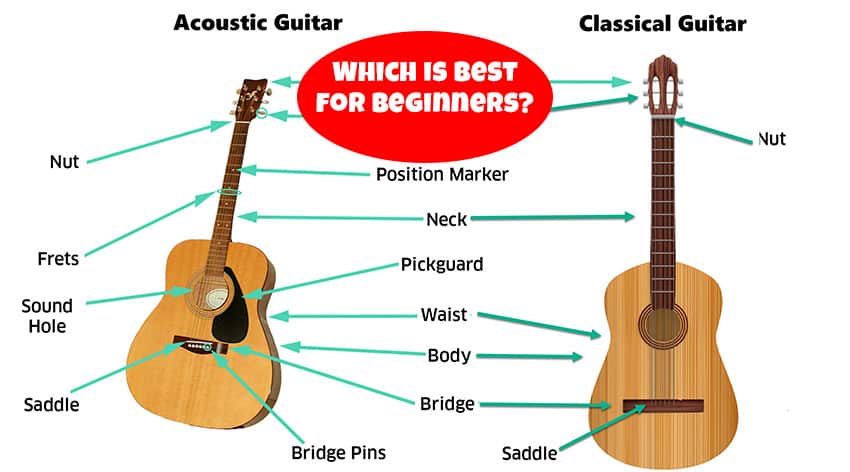
The neck is wider than the neck of a typical steel-string acoustic guitar. This extra space helps players perform separate bass lines, chords, melodies, and arpeggios at the same time.
So, what is a classical guitar in simple terms? It is a nylon-string acoustic instrument built for clear fingerstyle playing, rich tone, and musical detail.
A classical guitar does not need an amplifier for normal use. Its sound comes from the vibration of the strings, the bridge, the soundboard, and the air inside the body.
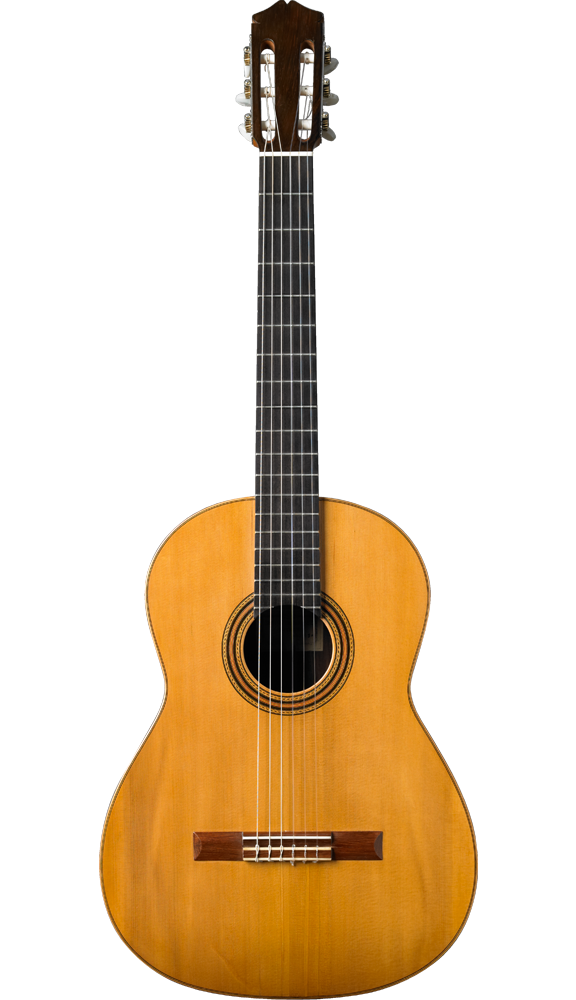
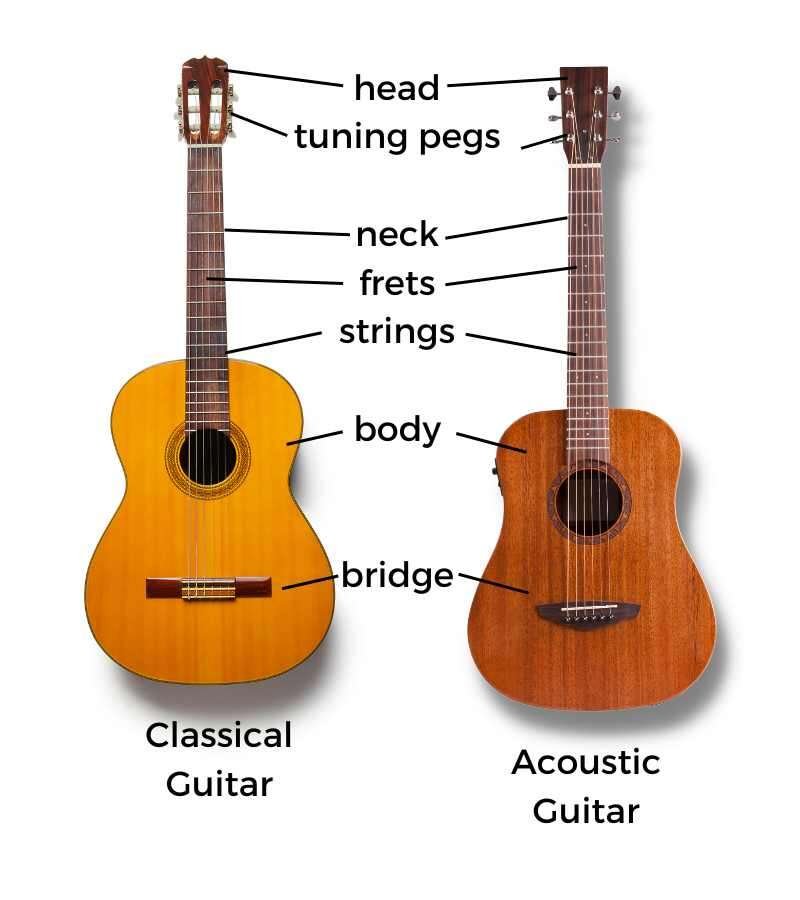
The Main Parts of a Classical Guitar
Understanding the parts can make the instrument feel less confusing. Each part has a clear job.
The body
The body is the large, hollow section of the guitar. It acts like a natural speaker.
The top, or soundboard, is one of the most important parts. It moves when the strings vibrate. This movement creates much of the guitar’s volume and tone.
Common body woods include:
• Spruce for a clear, bright sound
• Cedar for a warm, rich sound
• Rosewood for strong bass and deep overtones
• Mahogany for a focused and balanced tone
The neck and fingerboard
The neck connects the body to the headstock. The fingerboard, also called the fretboard, sits on top of the neck.
Classical guitars often have a flat or gently curved fingerboard. Their necks are usually wider than steel-string guitars. This design gives each finger more room.
The strings
Classical guitars use nylon strings, not steel strings. The three treble strings usually contain nylon or a similar synthetic material. The bass strings have a nylon core wrapped with metal wire.
Nylon strings feel softer under the fingers. They also create a smooth, round sound. This makes them useful for quiet music, solo pieces, and fingerstyle arrangements.
The bridge
The bridge holds the strings to the guitar’s soundboard. On a classical guitar, players normally tie the strings to the bridge.
This differs from many steel-string guitars, which often use bridge pins. A correct bridge tie helps the string vibrate well and stay secure.
The bracing
Wooden braces sit under the soundboard. They support the top and help shape the guitar’s voice.
The fan-bracing pattern is strongly linked to classical guitar design. It spreads support across the top while allowing the soundboard to vibrate freely.
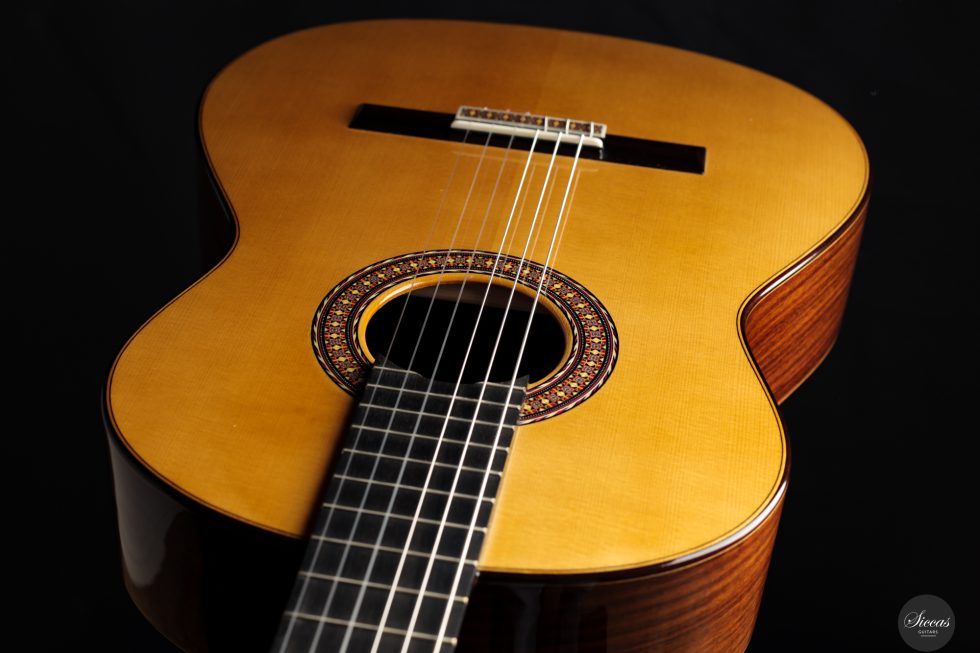
How Does a Classical Guitar Sound?
A classical guitar has a warm, rounded, and gentle sound. Its tone can also be bright, sharp, dramatic, or powerful when the player changes touch and technique.
Nylon strings vibrate in a different way from steel strings. They create less tension and often produce fewer harsh high tones. The result is a sound that many people describe as smooth or mellow.
The player’s right hand has a major effect on tone. A fingertip can create a soft sound, while the nail can add clarity and edge. Many classical players use both the fingertip and nail in a careful balance.
The wood also affects the sound. Cedar often responds quickly and sounds warm. Spruce may sound more direct and clear. These are general patterns, not strict rules. The builder, shape, age, setup, and player all matter.
A useful way to understand what is a classical guitar is to listen to how it speaks. It does not simply produce notes. It can create separate voices, much like a small choir played by one person.
The History of the Classical Guitar
The modern classical guitar developed from earlier stringed instruments in Europe. Its story includes the vihuela, the baroque guitar, and other plucked instruments.
By the 19th century, guitar makers refined the instrument’s shape, bracing, scale length, and fan design. Spanish builder Antonio de Torres played a major role in shaping the modern form.
The instrument gained a wider concert role through composers and performers such as Francisco Tárrega, Andrés Segovia, and later generations of classical guitarists. Their work helped move the guitar from folk and home music into major concert halls.
The classical guitar also grew through regional styles. Spanish flamenco uses a related guitar design, but flamenco guitars often have a sharper attack, lighter construction, and lower action.
Latin American music added even more color. Classical guitars appear in Brazilian choro, bossa nova, Mexican music, Argentine works, and many modern arrangements.
What is a classical guitar today? It is both a historic instrument and a flexible modern tool. Players use it for concert music, film music, jazz, folk, pop, worship, and personal study.
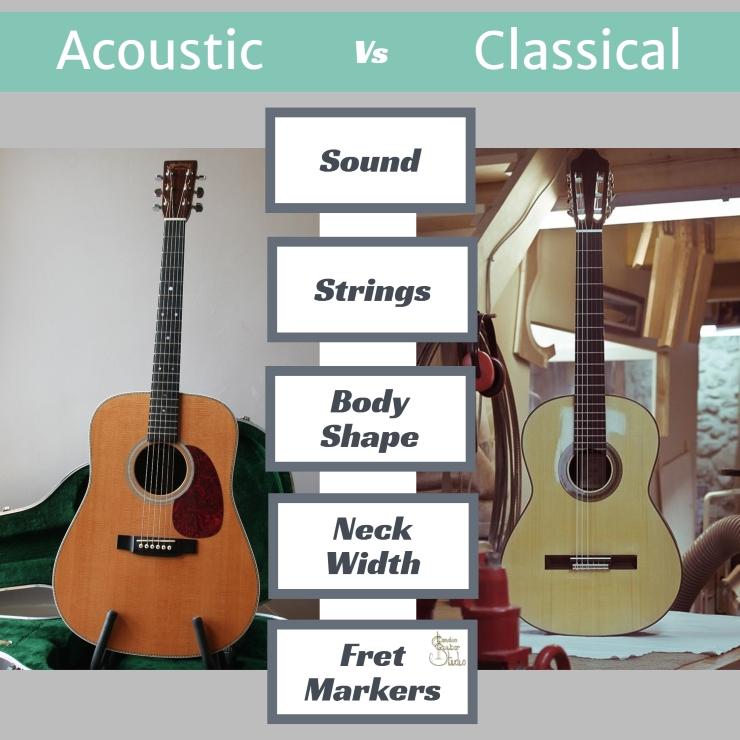
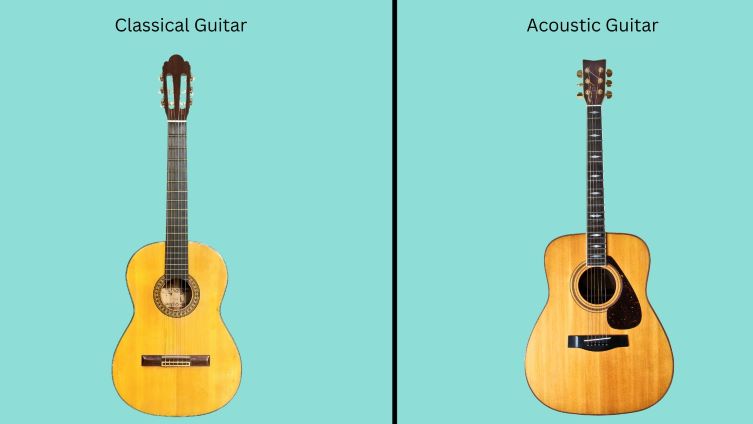
Classical Guitar vs. Acoustic Guitar
Many people ask about the difference between a classical guitar and an acoustic guitar. Both are acoustic instruments, but they are built for different purposes.
| Feature | Classical guitar | Steel-string acoustic guitar |
|---|---|---|
| Strings | Nylon | Steel |
| Neck | Wider | Narrower |
| Tone | Warm and soft | Bright and powerful |
| Common technique | Fingerstyle | Pick or fingerstyle |
| String tension | Lower | Higher |
| Body options | Often smaller or balanced | Many shapes and sizes |
| Typical use | Classical, Latin, fingerstyle | Folk, rock, country, pop |
A classical guitar is not simply a beginner version of a steel-string guitar. It has its own design, technique, and musical tradition.
You should not put steel strings on a classical guitar. The higher tension can damage the neck, bridge, or soundboard. If you want steel strings, buy a guitar designed for them.
You can play many songs on either instrument. Still, the best choice depends on your goals. A classical guitar suits fingerstyle detail and soft tone. A steel-string guitar may suit strong strumming and modern band music.
Classical Guitar vs. Flamenco Guitar
A flamenco guitar looks similar to a classical guitar, but it has a different role.
Flamenco guitars often have a lighter body and a lower action. This setup supports fast playing, strong rhythm, and quick response. Their sound is often brighter and more percussive.
Classical guitars usually have more sustain and a rounder tone. They are designed for balance between bass, harmony, and melody.
A flamenco player may also use tapping, fast rasgueado strums, and sharp rhythmic accents. Classical playing often focuses on clean voices, careful dynamics, and long musical phrases.
Neither instrument is automatically better. The best option depends on the music you want to play.

What Are the Benefits of Playing a Classical Guitar?
Learning what is a classical guitar can help you decide if it fits your needs. This instrument offers several practical and musical benefits.
It develops finger independence
Classical guitar music often assigns a separate job to each finger. The thumb may play the bass while the other fingers play chords or melody.
This builds coordination. It can also improve your understanding of harmony and rhythm.
It supports quiet practice
Nylon strings produce a softer sound than steel strings. You can practice at home without creating as much volume.
The softer feel may also help new players adjust to the instrument. However, the fingertips still need time to become comfortable.
It teaches strong music skills
Classical guitar study often includes:
• Reading standard music notation
• Understanding rhythm
• Playing scales and arpeggios
• Controlling tone and volume
• Learning music theory
• Performing independent bass and melody parts
These skills can help you play other instruments and styles.
It works well for solo music
A classical guitar can play melody, harmony, and bass at once. This makes it a complete solo instrument.
You do not need a band to create a full musical idea. One guitar can sound like several instruments working together.
It offers a wide musical range
You can play early music, Spanish pieces, Latin songs, popular arrangements, movie themes, and original compositions. The instrument rewards both careful study and creative exploration.

Is a Classical Guitar Good for Beginners?
Yes, a classical guitar can be an excellent beginner instrument. Its nylon strings are often easier on the fingertips than steel strings.
The wider neck can take some time to learn. Beginners with small hands may need to stretch more between notes. A good teacher can show you how to relax the wrist and avoid excess tension.
Start with short practice sessions. Ten to fifteen focused minutes can be more useful than an hour of tired playing.
A simple beginner plan looks like this:
-
Learn how to sit and hold the guitar.
-
Practice open strings with the thumb and fingers.
-
Learn basic chords and simple melodies.
-
Play slow scales with a relaxed hand.
-
Practice a short piece every day.
-
Record yourself once a week to track progress.
One common mistake is pressing too hard with the left hand. Use only enough pressure to make the note clear. Too much pressure causes fatigue and can pull notes out of tune.
Another mistake is ignoring the right hand. Good tone comes from both hands, not just from pressing notes on the fingerboard.
How to Choose a Classical Guitar
Choosing a classical guitar does not require the most expensive model. It requires the right size, setup, and comfort.
Check the size
Full-size guitars suit most adults. Children may need a smaller instrument, such as a half-size, three-quarter-size, or seven-eighths guitar.
A guitar is too large if the player must twist the body or reach far across the neck. Comfort matters because discomfort can stop practice before progress begins.
Check the action
Action is the distance between the strings and the frets. High action makes notes harder to press. Very low action can cause buzzing.
Ask a music shop to check the setup. A modest guitar with a good setup can feel better than an expensive guitar with poor adjustment.
Check the neck
Look along the neck from the headstock toward the bridge. It should not have an extreme twist or bow.
You can also play each fret. Listen for buzzing, dead notes, or notes that sound much louder than others.
Check the tone
Play open strings, scales, chords, and a simple melody. Listen for balance.
The bass should not overpower the treble. The treble should not sound thin. A good instrument gives each note a clear place.
Set a realistic budget
For a first classical guitar, focus on:
• Solid construction
• A comfortable neck
• Stable tuning
• A clean fretboard
• Reliable machine heads
• Professional setup
A solid-top guitar may offer more complex tone, but a well-made laminate guitar can be a sensible first choice. Price alone does not guarantee a better playing experience.
How to Hold and Play a Classical Guitar
Traditional classical posture places the guitar on the left leg. A footstool or guitar support can raise the neck to a comfortable angle.
Keep the shoulders relaxed. Let the right forearm rest lightly on the upper edge of the body. Avoid gripping the neck with the left hand.
The right-hand fingers are often named with Spanish letters:
• p means thumb
• i means index finger
• m means middle finger
• a means ring finger
The little finger usually rests outside the main pattern. It does not normally play the strings in standard classical technique.
The left thumb rests behind the neck. Keep the wrist fairly straight and use the fingertips to press the strings. Curved fingers help prevent accidental contact with nearby strings.
Good technique should feel efficient, not forced. If your hand hurts, stop and reset. Sharp pain is not a normal part of learning.
How to Care for a Classical Guitar
A classical guitar is made from wood, so changes in heat and humidity can affect it. Very dry air may cause cracks, while excess moisture can swell the wood and change the setup.
Keep the guitar away from:
• Direct sunlight
• Radiators and heaters
• Air-conditioning vents
• Hot car trunks
• Damp basements
Use a sturdy case when you travel. A padded gig bag can work for short trips, but a hard case offers more protection.
Wipe the strings and body with a soft, dry cloth. Do not use household cleaners or furniture polish unless the product is made for guitars.
Change nylon strings when they sound dull, lose tuning stability, or show visible wear. New nylon strings may take several days to settle.
Store the guitar with care. Never leave it balanced against a chair where it can fall. Many repairs begin with a simple accident.
Common Myths About Classical Guitars
Myth: Classical guitars are only for classical music
The name describes the instrument and its tradition, not a strict rule. You can use a classical guitar for pop, folk, Latin music, jazz, worship, and songwriting.
Myth: Nylon strings never hurt
Nylon strings are gentler than steel strings, but new players can still develop sore fingertips. Build practice time slowly and take breaks.
Myth: A wider neck is always harder
The wider neck may feel unfamiliar, but it gives your fingers more room. Many players find it helpful for clean fingerstyle work.
Myth: You need long fingernails
Some classical players grow the right-hand nails for added volume and clarity. Others play with fingertips or very short nails. Good tone depends on control, angle, and touch.
Myth: An expensive guitar creates better playing
A quality instrument can respond more easily, but it cannot replace practice. A careful setup and steady routine often matter more than a luxury label.
Practical Tips From Real-World Playing
One lesson many players learn early is that comfort beats appearance. A beautiful guitar that feels stiff or painful may spend more time in its case than in your hands.
When testing a guitar, play it for at least several minutes. Try both sitting and standing positions. Check whether your left shoulder rises or your wrist bends sharply.
Do not judge a guitar only by its loudest note. Listen for balance across the full range. A soft, even sound can be more useful than a loud but uneven one.
Record short practice sessions. A phone recording can reveal buzzing, uneven rhythm, or unwanted string noise that you may not notice while playing.
Learn one piece slowly rather than rushing through five pieces. Slow practice teaches the hands where to move. Speed should come later, like a road built after the foundation is strong.
Most of all, protect your interest in music. Practice should challenge you, but it should also give you a reason to pick up the guitar tomorrow.
Frequently Asked Questions About What Is a Classical Guitar
What is a classical guitar made of?
A classical guitar is mainly made from wood, including a wooden soundboard, back, sides, neck, and bridge. It has nylon or synthetic treble strings and bass strings with metal winding.
Can you play regular songs on a classical guitar?
Yes, you can play regular songs on a classical guitar. Its warm tone works well for pop, folk, Latin music, worship songs, and fingerstyle arrangements.
Is a classical guitar easier than a steel-string guitar?
Nylon strings are usually gentler on the fingertips and have lower tension. However, the wider neck and fingerstyle technique may feel harder at first.
Can you put steel strings on a classical guitar?
No, you should not put steel strings on a classical guitar. Steel strings create much higher tension and may damage the neck, bridge, or soundboard.
Do classical guitars need an amplifier?
No, a classical guitar does not need an amplifier for normal practice or acoustic performance. For concerts or recordings, you can use a microphone or a professionally installed pickup.
How long does it take to learn classical guitar?
You can learn simple notes and chords within a few weeks with regular practice. Building strong technique, music reading, and performance skill can take months or years.
What is the difference between a classical guitar and a Spanish guitar?
In most situations, “classical guitar” and “Spanish guitar” refer to the same general type of nylon-string instrument. “Spanish guitar” highlights its historical connection to Spain.
Conclusion
A classical guitar is a nylon-string acoustic instrument with a warm voice, wide neck, and strong connection to fingerstyle music. Its design supports melody, harmony, bass, and rhythm in one compact instrument.
Now that you know what is a classical guitar, you can choose one with better judgment and start with realistic expectations. Focus on comfort, a good setup, relaxed technique, and steady practice.
Try a few instruments in person if possible. Listen closely, ask a qualified guitar teacher or technician for advice, and explore beginner classical guitar lessons or recordings to deepen your understanding.

Senior Music Reviewer
Alex Carter is a seasoned music reviewer with over a decade of experience in the world of sound and instruments. Passionate about helping musicians and enthusiasts make informed choices, he brings sharp insights and in-depth knowledge to every review. From classical instruments to modern gear, Alex combines technical expertise with a love for music to deliver content that resonates with readers.
As a Senior Music Reviewer and expert author on Tuneluma.com, Alex is dedicated to sharing honest evaluations, practical advice, and thoughtful commentary to guide readers in their musical journey.