When Was The Bass Guitar Invented: History Explained
The modern electric bass guitar was invented in the early 1950s, led by Leo Fender.
The answer to “when was the bass guitar invented” depends on what you mean by “bass guitar.” Earlier electric bass instruments appeared in the 1930s, but Leo Fender’s Precision Bass, introduced in 1951, became the first commercially successful solid-body electric bass. Its design changed popular music by making low notes louder, easier to play, and far more portable than a traditional upright bass.
When Was the Bass Guitar Invented?
The modern bass guitar was invented in 1951, when Leo Fender developed the Fender Precision Bass. Fender’s company began producing the instrument soon after, and it reached musicians in the early 1950s.
However, the full history is more complex. Several inventors worked on electric bass instruments before Fender. Some looked like small upright basses, while others had a guitar-shaped body. This is why historians often separate the early electric bass from the modern bass guitar.
A simple timeline looks like this:
• 1930s: Paul Tutmarc builds an early electric bass in Seattle.
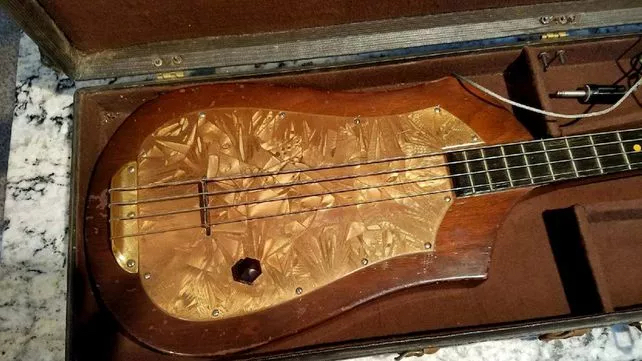
• 1936: Tutmarc’s Audiovox Model 736 bass appears as one of the first guitar-shaped electric basses.
• 1951: Leo Fender introduces the Precision Bass.
• 1952: The Precision Bass becomes available through Fender’s growing instrument business.
• 1953: Gibson releases the EB-1 electric bass.
• 1960s and 1970s: Electric bass becomes central to rock, soul, funk, jazz, and pop.
So, when was the bass guitar invented? The most useful answer is 1951 for the modern bass guitar, with important experimental instruments appearing during the 1930s.
The Bass Before the Electric Bass Guitar
Before electric bass guitars existed, bass players mainly used the double bass. This large wooden instrument, also called the upright bass or acoustic bass, provided the low notes in orchestras, jazz groups, dance bands, and early popular music.
The double bass has a deep, warm sound. It also has a long body, a tall bridge, and thick strings. A player must stand or sit on a tall stool to play it. Moving one from place to place can be difficult, especially for touring musicians.
By the early 20th century, musicians faced another problem. The double bass could be hard to hear beside loud horns, drums, and electric guitars. Players tried microphones and pickups, but these solutions often caused feedback or produced a weak sound.
The growing popularity of electric guitars created a clear path forward. If a guitar could be made louder with a pickup, designers reasoned, the same idea could work for a bass instrument.
That need helped drive the invention of the electric bass guitar. It was not created simply as a smaller double bass. It was designed as a practical answer to problems of volume, transport, tuning, and stage control.
Paul Tutmarc and the First Electric Bass Designs
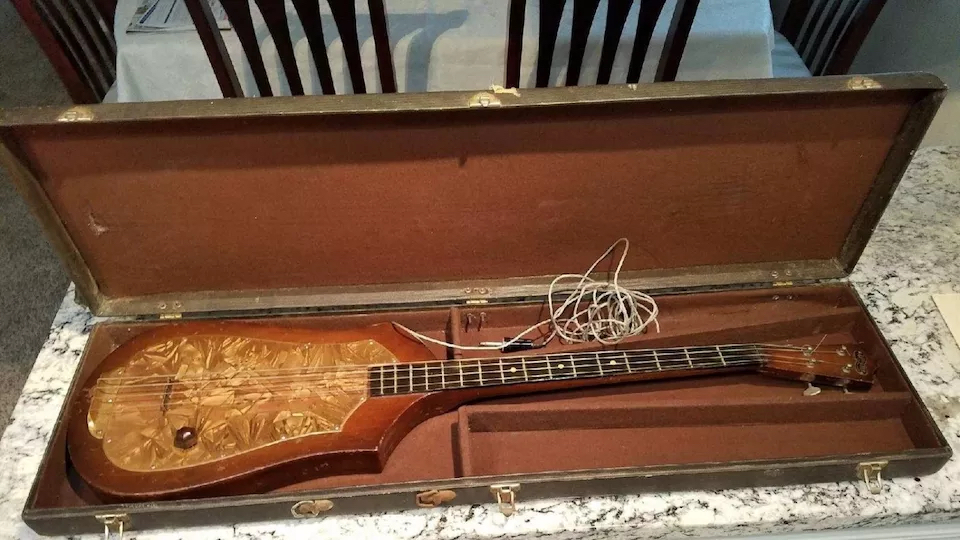
Paul Tutmarc, a musician and instrument maker from Seattle, developed one of the earliest known guitar-shaped electric basses in the 1930s. His instrument was smaller than a double bass and used magnetic pickups to amplify its sound.
Tutmarc’s Audiovox Model 736 is often described as one of the first electric bass guitars. It had a fretted neck, a solid body, and a design that allowed players to hold it in a guitar-like position.
This detail matters when studying when was the bass guitar invented. Leo Fender did not create the basic idea of a guitar-shaped electric bass from nothing. Earlier builders had already shown that the concept could work.
Tutmarc’s bass did not receive the same level of commercial attention as Fender’s later instrument. His company was small, and the instrument market was not yet ready for a large shift away from the upright bass.
The lesson is important: invention and success are not always the same thing. An inventor may create a working product years before the public understands its value.
Leo Fender and the Precision Bass
Leo Fender changed the history of the bass guitar by combining several smart design choices. His goal was to create an instrument that was easy to build, easy to repair, and easy for working musicians to use.
The first Fender Precision Bass had several features that made it different from the traditional upright bass:
• A solid-body design reduced feedback.
• A fretted neck made accurate pitch easier for many players.
• A magnetic pickup sent the bass signal to an amplifier.
• A bolt-on neck simplified repairs and production.
• A smaller body made the instrument easier to carry.
• A simple control layout helped players adjust volume and tone quickly.
The name “Precision” referred to the frets. A fretted neck gave players a visual and physical guide for finding notes. This was a major change from the fretless fingerboard of the upright bass.
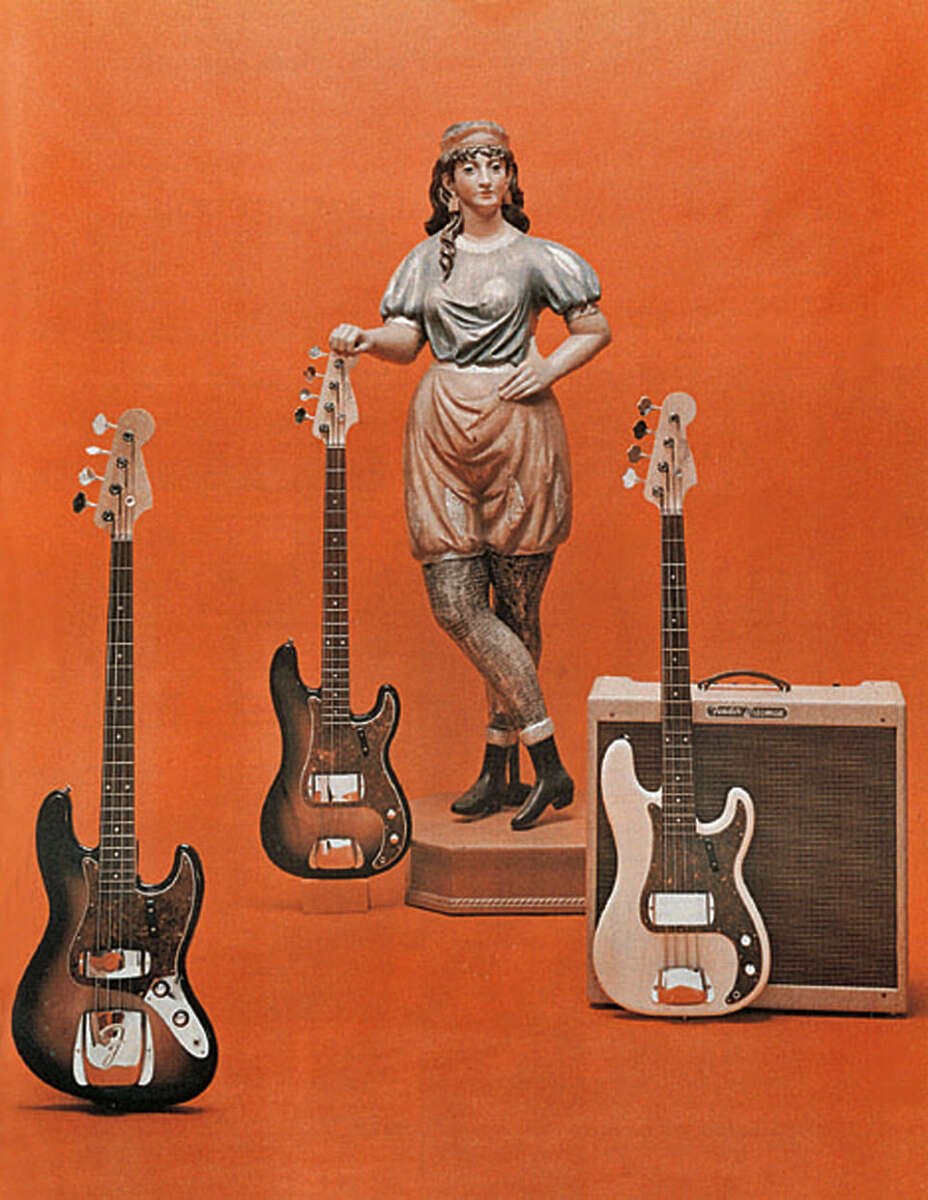
Fender introduced the Precision Bass in 1951. The company refined the design before wider production, and musicians began using it in the early 1950s. The instrument became a practical tool for dance bands, studio players, and touring groups.
This is why many music historians say the modern bass guitar was invented in 1951. Fender’s design was not the first electric bass concept, but it was the first to gain broad influence and lasting commercial success.

Why the Precision Bass Became So Important
The Precision Bass solved several problems at once. It gave bass players more volume, better portability, and greater control over their sound. It also fit naturally into the new world of electric music.
Its frets helped players perform precise lines. Its solid body worked well with loud amplifiers. Its shape allowed musicians to stand and move on stage without handling a large upright instrument.
The instrument also matched the needs of popular music. In the 1950s, rhythm and blues, country, rock and roll, and early pop were becoming louder and more rhythm-focused. A strong electric bass line could connect the drums and guitar while giving the song a clear pulse.
The Precision Bass also helped change the role of the bass player. Bassists were no longer limited to quietly supporting the band from the back of the stage. They could shape the groove, add melodic ideas, and develop a personal tone.
Players soon discovered that the bass could sound clean, warm, sharp, gritty, or aggressive. Different amplifiers, strings, playing styles, and pickup settings expanded its musical range.
The Difference Between an Upright Bass and an Electric Bass Guitar
The upright bass and electric bass guitar serve a similar musical purpose, but they feel and sound very different.
The upright bass is usually played vertically. It has a hollow wooden body and is commonly played with the fingers or a bow. Its sound is natural and resonant, with a strong acoustic character.
The electric bass guitar is held horizontally, much like an electric guitar. It usually has a solid body, frets, magnetic pickups, and an amplifier. Its tone depends on the instrument, strings, pickup, amplifier, effects, and the player’s technique.
Here are the main differences:
• Size: An electric bass is much smaller and easier to transport.
• Volume: An electric bass can produce strong volume through an amplifier.
• Technique: The electric bass often uses frets, while the upright bass is commonly fretless.
• Sound: The upright bass has a woody acoustic tone, while the electric bass can create many amplified sounds.
• Playing position: The electric bass is played across the body, while the upright bass stands on the floor.
Neither instrument is automatically better. Each one suits different music and playing styles. The electric bass became popular because it offered a practical solution for modern bands.
How the Bass Guitar Changed Music
The bass guitar helped define the sound of rock and roll. Early players used simple lines that locked closely with the drums. This partnership created the steady drive that made dance music feel powerful.
In soul and Motown music, bassists developed smooth, melodic parts that were easy to remember. James Jamerson’s playing showed that the bass could be both rhythmic and musical.
Funk pushed the instrument even further. Players such as Larry Graham used techniques like slapping and popping to create sharp, percussive sounds. These methods made the bass a leading voice rather than only a background instrument.
Rock musicians also expanded the bass guitar’s role. Players experimented with distortion, slides, harmonics, unusual tunings, and complex riffs. In jazz, the electric bass became a flexible alternative to the upright bass.
The instrument later became essential in metal, punk, reggae, disco, hip-hop, gospel, and electronic music. Even when listeners do not notice the bass line, they often feel its effect. It is the musical foundation that gives a song weight and movement.
Major Bass Guitar Milestones After 1951
The Precision Bass was only the beginning. Other builders introduced new shapes, pickup layouts, and playing options.
The Gibson EB-1
Gibson released the EB-1 in 1953. It had a violin-inspired body and a pickup mounted near the end of the fingerboard. Although it did not replace the Precision Bass, it showed that companies were taking the electric bass market seriously.
The Fender Jazz Bass
Fender introduced the Jazz Bass in 1960. It had a slimmer neck and two single-coil pickups. The two-pickup design gave players more control over tone and allowed for a wider range of sounds.
The Rickenbacker 4001
The Rickenbacker 4001 became famous for its bright tone and strong attack. It was widely used in rock music and helped create a distinctive sound during the 1960s and 1970s.
Active bass electronics
In the 1970s, some basses began using active preamps. These circuits gave players more control over bass, middle, and treble frequencies. Active basses became popular in funk, jazz fusion, rock, and studio music.
Five-string and extended-range basses
The standard electric bass usually has four strings tuned E, A, D, and G. Five-string basses add a low B string, while six-string models often add a high C string. These instruments give players more range without changing positions as often.
Common Misunderstandings About Bass Guitar History
One common mistake is saying that Leo Fender invented every form of electric bass. He did not create the first electric bass concept. Earlier makers, especially Paul Tutmarc, had already built important instruments.
Another mistake is giving only the year 1951 without explaining the context. That date refers to the development and introduction of Fender’s Precision Bass, which became the foundation of the modern electric bass market.
It is also inaccurate to say that bass guitar immediately replaced the upright bass. Many jazz, classical, country, and roots musicians continued to use the double bass. Both instruments remain important today.
When researching when was the bass guitar invented, it helps to distinguish between:
• The first electric bass experiment.
• The first guitar-shaped electric bass.
• The first commercially successful electric bass.
• The instrument that shaped the modern bass market.
These are related but different milestones. Clear definitions make the history easier to understand.
A Practical View for New Bass Players
If you are learning bass today, the instrument’s history offers useful advice. The electric bass was designed to be practical, so you do not need an expensive setup to begin.
Start with a well-adjusted four-string bass, a small practice amplifier, and a tuner. Learn steady rhythm before chasing complex techniques. A bass line that fits tightly with the drums will usually serve a song better than a line filled with extra notes.
A few lessons from the early history of the instrument are still useful:
• Choose comfort over appearance.
• Keep your instrument properly tuned.
• Practice with a metronome or drum track.
• Learn how to control unwanted string noise.
• Use a clean tone while developing your timing.
• Try different pickup and tone settings as your skills grow.
One mistake I often see in beginner demonstrations is the belief that bass is easier because it has fewer notes. In reality, bass requires strong timing, controlled touch, and careful listening. The best players make simple parts feel deep and powerful.
The history of the bass guitar also shows that good design removes barriers. A comfortable instrument encourages practice. A clear sound helps you hear mistakes. A reliable amplifier makes learning more rewarding.

Frequently Asked Questions About When Was the Bass Guitar Invented
When was the bass guitar invented?
The modern electric bass guitar was introduced by Leo Fender in 1951 through the Fender Precision Bass. Earlier electric bass designs existed in the 1930s, including Paul Tutmarc’s Audiovox bass.
Who invented the electric bass guitar?
Paul Tutmarc developed one of the earliest guitar-shaped electric basses in the 1930s. Leo Fender later created the Precision Bass, the first widely successful modern electric bass.
Was the Precision Bass the first electric bass?
No. The Precision Bass was not the first electric bass ever made. It was the first electric bass design to achieve major commercial success and broad influence.
When did the bass guitar become popular?
The bass guitar became widely popular during the 1950s and 1960s. Rock and roll, rhythm and blues, soul, country, and pop musicians helped establish it as a standard band instrument.
What was used before the bass guitar?
Most bands used the double bass, also called the upright bass. It produced low notes acoustically but was large, difficult to transport, and sometimes hard to hear beside loud instruments.
Why was the electric bass guitar invented?
The electric bass was invented to provide stronger volume, easier transport, and better control in modern bands. Its solid body also reduced feedback compared with amplified hollow instruments.
Conclusion
The clearest answer to when was the bass guitar invented is 1951, when Leo Fender introduced the Precision Bass. Still, the story began earlier with electric bass experiments by Paul Tutmarc and other builders during the 1930s.
The Precision Bass succeeded because it solved real problems. It was portable, loud, durable, and easier for many musicians to play than the upright bass. From rock and soul to funk, jazz, and modern pop, its influence remains easy to hear.
If you are learning bass, start with solid timing, a comfortable instrument, and careful listening. Explore the major bass designs, hear how different players use them, and share your favorite bass history or player in the comments.

Senior Music Reviewer
Alex Carter is a seasoned music reviewer with over a decade of experience in the world of sound and instruments. Passionate about helping musicians and enthusiasts make informed choices, he brings sharp insights and in-depth knowledge to every review. From classical instruments to modern gear, Alex combines technical expertise with a love for music to deliver content that resonates with readers.
As a Senior Music Reviewer and expert author on Tuneluma.com, Alex is dedicated to sharing honest evaluations, practical advice, and thoughtful commentary to guide readers in their musical journey.