What Chord Am I Playing Guitar: Easy Finder Guide
You are likely playing a major, minor, seventh, or suspended chord that can be identified from its notes and shape.
When you ask, “what chord am I playing guitar?” you are usually trying to name the group of notes under your fingers. With a clear method, you can identify most guitar chords by checking the frets, open strings, root note, and sound. This guide explains how to recognize a chord by sight, sound, and guitar apps, while also showing you how to avoid common mistakes.
What does “what chord am I playing guitar” mean?
A guitar chord is a group of two or more different notes played at the same time. Most common chords contain at least three notes, called a triad:
• The root gives the chord its name.
• The third tells you whether the chord is major or minor.
• The fifth adds strength and balance.
For example, a C major chord contains the notes C, E, and G. You may play some of these notes more than once on different strings, but the chord remains C major.
The question “what chord am I playing guitar?” can have more than one answer if you do not know the tuning, capo position, or exact notes. A familiar shape may sound like a different chord when you change the tuning or place a capo on the neck.
In standard tuning, the strings are tuned from thickest to thinnest as follows:
• Sixth string: E
• Fifth string: A
• Fourth string: D
• Third string: G
• Second string: B
• First string: E
Knowing these open-string notes is the first step toward naming any chord.
How to identify a guitar chord by its shape
The fastest way to identify a chord is to write down every string and fret that you play. Do not rely only on the shape. The same shape can create different chords when you move it to another fret.
Use this simple process:
- Number the strings from six to one, starting with the thickest string.
- Write the fret number for each pressed string.
- Mark open strings as “0.”
- Mark muted strings with “X.”
- Find the note played on each string.
- Compare the notes with a chord chart or chord naming tool.
- Locate the lowest-sounding note, which is often the bass note.
For example, a common open C major shape is written like this:
x 3 2 0 1 0
This means:
• Do not play the sixth string.
• Play the fifth string at fret three.
• Play the fourth string at fret two.
• Play the third string open.
• Play the second string at fret one.
• Play the first string open.
The notes are C, E, G, C, and E. Since C is the root and the chord contains a major third, the chord is C major.
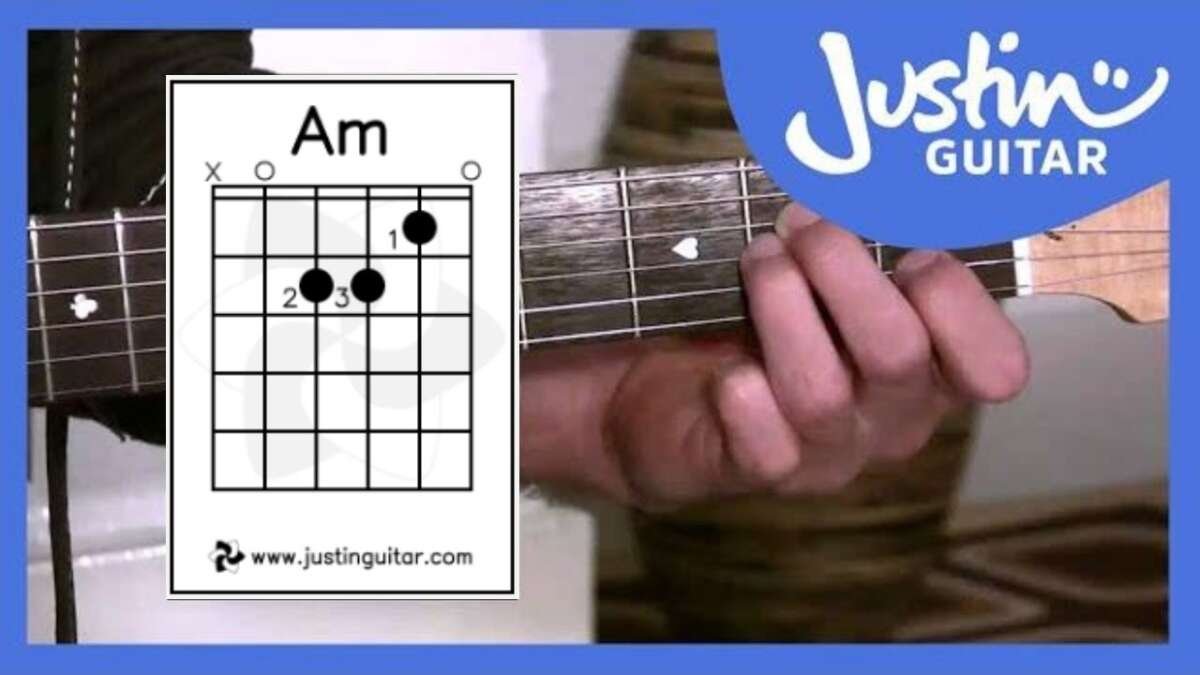
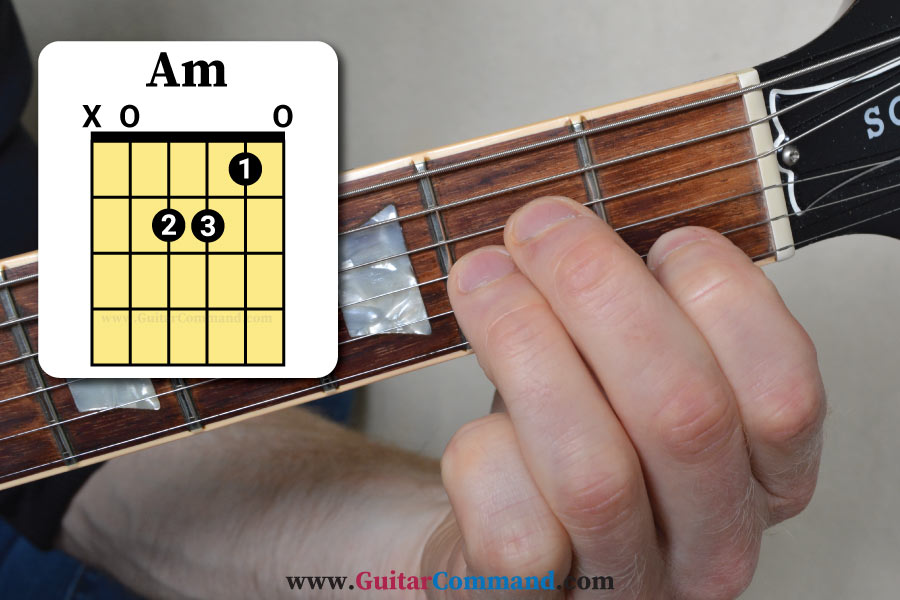
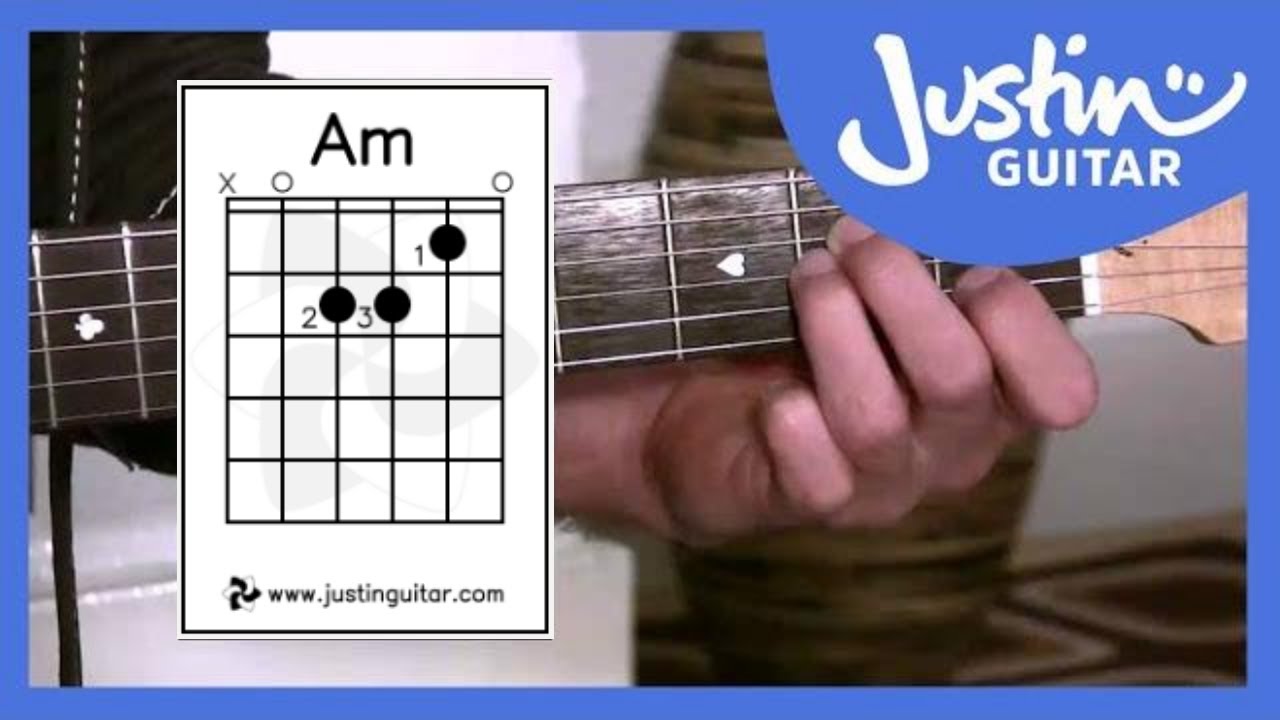
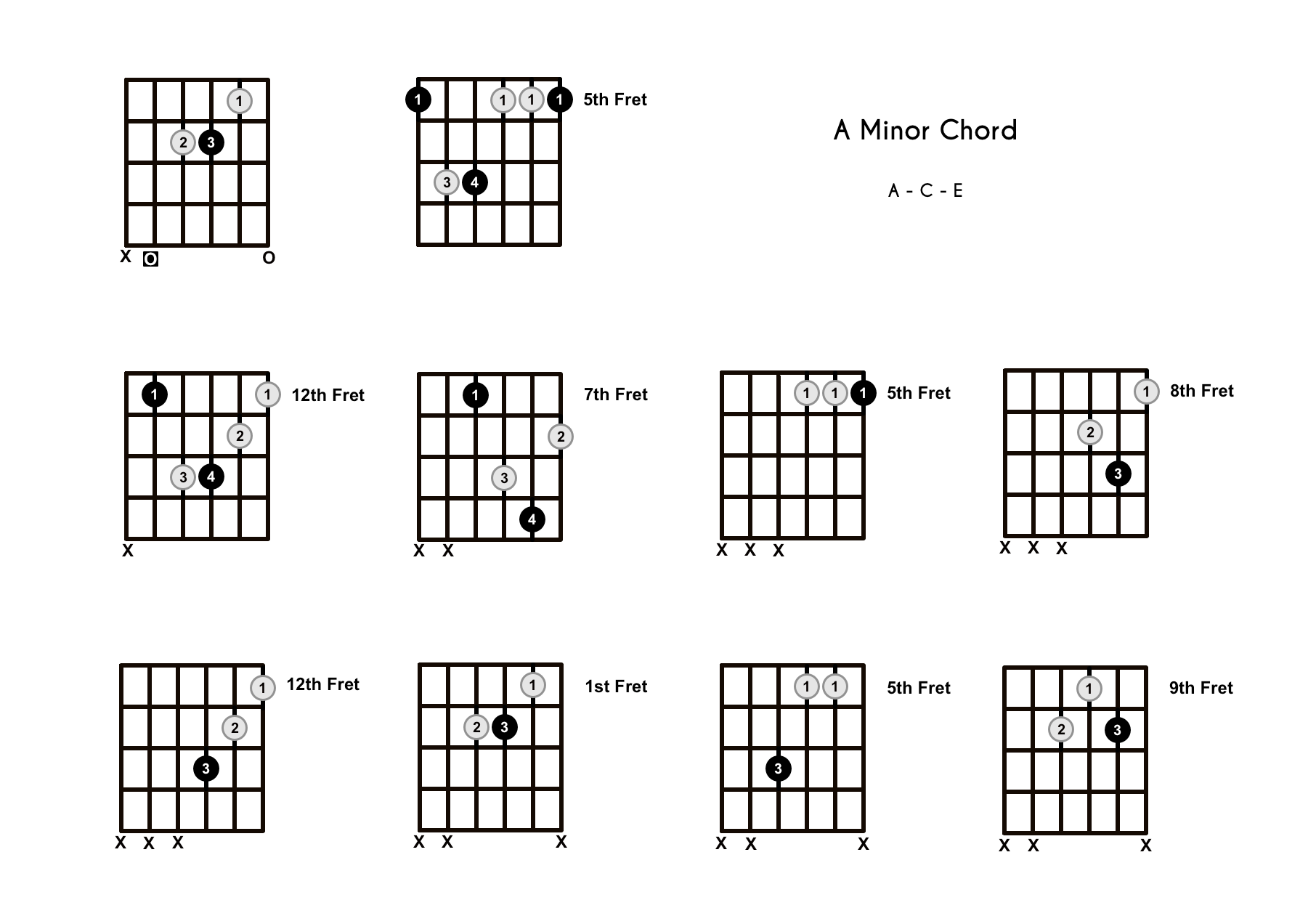
A common open A minor shape is:
x 0 2 2 1 0
The notes are A, E, A, C, and E. The note C is a minor third above A, so the chord is A minor.
 chord”
style=”max-width: 100%; height: auto; border: 2px solid black; border-radius: 10px; display: block; margin: 0 auto;”
loading=”lazy”
/>
How to find the notes in a guitar chord
to answer “what chord am I playing guitar?” accurately, you need to know the notes produced by each string. You can calculate them by moving through the chromatic scale.
The chromatic scale contains these twelve notes:
A, A#/Bb, B, C, C#/Db, D, D#/Eb, E, F, F#/Gb, G, G#/Ab
Each fret raises a note by one half step. For example:
• Open sixth string: E
• Sixth string, first fret: F
• Sixth string, second fret: F#
• Sixth string, third fret: G
• Sixth string, fifth fret: A
The same method works on every string. Remember that the notes B to C and E to F are only one fret apart. All other natural note pairs have a sharp or flat note between them.
A capo changes the pitch of every open string. If you play an open G shape with a capo at the second fret, the shape still looks like G, but the chord sounds as A. This is why chord shapes and chord names are not always the same thing.
A useful rule is this:
• A chord shape describes your finger position.
• A chord name describes the notes you hear.
This difference becomes very important when you use movable chords, alternate tunings, or a capo.

How to recognize major, minor, seventh, and suspended chords
Once you know the notes, study the distance between them. These distances are called intervals.
Major chords
A major triad contains:
• Root
• Major third
• Perfect fifth
The major third gives the chord its bright and stable sound. For example, C major contains C, E, and G.
Minor chords
A minor triad contains:
• Root
• Minor third
• Perfect fifth
The minor third gives the chord a darker or more emotional sound. A minor contains A, C, and E.
The difference between C major and C minor is only one note:
• C major: C, E, G
• C minor: C, Eb, G
Dominant seventh chords
A dominant seventh chord contains:
• Root
• Major third
• Perfect fifth
• Minor seventh
An E7 chord contains E, G#, B, and D. It often sounds tense and wants to resolve to A.
Major seventh chords
A major seventh chord contains a major seventh interval. Cmaj7 contains C, E, G, and B. It usually sounds smooth, rich, and gentle.
Suspended chords
A suspended chord replaces the third with another note:
• Sus2 replaces the third with the second.
• Sus4 replaces the third with the fourth.
A Dsus4 chord contains D, G, and A. Since it has no major or minor third, it sounds open and unresolved.
Power chords
A power chord usually contains only the root and fifth. A common G5 chord contains G and D. Because it has no third, it is neither major nor minor.

How to identify a chord by ear
Your ears can help when your eyes are unsure. Chord quality has a distinct emotional character, but listening alone may not give you the exact chord name.
Start with the lowest note. Play each string one at a time and listen for the note that sounds most stable. This note is often the root, although some chords have an inverted bass note.
Next, listen to the chord quality:
• Major often sounds bright or settled.
• Minor often sounds darker or more serious.
• Seventh chords often sound tense.
• Suspended chords often sound open or unfinished.
• Diminished chords often sound unstable and tense.
Here is a useful practice exercise:
- Play an open C major chord.
- Play an open A minor chord.
- Listen to the difference in the third.
- Play each chord again, slowly.
- Sing or hum the lowest note.
- Check your answer with a tuner or piano.
When I teach chord recognition, I encourage students to avoid guessing from mood alone. A minor chord can sound happy in a fast song, while a major chord can sound sad in a slow song. The chord’s notes matter more than its emotional effect.

Using a guitar chord finder or phone app
A chord finder can answer “what chord am I playing guitar?” in seconds, but the result is only as reliable as the information you enter.
Most chord tools ask for:
• Tuning
• Capo position
• Frets played
• Muted strings
• Open strings
• The lowest note
Some apps listen through your microphone. These can work well when the guitar is in tune and the room is quiet. They may struggle with background noise, distortion, finger noise, or chords with missing notes.
A chord detector may also provide more than one possible name. For example, the notes C, E, G, and A could be called Am7, C6, or another related voicing depending on which note sounds like the root.