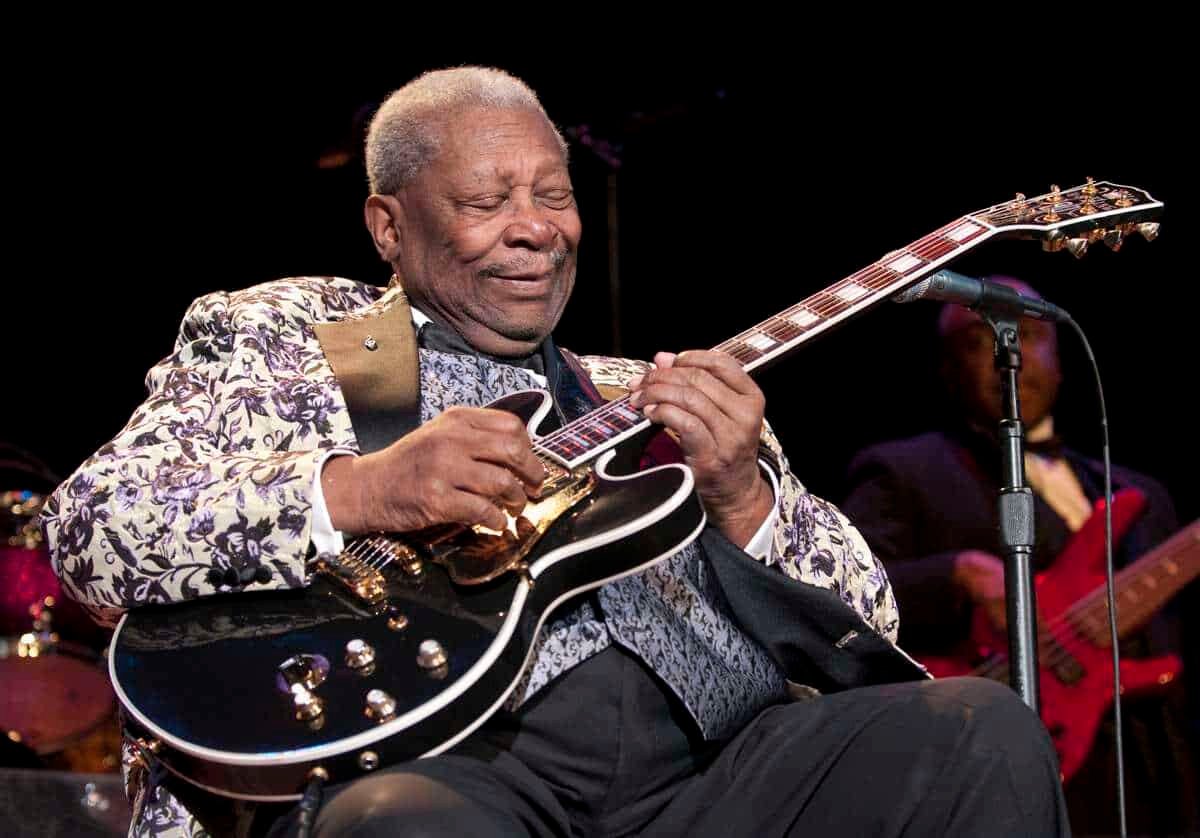
What Guitar Did BB King Play: His Famous Gibson
B.B. King played a Gibson ES-355 electric guitar, famously known as Lucille.
If you ask what guitar did B.B. King play, the short answer is only part of the story. Lucille was not just one instrument, but the name B.B. King gave to several Gibson guitars built around the ES-335 and ES-355 designs. This guide explains Lucille’s history, features, sound, and lasting influence.

What guitar did B.B. King play?
B.B. King mainly played a Gibson ES-355, a semi-hollow electric guitar. He called his guitars “Lucille,” and that name became as famous as the musician himself.
The Gibson ES-355 was a top-level version of Gibson’s ES series. It had a wide body, two humbucking pickups, a smooth neck, and a rich electric tone. These features helped King create his clear, singing lead sound.
The answer to what guitar did B.B. King play can seem simple, but it needs one important detail. B.B. King owned and played more than one Lucille during his long career. Gibson made several custom Lucille guitars for him over the years.
His best-known model was based on the Gibson ES-355. Some early guitars were closer to the ES-335 or ES-345 family. Still, the guitar most linked to his name is the Gibson Lucille, based mainly on the ES-355.

The story behind B.B. King’s Lucille
The name Lucille came from a dangerous event in King’s early life. In the winter of 1949, he performed in a dance hall in Twist, Arkansas. Two men began fighting, and a lit barrel used to heat the room was knocked over.
The building caught fire. King escaped, but he ran back inside to save his guitar. Later, he learned that the fight had started over a woman named Lucille. He named the guitar Lucille as a reminder never to risk his life in that way again.
That story gave the name a deeper meaning. Lucille was not simply a stage name for a guitar. It stood for survival, good judgment, and the value of protecting yourself.
When people ask what guitar did B.B. King play, they often expect a model number. The story of Lucille shows why the answer is also tied to memory, emotion, and personal identity.

How Lucille changed over time
B.B. King played different Gibson instruments during different stages of his career. His early guitars included acoustic and electric models from several makers. As his reputation grew, Gibson became closely connected with his sound and image.
Gibson began working more closely with King in the 1980s. The company developed a signature Lucille model that reflected his playing needs. It kept the familiar semi-hollow body but added several useful changes.
Important Lucille features included:
• A solid maple center block to help reduce feedback
• No traditional F-holes on many Lucille models
• Stereo and mono output options
• A six-position Varitone circuit
• A TP-6 tailpiece on some versions
• Two humbucking pickups
• A stop tailpiece and strong tuning stability
The solid center block was especially important. Semi-hollow guitars can produce a warm, open tone, but they may feed back at high volume. King often played with loud amplifiers, so the center block helped him control unwanted noise.
This is another key part of what guitar did B.B. King play. Lucille was not a standard ES-355 copied without changes. It was shaped around the way King worked on stage.
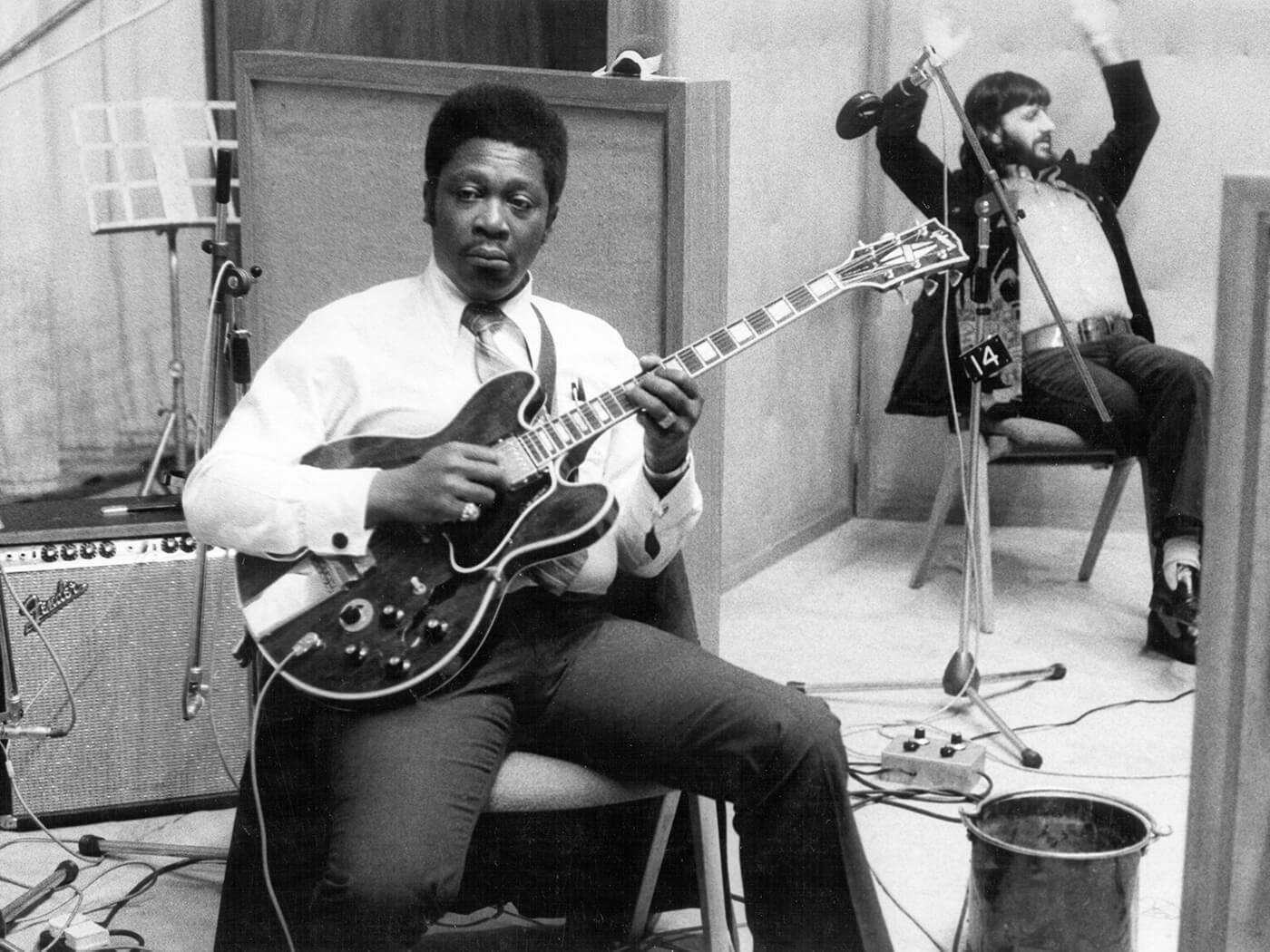
Why B.B. King used a semi-hollow guitar
A semi-hollow guitar sits between a solid-body and a fully hollow instrument. It has a resonant body, but a solid wood block runs through the middle. This design gives the guitar warmth while helping it handle more volume.
B.B. King wanted a tone that could sing above a band without sounding harsh. His semi-hollow Gibson gave him a full sound with strong note focus.
His tone came from more than the guitar. It also came from:
• Light-to-medium strings
• A clean or slightly driven amplifier
• A wide, controlled vibrato
• Careful use of the guitar’s volume and tone controls
• A strong picking hand
• Precise bends and slow phrasing
Many players focus on the instrument and overlook the hands. In my practical view of guitar gear, this is the biggest lesson from King’s setup: the player shapes the sound more than the label on the headstock.
A similar Gibson can help you approach the sound, but it will not automatically produce B.B. King’s voice. His touch was the real engine behind Lucille.

What did B.B. King’s Lucille sound like?
Lucille produced a warm, smooth, and focused tone. King often used the neck pickup or blended both pickups for a round lead sound. His notes had body, but they remained clear enough to cut through a full band.
He did not rely on heavy distortion. Instead, he used clean volume, natural amplifier breakup, and expressive technique. His bends could sound almost like a human voice.
Several traits define the classic Lucille sound:
Warm bass and clear mids
The semi-hollow body added depth, while the humbucking pickups reduced noise. The result was a strong middle range that made his lead lines easy to hear.
Smooth sustain
King held notes for emotional effect. A single note could last longer than a fast run, much like a singer holding a powerful word.
Gentle vibrato
His famous vibrato came from moving the fretting hand quickly and evenly. He often used a narrow wrist motion rather than wide bends from the whole arm.
Controlled brightness
King could make the sound brighter by adjusting his guitar controls or amplifier. He did not need extreme treble to create excitement.
When considering what guitar did B.B. King play, remember that his tone was a complete system. The guitar, strings, amplifier, pickups, hands, and musical choices all worked together.
B.B. King guitar models and related instruments
B.B. King’s most famous guitar was the Gibson Lucille, but his musical life included other instruments. He played acoustic guitars early in his career and used different electric guitars before his partnership with Gibson became central to his image.
The most relevant models include:
• Gibson ES-335: A semi-hollow electric guitar with a center block and two humbucking pickups
• Gibson ES-345: A model related to the ES-335, often associated with stereo wiring and Varitone controls
• Gibson ES-355: A higher-end semi-hollow model with premium appointments
• Gibson Lucille: A B.B. King signature guitar based largely on the ES-355 design
These models share a family resemblance, but they are not identical. That is why answers to what guitar did B.B. King play sometimes name the ES-335, ES-345, ES-355, or Lucille.
The most accurate answer is this: B.B. King became famous for playing Gibson semi-hollow guitars, especially his customized Gibson Lucille, which was closely based on the ES-355.
Gibson Lucille versus Gibson ES-335
The Gibson ES-335 is often the closest practical alternative to a Lucille. Both guitars have a semi-hollow construction and a center block. Both can create warm blues tones with strong sustain.
However, the standard ES-335 and Lucille differ in several ways:
| Feature | Gibson ES-335 | Gibson Lucille |
|---|---|---|
| Body design | Usually includes F-holes | Many Lucille models omit F-holes |
| Electronics | Standard pickup controls | Often includes Varitone switching |
| Feedback control | Center block | Center block with additional design changes |
| Tailpiece | Varies by model | Often uses a distinctive stop tailpiece |
| Player association | Broad blues, rock, and jazz use | Closely linked to B.B. King |
| Tone goal | Versatile semi-hollow sound | Focused, smooth blues lead tone |
An ES-335 is not a fake Lucille. It is a respected instrument with its own sound. A player can get close to King’s style with an ES-335, especially when using clean settings and careful vibrato.
The mistake to avoid is buying expensive gear before learning the core technique. If your bends are out of tune, a more costly guitar will not solve the problem.