What Guitar Does Slash Play: Guitars He Uses
Slash mainly plays Gibson Les Paul guitars, especially his famous Appetite for Destruction replica.
When people ask what guitar does Slash play, they usually mean the powerful Les Paul linked to Guns N’ Roses. His sound comes from more than one guitar, though. It also depends on the guitar’s pickups, tuning, strings, amps, and the way Slash attacks each note. This guide explains his main guitars, famous replicas, signature models, and the practical gear choices behind his tone.

What guitar does Slash play most often?
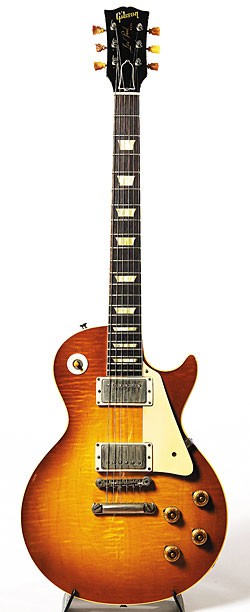
Slash is best known for playing Gibson Les Paul guitars. His main stage instruments are usually based on the classic Les Paul Standard design, with a solid mahogany body, a carved maple top, a glued-in mahogany neck, and two humbucking pickups.
The guitar most linked to Slash is the Les Paul replica he used during the early Guns N’ Roses years. That guitar helped shape the sound heard on Appetite for Destruction. It had a warm, thick tone that worked well for blues-based solos, hard rock riffs, and long singing notes.
When asking what guitar does Slash play, the most accurate short answer is Gibson Les Paul. However, his most famous guitar was not a standard Gibson model from the 1950s. It was a handmade copy built for him by guitar maker Kris Derrig.

The famous Appetite for Destruction guitar
Slash’s most famous guitar was a replica of a 1959 Gibson Les Paul Standard. Kris Derrig built the instrument in the early 1980s. Slash used it while recording and touring with Guns N’ Roses.
The guitar had several traits that suited Slash’s style:
• A sunburst-style finish
• A carved maple top
• A mahogany body and neck
• Two humbucking pickups
• A powerful bridge pickup for lead work
• A warm neck pickup for smooth blues tones


The instrument was made as a copy rather than as an original vintage Gibson. This detail matters because many fans assume Slash used a genuine 1959 Les Paul on Appetite for Destruction. In fact, the Derrig replica became famous because it sounded and felt right for Slash.
That guitar was important for another reason. Original 1959 Les Paul Standards are rare and extremely valuable. A well-made replica can offer a similar design and feel without exposing a priceless vintage instrument to the risks of touring.

Did Slash play a real 1959 Gibson Les Paul?
Slash has owned and played genuine vintage Gibson Les Pauls, but the guitar most closely connected with Appetite for Destruction was the Kris Derrig replica. It looked like a late-1950s Les Paul and delivered the classic sound fans associate with the album.
Many guitarists learn an important lesson from this story: the name on the headstock is not the whole sound. The player, pickups, setup, amplifier, recording method, and technique all matter.
A replica can sound excellent when it has the right construction and electronics. At the same time, not every inexpensive Les Paul copy will sound like Slash’s guitar. Wood quality, fretwork, pickup design, bridge hardware, and setup can make a major difference.
 models”
style=”max-width: 100%; height: auto; border: 2px solid black; border-radius: 10px; display: block; margin: 0 auto;”
loading=”lazy”
/>
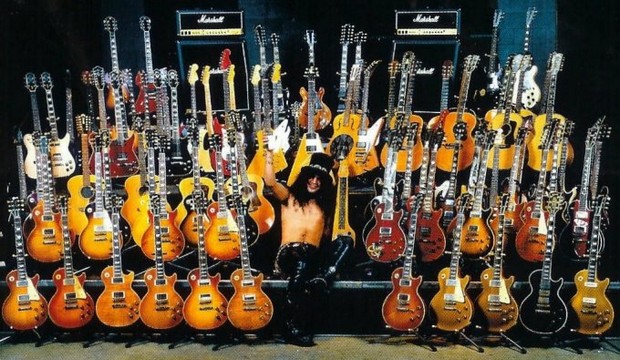
Slash’s Gibson Les Paul signature models
gibson has worked with Slash on several signature Les Paul models. These guitars are designed around features he prefers, but each model has its own finish, pickup set, neck shape, and specifications.
Popular Slash-inspired Gibson models include:
• Appetite Les Paul Standard: Based on the look and feel of the guitar linked with his early Guns N’ Roses years.
• Victoria Les Paul Standard Goldtop: A goldtop model built around Slash’s preferred feel and tone.
• Anaconda Burst Les Paul: A version with a distinctive burst finish and a strong vintage influence.
• Vermillion Burst Les Paul: A signature model with a bold red finish and classic Les Paul construction.
• Goldtop models: These reflect Slash’s love of gold-finished Les Paul guitars and traditional rock tones.
• Rosso Corsa models: These use a bright red finish and Slash-focused specifications.
The exact models available change over time. Gibson and Epiphone have released different Slash collections, so buyers should check the current specifications instead of relying only on the model name.


A Gibson signature guitar is not always an exact copy of the instrument Slash used on a specific tour. It is better to view each model as a production version of his preferred design ideas.
What makes Slash’s Les Paul sound different?
A Les Paul gives Slash a strong starting point, but the guitar alone does not create his tone. His sound comes from several parts working together.
Humbucking pickups
Slash is strongly linked with Seymour Duncan Alnico II Pro Slash pickups. These pickups use Alnico II magnets, which often produce a smooth and musical response. They are not as aggressive as some modern high-output pickups.
The result is a warm tone with clear mids. This helps Slash’s bends sound full without becoming harsh. It also allows his vibrato to remain easy to hear.
Low-output vintage-style design
Slash’s pickups are often described as moderate-output or vintage-style pickups. They push the amplifier without overwhelming it. This lets the amp add much of the distortion and compression.
That approach is useful for players who want a touch-sensitive sound. Pick lightly, and the tone cleans up. Pick harder, and the sound becomes thicker and more forceful.
Mahogany and maple construction
The Les Paul design combines a mahogany body with a maple top. Mahogany can add warmth and sustain, while the maple top can add attack and clarity.
Wood does not work like a simple tone recipe. The final sound also depends on the individual guitar, hardware, strings, pickups, and amplifier. Still, this classic construction gives Slash the rich foundation heard in many of his recordings.
Tune-o-matic bridge and stop tailpiece
Most of Slash’s Les Pauls use the classic Tune-o-matic bridge and stop tailpiece layout. This design supports stable intonation and strong string contact.
Good setup work is essential. A poorly adjusted bridge can cause tuning problems, high string action, and weak intonation, even on an expensive guitar.
What tuning does Slash use?
Slash commonly uses a half-step-down tuning. The strings are tuned from standard E tuning to:
• E-flat
• A-flat


• D-flat
• G-flat
• B-flat
• E-flat
This tuning lowers the pitch of every string by one semitone. It gives the guitar a slightly darker feel and can reduce string tension. It also lets Slash sing and play certain riffs in a more comfortable range.
Some songs and performances may use other tunings. Players should check the specific song before assuming every Guns N’ Roses track uses E-flat tuning.
If you want to try Slash’s setup, tune down carefully and check the neck relief and intonation. A guitar may need a small setup adjustment after changing its tuning for long periods.

What strings does Slash use?
Slash has been associated with heavier guitar strings than many beginners use. Sets around .011 to .048 are often linked with his setup, although string gauges can vary by guitar, tuning, and personal preference.
Heavier strings can offer several benefits:
• They feel firm during hard picking.
• They support wide bends.
• They can produce a full, strong tone.
• They may stay more stable in lower tunings.
They also have limits. Heavy strings can feel difficult for new players and may cause hand fatigue. They can require more effort during bends, especially on a shorter practice session.


A useful approach is to start with a comfortable set, such as .010s, then experiment with .011s if your hands and guitar setup allow it. The best string gauge is the one that supports your playing without causing pain.
What amps does Slash use?
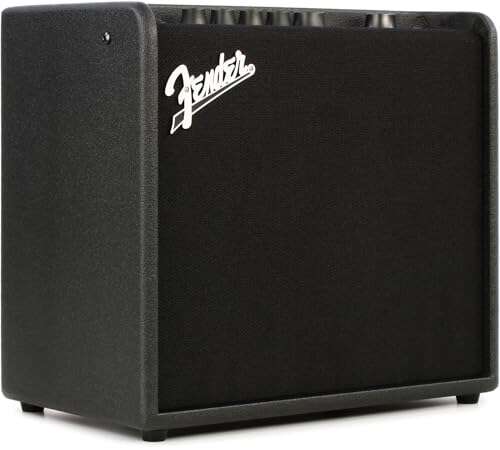
Slash is closely associated with Marshall amplifiers. His rig has included powerful Marshall tube amps and cabinets designed for loud rock performance.
His amplifier tone usually has:
• Strong midrange
• Smooth overdrive
• Thick low end
• Clear upper mids
• Enough gain for sustain without excessive distortion
This is an important point for anyone asking what guitar does Slash play. His sound is not created by the Les Paul alone. A Les Paul plugged into a clean practice amp will not automatically sound like a large Marshall rig.
You can get closer at home with a moderate-gain amplifier, a British-style amp model, and a guitar with warm humbuckers. Keep the gain lower than expected. Too much gain can reduce note clarity and make bends sound messy.
Slash’s tone is often more open than beginners assume. His hands provide much of the sustain, expression, and vocal quality.
Other guitars Slash has played
Although the Les Paul is his trademark guitar, Slash has used other instruments during his career. Different songs, tours, and recording sessions have required different sounds.
He has been associated with guitars such as:
• Gibson Les Paul models
• Gibson Explorer-style guitars
• Gibson Flying V-style guitars
• B.C. Rich guitars
• Guild guitars
• Double-neck guitars for special arrangements
The exact guitar may change depending on the song. A player might use a different guitar for an alternate tuning, a distinct pickup sound, or a visual effect on stage.
Still, these instruments do not replace the Les Paul as his main identity. When fans ask what guitar does Slash play, they are usually asking about the sunburst Les Paul shape with two humbuckers.
How to choose a Slash-style guitar
You do not need a top-tier Gibson to begin exploring Slash’s sound. A well-set-up guitar with two humbuckers can take you surprisingly far.
Look for these features:
-
Choose a solid-body guitar with two humbucking pickups.
-
Try a mahogany-style body if you want a warm, thick sound.
-
Select a neck shape that feels comfortable during bends.
-
Use a bridge that holds tuning well.
-
Start with moderate gain rather than maximum distortion.
-
Set the action low enough for comfort but high enough to avoid fret buzz.
-
Practice bends, vibrato, slides, and controlled picking.
Epiphone offers more affordable Les Paul-style models, including Slash signature versions. These can be useful for beginners and intermediate players. Before buying, test the guitar if possible and inspect the fret edges, tuning machines, bridge, and pickup balance.
The biggest mistake is buying a guitar only because it looks like Slash’s. A beautiful guitar that feels uncomfortable will spend more time on a stand than in your hands.
How to get Slash’s tone on a budget
A practical budget setup can include a Les Paul-style guitar, a British-voiced amplifier, and a moderate overdrive pedal. You do not need a huge stack to practice the core sound.
Try this basic starting point:
• Use the bridge pickup for strong rock riffs.
• Use the neck pickup for warmer lead parts.
• Set the amp gain around the middle.
• Keep the bass controlled.
• Add enough mids to make the guitar easy to hear.
• Use treble carefully to avoid a sharp tone.
• Add a small amount of delay for lead playing.
Your picking hand matters just as much as your settings. Slash’s sound has a strong attack, but his notes are not random or stiff. Practice slow bends with a tuner, then add vibrato after the pitch is stable.
A useful hands-on lesson is to record yourself before changing your equipment. Many players chase a new guitar when the real issue is uneven bends, weak vibrato, or too much gain. Better technique often creates a bigger improvement than a more expensive instrument.
Common mistakes when copying Slash’s setup
Many players focus only on the guitar model. That can lead to frustration because Slash’s tone is the result of a complete system.
Avoid these common mistakes:
• Using too much distortion: High gain can hide poor timing and make the sound unclear.
• Ignoring the setup: Incorrect neck relief or intonation can make any guitar feel difficult.
• Choosing strings that are too heavy: Heavy strings are not automatically better.
• Copying amp settings exactly: Room size, speakers, pickups, and volume change the result.
• Forgetting the right hand: Picking strength and position strongly affect tone.
• Neglecting vibrato: Slash’s expressive vibrato is a major part of his lead sound.
There is also a safety point. Do not force wide bends if your hands hurt. Short practice sessions with relaxed technique are better than long sessions that cause strain.
Frequently Asked Questions About What Guitar Does Slash Play
What guitar does Slash play in Guns N’ Roses?
Slash mainly plays Gibson Les Paul guitars with humbucking pickups. His most famous early guitar was a Kris Derrig replica based on a 1959 Gibson Les Paul Standard.
Is Slash’s Appetite for Destruction guitar a real Gibson?
The guitar most associated with Appetite for Destruction was a handmade replica built by Kris Derrig. Slash has also played real Gibson Les Paul guitars, but the famous recording-era instrument was not a standard original 1959 Gibson.
Does Slash play Gibson or Epiphone?
Slash plays Gibson guitars, especially Gibson Les Paul models. Epiphone also makes more affordable Slash signature guitars based on his preferred designs.
What pickups does Slash use?
Slash is closely associated with Seymour Duncan Alnico II Pro Slash pickups. These pickups provide a warm, smooth response with enough output for classic rock overdrive.
Does Slash tune his guitar down?
Slash often uses E-flat tuning, which is one half-step below standard tuning. The exact tuning can vary by song, guitar, and performance.
What guitar should a beginner buy to sound like Slash?
A beginner can start with an affordable Les Paul-style guitar that has two humbuckers. A good setup, moderate gain, and regular practice will matter more than buying the most expensive model.
Why does Slash use a Les Paul?
The Les Paul gives him sustain, warm mids, and a thick humbucker sound. Its design also works well with his blues-based bends, vibrato, and hard rock lead style.
Conclusion
Slash is best known for Gibson Les Paul guitars, especially the replica linked to Appetite for Destruction. His signature sound also comes from Alnico II-style pickups, E-flat tuning, heavier strings, Marshall-style amplification, and expressive technique.
You can begin with an affordable Les Paul-style guitar and focus on bends, vibrato, timing, and touch. Explore different guitars and settings, but let your hands lead the search for tone. Try the setup ideas in this guide, listen closely to your results, and share your favorite Slash guitar or tone tip in the comments.

Senior Music Reviewer
Alex Carter is a seasoned music reviewer with over a decade of experience in the world of sound and instruments. Passionate about helping musicians and enthusiasts make informed choices, he brings sharp insights and in-depth knowledge to every review. From classical instruments to modern gear, Alex combines technical expertise with a love for music to deliver content that resonates with readers.
As a Senior Music Reviewer and expert author on Tuneluma.com, Alex is dedicated to sharing honest evaluations, practical advice, and thoughtful commentary to guide readers in their musical journey.