Where Is The Best Place To Buy A Violin: Best Store Guide
The best place to buy a violin is a reputable violin shop offering expert setup and trials.
Knowing where is the best place to buy a violin can save you money, time, and frustration. The right seller will match the instrument to your skill, budget, size, and sound goals. This guide explains how to compare violin shops, online stores, local luthiers, rentals, and private sellers so you can make a confident choice.
Where Is the Best Place to Buy a Violin?
For most beginners and advancing players, the best place to buy a violin is a respected local violin shop or professional luthier. These sellers can check the instrument, adjust the bridge, fit the soundpost, and make sure the pegs work well.
A good shop also lets you try several violins. This matters because two violins with the same price may sound and feel very different. A violin is not like a factory-made phone. Each instrument has its own voice, shape, response, and history.
The best place to buy a violin depends on your needs:
• Local violin shop: Best for beginners, families, and players who want help after the sale.
• Professional luthier: Best for advanced players seeking a well-made instrument and expert advice.
• Trusted online violin store: Best for convenience, broad choice, and a clear return policy.
• School or shop rental program: Best for young beginners who may change sizes or stop playing.
• Private seller: Best for experienced buyers who can inspect the violin or bring an expert.
A reputable seller should answer questions clearly. They should also explain the violin’s condition, origin, age, repairs, accessories, and return terms. If the seller avoids these questions, look elsewhere.
Why a Violin Shop Is Often the Best Choice
A violin shop offers more than a violin in a box. It offers fitting, testing, advice, and after-sale care. These services are especially valuable if you are buying your first instrument.
Many problems that seem like poor playing come from poor setup. A bridge may be too thick. The strings may sit too high. The soundpost may be out of place. The pegs may slip every few minutes. A skilled shop can correct these issues before you take the violin home.
A shop can also help you choose the right size. A full-size violin is not right for every player. Children may need a 1/16, 1/10, 1/8, 1/4, 1/2, or 3/4 violin before moving to a 4/4 instrument. The player should be measured by a teacher or trained shop professional.
Benefits of buying from a local shop
• You can play the violin before buying it.
• You can compare several instruments at the same price.
• Staff can check the bridge, pegs, strings, fingerboard, and soundpost.
• You may receive a basic setup or adjustment.
• You can return for repairs, new strings, and future advice.
• Some shops offer trade-in programs as your playing improves.
This personal service explains why many teachers recommend a violin shop over a general marketplace. The violin and bow should work as a pair. A shop can often assemble a better package than a random online listing.
Buying From a Professional Luthier
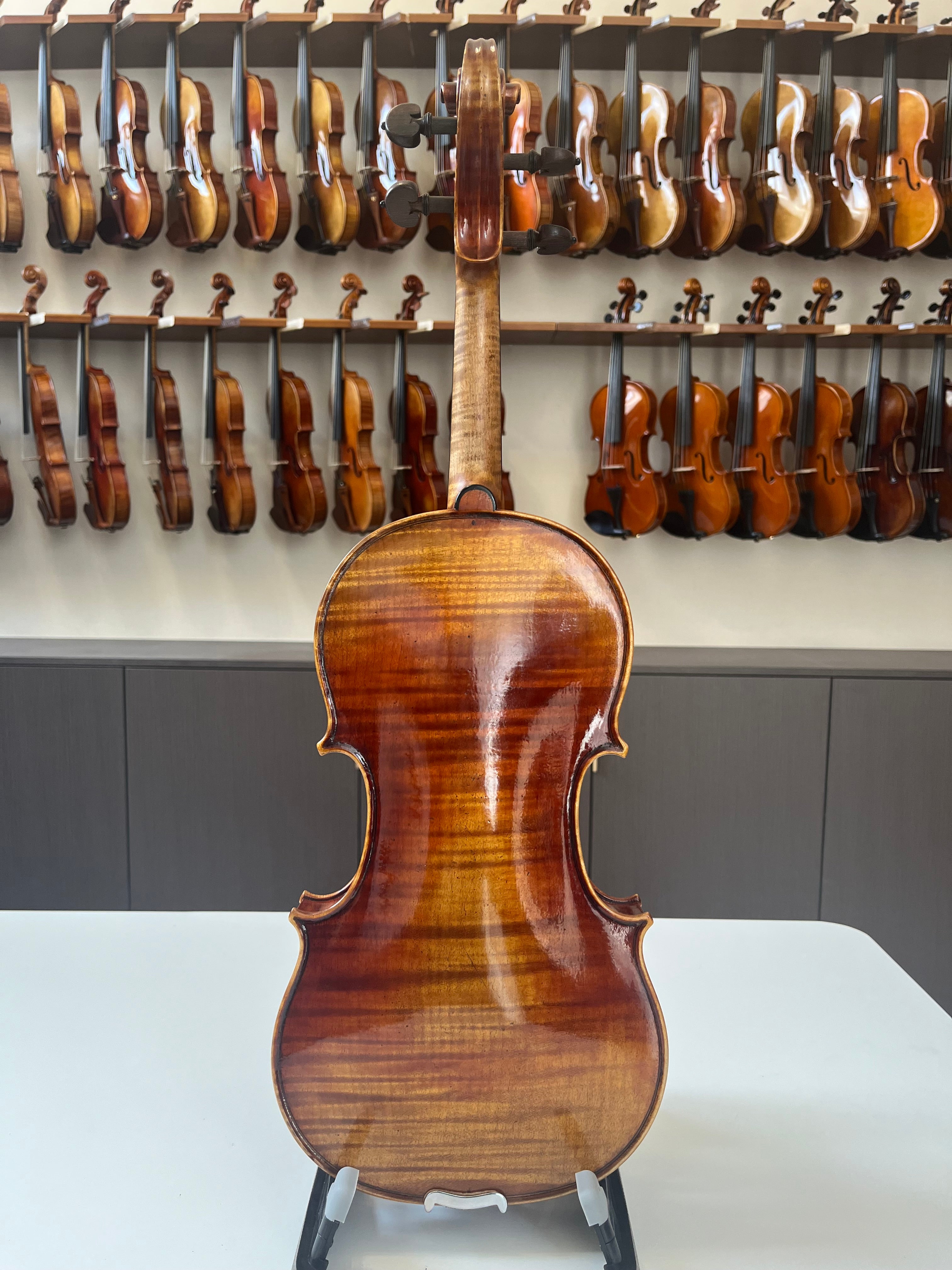
A luthier is a craftsperson who makes, repairs, restores, or adjusts string instruments. If you are asking where is the best place to buy a violin for serious study, a respected luthier deserves your attention.
Luthiers usually know the instrument’s history. They can explain repairs, wood quality, varnish, measurements, and tone. They may also offer instruments by known makers or carefully selected workshop violins.
A good luthier will not pressure you to buy the most expensive violin. Instead, they will ask about your playing level, music style, teacher, budget, and long-term goals. They may encourage you to take several violins home for a trial.
When a luthier makes sense
A luthier can be a strong choice if:
• You play in an orchestra or advanced school program.
• You need a violin with more power or color.
• You want to compare handmade instruments.
• You are buying a vintage or antique violin.
• You need advice about repairs or authenticity.
• You want a long-term instrument that can grow with you.
Luthier instruments may cost more than student models. Still, a well-maintained violin can hold value better than a poorly made bargain instrument. Price alone does not prove quality, so ask for a written description and independent advice when needed.
Is an Online Violin Store a Good Place to Buy?
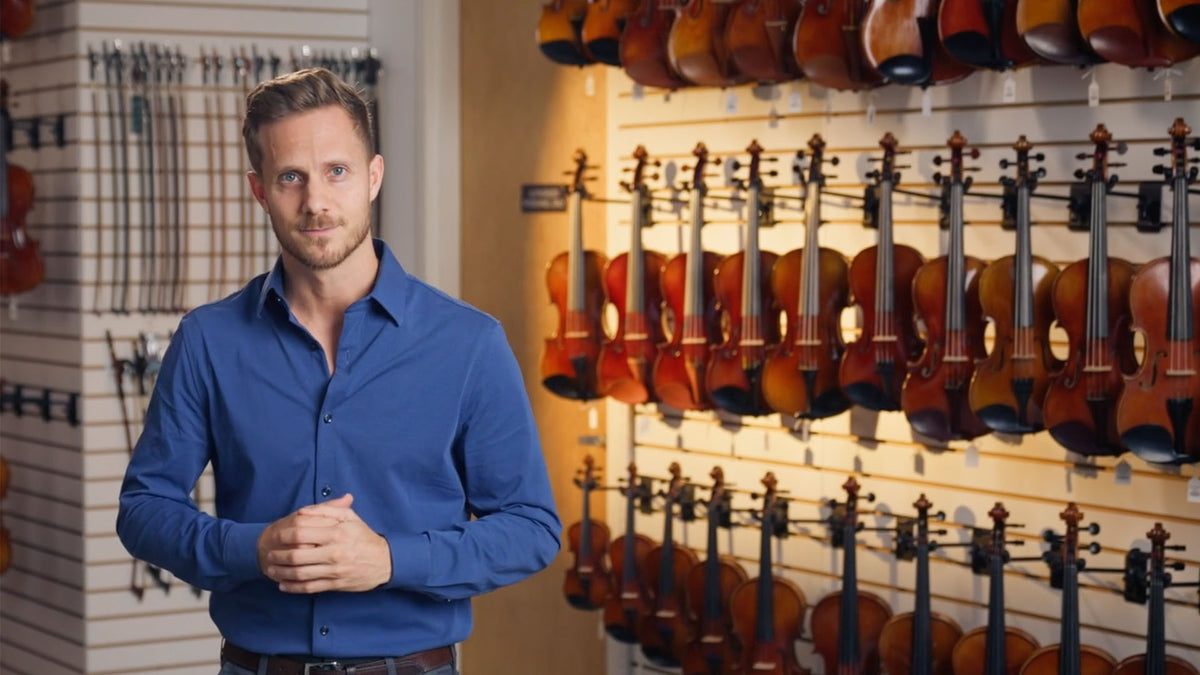
An online violin store can be the best place to buy a violin when the seller has a strong reputation, clear photos, honest descriptions, and a useful return policy. Online stores often offer more brands and price ranges than a small local shop.
The main problem is that you cannot hear the violin in person before ordering. Sound files can help, but microphones, rooms, and recording equipment change how an instrument sounds. A bright violin may sound harsh in one recording and balanced in another.
Before ordering online, check these details:
• The full return period and restocking fee.
• Whether return shipping is your responsibility.
• Whether the violin is professionally set up before shipment.
• The exact strings, bridge, bow, case, and rosin included.
• The seller’s repair and exchange policy.
• Customer reviews from musicians, teachers, or established organizations.
A return window of at least several days gives you time to test the violin with your teacher. Keep the packaging until you decide. Do not remove labels, alter the bridge, or make repairs during the trial unless the seller gives permission.
The best place to buy a violin online is not always the store with the lowest price. It is the store that explains what you are getting and supports you if the instrument is not right.
Buying a Violin From a Rental Program
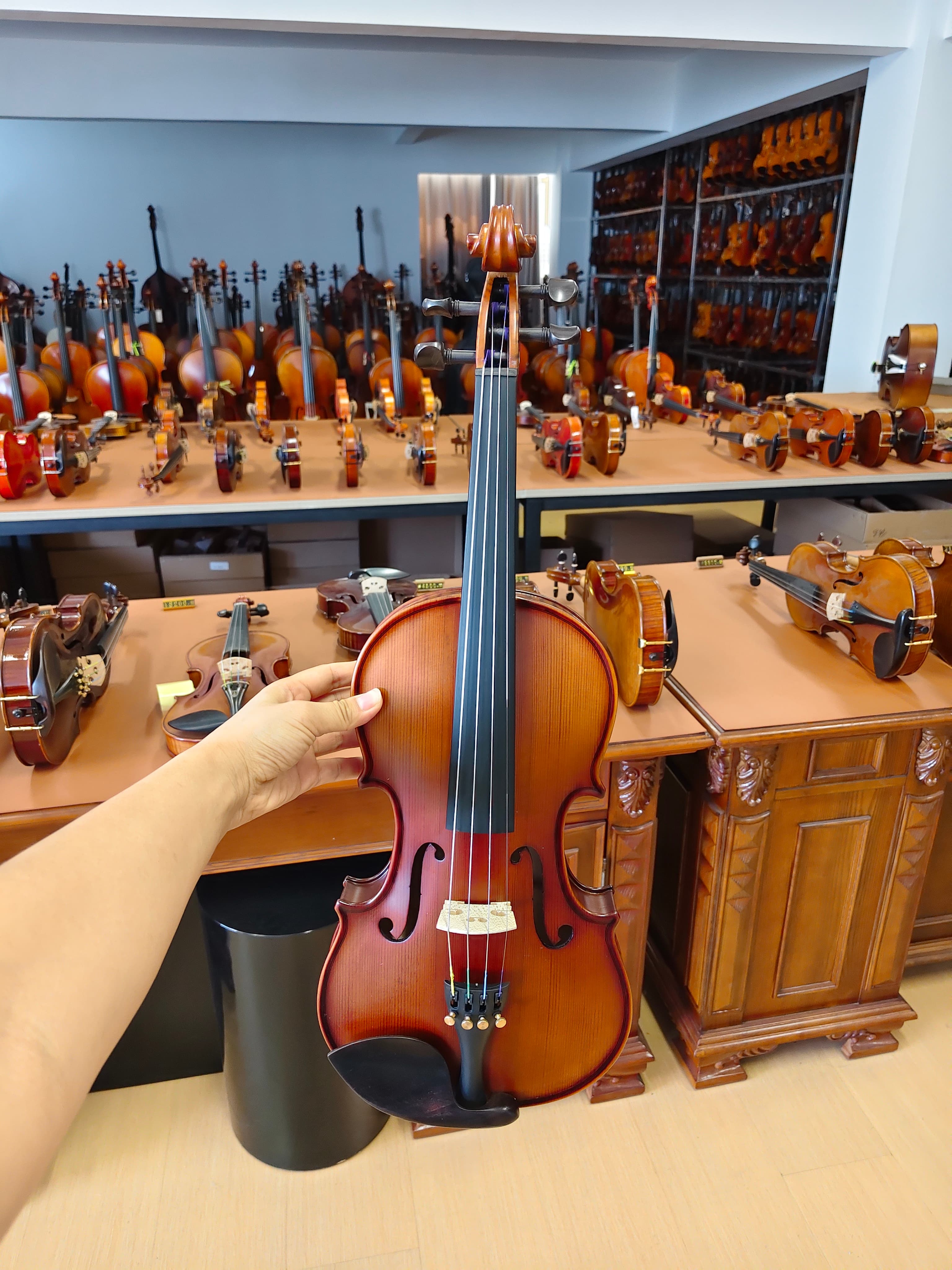
For many young students, renting is smarter than buying. Children grow quickly, and their violin size may change within a year. A rental program lets the family exchange the instrument as the player grows.
Many reputable violin shops apply part of the rental cost toward a future purchase. Some plans include maintenance, accidental damage coverage, or free size exchanges. Read the terms carefully because each program differs.
Renting is also useful when a student is not sure whether they will continue. It reduces the risk of spending hundreds of dollars on an instrument that sits unused in a closet.
Choose a rental program that includes:
• Proper setup.
• A functioning bow.
• A secure case.
• Reasonable insurance terms.
• Easy size exchanges.
• Credit toward a purchase, if desired.
Avoid very cheap rental instruments that are difficult to tune or uncomfortable to play. A poor first experience can make a student think they dislike music when the real problem is the instrument.

What to Look for in a Beginner Violin
A beginner violin should be easy to hold, tune, and play. It does not need to be expensive, but it should be correctly made and professionally adjusted.
When deciding where is the best place to buy a violin for a beginner, focus on setup more than decoration. Bright varnish, fancy labels, and attractive cases do not guarantee good sound. A simple violin with proper measurements may perform far better than a flashy instrument from an unknown seller.
Look for these features:
• A straight neck.
• A well-fitted bridge.
• Pegs that turn smoothly and hold their pitch.
• A fingerboard with a suitable shape.
• A secure tailpiece and chin rest.
• No open cracks or loose seams.
• Comfortable string height.
• A bow that grips the strings without excessive pressure.
The violin should produce a clear sound without fighting the player. Beginners need an instrument that responds easily. If the strings are too high or the violin is badly set up, the student may develop sore fingers and poor technique.
Ask the shop to tune the violin and show you how to care for it. A beginner should also learn how to loosen the bow after playing, wipe rosin from the strings, and store the instrument away from heat and moisture.
How Much Should You Spend on a Violin?
The right budget depends on the player’s age, commitment, and goals. Prices vary by region, maker, condition, and setup quality.
As a general guide in the United States:
• Rental violins may cost about $15 to $50 per month.
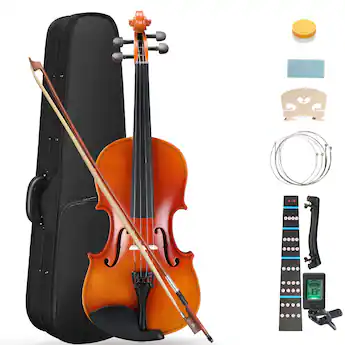
• Basic student outfits may cost about $200 to $600.
• Better intermediate outfits may cost about $600 to $2,000.
• Advanced instruments may cost $2,000 to $10,000 or more.
• Professional and rare violins can cost far more.
These ranges are only estimates. A $300 violin from a reliable shop may be a better choice than a $150 violin from an unknown marketplace. Include the bow, case, rosin, shoulder rest, strings, and future maintenance in your budget.
Do not spend your entire budget on the violin alone. A weak bow can limit the sound of a good instrument. A poor case may expose the violin to damage. A complete, balanced outfit usually gives beginners a better experience.
A teacher can help set a realistic budget. The American String Teachers Association and many school music programs encourage guided selection because the instrument should support healthy technique and steady progress.
How to Test a Violin Before Buying
Testing is one of the most important steps when deciding where is the best place to buy a violin. If possible, bring your teacher or an experienced player. A trained listener may notice problems that are hard for a beginner to hear.
Test the violin in a quiet room. Play open strings first. Then play simple scales, slow melodies, and a few louder passages. Listen for response, balance, comfort, and clarity.
Use this simple process:
-
Check that the violin feels comfortable under your chin and shoulder.
-
Play each open string and listen for buzzing or weak notes.
-
Test the lower and higher positions if you can.
-
Play soft notes to check response.
-
Play louder notes to check power and control.
-
Compare the violin with two or three others.
-
Ask your teacher to test it from several feet away.
-
Take notes about sound, comfort, price, and condition.
Do not choose only because the violin sounds loud. A loud violin may become tiring or harsh. Look for a sound that is clear, even, and pleasant to your ear.
During my years of helping musicians compare instruments, one lesson stands out: players often choose too quickly after hearing one impressive note. A full test reveals much more. The best violin should feel like a partner, not a wrestling match.
Buying a Used Violin: Risks and Benefits
A used violin can offer excellent value. Older instruments may have a mature sound, and a well-kept student violin can serve another player for many years.
However, used instruments need careful inspection. Repairs can cost more than the violin itself. A small open seam may be simple to fix, while a serious soundpost crack can affect value and stability.
Before buying a used violin, inspect:
• The top and back for cracks.
• The seams for gaps.
• The neck for movement.
• The bridge for warping.
• The fingerboard for deep grooves.
• The pegs for smooth movement.
• The scroll and pegbox for cracks.
• The label, while remembering that labels are not proof of origin.
Never assume an old violin is valuable because it looks antique. Many factory violins have copied labels. If the seller claims that an instrument was made by a famous maker, request written evidence and an appraisal from a qualified expert.
A private sale may be reasonable for an experienced player. For a beginner, buying from a shop with a return policy is usually safer.
Violin Shopping Mistakes to Avoid
Knowing where is the best place to buy a violin also means knowing which sellers and offers to avoid. A low price can become expensive when the instrument needs major repairs.
Avoid these common mistakes:
• Buying from a general marketplace without a return policy.
• Choosing a violin only because it has a beautiful finish.
• Trusting a famous name printed on an internal label.
• Buying the wrong size for a child.
• Ignoring the condition of the bow.
• Skipping a teacher’s advice.
• Assuming every “outfit” includes quality accessories.
• Failing to ask about setup and future service.
• Sending money to a seller who creates pressure or urgency.
One mistake I often see is treating the violin as a single product. It is really a system made of the violin, bow, strings, bridge, fittings, case, and player. If one part is poor, the whole experience suffers.
Ask questions before paying. A trustworthy seller will welcome careful buyers. Clear answers are a good sign; vague promises are not.
Questions to Ask a Violin Seller
A short conversation can reveal whether a seller is reliable. Use these questions when visiting a shop or speaking with an online dealer:
• Who set up the violin?
• What repairs has it had?
• Are there any open cracks or loose seams?
• What strings are installed?
• Is the bow included, and is it suitable for this violin?
• How long is the return period?
• Can my teacher inspect it?
• What maintenance is included?
• Can I exchange it if I improve or need a different sound?
• Is the instrument insured during shipping?
A professional seller should answer in plain language. They should not make unrealistic promises such as claiming that one violin will instantly make you sound like a professional.
Ask for receipts and written terms. Keep records of the instrument’s description, serial number, condition, and purchase date. These details help with insurance, resale, and future repairs.
Local Shop Versus Online Store
Both options can work well. The better choice depends on how much guidance you need.
A local shop is usually better if you:
• Are buying your first violin.
• Need help with size or setup.
• Want to compare instruments in person.
• Have access to a teacher nearby.
• Expect to need repairs or adjustments.
An online store may be better if you:
• Live far from a violin shop.
• Already know your preferred setup.
• Want to compare many models.
• Have a trusted teacher who can test the violin.
• Are comfortable using a return policy.
The key difference is support. A local shop gives immediate hands-on help. An online store may offer more selection, but you must manage shipping, testing, and returns.
For many players, the ideal plan is to research online and buy from a shop that allows a home trial. This combines convenience with professional guidance.
How to Make the Final Decision
Once you have tested several violins, compare them with a calm mind. Do not let a sales promotion force your choice. A violin should fit your current needs and leave room for growth.
Rate each instrument from one to five for:
• Comfort.
• Tone.
• Ease of response.
• Projection.
• Tuning stability.
• Condition.
• Bow quality.
• Seller support.
• Price and value.
Then ask your teacher or another experienced player to listen. A violin that sounds pleasant under your ear may sound different across the room. Both views matter.
The best place to buy a violin is the place that gives you confidence in the instrument and the transaction. If you feel rushed, confused, or pressured, pause and keep looking.
Frequently Asked Questions
Where is the best place to buy a violin for a beginner?
A reputable local violin shop is usually the best choice for a beginner. It can provide the correct size, professional setup, trial options, and future maintenance.
Is it safe to buy a violin online?
It can be safe if the seller has detailed descriptions, strong reviews, professional setup, and a clear return policy. Avoid online sellers that hide fees or refuse independent inspection.
Should I rent or buy a violin?
Renting is often best for young children, new players, or families unsure about long-term interest. Buying may make sense when the student is committed and has reached a stable size.
How much does a good beginner violin cost?
A dependable beginner violin outfit often costs about $200 to $600 in the United States, although prices vary. Setup quality and seller support matter as much as the listed price.
Can I buy a used violin as a beginner?
You can, but it is safer to buy from a reputable shop or have a luthier inspect the instrument first. Hidden cracks, poor setup, and repair costs can make a cheap violin expensive.
Do I need a teacher when choosing a violin?
You do not have to bring a teacher, but expert help is valuable. A teacher can judge sound, comfort, size, and playability more accurately than most beginners.
Conclusion
The best place to buy a violin is usually a trusted local shop or professional luthier that offers expert setup, honest advice, and a fair trial or return policy. Online stores can also work well when they provide clear terms and reliable support. Rental programs are often the smartest option for growing children and uncertain beginners.
Focus on fit, condition, sound, bow quality, setup, and after-sale care rather than labels or flashy finishes. Test several instruments, involve a teacher when possible, and take time before making your choice. Visit a reputable shop, compare your options, and choose the violin that helps you enjoy playing and continue improving.

Senior Music Reviewer
Alex Carter is a seasoned music reviewer with over a decade of experience in the world of sound and instruments. Passionate about helping musicians and enthusiasts make informed choices, he brings sharp insights and in-depth knowledge to every review. From classical instruments to modern gear, Alex combines technical expertise with a love for music to deliver content that resonates with readers.
As a Senior Music Reviewer and expert author on Tuneluma.com, Alex is dedicated to sharing honest evaluations, practical advice, and thoughtful commentary to guide readers in their musical journey.