How Does A Player Piano Work: Inside The Magic
A player piano uses coded music rolls, air pressure, and piano mechanisms to play notes without human fingers.
Understanding how does a player piano work reveals a clever link between music, mechanics, and early automation. These instruments can read punched paper rolls, convert holes into air signals, and move piano keys with remarkable timing. This guide explains the full process, from the music roll to the hammers, while covering modern digital player systems, common faults, maintenance, and buying tips.
What Is a Player Piano?
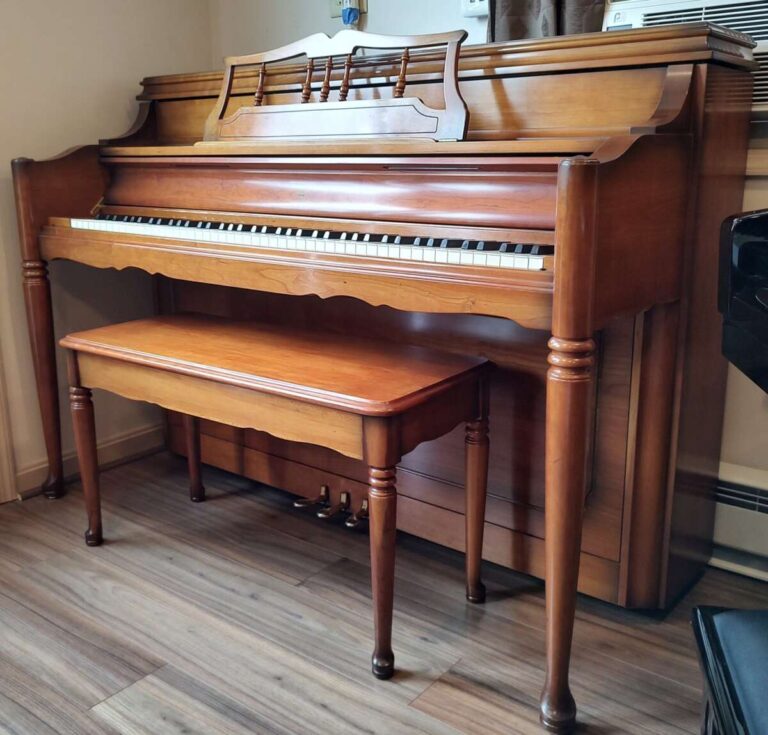
A player piano is an acoustic piano fitted with a mechanism that can play music automatically. Early models used perforated paper rolls. When the roll moved through the instrument, holes allowed air to pass through small control valves. Those valves then activated the piano action.
The piano still makes sound in the normal way. Felt hammers strike metal strings, and the sound travels through the soundboard. The main difference is that a pneumatic system, rather than a pianist’s fingers, moves the keys and pedals.
The term “player piano” often refers to instruments made from the late 19th century through the early 20th century. Many people also use it for modern reproducing pianos, which can use electronic sensors, motors, MIDI files, or remote controls.
A traditional player piano usually contains:
- A paper music roll
- A roll frame and drive motor
- A tracking system
- Pneumatic tubes
- Air valves
- Small bellows
- Pneumatic “fingers” or pushers
- A regular piano action
- Pedal controls
- A foot-operated or electric pump
The basic idea is simple: the roll stores instructions, the pneumatic system reads them, and the piano action turns those instructions into music.

How Does a Player Piano Work Step by Step?
To understand how does a player piano work, imagine the music roll as an old mechanical version of a digital file. Instead of storing information as computer code, it stores notes as carefully placed holes in paper.
1. The roll moves across the tracker bar
The paper roll wraps around a take-up spool and passes over a metal device called a tracker bar. The tracker bar has rows of small holes. Each hole connects to an air channel inside the player mechanism.
A motor or foot-powered system pulls the roll across the bar at a steady speed. The roll must move at the correct rate because its length represents time. If it moves too fast, the music sounds rushed. If it moves too slowly, the performance drags.
2. Holes allow air to enter
When a hole in the paper lines up with a hole in the tracker bar, air flows through that channel. The paper acts like a valve. Solid paper blocks the air, while a punched hole allows air to pass.
This air signal is not powerful enough to move a piano key by itself. It controls another valve that directs stronger air pressure to a small pneumatic motor.
3. Pneumatic motors move the keys
The pneumatic motor contains a flexible leather or fabric-covered pouch. When air pressure changes inside the pouch, it expands or contracts. A linkage connected to the pouch pushes the back of a piano key.
The key then moves the same parts that a human finger would move. It lifts the action, throws the hammer toward the string, and allows the note to sound.
This process happens many times each second. A fast musical passage may require many valves and pneumatic motors to operate in close succession.
4. The piano action creates the sound
The player mechanism does not replace the piano action. It activates it.
When a key moves, the piano action performs several jobs:
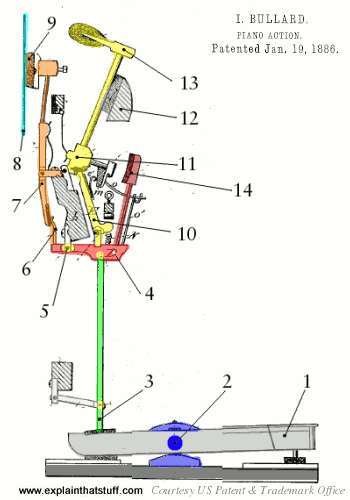
- The key lifts a whippen.
- The whippen moves the jack.
- The jack pushes the hammer butt.
- The hammer travels toward the string.
- The jack escapes from the hammer butt.
- The hammer strikes the string.
- The dampers lift and let the string vibrate.
The hammer then falls away from the string. The damper returns and stops the note when the key is released.
This is why a player piano sounds like a real acoustic piano. The strings, hammers, soundboard, and dampers remain part of the normal instrument.

The Role of Air Pressure in a Traditional Player Piano
Air pressure is the heart of a pneumatic player piano. Most early instruments use a vacuum system rather than positive air pressure. This detail helps explain how does a player piano work in practical terms.
A pump creates a partial vacuum inside a storage chamber, often called a reservoir. The reservoir stores a steady supply of suction. When a punched hole opens a tracker-bar channel, the suction reaches a control valve.
The control valve then connects the reservoir to a smaller bellows unit. That bellows changes shape and moves a mechanical linkage. The linkage pushes a piano key or operates a pedal.
The system uses different air levels for different jobs:
- The main reservoir provides steady suction.
- The primary valve responds to the music roll.
- The secondary pneumatic motor moves the key.
- The expression system changes volume and phrasing.
- The pedal pneumatics operate the soft and sustain pedals.
Leather plays a major role in older pneumatic systems. It forms airtight seals around valves and bellows. Over time, leather can dry out, crack, or lose its flexibility. Even a small air leak can make the player mechanism weak or unreliable.
A healthy system must maintain enough vacuum to move the keys with force. If the vacuum falls, the piano may play slowly, miss notes, or stop during thick chords.
How Player Piano Rolls Store Music
A player piano roll is a long strip of paper with rows of punched holes. Each row usually represents a pitch or control function. The position of a hole across the width of the roll identifies the note. Its position along the length identifies when the note should play.
The roll may also include holes for:
- Sustain pedal control
- Soft pedal control
- Tempo changes
- Expression effects
- Repeated notes
- Chord patterns
- Automatic rewind
A standard roll gives the instrument instructions about when to play notes. It usually does not capture every detail of a pianist’s touch. The system may know when a note begins and ends, but it may not fully reproduce the force used by the original performer.
A reproducing piano roll is more advanced. It can encode details such as:
- Note velocity
- Pedal timing
- Tempo changes
- Dynamic changes
- Performance accents
- Small timing differences
These rolls aimed to reproduce a specific pianist’s performance. They could make an early 20th-century piano play music by famous performers, even when no recording was available.
The roll is not always an exact musical score. Its holes must match the tracker bar’s layout and the player mechanism’s design. Rolls made for one system may not work correctly on another without an adapter or conversion.

How Does a Player Piano Control Volume and Expression?
One common question about how does a player piano work concerns expression. If the piano only turns notes on and off, how can it sound musical?
Early player pianos used expression controls to adjust the strength of the pneumatic action. A stronger vacuum could make the pneumatic fingers push the keys more firmly. A weaker vacuum could produce a softer touch.
Some systems use special perforations on the roll to control expression. These holes operate valves that change the air supply. The result can be louder or softer music, even though a human player is not pressing the keys.
Expression systems may control:
- Overall volume
- Crescendos
- Diminuendos
- Phrase shaping
- Pedal use
- Tempo changes
Still, a traditional player piano has limits. It may not reproduce the full range of touch available to a skilled pianist. The quality of the result depends on the roll, the condition of the mechanism, the piano’s regulation, and the person setting the tempo.
A poorly regulated piano can make a good roll sound harsh or uneven. A well-maintained piano can sound surprisingly natural. In my experience with mechanical piano systems, the piano itself often matters as much as the roll. A weak action or tired hammer set can hide the strengths of an excellent player mechanism.
How Modern Player Pianos Work
Modern player pianos may use electronic sensors and electric motors instead of paper rolls and pneumatic bellows. The acoustic piano still creates the sound, but a computer controls the movement.
A modern system may include:
- Optical or magnetic key sensors
- Solenoids beneath the keys
- A control computer
- MIDI input
- Digital music files
- Electronic pedal actuators
- Wireless or app-based controls
A MIDI file stores musical information as digital events. These events can include pitch, timing, velocity, pedal use, and other control data. The system sends each event to a solenoid, which moves the matching key.
A solenoid is an electromagnetic device. When electric current flows through its coil, it creates a magnetic field that moves a plunger. The plunger pushes the key or action part.
This answers how does a player piano work in a modern setting: software sends performance data to electronic actuators, and those actuators operate the acoustic piano action.
Some systems use sensors to record a pianist. The sensors measure key movement and pedal activity. The recording can then be stored as a MIDI performance and played back later.
Modern systems offer useful features:
- Remote playback
- Adjustable tempo
- Volume control
- Recording
- Smartphone access
- Digital music libraries
- Silent practice with headphones on some models
Modern player systems can be very accurate, but they are not free from limitations. Poor calibration, worn solenoids, outdated software, or weak piano regulation can reduce the quality of playback.

Player Piano vs. Digital Piano
A player piano and a digital piano are not the same instrument.
A player piano has real strings, hammers, dampers, and a soundboard. It creates sound through physical vibration. A digital piano creates sound from recorded samples or digital modeling and sends that sound through speakers or headphones.
Here are the main differences:
- A player piano uses acoustic piano strings.
- A digital piano uses electronic sound generation.
- A player piano can be played by hand like a normal piano.
- A digital piano often offers many instrument sounds.
- A player piano needs tuning and acoustic maintenance.
- A digital piano usually needs less mechanical service.
- A player piano can produce natural string resonance.
- A digital piano is often easier to move and use quietly.
Some acoustic pianos combine both systems. They include an electronic player mechanism inside a real piano. This gives the owner acoustic sound, automatic playback, recording, and sometimes silent operation.
When choosing between them, consider your main goal. Choose a player piano if you value acoustic tone and automatic performance. Choose a digital piano if you need portability, headphones, many sounds, or a lower maintenance burden.
Common Problems With Player Pianos
Knowing how does a player piano work makes troubleshooting much easier. Most problems come from air leaks, timing issues, worn parts, or poor adjustment.
The piano plays weakly
Weak notes often point to a leaking pneumatic system. Common causes include cracked tubing, damaged leather, loose fittings, or worn valve cloth.
A technician can test the system with a vacuum gauge and inspect the bellows. Increasing pump power without fixing the leak usually creates more strain and does not solve the real problem.
Notes do not play
A blocked tracker-bar hole can stop one note or an entire group of notes. Dust, old paper fibers, or dried residue may interfere with airflow.
Never poke hard objects into the tracker bar. A thin cleaning tool or professional service is safer because the internal channels are small and easy to damage.
The tempo is wrong
A slipping drive wheel, weak motor, incorrect roll tension, or damaged governor can change the tempo. Older foot-pumped systems may also play differently based on how steadily the pedals are used.
Some rolls include tempo markings. These are useful guides, but the correct speed can also depend on the musical style and the specific recording.
The piano plays several notes at once
Unwanted notes may result from valve leakage or misalignment. A roll can also be damaged or poorly cut. In a modern system, incorrect calibration may cause one solenoid to trigger another key.
The pedals do not respond
Pedal problems may come from blocked control channels, broken pneumatic tubing, worn leather, or a disconnected linkage. Sustain pedal timing is especially important because it changes how long notes ring.
A professional piano technician should inspect both the player mechanism and the acoustic pedal assembly.

Maintenance Tips for a Player Piano
A player piano needs two kinds of care: ordinary piano maintenance and player-mechanism maintenance.
Use these practical habits:
- Keep the piano away from direct sunlight, heaters, and air-conditioning vents.
- Maintain stable indoor humidity when possible.
- Store paper rolls flat or on their original spools.
- Keep dust away from the roll cabinet and tracker bar.
- Have the piano tuned on a regular schedule.
- Ask a qualified technician to inspect pneumatic parts.
- Avoid forcing keys when the player mechanism is engaged.
- Do not use household oils on valves, leather, or piano action parts.
- Use only compatible rolls and accessories.
- Test the system briefly rather than running it for hours when its condition is unknown.
Humidity changes can affect both the wooden piano structure and the paper, leather, and cloth in the player system. The ideal environment varies by instrument and region, so a local piano technician can offer better guidance than a single universal number.
Vintage player pianos often need restoration before regular use. A piano may look beautiful while its internal leather is already brittle. One mistake I would caution against is judging a player piano only by whether the motor turns. The motor can run while the bellows leak badly and the valves fail to control the keys.
Can You Play a Player Piano by Hand?
Yes. Most player pianos can be played by hand when the player mechanism is disengaged. The acoustic piano action remains in place, so the keyboard works like a normal piano.
Some instruments have a switch, lever, or sliding control that disconnects the pneumatic fingers. Others require the roll frame to be placed in a nonplaying position.
Before switching modes, check the owner’s instructions. Forcing the mechanism or changing controls while the roll is moving may damage the tracker system.
Playing by hand is also a useful test. If the piano feels heavy, uneven, or noisy without the player system, the acoustic action may need regulation. Automatic playback cannot correct a poor action. It only moves the existing action for you.
Benefits and Limitations of a Player Piano
A player piano offers a unique blend of history, convenience, and musical charm.
Benefits include:
- It can provide automatic music without a pianist.
- It preserves an acoustic piano sound.
- It can help students hear phrasing and pedal use.
- It offers a strong connection to music history.
- It can entertain guests in homes, museums, and public spaces.
- Modern models can record and replay live performances.
- It can demonstrate music that is difficult for one person to perform.
The limitations are just as important:
- Older systems may need expensive restoration.
- Paper rolls can be fragile and difficult to find.
- Pneumatic parts can leak or fail with age.
- Playback may sound mechanical if expression is limited.
- Acoustic pianos still need tuning and regulation.
- Modern electronics can become outdated.
- A player piano usually costs more to maintain than a basic digital piano.
The best choice depends on your expectations. A restored vintage instrument is part piano, part machine, and part historical artifact. A modern system is more convenient but may rely on proprietary software or replacement parts.

How to Choose a Player Piano
Start by deciding whether you want a vintage pneumatic instrument or a modern electronic system.
For a vintage player piano, inspect:
- The condition of the soundboard
- The state of the strings and tuning pins
- The condition of the hammers
- The quality of the cabinet
- The operation of the roll motor
- The strength of the pneumatic action
- The availability of repair parts
- The quality of any previous restoration
Ask whether the seller has restoration records. A fresh-looking cabinet does not prove that the internal mechanism works.
For a modern player piano, check:
- Compatibility with current music files
- Availability of technical support
- Replacement solenoid costs
- Software and app support
- Recording features
- Headphone or silent-play options
- Warranty coverage
- Technician experience with that brand
Play the piano by hand and through the automatic system. Listen for missed notes, uneven volume, excessive mechanical noise, and poor pedal timing.
If possible, take a trusted piano technician with you. The inspection fee is small compared with the cost of restoring an entire instrument.
Why Player Pianos Still Matter
Player pianos helped bring recorded and automated music into homes before radio and affordable audio equipment became common. They also preserved performances in a form that could be studied, shared, and replayed.
Their technology shows an important step in the history of automation. A paper roll is an early form of stored data. The tracker bar acts like a reader. The pneumatic valves act like switches. The bellows act like motors. The piano action acts like the final output device.
That is why learning how does a player piano work is more than a lesson in old machinery. It shows how engineers solved problems that still exist today: storing information, controlling timing, reproducing movement, and creating natural expression.
For musicians, these instruments also offer a different way to study performance. A listener can focus on tempo, phrasing, dynamics, and pedal use without watching a performer’s hands.

Frequently Asked Questions About How Does a Player Piano Work
Does a player piano need electricity?
Traditional player pianos can work without electricity when operated by foot pedals. Many use an electric motor for convenience, while modern player systems usually need electricity for their sensors, computers, and solenoids.
Can a player piano play any music?
A traditional player piano needs a compatible paper roll. A modern player piano can play digital files in supported formats, but compatibility depends on the control system and its software.
How loud is a player piano?
A player piano is about as loud as the same acoustic piano played by hand. Its volume depends on the piano’s size, condition, room acoustics, roll settings, and expression system.
Are player pianos hard to maintain?
Vintage pneumatic player pianos can be difficult to maintain because leather, tubing, valves, and bellows wear out. Modern systems need less mechanical work but still require regular piano tuning and occasional electronic service.
Can a player piano learn how a person plays?
Many modern systems can record a pianist through key and pedal sensors. Traditional paper-roll systems generally record note timing and some performance controls, but they do not capture every detail of finger touch.
Why does my player piano miss notes?
Missed notes may come from air leaks, blocked tracker-bar channels, damaged rolls, weak valves, poor calibration, or worn solenoids. A technician should test the player mechanism before replacing major parts.
Conclusion
A player piano combines a music code with a mechanical or electronic control system. Traditional instruments read punched paper rolls through a tracker bar and use air pressure to move piano keys. Modern systems use digital files, sensors, and solenoids, but both types still rely on the acoustic piano action to create sound.
The answer to how does a player piano work becomes clear when you follow the signal from the roll or file to the tracker system, valve, actuator, key, hammer, and string. If you own one, protect it from humidity, arrange regular tuning, and have the player mechanism inspected before heavy use.
Explore a well-restored instrument, listen to a full performance, or speak with a qualified piano technician before buying. A player piano is not just a machine that plays notes; it is a remarkable piece of music history that still rewards careful study.

Senior Music Reviewer
Alex Carter is a seasoned music reviewer with over a decade of experience in the world of sound and instruments. Passionate about helping musicians and enthusiasts make informed choices, he brings sharp insights and in-depth knowledge to every review. From classical instruments to modern gear, Alex combines technical expertise with a love for music to deliver content that resonates with readers.
As a Senior Music Reviewer and expert author on Tuneluma.com, Alex is dedicated to sharing honest evaluations, practical advice, and thoughtful commentary to guide readers in their musical journey.