Who Invented The Steel Drum: History And Inventor
Anthony “Pan” Williams, Winston “Spree” Simon, and Ellie Mannette helped invent and shape the modern steel drum.
The question of who invented the steel drum has no single, simple answer. The instrument grew from many experiments in Trinidad and Tobago during the 1930s and 1940s. This article explains the key inventors, the communities behind the invention, and how a discarded oil barrel became one of the world’s most unique musical instruments.
Who invented the steel drum?
The steel drum, also called the steelpan, was invented in Trinidad and Tobago. Most historians credit several pioneers rather than one person. The main names are Winston “Spree” Simon, Ellie Mannette, Anthony “Pan” Williams, and the creative communities of Port of Spain.
If you ask who invented the steel drum, the most accurate answer is this: Trinidadian musicians created it over time through shared experiments, rival bands, and careful improvements to metal drums.
Winston Simon made an important early breakthrough. In the late 1930s and early 1940s, he helped turn a simple metal object into a surface that could play several clear notes. His work showed that hammered metal could act as a real musical instrument.
Ellie Mannette made another major advance. Around 1946, he became the first person widely recognized for using the bottom of a 55-gallon oil drum to create a modern-style pan. He also helped shape the metal so players could strike separate notes without producing too much unwanted sound.
Anthony “Pan” Williams improved the design further. He developed note layouts, tuning methods, and playing systems that helped steel orchestras perform melodies, chords, and complex arrangements.
So, who invented the steel drum? The strongest historical answer is that the steel drum was a collective invention, with a small group of pioneers guiding its development.
The early history of the steel drum
The story of the steel drum begins with Trinidad’s Carnival culture. Carnival brought together music, dance, costume, and public celebration. Drums, bamboo tubes, whistles, and other homemade instruments were central to the festivities.
In 1881, colonial authorities banned traditional stick fighting and restricted some forms of Carnival music. Many performers began using bamboo tubes, known as tamboo bamboo, to create rhythm. Players struck the bamboo against the ground or against other pieces.
Tamboo bamboo bands became popular, but the instruments had limits. Bamboo could split, break, or wear out. Over time, musicians began adding metal objects such as biscuit tins, brake drums, paint cans, and discarded containers.
These metal objects produced different tones. A player could strike one part for a high sound and another part for a low sound. This discovery encouraged musicians to test larger and more useful pieces of metal.
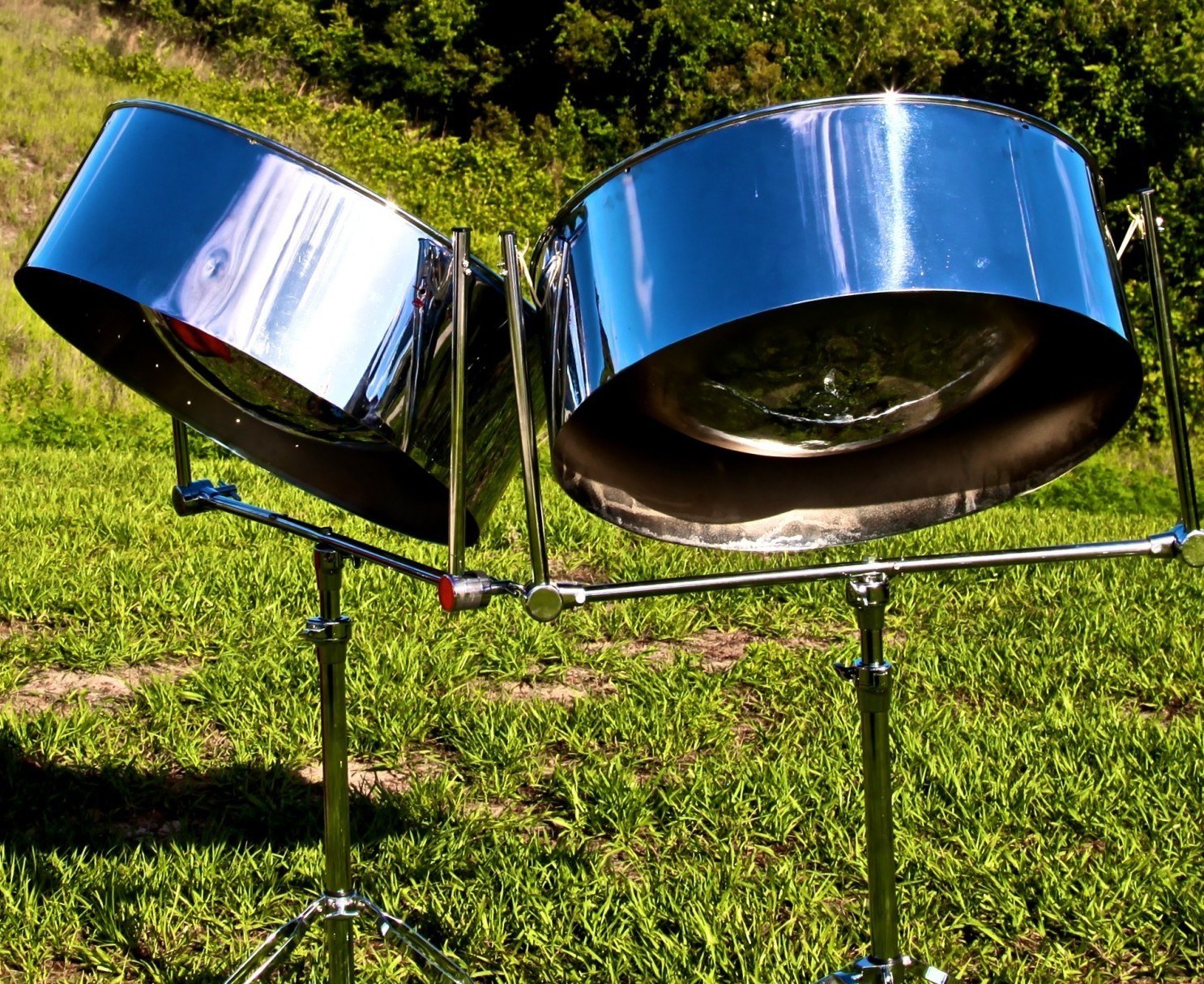
World War II also played a role. Oil drums became common in Trinidad because of military activity and the growth of the petroleum trade. After musicians discovered that oil drums could produce rich tones, the 55-gallon barrel became the ideal raw material.
This period explains why the answer to who invented the steel drum includes an entire community. The instrument did not appear in one workshop on one day. It grew in streets, yards, panyards, and Carnival bands.

Winston “Spree” Simon’s role
Winston “Spree” Simon is one of the most important figures in the history of the steel drum. He was a musician from Trinidad who helped prove that a metal pan could play a melody rather than only provide rhythm.
Early metal instruments often had just a few notes. Simon experimented with hammering and shaping metal to create more pitches. His work helped move the instrument from a simple percussion tool toward a melodic instrument.
Simon is often linked to the invention of the ping-pong pan. This early pan had a small number of notes and could play recognizable tunes. It was not yet the large, carefully tuned instrument used by modern steel orchestras, but it marked a major step forward.
His achievement was especially important because it changed how people viewed the instrument. A metal container was no longer just something to hit. It became a voice that could sing.
When studying who invented the steel drum, it is important not to overlook Simon. His work helped establish the steelpan as a melodic instrument and inspired other tuners to push the design further.
Ellie Mannette and the first modern steelpan
Ellie Mannette is often called the father of the modern steelpan. He played a major role in creating the shape and sound that people now associate with the steel drum.
Mannette is widely credited with being the first person to use the bottom of a 55-gallon oil drum as the playing surface. Earlier instruments often used smaller metal containers or flat sheets. The large drum provided more space for notes and allowed a stronger, deeper tone.
He also developed important construction methods. These included:
• Cutting the drum to create a workable playing surface
• Sinking the metal into a bowl shape
• Hammering separate note areas into the surface
• Raising the notes so they could vibrate clearly
• Tuning the notes to specific pitches
Mannette also helped create the skirt, or the lower part of the drum that supports the playing surface. The skirt affects the instrument’s tone, volume, and resonance.
His approach helped transform the steelpan from a rough street instrument into a serious musical instrument. That is why many accounts of who invented the steel drum place Ellie Mannette near the center of the story.
Still, calling Mannette the only inventor would leave out the musicians and tuners who came before him. His work was a major leap, but it stood on earlier discoveries made by other Trinidadian artists.
Anthony “Pan” Williams and steelpan tuning
Anthony “Pan” Williams made the steelpan easier to play in groups. He was a skilled tuner, arranger, and band leader who helped develop the modern layout of steelpan notes.
One of his best-known contributions was the use of a note arrangement based on the cycle of fourths and fifths. This layout grouped notes in a logical way for playing chords and musical patterns.
Williams also helped develop the “Spider Web” pan. The name describes the way the notes spread across the playing surface. This design gave players access to more notes while keeping the instrument practical to perform.
His work mattered because a steel orchestra needs more than individual notes. Players must perform together, stay in tune, and move between melodies and chords. Williams helped make that possible.
When people ask who invented the steel drum, they may expect one name. In reality, Williams shows why the invention should be viewed as a chain of improvements. Simon helped create melody, Mannette expanded the instrument, and Williams advanced its tuning and arrangement.
How a steel drum is made
A steel drum is made from a steel barrel, usually a 55-gallon oil drum. The process requires skill, patience, and accurate tuning.
A basic pan-making process includes these steps:
-
The maker selects a suitable steel drum.
-
The top or bottom of the barrel is cut away, depending on the design.
-
The remaining metal is cleaned and prepared.
-
The steel is heated and shaped into a curved playing surface.
-
Note sections are marked on the surface.
-
Each note is hammered into a raised or lowered shape.
-
The notes are tuned to exact pitches.
-
The pan is heat-treated, polished, and tested.
The tuning stage is the most demanding part. A small change in the shape or thickness of a note can alter its pitch. The maker must also control unwanted vibrations, called overtones.
A good steelpan has a clear main note, balanced tone, and enough sustain to blend with other pans. Poor tuning can make the instrument sound harsh, weak, or unstable.
This hands-on process is another reason why who invented the steel drum cannot be answered with one name. The instrument depends on metalworking, music theory, listening skills, and years of practical experience.
Why the steel drum is called a pan
In Trinidad and Tobago, musicians usually call the instrument a steelpan or pan. The word “steel drum” is common in North America, but some pan players consider it less precise.
The term “drum” suggests an instrument made mainly for rhythm. A steelpan can provide rhythm, but it can also play melodies, harmonies, and full musical arrangements.
The word “pan” may come from the idea of playing or striking a metal container. It became part of the language of Trinidad’s steelband culture.
Common names include:
• Steelpan: The preferred formal name for the instrument
• Pan: A short, common name used by players