Where Do Drums Come From: History And Origins Explained
Drums come from ancient human cultures that stretched animal skins over hollow objects to create rhythmic sounds.
The story of where do drums come from reaches back thousands of years, long before written history. Archaeologists have found early percussion instruments in several regions, but no single culture can claim to have invented every drum. Instead, drums likely developed in different places as people discovered that skin, wood, clay, and hollow logs could turn simple tapping into music, dance, ritual, and communication.

Where Do Drums Come From?
Drums come from many ancient cultures, not one exact birthplace. Early people likely made drums from materials that were easy to find, such as:
• Animal skins for drumheads
• Hollow tree trunks for shells
• Clay pots for drum bodies
• Bones, sticks, and stones for beaters
• Rope, leather, or plant fibers for tension systems
The basic design was simple. A person stretched a hide across an open container and struck it with a hand or stick. The stretched skin vibrated, and the hollow space below made the sound louder.
This idea is so natural that separate communities may have created drums on their own. That is why drum traditions appear across Africa, Asia, Europe, the Middle East, Australia, and the Americas.
The answer to where do drums come from also depends on what counts as a drum. A modern snare drum, a West African djembe, a Japanese taiko, and an ancient frame drum look very different. Yet they all use a vibrating surface to produce sound.
The Earliest Evidence of Drums
Finding the first drum is difficult because early drums were made from materials that decay. Animal skin, wood, and plant rope rarely survive thousands of years. Archaeologists must often study images, fragments, tools, and similar instruments to understand ancient percussion.
Some of the oldest known drum-like instruments date back more than 8,000 years. Archaeological sites in the Middle East have produced clay and frame-drum objects linked to early farming communities. These items suggest that people used percussion during a period when villages, agriculture, and religious ceremonies were growing.
Ancient drums may be even older than the surviving evidence. Humans could have stretched skins over wooden frames long before the materials disappeared. A simple skin drum might leave no clear trace in the ground.
Researchers also examine ancient art. Carvings, pottery scenes, and wall paintings show people holding frame drums, barrel drums, and other percussion instruments. These images help reveal how drums were played and how important they were in social life.
How Ancient People First Made Drums
The first drums were probably built with simple hand tools. A maker could hollow a log, form a clay vessel, or bend a thin piece of wood into a frame. The next step was to cover one opening with animal skin.
The skin had to be prepared carefully. It might be soaked, scraped, stretched, and dried over the shell. As the hide dried, it became tighter. A tight drumhead produces a brighter and higher sound, while a loose head creates a deeper tone.
Early drum makers probably learned through trial and error. They discovered that sound changed when they used:
• Thicker or thinner skins
• Larger or smaller shells
• Different types of wood
• More or less tension
• Hands instead of sticks
• Open or closed drum bodies
This process still matters today. In my own practical understanding of percussion design, one of the clearest lessons is that the drumhead and shell work as a team. A skilled player can change the sound with touch, but the materials set the instrument’s basic voice.
Drums in Ancient Africa
Africa has some of the world’s richest and most varied drum traditions. Drums developed in many African societies for music, dance, worship, storytelling, ceremonies, and long-distance communication.
The djembe is one well-known example. It originated among Mandé-speaking communities in West Africa and has a carved wooden shell with a goatskin head. Players use their hands to create bass, tone, and slap sounds.
The talking drum is another important instrument. Its hourglass shape and adjustable cords allow players to change the pitch. In some West African cultures, skilled drummers used talking drums to imitate speech patterns and send messages across distances.
Drums also supported oral history. A rhythm could signal a gathering, mark a royal event, guide a dance, or support a praise song. This shows that the answer to where do drums come from is not only about materials. It is also about human needs, memory, identity, and community.
Drums in Ancient Asia and the Middle East
Ancient Asian cultures developed many drum types. China has a long history of barrel drums, frame drums, and large ceremonial drums. Historical records and art show drums used in military settings, religious events, court music, theater, and festivals.
Japanese taiko traditions later became famous for powerful group performances. Large taiko drums can produce deep, physical sounds that are felt as much as heard. Their role has changed over time, from religious and military use to modern concert performance.
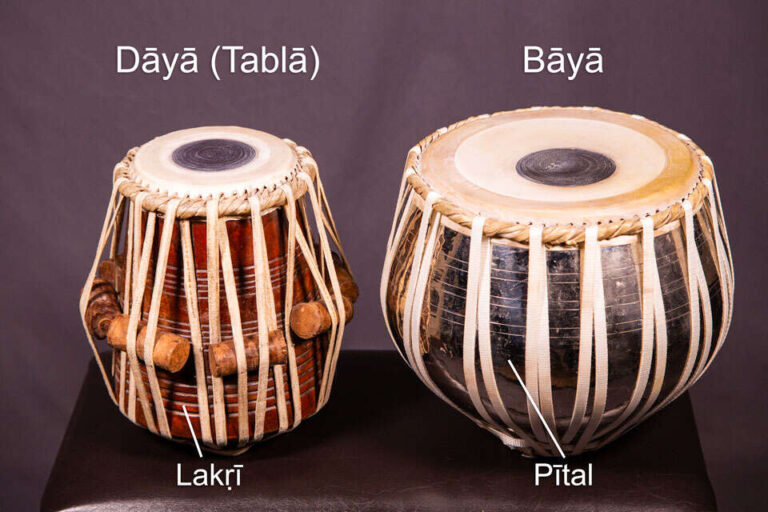
In India, drums became central to classical and folk music. Instruments such as the tabla and mridangam use carefully shaped shells and complex tuning methods. Their sounds support detailed rhythm systems rather than simple repeated beats.
The Middle East also has an ancient frame-drum tradition. Instruments such as the daf and various goblet drums appear in regional music and art. These drums show how similar ideas developed across different societies while taking on distinct local forms.
Drums in Ancient Europe
Europe also had early percussion instruments, although many ancient examples have not survived. Frame drums appear in art and written descriptions from parts of the Mediterranean and broader European regions.
Ancient Greek and Roman communities used drums, tambourines, cymbals, and other percussion tools in religious ceremonies, theater, military settings, and celebrations. The tympanum, a type of frame drum, was linked with worship and dance.
Northern European cultures used drums in ritual and folk settings. Later, military drumming became a major part of European marching traditions. Soldiers used drums to keep a steady pace, transmit commands, and build group focus.
The modern drum kit did not exist in ancient Europe. It developed much later when musicians began combining separate percussion instruments so one player could perform several parts at once.
Drums in the Americas
Indigenous peoples across North, Central, and South America created many kinds of drums before European contact. These included frame drums, hand drums, log drums, water drums, and large communal drums.
Many Native American nations use drums in ceremony, social dance, healing traditions, and community gatherings. The drum may represent the heartbeat of the Earth or the shared heartbeat of the people. Meanings differ by nation, so it is important not to treat all Indigenous drum traditions as the same.
In Mesoamerica, cultures such as the Maya and Aztec used drums in ceremonies, warfare, dance, and public events. The huehuetl was a large upright drum, while the teponaztli was a wooden slit drum played with beaters.
Across South America, drums became part of religious, social, and dance traditions. After European colonization, African, Indigenous, and European practices mixed in complex ways. Many modern Latin American rhythms grew from this long history of cultural exchange.
Why Did Humans Invent Drums?
People likely invented drums for several connected reasons. Rhythm is easy to repeat, easy to share, and powerful in a group. A drumbeat can organize movement in a way that a quiet instrument cannot.
Common early uses included:
• Dancing and celebration
• Religious ceremonies
• Military signals
• Community announcements
• Storytelling and oral history
• Work songs and group labor
• Trance, healing, and meditation
• Teaching children rhythm and social roles
A loud drum could travel farther than a human voice. This made it useful before phones, writing, or electronic signals existed. In that sense, early drums worked like both musical instruments and communication tools.
The physical effect also matters. Low drum sounds create vibration in the body. A large drum can make a crowd move together, while a fast hand drum can raise energy during a dance. That shared response may explain why drums appear so often in ceremonies around the world.
How Drums Changed Over Time
Drums became more advanced as people improved materials and construction methods. Early builders used simple knots and pegs to hold skins in place. Later makers developed cords, rings, wedges, and metal hardware for better control.
Several major changes shaped drum history:
- Frame drums became lighter and easier to carry.
- Barrel drums produced stronger low tones.
- Goblet drums offered different sounds from the center and edge.
- Rope-tuned drums allowed players to adjust tension.
- Metal shells made drums more durable and consistent.
- Machine-made heads improved tuning and repair.
- Pedals allowed one player to control bass drums.
- Modern hardware made large drum setups practical.
The development of the drum kit is especially important. In the late 1800s and early 1900s, marching percussionists and theater musicians began combining bass drums, snare drums, cymbals, and smaller percussion instruments.
By the jazz era, the drum set had become a central part of popular music. Drummers were no longer just keeping time. They shaped the groove, supported soloists, added color, and helped define entire genres.
Where Do Modern Drum Kits Come From?
Modern drum kits come from a blend of military drums, marching percussion, orchestral instruments, and African American musical innovation. The kit formed in the United States during the early 20th century.
Before the drum kit, one musician often played one drum. In theaters and dance halls, space and money encouraged performers to control several instruments at once. The bass drum pedal was a major breakthrough because it freed the drummer’s feet and made a compact setup possible.
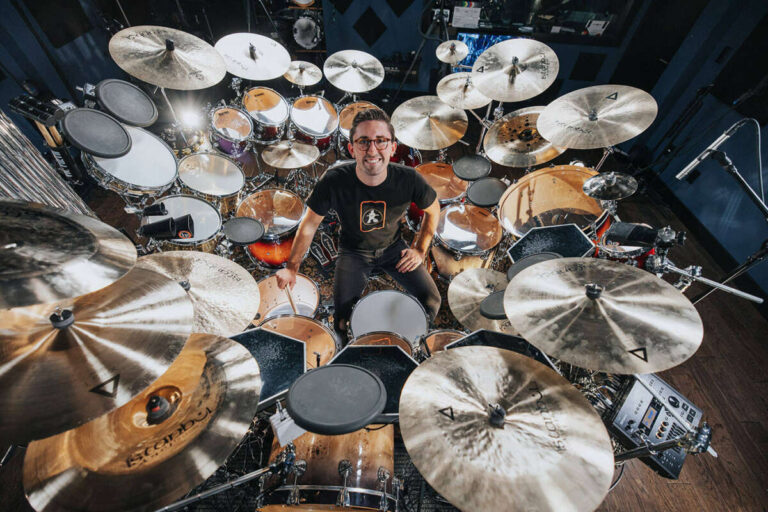
A typical modern kit may include:
• Bass drum
• Snare drum
• Mounted toms
• Floor tom
• Hi-hat cymbals
• Crash cymbals
• Ride cymbal
• Stands, pedals, and other accessories
Jazz drummers helped turn this collection into a musical instrument. Later, rock, funk, metal, hip-hop, country, and pop musicians expanded its sound and technique.
When people ask where do drums come from, they may be asking about the drum kit they see on stage. That instrument is relatively new, but its core idea is ancient: make a surface vibrate and use rhythm to connect people.
What Materials Are Used to Make Drums?
Traditional drums use natural materials, while many modern drums use a mix of natural and manufactured parts. Each choice affects tone, weight, strength, and price.
Common materials include:
• Maple for a warm and balanced sound
• Birch for a clear and focused sound
• Oak for strong attack and volume
• Mahogany for deep and rich tones
• Metal for bright, sharp sounds
• Plastic or synthetic heads for durability
• Goat, calf, buffalo, or other animal skins for natural heads
• Rope, leather, or metal hardware for tuning
Natural skin heads can produce subtle changes in tone as temperature and humidity shift. Synthetic heads are often more stable and easier to maintain. Neither choice is automatically best; the right option depends on the style, setting, and player.
Sustainability is also worth considering. Responsible makers should explain where wood, skins, and other materials come from. Buyers can ask about certified wood, recycled metal, synthetic alternatives, and repairable parts.
What Is the Difference Between a Drum and Percussion?
A drum is a percussion instrument with one or more stretched membranes that vibrate when struck. Percussion is the larger family that includes drums, cymbals, bells, wood blocks, marimbas, shakers, and many other instruments.
For example, a snare drum is a drum and a percussion instrument. A triangle is percussion, but it is not a drum because it does not use a stretched membrane.
This difference helps explain why drum history overlaps with the history of percussion. Ancient people likely used clapping, stones, sticks, rattles, and hollow objects before or alongside skin drums.
A Practical Lesson From Drum History
A common mistake is to think every drum should be tuned or played in the same way. A djembe, tabla, snare drum, and taiko have different designs and musical roles. Using the wrong technique can damage the head, strain your hands, or produce a weak sound.
If you are learning drums, start with these habits:
• Learn the instrument’s cultural background.
• Use the correct hand or stick technique.
• Tune the head evenly around the shell.
• Store the drum away from extreme heat and moisture.
• Begin with a slow, steady pulse.
• Listen to experienced players from the tradition.
• Avoid copying sacred practices without context or permission.
The deepest lesson in where do drums come from is respect. A drum may look simple, but it can carry language, history, ceremony, and community memory.