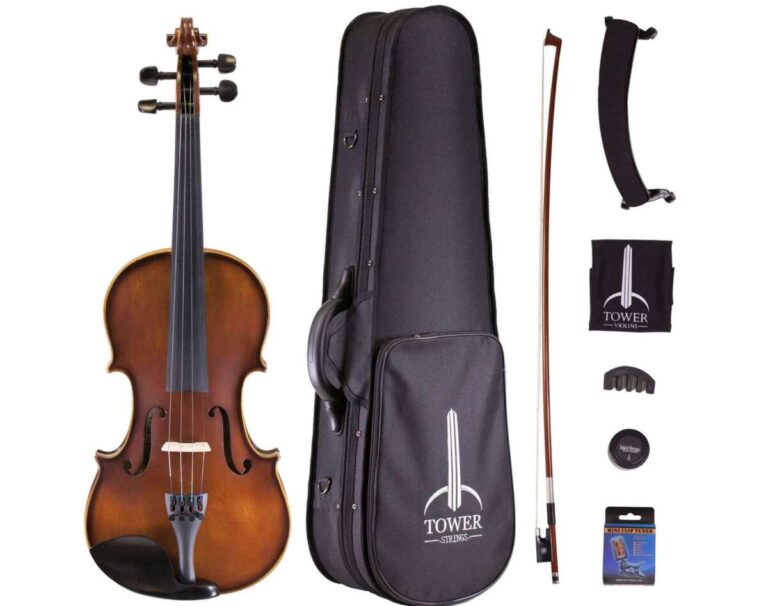
How To Choose The Right Violin: Best Guide For Beginners
Choose a violin by matching its size, comfort, sound, quality, setup, and budget to your playing needs.
Learning how to choose the right violin can feel confusing because two instruments may look similar yet sound and feel very different. This guide explains the key details that teachers, players, and violin makers use when comparing violins, from body size and wood quality to playability, sound, setup, and long-term value.
Start With the Correct Violin Size
The first step in learning how to choose the right violin is finding the correct size. A violin that is too large can cause tension and poor technique. A violin that is too small may feel cramped and limit progress.
Full-size violins are usually called 4/4 violins. They suit most teens and adults. Children often need smaller sizes, such as 1/16, 1/10, 1/8, 1/4, 1/2, or 3/4.
A student should not choose a smaller violin simply because it feels easier to hold. The instrument must support healthy posture and allow the player to reach each note without strain.
Common size guidance includes:
• 4/4: Most adults and taller teenagers
• 3/4: Many children around 9 to 11 years old
• 1/2: Many children around 7 to 9 years old
• 1/4: Many children around 5 to 7 years old
• 1/8 and smaller: Young children with shorter arm lengths
Age ranges are only general guides. Arm length matters more than age. A teacher or violin shop can measure the distance from the neck to the middle of the palm while the arm is extended.
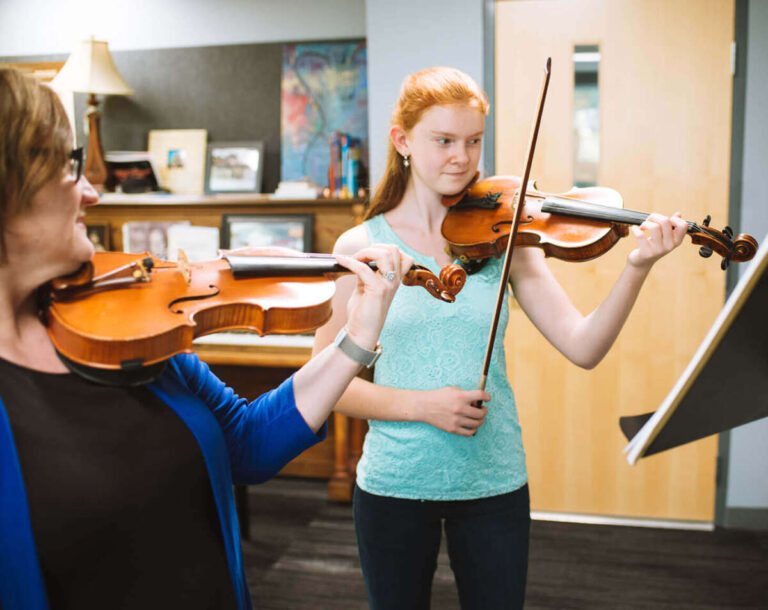
The player should be able to hold the violin comfortably. The left hand should reach the scroll without locking the elbow. The fingers should land on the fingerboard with ease, and the shoulder should remain relaxed.
A proper fit is like a well-sized pair of shoes. The violin should feel secure, but it should not pinch, stretch, or force the body into an awkward position.

Know the Main Parts of a Violin
Understanding the parts of a violin makes it easier to compare instruments. Each part affects comfort, sound, durability, or maintenance.
The main parts include:
• Body: The hollow wooden box that creates the instrument’s sound
• Top or soundboard: Usually made from spruce and designed to vibrate freely
• Back and ribs: Often made from maple and used to support the body
• Neck: The wooden section that connects the body to the scroll
• Fingerboard: The black surface where the player places the fingers
• Bridge: A small maple piece that transfers string vibrations to the body
• Sound post: A small wooden dowel inside the violin that supports the top and affects tone
• Tailpiece: Holds the strings near the bottom of the instrument
• Chin rest: Supports the jaw and helps the player hold the violin
• Pegs: Used to tune the strings
• Fine tuners: Small adjusters that make accurate tuning easier
A violin can have attractive wood and fine decoration but still play poorly. The bridge may be too thick, the sound post may be badly placed, or the fingerboard may be uneven.
This is why how to choose the right violin involves more than looking at photos. A trained violin technician can inspect the setup and spot problems that a new player may miss.
Choose Between Student, Intermediate, and Professional Violins
Violins are often grouped into student, intermediate, and professional levels. These labels can help, but they are not strict quality standards. One maker’s “intermediate” violin may outperform another maker’s “professional” model.
A student violin is usually made for reliability, easy care, and reasonable cost. It may use factory-made parts and simpler finishing methods. A good student violin should still have a clear tone, stable tuning, and comfortable action.
An intermediate violin often offers more refined wood, improved response, and a wider range of tone colors. It may suit a serious student who practices often, performs in recitals, or prepares for auditions.
A professional violin is made for advanced players who need strong projection, complex tone, and detailed control. These instruments can cost much more, but price alone does not guarantee that a violin will suit every player.
When comparing levels, ask:
• Does the violin respond easily to the bow?
• Can it produce a clear sound on every string?
• Does it stay in tune?
• Is the setup accurate?
• Does the tone remain balanced in higher positions?
• Will the instrument support the player’s next stage of growth?
A beginner does not need the most expensive violin in the shop. A reliable, well-set-up student instrument is often a better choice than a costly violin with poor playability.
Compare Acoustic and Electric Violins
Most students should begin with an acoustic violin. It teaches natural bow control, tone production, and listening skills. Acoustic violins also work well with teachers, ensembles, orchestras, and chamber groups.
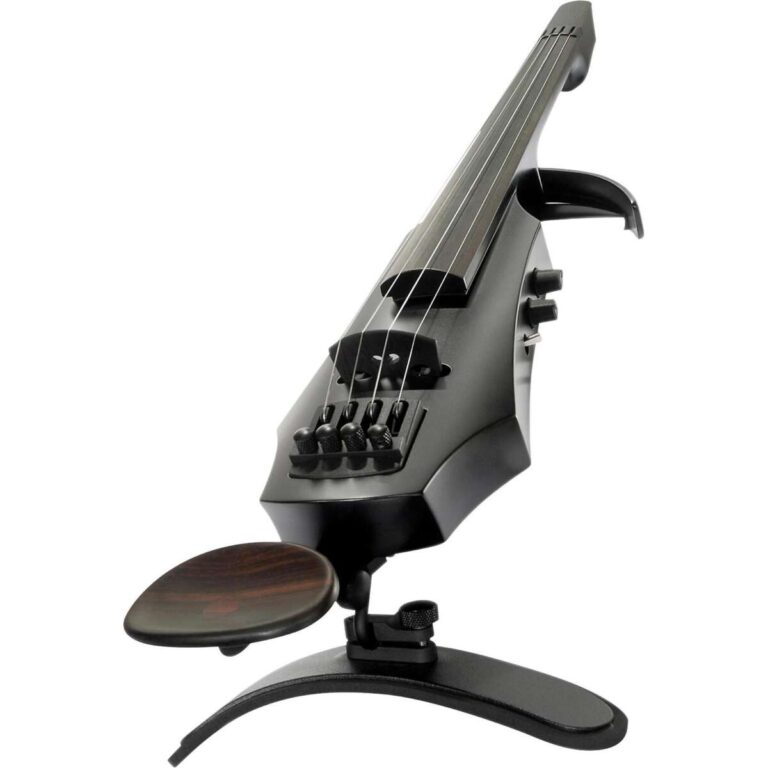
Electric violins can be useful for quiet practice, amplified performances, recording, or modern music. They need an amplifier or headphones with the correct equipment, and their response can differ from that of an acoustic instrument.
Consider an acoustic violin if you want:
• Classical lessons
• Orchestra or chamber music experience
• A natural violin tone
• Simple practice without extra equipment
• Traditional technique development
Consider an electric violin if you need:
• Silent practice with headphones
• Stage amplification
• Effects or modern performance sounds
• A durable instrument for certain live settings
An electric violin does not always replace an acoustic violin. Many players use both. If your main goal is to learn standard violin technique, an acoustic instrument is usually the safest starting point.
Examine the Wood and Craftsmanship
Wood quality matters because the violin body must vibrate in a controlled way. Traditional violins often use spruce for the top and maple for the back, ribs, and neck.
Good wood does not always look perfect. Small variations in flame, color, or grain can be normal. Decorative wood does not prove that an instrument sounds good.
Look for:
• Even, attractive grain without large structural cracks
• Clean joints around the top, back, and ribs
• A straight neck
• A properly fitted bridge
• Smooth edges and well-finished corners
• Pegs that turn smoothly but hold firmly
• No open seams or loose parts
Be careful with deep cracks, repaired damage near the sound post, or major repairs that are not clearly explained. Some repairs are safe and common, while others can affect value and stability.
A handmade violin may show small signs of individual work. A factory-made violin may look more uniform. Neither choice is automatically better. The sound, setup, condition, and price should guide the decision.
Focus on Sound, Not Appearance
The best-looking violin is not always the best-sounding violin. Tone is personal, but certain qualities are useful for almost every player.
A good violin should produce:
• A clear sound across all four strings
• A stable tone at soft and loud dynamics
• Quick response when the bow starts moving
• Enough warmth without sounding dull
• Enough brightness without sounding harsh
• Good balance between the G, D, A, and E strings
• Useful projection without excessive strain
The four strings have different roles. The G string should sound full. The D string often provides warmth. The A string should remain clear and centered. The E string should be bright but not painfully sharp.
When testing a violin, do not judge it after one short note. Play scales, open strings, slow melodies, and a few louder passages. The instrument may sound different under the ear than it does several feet away.
If possible, ask another player to perform while you listen from across the room. A violin that sounds rich under the ear may not project well. Another may seem plain nearby but carry beautifully in a hall.
Learning how to choose the right violin means listening for balance rather than chasing one dramatic sound.

Test the Violin’s Playability
Playability describes how easy and comfortable the violin is to use. It depends on the instrument’s setup, neck shape, string height, bridge curve, fingerboard, and overall response.
A playable violin should make basic tasks feel natural. The fingers should not need excessive pressure. The bow should move smoothly without causing unwanted whistles or scratches.
Test these areas:
- Play each open string with a slow, even bow.
- Play a simple scale across all four strings.
- Check whether the strings respond quickly.
- Use both short and long bow strokes.
- Try soft and loud notes.
- Listen for buzzing, rattling, or delayed response.
- Check whether the pegs stay in tune.
- Notice any pain in the wrist, thumb, shoulder, or neck.
The strings should not sit too high above the fingerboard. High string action can make the violin tiring to play. Very low action can create buzzing and poor clarity.
Do not confuse a bright response with a good response. A violin may sound loud but feel stiff. Another may feel easy and produce a softer tone that improves with a better bow or new strings.
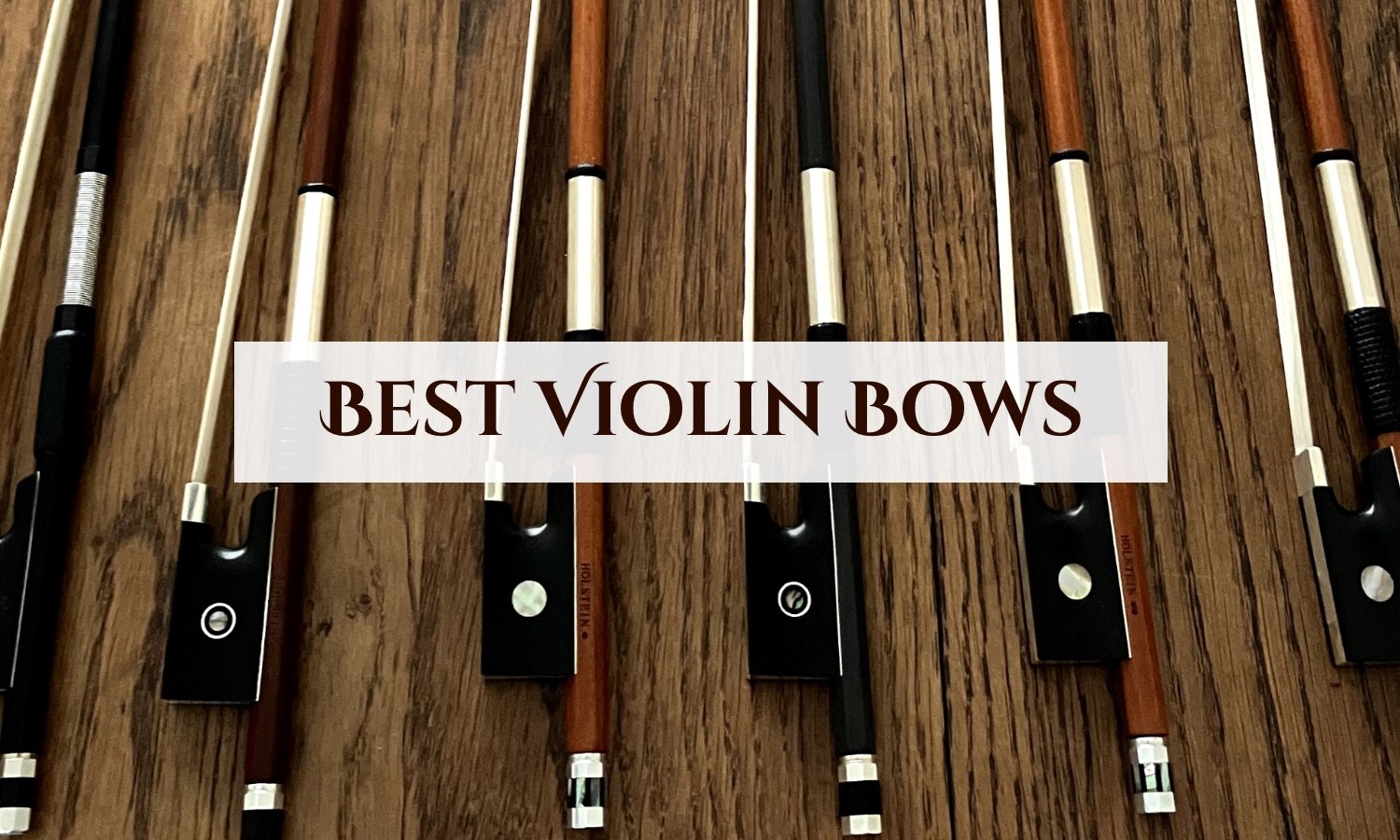
Test the Violin With Different Bows
A violin and bow work as a pair. A good violin can seem difficult with a poor bow, while a suitable bow can make a modest violin feel much more responsive.
When trying a bow, look for:
• Smooth contact with the strings
• Stable control during slow strokes
• A comfortable weight and balance
• Easy string crossings
• Clear articulation
• No excessive bouncing unless the technique requires it
Use the same bow when comparing several violins. Then try different bows on the violin you prefer. This helps you understand whether the sound comes from the violin, the bow, or the combination.
Beginners should not feel pressured to buy an expensive bow at once. However, the bow should be straight, properly haired, and easy to control. A damaged or poorly balanced bow can slow progress.
Inspect the Setup Before You Buy
A professional setup can transform a violin. It can also reveal whether a low price is truly a bargain.
A violin shop or qualified luthier should check:
• Bridge shape and thickness
• String height
• Sound post position
• Fingerboard shape
• Peg fit
• Nut height
• Tailpiece alignment
• Endpin security
• Open seams and cracks
• String condition
The bridge should stand upright and align correctly with the instrument. The sound post should fit securely inside without leaning in a risky way. The fingerboard should have a smooth, even curve.
A new violin often needs setup work after shipping or storage. Ask whether the listed price includes setup. If it does not, include that cost in your budget.
One lesson many new players learn late is that “cheap” and “low-cost” are not always the same. A $300 violin that needs $250 of repairs may cost more than a ready-to-play instrument priced at $450.

Set a Realistic Violin Budget
Budget is a major part of how to choose the right violin. Your budget should cover more than the instrument alone.
Plan for:
• Violin
• Bow
• Case
• Rosin
• Shoulder rest or sponge
• Extra strings
• Music stand
• Tuner
• Maintenance and future repairs
Rental can be a smart choice for children who may outgrow a size quickly. Many rental programs offer trade-up plans, which allow families to move to a larger violin while protecting part of the earlier payment.
Buying may make sense when:
• The player is committed to regular study
• The correct size is likely to last for years
• A teacher recommends a specific instrument
• The buyer wants to build long-term value
• The instrument has been inspected by a professional
Avoid choosing solely by price. The least expensive option may have poor setup or weak materials. The most expensive option may offer features the player cannot yet use.
A practical budget should leave room for lessons and maintenance. Good instruction often improves progress more than a small jump in instrument price.
Decide Whether to Rent or Buy
Renting reduces risk for beginners. It lets a student test the violin and confirm that regular practice feels enjoyable.
Renting can be useful when:
• A child needs a small size
• The family is unsure about long-term interest
• The shop offers maintenance and replacement support
• The rental includes a trade-up policy
• The player needs time to compare instruments
Buying can offer more choice and long-term value. It also allows the player to select an instrument based on sound rather than rental availability.
Read the rental agreement carefully. Check who pays for repairs, whether accidental damage is covered, and how trade-up credits work.
If buying a used violin, ask for a condition report. An experienced teacher, luthier, or violin shop can help identify hidden repair costs.
Consider New, Used, and Antique Violins
New violins are often easy to find and may come with a warranty. They can provide predictable condition and modern setup support.
Used violins can offer excellent value. A good older instrument may have a mature, attractive sound. However, age alone does not prove quality.
Antique violins need extra care. Their history, maker, condition, repairs, and documentation all affect value. Instruments with unclear labels are often misunderstood because labels can be copied or changed.
Before buying an older violin, ask:
• Has the instrument been examined by a qualified professional?
• Are repairs documented?
• Is the label original and reliable?
• Does the price reflect verified information?
• Is there a return period?
• Is the instrument insured or appraised?
Do not pay for a famous name without proof. In the violin market, expert evaluation matters more than an attractive label.
Visit a Violin Shop and Bring a Teacher
Online research is helpful, but it cannot replace hands-on testing. Photos do not show response, comfort, or projection.
A reputable violin shop should allow you to:
• Try several instruments
• Compare similar models
• Test instruments with different bows
• Ask about setup and repairs
• Take instruments home for a trial period
• Receive clear return and warranty terms
Bring your teacher if possible. A teacher can watch posture, listen from a distance, and notice problems that feel normal to a beginner.
If you do not have a teacher, ask the shop for a demonstration. Then play the violin yourself. Both views matter.
I have seen players choose an instrument because it looked old or sounded powerful under the ear. After a few weeks, they discovered that it was tiring and difficult to control. A short trial with an experienced listener would have prevented that mistake.

Use a Simple Violin Comparison Method
Comparing several violins can become tiring. Use a simple system to keep your judgment clear.
Choose three to five instruments in a similar price range. Give each one a short code, such as A, B, or C, so you do not focus on labels or appearance.
Rate each violin from one to five for:
• Comfort
• Response
• Tone on the G string
• Tone on the E string
• Balance across strings
• Dynamic range
• Tuning stability
• Physical condition
• Setup quality
• Overall preference
Play the same music on each instrument. Use a slow scale, a lyrical passage, and a faster passage if you can play one comfortably.
Take breaks. Your ears become tired, and tired ears often favor louder instruments. Return to your top two choices on another day if the shop allows it.
The right violin is usually the one that encourages relaxed, consistent playing. It should make you want to practice, not make you feel that every note is a struggle.
Watch for Common Buying Mistakes
Many violin problems come from rushed decisions. A few simple precautions can protect your money and your progress.
Avoid these mistakes:
• Buying only because the violin looks beautiful
• Choosing a size without measuring the player
• Trusting an impressive label without inspection
• Ignoring bridge, peg, or sound post problems
• Testing only one violin
• Using poor-quality strings during the trial
• Forgetting the cost of a bow and case
• Buying from a seller with no return policy
• Letting a beginner test only loud notes
• Assuming a higher price guarantees a better match
Be cautious when a seller refuses to provide clear photos, condition details, or a trial period. A trustworthy seller should answer questions without pressure.
Also, avoid making a decision after only five minutes. The first violin may feel exciting simply because it is the first one you played. Comparison creates better judgment.
Understand Violin Strings and Accessories
Strings influence tone, response, and comfort. A well-set-up violin with unsuitable strings may sound harsh or weak.
String types include:
• Steel strings: Often bright, stable, and durable
• Synthetic-core strings: Usually warm, flexible, and versatile
• Gut strings: Rich and complex but more sensitive to climate and tuning changes
Synthetic-core strings are common for many student and intermediate players. The best choice depends on the violin, playing style, and advice from a qualified teacher or shop.
A shoulder rest can improve comfort, but it is not required for every player. The correct choice depends on body shape, violin position, and teaching method.
A sturdy case should protect the violin from impact, heat, cold, and sudden humidity changes. Never leave a violin in a hot car or near a radiator. Wood responds to climate changes, and extreme conditions can cause cracks or open seams.
Think About Climate and Maintenance
Wooden instruments react to humidity. Very dry air can increase the risk of cracks, while excessive moisture can affect response and cause swelling.
Basic care includes:
• Wipe rosin dust from the strings and body after playing
• Loosen the bow after each use
• Keep the violin in its case when not in use
• Turn the pegs gently
• Replace worn strings before they fail
• Have the bridge checked if it begins to lean
• Avoid touching the bow hair
• Schedule professional maintenance when needed
A violin does not need constant repair, but it does need regular attention. Small issues are often cheaper to fix before they become serious.
Ask the shop about local climate advice. A player in Arizona may need different humidity support from a player in Florida or Seattle.

How to Choose the Right Violin for a Beginner
For a beginner, the best violin is usually comfortable, stable, easy to tune, and properly set up. It does not need an advanced or expensive tone.
Look for:
• Correct size
• Comfortable string height
• Smooth tuning pegs
• A straight bridge
• Clear sound on all strings
• A reliable case and bow
• A return or exchange policy
• Guidance from a teacher or professional shop
A beginner violin should make good habits easier. If the instrument feels stiff, buzzes often, or refuses to stay in tune, the student may lose confidence even when the real problem is the setup.
Parents should also consider the child’s growth. A rental program may be more practical than buying several small violins over time.
How to Choose the Right Violin for an Intermediate Player
Intermediate players need more control and variety than complete beginners. The instrument should respond well to changes in bow speed, pressure, and contact point.
Test whether the violin can:
• Play softly without losing focus
• Produce a strong tone without harshness
• Speak clearly in higher positions
• Handle fast string crossings
• Support vibrato and expressive phrasing
• Project in a group setting
At this stage, players often notice differences between instruments more clearly. A teacher can help identify whether a new violin truly offers better control or simply sounds louder.
Do not rush to upgrade. A new violin is worthwhile when the current instrument limits technique, tone, or confidence, not just because another player has a more expensive model.
How to Choose the Right Violin for Advanced Players
Advanced players often seek a wider palette of tone colors. They may need an instrument that responds to subtle changes while projecting in a large room.
When learning how to choose the right violin at an advanced level, compare:
• Response in high positions
• Tone color under different bow contact points
• Projection at a distance
• Ease of soft playing
• Stability during long performances
• Balance between strings
• Compatibility with the player’s bow
• Repair history and professional value
Advanced players should take more time with the trial. A violin may feel impressive during a short performance but tiring during a full rehearsal.
A professional appraisal may be useful when the instrument is expensive. Insurance, documentation, and secure storage also become more important at this level.
Frequently Asked Questions About How to Choose the Right Violin
What is the best violin size for an adult?
Most adults use a full-size 4/4 violin. However, arm length, hand size, posture, and comfort should guide the final choice.
Is an expensive violin better for a beginner?
Not always. A well-set-up student violin that feels comfortable and stays in tune is often better for a beginner than an expensive instrument with poor playability.
Should I rent or buy a violin?
Renting is useful when a child may outgrow the instrument or when the player is unsure about continuing. Buying can make sense when the player is committed and has professional help selecting the instrument.
How much should I spend on my first violin?
Spend enough to get a reliable violin, usable bow, protective case, and proper setup. The right amount depends on your location and goals, but lessons and maintenance should remain part of the budget.
How can I tell if a violin sounds good?
Play each string with slow and fast bows, then test soft and loud notes. Listen for a clear, balanced tone and ask someone else to listen from a distance because sound under the ear can be misleading.
Should I buy a new or used violin?
Both can be good choices. A used violin may offer strong value, while a new violin may provide predictable condition and warranty support; professional inspection is important in either case.
Do I need a shoulder rest?
Not every player needs the same shoulder rest. Comfort depends on body shape, violin position, and teaching style, so test several options with guidance from a teacher.
Conclusion
Learning how to choose the right violin means looking beyond price, color, and brand. Check the size, setup, condition, sound, response, bow, accessories, and return policy. Most importantly, test more than one instrument and ask a teacher or qualified violin professional for advice.
The right violin should feel comfortable, support healthy technique, and make you eager to play. Take your time, trust careful comparison over sales pressure, and choose an instrument that fits both your current needs and your musical goals. Explore local violin shops, arrange a trial, and share your experience with other players as you continue your search.

Senior Music Reviewer
Alex Carter is a seasoned music reviewer with over a decade of experience in the world of sound and instruments. Passionate about helping musicians and enthusiasts make informed choices, he brings sharp insights and in-depth knowledge to every review. From classical instruments to modern gear, Alex combines technical expertise with a love for music to deliver content that resonates with readers.
As a Senior Music Reviewer and expert author on Tuneluma.com, Alex is dedicated to sharing honest evaluations, practical advice, and thoughtful commentary to guide readers in their musical journey.