When Was The Snare Drum Invented: A Brief History
The snare drum began developing in medieval Europe around the 1300s, with its modern form emerging over the next several centuries.
The question “when was the snare drum invented?” has no single year because the instrument grew from earlier drums rather than appearing all at once. Its story moves from medieval European field drums to Swiss military drums, orchestral percussion, marching bands, drum kits, and today’s electronic and hybrid setups. Understanding that timeline makes the snare drum’s sharp, buzzing voice much easier to appreciate.
When Was the Snare Drum Invented?
The snare drum was not invented on one exact date. Historians generally trace its early roots to the 1300s, when European drums began using cords or gut strings across the lower drumhead to create a buzzing sound.
The drum itself came from older instruments such as the medieval tabor. The tabor was a small, two-headed drum often played with one hand while the musician played a pipe with the other. Some versions used snares against the head, creating the sound that later became central to the snare drum.
The most accurate answer to “when was the snare drum invented?” is this:
• Early snare-style drums appeared in Europe during the 14th century.
• The military side drum developed more clearly during the 15th and 16th centuries.
• The modern snare drum took shape during the 18th and 19th centuries.
This gradual development is common in musical history. Instruments often evolve through use, regional design, and new materials. The snare drum is more like a growing family tree than a single invention.

The Medieval Roots of the Snare Drum
The earliest ancestors of the snare drum were simple frame or cylindrical drums used in Europe and the Middle East. Medieval performers used drums for dancing, public events, religious processions, and military signals.
The tabor became especially important. It was usually smaller than a modern snare drum and had a single snare or a few snares stretched across one head. When the player struck the drum, the cords vibrated against the skin and created a rough, lively buzz.
These early snares were often made from gut. Gut is animal intestine that was cleaned, dried, and twisted into a strong cord. It was not as consistent as modern metal wire, but it produced a warm and complex tone.
So, when was the snare drum invented in its earliest form? The best historical estimate is the 1300s. However, surviving instruments from that period are rare, and written records do not always describe drum construction in enough detail to prove an exact date.
That uncertainty matters. It is safer to say the snare drum developed during the medieval period than to claim that one known person invented it in one known year.

From Tabor to Military Side Drum
The snare drum became more recognizable as military musicians began using larger drums with two heads. These drums were easier to carry and produced a strong sound outdoors.
Swiss military drummers played an important role in this change. By the 15th and 16th centuries, Swiss field drums had become linked with military groups and civic ceremonies. Their larger size and prominent snares helped the sound travel across marching formations.
The terms “side drum” and “snare drum” are closely related. A side drum is often a military-style drum worn at the player’s side. A snare drum may describe the same basic instrument in a wider musical setting, including orchestras, schools, bands, and drum kits.
The answer to “when was the snare drum invented?” therefore depends on the definition:
• If you mean any drum with snares, the roots reach back to the 1300s.
• If you mean the military side drum, its main development occurred during the 1400s and 1500s.
• If you mean the modern concert or drum-set snare, the design became established much later.
This distinction prevents a common mistake. Medieval tabor drums, military side drums, orchestral snares, and modern drum-set snares are related, but they are not identical instruments.

How the Snare Drum Changed in the 18th and 19th Centuries
The snare drum changed quickly as drum makers improved shell construction, head design, and tension systems. Earlier drums often used rope tension and natural animal skins. These methods worked, but they made tuning slow and inconsistent.
During the 18th and 19th centuries, metal tension rods and stronger hardware became more common. Players could tighten the heads with greater control. This helped the drum produce a cleaner pitch and a more reliable response.
The Industrial Revolution also influenced snare drum design. Manufacturers began using improved metal parts, stronger hoops, and more uniform shells. Brass, wood, and later other materials each gave the drum a different balance of warmth, power, and attack.
By the 1800s, the snare drum had become important in several settings:
• Military and marching bands
• Symphonic and theater orchestras
• Brass bands
• School and community ensembles
• Popular dance music
When people ask when the snare drum was invented, they may picture the modern metal or wood drum used today. That version is mainly the result of developments from the 1700s through the 1800s, not the medieval period alone.

The Invention of Metal Snare Wires
One of the largest changes in snare drum history was the move from gut snares to metal wires. Gut snares had a soft, earthy sound, but they could react badly to moisture and changes in temperature.
Metal wires were more durable and gave the drum a brighter, sharper response. They also made the snare sound more consistent from one performance to the next.
By the 19th century, metal snare wires were becoming common. Drum makers arranged several wires across the bottom head, often attaching them to a strainer that allowed the player to turn the snares on or off.
The strainer was a major practical improvement. It allowed one drum to produce two basic sounds:
• With the snares engaged, the drum had its familiar buzz and crack.
• With the snares released, it sounded deeper and more like a tom or small field drum.
This feature helped the snare drum move beyond military use. Orchestral composers could now use it for soft rolls, dramatic accents, marching effects, and fast rhythmic patterns.
A useful lesson from this history is that sound and hardware develop together. The snare drum did not become popular only because of its shape. It became useful because musicians could control its tone.

The Snare Drum in Orchestras and Marching Bands
The snare drum entered formal concert music as composers began writing more specific parts for percussion. Instead of serving only as a signal instrument, it became a tool for texture, rhythm, and emotion.
Composers used the drum to suggest military action, storms, tension, machines, and movement. A quiet snare roll can feel like distant thunder. A sharp accent can sound like a command.
Marching bands also helped standardize the instrument. Players needed drums that were loud, durable, and comfortable to carry. This encouraged improvements in shell depth, harnesses, tension systems, and snare mechanisms.
When was the snare drum invented as an orchestral instrument? There is no separate invention date. Its orchestral role developed mainly during the 19th century as composers and instrument makers expanded its capabilities.
In my experience explaining drum history to new players, this is often the moment when the instrument becomes easier to understand. The snare is not just a loud drum. It is a color instrument. Its wires add a rough edge, while the top head supplies attack and the shell shapes the body of the sound.

The Snare Drum and the Modern Drum Set
The modern drum set developed in the United States during the late 19th and early 20th centuries. Drummers began combining bass drum, snare drum, cymbals, and other percussion so one person could perform the work of several players.
The snare drum became the central voice of this setup. It could play backbeats, ghost notes, fills, accents, rolls, and rhythmic conversation with the bass drum.
Jazz pushed the design forward. Drummers needed instruments that responded quickly and worked in smaller venues. Manufacturers developed shorter shells, better strainers, adjustable snares, and more precise tuning hardware.
Rock, funk, country, pop, and hip-hop later gave the snare new roles. The familiar backbeat on beats two and four became a defining sound in many styles.
This history adds another layer to the question “when was the snare drum invented?” The answer is not the same as “when did the snare drum become central to popular music?” Its cultural influence expanded greatly during the 20th century.

What Makes a Snare Drum Different?
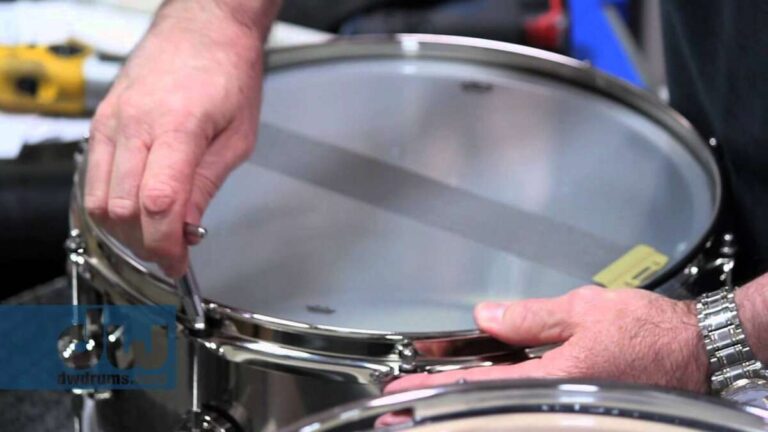
A snare drum has a set of wires, cords, or cable strands stretched against one drumhead. This system creates the buzzing response that separates it from most other two-headed drums.
Most modern snare drums include:
• A cylindrical shell made from wood, metal, acrylic, or composite material