How To Pick A Violin For Beginners: Easy Buying Guide
Choose a properly sized violin with a good setup, comfortable feel, and help from a qualified teacher or luthier.
Learning how to pick a violin for beginners can feel confusing at first. Violins look similar, yet small differences in size, setup, materials, and sound can strongly affect comfort and progress. This guide explains what matters, what to avoid, and how to make a smart choice without overspending.
Start With the Correct Violin Size
The first step in learning how to pick a violin for beginners is choosing the right size. A violin that is too large can cause tension, poor posture, and frustration. A violin that is too small may feel cramped and limit natural arm movement.
Full-size violins are called 4/4 violins. Most teens and adults use this size, but children need smaller instruments. Common fractional sizes include 1/16, 1/10, 1/8, 1/4, 1/2, and 3/4.
A teacher, violin shop, or music store can measure the player’s arm length. The player should be able to hold the violin comfortably and reach the scroll without stretching hard.
General violin size guide
• 1/16 or 1/10: Often suitable for very young children
• 1/8 or 1/4: Often suitable for younger children
• 1/2 or 3/4: Often suitable for older children
• 4/4: Usually suitable for teens and adults
Age is only a rough guide. Two children of the same age may need different sizes. Comfort and reach matter more than a chart.
A simple test is to place the violin under the player’s chin and extend the left arm beneath the instrument. The hand should reach around the scroll with a relaxed bend in the elbow. The fingers should not strain to touch the pegbox.

Know the Difference Between a Student Violin and a Professional Instrument
A beginner does not need an expensive concert violin. In fact, a highly valuable instrument may be a poor choice for a first-time player because it can require advanced technique and careful handling.
Student violins are made for learning. They usually have a clear, stable sound, durable parts, and a setup that supports basic technique. Professional violins often have more complex tone colors, but their response may feel less forgiving.
When considering how to pick a violin for beginners, look for an instrument that responds easily. The bow should create sound without extreme pressure. The strings should not sit too high above the fingerboard. The instrument should feel stable in the player’s hands.
A good beginner violin should offer:
• Easy response when the bow moves across the strings
• Comfortable string height
• Smooth tuning pegs
• A straight fingerboard
• A well-fitted bridge
• A secure chin rest
• Reliable fine tuners
A basic student violin can be made from solid wood, laminated wood, or a mix of both. Solid spruce is often used for the top, while maple is common for the back, ribs, and neck. These materials are traditional, but construction quality matters more than wood labels alone.
Why the setup matters so much
A low-cost violin with an excellent setup can be easier to play than a more expensive violin with poor adjustment. Setup includes bridge fitting, string height, peg adjustment, fingerboard shaping, and soundpost placement.
The setup is like the alignment on a car. A beautiful car still performs badly if the wheels point in different directions. The same idea applies to a violin.

Set a Realistic Budget
Price is an important part of how to pick a violin for beginners, but the cheapest instrument is not always the best value. Very cheap violins may have rough edges, weak tuning pegs, poor bridges, or strings that make learning harder.
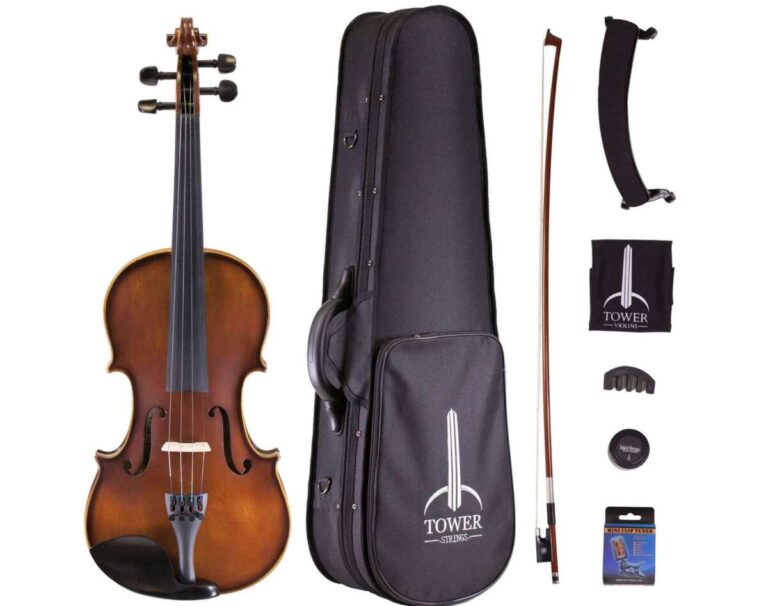
For many beginners, a rental or beginner outfit is a practical choice. A complete outfit may include the violin, bow, case, and rosin. Some packages also include a shoulder rest and extra strings.
A reasonable budget may vary by location, brand, condition, and shop support. In the United States, beginner instruments can range from inexpensive online packages to several hundred dollars for a well-set-up outfit. A teacher or local luthier can help you compare real value.
Before buying, ask what the price includes:
• Violin and bow
• Protective case
• Rosin
• Shoulder rest
• Tuning service
• Warranty or return period
• Future trade-in credit
• Free or reduced setup work
Avoid judging quality by price alone. A high price does not guarantee that a violin suits the player. Likewise, a low price does not always mean poor quality if the instrument has been checked and adjusted well.
Renting versus buying
Renting is often smart for children who may change sizes. It also allows a family to test whether the student enjoys violin lessons before making a larger purchase.
Buying can make sense when:
• The player is an adult using a full-size violin
• The student is committed to regular lessons
• The shop offers a return or trade-in policy
• A teacher has approved the instrument
One lesson I have learned from helping new players is that flexibility saves money. A trade-in plan can be more useful than a slightly cheaper purchase with no support.

Inspect the Violin Before You Buy
Knowing how to pick a violin for beginners requires more than checking its color or shine. Cosmetic details can be attractive, but they do not tell you whether the violin is easy to play.
Inspect the instrument in good light. Look at the body, neck, bridge, strings, pegs, and fingerboard. Small marks may be harmless, but cracks and poor alignment can lead to costly repairs.
Check the body
Look for:
• Open seams along the edges
• Cracks in the top or back
• Loose purfling around the body
• Major dents near the bridge or tailpiece
• A warped or damaged tailpiece
• A neck that does not line up with the body
Tiny marks from normal use are not always a problem. Open seams and structural cracks deserve professional attention.
Check the bridge
The bridge should stand upright. It should not lean sharply toward the fingerboard or tailpiece. Its feet should fit the top of the violin evenly.
A bridge that is too thick, too thin, or poorly cut can reduce sound quality and make the strings harder to press. Never sand or reshape a bridge yourself unless a trained professional shows you how.
Check the fingerboard
The fingerboard should look smooth and properly shaped. It should not have deep grooves, sharp edges, or obvious warping.
Pressing the strings should feel firm but manageable. If the strings sit very high above the fingerboard, a beginner may struggle to play simple notes.
Check the tuning pegs
The pegs should turn smoothly and hold their position. If they slip constantly, tuning becomes difficult. If they are too tight, a child may not have enough strength to adjust them.
Fine tuners are useful for beginners, especially on the E string. They allow small tuning changes without turning the main pegs.
Test the Sound and Playing Feel
A beginner may not yet know what a great violin sounds like. That is normal. You do not need expert ears to notice whether an instrument feels comfortable and responds well.
Ask a teacher or experienced player to test the violin first. Then let the beginner play open strings. Listen for a clear tone without excessive buzzing, rattling, or harshness.
When learning how to pick a violin for beginners, focus on these sound qualities:
• Clear response
• Even volume across all four strings
• No persistent buzzing
• A warm but not dull tone
• A sound that does not become painfully sharp under normal bow pressure
The violin does not need to sound perfect in a beginner’s hands. Bow angle, pressure, and contact point strongly affect tone. A new player may make any violin sound rough at first.
The more useful question is this: does the instrument help the player produce a decent sound with reasonable effort?
Test several violins
If possible, compare at least two or three violins. Play the same open strings on each one. Ask the teacher to play a simple scale or short melody.
Notice whether one violin feels easier to tune, hold, and play. Comfort often matters more than a small difference in tone that a beginner cannot yet control.
A violin should feel like a helpful partner, not a locked door. If every note feels like a struggle, the instrument may need a better setup.

Choose a Good Bow
Many beginners focus only on the violin and forget the bow. That is a mistake. The bow creates the vibration that produces the sound, so its quality and condition matter.
A beginner bow should be the correct size for the violin. It should feel balanced and not too heavy. The stick should be reasonably straight, and the hair should be clean and evenly attached.
Check for:
• A straight or gently cambered stick
• Secure hair across the length of the bow
• A frog that moves smoothly
• A properly fitted screw
• No major cracks in the stick or frog
• A comfortable weight
Carbon-fiber bows can be a practical choice for beginners. They are often durable and resist some changes caused by humidity. Good wooden bows can also work very well, but inexpensive wooden bows may warp or break more easily.
Do not tighten the bow hair too much. The hair should have space between it and the stick when the bow is tightened for playing. Always loosen the hair after practice.
A weak bow can make a decent violin sound poor. If the bow feels unstable, ask the teacher or shop staff to test another one.
Pay Attention to Strings and Accessories
The strings included with a beginner violin may be basic. That is not always a concern, but extremely poor strings can sound harsh and make tuning unstable.
A teacher or luthier can recommend strings that match the violin. Beginners usually benefit from reliable strings that hold pitch well and respond easily.
Useful beginner accessories include:
• A properly fitted shoulder rest
• Rosin for the bow
• A soft cleaning cloth
• A digital tuner or tuning app
• Extra strings
• A sturdy case
• A small music stand
The shoulder rest is personal. Some players prefer a shoulder rest, while others use a different setup. The goal is to support the violin without forcing the shoulder upward.
Keep the violin away from heaters, air conditioners, and direct sunlight. Rapid changes in temperature and humidity can damage wood and cause open seams or cracks.
After playing, wipe rosin dust from the strings and body. Rosin that builds up over time can become hard and difficult to remove.

Consider Buying Online Carefully
Online shopping can offer convenience and lower prices, but it creates more risk. Product photos cannot show whether a bridge is fitted correctly or whether the pegs hold their pitch.
When learning how to pick a violin for beginners online, choose a seller that provides:
• Clear size information
• A setup by a qualified technician
• A return period
• Warranty details
• Real customer support
• Replacement or trade-in options
• Accurate photos of the actual instrument
Be cautious with listings that use dramatic claims such as “professional quality” without explaining the setup or materials. A polished finish and decorative design do not prove good playability.
If you buy online, have the violin inspected by a local luthier or teacher soon after delivery. Keep all packaging until you are sure the instrument is suitable.
A return policy matters because sound and comfort are personal. Even a well-made violin may not suit every player.

Avoid Common Beginner Mistakes
Many families make the same mistakes when choosing a first violin. These errors are understandable, but they can make lessons harder and increase long-term costs.
Choosing by appearance
A bright finish or unusual color may attract a child. However, appearance should come after size, setup, comfort, and sound.
Buying the cheapest package
The lowest price may hide repair needs or weak components. A violin that cannot stay in tune can quickly discourage a new student.
Skipping professional setup
A violin straight from a factory box may not be ready for lessons. Proper setup can make a major difference in response and comfort.
Choosing a larger size too soon
Some parents buy a full-size violin so the child can “grow into it.” This often causes poor posture and tension. Use the correct size now and plan for a future trade-in.
Ignoring the bow
A violin and bow work as a pair. Testing only the instrument gives an incomplete picture.
Letting the student play through pain
Mild soreness can happen as new muscles develop, but sharp pain, numbness, or ongoing tension should not be ignored. A teacher should check posture and instrument fit.
Failing to ask about support
A helpful store can adjust a bridge, explain tuning, and answer care questions. That support can be worth more than a small discount.
Use This Simple Buying Process
If you are still unsure how to pick a violin for beginners, follow a clear process. It reduces stress and keeps the decision practical.
-
Ask the student’s teacher for size and budget advice.
-
Measure the player or visit a violin shop for a fitting.
-
Decide whether renting or buying makes more sense.
-
Compare two or three instruments of the correct size.
-
Check the body, bridge, fingerboard, pegs, and strings.
-
Test the violin with a teacher or experienced player.
-
Test the bow as carefully as the violin.
-
Confirm the setup, return policy, warranty, and trade-in terms.
-
Buy essential accessories, including rosin and a suitable shoulder rest.
-
Schedule a follow-up check after the student has played for a few weeks.
This method works because it separates emotion from the main decision. You can enjoy the look and sound of the violin, but the final choice should rest on fit, playability, condition, and support.
How Teachers and Luthiers Help
A violin teacher understands how an instrument affects posture, bow control, and early progress. A luthier understands construction, repair, setup, and acoustic behavior. Their advice can prevent expensive mistakes.
Teachers may notice that a violin is too large, too hard to press, or difficult to tune. Luthiers can identify cracks, poor bridge work, neck problems, and peg issues that a beginner may miss.
There are limits to any buying guide. Sound preference is personal, and instruments can change as they age or receive new strings and adjustments. Online descriptions also cannot replace an in-person test.
For this reason, expert guidance is especially valuable when buying a used violin or spending more than a basic student budget.
A useful approach is to ask direct questions:
• Is the violin the correct size?
• Does it need immediate setup work?
• Are the bridge and soundpost positioned correctly?
• Is the neck straight?
• Are the pegs likely to hold tune?
• Can I return or trade in the instrument?
Clear answers usually reveal whether a seller is focused on long-term value.
How to Pick a Violin for Beginners on a Small Budget
A limited budget does not prevent a student from getting a useful instrument. It simply makes planning more important.
Start by comparing the total cost, not just the sticker price. A cheap violin may need new strings, a bridge, peg work, and bow repairs. A slightly more expensive outfit may already include these improvements.
Consider these options:
• Rent from a shop with a trade-in program
• Buy a used violin from a reputable local dealer
• Ask a teacher about trusted brands or shops
• Choose a solid student outfit instead of decorative extras
• Set aside money for lessons and maintenance
Lessons often provide more long-term value than a costly upgrade. A well-taught student can develop strong habits on a modest instrument, while an expensive violin cannot correct poor posture or weak practice habits.
One practical mistake to avoid is spending the entire budget on the violin and having nothing left for lessons, repairs, or a proper case. A balanced plan supports steady progress.
Frequently Asked Questions About How to Pick a Violin for Beginners
What is the best violin size for a beginner?
Adults and most teens usually need a 4/4 violin. Children need a fractional size based on arm length and comfort, so a teacher or music shop should confirm the fit.
How much should a beginner violin cost?
Prices vary by region, materials, setup, and seller support. A reliable rental or properly set-up student outfit is often a better value than the cheapest new violin.
Is it better to rent or buy a beginner violin?
Renting is often best for children who may need a larger size soon. Buying can work well for adults or committed students when the seller offers a return policy, setup support, or trade-in plan.
Can a beginner use a cheap violin?
A beginner can use an inexpensive violin if it is correctly sized, safe, and properly set up. Very low-cost instruments may create problems with tuning, string height, and sound quality.
Should a beginner buy a new or used violin?
Both can be good choices. A used violin from a trusted shop may offer better quality, but it should be inspected for cracks, open seams, poor repairs, and setup problems.
What should a beginner listen for in a violin?
Listen for a clear, even sound across all four strings. The violin should respond without excessive force and should not produce constant buzzing or rattling.
Does a beginner need a shoulder rest?
Many beginners find a shoulder rest helpful, but not every player uses one. It should support the violin without lifting the shoulder or causing neck tension.
Conclusion
Learning how to pick a violin for beginners becomes easier when you focus on fit, setup, comfort, sound, and long-term support. Choose the correct size, test the violin and bow together, inspect the instrument carefully, and ask a teacher or luthier for advice.
A good first violin does not need to be expensive. It needs to help the student play with less struggle and build healthy habits from the start. Visit a reputable music shop, compare a few options, and choose the instrument that feels comfortable and responds with ease.

Senior Music Reviewer
Alex Carter is a seasoned music reviewer with over a decade of experience in the world of sound and instruments. Passionate about helping musicians and enthusiasts make informed choices, he brings sharp insights and in-depth knowledge to every review. From classical instruments to modern gear, Alex combines technical expertise with a love for music to deliver content that resonates with readers.
As a Senior Music Reviewer and expert author on Tuneluma.com, Alex is dedicated to sharing honest evaluations, practical advice, and thoughtful commentary to guide readers in their musical journey.