How To Turn A Violin: Easy Step-By-Step Guide
To turn a violin safely, support its neck and rotate it gently without twisting the bridge, strings, or body.
The phrase “how to turn a violin” can mean two different things. You may want to rotate the instrument in your hands, or you may mean how to tune a violin. This guide covers both meanings, with clear steps for safe handling, tuning, practice, and care.
What “turn a violin” can mean
When someone searches for how to turn a violin, they may be asking about one of these tasks:
- Rotating the violin while holding or displaying it
- Turning the violin to reach the strings or fittings
- Turning the tuning pegs to tune the instrument
- Changing the violin’s playing angle
- Turning a violin part, such as the bridge or fine tuners
These tasks are not equally safe. The violin is strong in some areas, but its bridge, tailpiece, sound post, and pegbox need gentle care.
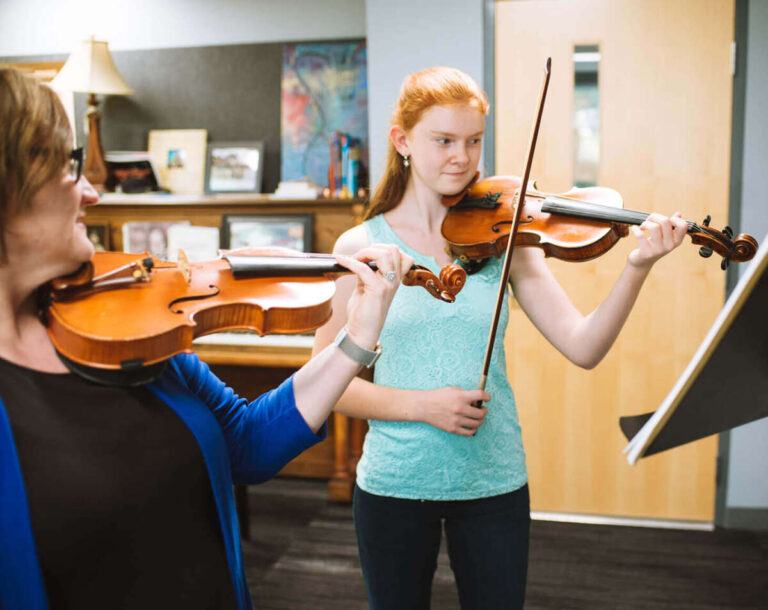
If you mean how to turn a violin while playing, the main rule is simple: move your arms and shoulders, not just your wrist. Keep the violin balanced between your chin, shoulder, and left hand.
If you mean how to tune a violin, do not twist the whole instrument. Turn only the tuning pegs or fine tuners in small steps.

How to rotate a violin safely
Learning how to turn a violin begins with a secure grip. Hold the violin by the neck and lower bout, not by the bridge, strings, or tailpiece.
Follow these steps:
- Sit or stand in a stable position.
- Place the violin on a soft, clean surface if you are not playing it.
- Support the neck with one hand.
- Place your other hand under the lower body.
- Rotate the violin slowly.
- Keep the bow away from the instrument during the movement.
- Check that no part of the violin touches a hard edge.
Never lift a violin by its scroll alone. The scroll is decorative and may not provide a safe grip. Also, avoid pressing your fingers into the bridge. The bridge is held in place by string pressure, not glue.
When learning how to turn a violin for cleaning, turn it only as much as needed. A small change in angle is usually enough. Excess movement increases the chance of dropping the instrument or shifting the bridge.
A hard case is the safest place for most violin handling. If you must place the violin on a table, use a padded cloth and keep the scroll away from the edge.

How to turn a violin while playing
Players often need to turn a violin slightly to improve comfort, tone, or posture. This is different from spinning or rotating the instrument.
The violin should rest at an angle of about 30 to 45 degrees from the floor. The scroll usually points slightly forward and to the left for a right-handed player.
Use these posture tips:
- Keep the violin level enough that the strings remain easy to reach.
- Let the left wrist stay straight and relaxed.
- Keep the left elbow under the violin.
- Turn your head slightly instead of forcing your neck downward.
- Move the instrument with your shoulder and upper arm.
- Avoid gripping the neck tightly.
If you are learning how to turn a violin during a performance, make small movements between musical phrases. Large movements can affect intonation, bow contact, and balance.
A useful image is to think of the violin as a tray holding a glass of water. Move it smoothly so the imaginary water does not spill. This helps new players avoid sudden wrist movements.
The correct angle depends on your body, instrument, and playing style. A teacher or qualified violin instructor can check your posture in person.

How to turn a violin peg when tuning
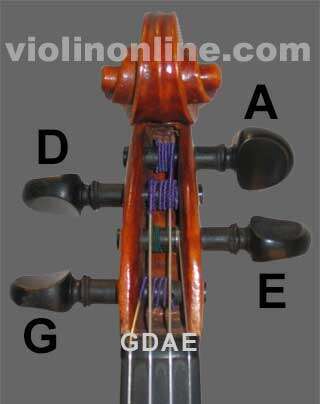
Many people use “how to turn a violin” when they really mean “how to tune a violin.” Tuning requires care because a string can break if you raise its pitch too quickly.
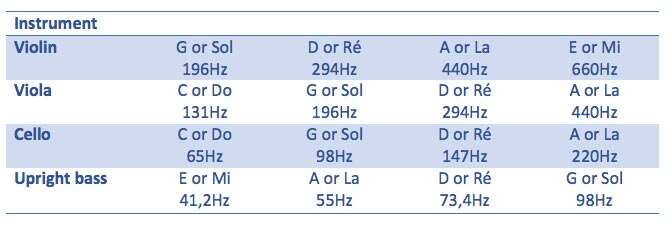
A standard violin is tuned in fifths:
- G3, the lowest string
- D4
- A4
- E5, the highest string
Most players tune the A string first. Standard tuning uses A4 at 440 hertz, although orchestras may use a slightly higher pitch, such as A4 at 442 or 443 hertz.
Here is how to turn a violin tuning peg safely:
- Place the violin in a stable position.
- Use an electronic tuner or tuning app.
- Pluck or bow one string.
- Identify whether the pitch is sharp or flat.
- Turn the correct peg by a very small amount.
- Pluck the string again.
- Repeat until the pitch is close.
- Use the fine tuner for the final adjustment.
A peg usually raises the pitch when you turn it so the string winds more tightly around the peg. However, the exact direction depends on which side of the pegbox the peg sits on. Do not rely only on clockwise or counterclockwise instructions. Watch the string and listen to the pitch.
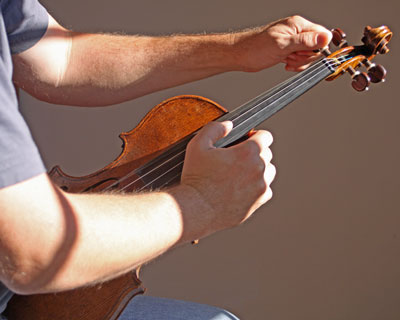
When learning how to turn a violin peg, push the peg gently inward as you turn it. This helps the tapered peg stay seated in the pegbox. Do not force a peg that feels stuck.
Turn each peg by only a few degrees at a time. Small movements are safer and make accurate tuning easier.
How to use violin fine tuners
Fine tuners are small screws found on the tailpiece. They allow small pitch changes without moving the main tuning peg very much.
To use a fine tuner:
- Turn the screw slowly.
- Listen after each small movement.
- Stop when the tuner reaches the end of its travel.
- Reset the fine tuner before making a large adjustment with the peg.
Most fine tuners raise the pitch when tightened and lower the pitch when loosened. Still, confirm the direction by watching your tuner. If the pitch moves the wrong way, reverse the adjustment.
Fine tuners are useful for beginners and for players who need quick corrections. Many violinists use one fine tuner on the E string because that string is thin and can be difficult to adjust with the peg.
If your violin has four fine tuners, avoid leaving all of them fully tight or fully loose. This can reduce your adjustment range and may make the tailpiece sit poorly.
If you are unsure how to turn a violin fine tuner, ask a teacher or luthier to demonstrate it once. A short demonstration can prevent damage.

How to turn a violin bridge safely
The bridge is one of the most delicate parts of the violin. It stands between the f-holes and supports the strings. It is not glued to the top.
A bridge can lean toward the fingerboard as the strings are tightened. Some players carefully straighten it, but this task carries risk. If the bridge falls, the sound post may also move, and the strings may lose tension.
Before touching the bridge, check these points:
- The feet should sit flat on the violin top.
- The bridge should stand near the correct position between the f-holes.
- The back of the bridge, facing the tailpiece, is usually close to vertical.
- The strings should sit in their proper grooves.
- The bridge should not look cracked or warped.
Do not use the phrase how to turn a violin as a reason to rotate the bridge by force. A bridge does not work like a knob. It should not be twisted from side to side.
If the bridge is badly tilted, cracked, or out of position, loosen the strings only with professional guidance. A violin repair specialist can correct the bridge and inspect the sound post at the same time.

How to turn a violin for left-handed playing
A standard violin can be played by either a left-handed or right-handed person. However, simply turning the instrument around does not create a left-handed violin.
A true left-handed setup may require changes to:
- Bridge shape
- Sound post position
- Bass bar position
- String order
- Nut grooves
- Chin rest placement
- Tailpiece and fine tuner layout
The bass bar and sound post are placed to match the violin’s string arrangement. Reversing the strings without changing the internal setup can produce poor tone and may put stress in the wrong places.
For this reason, do not try to turn a standard violin upside down and restring it at home. A qualified violin maker or repair technician should complete the conversion.
For many left-handed beginners, learning on a standard violin is practical because lessons, sheet music, orchestras, and rental instruments are easier to find. The best choice depends on comfort and long-term goals.

Common mistakes when turning a violin
The most common mistakes are usually caused by rushing. A violin responds better to slow, small movements.
Avoid these errors:
- Holding the violin by the bridge
- Turning a tuning peg too far
- Forcing a stiff peg
- Spinning the violin by the neck
- Pressing hard on the tailpiece
- Moving the bridge without understanding its position
- Tuning without checking the string pitch
- Leaving the violin in direct heat or sunlight
- Turning the instrument while the bow is trapped under it
- Using household oil or glue on violin parts
A stuck peg may be caused by dry wood, excess pressure, poor fit, or seasonal humidity changes. Do not apply random lubricants. Peg compound made for violins may help, but a repair specialist should inspect a peg that repeatedly slips or sticks.
Another common mistake is tuning only one string. The strings affect one another through the bridge and body, so check all four strings after making major adjustments.
Weather, humidity, and violin movement
Wood changes with temperature and humidity. A violin may feel different in winter, summer, or a heated room.
Low humidity can contribute to open seams, cracks, and shrinking wood. High humidity can cause swelling, sluggish pegs, and changes in playability. Sudden changes are often more harmful than normal seasonal changes.
To protect the violin:
- Keep it in a quality hard case.
- Avoid leaving it in a hot car.
- Keep it away from radiators and vents.
- Use a case humidifier only as directed.
- Check the instrument often for open seams or cracks.
- Let a cold violin warm gradually before opening the case fully.
If you are learning how to turn a violin after bringing it indoors from the cold, wait several minutes before making major adjustments. Sudden temperature changes can affect tuning and wood stability.
Humidity tools can help, but they are not a replacement for professional inspection. A damaged violin may need repair even when the room conditions improve.

A simple violin tuning routine
A consistent routine makes how to turn a violin peg much easier to understand. Use the same order each time.
- Tune the A string first.
- Tune the D string to A.
- Tune the G string to D.
- Tune the E string to A.
- Check all strings again.
- Play a short scale or chord pattern.
- Make small final corrections.
Electronic tuners are usually easier for beginners than tuning by ear. Clip-on tuners work well in noisy rooms, while microphone apps may struggle near other instruments.