
Best Acoustic Guitar For Small Female Hands: Top Picks
The best acoustic guitar for small female hands is a compact, easy-play model with a slim neck and comfortable body.
Many players struggle with a large dreadnought body, wide neck, or stiff steel strings. The guitar may sound fine, yet feel like a piece of furniture in your lap. I tested these options by focusing on body size, scale length, neck comfort, string feel, tone, and beginner value. This guide will help you find the best acoustic guitar for small female hands without guessing from photos alone.
Pyle 36-Inch Left-Handed Classical Guitar

The Pyle 36-inch classical guitar is a strong choice for a left-handed player who wants a smaller instrument. Its 3/4-size body takes up less space than a full dreadnought. That makes it easier to hold close and easier to reach across. The nylon strings also feel softer under the fingertips than most steel strings.
This guitar comes as a kit, so a new player receives useful extras from the start. The gig bag helps with storage, while the strap, picks, spare strings, and cleaning cloth add practical value. I especially like the 18-fret layout for basic chords and simple songs. It is not a concert-level classical guitar, but it gives small hands a calm and gentle place to learn.
Pros:
- Compact 36-inch body feels less bulky
- Nylon strings are gentle on new fingertips
- Left-handed design suits left-handed players
- Includes gig bag, strap, picks, and spare strings
- 18 frets offer room for beginner melodies
- Gloss finish looks neat and is easy to wipe clean
Cons:
- Classical nylon-string tone may not suit steel-string fans
- Basic hardware may need occasional adjustment
- Left-handed layout limits its use for right-handed players
For a left-handed woman with small hands, this Pyle model solves two common problems at once: reach and finger pain. The shorter body helps the picking hand sit in a natural place. Nylon strings reduce the sharp bite that many beginners feel during the first weeks. I would still ask a guitar shop to check the action if the strings sit too high above the fretboard.
Enya NOVA GO 35-Inch Carbon Fiber Guitar

The Enya NOVA GO is a compact 35-inch travel guitar with a carbon-fiber body. Its small frame works well for players who find a full-size guitar hard to control. The body is also less sensitive to heat and humidity than a traditional solid-wood instrument. That matters if you carry your guitar in a car, travel often, or live in a place with changing weather.
Carbon fiber gives this guitar a clean, modern feel. It does not have the deep boom of a large dreadnought, but it can deliver a clear voice that works well for strumming and light fingerstyle. The short overall length helps the fretting hand move with less stretch. For many women searching for the best acoustic guitar for small female hands, the NOVA GO stands out because it combines comfort with strong travel value.
Pros:
- 35-inch size is easy to hold and carry
- Carbon-fiber construction handles weather changes well
- Clear tone suits practice, travel, and casual playing
- Compact body places less strain on the shoulder
- Modern black finish looks distinctive
- Good fit for apartments, dorm rooms, and road trips
Cons:
- Carbon-fiber tone feels different from warm wood
- Small body produces less bass than a dreadnought
- May cost more than basic beginner wood guitars
I recommend the Enya NOVA GO to a player who wants one guitar for the couch, the campsite, and the airplane. It feels more like a friendly travel tool than a large instrument that demands space. The 35-inch body can help smaller players keep the neck at a useful angle. Still, tone preference matters, so choose this model if you value clarity, durability, and easy handling more than a rich vintage voice.
Martin LX1E Little Martin Acoustic-Electric
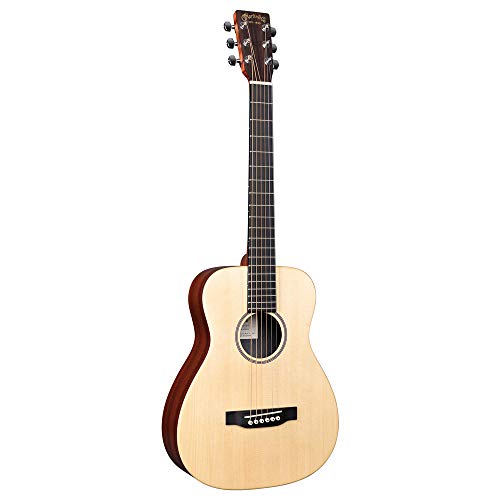
The Martin LX1E, often called the Little Martin, is one of the most respected compact acoustic guitars on this list. It uses a solid Sitka spruce top with mahogany-patterned HPL construction on the back and sides. The small body feels approachable, yet the guitar still has the focused projection that players expect from Martin. Its acoustic-electric design also lets you connect to an amplifier or recording setup.
This model uses steel strings, so it will feel firmer than a nylon-string guitar. However, its compact shape and shorter scale can make the fretting distance feel less demanding than on a standard dreadnought. The neck still needs a proper setup, especially for a beginner. In my view, this is the best acoustic guitar for small female hands when the player wants a premium compact instrument that can grow with her skills.
Pros:
- Compact body is comfortable for smaller players
- Solid Sitka spruce top offers strong detail
- Acoustic-electric design supports live use and recording
- Martin build quality gives it long-term appeal
- Gig bag makes transport simple
- Clear tone works for both strumming and picking
Cons:
- Steel strings may feel hard on untrained fingers
- Higher price than entry-level beginner kits
- Small body has less low-end power than a full-size guitar
The LX1E is best for a serious beginner, an advancing player, or a songwriter who needs a compact guitar with a professional voice. I like its balance: the body does not swallow a smaller frame, but the sound does not feel toy-like. A fresh setup can make a major difference in playability. If you can spend more and want an instrument that remains useful for years, this model deserves close attention.
Fender CD-60S Left-Handed Acoustic Guitar

The Fender CD-60S is a left-handed dreadnought with a classic full-size shape. It is not the smallest guitar here, but its rounded walnut fingerboard and comfortable neck help make it friendlier than many budget dreadnoughts. The solid spruce top can produce a lively sound with good volume. Mahogany construction adds a warm character that works well for open chords.
Small-handed players should know that body size and neck size are different issues. A player may manage the neck well but still find the large body tiring. The CD-60S offers a familiar steel-string sound, yet it needs more arm reach than a 3/4-size model. For a left-handed adult who wants a traditional guitar and does not mind the larger body, it can be a good value.
Pros:
- Left-handed layout is ready for lefty players
- Solid spruce top gives the sound more life
- Walnut fingerboard feels smooth under the fingers
- Dreadnought body provides strong volume
- Phosphor bronze strings offer a full acoustic tone
- Two-year warranty adds buying confidence
Cons:
- Large dreadnought body may overwhelm a petite player
- Steel strings can feel tough during early practice
- Requires more reach than a 3/4-size guitar
I would choose the CD-60S for a left-handed woman who wants to play folk, country, worship music, or campfire songs with a full voice. It is less ideal for someone who already knows that large bodies cause shoulder or wrist pain. A supportive strap can improve the sitting position. Even so, the guitar remains a traditional option rather than the easiest physical fit.
Fender FA-25N 3/4-Size Nylon Guitar

The Fender FA-25N is a 3/4-size nylon-string acoustic guitar made with beginners in mind. Its smaller body makes it easier to rest on a lap, and its nylon strings feel softer than steel. That combination is helpful for a player with short fingers, small hands, or tender fingertips. The natural finish also gives it a clean and simple look.
I see this as one of the safest starting points for basic chords and gentle fingerstyle. Nylon strings do not create the same bright snap as steel strings, but they are often kinder during the first month of practice. Fender also includes access to three months of lessons, which can give a new player a clear path. If comfort is the top concern, this is a strong candidate for the best acoustic guitar for small female hands.
Pros:
- 3/4-size body fits smaller laps and shorter arms
- Nylon strings are soft and beginner friendly
- Easy starting point for basic chords
- Lightweight design is simple to carry
- Includes three months of free lessons
- Two-year warranty offers extra support
Cons:
- Nylon tone may not fit rock or bluegrass styles
- Lower volume than many steel-string guitars
- Some adult players may outgrow the small body
The FA-25N suits a first-time player who wants less finger pain and less physical strain. I would also suggest it for an adult learner who feels nervous about starting. The short scale can make early chord shapes feel less like a hand stretch. Its value is strongest when comfort matters more than maximum volume or advanced stage performance.
Donner 36-Inch Beginner Acoustic Guitar Kit

The Donner 36-inch acoustic guitar is built for beginners who want a full kit at a low starting cost. The 3/4-size body is easier to manage than a large dreadnought. It includes a gig bag, capo, tuner, strap, picks, and other useful accessories. That means a new player can begin without buying every small item separately.
This model uses steel strings, so it will feel firmer than the Fender FA-25N or the Pyle classical guitar. The smaller body still helps with posture and reach. I like the bundle for casual learning, travel, and young adults who want to try guitar before making a larger investment. A good setup can improve the action and make this guitar much easier on small hands.
Pros:
- 36-inch body is easier to hold than a full-size dreadnought
- Complete starter bundle reduces extra purchases
- Steel-string tone suits pop, folk, and country songs
- Capo and tuner help beginners practice with confidence
- Travel-friendly size works well for lessons
- Low entry price makes it easy to try guitar
Cons:
- Factory action may vary from one guitar to another
- Steel strings may cause early fingertip soreness
- Basic accessories may not last as long as premium gear
I recommend the Donner kit to a budget-minded beginner who wants steel-string sound in a smaller package. It is a practical pick for a teen, college student, or adult learner. The included tuner and capo remove two common barriers on day one. It may need a local setup, but that cost can still leave the total value very strong.
Moukey 41-Inch Full-Size Acoustic Guitar

The Moukey 41-inch guitar follows the familiar full-size acoustic design. It comes with a gig bag, tuner, capo, strap, picks, and a chord poster. That package is useful for a new player who wants simple tools and a clear start. The black finish gives it a bold look, while the steel strings provide the bright sound many people expect from an acoustic guitar.
Because it is full size, I would not call it the easiest physical match for very small hands. Still, some petite players prefer a full-size neck and want stronger volume. The right sitting position can make a larger guitar feel much better. If possible, try holding one before buying, since arm length and shoulder comfort matter as much as finger length.
Pros:
- Full-size body produces strong acoustic volume
- Steel strings suit common pop and folk styles
- Includes a tuner, capo, strap, picks, and bag
- Chord poster helps new players learn basic shapes
- Black finish gives the guitar a modern appearance
- Suitable for adults who want a traditional body size
Cons:
- 41-inch size may feel large for a petite player
- Wide body can cause shoulder fatigue
- Entry-level setup may require adjustment
The Moukey is best for a small-handed player who has average or long arm reach and wants a louder guitar. It is also a reasonable family guitar because several players can share it. I would not make it my first suggestion for someone with wrist pain or limited reach. A smaller model will usually create a more relaxed learning experience.
Smartxchoices 38-Inch Beginner Acoustic Guitar

The Smartxchoices 38-inch acoustic guitar sits between a compact travel guitar and a full-size instrument. That middle size can work well for a player who wants more volume than a 3/4-size model but less bulk than a 41-inch dreadnought. The bundle includes a gig bag, strap, picks, spare strings, and a pitch pipe. For a beginner, those extras make the first practice session more convenient.
The 38-inch body still requires some arm reach, and its steel strings may feel firm at first. However, the reduced body length can help a smaller player keep the guitar steady. I see it as a useful bridge for someone who expects to move to a full-size guitar later. It offers a familiar six-string format without the biggest body found on many beginner guitars.
Pros:
- Middle-size body balances comfort and volume
- Starter kit includes several useful accessories
- Steel-string sound works for many song styles
- Spare strings add practical backup value
- 38-inch size may suit older children and petite adults
- Black finish is easy to match with other gear
Cons:
- Steel strings can feel rough during early practice
- Pitch pipe is less precise than a digital tuner
- Body may still feel large for very short arms
I would choose this Smartxchoices guitar for a player who wants a useful middle ground. It can fit a petite adult better than a full-size dreadnought while keeping the feel of a standard steel-string guitar. The included accessories help keep the purchase affordable. Before buying, check the seller’s current measurements and setup details because entry-level specifications can change.
Donner 41-Inch Left-Handed Cutaway Guitar

The Donner DAG-1CL is a left-handed acoustic guitar with a 41-inch cutaway body. Its cutaway gives the fretting hand better access to the higher frets. That feature is useful for lead lines, simple solos, and chord shapes above the fifth position. The package includes a bag, strap, tuner, capo, pickguard, and picks.
This is a full-size guitar, so smaller players should think about body comfort before finger reach. The left-handed neck may feel fine, but the wide lower bout can still press against the arm. The included capo can also make difficult chords easier by moving the playing area up the neck. For a left-handed adult who wants a low-cost steel-string guitar with room to grow, this Donner offers good feature value.
Pros:
- Left-handed design supports natural playing posture
- Cutaway improves access to upper frets
- Complete kit includes tuner, capo, strap, and bag
- Steel strings create a bright, familiar sound
- Pickguard helps protect the top from pick marks
- Affordable option for left-handed beginners
Cons:
- 41-inch body may be too large for petite players
- Factory action may benefit from a professional setup
- Steel strings can be hard on sensitive fingertips
I suggest this model for a left-handed player who wants a traditional full-size instrument and access to higher notes. It is not my first pick for someone specifically seeking the smallest comfortable guitar. However, the cutaway adds more playing range than many starter models. Its value is strongest when left-handed orientation and future lead playing matter most.
My Recommendation
After comparing body size, string feel, scale comfort, and likely use, I would start with the Fender FA-25N for a first-time player with very small hands. Its 3/4-size body and nylon strings remove two major sources of strain. I would choose the Martin LX1E for a serious player who wants premium sound and acoustic-electric flexibility. For left-handed players, the Pyle is the easiest compact option, while the Fender CD-60S and Donner DAG-1CL suit those who prefer full-size steel-string guitars.
| Best for | Why |
|---|---|
| Small hands and soft fingertips | Fender FA-25N combines a 3/4-size body with gentle nylon strings. |
| Premium compact performance | Martin LX1E offers a smaller body, solid spruce top, and acoustic-electric use. |
| Left-handed compact playing | Pyle 36-inch classical guitar offers a lefty layout, short body, and nylon strings. |
The best acoustic guitar for small female hands should feel inviting before it sounds impressive. A comfortable guitar encourages longer practice, and longer practice builds skill. Check current stock, seller ratings, and setup options before ordering because price and availability can change.
How to Choose the Best Acoustic Guitar for Small Female Hands
Hand size matters, but it does not tell the whole story. Finger length, palm width, arm reach, shoulder comfort, and playing style all affect the right choice. I have seen players with small hands handle a full-size guitar with no trouble. I have also seen tall players prefer a compact guitar because it feels more relaxed.
Start With Body Size
A guitar body sits against the ribs and upper leg. A large dreadnought can push the picking arm outward. That position may cause shoulder tension and make the guitar feel heavy. A 3/4-size or travel guitar usually keeps the instrument closer to the body.
Compact guitars are not only for children. Many adult women prefer concert, parlor, travel, or 3/4-size guitars. These shapes can offer enough tone for home practice without forcing the player to reach around a large lower bout. If comfort is your first concern, body size should be your first measurement.
Pay Attention to Scale Length
Scale length means the distance from the nut to the bridge. A shorter scale places the frets closer together. That can help a player form chords without overextending the fingers. It may also reduce the tension of the same string gauge, although the exact feel depends on tuning and construction.
Many compact guitars use a shorter scale than full-size dreadnoughts. Still, product listings do not always show every measurement clearly. Check the maker’s specifications when possible. A guitar that looks small may still have a neck that feels wide.
Check Nut Width and Neck Shape
The nut is the small piece at the top of the fretboard. Nut width tells you how much space the strings occupy near the first fret. A narrow nut can feel easier for small hands, but too little space can make your fingers touch nearby strings. A classical guitar often has a wider neck even though its nylon strings feel soft.
Neck shape also matters. A slim, rounded neck may feel easier than a thick or square profile. The best acoustic guitar for small female hands should let your thumb rest behind the neck without squeezing hard. If your wrist bends sharply, the guitar may need a better strap position or a different neck.
Choose the Right Strings
Nylon strings are soft and easy on new fingers. They work well for classical music, soft pop, folk patterns, and gentle fingerstyle. Steel strings offer more snap, volume, and range for folk, country, rock, and singer-songwriter playing. They can also cause sore fingertips during the first few sessions.
Light-gauge steel strings may help. A guitar technician can also lower the action if it is too high. Do not use steel strings on a guitar designed only for nylon strings. The construction may not handle the different tension.
Do Not Ignore Guitar Setup
Setup may matter as much as the guitar brand. A setup checks the neck, action, intonation, nut, and saddle. High action makes every chord harder. It can turn an affordable guitar into a frustrating one.
I always suggest checking the first-fret area and the string height around the 12th fret. If the strings feel far from the fretboard, ask a qualified repair shop for help. A small setup can make a beginner guitar feel like a new instrument.
Think About Playing Style
Fingerstyle players may like a smaller body with a clear voice. Strummers may want more top area and volume. A songwriter may value an acoustic-electric pickup. A travel player may care more about weather resistance than deep bass.
There is no single guitar for every woman with small hands. The best choice matches both the body and the music. Pick comfort first, then tone, features, and looks.
Why Compact Acoustic Guitars Help Small-Handed Players
A compact guitar can make the first step feel less steep. The player can see the fretboard more easily. The picking arm can rest without reaching far across the body. These small changes can reduce tension and make practice feel more like music than exercise.
Shorter frets can also help with common beginner chords. Chords such as C, G, D, and A still take practice, but the hand does not need to stretch as far. A smaller guitar may also weigh less, which helps during long lessons or standing practice.
That does not mean every compact guitar sounds weak. Modern designs can produce clear mids, useful bass, and strong projection. The Martin LX1E and Enya NOVA GO show how a small body can still support serious playing. A good player can create a large musical feel from a small instrument.
Steel Strings or Nylon Strings for Small Hands?
Nylon strings are usually the gentler choice. They bend more easily and feel smoother under the fingers. This can help a new player practice longer before the fingertips become sore. Nylon is also a good fit for classical pieces and quiet fingerstyle.
Steel strings create a brighter and more cutting sound. They suit many popular songs and are common on folk guitars. Light steel strings can improve comfort, but they still need more finger pressure than nylon strings. If you love steel-string music, choose a compact steel-string model rather than forcing yourself to play a large guitar.
My simple advice is this: choose nylon if finger comfort is your main worry. Choose steel if your music demands it and you can accept a short adjustment period. The best acoustic guitar for small female hands should support your goals, not make you change the music you love.
Common Mistakes to Avoid
Buying Only by Appearance
A small-looking body does not always mean a narrow neck. Study the scale length, nut width, and body measurements. Product photos can hide the actual depth of the guitar.
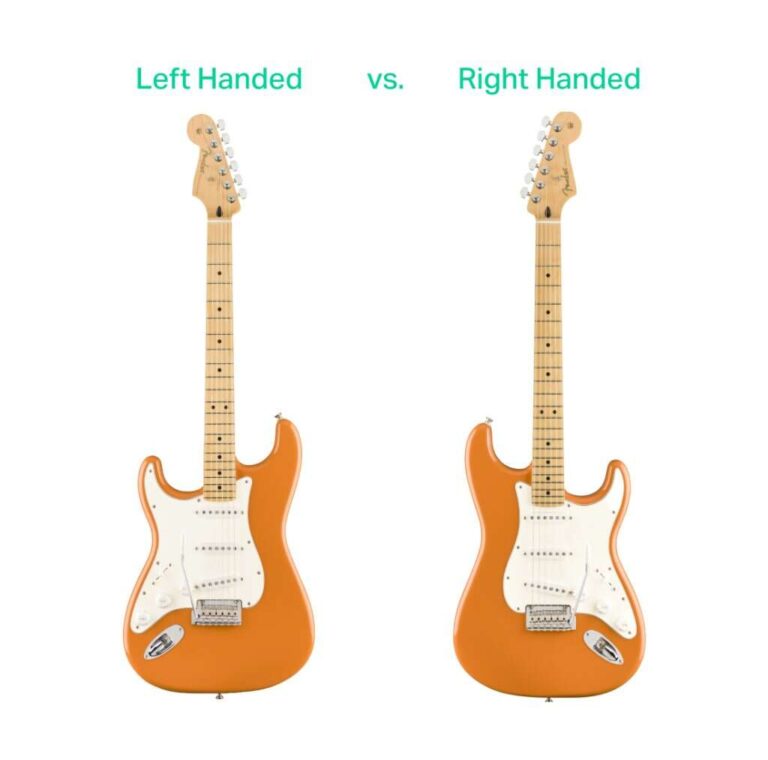
Ignoring Left-Handed Orientation
A left-handed player needs more than a guitar turned around. The nut, saddle, bracing, and string order must match the playing direction. The Pyle, Fender CD-60S, and Donner left-handed model listed above address that need.
Choosing High Action
High action forces the fingers to press harder. It also makes chords sound sharp if the player pushes too much. Ask about setup support before buying, especially with low-cost guitars.
Expecting a Small Guitar to Sound Like a Dreadnought
A compact guitar often has less bass. That is normal. In return, it may offer clearer mids, easier handling, and better comfort. Judge the guitar by its purpose rather than by size alone.
Skipping a Strap
A strap can help even when you play while seated. It keeps the guitar from sliding and lets the hands focus on the strings. Adjust it so the neck sits at a slight upward angle. This position often helps small hands reach the frets with less wrist bend.
Care Tips for Your New Acoustic Guitar
Keep the guitar away from extreme heat and direct sun. Heat can damage glue and change the neck. Very dry air can also harm wood, especially on instruments with solid wood parts.
Wipe the strings after playing. Clean hands help reduce dirt and oil. Store the guitar in its gig bag or case when you are not using it. Do not leave it leaning against a wall where it can fall.
Tune the guitar often. A digital tuner makes the process quick and helps your ear learn the correct pitch. Replace old strings when they sound dull or feel rough. Ask a guitar shop for help if the neck buzzes, the bridge lifts, or the action changes quickly.
How I Judged These Acoustic Guitars
I focused on features that affect real use, not just brand names. Body size came first because it controls how the guitar rests against the player. I then considered scale length, string type, neck access, left-handed availability, included items, and the likely need for a setup.
I also compared the needs of different players. A first-time learner needs comfort and low risk. A traveling musician needs durability and a compact case. A serious songwriter may need a pickup and a strong top. This approach gives a fairer answer than naming one guitar for every player.
Specifications can vary by production run and seller. Always confirm the current listing before purchase. Price, warranty terms, included accessories, and color availability may change in 2026.
FAQs Of best acoustic guitar for small female hands
What size acoustic guitar is best for small hands?
A 3/4-size, travel, parlor, or concert guitar is often the easiest place to start. These guitars usually reduce body bulk and fret reach. Choose based on scale length and nut width, not total length alone.
Are nylon strings better for small female hands?
Nylon strings are often better for beginners with sore or sensitive fingertips. They need less pressure and feel softer. Steel strings may be better for folk, country, and pop, so music style still matters.
Can an adult woman play a 3/4-size guitar?
Yes. Adult players can use a 3/4-size guitar comfortably. Many choose one for travel, practice, songwriting, or reduced shoulder strain.
Is the Martin LX1E worth it for small hands?
It can be worth the higher price if you want a compact guitar with strong build quality and acoustic-electric use. Its steel strings may feel firm at first. A professional setup can improve comfort.
Should I buy a left-handed acoustic guitar?
Buy a left-handed model if you naturally play left-handed. A correctly built lefty guitar keeps the string order, bridge, and controls in the proper position. Do not rely on simply reversing a right-handed guitar.
Final Verdict: Which Should You Buy?
The Fender FA-25N is my top pick for the best acoustic guitar for small female hands. Its 3/4-size body and nylon strings make learning gentle and simple. Choose the Martin LX1E for premium compact steel-string performance.
For left-handed players, the Pyle 36-inch classical guitar offers excellent comfort at a friendly price. Compare current Amazon stock, measurements, and setup options before buying your ideal compact acoustic guitar.

Senior Music Reviewer
Alex Carter is a seasoned music reviewer with over a decade of experience in the world of sound and instruments. Passionate about helping musicians and enthusiasts make informed choices, he brings sharp insights and in-depth knowledge to every review. From classical instruments to modern gear, Alex combines technical expertise with a love for music to deliver content that resonates with readers.
As a Senior Music Reviewer and expert author on Tuneluma.com, Alex is dedicated to sharing honest evaluations, practical advice, and thoughtful commentary to guide readers in their musical journey.