Best Guitar For 4 Year Old: Top Picks For Beginners
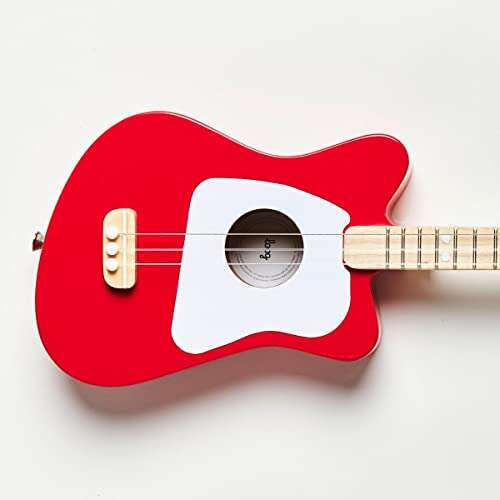
The Loog Mini Acoustic is the best guitar for a 4 year old who is ready to learn.
A four-year-old may ask for a “real” guitar, then lose interest when the body feels too large or the strings hurt. I understand that challenge. The right first guitar should feel light, safe, and fun while still giving a child a true music experience. In this guide, I review popular toddler guitars, ukulele-style guitars, toy guitars, and small beginner models. I focus on size, play value, comfort, sound, tuning, and how well each option suits a young child.
Loog Mini Acoustic Guitar

The Loog Mini Acoustic is a small, real acoustic guitar made for young beginners. Its three-string design reduces the amount of pressure needed to form simple chords. That matters for a four-year-old whose hands are still growing. The compact body also feels less bulky than a full-size guitar.
I like the simple layout because it gives a child a clear path into music. The included learning app and lessons can help parents start short practice sessions without guessing what to teach first. The guitar is still a learning instrument, so it may need gentle tuning and adult help. For many families, it offers the best balance between a toy-like size and a real musical feel.
Pros:
- Three strings make early chord shapes easier
- Compact size suits many preschool players
- Real acoustic design encourages active learning
- Learning app and lessons support parent-led practice
- Simple layout helps reduce finger confusion
- Light body is easier for a child to hold
Cons:
- It costs more than a basic toy guitar
- It may require regular tuning
- A four-year-old still needs help with care and setup
My Recommendation
The Loog Mini Acoustic is best for a four-year-old who shows real interest in singing, strumming, and learning simple songs. It is also a strong pick for parents who want more than flashing lights and sound effects. The three-string design can make the first steps feel less frustrating. If you want the best guitar for 4 year old beginners who may continue playing, this is my leading choice. Its learning support adds value, and availability can change, so check the current Amazon listing before buying.
Lehoo Castle Dinosaur Kids Guitar

The Lehoo Castle guitar uses a playful dinosaur theme to invite pretend play. Its design targets young children around the toddler and preschool age range. A fun shape can help a shy child pick up the instrument without feeling like practice has started. It works well for short bursts of strumming, singing, and make-believe concerts.
This type of guitar is best viewed as an early music toy rather than a full lesson instrument. It can help a child explore rhythm, hand movement, and musical cause and effect. The included set may also make it feel more exciting as a birthday gift. Parents should still check the strings, small parts, and body condition before giving it to a child.
Pros:
- Dinosaur design creates strong play appeal
- Made with very young children in mind
- Supports pretend concerts and music games
- Can introduce basic strumming movements
- Often feels less demanding than a real guitar
- Suitable for gift giving and casual play
Cons:
- Sound and tuning may not match a true acoustic guitar
- It may not support formal chord lessons well
- Parents should inspect small parts and strings
My Recommendation
I recommend the Lehoo Castle Dinosaur Guitar for a four-year-old who wants a colorful toy first. It suits children who enjoy dinosaurs, role play, and quick music games more than structured practice. This model can be a gentle first step before a family buys a higher-grade instrument. It may be the best guitar for 4 year old gift shoppers who want fun, low-pressure play at a reasonable cost.
LeapFrog Strum and Count Wooden Guitar

The LeapFrog Strum and Count is a wooden musical toy with a strong focus on early learning. It combines guitar-style play with counting and simple musical interaction. That combination can keep a preschool child engaged longer than a plain toy instrument. The familiar LeapFrog approach also makes it easy for parents to add music to daily play.
This guitar is designed for discovery, not advanced guitar training. A child can strum, listen, count, and repeat simple activities at their own pace. The wooden build may feel more substantial than a thin plastic toy, though parents should still treat it as a children’s learning toy. It is a useful choice when early education matters as much as guitar appearance.
Pros:
- Combines music play with counting practice
- Wooden construction gives it a solid feel
- Easy for a preschool child to explore
- Supports rhythm and hand-eye coordination
- Good choice for screen-free learning
- Recognizable learning-toy format helps parents guide play
Cons:
- It is not a full-size playable acoustic guitar
- It may offer limited value for formal lessons
- Electronic or learning features may not suit every child
My Recommendation
The LeapFrog Strum and Count is best for a four-year-old who learns through songs, numbers, and repeated play. It is especially useful for parents seeking a first music toy with an educational purpose. I would choose it for a child who is not yet ready to manage a tuned instrument. Among the options here, it can be the best guitar for 4 year old preschool learning and musical discovery.
2-in-1 Toddler Guitar and Piano Toy

This 2-in-1 toy combines a guitar shape with piano-style play. It gives a young child more than one way to make sounds and explore music. That variety can help when a child grows bored with repeated strumming. It also makes the toy useful for siblings with different interests.
The guitar side encourages hand motion and rhythm, while the piano side introduces keys and pitch changes. This is not the right tool for a child who wants to learn guitar chords in a serious way. It is better for open-ended play, sound discovery, and early confidence. I also like the format for travel or living rooms where a small toy is easier to store than a full instrument.
Pros:
- Offers guitar and piano play in one toy
- Gives children several ways to explore sound
- Can hold attention better than a single-function toy
- Works well for pretend performances
- Compact format is simple to store
- Useful for children who are unsure which instrument they prefer
Cons:
- It does not teach standard guitar technique
- Sound quality may be toy-like
- Extra features can distract from focused practice
My Recommendation
Choose this model for a four-year-old who wants buttons, keys, and guitar play in one package. It is a good fit for a child who enjoys variety and does not yet have a clear instrument preference. I would not select it as the best guitar for 4 year old music lessons, but I would consider it a flexible first music toy. It offers broad play value for families who want one compact gift.
MasterPlay 30-Inch Kids Classical Guitar
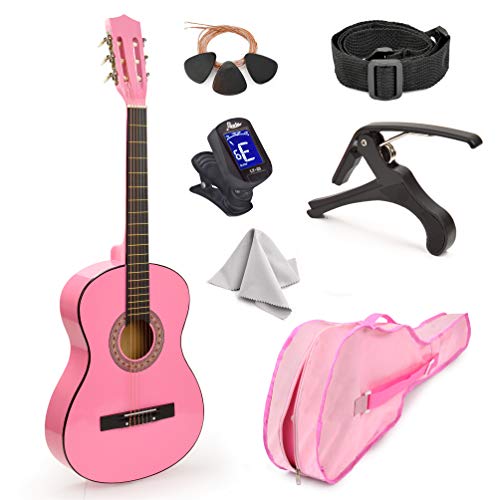
The MasterPlay is a 30-inch beginner classical guitar that comes with useful accessories. The package includes items such as a bag, strap, tuner, pick, extra string, and cleaning cloth. That setup can save parents from buying basic supplies one by one. The classical shape also gives a child a more traditional guitar experience.
At 30 inches, this model may be large for many four-year-olds. Its listed age range focuses on older children, so I would measure the child’s reach before ordering. A tall four-year-old with strong interest may manage it with adult support, while a smaller child may struggle. The nylon-style classical format can feel gentler than steel strings, but size remains the main concern.
Pros:
- Includes a practical beginner accessory kit
- Classical design feels like a real guitar
- Strap and bag support storage and transport
- Tuner helps parents maintain basic pitch
- Cleaning cloth encourages good instrument care
- May last longer as a child grows
Cons:
- Thirty inches may be too large for many four-year-olds
- Better suited to older children than toddlers
- Parents should confirm fit before purchase
My Recommendation
I recommend the MasterPlay for a tall or advanced preschool child who already shows serious guitar interest. It is also worth considering if the child will soon enter the recommended age range. For an average four-year-old, I would choose a smaller model first. This is not my first pick for the best guitar for 4 year old beginners, but its accessory kit gives it good value for a growing learner.
Hape 26-Inch Wooden Kids Guitar

The Hape 26-inch guitar is a wooden beginner instrument with four tunable strings. It looks and feels more like a small guitar than a simple electronic toy. The size may work for some preschool children, though body length alone does not guarantee a good fit. A child’s arm reach, sitting posture, and comfort matter just as much.
The tunable strings give parents a chance to introduce real musical habits. A four-year-old may not tune it alone, but an adult can prepare it before play. The wooden build should be handled with care, especially around walls and hard floors. I see this model as a bridge between pretend play and early instrument practice.
Pros:
- Four tunable strings provide a real guitar experience
- Wooden body has a classic instrument look
- Supports basic strumming and rhythm work
- May suit children who want a traditional design
- Useful for parent-and-child music time
- Can grow with a child better than a tiny toy
Cons:
- Twenty-six inches may still feel large for some children
- It needs adult tuning and supervision
- String height may not feel ideal for every beginner
My Recommendation
The Hape guitar is best for a four-year-old who wants a real-looking instrument and can sit comfortably with a larger body. I would pick it for family music time, especially when an adult already knows how to tune a guitar. It is more educational than a sound-effect toy but less child-friendly than a compact three-string model. For the right-sized child, it is a thoughtful choice with lasting play value.
Raimy 21-Inch Kids Ukulele Guitar

The Raimy is a 21-inch ukulele-style guitar toy made for young children. Its short length can feel more manageable than a standard children’s guitar. The smaller body lets a child bring the neck closer and strum without stretching too far. That can make early play feel less like hard work.
Ukulele-style instruments often offer a friendly route into string music. A young child can focus on holding, strumming, and singing before learning complex chords. I would check whether the model is meant for toy play or true musical use before planning lessons. It is a strong gift option for a preschooler who likes bright, small instruments.
Pros:
- Twenty-one-inch size is easier for small arms
- Ukulele format offers a gentle start with strings
- Light design supports independent carrying
- Good for singing and simple strumming games
- Suitable for boys and girls in the listed age range
- Usually easier to store than a full guitar
Cons:
- It may not teach standard six-string guitar skills
- Tuning stability may be limited on a toy-style model
- Children may outgrow it quickly
My Recommendation
I recommend the Raimy for a four-year-old with small hands who wants to hold and strum an instrument right away. It can also suit parents who are open to starting with ukulele skills. If your long-term goal is standard guitar, treat this as a confidence-building first step. For size and comfort, it may be the best guitar for 4 year old children who find larger bodies awkward.
Portable Blue Electric Guitar for Beginners
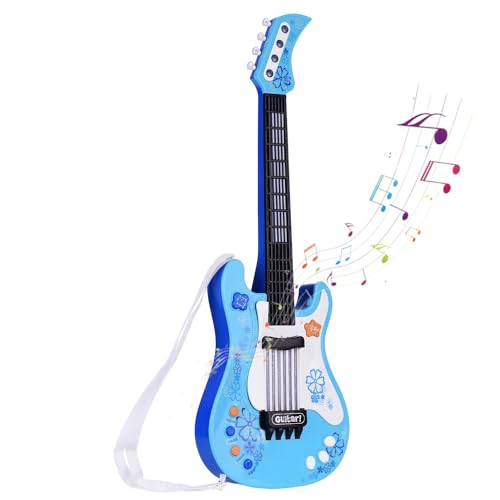
This portable blue electric guitar is aimed at beginners who enjoy the look of an electric instrument. A strap can make it easier for a child to stand during pretend performances. Electric guitar styling often creates instant excitement for children who love rock music. The compact design may also be easier to carry than a full-size electric guitar.
Parents should confirm what is included and how the guitar creates sound before ordering. Some beginner electric guitar products are playable instruments, while others are mainly toys with built-in effects. A four-year-old should use any cord, battery, amplifier, or small accessory with adult supervision. I would choose this model for performance play rather than quiet, focused acoustic practice unless the listing confirms otherwise.
Pros:
- Electric design appeals to young rock music fans
- Portable body is easier to move and store
- Strap supports standing play
- Can make pretend performances more exciting
- Blue finish adds strong visual appeal
- May encourage confidence and creative play
Cons:
- It may need extra equipment, depending on the package
- Electric parts require closer adult supervision
- It may not be ideal for quiet practice
My Recommendation
This portable electric guitar is best for a four-year-old who dreams of being on stage. I would buy it for energetic pretend play and family performances, not as my first formal lesson guitar. Check the power needs, included accessories, and product details before purchase. It can be the best guitar for 4 year old children who are motivated by lights, rock style, and standing with a strap.
Drmukie Light-Up Kids Electric Guitar
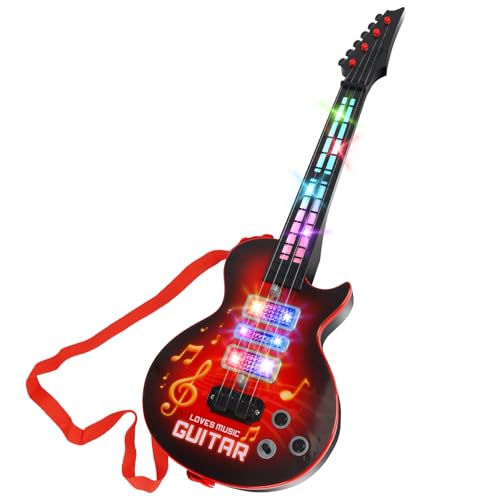
The Drmukie kids electric guitar adds light-up effects to a toddler-friendly format. Bright feedback can help a young child see that pressing or strumming caused a response. That quick reward often makes a first music toy feel like a game. The four-string design also looks more like a guitar than a basic button board.
This product is mainly about fun, movement, and sound discovery. It can support pretend play, hand control, and simple rhythm, but it should not replace a tuned acoustic guitar for lessons. Light and sound features may be exciting at first, so parents should watch for overstimulation. I suggest short play periods and a clear storage spot for the instrument.
Pros:
- Light-up effects create instant visual feedback
- Four-string guitar shape feels familiar
- Encourages cause-and-effect learning
- Good for pretend bands and indoor play
- Easy entry point for children who dislike lessons
- Can add excitement to a birthday gift
Cons:
- It is not designed for serious guitar training
- Lights and sounds may need batteries
- Some children may prefer a quieter instrument
My Recommendation
The Drmukie is best for a four-year-old who responds to lights and interactive effects. It makes sense for a child who needs a fun reason to pick up a guitar-shaped toy. I would choose it as a play instrument, then move to a tuned model if interest grows. Its main value is motivation, not traditional guitar technique.
Vanplay Pink Toddler Guitar Set

The Vanplay pink guitar set is designed as a colorful toddler gift. Its bright look can appeal to children who enjoy pretend play and role-based toys. A set format may give the child more to explore than a guitar alone. It can work well for birthday mornings, playrooms, and family sing-alongs.
This is a better fit for casual play than structured guitar study. It can introduce the idea of holding, strumming, and performing for others. Parents should inspect the instrument when it arrives and keep any small accessories away from children who still put items in their mouths. As with any toddler toy, adult supervision remains important.
Pros:
- Bright pink design creates strong gift appeal
- Set format can add more pretend-play options
- Easy way to introduce guitar-shaped play
- Good for singing and family interaction
- Light body helps young children carry it
- Works well for short, informal play sessions
Cons:
- It may be too basic for formal music lessons
- Sound quality may be limited compared with real instruments
- Small set pieces need careful supervision
My Recommendation
I recommend the Vanplay set for a young child who wants a pretty, fun, and simple guitar gift. It suits families that value imaginative play over accurate notes. I would not call it the best guitar for 4 year old lessons, but it can be a pleasant first introduction. Its value depends on the child’s play style and the included set contents.
How to Choose the Best Guitar for a 4 Year Old
Choosing the best guitar for 4 year old beginners starts with fit. Age labels help, but they do not tell the whole story. Children of the same age can have very different arm lengths, hand strength, and attention spans. I always look at the child’s reach, posture, and interest before I look at color or extra features.
Choose the right size
A guitar should not force a child to stretch across the body. When the child sits, the instrument should rest in a stable position. The strumming hand should reach the sound area without the shoulder lifting too high. A neck that feels too long can turn a fun lesson into a tiring task.
Small ukulele-style guitars and compact three-string models often suit preschool hands. A 26-inch or 30-inch guitar may work for a taller child, but parents should measure first. I would rather choose a small instrument that a child plays often than a large one that stays in a corner. Comfort is the bridge between interest and practice.
Real guitar or toy guitar?
A toy guitar is often the best starting point for a child who wants lights, songs, and pretend play. It can build rhythm and confidence without demanding correct notes. A real guitar is better when the child asks to learn songs, copies adult players, or enjoys repeated practice. Neither type is wrong; they serve different goals.
Look closely at product language. “Guitar toy” usually means the instrument focuses on play effects, shape, or sound buttons. “Beginner acoustic guitar” suggests a playable instrument, but the exact quality can still vary. I advise parents to read current details about strings, tuning, size, and included parts before ordering.
String count and string feel
Three strings can simplify the first lesson. Fewer strings mean less visual clutter and fewer areas for a child to touch by mistake. Nylon-style strings may feel softer than steel strings, but every instrument can still need careful finger pressure. A child should never feel forced to push through pain.
At this age, the goal is not perfect technique. The goal is positive contact with music. A parent can teach gentle strumming, stop signs, and simple rhythm patterns. If the child’s fingers become sore, end the session and try again later.
Sound and tuning
A tuned instrument helps a child learn what pleasing sound feels like. It also makes singing along more rewarding. Toy guitars often use fixed sounds, while real guitars need tuning. Parents should expect to do the tuning at first.
I recommend a simple electronic tuner for a playable guitar. Keep the volume low if the model has electronic effects. A child should hear the instrument without creating a harsh sound that makes family time stressful. Good sound does not need to be loud sound.
Safety and build quality
Check for loose parts, sharp edges, cracked wood, exposed wires, and rough string ends. Make sure the strap cannot become a hazard during unsupervised play. Follow the manufacturer’s age guidance and inspect the product after delivery. Adult supervision matters most with electric toys, batteries, cords, picks, and small accessories.
Wooden instruments can last well, but they need gentle handling. Teach your child to place the guitar on the floor only when the neck is safe from feet and doors. A soft bag can help protect it. These small habits turn ownership into part of the learning process.
Sound effects and learning features
Buttons, lights, and songs can help a child begin. They provide quick feedback and keep play lively. Still, extra features do not always equal better music learning. If every touch triggers a new effect, a child may focus on pressing buttons instead of listening to rhythm.
I prefer simple features when the goal is guitar skill. I prefer interactive features when the goal is early exploration. Think of the toy as a doorway. The best doorway is the one your child wants to walk through.
What should parents expect from practice?
Four-year-olds learn best through short sessions. Five to ten minutes may be enough at first. Let the child strum while you sing a familiar song. Praise effort, listening, and gentle handling rather than demanding perfect chords.
Music should feel like a game, not a test. You can count four beats, copy a rhythm, or take turns playing loud and soft. These small activities teach real musical ideas. They also help a child build focus without losing joy.
Best Features Compared
| Best for | Why |
|---|---|
| Early guitar lessons | Loog Mini Acoustic offers a compact real instrument, three strings, and learning support. |
| Educational play | LeapFrog Strum and Count blends guitar-style play with counting and music discovery. |
| Imaginative toddler fun | Lehoo Castle, Drmukie, and Vanplay models use themes, lights, or set features to invite play. |
Why Size Matters More Than Appearance
A bright guitar may catch a child’s eye, but size decides whether the child can use it. I have seen children love an instrument for one minute, then drop it because the neck was too far away. That is not always a lack of interest. Sometimes the guitar simply feels like a small piece of furniture.
Watch the child hold the instrument while seated. The body should not cover the whole chest. The neck should not point sharply upward because the child cannot reach it. A balanced guitar lets the child focus on sound instead of fighting the shape.
How I Assess a Guitar for Preschool Children
I assess each model by asking five simple questions. Can a four-year-old hold it without strain? Can the child make a sound with little force? Does the product support the family’s real goal? Can an adult keep it clean, safe, and ready? Does the price make sense for the expected use?
I also separate a musical toy from a lesson instrument. Both can be useful, but buyers should know what they are getting. A toy may win on fun, while a small acoustic guitar may win on long-term learning. Honest product matching prevents disappointment.
Common Buying Mistakes to Avoid
The first mistake is buying a full-size guitar because it seems like better value. A large instrument may last longer, but it can block a child from playing now. The second mistake is choosing a guitar only by color. A favorite color helps, but comfort keeps the child engaged.
Another mistake is expecting adult-level practice from a preschooler. Four-year-olds need play, praise, and pauses. Parents should also avoid leaving a real guitar out where it can be stepped on or pulled from a table. A simple care routine protects the purchase and teaches respect for tools.
FAQs Of best guitar for 4 year old
What size guitar is best for a 4 year old?
A compact child guitar or small ukulele-style model often works best. The correct size depends on the child’s reach and body size. Choose a guitar that the child can hold without lifting the shoulder or stretching across the neck.
Should a 4 year old start with a guitar or ukulele?
Either can work. A ukulele-style instrument is often smaller and easier to hold. A three-string guitar may be better if the child wants to move toward standard guitar lessons later.
Are toy guitars useful for learning music?
Yes, toy guitars can teach rhythm, movement, listening, and confidence. They usually do not teach accurate chords or standard tuning. Choose a real beginner instrument when formal guitar skills are the main goal.
Do children need guitar lessons at age four?
Not always. Many four-year-olds benefit from playful music time at home first. If the child asks to learn and can focus for short periods, a patient teacher with preschool experience may help.
What is the safest way for a child to use a guitar?
Use adult supervision, inspect the strings and parts, and keep cords, batteries, picks, and straps managed. Teach the child to sit while learning and store the instrument safely after play. Follow the product’s age and care instructions.
Final Verdict: Which Should You Buy?
The Loog Mini Acoustic is my top pick for the best guitar for 4 year old beginners. Its small body, three strings, and learning support offer the strongest path from play to real skills.
For pretend play, choose a themed or light-up toy. For serious interest, choose a compact acoustic model. The best guitar for 4 year old children is the one they can hold, enjoy, and play often.

Senior Music Reviewer
Alex Carter is a seasoned music reviewer with over a decade of experience in the world of sound and instruments. Passionate about helping musicians and enthusiasts make informed choices, he brings sharp insights and in-depth knowledge to every review. From classical instruments to modern gear, Alex combines technical expertise with a love for music to deliver content that resonates with readers.
As a Senior Music Reviewer and expert author on Tuneluma.com, Alex is dedicated to sharing honest evaluations, practical advice, and thoughtful commentary to guide readers in their musical journey.