What Are Pianos Made Of: Piano Materials Explained
Most pianos are made from hardwood, spruce, steel, iron, felt, leather, and durable adhesives.
That simple answer hides a remarkable blend of craft and engineering. To understand what are pianos made of, you need to look at how each material supports tone, strength, touch, and long-term stability. From the soundboard that amplifies each note to the tiny felt parts under every key, nearly every piece has a clear job.
The Main Materials Used in a Piano
A piano combines natural materials with modern manufactured parts. Traditional makers choose each material for a specific reason, such as strength, flexibility, vibration, or resistance to wear.
The main materials in an acoustic piano include:
• Wood for the case, soundboard, bridges, action parts, and keys
• Spruce for the soundboard and some internal parts
• Cast iron for the heavy plate or frame
• Steel for strings, pins, and some hardware
• Felt and cloth for dampers, hammers, and cushions
• Leather for selected action parts and hinges
• Ivory or plastic for older and modern key surfaces
• Glue and varnish for joining and protecting components
• Rubber, foam, and synthetic materials in some newer instruments
When people ask what are pianos made of, they often expect one simple material. In reality, a piano is closer to a small machine, a piece of furniture, and a musical instrument combined.
The exact materials vary by brand, model, age, and piano type. A concert grand may use more carefully selected wood and specialized parts than a basic student upright, but the core design remains similar.

What Is the Piano Case Made Of?
The outer piano case is usually made from hardwood, plywood, veneers, or a combination of these materials. Common woods include maple, beech, mahogany, walnut, and poplar. Many visible cases use a thin decorative veneer over a stronger wood core.
The case protects the inner parts and helps keep the piano rigid. It also affects the instrument’s appearance, weight, and resistance to changes in temperature and humidity.
A piano case may contain:
• Hardwood posts and rails for support
• Plywood panels for strength and stability
• Decorative veneers for the outer finish
• Metal hinges, locks, pedals, and brackets
• Polyester, lacquer, or another protective finish
Modern piano makers often use laminated wood. This means several thin wood layers are glued together. Laminated wood can resist warping better than a single thick board, which matters because a piano may face years of seasonal humidity changes.
The case is not the main source of a piano’s sound. Still, it must hold the frame and action in the correct position. Even a small shift can affect tuning, key movement, or the feel of the instrument.
What Is a Piano Soundboard Made Of?
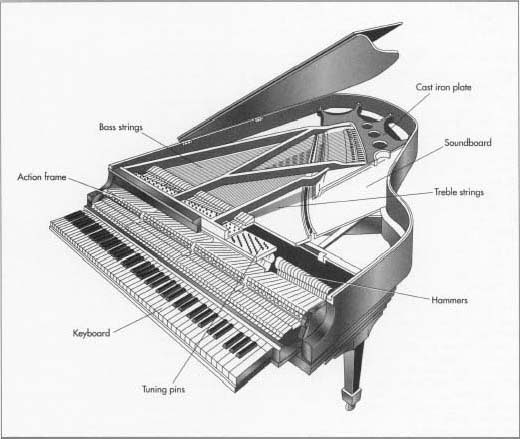
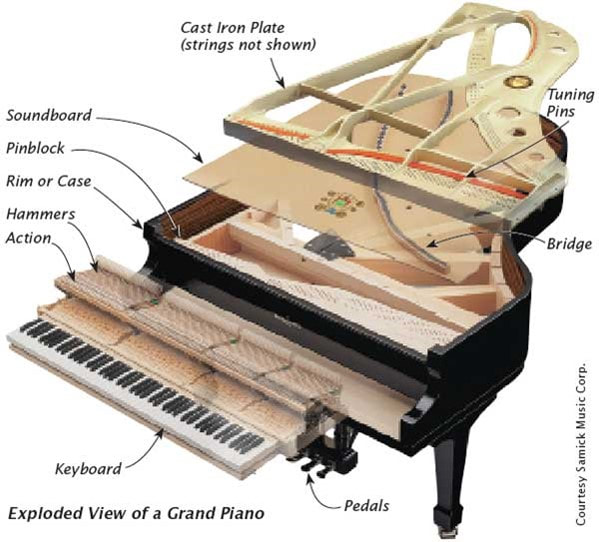
The soundboard is one of the most important parts of an acoustic piano. It is usually made from carefully selected spruce, a light wood that can vibrate well.
Spruce has a useful balance of strength and low weight. When a string vibrates, the bridge transfers that energy to the soundboard. The soundboard then moves more air than the string could move alone. This creates the rich volume associated with a piano.
A soundboard usually includes:
• A thin spruce panel
• Ribs glued across the underside
• Bridges attached to the upper surface
• A curved shape called the crown
The crown is a gentle upward curve in the soundboard. String tension presses against the bridge and soundboard, so the crown helps the board remain strong and responsive.
Soundboards are not flat by accident. Their shape, thickness, grain direction, and rib placement all influence tone. A well-made soundboard can produce a warm, clear sound, while damage or poor design may cause buzzing, weak volume, or uneven notes.
Dry air can shrink wood. Damp air can make it swell. For this reason, stable room humidity is one of the best ways to protect a piano soundboard.
What Are Piano Strings Made Of?
Piano strings are made from high-carbon steel wire. The treble strings are usually thinner, while the bass strings are thicker and often wrapped with copper.
The steel must tolerate strong tension without stretching too much. Each string is tuned to a specific pitch, so even a small change in length, thickness, or tension can alter the note.
Bass strings often have two parts:
• A steel core wire
• A copper winding wrapped around the core
Copper adds mass without requiring an extremely thick steel wire. This lets the piano produce low notes while keeping the string practical in size.
A piano may contain more than 200 strings, depending on its design. These strings create a combined tension that can reach many tons. The exact amount varies by instrument, but the large force explains why a piano needs a strong metal frame.
Strings can develop rust when exposed to moisture. Rust weakens the wire and may create a dull tone or sudden break. Avoid placing a piano near open windows, kitchens, radiators, or damp outside walls.
What Is the Piano Frame Made Of?
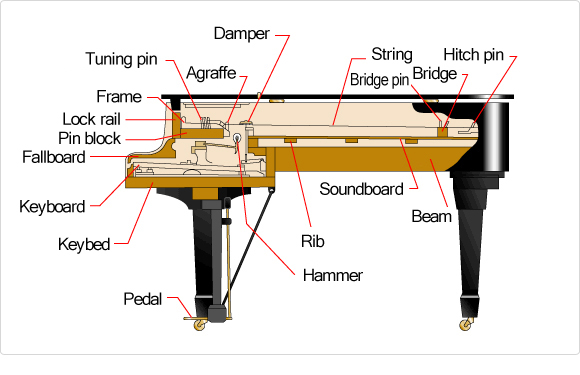
The piano frame, also called the plate, is usually made from cast iron. It sits above or around the soundboard and supports the tension of the strings.
Cast iron works well because it is strong and rigid. It can hold the strings in place without bending under their combined force. Piano makers shape and finish the plate with great care because it is both a structural part and a visible design feature.
The frame supports several key components:
• Tuning pins
• String hitch pins
• Bridges and related hardware
• The upper ends of the strings
• Parts of the pedal and structural system
A grand piano typically has a large plate that follows the shape of the case. An upright piano uses a more vertical arrangement, but its frame still performs the same basic job.
The cast-iron plate is heavy. It is one reason moving a piano requires planning, proper equipment, and trained movers. A small upright may weigh several hundred pounds, while a concert grand can weigh well over 1,000 pounds.

What Are Piano Keys Made Of?
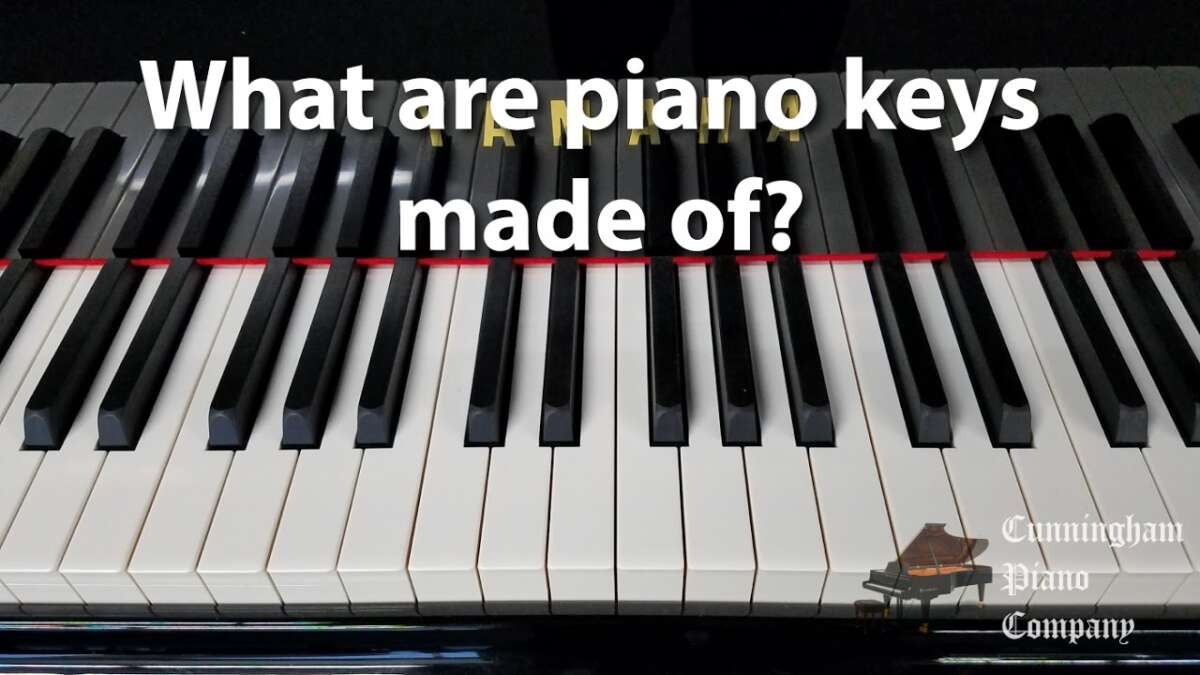
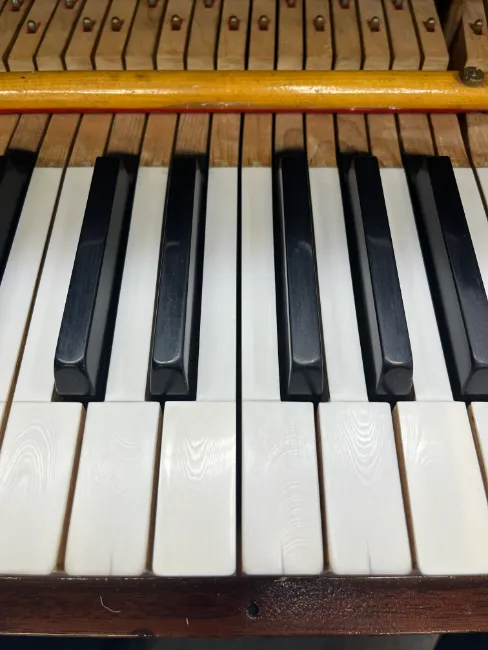
Modern piano keys are usually made from wood covered with plastic or another synthetic material. The white keys once used ivory, but new ivory key coverings are generally prohibited or tightly regulated because elephants are protected wildlife.
Key cores may use spruce, basswood, poplar, or other lightweight woods. The key must be strong enough for repeated use but light enough to move smoothly.
The visible key surfaces may include:
• Acrylic plastic
• ABS plastic
• Other synthetic materials
• Ivory on some antique pianos
Black keys are often made from ebony, stained hardwood, or synthetic material. Ebony has a smooth feel and attractive dark color, but quality synthetic surfaces can also provide excellent grip and durability.
The key itself does not make the sound. Pressing it moves the action, which causes a felt-covered hammer to strike the string. This chain of movement must be balanced carefully so the pianist can control volume and expression.
One practical lesson is to avoid harsh cleaners on piano keys. A soft, slightly damp cloth is usually safer. Excess moisture can enter the gaps and damage the wood beneath the key coverings.
What Are Piano Hammers Made Of?
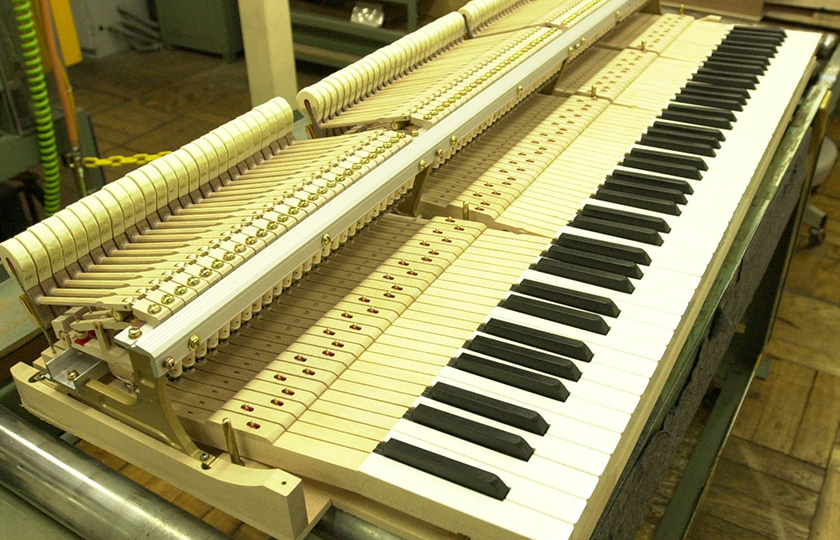
Piano hammers have a wooden core covered with layers of dense felt. The wood gives the hammer its shape, while the felt cushions the impact against the string.
When you press a key, the action throws the hammer toward the string. The hammer strikes and then quickly moves away. This fast movement allows the string to vibrate freely.
Hammer materials and shape affect:
• Volume
• Brightness
• Warmth
• Attack speed
• Dynamic control
A harder hammer covering can create a brighter, sharper tone. Softer felt often produces a warmer sound. Piano technicians can sometimes adjust the felt through a process called voicing.
Hammers wear over time. Repeated strikes create grooves where the felt meets the strings. A technician may reshape or “voice” the hammer to restore a more even tone. Replacing hammers is possible, but it is a specialist repair and can be costly.
What Are Piano Dampers Made Of?
Dampers are usually made from lightweight wood or composite parts covered with felt. They sit against the strings and stop the sound when the pianist releases a key.
Most notes in the upper register do not need individual dampers because their strings are short and decay quickly. Lower and middle notes usually have dampers that control their longer vibrations.
A damper system includes:
• Damper heads
• Damper wires
• Felt pads
• Levers and spoons
• A damper lift mechanism
The right pedal raises many or all dampers at once. This allows strings to continue ringing after the keys are released. The left and middle pedals use different mechanisms, depending on the piano’s design.
If a damper does not sit evenly on a string, the note may continue ringing or create unwanted noise. Damper problems need careful adjustment because small alignment errors can be easy to hear.

What Materials Are Used in the Piano Action?
The action is the mechanical system between the keys and the hammers. It contains many small parts, and each part must move with very little friction.
Traditional piano actions use a mixture of wood, felt, cloth, leather, metal, and small plastic parts. Newer instruments may use more composite materials, especially in areas where humidity can affect wooden parts.
Common action materials include:
• Wood for keys, jacks, whippens, and levers
• Felt for cushions and hammer coverings
• Cloth for bushings and friction points
• Leather for selected hinges and action surfaces
• Brass or steel for springs, pins, and wires
• Plastic or composite parts in some modern actions
The action has thousands of moving relationships, even though the pianist only sees the keys. This is why a piano can feel heavy, sluggish, uneven, or noisy when its action needs service.
A useful maintenance tip is to keep food, drinks, dust, and small objects away from the keyboard. Crumbs can enter the action and interfere with delicate parts. Regular cleaning and professional regulation help preserve the original touch.
What Are Piano Pedals Made Of?
Piano pedals are commonly made from brass, nickel-plated metal, steel, or another durable alloy. The visible pedal may have a decorative finish, while internal rods and levers use stronger working metals.
The pedals connect to mechanical systems inside the piano. Depending on the model, they may control dampers, shift the action, or reduce volume.
The main pedal functions are:
• Sustain pedal: lifts the dampers and allows notes to ring
• Soft pedal: changes hammer position or action movement
• Sostenuto pedal: sustains selected notes on many grand pianos
• Practice pedal: reduces volume on some upright pianos
Pedal design differs between upright and grand pianos. For example, the soft pedal on a grand piano usually shifts the action sideways. On many uprights, it moves the hammers closer to the strings.
A loose pedal may create clicking or squeaking sounds. Sometimes the issue is simple friction, but a technician should inspect any serious mechanical problem.
The Role of Glue, Felt, Leather, and Finishes
Small materials can have a large effect on a piano. Glue holds wood parts together, felt controls movement and tone, leather provides flexible contact in selected areas, and finishes protect the case.
Traditional piano construction often uses animal-based hide glue because it bonds well and can be softened for future repairs. Some manufacturers also use modern synthetic adhesives. The choice depends on the part, design, and production method.
Felt appears in many places:
• Hammer coverings
• Damper heads
• Key bushings
• Rail cushions
• Action pads
• String and frame contact points
Leather is less visible but remains useful where a durable, flexible surface is needed. It may appear in action hinges, butt coverings, or selected adjustment points.
The outer finish may be lacquer, polyester, varnish, or another coating. High-gloss polyester is common on many modern pianos because it creates a hard, polished surface. Older instruments may have shellac or lacquer finishes that require gentler care.
How Materials Affect Piano Sound and Feel
The answer to what are pianos made of also explains why two pianos can sound very different. Materials work together, rather than acting alone.
For example, the string creates vibration, the bridge transfers it, the soundboard amplifies it, and the case supports the whole system. The hammer controls the first moment of contact, while the damper controls how long the note lasts.
Tone depends on several factors:
• Wood species and grain
• Soundboard thickness and crown
• String size and tension
• Hammer felt density
• Bridge design
• Action regulation
• Room size and acoustics
• Piano age and maintenance
This is why it is risky to judge a piano only by its brand or visible finish. Two instruments of the same model may sound different because of age, regulation, room conditions, and individual materials.
In practice, the best test is to play the piano across its full range. Listen for evenness, sustain, unwanted buzzes, and changes in tone between soft and loud playing.
Natural Materials Versus Modern Materials
Piano making has changed over time. Many classic instruments rely heavily on wood, felt, leather, and hide glue. Modern pianos may use laminated wood, synthetic key coverings, composite action parts, and advanced finishes.
Neither approach is automatically better. Natural materials can offer a familiar feel and proven repair methods. Modern materials may provide better consistency and improved resistance to changes in humidity.
Each approach has limits:
• Wood can swell, shrink, crack, or warp
• Felt can compress and wear
• Leather can dry out or stretch
• Plastic can age or break under stress
• Composite parts may be harder to match during some repairs
• Metal can rust when exposed to moisture
A well-designed piano can use either traditional or modern materials successfully. Craftsmanship, design, setup, and maintenance often matter as much as the material label.
When shopping for a piano, ask about the instrument’s age, repair history, soundboard condition, string condition, and action parts. A qualified piano technician can reveal problems that are not obvious during a quick inspection.
How to Care for the Materials in a Piano
Good care protects nearly every material inside the instrument. The goal is not to create a perfect climate, but to avoid sudden and extreme changes.
Follow these practical steps:
- Keep the piano away from direct sunlight, heating vents, fireplaces, and exterior doors.
- Maintain fairly stable indoor humidity.
- Dust the case with a clean, soft cloth.
- Use only products approved for the piano’s finish.
- Clean keys gently and avoid spraying liquid directly on them.
- Schedule tuning as needed, often once or twice a year.
- Have a technician inspect sticking keys, rattles, weak pedals, or uneven tone.
- Use professional movers when relocating the instrument.
A common mistake is placing a piano against a cold outside wall. That location can expose wood and metal parts to repeated moisture changes. Another mistake is trying to repair action parts with household glue, which may make future professional repairs more difficult.
Stable care is more valuable than aggressive care. A piano does not need constant attention, but it does need thoughtful placement and regular service.
Frequently Asked Questions About What Are Pianos Made Of
Are pianos made mostly of wood?
Yes, wood is a major material in many acoustic pianos. It appears in the case, soundboard, bridges, keys, and action, but steel, cast iron, felt, and other materials are also essential.
What type of wood is used in a piano soundboard?
Piano soundboards are commonly made from spruce. Spruce is light, strong, and responsive, which allows it to vibrate and project the sound created by the strings.
Are piano strings made of steel?
Yes, piano strings are made from high-carbon steel. Bass strings usually have a steel core wrapped with copper to add mass and produce low pitches.
Why do pianos have a cast-iron frame?
The cast-iron frame supports the very high tension created by the strings. Without a strong frame, the piano could bend, lose tuning stability, or suffer serious structural damage.
Are piano keys still made from ivory?
New piano keys are not normally made from ivory because international wildlife protections restrict the ivory trade. Modern pianos usually use plastic or synthetic key coverings, while some older pianos may still have ivory keys.
What are piano hammers covered with?
Piano hammers are usually covered with specially shaped wool felt. The thickness and firmness of that felt strongly affect the piano’s volume, tone, and response.
Can humidity damage piano materials?
Yes, major humidity changes can affect wood, felt, glue, and metal parts. Stable indoor conditions help reduce swelling, shrinking, rust, sticking keys, and tuning problems.
Conclusion
Pianos are made from a carefully balanced mix of wood, spruce, steel, cast iron, felt, leather, plastic, glue, and protective finishes. Each material has a purpose, from carrying string tension to shaping tone and giving the keys a smooth response.
Understanding what are pianos made of makes piano care easier. Protect the instrument from sudden climate changes, clean it gently, and use a qualified technician for tuning and repairs. If you are buying or restoring a piano, inspect its soundboard, frame, strings, action, and key coverings before making a decision, and explore trusted piano resources for your next step.

Senior Music Reviewer
Alex Carter is a seasoned music reviewer with over a decade of experience in the world of sound and instruments. Passionate about helping musicians and enthusiasts make informed choices, he brings sharp insights and in-depth knowledge to every review. From classical instruments to modern gear, Alex combines technical expertise with a love for music to deliver content that resonates with readers.
As a Senior Music Reviewer and expert author on Tuneluma.com, Alex is dedicated to sharing honest evaluations, practical advice, and thoughtful commentary to guide readers in their musical journey.