Best Cleaner For Piano Black Trim: Safe Cleaning Tips
The best cleaner for piano black trim is a gentle, residue-free polish used with a soft microfiber cloth.
If your piano black trim looks dusty, cloudy, or covered in fingerprints, you are not alone. This glossy finish looks rich, but it also shows every mark like a mirror. The wrong household spray can leave streaks, haze, or tiny scratches. I tested the main points that matter, including safe formulas, cloth quality, shine, dust control, and ease of use. This guide will help you choose the best cleaner for piano black trim without risking the deep gloss you want to keep.
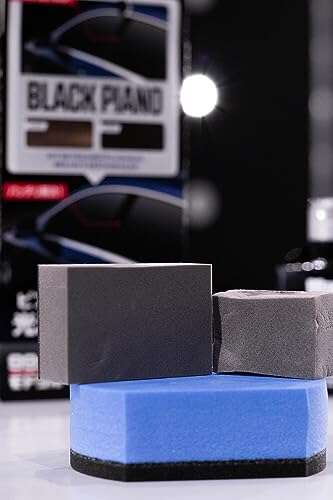
SOFT99 Piano Black Restoration

SOFT99 Piano Black Restoration is aimed at glossy black surfaces that need more than a quick dusting. Its main appeal is the promise of restoring a cleaner, deeper look to dull piano-black trim. I would consider it when fingerprints, light haze, and fine surface marks have taken away the original shine. As with any polish, I would test it on a hidden spot before treating the full panel.
The product works best when you use very little liquid and a clean microfiber cloth. A small amount helps prevent excess residue, which can make black trim look greasy. I like this type of product for careful owners who want to refresh an older finish instead of simply wiping dust away. It may be one of the strongest choices here for restoration work, but it still cannot repair deep scratches or peeling finish.
Pros:
- Designed for glossy piano-black surfaces
- Helps improve dull and hazy trim
- Useful for light surface marks
- Requires only a small amount per panel
- Works well with a soft microfiber cloth
- Suitable for detail-focused cleaning routines
Cons:
- Needs careful testing before full use
- May not remove deep scratches
- Requires extra buffing to avoid residue
MusicNomad Gloss Piano Care Kit

MusicNomad’s three-piece gloss piano kit is a practical pick for owners who want a complete care system. The kit includes cleaner, polish, and a cloth, so you do not have to match separate products. That matters because a good formula can still disappoint when paired with a rough or dirty towel. The set is made for gloss pianos, which makes it a logical option for high-shine black trim.
I see this kit as a balanced choice for routine care and occasional polishing. The cleaner can handle normal dust and fingerprints, while the polish can help restore a richer finish after cleaning. I would use the cloth only when it is fresh and free of grit, since trapped dust can act like sandpaper. For many buyers, the convenience of one matched kit makes this a leading candidate for the best cleaner for piano black trim.
Pros:
- Includes cleaner, polish, and cloth
- Made for gloss piano finishes
- Good option for regular home care
- Reduces the need to buy parts separately
- Helpful for removing fingerprints and dust
- Gives beginners a simple care process
Cons:
- More expensive than a single cleaner
- Polish may be unnecessary for light dust
- Cloth still needs washing and proper care
Samorillo Piano Shine Polish and Cleaner

Samorillo Piano Shine Polish and Cleaner combines cleaning, polishing, waxing, and protection in one bottle. The formula is also described as having UV protection and anti-static features. Those traits may appeal to owners who want less dust and fewer smudges between cleanings. I would still follow the label and avoid applying it directly to seams, openings, keys, or the inside of a piano.
This product is especially interesting for glossy surfaces that need a bright finish after routine cleaning. The anti-static claim may help reduce how quickly dust settles, although no polish can keep a piano dust-free. The added protection can be useful in rooms with strong sunlight, but I would not treat it as a substitute for curtains or sensible placement. It offers a convenient all-in-one approach for people who want a quick shine with limited steps.
Pros:
- Combines cleaner and polish in one product
- Includes wax for a richer surface feel
- Lists UV protection as a feature
- Anti-static design may reduce dust buildup
- Useful for glossy piano surfaces
- Made in the USA according to the listing
Cons:
- Too much product may leave a film
- Requires a clean cloth for best results
- Not intended to fix deep finish damage
Cory Satin Sheen Piano Cleaner
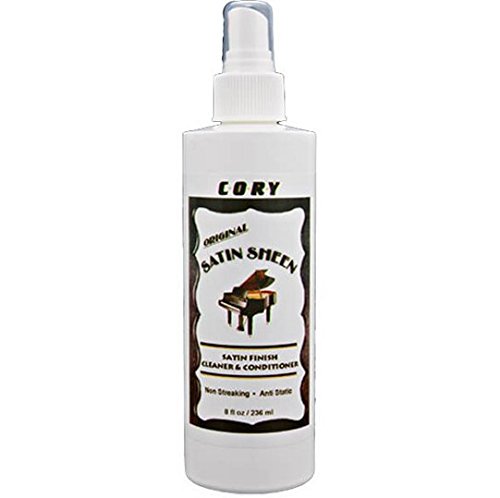
Cory Satin Sheen Piano Cleaner and Conditioner is made for owners who prefer a soft, low-glare finish. It is not the same type of choice as a high-gloss restoration polish. Instead, it aims to clean and condition while leaving a satin look. That can be a good fit for pianos or trim that should look smooth and cared for without a sharp mirror effect.
I would choose this product when the finish is satin, matte, or intentionally subdued. I would use more caution on true high-gloss piano black trim because satin products can change the visual look. The conditioner may help the surface feel less dry, but it should not be used to hide damage. Its strongest point is the focused piano-care purpose and the gentle approach to routine upkeep.
Pros:
- Made for piano care
- Offers a satin, low-glare finish
- Cleans normal dust and fingerprints
- Includes conditioning benefits
- Good for owners who dislike a wet shine
- Useful on suitable satin surfaces
Cons:
- Not the best match for mirror-gloss trim
- May alter the look of some finishes
- Requires a hidden-area test first
XUYIYUE Piano Dust Mop

The XUYIYUE piano dust mop solves a different part of the cleaning problem. It is a long-handled tool made to reach the grand piano soundboard and other hard-to-access areas. It does not replace a liquid cleaner for fingerprints or oily marks on black trim. Still, removing dry dust before using a cleaner is one of the safest steps in piano care.
I like this tool for large grand pianos, tall cabinets, and owners who do not want to lean across delicate surfaces. The extendable handle can make regular dusting easier and reduce awkward reaching. I would inspect the mop head before every use and wash or replace it when it becomes dirty. Used gently, it helps keep grit away from the glossy finish and supports a safer cleaning routine.
Pros:
- Reaches difficult piano areas
- Useful for grand piano soundboards
- Extendable handle improves access
- Helps remove dry dust before polishing
- Reduces the need to lean over the piano
- Works without liquid or chemical residue
Cons:
- Does not remove oily fingerprints alone
- Not a liquid piano black trim cleaner
- A dirty mop head can spread grit
IMPRESA Grand Piano Cleaning Spray

IMPRESA Grand Piano Cleaning Kit Spray is a straightforward option for owners who want a dedicated piano gloss spray. The eight-ounce size should be easy to store and handle during normal home cleaning. A piano-specific spray is generally a better starting point than glass cleaner, furniture spray, or an all-purpose household product. I would spray it onto the cloth rather than directly onto the piano.
This product makes sense for light cleaning and shine maintenance on suitable glossy finishes. The clear spray should help you see how much product reaches the cloth, which can make controlled use easier. I would work in small sections and buff each section before moving on. It is a practical choice for people who want a simple bottle without a large multi-part kit.
Pros:
- Designed for grand piano care
- Simple spray format
- Convenient eight-ounce size
- Useful for routine gloss maintenance
- Easy to apply to a microfiber cloth
- More focused than general household sprays
Cons:
- Does not include a cloth in the listing title
- May need repeated buffing
- Not a scratch-repair product
Key-Brite Piano Key Cleaner

Key-Brite Piano Key Cleaner is intended for piano keys, not as the first choice for glossy black trim. That distinction matters because keys and cabinet finishes can use different materials. The four-ounce bottle is compact and may be useful for owners who need focused key care. I would keep it separate from the cleaner chosen for the piano case or black trim.
This product can complement a larger piano-care routine when keys show fingerprints or normal playing residue. However, I would not assume that a key cleaner is safe for every painted, lacquered, or plastic gloss panel. Always read the current label and follow the piano maker’s care instructions. For the best cleaner for piano black trim, I would select a product clearly intended for the trim surface instead.
Pros:
- Designed for piano key cleaning
- Compact four-ounce bottle
- Useful for focused maintenance
- Helps separate key care from cabinet care
- Convenient for regular playing environments
- Sold through an authorized product dealer
Cons:
- Not specifically made for black trim
- May not suit cabinet finishes
- Requires careful surface matching
Shaevle ProTone Piano Care Kit

Shaevle ProTone Piano Care Kit is an all-in-one option for shoppers who want a broad care setup. A kit can be useful when a piano has more than one cleaning need, such as dust, fingerprints, and a finish that needs a fresh shine. The product title presents it as a cleaner and polish kit, so it may suit owners who want more than a basic wipe. I would still confirm the included parts and label directions before use.
This kind of kit is convenient for a new piano owner who does not yet have cloths or polish. It can also reduce guesswork when the included products are designed to work together. I prefer a light touch on piano black trim because heavy rubbing can create more marks than it removes. With a clean cloth and small sections, this kit may offer good everyday value.
Pros:
- All-in-one piano care approach
- Combines cleaning and polishing needs
- Useful for new piano owners
- Can reduce separate shopping
- Suitable for routine surface upkeep
- Helpful when several care steps are needed
Cons:
- Included items may vary by package
- May offer more than casual users need
- Requires careful use on delicate finishes
comeast Piano Cleaner and Polish

comeast Piano Cleaner and Polish is presented as a product that can clean, wax, and protect glossy surfaces. That combination is useful for people who want a polished appearance without adding several bottles to the shelf. It may be a good match for black trim that has lost some of its smooth visual depth. I would keep the application thin because wax-heavy products can show streaks on dark finishes.
The product is best suited to careful maintenance rather than aggressive correction. I would first remove loose dust with a dry microfiber cloth, then use a small amount on another clean section of cloth. The final buff should be gentle and even, with no pressure on edges or hardware. It offers a convenient route to a clean, bright look, but its results depend strongly on good technique.
Pros:
- Combines cleaner and polish
- Includes a protective wax approach
- Made for glossy surfaces
- Useful for reducing visible fingerprints
- Simple choice for routine shine care
- Can reduce the number of products needed
Cons:
- Too much product may cause streaks
- Needs careful buffing on black surfaces
- Cannot correct deep finish damage
Microfiber Piano Cleaning Cloth

The Cory microfiber piano cleaning cloth may look simple, but the cloth is one of the most important parts of a safe cleaning job. A liquid cleaner cannot protect a finish if the towel holds dust, grit, or hard debris. Microfiber can lift light dust and help spread a small amount of polish across a smooth surface. This cloth is distributed by an authorized Cory products dealer, according to the listing.
I recommend keeping separate cloths for dusting, applying cleaner, and final buffing. Wash them without fabric softener, and check them for trapped particles before each use. A dedicated cloth is also useful for quick fingerprint removal when you do not want to use a large amount of spray. It is not the best cleaner for piano black trim by itself, but it can make almost any suitable cleaner safer and easier to use.
Pros:
- Helps reduce surface scratching from rough towels
- Useful for applying liquid cleaner
- Good for final buffing
- Supports a low-pressure cleaning method
- Can be used as part of a cloth rotation
- Sold through an authorized dealer
Cons:
- Does not contain cleaning solution
- Must stay free of grit
- Needs proper washing and storage
My Recommendation
For most owners, I would choose the MusicNomad 3 pc. Care Kit because it gives you a cleaner, polish, and cloth in one matched set. It is the most complete option for routine care, especially if you are new to cleaning piano black trim. For a dull finish that needs more focused correction, SOFT99 Piano Black Restoration is the more specialized pick. I would choose Samorillo when dust and fingerprints return quickly and you want an all-in-one formula with stated UV and anti-static features.
The Cory Satin Sheen product is better for satin or low-glare finishes, while the XUYIYUE dust mop is a useful add-on for grand pianos. Key-Brite belongs on the keys, not automatically on the cabinet. The remaining sprays and kits offer useful low-cost alternatives, but I would always value surface compatibility over a dramatic shine claim. In my view, the best cleaner for piano black trim is the product that cleans with little rubbing, leaves little residue, and matches the exact finish.
| Best for | Why |
|---|---|
| Complete routine care | MusicNomad includes cleaner, polish, and cloth in one kit. |
| Dull or hazy glossy trim | SOFT99 focuses on restoring the look of piano-black surfaces. |
| Dust and smudge control | Samorillo combines cleaning with stated anti-static and UV features. |
How I Chose the Best Cleaner for Piano Black Trim
I judged these products by the needs that matter most on a dark, glossy surface. First, the formula should match the finish and should not require hard scrubbing. Second, the product should leave little residue because streaks stand out on black trim. Third, the package should support safe use through clear directions, a suitable cloth, or a simple application method.
I also looked at the difference between cleaning and polishing. Cleaning removes dust, fingerprints, and light surface grime. Polishing may add shine or help improve the look of very fine marks, but it cannot rebuild damaged lacquer or paint. This difference helps prevent a common mistake: using a strong polish when the surface only needs a gentle wipe.
Product titles and feature claims can change, so I recommend checking the current Amazon listing and label before ordering. I also place piano maker instructions first. Some finishes need special care, and an older piano may have a fragile surface. If the finish is cracked, lifting, sticky, or badly cloudy, ask a piano technician before applying any cleaner.
What Makes Piano Black Trim So Hard to Clean?
Piano black trim has a smooth, reflective finish. That finish acts like a dark mirror. A fingerprint that would disappear on a light surface becomes a bright smear on black gloss. Even a thin layer of dust can scatter light and make the panel look gray.
The surface can also show fine scratches caused by dry wiping. Dust contains small hard particles. If you drag those particles across the finish, you can mark the surface even when the cloth feels soft. That is why I remove loose dust first and use almost no pressure.
Another problem is residue. Household glass cleaner may evaporate fast, but it may not suit a piano finish. Furniture sprays can contain oils that create a dull film. Strong solvents may damage coatings, decals, plastic parts, or nearby materials. A piano-specific product is usually the safer place to start, but “piano” on a label still does not remove the need for a spot test.
How to Clean Piano Black Trim Safely
Start by checking the piano’s care guide. If the maker says to use only a dry cloth, follow that advice. Close the lid and keep liquid away from keys, hinges, vents, joints, and openings. Set aside two or three clean microfiber cloths before you begin.
- Remove jewelry, watches, and anything that can touch the finish.
- Use a clean, dry microfiber cloth to lift loose dust.
- Inspect the cloth and surface for grit.
- Apply a small amount of cleaner to the cloth, not the piano.
- Work on one small area at a time.
- Wipe with light, straight passes instead of hard circles.
- Use a second dry cloth to buff away residue.
- Check the panel under normal room light.
Do not chase a mark with more pressure. If a spot does not lift, stop and identify it. It may be dried polish, adhesive, a scratch, or damage below the surface. More cleaner will not solve every problem, and extra rubbing can make a small flaw much worse.
I also avoid cleaning in direct sun or near a heater. Heat can make a product dry too fast and leave uneven marks. A cool room with soft light gives you more time to spread the product and inspect the result. Good cleaning feels slow, but it protects the finish.
Cleaner, Polish, or Wax: Which One Do You Need?
A cleaner is the best first step for normal dust and fingerprints. It should lift dirt without leaving a heavy coating. If the panel looks clean but lacks depth, a polish may improve its appearance. Use polish less often than cleaner unless the product label says it is safe for regular use.
Wax adds a layer that may increase shine and help reduce the look of new smudges. However, wax can build up in seams and may create haze if you apply too much. I treat wax as an optional finish step, not a basic cleaning need. On valuable or vintage instruments, I prefer a conservative approach.
When shopping for the best cleaner for piano black trim, think about the actual mark in front of you. Dry dust calls for a soft cloth. Fingerprints call for a small amount of suitable cleaner. Dullness may call for polish. Deep scratches or finish failure call for professional help.
Common Mistakes to Avoid
The first mistake is spraying directly on the piano. Liquid can run into gaps and reach areas that should stay dry. Spray the cloth instead. The second mistake is using one cloth for the whole job. A cloth that picked up grit on the first panel can scratch the next one.
The third mistake is using paper towels. Some paper towels feel smooth, but they can leave lint and may drag dust across the surface. The fourth mistake is using an old shirt without checking it. Laundry fibers, buttons, seams, and hidden debris can all cause trouble.
I also avoid ammonia, bleach, abrasive powders, melamine foam, rough sponges, and strong solvent blends unless the finish maker clearly approves them. These products may work on other objects, but piano black trim is not a kitchen counter. When in doubt, stop and ask the piano maker or a qualified technician.
How Often Should You Clean Piano Black Trim?
For most homes, dry dusting once or twice each week is enough. Clean fingerprints as soon as practical, especially around areas that people touch often. A full polish may only be needed every few weeks or months, depending on the room and the product directions.
A piano near a window, fireplace, kitchen, or busy doorway may need more care. Cooking oils and airborne dust can settle on the surface faster. A piano in a quiet room may stay clean much longer. The goal is not to clean on a strict calendar; the goal is to prevent buildup.
Frequent light care is safer than rare deep scrubbing. Think of it like brushing dust from a camera lens. Small, gentle steps protect the surface better than one hard cleaning session. This approach also helps any cleaner perform better.
Tips for Choosing a Microfiber Cloth
Choose a cloth with a soft, smooth feel and no rough edge. Avoid cloths with loose stitching, tags, zippers, or decorative trim. A short-pile microfiber cloth often gives better control on smooth gloss than a thick, fluffy towel. Keep several cloths in a clean container so they do not collect dust.
Wash cleaning cloths apart from greasy household laundry. Do not use fabric softener because it can leave a coating on the fibers. Dry the cloth fully before storing it. If you drop it on the floor, place it in the wash rather than using it again.
I prefer a light-colored cloth for black trim because it shows the dust and residue it picks up. That visual check can tell you when to change sides or switch cloths. It is a small habit, but it adds a strong layer of protection.
Using These Products on Automotive Piano Black Trim
The phrase “piano black trim” can also describe glossy interior panels in cars. That finish may look like a piano, but it is not always made from the same coating. Before using a piano cleaner in a vehicle, check the car maker’s instructions. Automotive trim may have a protective layer that reacts differently to polish, wax, or conditioner.
For car interiors, use a product that clearly says it is compatible with the surface. Keep the liquid away from electronics, screens, switches, and seams. Work in shade, use a clean microfiber cloth, and buff dry. If the vehicle maker warns against silicone, wax, or certain solvents, follow that warning.
In other words, the best cleaner for piano black trim on a musical instrument may not be the best cleaner for automotive trim. Surface names can be similar while materials differ. Match the formula to the object, not just the color or shine.
FAQs Of best cleaner for piano black trim
What is the safest way to clean piano black trim?
Remove dry dust with a clean microfiber cloth first. Then apply a small amount of compatible cleaner to the cloth, not the surface. Wipe gently and buff with a second dry cloth.
Can I use glass cleaner on piano black trim?
I do not recommend it unless the finish maker approves it. Glass cleaners may contain ingredients that leave streaks or react with a piano finish. A product made for the exact surface is a safer choice.
Can a piano polish remove scratches?
A polish may improve the look of very fine marks, but it cannot remove deep scratches or damaged coating. Strong rubbing can make the damage worse. Ask a piano technician before attempting correction on valuable trim.
Should I spray cleaner directly onto the piano?
No. Spray the cleaner onto a microfiber cloth instead. This gives you better control and helps keep liquid away from seams, keys, hardware, and openings.
How do I avoid streaks on black gloss trim?
Use less product, clean small sections, and buff with a dry cloth. Change cloths when they collect dust or residue. Cleaning in cool, indirect light also helps you see streaks before you finish.
Final Verdict: Which Should You Buy?
I recommend the MusicNomad 3 pc. Care Kit for most owners. It offers a clear, complete routine with cleaner, polish, and cloth. For restoration work, SOFT99 is the stronger specialist choice.
The best cleaner for piano black trim should protect the finish, not chase extreme shine. Use a light touch, a clean cloth, and the product made for your surface.

Senior Music Reviewer
Alex Carter is a seasoned music reviewer with over a decade of experience in the world of sound and instruments. Passionate about helping musicians and enthusiasts make informed choices, he brings sharp insights and in-depth knowledge to every review. From classical instruments to modern gear, Alex combines technical expertise with a love for music to deliver content that resonates with readers.
As a Senior Music Reviewer and expert author on Tuneluma.com, Alex is dedicated to sharing honest evaluations, practical advice, and thoughtful commentary to guide readers in their musical journey.