How High Should A Piano Bench Be: Ideal Height Guide
Most piano benches should be 18 to 22 inches high, but your posture and piano height determine the best setting.
Knowing how high should a piano bench be can make practice more comfortable, improve control, and help prevent back, neck, and wrist strain. As a piano teacher and player, I have seen many students struggle because their bench was only an inch or two too high or too low. This guide explains how to find the right height, measure it at home, spot posture problems, and choose the best bench for your piano.
How high should a piano bench be?
For most adults, a piano bench should be about 18 to 22 inches from the floor to the top of the seat. Many standard piano benches are close to 19 or 20 inches high.
Still, there is no single perfect height for every pianist. The right setting depends on:
• Your height and leg length
• The height of the piano keyboard
• The length of your arms
• Your playing style
• Whether you can reach the pedals with ease
• The bench cushion thickness
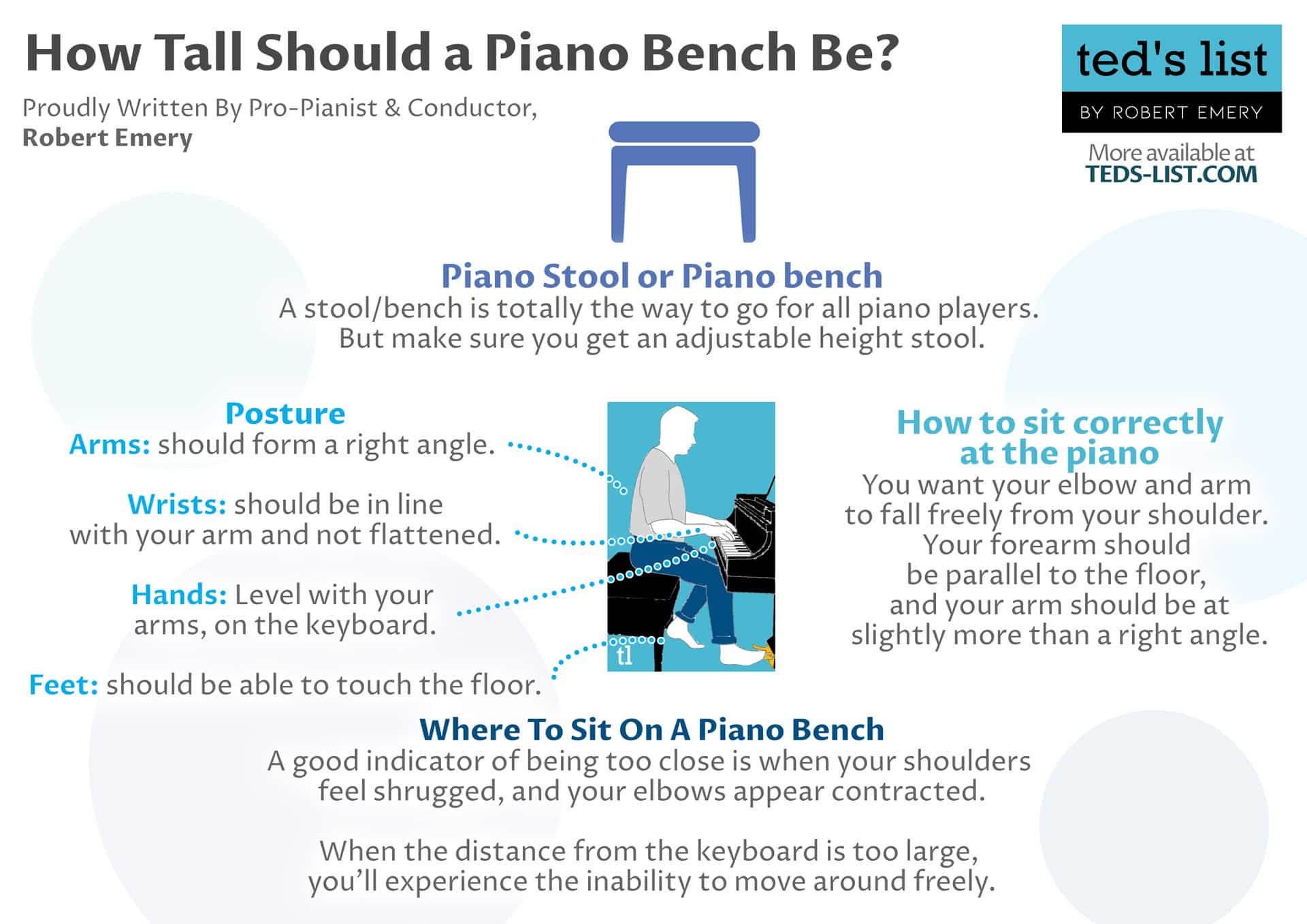
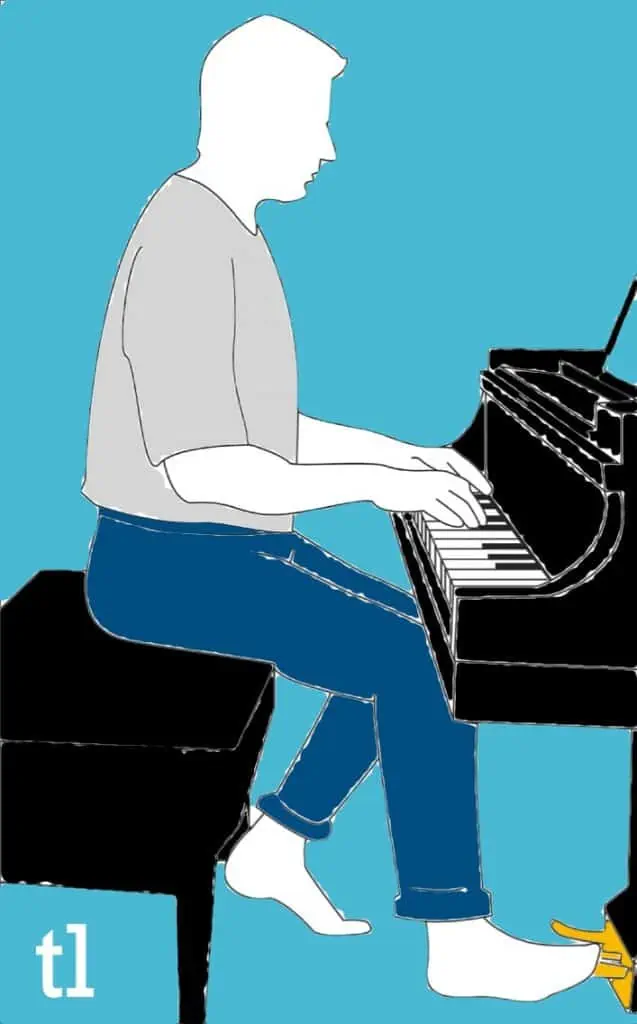
A good bench lets you sit with a relaxed upper body. Your forearms should be close to level with the keys, your wrists should remain neutral, and your shoulders should stay loose.
Think of the bench as the foundation of your technique. If the foundation is wrong, your hands may work harder than they need to.

The correct piano bench height for proper posture
The best piano bench height places your body in a balanced position. You should feel supported, not forced into a pose.
Use these posture checks:
• Sit near the front half of the bench.
• Keep both feet stable on the floor when you are not using the pedals.
• Keep your knees slightly lower than your hips or close to hip level.
• Let your elbows rest slightly in front of your body.
• Keep your forearms level or gently sloping down toward the keys.
• Keep your wrists straight and flexible.
• Relax your shoulders and avoid lifting them.
• Keep your head balanced above your spine.
When you play, your fingers should reach the keys without stretching. Your elbows should not press tightly against your sides, and they should not rise far above your wrists.
If the bench is too low, your elbows may sit below the keyboard. This can make your wrists bend upward and may cause tension in your shoulders.
If the bench is too high, your elbows may rise above the keys. Your shoulders may lift, and your arms may feel heavy. Both problems can reduce control and make long practice sessions tiring.
How to measure the right piano bench height
You can find a useful starting point in just a few minutes. Ask another person to watch your posture while you sit and play.
Step 1: Measure from the floor to the seat
Measure from the floor to the top of the seat cushion. Do not measure only to the wooden frame because the cushion may add one or more inches.
A typical fixed bench may measure 18 to 20 inches. An adjustable piano bench can often move between about 18 and 22 inches, depending on its design.
Step 2: Sit at the center of the keyboard
Place yourself near the middle of the keyboard. Sit tall, but do not stiffen your back.
Your body should face the piano. Avoid twisting your torso toward one side, especially when playing scales or wide chords.
Step 3: Check your elbows and wrists
Place your hands on the keys as if you are about to play. Your forearms should form a smooth line with your hands.
Your wrists should not collapse down or bend sharply upward. If they do, change the bench height and check again.
Step 4: Check your shoulders
Play a few soft chords. Notice whether your shoulders rise toward your ears.
Raised shoulders often mean the bench is too high, although tension can also come from poor technique. Lower the bench slightly and see whether your arms feel more free.
Step 5: Test the pedals
Use the sustain pedal without reaching or sliding forward. Your heel should feel stable, and your knee should not lift sharply.
If you cannot use the pedals comfortably, the bench may be too far away, too high, or too low. Bench distance matters as much as bench height.
Piano bench height by player height
Body height can help you choose a starting point, but it should not be the only guide. Two people who are the same height may have different leg, torso, and arm lengths.
Here is a general starting range:
• Children under 4 feet tall: 16 to 18 inches, often with a footstool
• Children around 4 to 5 feet tall: 17 to 19 inches
• Adults around 5 to 5 feet 6 inches: 18 to 20 inches
• Adults around 5 feet 7 inches to 6 feet: 19 to 21 inches
• Adults over 6 feet: 20 to 22 inches or more
These numbers are not strict rules. They simply help you choose a bench before you test your posture.
For children, an adjustable bench is often a wise choice. A child may need a higher seat to reach the keys well, but the feet must still receive support. A stable footrest can help prevent dangling legs and unwanted body movement.

How keyboard height affects bench height
The height of the piano keyboard also matters. Most acoustic pianos have a similar key height, but digital pianos and portable keyboards can sit at very different levels.
A digital keyboard on a low stand may require a lower bench. A keyboard on a tall stand may require a higher bench. If the keyboard is too low or too high, changing only the bench may not solve the problem.
Before deciding how high should a piano bench be, check the full setup:
• Measure from the floor to the playing surface.
• Check whether the keyboard stand is stable.
• Consider the thickness of the bench cushion.
• Make sure the pedals are in a natural position.
• Check whether your knees fit under the keyboard.
A common mistake is to place a digital piano on a table. The keyboard may then sit too high for a normal bench. Your shoulders can rise, and your wrists may bend down toward the keys.
The bench, piano, and pedals should work as one system. Adjusting one part may require a small change to another.

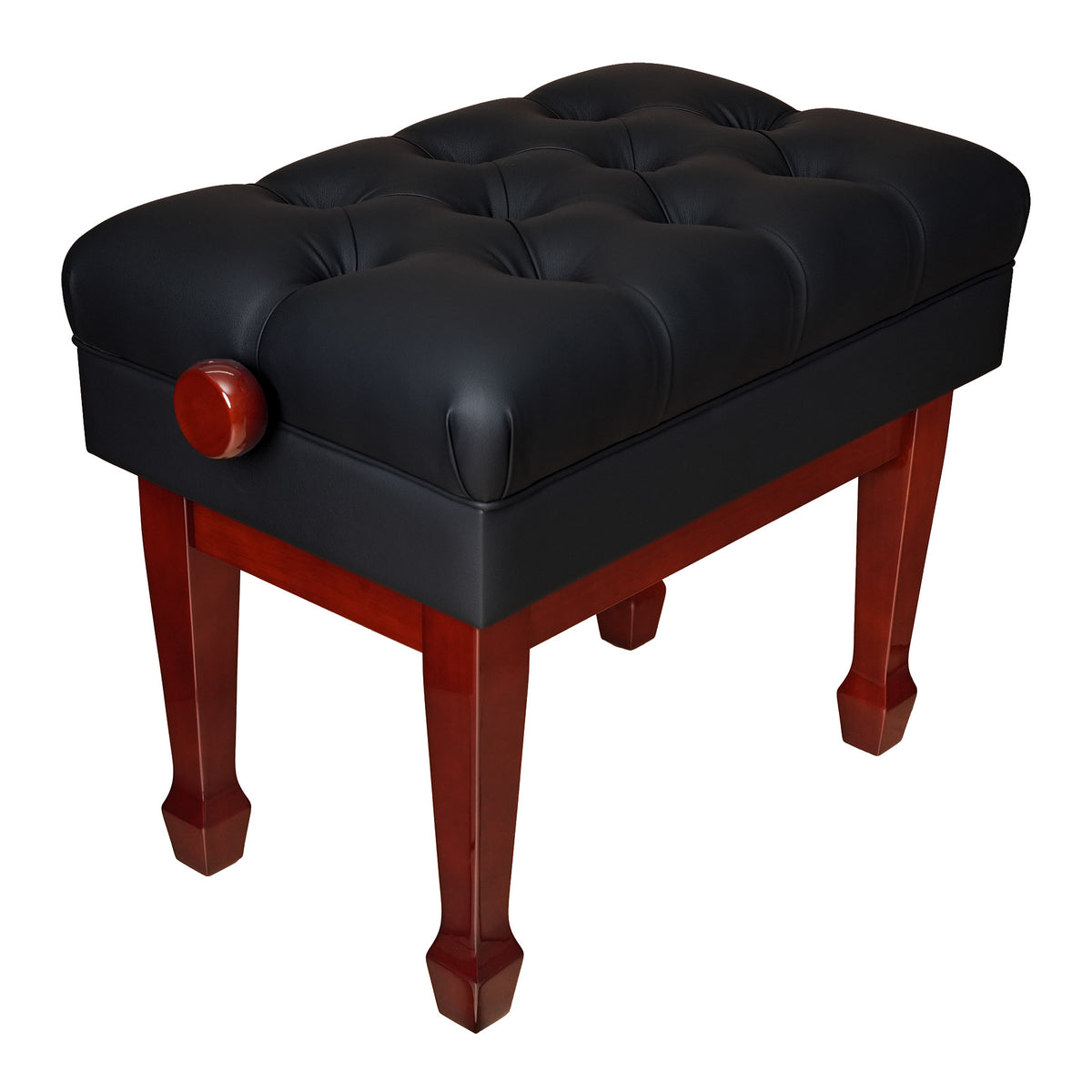
Fixed versus adjustable piano benches
Both fixed and adjustable benches can work well. The better choice depends on who uses the piano and how often the setup changes.
Fixed piano benches
Fixed benches are simple and often look elegant with an acoustic piano. They can also be strong and stable.
Their main limitation is height. If the bench does not fit your body, you may need a cushion, footstool, or different bench.
Fixed benches work best when:
• One main player uses the piano.
• The player has already found a comfortable height.
• The piano has a standard keyboard height.
• The bench is strong enough for daily use.
Adjustable piano benches
Adjustable benches use a screw or hydraulic system to raise and lower the seat. They are helpful for families, teachers, and serious players.
An adjustable piano bench is often the safest choice when:
• Several people share one piano.
• Children are still growing.
• You play both piano and keyboard.
• You need a precise sitting position.
• You experience pain or tension during practice.
Choose a bench that moves smoothly and locks securely. A bench that slowly drops while you play can affect posture and create a safety risk.
Signs your piano bench is too low
A low bench changes the angle of your arms and may make the piano feel harder to play.
Watch for these signs:
• Your elbows sit below the level of the keys.
• Your wrists bend upward.
• Your shoulders feel tight after playing.
• You press down into the keys from below.
• Your knees rise close to the underside of the keyboard.
• You struggle to play repeated notes with ease.
A low seat can also make your torso lean forward. This may seem helpful at first, but it often creates extra work in the neck and upper back.
Raise the bench by a small amount, such as half an inch. Then play a slow scale and compare the feeling. Small changes can produce a noticeable difference.

Signs your piano bench is too high
A high bench can create a different set of problems. Your arms may feel compressed, and your shoulders may rise without you noticing.
Common signs include:
• Your elbows sit well above the keys.
• Your shoulders lift while you play.
• Your wrists bend downward.
• Your feet cannot rest comfortably on the floor.
• Your thighs press against the underside of the keyboard.
• Your arms feel heavy during fast passages.
Some pianists also sit too high because they believe it creates better power. In reality, power should come from balanced arm movement and good technique, not from forcing the body into a raised position.
Lower the seat a little and check whether your shoulders and wrists relax. If your knees then hit the piano, move the bench slightly farther back.

How far should you sit from the piano?
Bench distance is closely linked to bench height. You can have the correct height but still feel uncomfortable if you sit too close or too far away.
Start with your knees slightly under the front edge of the keyboard. Your elbows should remain free, and your arms should reach the keys without locking your shoulders.
When playing in the middle register, your upper arms should hang naturally. You should be able to move left and right without dragging your body across the bench.
Sit too close, and your elbows may press against your body. Sit too far away, and you may lean forward or stretch your arms.
A useful test is to play a simple five-finger pattern. If your shoulders move, your wrists collapse, or your back leans forward, adjust the bench distance before changing your technique.
Piano bench height for children
Children often need more than a smaller bench. They need support for their feet and enough space to move freely.
If a child’s feet dangle, the legs may swing or tense during playing. A stable footrest can give the child a stronger base and improve comfort.
For a young player:
• Adjust the seat so the arms reach the keys without lifting the shoulders.
• Add a solid footrest if the feet do not touch the floor.
• Check the setup every few months as the child grows.
• Avoid unstable cushions that can slide.
• Let the child describe where tension or discomfort begins.
Many parents ask how high should a piano bench be for a child. The answer is the height that supports relaxed arms, level wrists, and stable feet. Age charts can help, but direct observation is more reliable.
Common mistakes when choosing a piano bench
A bench may look attractive and still be the wrong fit. Comfort and stability should come before style.
Avoid these common mistakes:
• Choosing a bench based only on the player’s height
• Measuring to the wooden frame instead of the top of the cushion
• Buying a bench that does not adjust
• Ignoring the height of a digital keyboard stand
• Letting children play with dangling feet
• Sitting too far from the keys
• Using a soft cushion that changes height while playing
• Treating pain as a normal part of practice
I once helped a pianist who blamed poor wrist control on weak technique. The real issue was a bench that was nearly two inches too low. After raising the seat and moving it slightly back, the pianist could play scales with less tension. The lesson was simple: check the setup before assuming the body or technique is the problem.
Pain that continues after you adjust the bench deserves attention. A qualified piano teacher, physical therapist, or medical professional can help identify other causes.
A simple piano bench height adjustment routine
Use this routine whenever you buy a new bench, move your piano, or change your keyboard stand.
- Sit at the center of the keyboard.
- Place your hands on the keys.
- Relax your shoulders.
- Check that your wrists stay straight.
- Make sure your elbows are near key level.
- Place your feet flat on the floor.
- Test the sustain pedal.
- Play a slow scale and a few chords.
- Raise or lower the bench by a small amount.
- Repeat until your arms and legs feel balanced.
Do not judge the setup after only ten seconds. Play for five to ten minutes and notice where tension develops. A bench may feel fine at first but reveal problems during longer practice.
Write down the height that works best. This helps if you move the bench or share the piano with another player.
What height is best for a piano bench?
The best piano bench height is usually the lowest position that lets your arms reach the keys freely while keeping your wrists neutral and your shoulders relaxed. For many adults, this falls between 18 and 22 inches.
Your feet should also feel stable, and you should be able to use the pedals without strain. Height alone cannot determine the correct setting.
Is an 18-inch piano bench too low?
An 18-inch bench is not too low for everyone. It may suit shorter adults, children, or a piano with a lower keyboard, but taller players may need a higher seat.
Is a 20-inch piano bench standard?
A 20-inch piano bench is a common size for many adult players. However, the correct height depends on your body proportions, piano keyboard height, and pedal position.
Should your elbows be higher or lower than the piano keys?
Your elbows should usually be close to key level, with the forearms level or slightly sloping downward. Avoid a position that forces the wrists sharply up or down.
Do piano benches come in different heights?
Yes. Fixed benches often range from about 18 to 20 inches, while adjustable benches may cover a wider range, often around 18 to 22 inches or more.
Should children use an adjustable piano bench?
An adjustable bench is helpful because children grow quickly and may share the piano with adults. Add a stable footrest if the child’s feet cannot rest comfortably on the floor.
Can the wrong bench height cause pain?
Yes. A poorly fitted bench can contribute to tension in the wrists, shoulders, neck, hips, or lower back. Persistent pain may have other causes, so seek advice from a qualified professional rather than relying only on bench adjustments.
Conclusion
For most players, a piano bench between 18 and 22 inches high is a useful starting range. The best height keeps your elbows near the keys, your wrists neutral, your shoulders relaxed, and your feet stable enough to control the pedals.
Do not choose a bench by height alone. Sit at the piano, test your posture, play for several minutes, and make small adjustments until your body feels balanced. If you share the instrument or have growing children, an adjustable bench is often the most practical choice.
Take a few minutes today to check how high should a piano bench be in your setup. Your comfort, technique, and enjoyment may improve with one simple adjustment.

Senior Music Reviewer
Alex Carter is a seasoned music reviewer with over a decade of experience in the world of sound and instruments. Passionate about helping musicians and enthusiasts make informed choices, he brings sharp insights and in-depth knowledge to every review. From classical instruments to modern gear, Alex combines technical expertise with a love for music to deliver content that resonates with readers.
As a Senior Music Reviewer and expert author on Tuneluma.com, Alex is dedicated to sharing honest evaluations, practical advice, and thoughtful commentary to guide readers in their musical journey.