How Many Strings On A Piano: The Complete Guide
Most modern pianos have about 220 to 240 strings, though the exact number varies by model and design.
The answer to how many strings on a piano is more complex than simply counting its 88 keys. Piano makers use one, two, or three strings for each note, so the total depends on the piano’s size, range, and string layout. This guide explains the numbers, the reason for the design, and what the strings do.
How many strings does a piano have?
Most full-size, 88-key pianos have between 220 and 240 strings. A common figure is about strings, but there is no single number that fits every piano.
The number of strings on a piano depends on three main factors:
• The number of keys
• The pitch range of the instrument
• The number of strings used for each note
A standard piano has 88 keys, but it does not have one string for every key. In the upper range, most notes use three strings. In the middle range, notes often use two or three strings. In the bass range, many notes use only one or two strings.
For example, a concert grand piano may have 243 strings. Many upright pianos have about 220 strings, while smaller or older pianos may have fewer.
The best short answer is this: an 88-key piano usually has about 220 to 240 strings, but the exact count varies.
Why does a piano have more strings than keys?
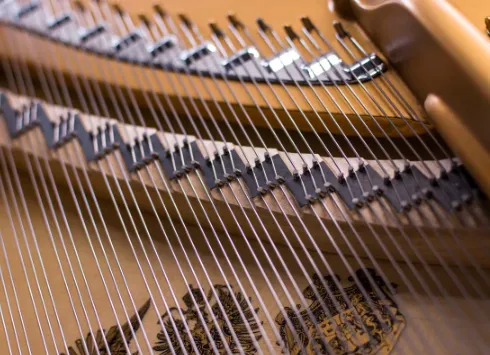
A piano has more strings than keys because many notes use two or three strings at the same pitch. These grouped strings are called unisons.
When you press one key, the action lifts a felt-covered hammer. The hammer strikes one, two, or three strings at once. The strings vibrate together and create the sound you hear.
Using several strings for one note gives the piano a richer and louder voice. It also adds small differences in vibration. These differences create a full tone that one string alone cannot easily produce.
Think of it like singing in a small group. One singer can carry a tune, but several singers create a wider and stronger sound. Piano strings work in a similar way.
Most piano makers use this general pattern:
• Bass notes often use one thick string
• Lower middle notes often use two strings
• Upper middle and treble notes often use three strings
The exact change from one string to two or from two to three depends on the piano’s scale design. Each maker chooses a layout that balances tone, power, string tension, and space.
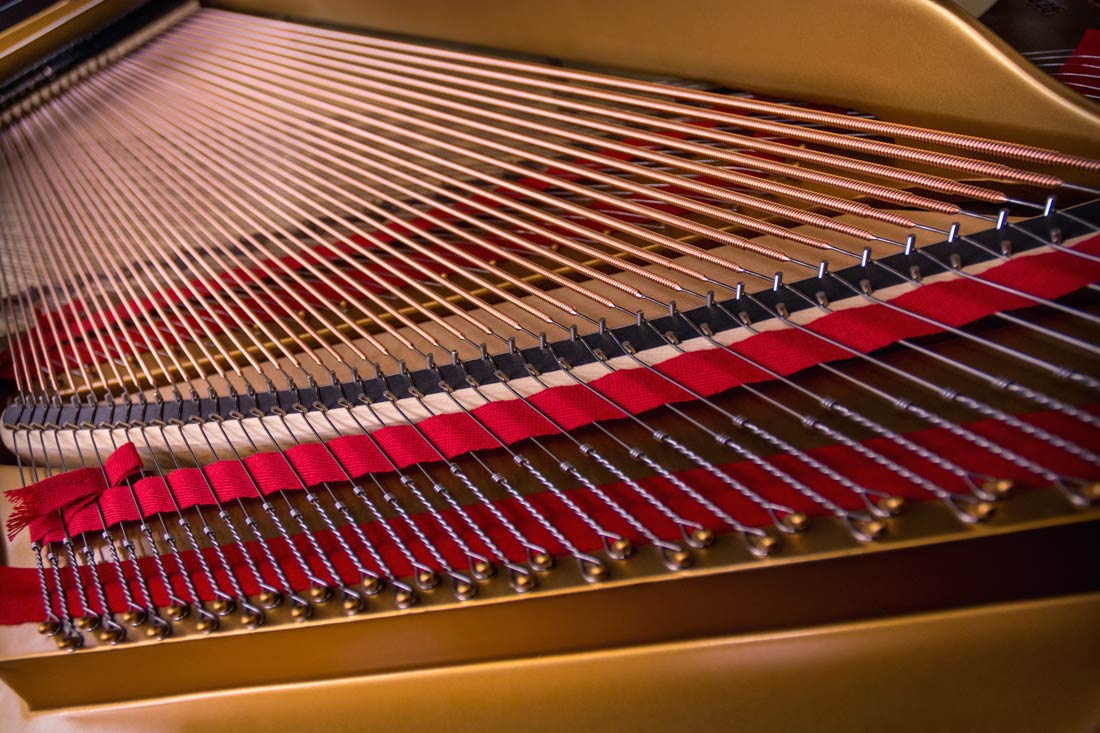
How are piano strings arranged?
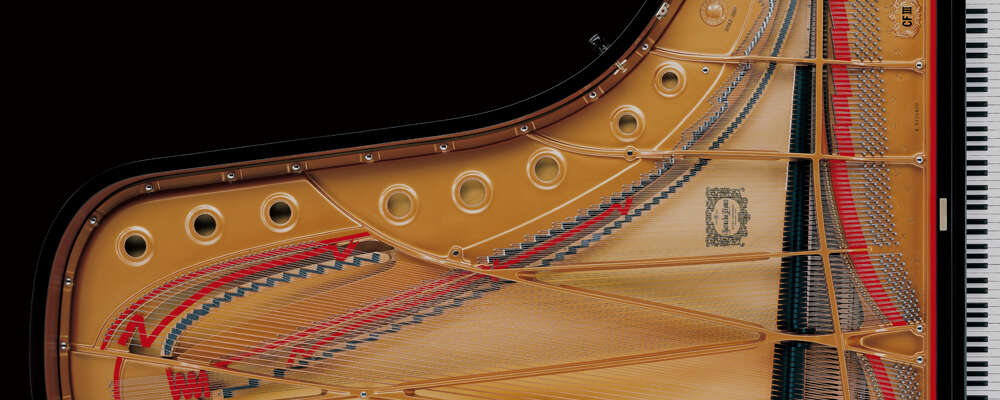
Piano strings run from the tuning pins near the keyboard end to the hitch pins near the back of the instrument. The frame and soundboard support the string system.
The strings are arranged from thick and long in the bass to thin and short in the treble. This layout helps the piano cover a wide pitch range, from deep rumbling bass notes to bright high notes.
Bass strings
Bass strings are thick and often wrapped with copper wire. The copper winding adds mass without making the string too thick to fit inside the piano.
The lowest notes may use one string per key. Some bass notes use two strings, depending on the piano’s design. These strings can be very long in a grand piano, which helps produce a deep and powerful tone.
Middle-register strings
The middle section often uses two or three strings for each note. This area gives the piano much of its warmth and strength.
Many upright pianos and grand pianos use two strings in part of the lower middle range. As the pitch rises, the design often shifts to three strings per note.
Treble strings
Most treble notes use three thin, steel strings. These strings are usually plain steel and are not wrapped with copper.
Three strings help the high notes sound clear and strong. Without them, the treble could sound weak compared with the bass.
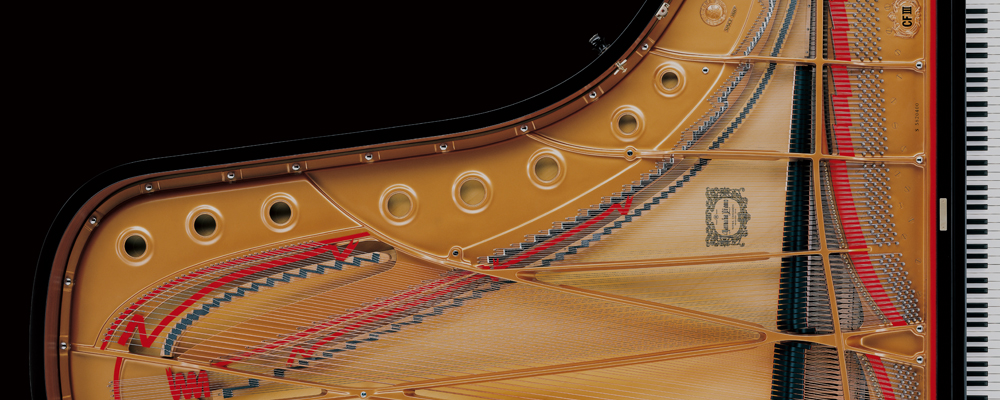
How many strings are on an 88-key piano?
An 88-key piano usually has about 220 to 240 strings. The exact total depends on how many notes use one, two, or three strings.
A simple example can show why the count is higher than 88:
• 12 bass notes use one string each, creating 12 strings
• 30 lower and middle notes use two strings each, creating 60 strings
• 46 upper notes use three strings each, creating 138 strings
This example gives a total of 210 strings. A real piano may use a different split and may include extra strings in its scale design. That is why many 88-key pianos end up closer to 220, 230, or 240 strings.
Some famous concert grand pianos have 243 strings. This number is often used as a reference because large concert instruments need strong tone across their full range.
The number of keys still matters, but it is not the only factor. Two 88-key pianos can have different string counts because their makers use different stringing plans.

How many strings are on a baby grand piano?
A baby grand piano often has about 220 to 240 strings. Many models use a string count close to that of a larger grand piano because both may have the same 88-note range.
The main difference is not always the number of strings. It is often the length of the strings, the size of the soundboard, and the shape of the case.
A larger grand piano can use longer bass strings. Longer strings often create a deeper and more powerful tone. A baby grand has less room, so its bass strings may be shorter.
This does not mean every large piano has more strings. A 5-foot baby grand and a 9-foot concert grand may both use around 220 to 243 strings. Their sound can still differ greatly because of scale design and body size.
When comparing pianos, look at more than the string count. Also consider:
• String length
• Soundboard area
• Crown of the soundboard
• Metal frame design
• String tension
• Hammer size and shape
• Cabinet size
String count tells you part of the story, not the whole story.
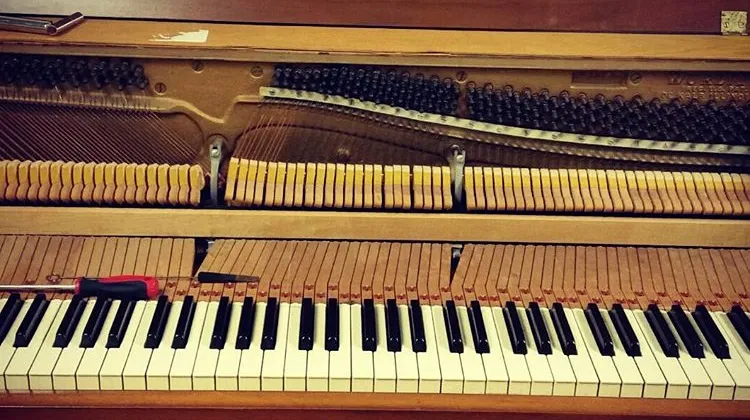
How many strings are on an upright piano?
Most full-size upright pianos have about 220 strings, although the number can vary. Smaller studio uprights may use fewer strings, while some larger uprights use a count close to that of a grand piano.
An upright piano has less horizontal space than a grand piano. Its strings stand nearly vertical, and the action uses a different movement to strike the strings.
Uprights still follow the same broad pattern:
• One string for some low bass notes
• Two strings for many lower and middle notes
• Three strings for most upper notes
The height of an upright affects string length. A taller upright can often use longer bass strings than a short spinet piano. This can improve bass depth and balance.