Is An Electric Violin Good For A Beginner: What To Know
Yes, an electric violin can be good for a beginner who needs quiet practice, flexible sound, and modern features.
The answer depends on your goals, budget, and practice space. After comparing electric and acoustic violins for new players, I find that an electric violin can make practice easier, but it does not remove the need to learn posture, bow control, tuning, and good technique. This guide explains when an electric violin is a smart first choice and when a traditional violin may serve you better.
Is an electric violin good for a beginner?
Yes, an electric violin is good for a beginner in many situations. It can connect to headphones, an amplifier, or a computer. This makes it useful for apartment living, late-night practice, recording, and experimenting with effects.
However, an electric violin is not automatically easier to play. You still need to place your fingers correctly, control the bow, and develop a steady tone. The instrument changes how your sound is heard, but it does not change the basic work of learning violin.
An electric violin is often best for a beginner who:
• Needs quiet practice at home
• Enjoys rock, pop, folk, worship, or electronic music
• Wants to record or use music software
• Likes modern instruments and technology
• Plans to perform with amplification later
A traditional acoustic violin may be better if you want to study classical violin, play in an orchestra, or build your ear around a natural violin tone from the start.

How an electric violin works
An electric violin uses a pickup to turn string vibrations into an electrical signal. That signal travels through a cable to headphones, an amplifier, an audio interface, or another device.
Most electric violins use one of these pickup types:
• Piezo pickup: Common in student and performance models. It senses vibration through the bridge.
• Magnetic pickup: Less common on violins and more dependent on compatible strings.
• Transducer system: Converts vibration into an electrical signal through contact with the instrument.
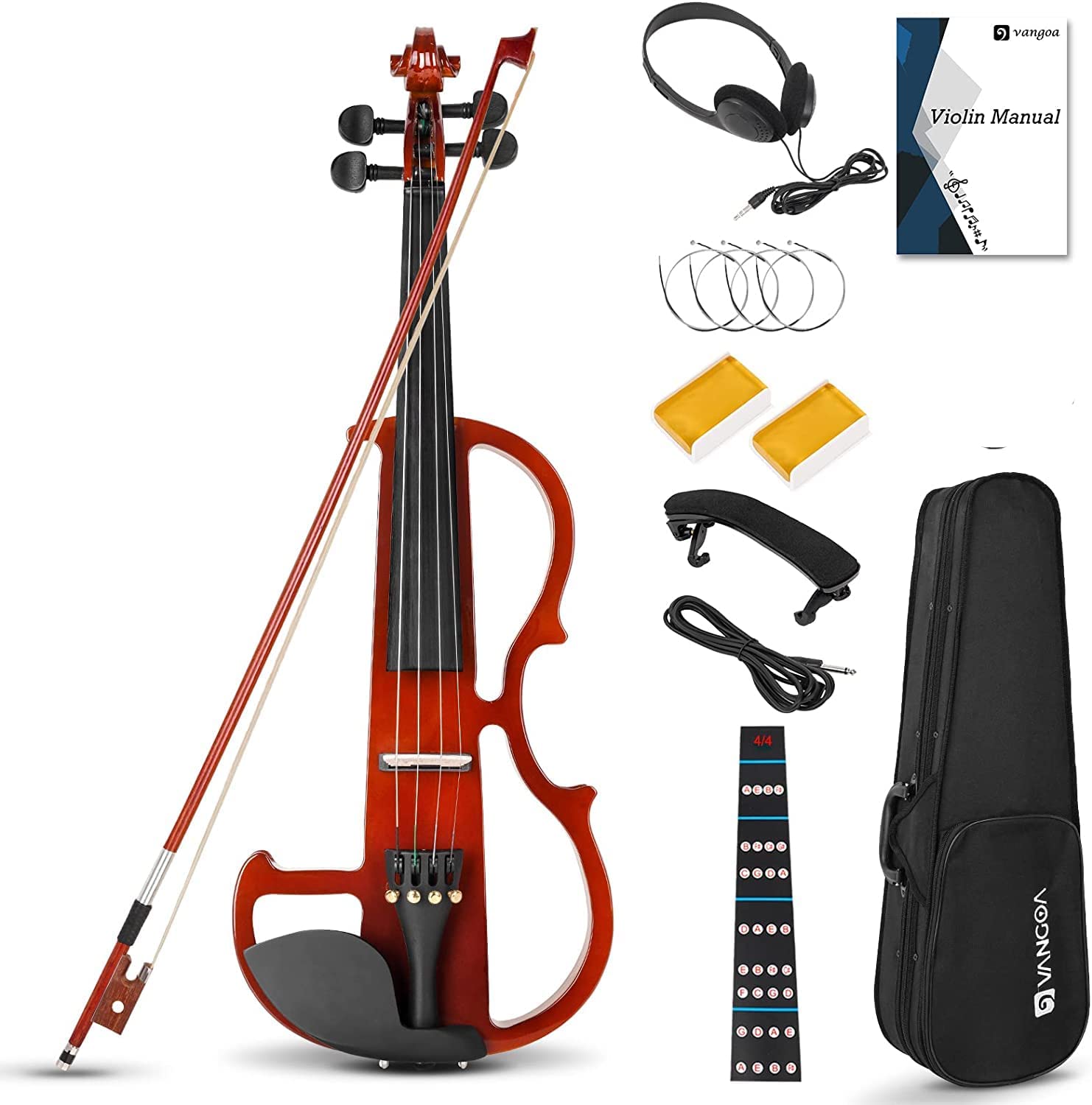
Some models include a headphone output, volume control, tone control, built-in effects, or a rechargeable battery. Others are passive and need an amplifier or interface before you can hear them at a useful volume.
This difference matters when asking, “Is an electric violin good for a beginner?” A simple instrument with a reliable pickup may be more useful than a cheaper model with many confusing features.
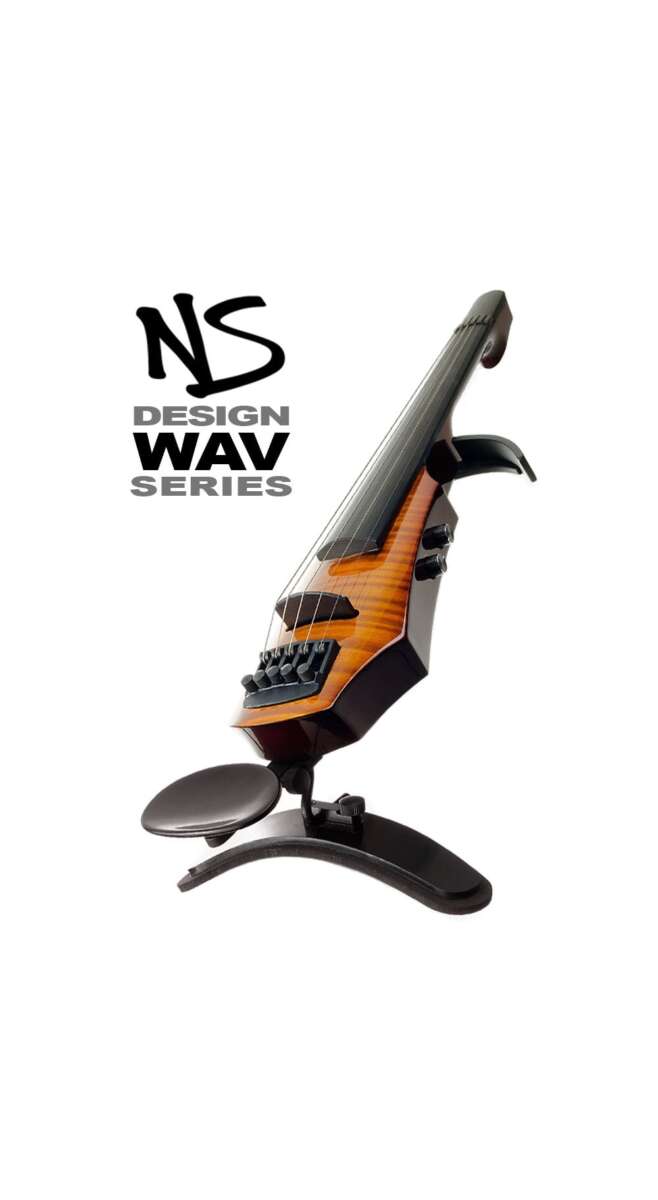
An electric violin still uses familiar violin parts, including:
• Four strings
• A bridge
• A fingerboard
• Fine tuners
• A chin rest
• A tailpiece
• A bow
The shape may look unusual, but the playing position is usually close to that of an acoustic violin.

Benefits of an electric violin for beginners
Quiet practice with headphones
The biggest benefit is volume control. You can practice through headphones without filling the room with violin sound.
This is helpful in apartments, shared homes, dorms, and busy family spaces. It also lets you practice early in the morning or later at night, as long as you keep the volume at a safe level.
Remember that “silent” does not mean completely silent. The bow still makes a soft physical sound on the strings, and some finger movement may be audible.
Easy connection to modern equipment
An electric violin can connect to:
• Headphones
• Guitar or keyboard amplifiers
• Audio interfaces
• Loop stations
• Effects pedals
• Computers and tablets
This gives beginners a fun way to explore music. You can record a simple melody, add reverb, or play along with backing tracks.
Useful for modern music
An electric violin fits naturally into pop, rock, country, jazz, worship, and electronic music. If your goal is to play songs with a band, an electric model may keep you motivated.
Motivation matters. A beginner who enjoys practice often improves faster than a beginner who owns a perfect instrument but rarely picks it up.
Less worry about acoustic feedback
When used with an amplifier, some electric violins can be easier to control than an acoustic violin with a microphone. This can help during live performance.
The result depends on the pickup, amplifier, room, and settings. No electric violin is completely free from sound problems, but many are practical for amplified playing.
Modern features can support learning
A headphone output, tuner, metronome app, and recording setup can help you review your progress. Listening back to your playing may reveal timing or intonation problems that you did not notice while playing.

Drawbacks of an electric violin for beginners
It may hide tone problems
A poor bow stroke can sound less obvious through effects or heavy reverb. This can make an electric violin seem easier than it really is.
For good training, practice with a clean sound. Keep effects low, and sometimes play without headphones so you can hear the natural string and bow noise.
The tone may feel less natural
A good acoustic violin produces a complex sound through its wooden body. Many electric violins produce a more direct, focused, or slightly synthetic sound.
This is not always a flaw. It is simply a different sound. If you want the warm response of a traditional violin, an electric model may feel less satisfying.
Setup quality varies
A cheap electric violin may have:
• Uneven string height
• A poorly shaped bridge
• Rough fingerboard edges
• Weak tuning machines
• Noisy electronics
• Uncomfortable chin or shoulder support
These problems can make a beginner think they are failing when the instrument is actually holding them back. A basic setup by a violin technician can make a major difference.
You may need extra equipment
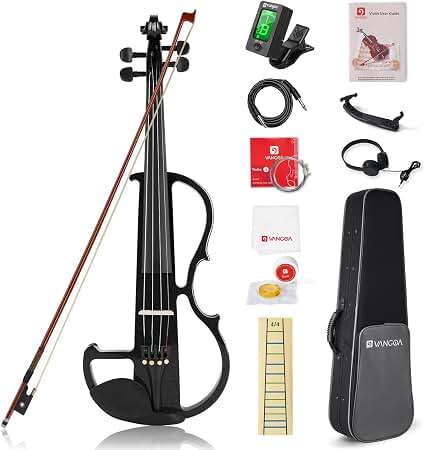
The instrument may not work alone. Depending on the model, you may need:
• A suitable cable
• Headphones or an amplifier
• A battery
• An audio interface
• A shoulder rest
• A violin case
• A tuner
Include these costs when comparing an electric violin with an acoustic beginner outfit.
It may not match classical training
A student who wants to join a school orchestra or take traditional violin exams should spend regular time on an acoustic violin. Classical teachers often need to hear the natural tone clearly.
An electric violin can still be useful, but it should not replace the sound and response of an acoustic instrument in every practice session.
Electric violin versus acoustic violin for beginners
The best choice depends on what you value most.
| Feature | Electric violin | Acoustic violin |
|---|---|---|
| Quiet practice | Excellent with headphones | Limited |
| Natural tone | Varies by model | Strong when well set up |
| Amplification | Built in through a pickup | Needs a microphone or pickup |
| Beginner feel | Similar, but can vary | Familiar and traditional |
| Modern effects | Easy to use | Requires extra equipment |
| Classical study | Possible, but less ideal alone | Usually the better fit |
| Maintenance | Electronics may need care | Wood and setup need care |
| Starting cost | Varies widely | Wide range of prices |
If quiet practice is your main concern, an electric violin may win. If tone development and classical study are your main goals, an acoustic violin often wins.
Some beginners choose both. They use an acoustic violin for lessons and tone work, then use an electric violin for quiet practice and creative projects. This gives them the strengths of each instrument.
What to look for in a beginner electric violin
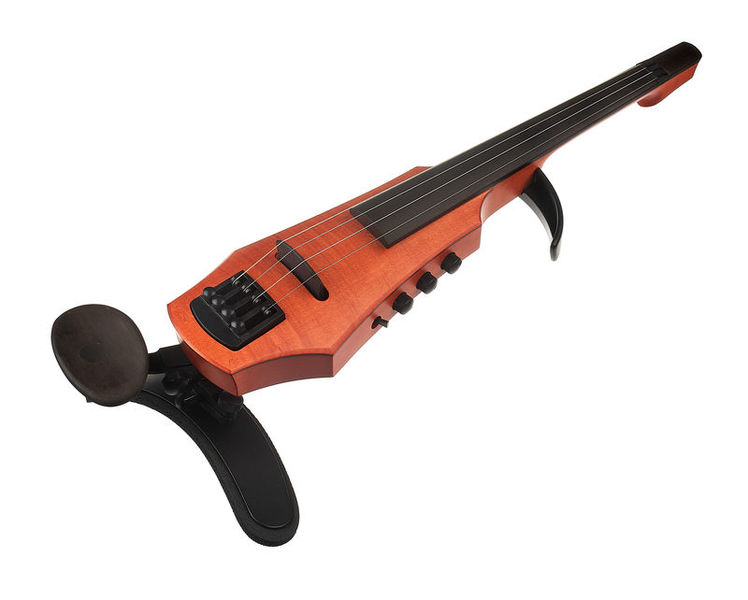
A comfortable shape
Do not choose a violin only because it looks futuristic. Check the neck, chin rest, shoulder rest, and body shape.
Hold the instrument in playing position for several minutes. Your left hand should not feel cramped, and your shoulder should stay relaxed.
A proper bridge and string height
The bridge should be shaped correctly, not flat like a block. The strings should have a comfortable height above the fingerboard.
String height that is too high makes fingering tiring. String height that is too low can cause buzzing.
Reliable tuning machines
Beginners need stable tuning. Look for smooth pegs or dependable geared tuners.
Fine tuners can also help new players make small adjustments. Electronic tuning does not fix poor mechanical parts, so inspect the tuning system carefully.
A clean headphone output
If quiet practice is your reason for buying an electric violin, test the headphone system before purchasing. Listen for hiss, delay, crackling, or weak sound.
Low latency matters. A noticeable delay between bowing and hearing the note can make practice frustrating.
A natural, clean sound
Choose a model that sounds clear without heavy effects. You should hear pitch, bow noise, and changes in dynamics.
A clean sound helps you build better habits. Effects can come later.
Good customer support
A beginner may need help with strings, cables, batteries, setup, and warranty issues. Buy from a seller that provides clear support and returns.
A local violin shop can be especially helpful because staff may inspect the instrument before you take it home.
A realistic budget
A very low price can be tempting, but poor construction often costs more over time. A reliable beginner electric violin may cost more than a basic acoustic outfit because it includes electronics.
Set aside money for lessons, replacement strings, a bow, rosin, and a case.

Can an electric violin teach you proper technique?
Yes, an electric violin can teach proper technique when it has a suitable setup and you practice correctly. The main skills remain the same:
• Balanced posture
• Relaxed shoulders and hands
• Correct bow hold
• Straight bow travel
• Accurate finger placement
• Good rhythm
• Controlled dynamics
• Active listening
Still, an electric violin may feel different from an acoustic model. The body can be lighter, the balance can change, and the sound may not respond in the same way.
For this reason, beginners should take occasional lessons with a qualified violin teacher. A teacher can identify tension, poor wrist angles, and bow problems before they become habits.
A teacher does not need to reject electric violin lessons. Many teachers can work with electric instruments, especially when the student also has access to an acoustic violin.

A practical beginner practice plan
A simple routine is more useful than a long routine that you avoid.
Try this 20-minute plan:
- Tune the violin and check your posture for two minutes.
- Practice open-string bowing for five minutes.
- Play finger exercises or scales for five minutes.
- Practice a short song for six minutes.
- Record or review one minute of playing.
- Write down one small goal for the next session.
Use a clean setting with little or no reverb. Keep your headphones at a safe level. If your ears ring or feel tired, stop and rest.
In my experience advising new players, the most common mistake is chasing equipment instead of building a routine. A simple instrument practiced often will usually produce better progress than an expensive instrument that stays in its case.
Another common mistake is skipping the bow. Beginners often focus on left-hand notes because they feel more active. Yet the bow creates most of the sound, so steady bow practice is essential.

Safety and hearing advice
Electric violin players should protect their hearing. Headphones and amplifiers can become dangerous when played too loudly for too long.
Use these habits:
• Start at a low volume.
• Increase it only enough to hear clearly.
• Take regular breaks.
• Avoid playing through pain or ringing ears.
• Use volume-limited headphones when possible.
Hearing experts commonly recommend reducing both loudness and exposure time. A quiet practice setup is helpful only if you keep it truly quiet.
Also check cables and power supplies. Keep liquids away from electronic equipment, and remove batteries if the manufacturer recommends doing so during long storage.
Common beginner mistakes to avoid
Buying by appearance
A striking design does not guarantee good playability. Test comfort, tuning, string height, and sound first.
Using too many effects
Reverb and distortion can make practice exciting, but they can also hide weak technique. Learn the notes with a clean tone before adding effects.
Ignoring the bow
The bow is not an accessory. It is one of the main tools that shapes volume, tone, rhythm, and expression.
Practicing only with headphones
Headphones help with privacy, but you should also hear how your playing feels in the room. Switch between headphone practice and natural listening when possible.
Skipping professional setup
Even a good electric violin may need adjustment. A qualified technician can improve the bridge, strings, pegs, and overall comfort.
Expecting instant silence
An electric violin reduces amplified volume, but it does not erase every physical sound. Be considerate of people nearby.
Who should buy an electric violin first?
An electric violin is a strong first choice for a beginner who lives with others or wants to play modern music. It is also useful for people who plan to record, perform with a band, or explore effects.
A traditional acoustic violin may be the better first choice for someone who:
• Wants classical lessons
• Plans to join an orchestra
• Needs the most natural tone
• Has a quiet place to practice
• Wants a simpler setup with fewer electronics
There is no universal answer to “Is an electric violin good for a beginner?” The right answer depends on your daily life and musical goals.
If possible, try both types before you buy. Play the same simple scale on each instrument. Notice which one feels comfortable and which one makes you want to practice again tomorrow.
Is an electric violin good for a beginner? Frequently asked questions
Is an electric violin easier to play than an acoustic violin?
No. An electric violin may be quieter and more flexible, but it still requires the same core skills. Finger placement, bow control, posture, and rhythm remain essential.
Can a beginner learn violin on an electric violin?
Yes, a beginner can learn on an electric violin if the instrument is properly set up. Regular lessons and some practice on an acoustic violin can help you develop a more natural tone and stronger listening skills.
Do electric violins work with headphones?
Many electric violins work with headphones, but not all models include a headphone output. Check the product specifications and confirm whether you need an amplifier or audio interface.
Is an electric violin good for classical music?
It can play classical music, but an acoustic violin is usually better for learning natural tone and dynamic control. An electric violin works best as a secondary instrument for classical students or for quiet practice.
How much does a beginner electric violin cost?
Prices vary based on construction, pickup quality, setup, and included accessories. A very cheap model may need repairs or upgrades, so compare the full cost rather than the instrument price alone.
Does an electric violin need an amplifier?
Not always. A model with a headphone output may work without an amplifier, while a passive model usually needs an amplifier, mixer, or audio interface.
Can you use regular violin strings on an electric violin?
Many electric violins use standard violin strings, but the correct choice depends on the instrument and pickup system. Check the manufacturer’s instructions or ask a violin technician before changing string types.
Conclusion
So, is an electric violin good for a beginner? Yes, it can be an excellent choice when quiet practice, modern music, and recording matter to you. It offers useful features, but it does not replace careful setup, patient practice, good bow technique, or expert guidance.
Choose a comfortable model with reliable tuning, a clear sound, low-latency headphones, and strong customer support. If classical study is your main goal, consider using an acoustic violin as well. Try both types, speak with a teacher or violin technician, and choose the instrument that makes you excited to practice.
Start with short daily sessions, keep your sound clean, and explore trusted beginner violin lessons and resources as you grow.

Senior Music Reviewer
Alex Carter is a seasoned music reviewer with over a decade of experience in the world of sound and instruments. Passionate about helping musicians and enthusiasts make informed choices, he brings sharp insights and in-depth knowledge to every review. From classical instruments to modern gear, Alex combines technical expertise with a love for music to deliver content that resonates with readers.
As a Senior Music Reviewer and expert author on Tuneluma.com, Alex is dedicated to sharing honest evaluations, practical advice, and thoughtful commentary to guide readers in their musical journey.