Is It Hard For Adults To Learn Violin: A Beginner’s Guide
No, adults can learn violin well, but progress takes patience, steady practice, and good guidance.
Many adults ask, “is it hard for adults to learn violin?” The honest answer is that the violin has a steep early learning curve, but age is not a barrier. Adults often bring focus, discipline, and clear goals that help them learn faster than they expect. This guide explains the real challenges, realistic timelines, practice methods, costs, and simple ways to make learning violin enjoyable.

Is it hard for adults to learn violin?
Learning violin as an adult can feel hard at first because the instrument gives you very little help. Unlike a piano, the violin has no marked keys. You must find the right note with your left hand while controlling the bow with your right hand.
That coordination takes time. Your first sounds may be scratchy, weak, or uneven. This is normal. It does not mean you lack talent.
The question “is it hard for adults to learn violin?” depends on several factors:
• Your practice routine
• The quality of your teacher
• Your previous music experience
• Your physical comfort
• The type of music you want to play
• Your expectations and patience
Adults may learn more slowly than children in some physical skills. However, adults often understand instructions better and can practice with more purpose. They also tend to notice mistakes and solve problems with care.
A useful comparison is learning to drive. At first, steering, braking, and watching traffic all feel difficult. With repetition, these actions become more natural. Violin works in much the same way.
Why adults may find violin challenging
Adults face real challenges when they begin violin. Knowing these challenges helps you prepare for them instead of feeling discouraged.
The violin has no fixed note positions
A violin fingerboard does not show where each note belongs. Your ear and hand must work together to find accurate pitch.
This skill is called intonation. It improves through slow practice, listening, and repetition. Finger tapes can help beginners at first, but they should not replace ear training.
Bow control takes coordination
The bow creates the sound, so bow control matters as much as finger placement. You must manage pressure, speed, angle, and contact point.
Too much pressure can create a harsh sound. Too little pressure can create a thin sound. Moving the bow at the wrong angle can produce unwanted noise.
Adult muscles may feel stiff
Many adults spend hours at a desk or behind a wheel. Tight shoulders, a stiff neck, or weak posture can make violin practice uncomfortable.
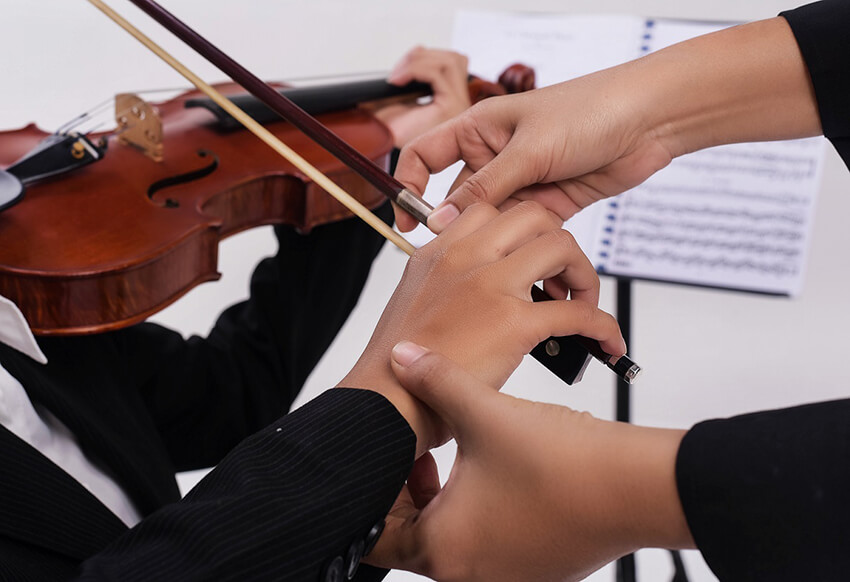
The solution is not to force your body into position. A skilled teacher can help you adjust the shoulder rest, chin rest, violin angle, and bow hold.
Progress may feel slower than expected
Adults often compare their first months with skilled players online. This can create unrealistic expectations.
Online videos usually show polished performances, not the years of practice behind them. A beginner should measure progress by better tone, smoother bow changes, and improved rhythm.

Advantages adults have when learning violin
The question “is it hard for adults to learn violin?” should include the benefits of adult learning. Adults are not starting with only disadvantages.
Most adults have stronger planning skills than young children. They can set a weekly goal, track practice, and understand why a technique matters.
Adults may also have a clear reason for learning. Some want to play folk music. Others dream of performing a classical piece, joining a community orchestra, or enjoying music after work.
Common adult advantages include:
• Better attention during lessons
• More control over practice time
• Stronger reading and problem-solving skills
• A clear sense of personal taste
• Greater appreciation for small improvements
• More ability to ask useful questions
Research on adult learning and neuroplasticity shows that the brain can continue forming new skills throughout life. Age may affect the speed of some physical changes, but it does not remove the ability to learn music.
In my experience observing adult beginners, the most successful students are not always the most naturally gifted. They are usually the ones who practice often, accept slow progress, and ask for help before a small problem becomes a habit.

How long does it take adults to learn violin?
There is no single timeline for learning violin. Your progress depends on your goals, practice quality, musical background, and access to instruction.
A general timeline may look like this:
-
First month: You learn how to hold the violin and bow, produce basic sounds, and play simple rhythms.
-
Three to six months: You may play easy songs with better posture, basic note accuracy, and simple bow patterns.
-
Six to twelve months: You can often play beginner pieces with more control and confidence.
-
One to three years: You may develop a wider range of songs, stronger intonation, and better musical expression.
-
Several years: You can build advanced technique, perform more complex works, or prepare for auditions.
These estimates assume regular practice and suitable instruction. Ten focused minutes each day can be more useful than one long session each weekend.
Adults who already play piano, guitar, or another instrument may learn rhythm and music reading faster. However, violin technique still requires new physical skills.

How much should adults practice violin?
Most adult beginners should start with 15 to 30 minutes a day, five or six days each week. This amount is long enough to build a habit without causing excessive tension or fatigue.
If your schedule is busy, divide practice into short blocks. You might practice for 10 minutes before work and 10 minutes after dinner.
A simple beginner practice plan looks like this:
• Two minutes of relaxed posture and breathing
• Five minutes of open-string bowing
• Five minutes of finger patterns or scales
• Ten minutes of a lesson piece
• Three minutes of slow review
Practice slowly enough to notice problems. Speed can hide mistakes, while slow playing helps your brain and muscles learn the correct movement.
Record yourself once a week. You may hear improvements that are hard to notice during daily practice. You can also share the recording with your teacher to identify tension or pitch problems.

The best way for adults to learn violin
Private lessons are often the most efficient choice for adult beginners. A teacher can correct posture, bow grip, shoulder tension, and intonation before these issues become deeply established.
Online courses can also help. They are useful for reviewing scales, learning songs, and practicing between lessons. However, videos cannot always see whether your wrist is stiff or your violin is tilted.
A strong learning plan may include:
• One lesson each week or every two weeks
• Short daily practice
• A notebook for teacher feedback
• Easy songs you genuinely enjoy
• Basic scales and rhythm work
• Regular recordings of your playing
Choose a teacher who works with adults. Adult students often need a different pace from young beginners. You may also want lessons focused on folk, fiddle, classical, worship, movie, or popular music.
The right teacher should explain the reason behind each exercise. You should feel challenged, but not embarrassed.

Common mistakes adult violin beginners make
Many adults make the same mistakes during the first year. Avoiding them can make violin learning much easier.
Practicing only when motivated
Motivation changes from day to day. A small routine is more reliable than waiting to feel inspired.
Keep your violin visible and ready to play. Even five minutes can maintain your habit.
Trying difficult songs too soon
A favorite song may be far above your current level. That does not mean you should never play it. Ask your teacher for a simpler version first.
Easy arrangements help you enjoy music while building the skills needed for the full piece.
Using too much force
New players often press the bow or squeeze the neck. This creates tension and can make the sound worse.
Your hands should guide the violin, not fight it. Check your shoulders and jaw often. If they feel tight, pause and reset.
Ignoring rhythm
Some beginners focus only on playing the correct notes. Rhythm is just as important.
Use a metronome at a slow speed. Count aloud when needed. A simple song with steady rhythm sounds better than a difficult song with uneven timing.
Comparing yourself with others
Every learner has a different body, schedule, musical background, and goal. Comparison can turn a rewarding hobby into a source of stress.
Compare this month’s playing with your own earlier recording instead.

Is violin harder to learn than piano or guitar?
Violin can feel harder at the beginning than piano because you must create each note. A piano key produces a clear pitch when pressed, while violin players must place the finger accurately and shape the sound with the bow.
Guitar has a similar challenge because it also uses finger placement, but the frets provide visual and physical guides. Violin has no frets, so your ear plays a larger role.
Each instrument has its own learning curve:
• Piano: Easier to produce a clear first note, but advanced coordination can become complex.
• Guitar: Chords may hurt the fingers at first, but frets help with pitch.
• Violin: Difficult early sound production, but strong control can lead to expressive playing.
This does not mean violin is the wrong choice. The best instrument is often the one you feel excited to practice. Enjoyment has a major effect on consistency.
The cost of learning violin as an adult
Adult violin lessons can range from affordable community classes to higher-priced private instruction. Prices vary by location, teacher experience, lesson length, and format.
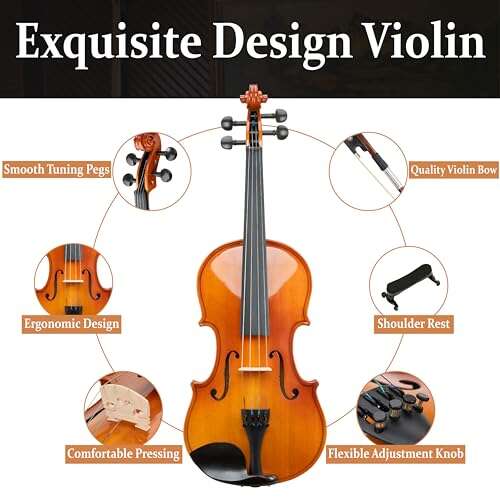
You will also need an instrument that is properly set up. A cheap violin with poor strings, a weak bridge, or an improperly fitted sound post can make learning much harder.
Plan for these basic costs:
• Violin and bow
• Case
• Rosin
• Shoulder rest
• Extra strings
• Music or lesson materials
• Tuner or metronome
Renting can be a wise choice during the first few months. It lets you test the instrument before making a larger purchase. A reputable music shop can also help you choose the correct size and setup.
Do not assume the most expensive violin is best for a beginner. A well-adjusted student instrument is often a better choice than a costly violin that does not suit your needs.
How to stay motivated while learning violin
Motivation grows when practice feels meaningful. Set goals that are specific and easy to measure.
Instead of saying, “I want to get better,” try these goals:
• Play one scale with steady rhythm
• Learn the first eight measures of a song
• Improve one bowing pattern
• Record a short piece by the end of the month
• Play for one supportive friend
Celebrate small wins. The first time you produce a clean tone may seem minor, but it is an important step.
It also helps to mix technical work with music you enjoy. Spend part of your practice on scales and exercises, then play a familiar melody. This balance keeps practice useful without making it dull.
If you miss several days, start again without guilt. A missed week is a pause, not a failure.
A practical 30-day violin plan for adults
A simple first month can answer “is it hard for adults to learn violin?” through direct experience. Focus on steady habits rather than difficult songs.
Week one
Learn how to hold the violin and bow. Practice relaxed posture and open-string bowing for five to ten minutes at a time.
Week two
Add simple finger patterns on one or two strings. Work with a tuner, teacher, or slow reference recording.
Week three
Practice basic rhythms and short melodies. Use a metronome and stop when your shoulders become tense.
Week four
Review your best exercises and learn a short beginner song. Record yourself at the start and end of the month so you can hear the change.
At the end of 30 days, you may not sound like a professional. That is not the goal. The goal is to build control, comfort, and a routine you can continue.
When to take a break or seek help
Some discomfort is normal when learning a new physical skill. Sharp pain, numbness, tingling, or ongoing neck and shoulder pain is not something to ignore.
Stop playing if pain continues, then speak with your teacher. If symptoms remain, consult a qualified health professional. A teacher can check technique, but should not diagnose an injury.
Seek extra guidance if:
• Your bow constantly bounces
• You cannot relax your shoulders
• Your wrist feels painful
• Your pitch does not improve after regular practice
• You feel lost between lessons
Small technical changes can create major improvements. Moving the violin slightly, changing the shoulder rest, or relaxing the thumb may solve a problem that once seemed permanent.
Frequently Asked Questions About Is It Hard for Adults to Learn Violin
Is it too late for an adult to learn violin?
No, it is not too late. Adults can learn violin at almost any age when they practice safely and follow a suitable plan.
How many years does it take an adult to learn violin?
Many adults can play simple songs within a few months. Playing advanced classical music may take several years of regular practice, but progress begins from the first lesson.
Can I learn violin without a teacher?
You can learn some basics through books and online videos, but a teacher can correct posture, bow control, and pitch much faster. Even occasional lessons can prevent habits that are difficult to change later.
How often should an adult beginner practice violin?
Aim for 15 to 30 minutes on most days. Short, focused practice usually works better than one long session each week.
Is violin harder than guitar for adults?
Violin may feel harder at first because it has no frets and requires careful bow control. Guitar can also be demanding, so the better choice depends on which instrument keeps you interested.
Can adults learn violin if they cannot read music?
Yes. You can begin with ear training, simple patterns, or color guides, then learn music reading step by step. Reading music is a useful skill, but it does not need to come first.
What is the hardest part of learning violin as an adult?
The early stages often feel hardest because posture, bowing, finger placement, and rhythm must develop together. With consistent practice, these tasks become more automatic.
Conclusion
So, is it hard for adults to learn violin? It can be challenging, especially during the first few months, but it is absolutely possible. Adults bring focus, life experience, and clear goals, while steady practice builds the physical skills that violin requires.
Start with a well-set-up instrument, take a few lessons, and practice for a short time most days. Choose simple music you enjoy, track small improvements, and give yourself time to grow.
Pick one beginner song today, schedule your first practice session, and explore more violin learning resources to keep your progress moving.

Senior Music Reviewer
Alex Carter is a seasoned music reviewer with over a decade of experience in the world of sound and instruments. Passionate about helping musicians and enthusiasts make informed choices, he brings sharp insights and in-depth knowledge to every review. From classical instruments to modern gear, Alex combines technical expertise with a love for music to deliver content that resonates with readers.
As a Senior Music Reviewer and expert author on Tuneluma.com, Alex is dedicated to sharing honest evaluations, practical advice, and thoughtful commentary to guide readers in their musical journey.