What Is The Guitar Scale: Easy Music Theory Guide
A guitar scale is a set of notes arranged in order that creates the sound and mood of a piece of music.
If you have ever wondered what is the guitar scale, you are asking one of the most useful questions in music. Scales help you understand chords, melodies, solos, fretboard patterns, and music theory. Once you see how scales work, the guitar neck feels less like a maze and more like a map.
What Is the Guitar Scale?
A guitar scale is a group of musical notes arranged in ascending or descending order. Each scale follows a set pattern of whole steps and half steps. Guitarists use these note patterns to build melodies, chords, riffs, and solos.
A whole step means moving two frets. A half step means moving one fret. For example, moving from the fifth fret to the seventh fret is a whole step, while moving from the fifth fret to the sixth fret is a half step.
The most common guitar scale is the major scale. Its pattern is:
- Whole step
- Whole step
- Half step
- Whole step
- Whole step
- Whole step
- Half step
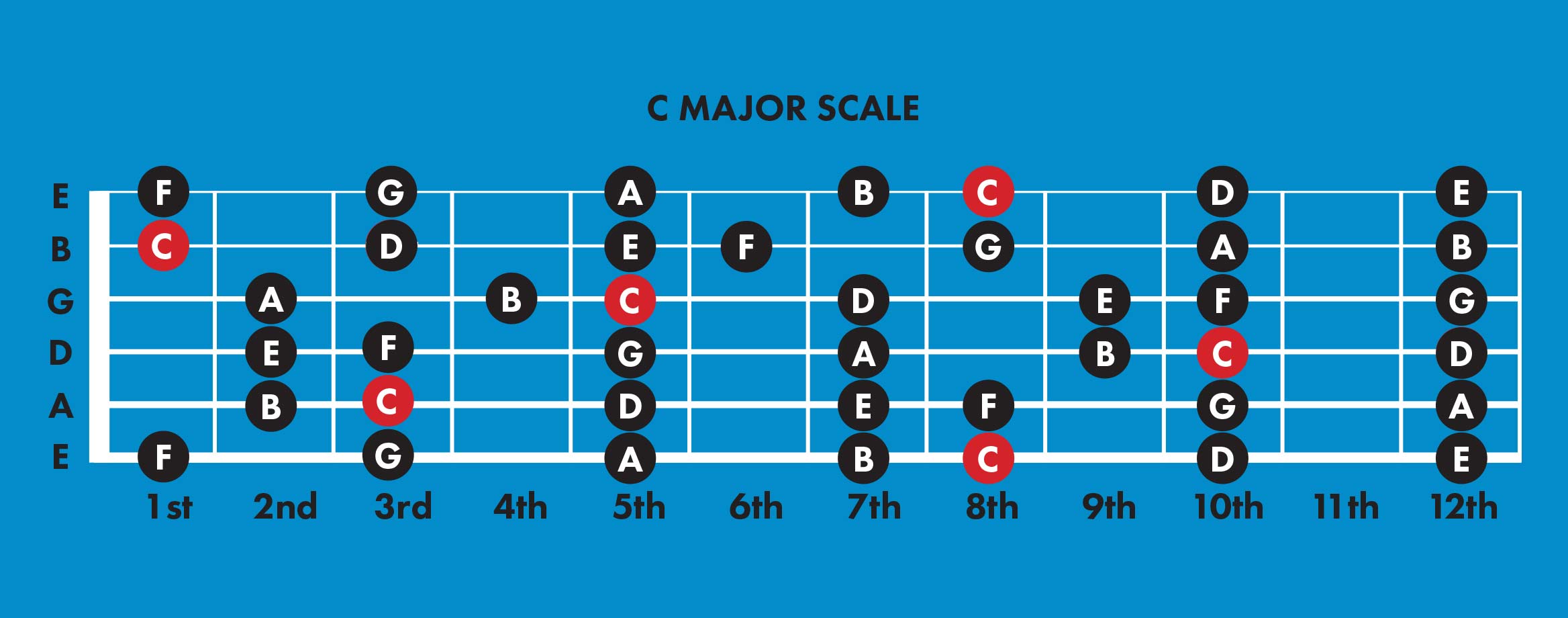
In the key of C, the C major scale uses these notes:
C D E F G A B C
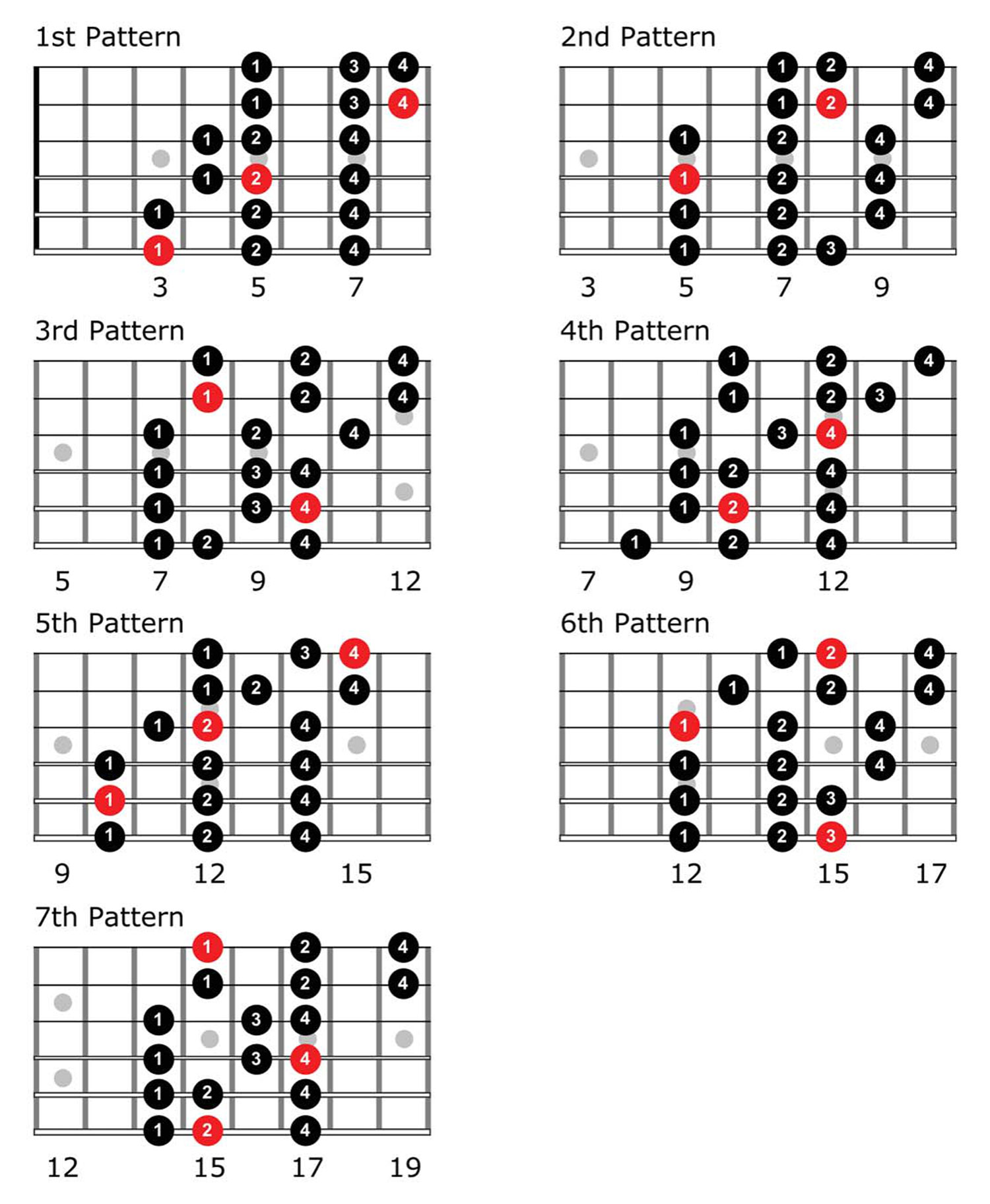
There are no sharps or flats in this scale. On guitar, you can play these notes in several positions, which makes the instrument flexible but sometimes confusing for beginners.
Why Guitar Scales Matter
Learning what is the guitar scale gives you a foundation for nearly every part of guitar playing. Scales show you which notes are likely to sound good together in a key.
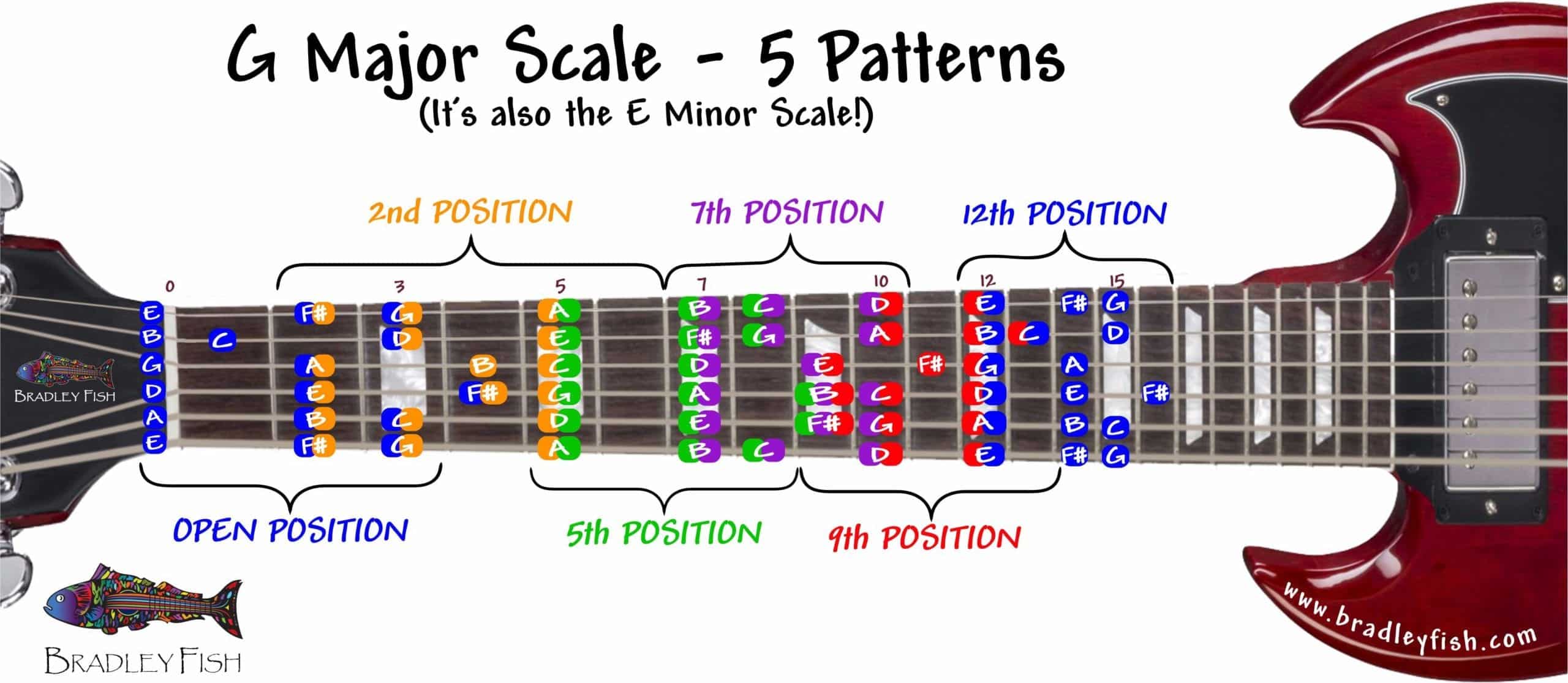
For example, if a song is in the key of G major, the G major scale gives you the main note group:
G A B C D E F# G
You can use these notes to create a melody, improvise a solo, or understand the chords in the song. The scale acts like a musical color palette. Each note adds a different shade.
Guitar scales also help you:
• Understand the fretboard
• Build stronger solos
• Write melodies and riffs
• Recognize keys and chord progressions
• Improve finger control
• Connect rhythm playing with lead playing
• Play with more confidence
A common mistake is to treat scales as boring finger exercises. They are not just patterns. They are the raw material of music.
How Guitar Scales Are Built
To understand what is the guitar scale, you need to understand intervals. An interval is the distance between two notes.
The major scale uses seven different notes before reaching the starting note one octave higher. Each note has a position, or scale degree:
• 1: Root
• 2: Major second
• 3: Major third
• 4: Perfect fourth
• 5: Perfect fifth
• 6: Major sixth
• 7: Major seventh
• 8: Octave
The root is the note that gives the scale its name. In the C major scale, C is the root. In the A minor scale, A is the root.
The major scale formula is:
1 2 3 4 5 6 7
The natural minor scale formula is:
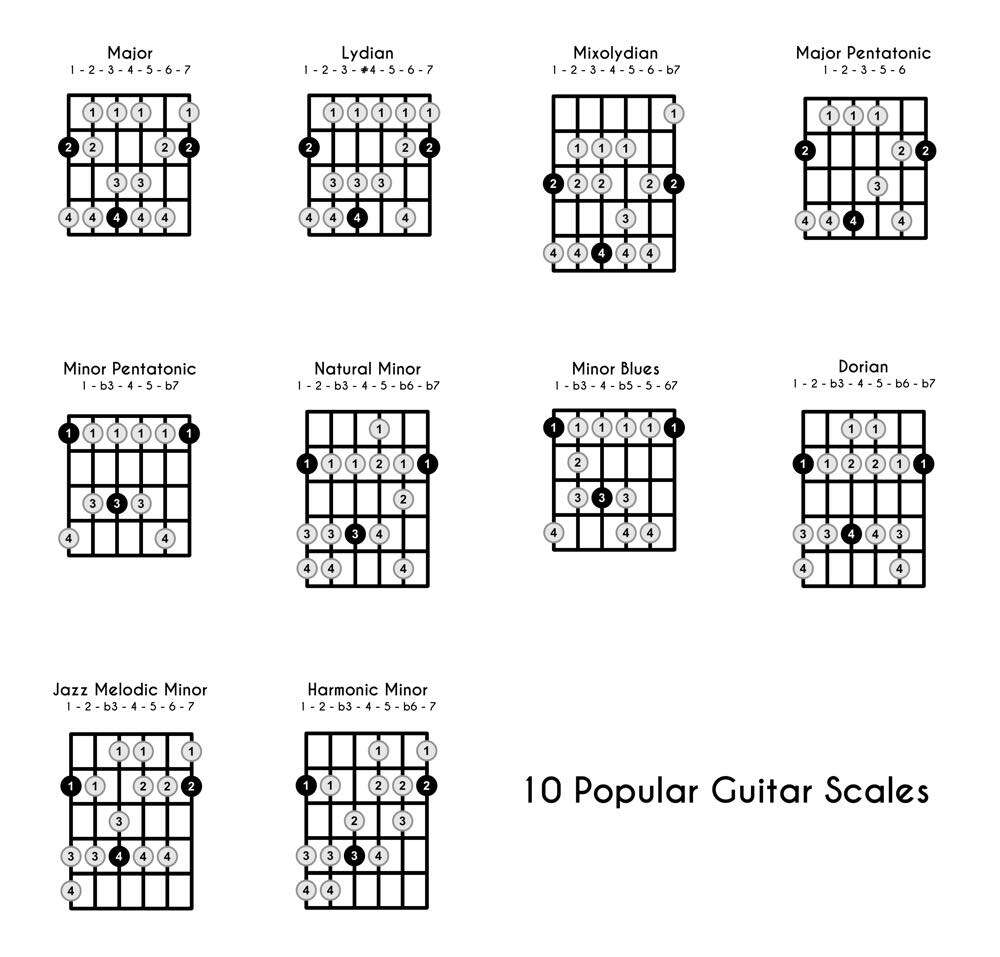
1 2 b3 4 5 b6 b7
The lowercase “b” means flat. A flat note is one half step lower than the natural note with the same letter name.
For example, the A natural minor scale is:
A B C D E F G A
The difference between A major and A minor is mainly the third, sixth, and seventh notes. These changes create a different emotional sound.
The Main Types of Guitar Scales
There are many guitar scales, but a few appear again and again in rock, blues, country, jazz, metal, folk, and pop music.
Major Scale
The major scale often sounds bright, open, and stable. It is the foundation of Western music theory.
The G major scale is:
G A B C D E F# G
Many familiar melodies use the major scale. Learning its patterns helps you understand major keys and diatonic chords.
Natural Minor Scale
The natural minor scale often sounds darker, sadder, or more serious than the major scale.
The A natural minor scale is:
A B C D E F G A
A minor is also the relative minor of C major. This means both scales use the same notes but begin on different roots.
Minor Pentatonic Scale
The minor pentatonic scale has five notes. It is one of the most useful guitar scales for blues, rock, and improvisation.
The A minor pentatonic scale is:
A C D E G A
Its formula is:
1 b3 4 5 b7
This scale is easy to use because it avoids some notes that can create strong tension against common blues and rock chords.
Major Pentatonic Scale
The major pentatonic scale also has five notes. It often sounds bright, simple, and melodic.
The A major pentatonic scale is:
A B C# E F# A
Country guitar, folk music, pop melodies, and classic rock often use this sound.
Blues Scale
The blues scale is the minor pentatonic scale with one extra note called the flat fifth, or tritone.
The A blues scale is:
A C D Eb E G A
The Eb is the blue note. It creates tension and gives blues guitar its expressive bite.
Chromatic Scale
The chromatic scale uses all 12 notes in the octave:
A A# B C C# D D# E F F# G G# A
It is not usually used as the main scale for an entire song. Instead, guitarists often use chromatic notes as passing tones to connect stronger notes.
Guitar Scale Patterns and the Fretboard
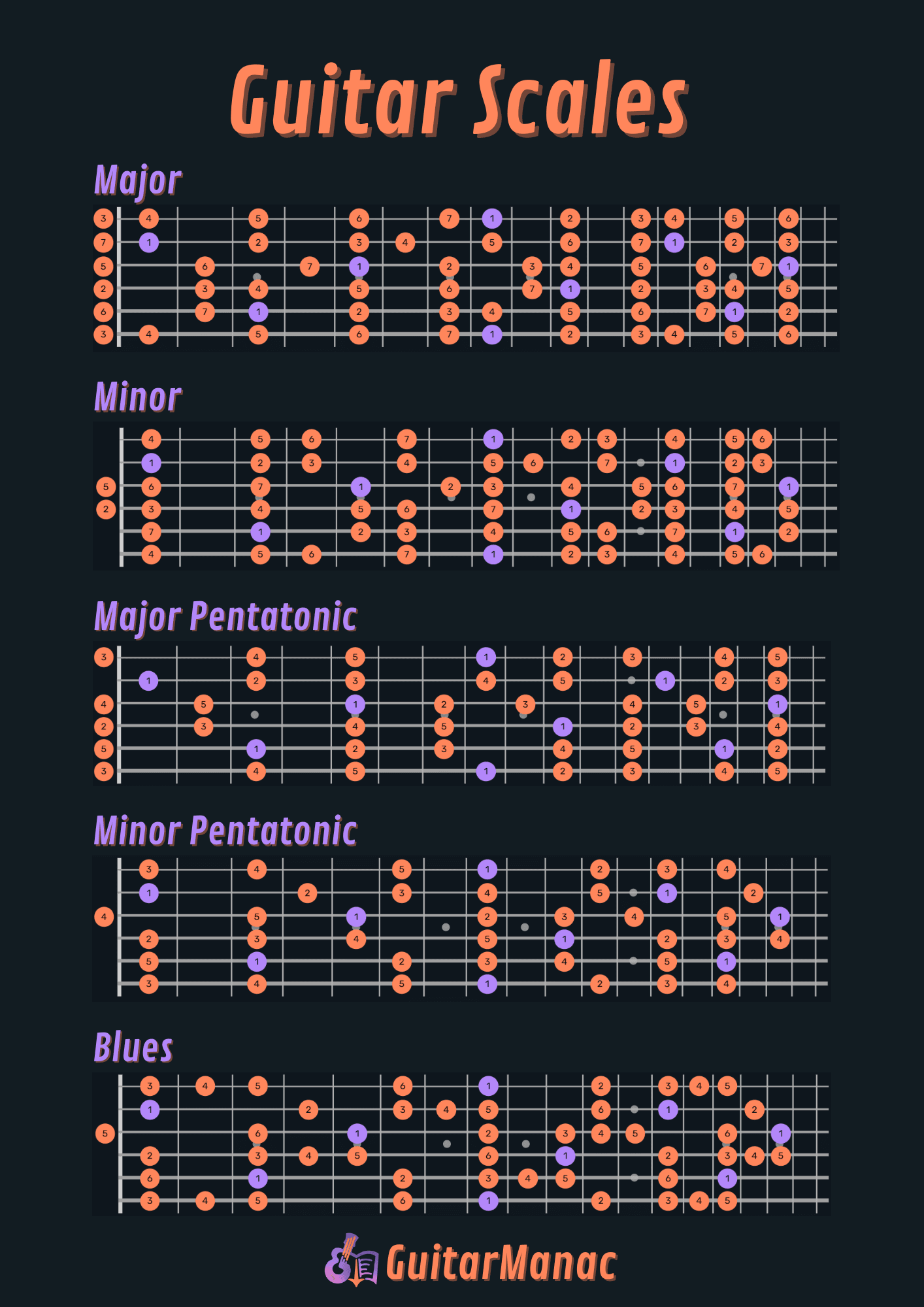
A scale pattern is a group of notes arranged in a practical shape on the fretboard. Since a guitar has repeated notes across multiple strings, one scale can appear in several positions.
For example, the A minor pentatonic scale has five common positions. Many players learn these positions first because they connect across the neck and work well for soloing.
The famous first position looks like this: