Best Music Theory Book For Guitar: Top Picks
The best music theory book for guitar is Tom Kolb’s Hal Leonard guide for clear, practical, fretboard-based learning.
Many guitar players know open chords but feel lost when someone mentions intervals, modes, key signatures, or chord construction. I understand that gap because guitar theory can seem like a maze of dots, shapes, and terms. The right book turns that maze into a map. In this review, I compare nine useful guitar theory and method books for beginners, self-taught players, bassists, and advancing guitarists. I focus on clear lessons, fretboard use, practice value, audio support, and long-term usefulness.
Music Theory – Hal Leonard Guitar Method

Tom Kolb’s Music Theory – Hal Leonard Guitar Method is the most balanced choice in this group. It explains core theory through the guitar, rather than treating the instrument as an afterthought. The book covers scales, chords, intervals, modes, notation, and ear training in a steady order. Its 94 audio tracks also help connect the printed page with real sound.
I especially like the way this guide links a theory idea to a playable fretboard shape. That approach helps new players avoid memorizing empty definitions. Beginners can use it as a guided course, while intermediate players can return to sections on harmony and modes. If you want the best music theory book for guitar as a single all-around purchase, this is the safest starting point.
Pros:
- Explains theory with direct guitar examples
- Includes 94 audio tracks for ear training
- Covers scales, chords, modes, and intervals
- Works well for beginner and intermediate players
- Builds a useful bridge between reading and playing
- Supports structured, self-paced study
Cons:
- Some topics may feel slow for advanced players
- Audio access and digital materials may change over time
- Requires regular practice away from the page
My Recommendation
I recommend this book to most electric and acoustic guitar players who want one clear theory guide. It suits beginners who need a path and intermediate players who want to fill knowledge gaps. The audio tracks add real value because theory becomes easier when I can hear each example. Overall, it offers strong value and remains widely available through major music retailers and Amazon.
Complete Music Theory for Guitarists

Music Theory for Guitarists, the Complete Method Book combines Volumes 1, 2, and 3 in one edition. That makes it appealing to players who dislike buying separate books as their skills grow. The series moves from basic musical language toward more advanced fretboard and harmony work. It gives the reader a longer learning path than a short beginner primer.
This book feels like a full course rather than a quick reference. I found that useful when I wanted to keep the same teaching voice from one level to the next. The format can help motivated players build a daily routine and track their progress. However, the large scope may seem demanding if you only want to learn basic chords or read a few songs.
Pros:
- Combines three volumes in one book
- Offers a clear path from basic to advanced topics
- Reduces the need to buy multiple theory books
- Encourages long-term study and review
- Focuses on guitar-specific theory
- Useful for serious self-taught players
Cons:
- May feel too large for casual beginners
- Can require more patience than a short method book
- Less convenient to carry than a small workbook
My Recommendation
I suggest this complete edition for players who want a deep, organized course and plan to study for months or years. It is a strong option for intermediate guitarists who have learned from scattered online lessons. It can also suit a dedicated beginner who enjoys a detailed approach. For long-term value, this may be the best music theory book for guitar in a complete-series format.
No Bull Music Theory for Guitarists

No Bull Music Theory for Guitarists takes a direct approach to the subject. It aims to explain the essential knowledge guitarists need without burying the reader in academic language. The practical focus makes it a good fit for players who want to understand what they play. It addresses common ideas such as keys, scales, chords, intervals, and fretboard patterns.
I like this style for guitarists who have started several theory books but finished none. The writing feels focused, and the lessons can answer questions that arise during normal practice. It is less about showing every possible theory detail and more about giving you tools you can use at rehearsal. This makes it a useful companion for songwriting, improvisation, and learning songs by ear.
Pros:
- Uses plain language and a direct teaching style
- Focuses on useful guitar knowledge
- Helps connect theory to playing situations
- Good fit for self-taught musicians
- Supports songwriting and improvisation
- Easy to revisit as a reference
Cons:
- May not go as deep as a full academic text
- Some readers may want more written exercises
- Players seeking a complete method may need another book
My Recommendation
I recommend this book to guitarists who want fast clarity and dislike overly formal lessons. It is especially useful for rock, pop, blues, and singer-songwriter players who need theory they can apply today. I would pair it with regular fretboard practice and real songs. If simple language matters most, this could be the best music theory book for guitar for your learning style.
Guitar Theory Simplified

Guitar Theory Simplified: Demystifying the Language of Music is aimed at players who find music terms confusing. Its main strength is approachability. Instead of assuming that the reader already understands a staff, a key, or a chord formula, it works to make those ideas less intimidating. That can help remove the mental wall that stops many new guitarists from studying theory.
This book is a good reminder that theory should describe music, not replace it. I would use each lesson with a guitar in hand and test the ideas across several keys. The simple format can make review less tiring after a long workday. Players who want advanced jazz harmony may need a deeper follow-up text, but beginners can gain a useful base.
Pros:
- Friendly entry point for theory beginners
- Breaks down confusing musical terms
- Encourages learning at a comfortable pace
- Useful for players who feel nervous about notation
- Can support practice with any guitar style
- Works well as a first theory purchase
Cons:
- May be too basic for advanced players
- Readers may need more drills for strong retention
- Should be used with a guitar for the best results
My Recommendation
I would choose this book for a complete beginner who wants theory explained without pressure. It can also help an adult learner who has put off theory for years. The book’s value comes from reducing confusion and giving the reader a starting point. It is a practical contender for the best music theory book for guitar when ease of entry matters most.
Music Theory for the Bass Player
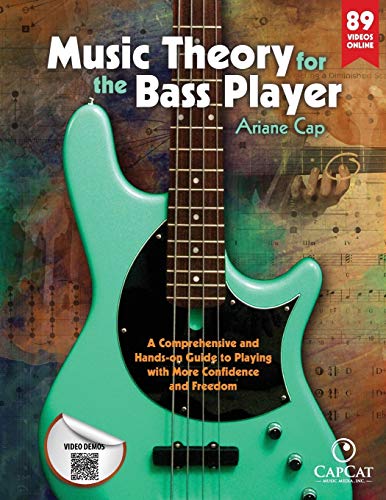
Music Theory for the Bass Player takes a hands-on approach to musical understanding. Although it targets bassists, much of its discussion of intervals, harmony, scales, and fretboard fluency applies to guitar. Bass players need to see how notes support chords and groove, so the book often presents theory in a very practical way. That makes it valuable for guitarists who want stronger rhythm and ensemble skills.
I would not choose this as my first guitar method if I only wanted chords and songs. I would choose it when I wanted to understand the musical role of each note. The book can sharpen your sense of root movement, chord tones, and connection within a band. Guitarists who play funk, soul, jazz, worship, or studio music may find those ideas especially useful.
Pros:
- Teaches theory through hands-on fretboard work
- Strengthens understanding of intervals and chord tones
- Useful for rhythm guitar and ensemble playing
- Supports groove, harmony, and note choice
- Can improve communication with bass players
- Offers a fresh view of common theory ideas
Cons:
- Written mainly for bass rather than guitar
- May not cover guitar chords and techniques in depth
- Less suitable as a first book for a total beginner
My Recommendation
I recommend this title to guitarists who already know basic chords and want better musical awareness. It is also a smart choice for bassists, band members, and players who want to improve their rhythm part. The concepts transfer well, but you must adapt some examples to the guitar. It is not the best music theory book for guitar for everyone, yet it is one of the best specialty choices for fretboard fluency.
Essential Elements for Guitar Book 1

Essential Elements for Guitar Book 1 blends basic guitar instruction with chords, TAB, notation, and simple theory. It follows a step-by-step layout that can work well in a classroom or private lesson. New players get a chance to learn technique while also seeing how written music works. The use of popular songs may make practice feel more rewarding than isolated drills.
This book is less of a pure theory text and more of a beginner method with theory built into the lessons. I see that as a benefit for a young player or an adult who wants to play songs quickly. TAB lowers the first barrier, while standard notation introduces a skill that can grow over time. It gives beginners a solid first brick, though advanced theory seekers will outgrow it.
Pros:
- Combines TAB, chords, notation, and theory
- Uses a structured beginner lesson plan
- Suitable for students and teachers
- Includes songs to make practice feel musical
- Builds basic reading and playing skills together
- Works with acoustic and electric guitar learners
Cons:
- Limited for intermediate and advanced theory study
- Some adult learners may want a faster pace
- Song selections may not suit every player
My Recommendation
I recommend this book for a child, teen, or adult at the very start of the guitar journey. It is a strong choice when a teacher needs a clear lesson sequence or when a student wants songs and theory in one place. It teaches the basics without asking too much too soon. For a young beginner, it may be the best music theory book for guitar because it turns study into a guided activity.
Hal Leonard Guitar Method Book 1

Hal Leonard Guitar Method Book 1 is a popular starting point for learning guitar from the ground up. It introduces chords, strumming, notation, exercises, and songs in a measured order. The book supports both acoustic and electric players, which makes it flexible for many homes and lesson rooms. Its main goal is broader guitar skill, with music theory woven into the process.
I like this method for players who need help with the physical side of guitar as much as the mental side. It can show how a chord shape, rhythm pattern, and written example fit together. The lessons are not designed to cover advanced modes or deep harmony. Still, strong basics matter, and this book helps create them before more complex theory enters the picture.
Pros:
- Clear path for first-time guitar players
- Covers chords, songs, strumming, and notation
- Fits both acoustic and electric guitar
- Useful for adult students and younger learners
- Builds technique before advanced theory
- Easy to pair with a teacher or online lesson
Cons:
- Not a dedicated intermediate theory book
- Some players may move through it quickly
- Requires extra material for modes and advanced harmony
My Recommendation
I suggest this method for someone who is still learning how to hold chords, read TAB, and keep steady rhythm. It is a better first purchase than a dense theory book for a player who has never followed a lesson plan. Use it first, then move to a focused theory guide once the basic technique feels natural. It can be the best music theory book for guitar beginners who need a full introduction, not theory alone.
Guitar Exercises for Beginners

Guitar Exercises for Beginners focuses on short daily practice. Its ten-minute concept suits busy players who struggle to build a routine. Exercises can support finger control, coordination, timing, and basic movement across the fretboard. While it is not mainly a theory book, these skills create the physical base needed to use theory well.
I often tell new players that theory cannot live only on paper. Your fingers must find notes, shapes, and patterns without a long pause. A short exercise book can help create that habit. I would combine this title with a theory guide, because it does not replace lessons on harmony, keys, or chord construction.
Pros:
- Encourages short and regular practice sessions
- Good for players with limited free time
- Supports finger strength and coordination
- Helps build a repeatable warm-up routine
- Can reduce the fear of long practice sessions
- Pairs well with a dedicated theory book
Cons:
- Does not provide a complete theory course
- Exercises may feel repetitive without song practice
- Beginners may need help with correct technique
My Recommendation
I recommend this book as a practice partner, not as your only theory resource. It suits beginners who keep skipping practice because they feel short on time. Ten focused minutes can make a difference when the routine stays consistent. If you want the best music theory book for guitar, add a deeper theory title beside this exercise guide.
A Modern Method for Guitar, Volume 1

A Modern Method for Guitar – Volume 1 is associated with the Berklee approach to guitar study. It introduces reading, chords, scales, technique, and musical understanding in a formal course format. The book expects the student to work through exercises rather than skim for quick tips. That structure can produce strong results for players who enjoy disciplined study.
This method may feel more serious than a song-first beginner book. I see that as both its strength and its challenge. It can develop reading and theory habits that serve a player well in many styles, but progress depends on steady practice. A teacher can make the book easier to follow, though a focused self-learner can also use it successfully.
Pros:
- Uses a respected, structured method approach
- Builds reading, scales, chords, and technique
- Encourages careful and disciplined practice
- Useful for players who want formal training
- Supports long-term musical growth
- Can prepare students for deeper study
Cons:
- May feel demanding for casual learners
- Less focused on modern TAB-only learning
- Some students may benefit from teacher guidance
My Recommendation
I recommend this volume for serious beginners and players who want a more formal path. It is a smart choice for someone considering music school, ensemble work, or stronger notation skills. Keep your guitar nearby and move at a pace that protects accuracy. For disciplined learners, it can compete for the best music theory book for guitar because it develops theory and technique together.
FJH Young Beginner Guitar Theory Book 1

The FJH Young Beginner Guitar Method, Theory Activity Book 1 is designed for young students. Its activity-based format can make early theory feel more like a game than a test. It introduces basic musical ideas in small steps that are easier for children to absorb. Parents and teachers can use it to support lessons away from the instrument.
This is not the book I would hand to an adult seeking chord substitutions or modes. Its strength lies in early learning, repetition, and simple tasks. Young students often need a visible sense of progress, and activity pages can provide that feeling. With patient guidance, the book can help children build vocabulary before more detailed guitar theory arrives.
Pros:
- Designed for young beginner guitar students
- Uses activities to support early theory learning
- Breaks lessons into manageable steps
- Useful for parents and private teachers
- Helps children learn basic music terms
- Supports learning away from the guitar
Cons:
- Too basic for most adult learners
- Limited value for intermediate guitarists
- Works best with a teacher or parent nearby
My Recommendation
I recommend this workbook for a young child beginning guitar lessons. It can help a teacher or parent reinforce notes, rhythm, and simple theory in a calm way. Short activities may hold a child’s attention better than a dense adult text. For children, this can be the best music theory book for guitar when age-appropriate design matters more than advanced content.
How I Choose a Guitar Theory Book
Choosing the best music theory book for guitar is not just about counting topics. A book may list scales and modes yet fail to show where those ideas sit on the fretboard. I look for a clear link between the name of a concept, the sound it creates, and the shape a player can use. That three-part link turns theory into music.
I also check the level. A beginner needs short lessons, basic terms, and simple wins. An intermediate player needs harmony, intervals, chord formulas, and fretboard control. A young student needs visual tasks and support from a parent or teacher. The right level matters more than a long table of contents.
What Guitar Music Theory Should You Learn First?
Start with the musical alphabet and the notes on the sixth and fifth strings. These notes help you find root notes and move common chord shapes. Next, learn whole steps, half steps, major scales, and scale degrees. These ideas explain why chords belong together in a key.
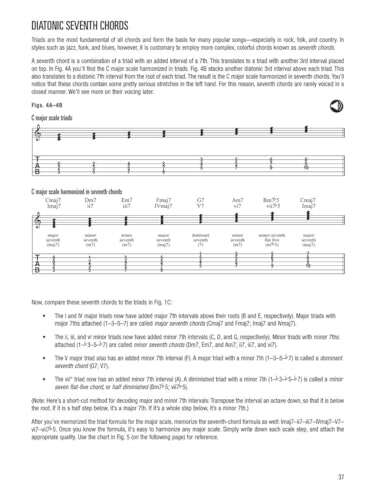
After that, study triads and seventh chords. A triad uses three basic chord tones: the root, third, and fifth. A seventh chord adds another note and changes its color. Once you understand these parts, chord progressions stop looking like random letters.
Intervals deserve special attention. An interval is the distance between two notes. I use intervals to understand melodies, chord shapes, scale patterns, and solos. They are like the ruler of music. Without them, the fretboard can feel like a wall of unrelated dots.
Modes should come later, not first. Many players rush to modes because they sound advanced. In practice, modes make more sense after you understand the major scale, key centers, and chord tones. A good guitar theory book should show that connection instead of presenting modes as seven shapes to memorize.
How to Study Guitar Theory Without Getting Lost
Keep each session short. Read one idea, play it in one key, and then use it in a small musical example. For instance, after learning a major scale, play it slowly, name each degree, and create a two-bar melody. This method gives your brain and fingers the same lesson.
Do not study theory with your guitar across the room. The instrument should be in your lap. Play every example, even if it seems easy. Then move the idea to another string set or key. This extra step helps you learn the concept rather than memorize one diagram.
Use your ears as much as your eyes. Sing a scale before you play it when possible. Listen for the sound of the third, the pull of the leading tone, and the tension of an altered note. Audio tracks can help, but your own voice and guitar also provide valuable feedback.
Keep a small notebook. Write down one new term, one fretboard shape, and one song where you hear the idea. This simple habit turns a book into a personal reference. After a few months, you will have a useful map built from your own playing.
Book-by-Book Buying Advice
If you want one broad purchase, Tom Kolb’s Hal Leonard guide is the strongest match. It balances theory, guitar diagrams, and audio support. If you want a complete course, the combined three-volume method offers more material. If plain talk helps you learn, No Bull Music Theory for Guitarists keeps the focus on practical knowledge.
For a complete beginner, choose between Essential Elements and Hal Leonard Guitar Method Book 1. The first leans toward a guided student method with songs and activities. The second offers a broad first course for acoustic or electric guitar. Both are better first steps than an advanced harmony book.
For formal study, Berklee’s A Modern Method for Guitar offers a more disciplined route. For a young child, the FJH activity book fits the learner’s age. For daily hand work, Guitar Exercises for Beginners adds practice support but should not stand alone as theory instruction. Bass players and rhythm-focused guitarists can gain fresh insight from the bass theory title.
Best Features at a Glance
| Best for | Why |
|---|---|
| Overall guitar theory | Tom Kolb’s Hal Leonard guide balances clear lessons, fretboard examples, and audio tracks. |
| Long-term study | The complete three-volume edition gives motivated players a broad learning path. |
| Young beginners | The FJH activity book uses simple tasks that suit early learners and teacher support. |
Common Mistakes When Buying a Theory Book
The first mistake is buying above your level. A book filled with advanced harmony can discourage a player who still struggles to find basic notes. The second mistake is buying a method that does not match your goal. A songwriter, a jazz student, and a child beginner may need very different material.
Another mistake is choosing a book because it looks complete. More pages do not always mean better learning. I would rather see a short lesson that I can play, hear, and remember than a large chapter that stays closed. A useful book should invite practice, not simply impress you on a product page.
Finally, do not expect a book to replace playing songs. Theory is a tool. Use it to understand a chord change, find a melody, create a solo, or write a better progression. The best music theory book for guitar becomes powerful only when you apply its ideas to real music.
FAQs Of best music theory book for guitar
What is the best music theory book for guitar beginners?
Tom Kolb’s Music Theory – Hal Leonard Guitar Method is the best overall choice for many beginners. It explains theory through guitar shapes and includes audio support. Complete beginners who also need basic technique may prefer Hal Leonard Guitar Method Book 1.
Can I learn guitar theory without reading standard notation?
Yes. You can begin with TAB, chord diagrams, fretboard maps, and ear training. However, standard notation adds useful skills, especially for formal study, session work, and reading melodies. A good method can introduce notation slowly.
Should I learn scales or chords first?
Learn basic chords and the major scale together. Chords show how notes work at the same time, while scales show how notes move. Studying both helps you understand keys and progressions faster.
Are guitar theory books useful for songwriting?
Yes. Theory can help you choose chords, build melodies, change keys, and create stronger song sections. It does not limit creativity. Instead, it gives you more choices and helps you repeat good ideas with control.
How long does it take to learn guitar music theory?
You can learn useful basics in a few weeks with regular practice. Full fretboard fluency takes much longer. Study for 10 to 20 minutes a day, and apply each lesson to songs, riffs, or simple improvisation.
Final Verdict: Which Should You Buy?
For most players, Tom Kolb’s Hal Leonard guide is the best music theory book for guitar. It offers clear lessons, useful fretboard examples, and audio tracks in one practical package.
Choose a beginner method for basic skills, a complete series for deep study, or a child’s workbook for young learners. The best guitar theory book is the one you will open, play, hear, and use often.

Senior Music Reviewer
Alex Carter is a seasoned music reviewer with over a decade of experience in the world of sound and instruments. Passionate about helping musicians and enthusiasts make informed choices, he brings sharp insights and in-depth knowledge to every review. From classical instruments to modern gear, Alex combines technical expertise with a love for music to deliver content that resonates with readers.
As a Senior Music Reviewer and expert author on Tuneluma.com, Alex is dedicated to sharing honest evaluations, practical advice, and thoughtful commentary to guide readers in their musical journey.