What Is Standard Violin Tuning: A Simple Guide
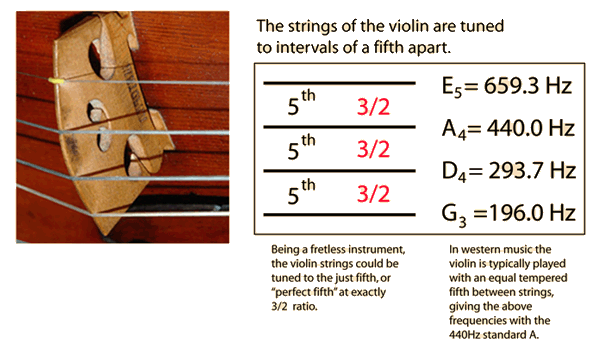
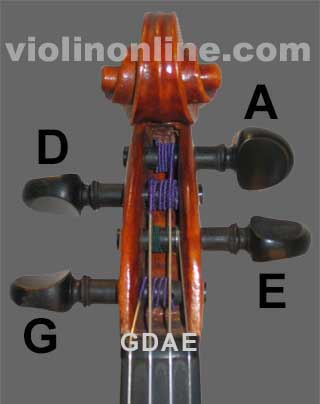
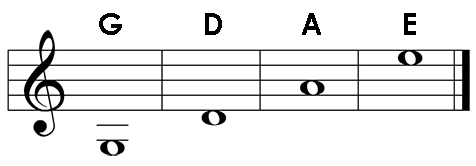
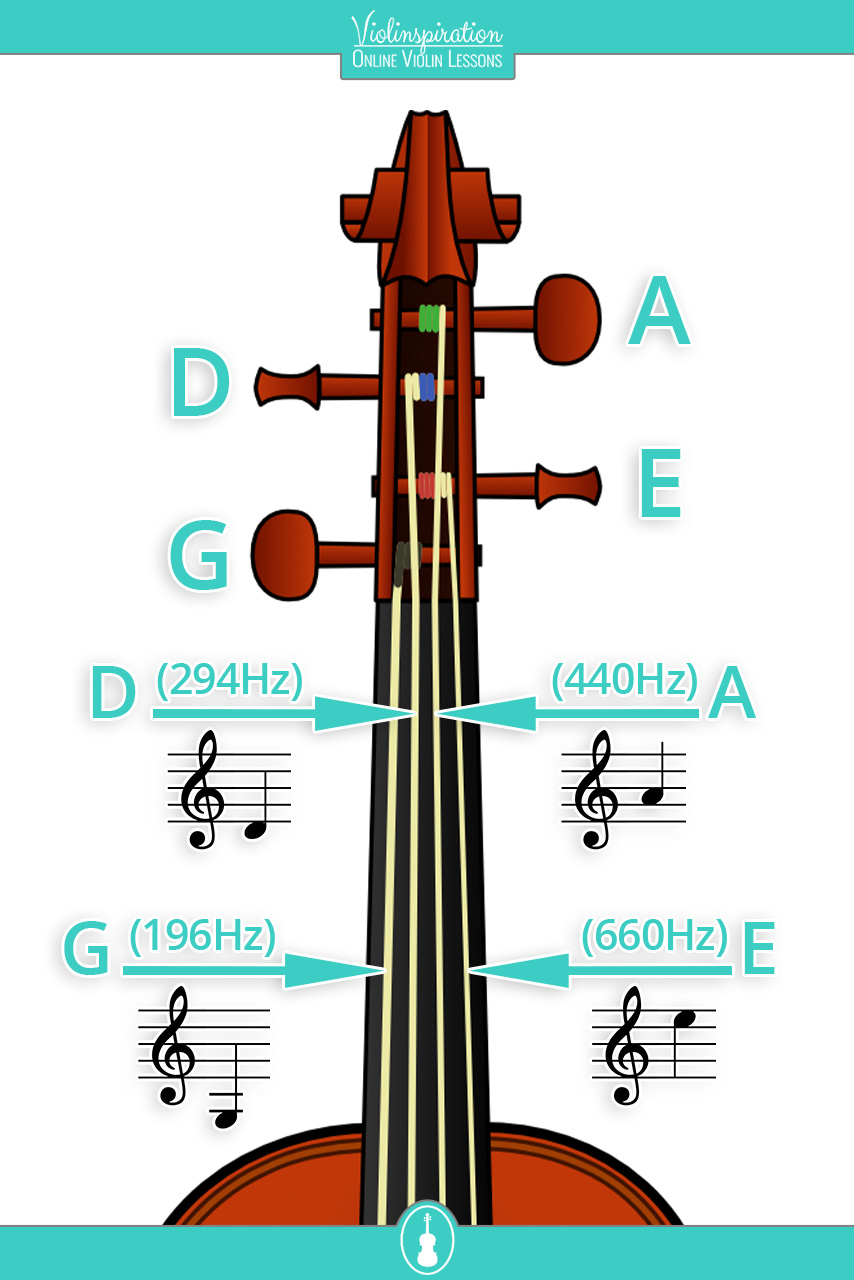
Standard violin tuning sets the strings to G3, D4, A4, and E5 in perfect fifths.
Knowing what is standard violin tuning gives every player a reliable starting point for practice, lessons, ensembles, and recordings. The system is simple, but small tuning errors can affect intonation, tone, and how well your violin blends with other instruments. This guide explains the pitch names, frequencies, tuning method, common mistakes, and practical ways to keep your violin in tune.
What Is Standard Violin Tuning?
Standard violin tuning means tuning the four open strings to these notes, from lowest to highest:
| String | Note | Scientific pitch | Approximate frequency |
|---|---|---|---|
| G string | G | G3 | 196.00 Hz |
| D string | D | D4 | 293.66 Hz |
| A string | A | A4 | 440.00 Hz |
| E string | E | E5 | 659.26 Hz |
The strings are tuned in perfect fifths. This means each string is five scale steps above the string before it. The G string is followed by D, then A, then E.
When people ask what is standard violin tuning, they usually mean this G3–D4–A4–E5 system with A4 set to 440 Hz. The A string acts as the main reference pitch because orchestras and many digital tuners use A4 to set the tuning standard.
A frequency of 440 Hz means the A string vibrates 440 times each second when it plays A4. Some orchestras tune slightly higher, often to A4 at 441, 442, or 443 Hz. However, A4 = 440 Hz remains the common standard for students, home practice, and most general playing.
Why Violin Strings Are Tuned in Perfect Fifths
Perfect fifths give the violin its wide range and help create a balanced relationship between the open strings. The interval from G to D, D to A, and A to E has a clear, ringing sound.
This tuning also supports common violin techniques:
- Scale patterns move naturally across the strings.
- Chords and double stops use the open strings as stable pitch references.
- The bow can move across the strings with a consistent spacing pattern.
- Players can use sympathetic vibration to improve resonance.
Sympathetic vibration happens when one string responds to a note played on another string. For example, playing a well-tuned A can make the open A string ring. This extra vibration gives the instrument a fuller sound and can help you notice small tuning problems.
The relationship between the strings is not random. It is one reason the violin can produce rich harmonies with only four strings. If the strings are tuned too far apart or too close together, the instrument may feel less natural under the fingers.
What Is Standard Violin Tuning in Hertz?
In standard violin tuning, the open A string is A4 at 440 Hz. The other open-string frequencies are based on the mathematical ratio for a perfect fifth.
The approximate frequencies are:
- G3: 196.00 Hz
- D4: 293.66 Hz
- A4: 440.00 Hz
- E5: 659.26 Hz
These values come from equal temperament, the tuning system used by most electronic tuners and modern fixed-pitch instruments. A violinist may adjust notes slightly while playing to improve harmony, especially in a string quartet or orchestra.
This point matters because a violin is not limited to fixed frets. You can place each finger slightly higher or lower to match the musical setting. The open strings, however, should usually begin with a clear and stable reference.
A tuner may show a note as correct while the violin still sounds slightly uneven. This can happen when the tuner is reacting to noise, when the string is still settling, or when the player hears the pitch in relation to another note. Use the tuner as a guide, then listen carefully.

How to Tune a Violin to Standard Pitch
Learning what is standard violin tuning is only the first step. The next step is tuning safely and steadily.
1. Start with the A string
Play the open A string and compare it with a reliable tuner, tuning app, piano, pitch pipe, or another trusted instrument. Adjust the A string until it matches A4 at 440 Hz.
Use the fine tuner if the pitch is only slightly off. Use the peg when the string needs a larger adjustment.
2. Tune the D string
Play the open D string after tuning A. Then play the open A and D together. A correct perfect fifth should sound smooth and focused.
If the interval sounds rough or pulses strongly, adjust the D string in small movements. Turn the peg slowly and keep checking the sound.
3. Tune the G string
Compare the open G string with the open D string. Tune G until the two strings form a clean perfect fifth.
The G string is the lowest string, so it may feel less bright than the others. Do not mistake a darker tone for incorrect tuning. Listen to the pitch relationship rather than the tone color alone.
4. Tune the E string
Finally, tune the E string against the open A string. The E string is thin and carries high tension, so make small adjustments.
After tuning E, check all four strings again. Changing one string can slightly alter the bridge pressure and affect the others.
Safe tuning tips
- Turn the peg in very small amounts.
- Push the peg gently inward as you turn it so it stays in place.
- Tune upward toward the target pitch when possible.
- Keep your face and eyes away from the path of the E string.
- Stop if a string feels unusually tight, damaged, or unstable.
- Check that the bridge remains upright while tuning.
A frequent beginner mistake is turning the peg too quickly. Violin pegs are sensitive. A tiny movement can change the pitch more than expected.
Fine Tuners, Pegs, and Digital Tuners
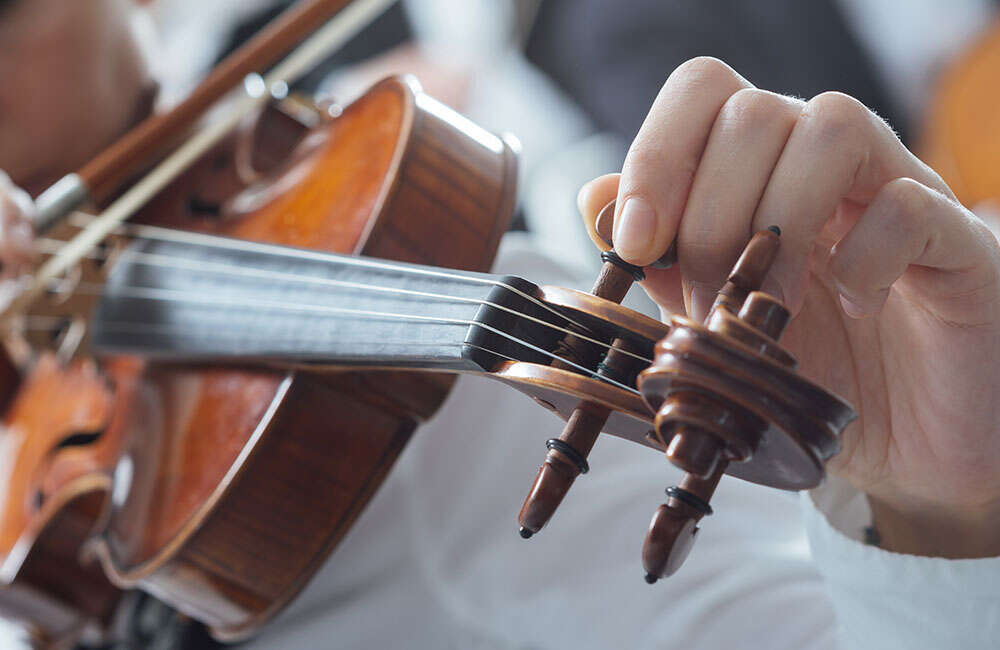
Most violins use tuning pegs for large pitch changes. Fine tuners allow small adjustments, often through a screw attached to the tailpiece.
A fine tuner is useful when the string is close to the correct note. Turning the screw clockwise usually raises the pitch, while turning it counterclockwise usually lowers the pitch. The exact direction can vary by instrument design, so watch the tuner and listen as you turn.
Many student violins have four fine tuners. Professional players often use only one fine tuner on the E string, although personal preference varies.
Digital tuners are helpful because they show whether the note is sharp, flat, or centered. Still, they have limits:
- Room noise can confuse a microphone tuner.
- Strong overtones can make the tuner display the wrong note.
- A moving needle may reflect an unstable bow stroke.
- The tuner does not tell you whether the violin sounds pleasant or blends well.
For the most accurate result, use a tuner in a quiet room. Play a steady, open-string tone with moderate bow pressure. Let the sound settle before making a large adjustment.

Common Problems With Standard Violin Tuning
Even when you know what is standard violin tuning, several problems can make the instrument difficult to tune.
Pegs that slip
A slipping peg can make a string go flat soon after tuning. This may happen because the peg is not seated well, the pegbox is dry, or the peg needs professional adjustment.
Do not force a slipping peg. A violin repair professional can fit and lubricate the peg correctly.
A bridge that leans
The bridge should stand almost straight between the f-holes. Tuning raises and lowers string tension, and this can slowly pull the bridge forward.
Check the bridge often. If it begins to lean, loosen the strings slightly and ask a qualified violin shop for help. Moving a bridge without experience can damage the instrument.
Old or damaged strings
Strings lose their response over time. They may sound dull, feel rough, or refuse to hold pitch. A broken winding, visible rust, or a sharp spot near the bridge is a sign that the string may need replacement.
New strings also need time to settle. You may need to retune them several times during the first few days.
Tuning only by color or needle position
A green light or centered needle is useful, but it is not the entire answer. Always listen to the sound and compare neighboring strings.
When two strings are close to a perfect fifth, the tone should become calm and clear. Strong beats often mean the interval still needs adjustment.
Using the wrong octave
A tuner may recognize the note name but not always the octave clearly. Make sure the violin’s A string is A4, not A3 or A5. The sound should be bright and clear, but not painfully tight.
Standard Violin Tuning for Beginners
Beginners often benefit from a simple routine. Tune before every practice session, even if the violin sounded correct the day before.
Temperature, humidity, travel, and playing can all change string tension. Wooden instruments respond to their surroundings, so tuning is a normal part of playing rather than a sign that something is wrong.
Try this routine:
- Place the violin securely on your shoulder or in your lap.
- Check the bridge position.
- Tune the A string with a reliable tuner.
- Tune D against A.
- Tune G against D.
- Tune E against A.
- Recheck every string.
- Play a slow scale to confirm the instrument feels stable.
A useful practice habit is to play each open string with a long, even bow. This helps you hear the pitch without the distraction of left-hand fingers.
If you are new to the violin, ask a teacher to show you how much pressure to use on the pegs. This short lesson can prevent broken strings, fallen bridges, and unnecessary frustration.
How Often Should a Violin Be Tuned?
A violin should usually be checked every time you play. Some instruments stay in tune for days, while others need adjustment before each session.
You may need to tune more often when:
- The strings are new.
- The weather changes quickly.
- The violin moves between indoor and outdoor spaces.
- The instrument has been stored for a long time.
- The pegs are slipping.
- You are playing with a piano, orchestra, or ensemble.
Before a performance, tune in the same room where you will play. A violin may react to changes in temperature and humidity. Arrive early enough to tune, let the instrument settle, and check it once more before starting.
In an ensemble, follow the leader’s reference pitch. An orchestra may use a slightly higher A than 440 Hz. Matching the group matters more than insisting on a different personal setting.

Standard Violin Tuning Compared With Other Tunings
Standard violin tuning is the normal tuning for lessons, orchestral music, chamber music, folk music, and most solo playing. However, some musical traditions use alternative tunings.
Scordatura is a technique in which one or more strings are tuned differently from the standard G, D, A, and E arrangement. Composers may use it to create special colors, simplify certain chords, or expand the instrument’s range.
Alternative tuning can appear in:
- Baroque and early music performance
- Folk traditions
- Contemporary classical music
- Experimental music
- Some solo compositions
A player should not change from standard violin tuning without checking the music and the instrument. Raising a string too far can increase tension and cause damage. Lower tunings are often safer, but they can reduce response and change the feel of the violin.