Why Is My Violin Not Tuning: Easy Fixes
Your violin may not be tuning because its strings, pegs, fine tuners, bridge, or soundpost are not working together.
If you are asking, “why is my violin not tuning,” you are not alone. Even a well-made violin can resist tuning when the strings slip, the bridge leans, or the pegs do not grip correctly. This guide explains how to find the cause, fix safe problems at home, and know when to visit a violin maker.
Why is my violin not tuning?
A violin may not tune for several simple reasons. The most common cause is string tension that does not stay stable. You may tune one string, only to find that it becomes sharp or flat again a few minutes later.
The main causes include:
• Loose or poorly fitted tuning pegs
• Old, damaged, or stretched strings
• A bridge that is leaning or out of position
• Fine tuners that have reached their limit
• Strings caught in the bridge or nut grooves
• Sudden changes in heat or humidity
• A tuner that hears the wrong pitch
• Incorrect tuning technique
• A loose tailpiece, chin rest, or other violin part
• A soundpost or setup problem
A violin is a small wooden instrument under constant tension. The four strings pull against the bridge, tailpiece, pegs, and body. If one part moves, the whole tuning system can feel unstable.

Check your violin tuner first
Before adjusting the violin, make sure the tuner is accurate. A phone tuner may struggle in a noisy room, especially when other strings or voices are nearby. It may also identify the wrong octave if the violin is far from the microphone.
Use a chromatic tuner set to the standard tuning system. Most violinists tune to:
• G3, the lowest string
• D4
• A4
• E5, the highest string
The A string is normally tuned to 440 Hz in many orchestras and lessons. Some orchestras use A=441, 442, or 443 Hz, so follow your teacher or ensemble leader when needed.
Place the tuner close to the violin. Mute nearby sounds, pluck one string at a time, and wait for the note to settle. If the tuner jumps between notes, check the room and microphone before blaming the instrument.
A useful test is to compare the tuner with a second device. If both devices show different readings, one may need calibration or better placement.

Loose tuning pegs are a common cause
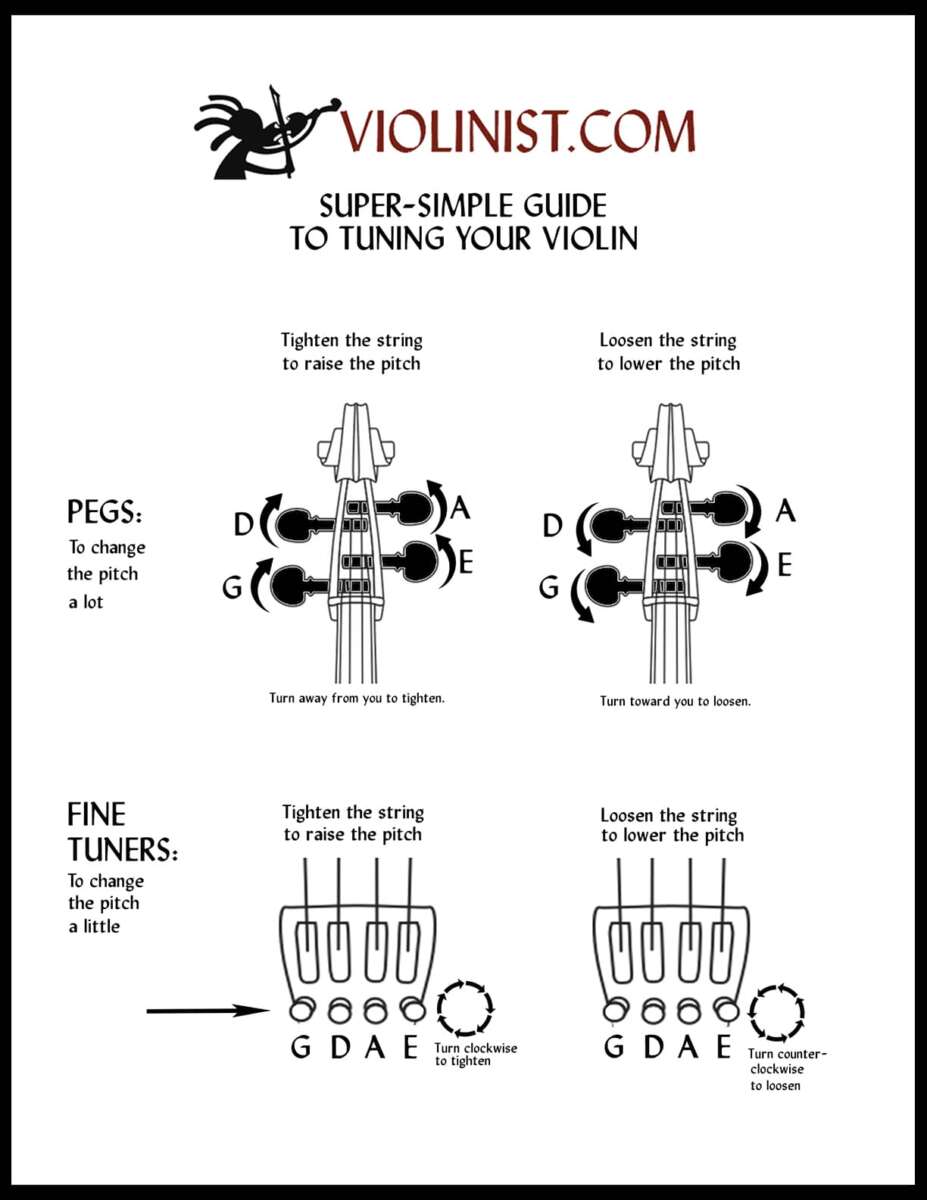
The tuning pegs control most of the pitch movement. They must turn smoothly and hold firmly at the same time. If a peg spins freely, slips backward, or feels stiff in one spot, the violin may not stay in tune.
Violin pegs are held in place by friction. They are not locked with gears like guitar tuning machines. This means the peg must fit its pegbox hole correctly and must be pushed inward while you tune.
Try this method:
- Turn the peg slowly toward the correct pitch.
- Use your other hand to support the violin neck.
- Push the peg gently into the pegbox as you turn it.
- Stop when the string reaches the target note.
- Check the pitch again after a few seconds.
Do not force a stiff peg. Too much pressure can damage the pegbox or snap the string. Do not use household soap, candle wax, or random lubricants. Peg compounds made for violins are safer, but a badly fitted peg needs professional adjustment.
If the peg slips even when you push it inward, the peg may be worn, poorly shaped, or affected by humidity. A luthier can refit the peg and pegbox holes with the correct tools.

Old or faulty strings can prevent accurate tuning
Strings do not last forever. Over time, their winding can wear down, their core can weaken, and their tone can become dull. Old strings may also produce unstable pitch, false notes, or a rough sound.
A string may need replacement if:
• The winding is loose or unraveling
• The string has rust, dark spots, or rough areas
• It feels uneven when you slide your finger along it
• It goes sharp or flat without a clear reason
• The violin sounds dull even after careful tuning
• The string breaks near the peg, bridge, or fine tuner
New strings can also cause temporary tuning problems. They stretch during the first hours or days of use. Tune them often, but make small adjustments. Pulling a new string hard to “stretch it faster” can damage the string or the violin.
Replace strings one at a time. This keeps the bridge and soundpost under more stable tension. After installing a string, make sure it sits correctly in the nut, bridge groove, and tailpiece.
String choice matters too. Different string types have different tension levels. A set that works well on one violin may feel too tight, too soft, bright, or unstable on another. Ask a qualified teacher or luthier before making a major change.

Inspect the bridge before tuning again
The bridge transfers string vibration to the violin body. It must stand in the correct position and remain straight. A leaning bridge can make tuning difficult and may eventually warp.
Look at the bridge from the side. Its back surface should usually stand close to vertical, while the top may have a slight angle toward the tailpiece. The feet should sit flat on the violin top.
The bridge can lean toward the fingerboard when you tune upward. This often happens because the strings pull the bridge through the small grooves. You may notice that the bridge looks tilted or that the feet no longer sit flat.
Do not force the bridge back without knowing how to do it. Bridges are delicate, and a sudden movement can damage the violin or cause the bridge to fall. If the bridge is only slightly out of place and you have been shown the correct method by a teacher or luthier, make very small corrections while loosening the strings slightly.
Call a professional if the bridge is badly warped, cracked, loose, or far out of position. Bridge fitting requires precise work. A bridge that looks fine may still have incorrect feet or string spacing.

Fine tuners may be causing the problem
Fine tuners are useful for small pitch changes. Many student violins have four fine tuners, while traditional setups often use only one on the E string.
A fine tuner can create trouble when its screw is fully tightened or fully loosened. Once it reaches its limit, it cannot make further adjustments. The string may then feel impossible to tune accurately.
Check each tuner before turning the peg:
• If the screw is almost fully tight, loosen it several turns before using the peg.
• If the screw is almost fully loose, tighten it several turns before making a fine adjustment.
• Make sure the tuner arm does not touch the violin top.
• Check that the string is seated properly in the tuner hook.
If a fine tuner rattles, sticks, or touches the instrument, have it inspected. A loose tuner can create unwanted noise and may scratch the violin.
When tuning, use the peg for large changes and the fine tuner for small changes. This simple habit gives you more control and helps the violin stay stable.

Check the string path from peg to tailpiece
A violin string must travel smoothly through several contact points. These include the peg, pegbox, nut, fingerboard area, bridge, fine tuner, and tailpiece. If the string sticks at one point, the pitch may jump instead of changing smoothly.
This is called friction. For example, you may turn the peg and hear no change. Then the string suddenly releases and becomes far too sharp. The pitch may later drop as the tension balances out.
Inspect these areas:
• The string should sit neatly in the peg groove.
• It should pass through the correct nut groove.
• It should rest in the correct bridge groove.
• It should not cross over another string.
• The tailpiece loop or ball should be seated correctly.
• The fine tuner should hold the string without bending it sharply.
Never make the nut or bridge grooves deeper with a knife or file at home. These parts need exact measurements. A groove that is too deep can cause buzzing, weak tone, or string breakage.
A luthier can smooth or reshape the contact points safely. This small repair often makes a major difference when asking why is my violin not tuning.

Temperature and humidity can change violin tuning
Wood responds to changes in moisture and temperature. When the air becomes dry, parts of the violin may shrink slightly. In humid conditions, wood may expand. These changes can affect pegs, bridge position, string tension, and overall pitch.
A violin may go out of tune after:
• Moving from a warm room into cold outdoor air
• Traveling in a car
• Playing in a heated or air-conditioned room
• Storing the violin near a radiator or vent
• Leaving the case open in a damp space
Let the violin adjust gradually. Do not tune it immediately after bringing it from a very cold or hot place. Give it time to reach room temperature.
Store the violin in a sturdy case. Keep it away from direct sunlight, heating systems, fireplaces, and damp areas. A case humidifier may help in very dry conditions, but it must be used carefully. Too much moisture can also cause harm.
The best storage range depends on the instrument and local climate. A room humidity monitor can help you notice extreme changes. If your pegs repeatedly slip or become tight during seasonal changes, ask a luthier to check the fit.

Tune a violin in the correct order
Correct technique can solve many tuning problems. Start with the lowest string and move upward:
- Tune the G string.
- Tune the D string.
- Tune the A string.
- Tune the E string.
- Check all four strings again.
Tune upward toward the note when possible. If you go too sharp, lower the pitch below the target and then raise it slowly. This helps reduce slack in the string and gives the peg a more stable position.
Use a gentle grip. Turn the peg in small movements rather than making large, sudden changes. After tuning one string, check the others because changing tension can move the bridge slightly and affect nearby strings.
Many players ask why is my violin not tuning when they tune each string only once. A violin often needs two or three passes. This is normal, especially with new strings, temperature changes, or a bridge that has recently been adjusted.

Safe troubleshooting steps at home
You can perform a basic inspection without taking the violin apart. Work in good light and stop if anything feels forced.