What Is Piano Wire Made Of: Materials And Uses
Piano wire is made from high-carbon steel, drawn and treated for extreme strength, spring, and lasting tension.
Understanding what is piano wire made of helps explain why a thin string can hold steady tension for years. Piano wire is not ordinary craft wire. It is a carefully made music wire with strict control over carbon content, diameter, surface finish, strength, and elasticity. This guide explains its metal composition, manufacturing process, uses, limits, and the key differences between piano wire and other steel wires.
What Is Piano Wire Made Of?
Piano wire is made mainly from high-carbon steel. In the wire industry, it is often called music wire and is commonly associated with ASTM A228 specifications in the United States.
The steel usually contains:
• Iron as the main base metal
• Carbon to increase hardness, strength, and spring action
• Manganese to improve strength and help the steel process well
• Small amounts of silicon and other elements, depending on the maker
• Very low levels of sulfur and phosphorus to reduce brittleness
The exact formula can vary. Manufacturers may adjust the steel slightly to improve tensile strength, fatigue life, drawing performance, or resistance to defects.
When people ask what is piano wire made of, the simplest answer is high-carbon, cold-drawn steel. However, the final product gets its special properties from more than its basic ingredients. The drawing process and heat treatment are just as important as the metal itself.
Piano wire is usually bright, smooth, and round. It is not normally stainless steel, aluminum, copper, or ordinary low-carbon steel. Its design goal is to handle high tension while vibrating in a stable and musical way.

Why High-Carbon Steel Is Used
High-carbon steel contains more carbon than mild steel. This added carbon allows the wire to become much harder and stronger after controlled processing.
A piano string must do several jobs at once. It must:
• Hold strong tension without breaking
• Vibrate evenly along its length
• Return to its original shape after vibration
• Resist fatigue from repeated use
• Keep a consistent diameter
• Produce a clear and stable tone
Low-carbon steel is too soft for these demands. It can stretch more easily and may not provide the needed strength in a very small diameter. High-carbon steel offers a better balance of strength, stiffness, and elasticity.
The word “elasticity” needs a little care here. Piano wire does not stretch like a rubber band. In fact, a good piano string should stretch very little during normal use. Its useful behavior comes from its ability to flex and vibrate within its elastic range without taking a permanent bend.
Carbon also affects hardness. A harder wire can resist wear and deformation, but too much hardness can make it brittle. This is why steel makers must control the formula and production process closely.
The answer to what is piano wire made of is therefore tied to a design balance. The steel must be hard enough to stay strong, yet tough enough to survive years of vibration and tuning.
How Piano Wire Is Manufactured
The manufacturing process gives piano wire much of its final performance. Steel begins as a rod, often called wire rod. It then passes through several controlled stages.
1. Steel preparation
The raw steel is melted and refined. Producers control the carbon level and remove unwanted impurities. Clean steel is important because tiny internal defects can become crack points under high tension.
2. Rod forming
The molten steel is cast and formed into a rod. The rod is then prepared for drawing. Its surface may be cleaned to remove scale and other residues.
3. Cold drawing
The rod is pulled through a series of dies. Each die makes the wire smaller and more precise. This process is called cold drawing because it takes place below the steel’s recrystallization temperature.
Cold drawing does several things:
• Reduces the wire to an exact diameter
• Improves its tensile strength
• Creates a smooth surface
• Aligns the metal structure along the wire
• Produces the stiffness needed for musical vibration
The wire may pass through many dies. Each reduction must be controlled. Drawing too much at once can cause cracks, uneven stress, or surface damage.
4. Heat treatment
Manufacturers may use controlled heat treatment between drawing stages or after major reductions. This relieves some internal stress and allows further drawing without damaging the wire.
The exact treatment is part of the producer’s process. This is one reason two wires with similar chemistry can perform differently.
5. Inspection and coiling
The finished wire is checked for diameter, strength, roundness, surface quality, and straightness. It is then coiled or cut into lengths for piano makers, repair shops, instrument builders, and industrial users.
In practical terms, what is piano wire made of includes both the steel and the manufacturing history stored inside that steel.

The Typical Composition of Piano Wire
There is no single universal recipe for every brand. Still, high-quality music wire commonly uses a carbon steel composition with carbon near the upper range used for high-strength wire.
A typical composition may include:
• Carbon: often around 0.70% to 1.00%
• Manganese: commonly used in modest amounts to improve strength and processing
• Silicon: present in small amounts in many steel grades
• Iron: the balance of the material
• Sulfur and phosphorus: kept low because excess amounts may increase brittleness
These figures are general ranges, not a guarantee for every product. A particular wire should always be checked against its technical data sheet or applicable standard.
Some piano wire may contain small alloying additions. These can improve strength, drawing behavior, or resistance to fatigue. However, piano wire is generally not an exotic alloy. Its impressive performance comes from well-controlled high-carbon steel and precision production.
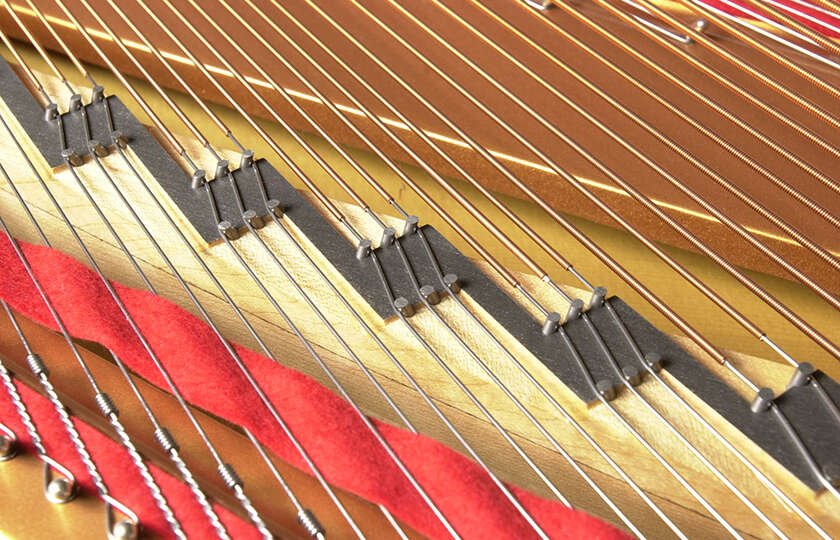
It is also useful to separate the core wire from the full piano string. In the bass section of a piano, a steel core is often wrapped with copper. The copper increases the string’s mass without requiring a much thicker steel core. This allows the piano to produce low notes within a practical size.
So, when asking what is piano wire made of, specify whether you mean the plain treble wire or a complete wound bass string. The plain wire is mainly high-carbon steel. A wound string adds copper around a steel core.

Piano Wire Versus Other Types of Wire
Piano wire looks simple, but its performance is far above that of common household wire. Comparing materials makes its purpose clearer.
Piano wire versus mild steel wire
Mild steel has a lower carbon content. It is easier to bend and form, but it is not strong enough for many high-tension music applications.
Piano wire versus stainless steel wire
Stainless steel contains enough chromium to resist rust. Piano wire usually does not have that level of chromium. Stainless wire may offer better corrosion resistance, but it may not provide the same combination of strength, stiffness, tone, and cost for piano strings.
Piano wire versus spring wire
Both materials can be strong and elastic. In fact, music wire is often used for small springs. However, piano wire must also meet strict needs for sound, surface quality, diameter, and vibration.
Piano wire versus guitar strings
Some guitar strings use steel cores, but their construction varies. They may include nickel, bronze, phosphor bronze, stainless steel, or other windings. Piano wire is a specific high-strength wire product, while guitar strings are complete string assemblies designed for different instruments.
Piano wire versus fencing wire
Fencing wire is built for durability and outdoor use. It may use galvanized coatings, lower-carbon steel, or other designs. It is not made for accurate musical vibration.
These comparisons show why the answer to what is piano wire made of cannot be reduced to “steel.” The grade, carbon level, drawing method, finish, and intended use all matter.

What Makes Piano Wire Strong?
Piano wire gets its strength from several related features.
High carbon content
Carbon helps form a hard steel structure. This improves resistance to stretching and permanent deformation.
Cold work
Drawing the wire through dies changes its internal grain structure. The metal becomes stronger as it is reduced in size. This is known as work hardening.
Accurate diameter
A tiny change in diameter affects both tension and pitch. Precision drawing keeps the wire consistent from one section to another.
Clean steel
Inclusions and internal flaws can weaken a high-tension string. Quality music wire is made from steel with carefully controlled impurities.
Smooth surface
A scratch or nick can act as a stress concentrator. Under high tension, that small flaw may become the starting point for a break.
A helpful way to picture this is to think of the wire as a very small bridge cable. Its strength is not just about the metal recipe. Its shape, surface, internal structure, and production quality all affect how safely it carries load.
This is why knowing what is piano wire made of is useful, but not enough by itself. A poor-quality high-carbon wire may perform worse than a well-made wire with a similar chemical analysis.
Common Uses for Piano Wire
Piano wire is best known for musical instruments, but its high strength makes it useful in many other products.
Common uses include:
• Piano strings
• Small springs
• Mechanical instruments
• Precision controls
• Hobby mechanisms
• Model parts
• Wire forms
• Fishing and outdoor devices in selected applications
• Industrial parts that need small, strong wire
Piano wire is popular for springs because it can store and release energy repeatedly. It is also useful when a designer needs a thin wire that resists bending and stretching.
However, not every application should use it. Piano wire can rust, and its high strength makes it harder to bend safely by hand. If a project needs corrosion resistance, easy forming, or welding, another wire may be a better choice.
When selecting it, check the following: