What Is A Major 7 Chord Piano: Easy Notes Guide
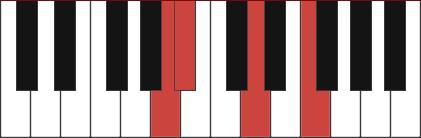
A major 7 chord on piano combines a root, major third, perfect fifth, and major seventh.
If you are asking what is a major 7 chord piano players use, think of it as a bright major chord with one smooth, colorful note added. This guide explains the notes, shapes, symbols, sound, uses, and practice methods so you can play a major seventh chord with confidence in jazz, pop, soul, gospel, and film music.
What Is a Major 7 Chord on Piano?
A major 7 chord is a four note chord. It contains a major triad plus a major seventh interval above the root. In simple terms, it is a major chord with an added note that sits one half step below the octave.
For example, C major contains:
• C, the root
• E, the major third
• G, the perfect fifth
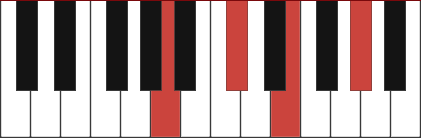
Add B, the major seventh, and you get Cmaj7:
• C, E, G, B
When people ask what is a major 7 chord piano musicians often explain it through its formula:
- Root
- Major third
- Perfect fifth
- Major seventh
The interval formula is 1, 3, 5, 7. In half steps, the notes are 0, 4, 7, and 11 semitones above the root.
The major seventh gives the chord its special character. It sounds warm, open, elegant, and slightly dreamy. Unlike a dominant seventh chord, it usually does not sound tense or as if it must resolve right away.
How to Build a Major 7 Chord
The easiest way to build a major 7 chord is to start with a major triad. Then add the note that is one half step below the root’s octave.
Let us build Cmaj7:
- Play C, E, and G to form C major.
- Find the next C above the root.
- Move down one half step to B.
- Add B to the chord.
The result is C, E, G, and B.
This method works for every root. For example:
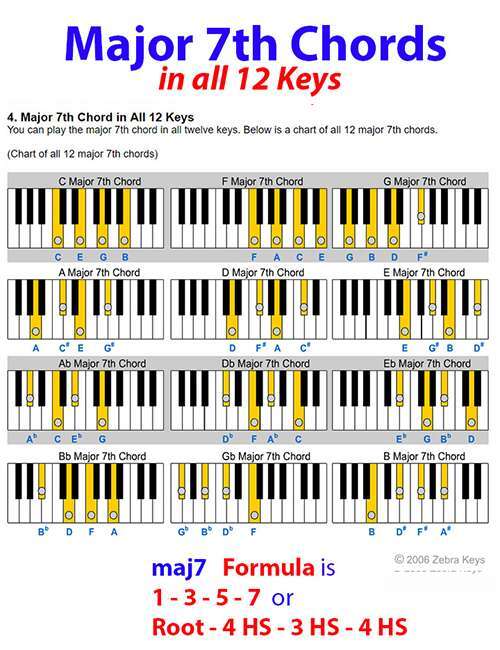
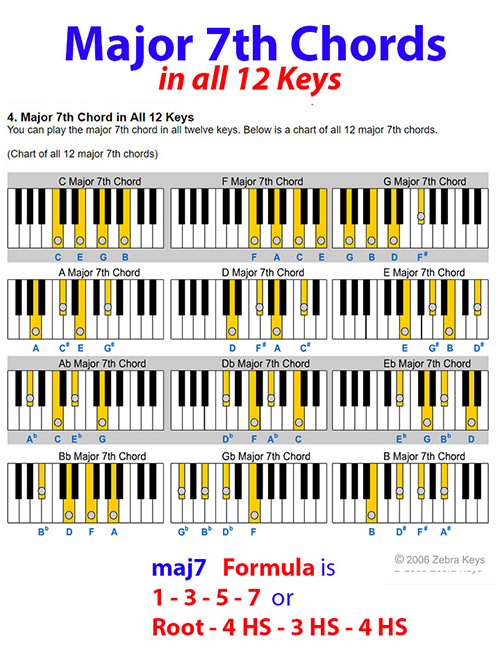
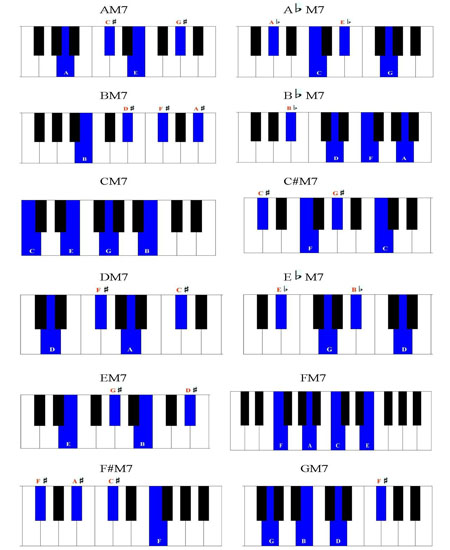
• Dmaj7 contains D, F-sharp, A, and C-sharp
• Emaj7 contains E, G-sharp, B, and D-sharp
• Fmaj7 contains F, A, C, and E
• Gmaj7 contains G, B, D, and F-sharp
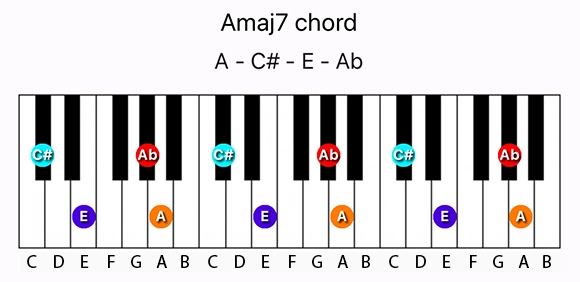
• Amaj7 contains A, C-sharp, E, and G-sharp
• Bmaj7 contains B, D-sharp, F-sharp, and A-sharp
A useful shortcut is to play the major scale and use notes 1, 3, 5, and 7. For C major, the scale is C, D, E, F, G, A, B. Taking the first, third, fifth, and seventh notes gives C, E, G, and B.
This scale method helps you understand what is a major 7 chord piano players use in every key. It also connects chord building with music theory instead of making you memorize isolated shapes.
Major 7 Chord Piano Shapes and Fingerings
On the right hand, a basic Cmaj7 shape can use these fingers:
• Thumb on C
• Index finger on E
• Middle finger on G
• Little finger on B
This fingering works well for slow practice. However, it may not be the best choice in every musical setting. Chord voicings often require different fingers, especially when the notes are spread across a wider range.
For the left hand, you can play the same four notes with:
• Little finger on C
• Middle finger on E
• Index finger on G
• Thumb on B
Many players prefer a simpler left hand. You can play the root with the left hand and the other chord tones with the right hand. For example:
• Left hand: C
• Right hand: E, G, B
This sound is clear and easy to control.
You can also use an open voicing. Try this arrangement:
• Left hand: C and G
• Right hand: E and B
This places the chord tones farther apart. The sound becomes wider and less crowded, which works well for ballads, worship music, jazz, and cinematic piano.
When learning what is a major 7 chord piano players often use, remember that the same chord can have many voicings. The notes stay the same, but their order and spacing change.
Major 7 Chord Inversions
An inversion changes which chord note sits at the bottom. The chord remains the same, but its color and movement can change.
Cmaj7 has four basic positions:
• Root position: C, E, G, B
• First inversion: E, G, B, C
• Second inversion: G, B, C, E
• Third inversion: B, C, E, G
Root position places C at the bottom. Third inversion places B at the bottom. Each position is useful when moving from one chord to another.
For example, imagine this progression:
• Cmaj7
• Am7
• Dm7
• G7
Instead of jumping around the keyboard, choose nearby inversions. Small movements make the progression smoother and easier to play.
A common mistake is to think that an inversion changes the chord name. It does not. If the chord still contains C, E, G, and B, it is still Cmaj7. The bass note may change, but the chord quality remains major seventh.
In my own practice, I have found that inversions make a bigger difference than speed. A slow progression with smooth voice leading often sounds more professional than fast chords played with large jumps.
How a Major 7 Chord Sounds
A major 7 chord sounds bright but soft. It has the stable center of a major chord and the gentle tension of the major seventh.
You may hear this chord in:
• Jazz standards
• R&B and soul
• Neo soul
• Pop ballads
• Gospel music
• Bossa nova
• Movie and television scores
The major seventh note creates a close interval with the root. In Cmaj7, B is only one half step below the higher C. This close distance adds color without creating the strong pull found in a dominant seventh chord.
You can think of a major triad as a clear blue sky. The major seventh adds a thin layer of warm evening light. The chord is still major, but it feels more refined and emotional.
Compare these chords:
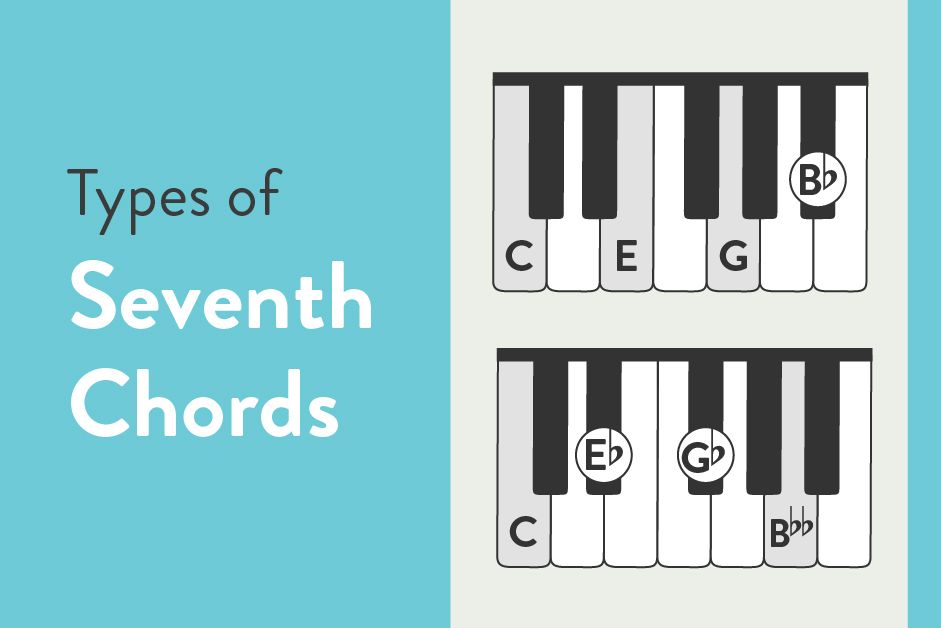
• C major: C, E, G
• Cmaj7: C, E, G, B
• C7: C, E, G, B-flat
C major sounds simple and stable. Cmaj7 sounds smooth and sophisticated. C7 sounds more tense and often wants to resolve to F.
This comparison is central to understanding what is a major 7 chord piano students often confuse with a dominant seventh chord.
Major 7 Versus Other Seventh Chords
Several seventh chord types look similar on paper. Their seventh notes create very different sounds.
Major seventh chord
Formula: 1, 3, 5, 7
Example: C, E, G, B
This chord sounds warm, polished, and stable.
Dominant seventh chord
Formula: 1, 3, 5, flat 7
Example: C, E, G, B-flat
This chord sounds bluesy and tense. It often resolves down a perfect fifth, such as G7 moving to C.
Minor seventh chord
Formula: 1, flat 3, 5, flat 7
Example: C, E-flat, G, B-flat
This chord sounds mellow, relaxed, and sometimes melancholy.
Minor major seventh chord
Formula: 1, flat 3, 5, 7
Example: C, E-flat, G, B
This chord has a minor sound with a strong, unusual major seventh color. It often appears in jazz and film music.
The most important difference is the seventh. A major seventh uses the natural seventh of the major scale. A dominant seventh lowers that note by one half step.
Major 7 Chord Piano Progressions
Major seventh chords sound especially effective in chord progressions. Here are a few useful examples.
I major 7, IV major 7
In the key of C:
• Cmaj7
• Fmaj7
This progression sounds bright and peaceful. It is useful for a simple piano introduction or a relaxed background pattern.
I major 7, VI minor 7, II minor 7, V7
In C major:
• Cmaj7
• Am7
• Dm7
• G7
This is one of the most useful progressions in jazz and popular music. It creates movement while keeping a smooth, rich sound.
IV major 7, V major 7, iii minor 7, vi minor 7
In C:
• Fmaj7
• Gmaj7
• Em7
• Am7
This progression has a modern pop and gospel flavor. Try playing each chord for four beats.
I major 7, flat VII major 7
In C:
• Cmaj7
• B-flatmaj7
This progression creates a colorful, unexpected change. You can hear related sounds in soul, jazz, and film music.
When practicing what is a major 7 chord piano progressions offer a practical way to hear the chord in context. A single chord teaches the shape, but a progression teaches its musical purpose.
How to Practice Major 7 Chords
Start with one key. C major is a good choice because it uses only white keys. Play Cmaj7 slowly and listen to each note.
Then follow this practice plan:
- Play the chord in root position.
- Name each note aloud.
- Play the chord as broken notes.
- Try all four inversions.
- Move between Cmaj7 and Fmaj7.
- Add a simple bass note with the left hand.
- Practice the same shape in another key.
Use a metronome at a slow speed. Play the chord once on each beat, then hold it for a full measure. Listen for uneven volume and unwanted noise.
A helpful exercise is to play the root in the left hand while moving through right hand inversions. For example, keep C in the bass and play:
• E, G, B, C
• G, B, C, E
• B, C, E, G
This trains your fingers to move with less effort.
One lesson I have learned from chord practice is that pressing harder does not make the sound richer. Relaxed fingers, even timing, and careful listening create a better tone. Let the piano produce the sound rather than forcing every note.
Common Mistakes to Avoid
Many beginners understand the basic notes but still struggle to make the chord sound good. These mistakes are common and easy to fix.
• Playing a dominant seventh by accident: Use B in Cmaj7, not B-flat.
• Adding too many low notes: Low, crowded voicings can sound muddy. Keep wide spaces between bass notes and higher chord tones.
• Ignoring inversions: Root position is useful, but inversions make chord changes smoother.
• Holding the sustain pedal too long: The pedal can blur several chords together. Lift it as the harmony changes.
• Playing every note with the same force: Try making the third and seventh clear while keeping the fifth softer.
• Learning shapes without note names: Memorized shapes can break down in new keys. Learn the chord formula as well.
• Moving the whole hand too far: Look for the closest available inversion instead.
The third and seventh are often the most important color tones. In Cmaj7, E tells us the chord is major, while B identifies the major seventh quality. The fifth, G, supports the sound but can sometimes be left out in advanced voicings.
Where Major 7 Chords Are Used
A major 7 chord can serve different roles depending on the key and style.
In a major key, it often appears on the first degree. In C major, Cmaj7 is the Imaj7 chord. It feels like home, but it sounds more colorful than a plain C major chord.
It can also appear on the fourth degree. In C major, Fmaj7 is the IVmaj7 chord. This chord often creates a warm lift without adding sharp tension.
Songwriters use major seventh chords to create:
• A calm opening
• A smooth verse
• A reflective bridge
• A sophisticated ending
• A gentle transition between sections
Jazz pianists may use extended versions such as Cmaj9 or Cmaj13. These chords contain the major seventh but add more notes. Cmaj9 contains C, E, G, B, and D.
A major 7 chord does not fit every musical moment. If a song needs strong tension or a clear resolution, a dominant seventh may work better. Chord choice should follow the melody, bass line, and mood.
Major 7 Chord Symbols
You may see several symbols for the same chord:
• Cmaj7
• CM7
• CΔ7
• C major seventh
These symbols usually mean C, E, G, and B. The symbol “C7” does not mean C major seventh. It normally means C dominant seventh: C, E, G, and B-flat.
This small symbol difference matters. Confusing Cmaj7 with C7 changes the chord’s sound and function.
Lead sheets, jazz charts, worship charts, and pop arrangements may use different notation styles. Always check the seventh note if the symbol is unclear.
A slash chord adds a bass note. For example, Cmaj7/E means a C major seventh chord with E in the bass. The chord tones remain C, E, G, and B, but E is the lowest note.
Frequently Asked Questions About What Is a Major 7 Chord Piano
What notes are in a major 7 chord on piano?
A major 7 chord contains the root, major third, perfect fifth, and major seventh. Cmaj7, for example, contains C, E, G, and B.
What is the difference between Cmaj7 and C7?
Cmaj7 uses B, the major seventh. C7 uses B-flat, the lowered seventh, so it is a dominant seventh chord.
Is a major 7 chord the same as a major chord?
No. A major chord has three notes: the root, third, and fifth. A major 7 chord adds the major seventh, creating a richer and more colorful sound.
How do you find the major seventh note?
Play the major scale of the chord root and use its seventh note. For C major, the seventh scale note is B, so C, E, G, and B create Cmaj7.
Can beginners play major 7 chords?
Yes. Beginners can start with simple root position shapes, such as C, E, G, and B. Practice slowly, learn the note names, and add inversions as your hand becomes comfortable.
What music uses major 7 chords?
Major 7 chords appear in jazz, pop, soul, R&B, gospel, bossa nova, and film music. They are useful when you want a smooth, warm, and polished sound.
Conclusion
A major 7 chord on piano is a major triad with a major seventh added. Its formula is 1, 3, 5, and 7, and Cmaj7 uses the notes C, E, G, and B. It sounds warm, bright, and refined, making it useful in many styles.
The best way to learn what is a major 7 chord piano players use is to combine theory with practice. Build the chord, play its inversions, compare it with a dominant seventh, and use it in simple progressions.
Start with Cmaj7 today, then move through every key. Explore different voicings, listen closely, and share your favorite major seventh progression in the comments.

Senior Music Reviewer
Alex Carter is a seasoned music reviewer with over a decade of experience in the world of sound and instruments. Passionate about helping musicians and enthusiasts make informed choices, he brings sharp insights and in-depth knowledge to every review. From classical instruments to modern gear, Alex combines technical expertise with a love for music to deliver content that resonates with readers.
As a Senior Music Reviewer and expert author on Tuneluma.com, Alex is dedicated to sharing honest evaluations, practical advice, and thoughtful commentary to guide readers in their musical journey.