How Many Keys Are On A Full Size Piano Keyboard: Key Facts
A full-size piano keyboard has 88 keys: 52 white keys and 36 black keys.
If you are learning piano, buying a digital keyboard, or comparing instruments, knowing how many keys are on a full size piano keyboard is a useful first step. The 88-key design covers the full standard range used in classical music, film scores, jazz, pop, and most modern piano lessons. This guide explains the layout, note range, key groups, alternatives, and tips for choosing the right keyboard.
How Many Keys Are on a Full Size Piano Keyboard?
A full size piano keyboard has 88 keys. This total includes:
• 52 white keys for natural notes
• 36 black keys for sharp and flat notes
• 7¼ octaves of musical range
• Notes from A0 to C8
The lowest key is A0, while the highest key is C8. This range is the standard used by most modern acoustic pianos and 88-key digital pianos.
When people ask how many keys are on a full size piano keyboard, they usually mean the standard 88-key layout. Some older pianos and smaller electronic keyboards use fewer keys, but 88 keys remains the accepted full-size standard.

Why Does a Full Size Piano Have 88 Keys?
The 88-key design became standard because it gives players a broad musical range without making the instrument too large for most homes and concert halls. Early pianos had fewer keys, but composers began writing music that needed deeper bass notes and brighter high notes.
By the late 19th century, piano makers had expanded the keyboard to 88 keys. The range from A0 to C8 became widely accepted because it could support the needs of major composers and professional performers.
A full size piano keyboard is like a wide musical canvas. The low keys provide weight and depth, while the high keys add brightness and lift. Together, they let one player create bass lines, chords, melodies, and rich harmonies at the same time.

The Layout of an 88-Key Piano Keyboard
The layout of a full size piano keyboard follows a repeating pattern of white and black keys. Once you learn this pattern, it becomes much easier to find notes and understand scales.
White Keys
The 52 white keys represent the natural notes:
• A
• B
• C
• D
• E
• F
• G
These seven notes repeat across the keyboard. Each repeated group begins again at the next octave.
Black Keys
The 36 black keys represent notes between many of the white keys. They can be named as sharps or flats.
For example:
• The black key between C and D is C-sharp or D-flat
• The black key between D and E is D-sharp or E-flat
• The black key between F and G is F-sharp or G-flat
• The black key between G and A is G-sharp or A-flat
• The black key between A and B is A-sharp or B-flat
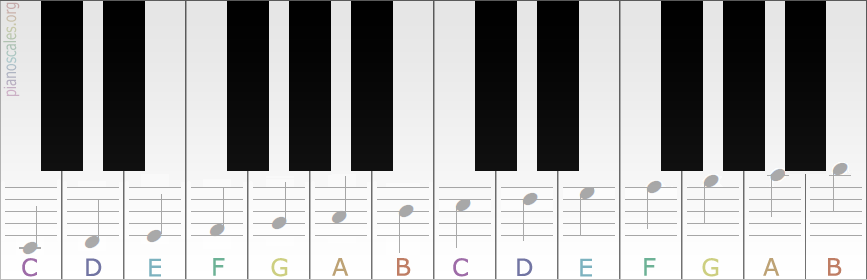
Notice that there is no black key between E and F or between B and C. This pattern is one of the best ways to navigate a full size piano keyboard.

How the Keys Are Grouped
Black keys appear in groups of two and three. This pattern repeats across the entire 88-key keyboard.
To find middle C, look for a group of two black keys. The white key directly to the left of that group is C. Middle C is the C near the center of the keyboard, though its exact position depends on the instrument’s design.
This simple pattern helps beginners find notes without counting every key. It also supports basic music theory. For example, the distance from one C to the next C is called an octave, and each octave contains seven white keys and five black keys.
On a full size piano keyboard, the first and last sections are not perfectly complete octaves. The keyboard starts at A0 and ends at C8, so the total range is slightly more than seven full octaves.
What Is the Note Range of a Full Size Piano?
A standard 88-key piano ranges from A0 to C8. This gives the instrument 88 distinct pitches in equal-tempered tuning.
The range includes:
• The lowest note, A0
• The central reference area around middle C
• The highest note, C8
• Seven full octave distances plus a few extra notes
Middle C is written as C4 in scientific pitch notation. It sits near the center of the keyboard and is a key reference point for reading music.
This wide range is important because piano music often uses both extreme bass and high treble notes. A left hand may play deep octaves, while the right hand plays a melody several octaves above.

Is 88 Keys Enough for Every Type of Music?
For nearly all standard piano music, 88 keys are enough. Classical works, jazz pieces, popular songs, worship music, and most film scores are written with the standard piano range in mind.
An 88-key keyboard is especially useful for:
• Classical piano study
• Advanced lessons and examinations
• Music school practice
• Professional performances
• Recording and songwriting
• Weighted-key digital piano practice
Some modern composers use extended-range pianos with extra bass keys. These instruments are less common and are not needed for most players.
If you are learning a piece written for a standard piano, an 88-key instrument will usually give you the complete range. You are less likely to run out of notes during advanced practice.

How Does an 88-Key Piano Compare With Smaller Keyboards?
Not every keyboard has 88 keys. Many portable keyboards and beginner instruments have 61, 76, or 49 keys.
Here is a basic comparison:
• 49 keys: Useful for simple melodies, music production, and basic chord work
• 61 keys: Suitable for beginners, pop music, and portable playing
• 76 keys: Offers a wider range while remaining smaller than a full-size piano
• 88 keys: Provides the complete standard piano range
A 61-key keyboard can be a smart choice for a child, casual player, or producer who needs portability. However, it may not cover the full range of advanced piano pieces.
The answer to how many keys are on a full size piano keyboard remains 88, even when smaller keyboards are popular. Key count and instrument quality are separate issues. A keyboard with fewer keys may still have excellent sounds, controls, and build quality.

Do All 88-Key Keyboards Feel Like Real Pianos?
No. Having 88 keys does not automatically make a keyboard feel like an acoustic piano. The action, weight, key size, sensor system, and pedal response also matter.
Many digital pianos use weighted or hammer-action keys. These systems imitate the resistance of acoustic piano hammers. Lower keys often feel heavier, while higher keys may feel lighter.
When testing an 88-key keyboard, check:
• Whether the keys are full size
• Whether the action is weighted
• Whether the keys respond to different playing pressures
• Whether the keyboard includes a sustain pedal
• Whether the keys make excessive noise
• Whether the action feels comfortable for long practice sessions
A light, unweighted keyboard can be easier to carry. A weighted keyboard may be better for developing traditional piano technique.

Full Size Piano Keyboard Versus Acoustic Piano
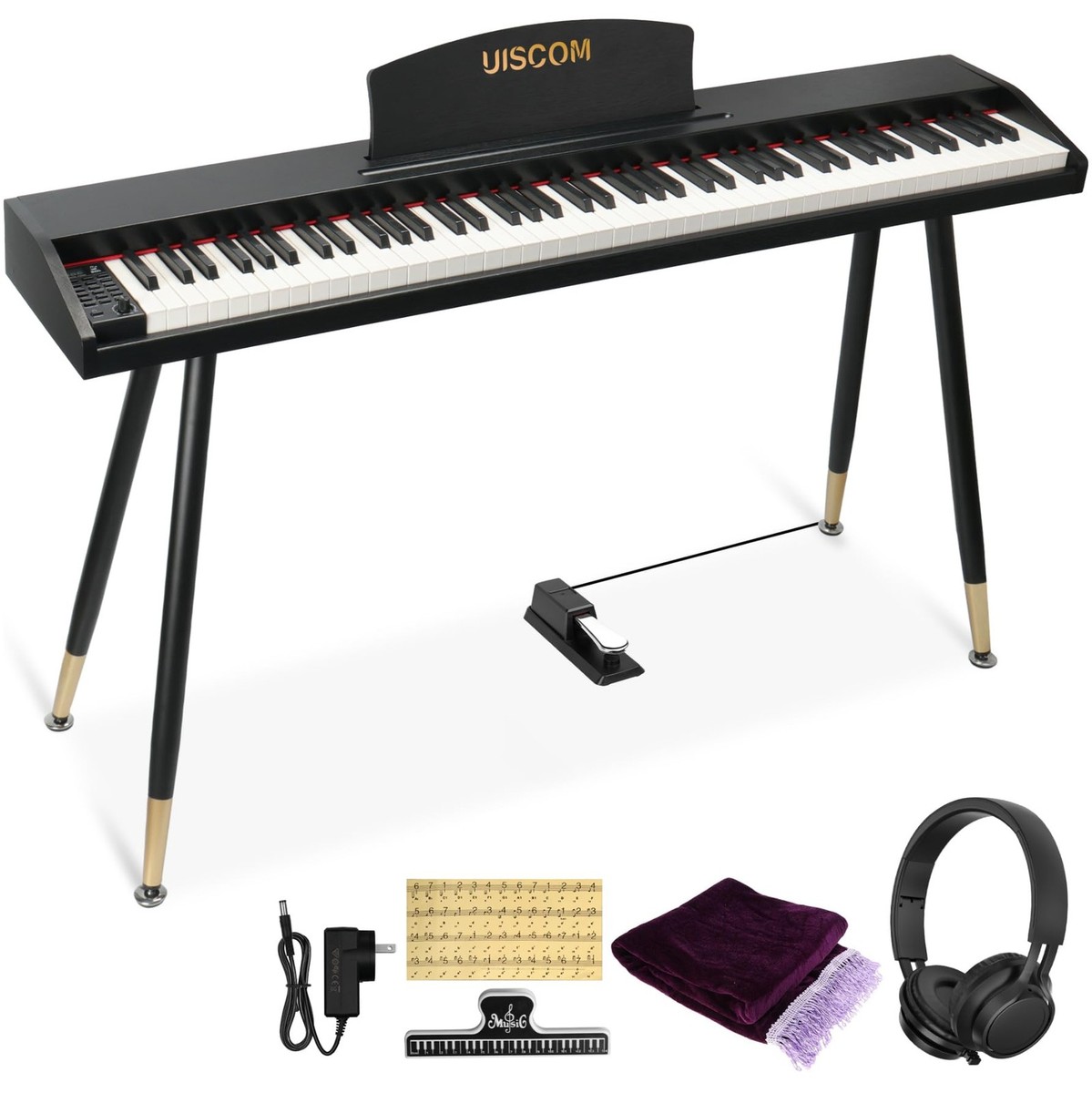
An acoustic piano has strings, hammers, dampers, and a soundboard. When you press a key, a felt-covered hammer strikes a string. The vibration travels through the soundboard and creates the piano’s sound.
A digital piano uses electronic sensors and recorded or modeled sounds. It can reproduce the full 88-key range while taking up less space and requiring less maintenance.
Both types have strengths:
• Acoustic pianos offer natural resonance and physical feedback
• Digital pianos offer volume control and headphone use
• Acoustic pianos do not require electricity
• Digital pianos are easier to move
• Acoustic pianos need regular tuning
• Digital pianos can include recording and practice tools
The number of keys is the same on many instruments, but the playing experience can differ greatly.
How to Count the Keys on a Piano
If you want to verify how many keys are on a full size piano keyboard, you can count them in a simple way.
- Count the white keys. A standard full-size keyboard has 52.
- Count the black keys. There are 36.
- Add the two numbers together.
- Confirm that the lowest note is A0 and the highest note is C8.
The calculation is:
52 white keys + 36 black keys = 88 total keys
Counting by color is faster than counting every key one at a time. You can also count the repeating groups of two and three black keys to check the layout.