What Are The Parts Of A Drum: Drum Anatomy Guide
A drum has a shell, heads, hoops, lugs, tension rods, and hardware that shape its sound and playability.
Learning what are the parts of a drum helps you tune better, choose the right replacement parts, and understand why two drums can sound so different. Whether you play a snare, bass drum, tom, hand drum, or full drum set, each part has a clear job. This guide breaks down the parts of a drum in simple terms, with practical tips used by drummers and drum technicians.
The Main Parts of a Drum
A drum is more than a hollow shell with a skin on top. It is a tuned instrument made from several parts that work together. The shell creates the body of the sound, while the heads, hoops, and tension hardware control pitch, tone, and response.
The exact parts of a drum can change based on its type. A snare drum has wires and a strainer, while a bass drum has spurs and a pedal mount. A tom has mounting hardware, but it usually does not have snare wires.
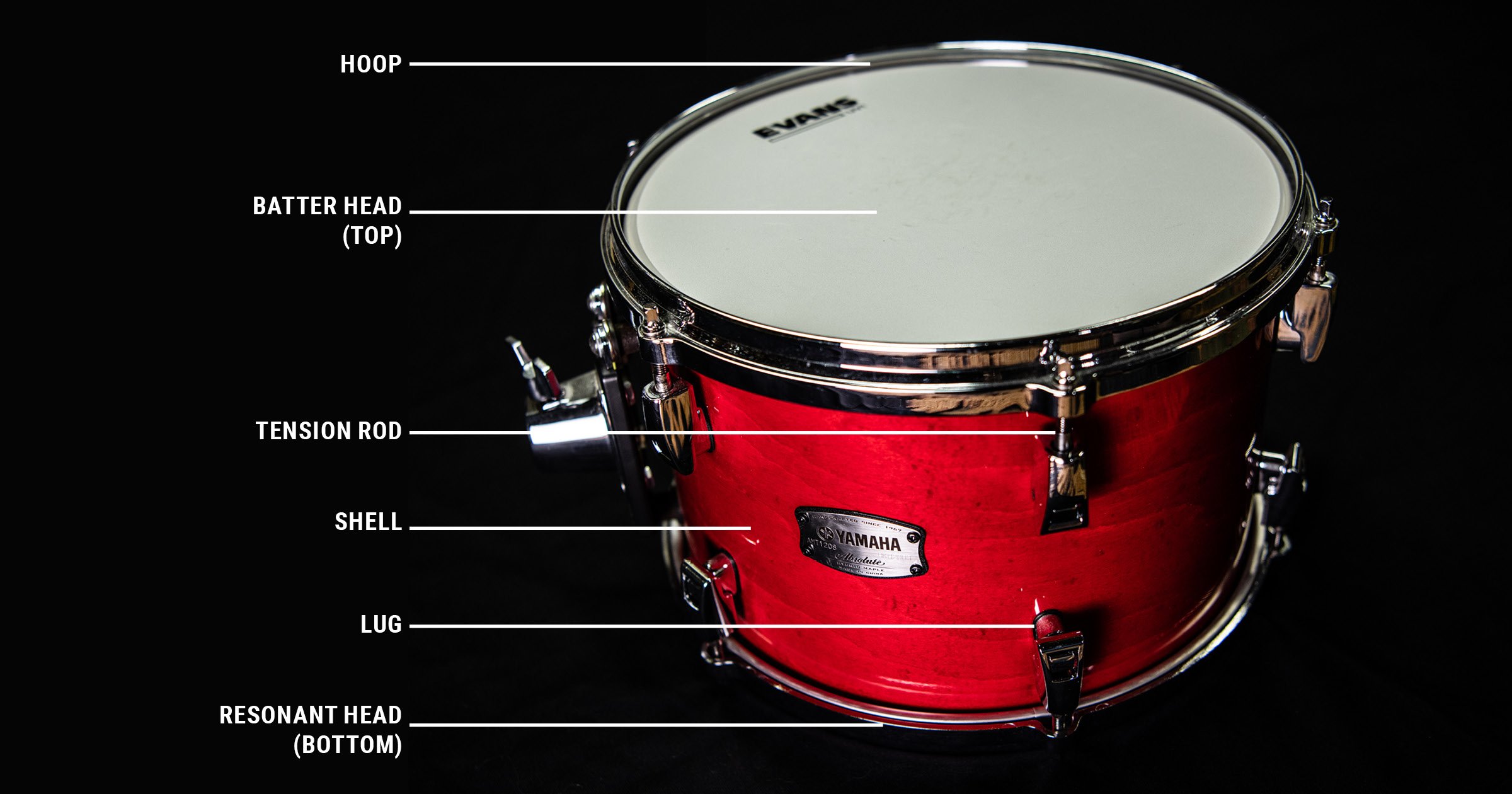
The main parts of a drum include:
• Shell: The hollow body that supports the drum’s sound.
• Drumhead: The stretched surface that the player strikes.
• Bearing edge: The rim of the shell where the head sits.
• Hoop or rim: The ring that holds the head in place.
• Tension rods: Screws that tighten or loosen the head.
• Lugs: Small fittings that hold the tension rods.
• Air vent: A small opening that balances air pressure inside the shell.
• Strainer and snare wires: Special parts found on a snare drum.
• Mounts and legs: Hardware that supports or attaches the drum.
These parts act like a team. If one part is damaged or poorly adjusted, the drum may lose tone, tuning stability, or comfort.
The Drum Shell
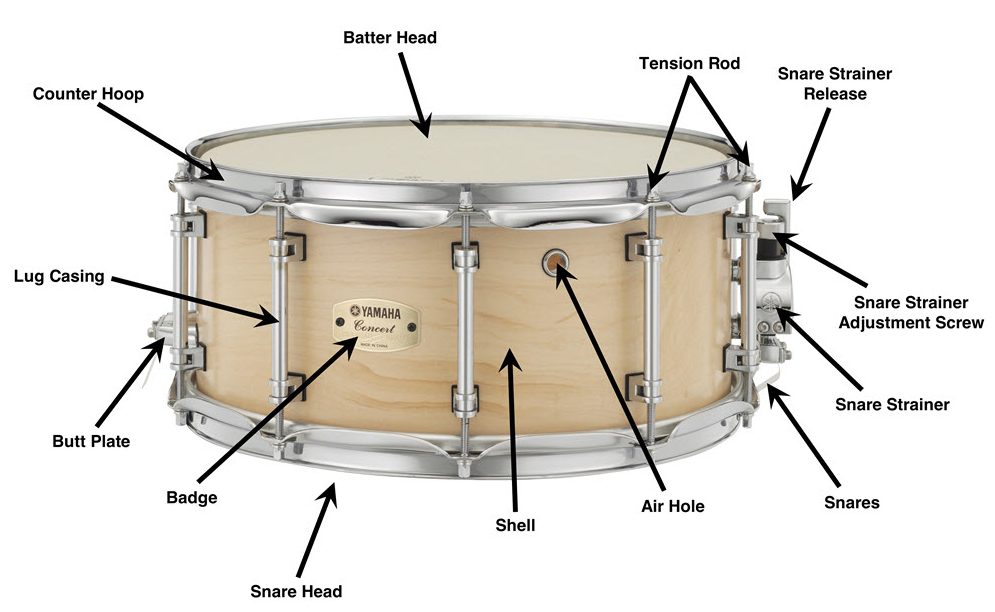
The shell is the main body of a drum. It is usually made from wood, metal, acrylic, fiberglass, or a composite material. Its size, shape, thickness, and construction all affect the drum’s voice.
Wood shells often produce warm tones with a rich low end. Maple, birch, mahogany, beech, and oak are common choices. Each wood has its own sound, but the shell design matters just as much as the species.
Metal shells often create a bright, sharp, and powerful sound. Steel, brass, aluminum, and bronze are popular in snare drums. Acrylic shells can sound lively and look striking because they are clear or colored.
Shell size and sound
The shell’s diameter affects pitch more than its depth. A larger diameter usually gives a lower basic pitch. Shell depth affects the feel, sustain, and amount of body in the sound.
For example:
• A 10-inch tom often produces a high, quick tone.
• A 16-inch floor tom produces a deeper and fuller note.
• A 14-inch snare drum can offer a balanced mix of attack and body.
• A 22-inch bass drum can create a deep sound with strong low-end power.
When learning what are the parts of a drum, remember that the shell is the voice box. It does not make the whole sound alone, but it gives the drum its main character.
How shells are made
many wood shells are made from thin plies bent and glued into a round shape. Others are made from a single solid piece, steam-bent into a shell. Some drums use stave construction, where small blocks of wood are joined together.
Each method can affect resonance and attack. However, no single construction method is always best. The head, bearing edge, tuning, room, and playing style also matter.
The Drumhead
The drumhead is the surface that you strike. It vibrates when hit and transfers energy into the air inside the shell. The head is one of the most important parts of a drum because even a high-quality shell can sound poor with a worn or badly tuned head.
Most modern drumheads use plastic film. Some traditional drums use animal skin, often called calfskin or goatskin. Plastic heads are more consistent and handle changes in temperature and humidity better.
Drumheads come in several designs:
• Single-ply heads use one layer of film. They often sound open, bright, and sensitive.
• Two-ply heads use two layers. They usually provide more durability and a thicker tone.
• Coated heads have a thin coating that adds warmth and improves brush response.
• Clear heads sound bright and focused.
• Pre-muffled heads include a built-in ring or layer that reduces unwanted overtones.
• Mesh heads create a quiet playing surface for electronic or low-volume practice.
Batter and resonant heads
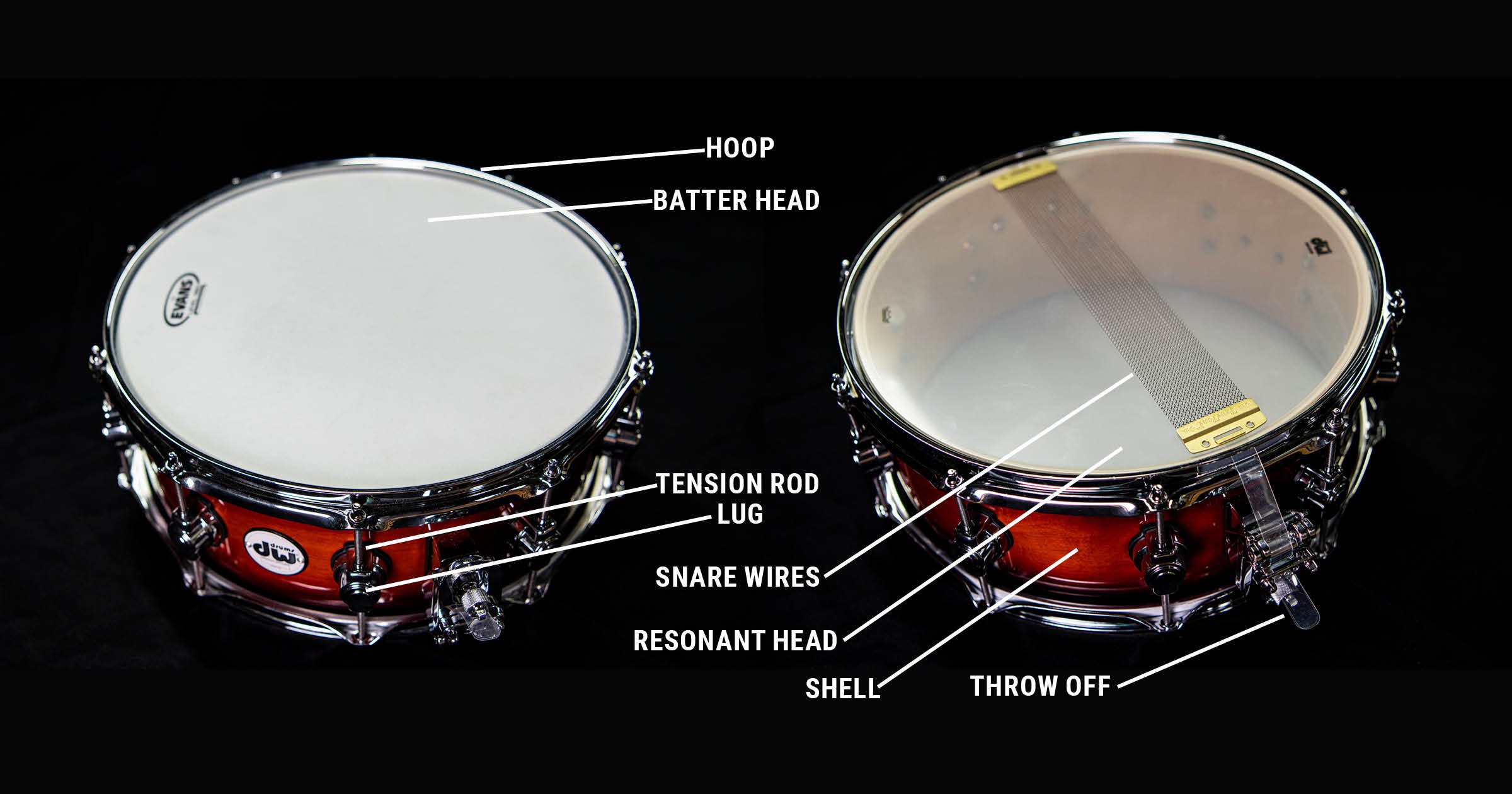
The batter head is the head you hit. The resonant head is the lower or opposite head. Both heads affect the final sound.
A batter head controls attack, feel, and durability. A resonant head affects sustain, pitch, and response. If the two heads are tuned far apart, the drum may produce a pitch bend or a longer note. If they are tuned close together, the sound may feel more focused.
A common mistake is to treat the resonant head as unimportant. In practice, replacing or tuning it can change a drum more than many players expect.
When to replace a drumhead
Replace a head when it shows deep dents, cracks, wrinkles that will not tune out, or a dull sound. A head can also wear out before visible damage appears.
In my experience, many drummers replace heads only after the drum becomes difficult to tune. That often leads to frustration. A fresh head can restore tone, tuning range, and playing response in a few minutes.

The Bearing Edge
The bearing edge is the narrow edge at the top and bottom of the drum shell. The drumhead rests on this edge. It creates the contact point between the head and the shell.
A smooth, even bearing edge helps the head vibrate evenly. If the edge is damaged, uneven, or dirty, the drum may have dead spots, air leaks, or unstable tuning.
Common bearing edge shapes include:
• A rounded edge, which can provide a softer and more open response.
• A sharper edge, which may create more attack and sensitivity.
• A double-angle edge, which balances head contact and shell resonance.
There is no universal perfect bearing edge. The design depends on the drum’s purpose and the maker’s goals.
Caring for the bearing edge
Never drag a drumhead across the shell edge. Clean dust and debris with a soft, dry cloth. If the edge has a chip or deep dent, have it checked by a qualified drum repair technician.
A small flaw may not matter on a rugged marching drum. On a sensitive snare or concert drum, the same flaw can affect tuning and tone.

Hoops, Rims, and Counterhoops
The hoop, also called the rim or counterhoop, holds the drumhead around the shell. Tension rods pass through the hoop and connect to the lugs.
Common hoop types include:
• Triple-flange hoops are light, flexible, and common on many drum kits.
• Die-cast hoops are heavier and more rigid. They can improve tuning stability and create a focused sound.
• Wood hoops offer a warm tone and a classic look.
• Single-flange hoops are often used on vintage-style or orchestral drums.
The hoop affects how the drum feels under the stick. A flexible hoop may allow more openness and sustain. A rigid hoop can make the drum sound tighter and more controlled.
The rim also creates a playing surface for rimshots and cross-sticks. A rimshot strikes the head and rim at nearly the same time, producing a loud crack. A cross-stick rests the stick across the head while the other end clicks against the rim.
Rim care
Check the hoop for bends, cracks, or rust. A bent hoop can pull the head unevenly and make tuning difficult. When changing a head, place the hoop evenly around the shell before tightening the rods.

Lugs and Tension Rods
Lugs and tension rods make drum tuning possible. They are small parts, but they have a major effect on the instrument.
Lugs attach to the outside of the shell. Each lug contains a threaded insert or receiver. The tension rod passes through the hoop and screws into the lug.
Turning the rod clockwise usually raises tension and pitch. Turning it counterclockwise lowers tension. Always make small, even adjustments rather than forcing one rod too far.
Types of lugs
• Tube lugs are narrow and often used on vintage or lightweight drums.
• Standard lugs are compact and common on modern drum kits.
• Bridge lugs connect two tension points with one larger fitting.
• Isolated lugs use spacers to reduce direct contact between the hardware and shell.
The design may affect appearance, weight, and resonance. It does not automatically determine whether a drum sounds good.
Safe tuning practice
Use a cross-pattern when tightening tension rods. For a six-lug drum, move to the lug opposite the one you just adjusted. For an eight-lug or ten-lug drum, use the same principle.
A simple tuning process is:
-
Seat the head on the bearing edge.
-
Place the hoop over the head.
-
Tighten each rod by hand.
-
Add small turns in a cross pattern.
-
Tap near each lug and compare the pitches.
-
Adjust until the tension sounds even.
Do not rely only on a drum key’s number of turns. Different heads and shells need different tension. Your ears are more useful than a fixed formula.
The Air Vent
The air vent is a small hole in the drum shell. It allows air to move in and out as the head vibrates. Many vents include a metal or plastic grommet to protect the shell.
The vent can influence the drum’s response, but it is not a simple volume control. Its size and location are chosen as part of the shell design.
A loose or damaged grommet may rattle. If you hear a strange buzz, inspect the vent along with the lugs, snare wires, and other hardware.
Some hand drums have larger openings, while bass drums may include a port in the front head. A bass drum port is different from a small shell vent. It can change attack, microphone placement, and low-frequency response.

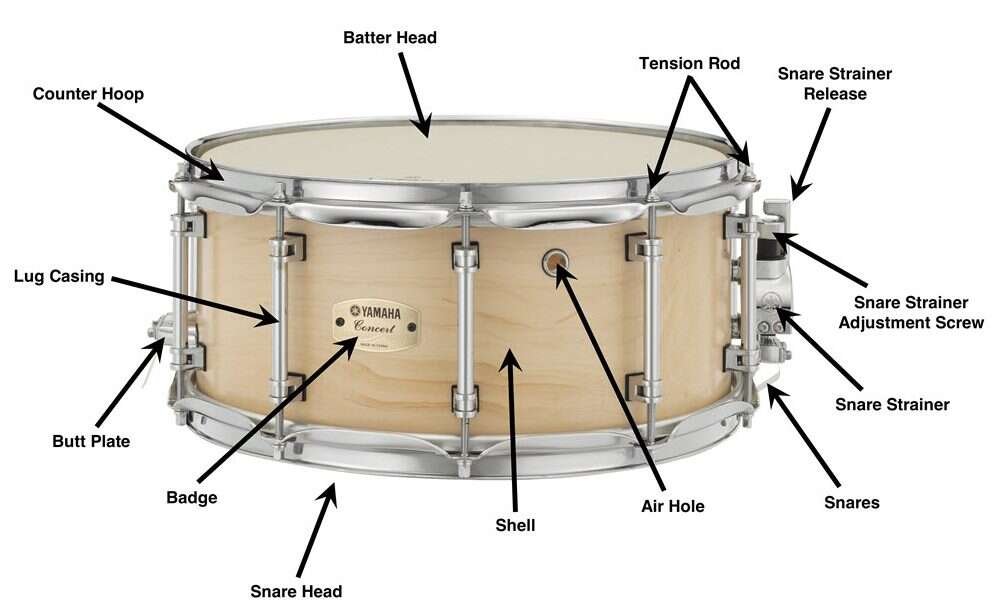
The Parts of a Snare Drum
A snare drum has the same basic parts of a drum as many other drums, but it also includes a snare system. This system gives the snare its sharp buzz and quick response.
The main snare drum parts are:
• Snare wires: Metal wires or cable strands that rest against the bottom head.
• Snare strainer: The mechanism that engages and releases the wires.
• Butt plate: The fixed fitting opposite the strainer.
• Snare beds: Slight dips in the bottom bearing edge that allow the wires to sit correctly.
• Snare-side head: The thin resonant head under the wires.
Snare wires
Snare wires vibrate against the resonant head when the top head is struck. They create the familiar crisp sound associated with the snare drum.
Wires may be made from steel, cable, or synthetic materials. They come in different lengths and strand counts. More wires do not always mean a better sound. A smaller set may offer more openness, while a wider set may give more buzz and sensitivity.
Strainer and butt plate
The strainer moves the snare wires into contact with the bottom head. It also pulls them away when you want a tom-like sound. The butt plate anchors the other end of the wires.
If the strainer does not hold tension, the wires may loosen during playing. If the wires sit unevenly, the drum may buzz or respond poorly.
A useful lesson from regular drum maintenance is to avoid excessive snare tension. Too much tension can choke the drum and make the wires less sensitive. Start with moderate tension, then raise it only as needed.
The Parts of a Bass Drum
A bass drum, also called a kick drum, has several special parts. Its large shell creates a deep note, while the pedal moves the beater into the batter head.
Important bass drum parts include:
• Bass drum hoops: Larger hoops that hold the heads in place.
• Tension claws: Fittings that connect the tension rods to the hoops.
• Spurs: Retractable legs that stop the drum from moving forward.
• Tom mounts: Brackets that may hold rack toms above the bass drum.
• Pedal mount area: The space where the bass drum pedal attaches.
• Bass drum heads: Usually thicker and stronger than many tom heads.
• Muffling system: Foam, rings, pillows, or other tools that control sustain.
Bass drum spurs should be set so the drum stays stable without lifting too far from the floor. The pedal should sit straight and grip the hoop without crushing it.
A common beginner mistake is using too much internal muffling. A pillow or heavy pad may make the drum feel controlled, but it can also remove the low-end tone. Add small amounts of muffling until the drum fits the room and music.
The Parts of a Tom Drum
Tom drums usually have a shell, batter head, resonant head, hoops, lugs, tension rods, and mounting hardware. Unlike a snare drum, a standard tom has no snare wires.
Rack toms may attach to a bass drum, cymbal stand, or rack system. Floor toms usually stand on three legs.
The main tom components include:
• Tom shell: The body that produces the drum’s tone.
• Tom mount: Hardware that attaches the drum to a stand or rack.
• Floor tom legs: Supports that keep a floor tom at playing height.
• Floor tom brackets: Fittings that hold the legs.
• Batter and resonant heads: The upper and lower vibrating surfaces.
Tom mounting can affect resonance. Very tight or heavy mounts may limit shell movement. Modern suspension mounts aim to support the tom while allowing more vibration.
When setting up toms, keep the angles comfortable. Extreme angles make the head harder to strike evenly and may cause uneven wear.
Drum Set Hardware and Accessories
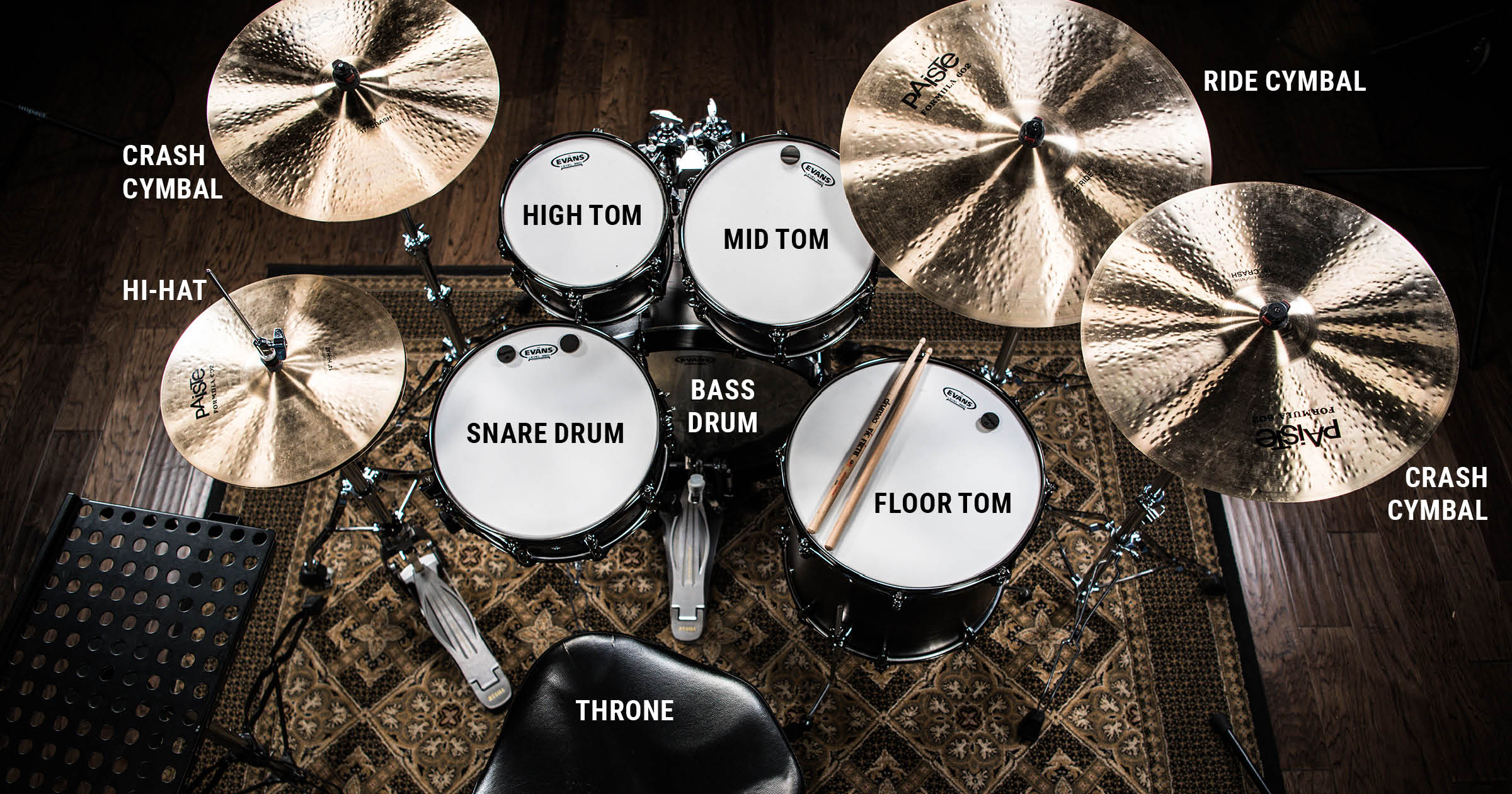
A full drum kit includes parts beyond the drums themselves. These parts support the player and allow the kit to function as one instrument.
Key drum set hardware includes:
• Bass drum pedal: Uses a beater to strike the bass drum head.
• Hi-hat stand: Holds and controls two cymbals with a foot pedal.
• Cymbal stands: Support crash, ride, splash, and other cymbals.
• Snare stand: Holds the snare at a comfortable height and angle.
• Drum throne: The seat that supports the drummer.
• Drum rack: A frame that holds drums and cymbals.
• Memory locks: Mark a hardware position for faster setup.
• Felt, washers, and sleeves: Protect cymbals and reduce unwanted movement.
These accessories are not always listed among the parts of a drum, but they are essential parts of a drum set. Good hardware improves balance, comfort, and setup speed.
A stable setup also protects your body. Keep the snare near a natural elbow height, place the pedals so your knees are relaxed, and avoid reaching too far for cymbals.
How Drum Parts Work Together
The parts of a drum do not work alone. The shell, heads, hoops, and tuning system form one acoustic system.
When you strike the batter head, it vibrates. That vibration moves air inside the shell and transfers energy to the resonant head. The shell supports and colors the vibration, while the hoops and tension rods keep the heads at the correct tension.
The final sound depends on several factors:
• Shell material and construction
• Drum diameter and depth
• Head type and thickness
• Tuning of both heads
• Hoop design
• Bearing edge shape
• Snare wire tension
• Room acoustics
• Stick choice and playing technique
This explains why changing one part can change the whole drum. A coated head may make a snare warmer. A die-cast hoop may make it more focused. A fresh resonant head may improve sustain and tuning.
There are also limits. Hardware upgrades cannot fix a cracked shell or a damaged bearing edge. Expensive parts may improve a drum, but they cannot replace good tuning and careful playing.
How to Maintain the Parts of a Drum
Regular maintenance keeps drums sounding good and prevents small problems from becoming costly repairs. You do not need a large tool kit.
Use these simple habits:
• Wipe dust from the shell and hardware with a soft cloth.
• Keep moisture away from unfinished wood.
• Check tension rods for rust or damaged threads.
• Inspect hoops for bends.
• Clean dirt from the bearing edge before installing a head.
• Check snare wires for broken strands.
• Lubricate rough tension rod threads with a small amount of suitable lubricant.
• Store drums in cases when moving them.
• Avoid extreme heat, cold, and sudden humidity changes.
Do not use harsh household cleaners on drum finishes. Some chemicals can damage lacquer, wraps, plating, or rubber parts. Test any cleaning product on a hidden area first.
For a loose lug, tighten the mounting screws carefully. Do not over-tighten them, because excessive force can damage the shell or strip the hardware.
Common Problems With Drum Parts
Many drum problems have simple causes. The key is to inspect one part at a time.
The drum will not stay in tune
Check the head, hoop, tension rods, and lug threads. A damaged head or bent hoop can create uneven tension. Also check whether the rods are clean and moving smoothly.
The drum sounds dead
The head may be worn, the tuning may be uneven, or the bearing edge may have a problem. Excessive muffling can also remove too much sustain.
The snare buzzes too much
Inspect the snare wires, snare beds, and resonant head. Nearby drums can also create sympathetic buzz when their pitches interact with the snare.
The bass drum moves forward
Adjust the spurs and make sure the pedal is firmly attached. A drum rug can also help keep the setup stable.
A strange rattle appears
Check the air vent, lug screws, washers, throw-off, cymbal hardware, and loose drum key parts. Rattles often come from a small loose fitting rather than the shell itself.
A practical repair lesson is to avoid changing several things at once. If you replace the head, adjust the snare wires, and alter the tuning together, you may not know which change solved the problem.
Choosing Replacement Drum Parts
When replacing parts of a drum, match the measurements and purpose. A part that looks similar may not fit correctly.
Before buying, measure:
• Shell diameter
• Shell depth
• Number of lugs
• Distance between mounting holes
• Tension rod length and thread type
• Hoop type
• Head size
• Snare wire length
Drumhead sizes are usually listed in inches. A 14-inch snare head must match a 14-inch shell diameter, but the head type must also suit the drum.
For snare wires, choose a set that matches the shell width and the distance between the end plates. Some drums use special wire lengths, so check the manufacturer’s specifications when possible.
Replacement hardware can also change the sound. A heavier hoop, thicker head, or different snare wire set may make the drum darker, brighter, louder, or more controlled.
A Simple Drum Tuning Method
Tuning is one of the most useful skills for understanding what are the parts of a drum. It shows how every component affects the final sound.
Follow these steps:
-
Remove the old head and clean the bearing edge.
-
Place the new head on the shell.
-
Install the hoop and tension rods.
-
Tighten each rod by hand until it feels snug.
-
Use a drum key to make small turns in a cross pattern.
-
Press gently in the center of the head to help it seat.
-
Tap near each tension rod and compare the pitch.
-
Adjust the lowest-sounding areas until the tension is even.
-
Tune the resonant head to fit the sound you want.
-
Test the drum at normal playing volume.
Do not tune only from the center of the head. Tap close to each lug because uneven edge tension is a common cause of poor tone.
The best tuning is not always the highest or lowest pitch. It is the setting that gives the drum a clear note, comfortable feel, and useful response in its musical setting.
Frequently Asked Questions About What Are the Parts of a Drum
What are the main parts of a drum?
The main parts of a drum are the shell, drumhead, bearing edge, hoop, lugs, tension rods, and air vent. Some drums also have special parts, such as snare wires, strainers, spurs, or mounting brackets.
What is the shell of a drum?
The shell is the hollow body of the drum. It supports the heads and helps shape the drum’s pitch, resonance, volume, and tone.
What holds a drumhead in place?
A hoop holds the drumhead around the shell. Tension rods pass through the hoop and screw into the lugs, allowing the player to tighten or loosen the head.
What are the wires under a snare drum called?
The wires under a snare drum are called snare wires. They vibrate against the bottom head and create the snare drum’s sharp, buzzing sound.
What is the difference between a batter head and a resonant head?
The batter head is the surface you strike. The resonant head is the opposite head, and it affects sustain, pitch, sensitivity, and the overall character of the drum.
What do drum lugs do?
Drum lugs receive the tension rods and help hold the head at the desired tension. They are attached to the outside of the shell.
What parts are unique to a bass drum?
Bass drums commonly have spurs, tension claws, large hoops, and a pedal attachment area. These parts help support the drum and connect it to the kick pedal.
Conclusion
The parts of a drum work together to create its sound, feel, and stability. The shell provides the body, the heads vibrate, the bearing edges support even contact, and the hoops, lugs, and tension rods make tuning possible. Snare wires, bass drum spurs, tom mounts, and pedals add special functions to different drums.
Once you understand what are the parts of a drum, maintenance and tuning become much easier. Start by inspecting your own drum, learn what each part does, and make small changes one at a time. Explore more drum care guides, practice your tuning skills, and share your questions or setup tips in the comments.

Senior Music Reviewer
Alex Carter is a seasoned music reviewer with over a decade of experience in the world of sound and instruments. Passionate about helping musicians and enthusiasts make informed choices, he brings sharp insights and in-depth knowledge to every review. From classical instruments to modern gear, Alex combines technical expertise with a love for music to deliver content that resonates with readers.
As a Senior Music Reviewer and expert author on Tuneluma.com, Alex is dedicated to sharing honest evaluations, practical advice, and thoughtful commentary to guide readers in their musical journey.