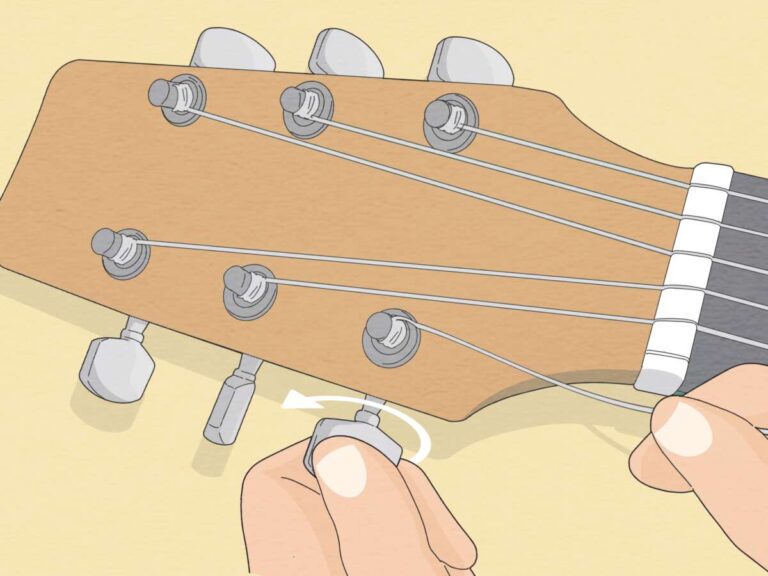
How Do You Hang A Guitar On The Wall: Easy Safe Guide
Use a stud-rated guitar hanger, secure it correctly, and protect the instrument from heat, moisture, and falls.
Knowing how do you hang a guitar on the wall is useful for saving floor space and displaying an instrument safely. The right hanger, solid wall support, and careful placement matter more than the job first appears. This guide explains how do you hang a guitar on the wall with simple tools, clear steps, and practical tips learned from installing wall mounts in homes and music rooms.
Why Hang a Guitar on the Wall?
A wall-mounted guitar takes up less space than a floor stand. It also keeps the instrument easy to reach, which may encourage you to play more often. For many musicians, a guitar on the wall becomes both a useful instrument and part of the room’s design.
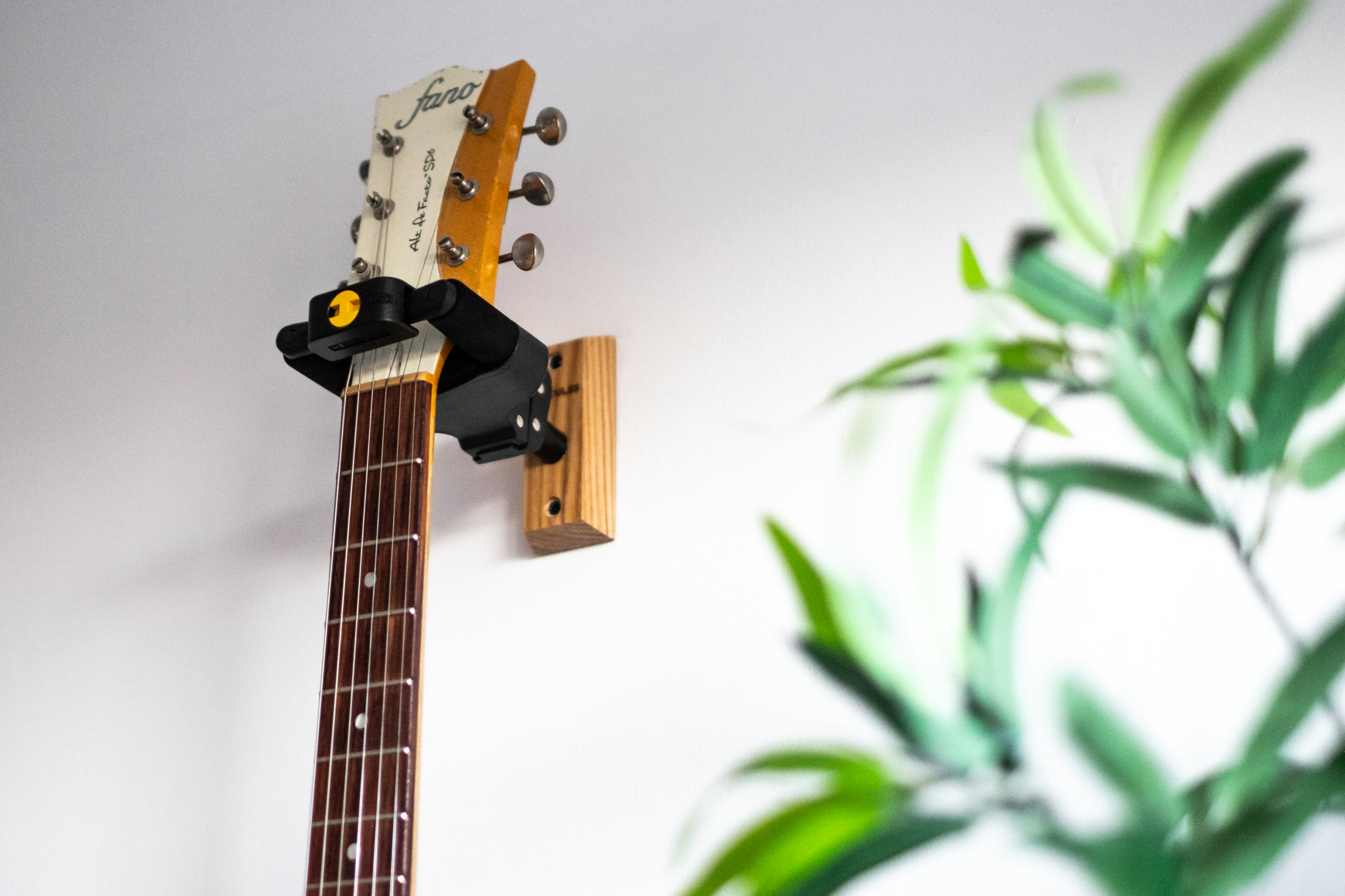
A good guitar wall hanger supports the neck without squeezing it. It should also hold the guitar away from the wall and keep the finish from touching rough surfaces. Most quality hangers use padded arms that cradle the neck.
Wall mounting also reduces some risks. A guitar left on the floor can be knocked over, stepped on, or damaged by pets. However, a poorly mounted hanger can cause a much worse fall, so installation deserves care.

Choose the Right Guitar Wall Hanger
Before learning how do you hang a guitar on the wall, choose a hanger that matches your instrument and wall. Most guitar hangers attach to the wall with screws and either a stud or wall anchors. Some models have automatic locking arms that close around the neck when the guitar is placed on them.
Look for these features:
• A weight rating higher than your guitar’s actual weight
• Padded, non-marking contact points
• Strong steel or hardwood construction
• A mounting plate with two or more screw holes
• A neck cradle wide enough for your guitar
• Locking arms for extra security
• Hardware designed for your wall type
A standard electric guitar may weigh between 6 and 9 pounds. Many acoustic guitars weigh about 3 to 6 pounds, while some hollow-body models are heavier and more delicate. Choose a hanger with a generous safety margin rather than one rated just above the instrument’s weight.
Some guitar hangers use a swivel feature. This can help the guitar rest straight when the headstock shape is uneven. Still, the hanger must not allow the guitar to swing into a wall, shelf, or nearby instrument.
Check Finish Compatibility
Some rubber and foam materials can react with certain guitar finishes over time. This is especially important with vintage instruments and guitars finished with nitrocellulose lacquer. Check the hanger maker’s finish-compatibility statement before installation.
If the manufacturer gives no clear information, use a hanger with confirmed safe padding. Do not wrap the neck in random tape or fabric, because loose material can reduce grip and collect dust.
Find the Best Wall Location
The best answer to how do you hang a guitar on the wall begins with location. Select a wall that is dry, stable, and away from strong heat or direct sunlight. A guitar should not hang above a radiator, fireplace, heater vent, or cooking area.
Rapid changes in temperature and humidity can affect wood. They may cause neck movement, fret problems, finish damage, or cracks. Many repair professionals recommend keeping acoustic instruments in a fairly stable indoor environment, often around 40% to 60% relative humidity.
Avoid these locations:
• Above a bed or sofa where a falling guitar could cause injury
• Near a door that may strike the instrument
• Beside a window with strong afternoon sun
• Above a heat vent or radiator
• In a damp basement or poorly ventilated room
• Next to a high-traffic corner
Use a stud finder to locate a wall stud. A stud is the wood or metal framing behind drywall. Driving screws into a wood stud gives the strongest support for most guitar hangers.
If the ideal location has no stud, use high-quality anchors rated for the wall and the hanger’s load. Do not rely on a small plastic plug that is not designed for the guitar’s weight.
Tools and Materials You Need
You do not need a large toolbox to learn how do you hang a guitar on the wall. Gather the tools before you mark the wall. This makes the process faster and helps prevent crooked or rushed work.
You may need:
• Guitar wall hanger
• Screws supplied with the hanger
• Stud finder
• Pencil
• Tape measure
• Level
• Drill and drill bits
• Screwdriver
• Appropriate drywall, masonry, or plaster anchors
• Safety glasses
• Painter’s tape
Read the hanger instructions first. Hardware supplied with the product is not always right for every wall. For example, a screw meant for wood may not work in concrete, brick, or metal framing.
For a heavy bass, baritone guitar, or several-guitar display, consider a reinforced mounting board. Attach the board to two or more studs, then attach the hangers to the board. This spreads the load and gives you more freedom to space the instruments.
How Do You Hang a Guitar on the Wall: Step-by-Step
Once you have the right hanger and location, follow these steps. Take your time with the first mount. A careful installation protects both the guitar and the wall.
1. Measure the Guitar
Measure the guitar from the bottom of the body to the top of the headstock. Add enough clearance for easy lifting and removal. The guitar should not touch the floor, ceiling, furniture, or nearby instruments.
A common display height places the guitar’s body around eye level. Yet comfort matters more than a fixed number. If you play the instrument often, hang it at a height that lets you remove it without stretching.
2. Mark the Mounting Point
Hold the guitar hanger against the wall and mark the screw holes with a pencil. Use a level to keep the hanger straight. If the hanger will attach to a stud, center the mounting plate over the stud.
Place painter’s tape over the marked area if you are drilling into delicate paint or plaster. The tape can help reduce surface chipping. It also makes pencil marks easier to see.
3. Drill Pilot Holes
Drill a pilot hole that matches the screw and wall material. A pilot hole helps prevent split wood and makes the screw easier to drive. Do not use a drill bit so large that the screw loses its grip.
For drywall anchors, follow the anchor instructions closely. Some anchors need a small pilot hole, while others cut their own thread. For brick or concrete, use a masonry bit and anchors designed for that surface.
4. Install the Hanger
Place the hanger over the holes and drive the screws firmly. The mounting plate should sit flat against the wall. Stop when the screw is secure; overtightening can damage drywall or bend the plate.
Check that the hanger does not rotate or wobble. Pull it gently in several directions before placing the guitar on it. This simple test can reveal a loose anchor before the instrument is at risk.
5. Test the Hanger Carefully
Before using your best guitar, test the hanger with light pressure. Then place the guitar on the cradle while supporting its body with one hand. Watch for movement, slipping, or contact between the guitar and the wall.
If the hanger has locking arms, confirm that they close around the neck. The arms should secure the neck without crushing it. Never force a thick neck into a narrow cradle.
6. Add a Security Check
After mounting the guitar, inspect the screws and hanger again. Make sure the instrument hangs level and does not swing into the wall. For valuable guitars, add a secondary safety strap or a locking hanger made for instrument security.
This is how do you hang a guitar on the wall without treating the job as decoration alone. The hanger is a small support system, and every part must work together.
Hanging a Guitar on Drywall
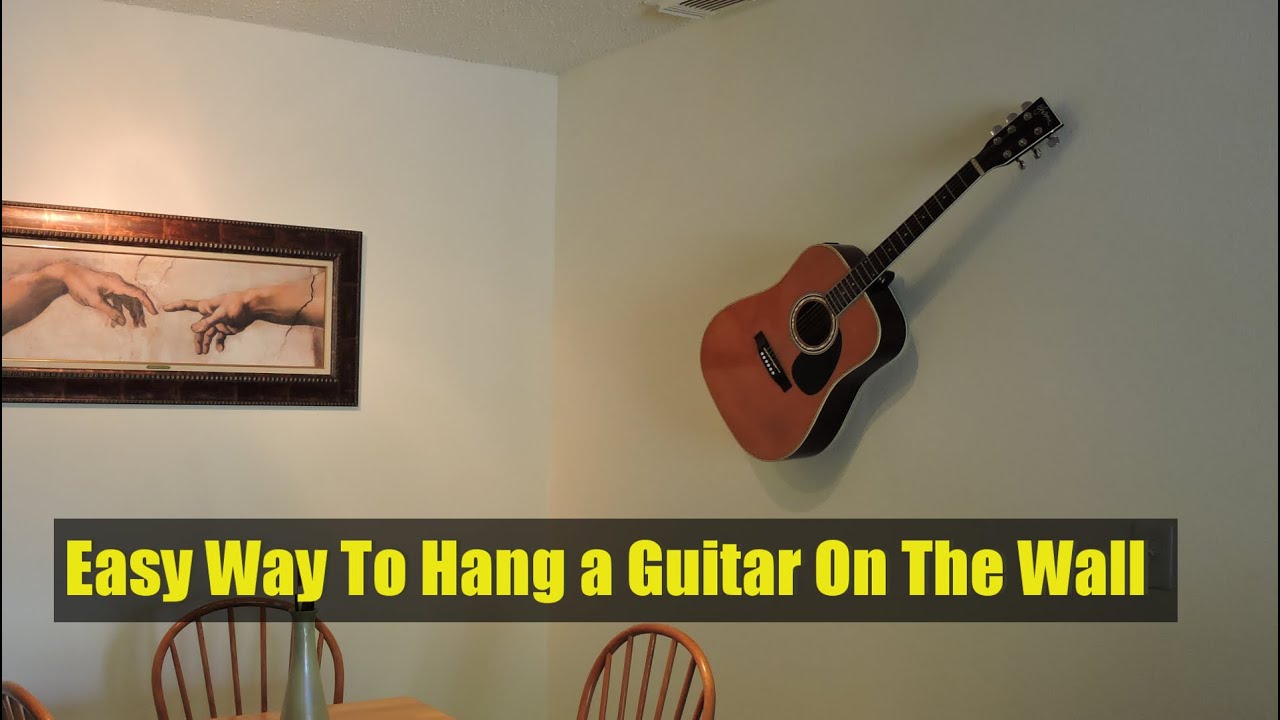
Drywall can support a guitar when you use the correct anchor and install it properly. The safest option is usually to find a wood stud behind the drywall. A stud provides a stronger connection than the drywall surface itself.
When no stud is available, choose an anchor based on the guitar’s weight and the hanger’s pull force. Toggle bolts, snap toggles, and rated self-drilling anchors may work better than basic expansion plugs. Read the load rating carefully and remember that ratings can change when the anchor is installed in a ceiling, damaged drywall, or a thin wall.
Avoid placing an anchor near a damaged seam or cracked section. Weak drywall may crumble around the anchor. If the wall feels soft, repair it first or choose a different location.
For several guitars, install a wood mounting board across two or more studs. This method is more secure and makes it easier to change the guitar layout later.
Hanging a Guitar on Plaster, Brick, or Concrete
Older homes may have plaster walls with wood lath behind them. Plaster can crack if you drill too quickly or use the wrong bit. Apply gentle pressure and use a drill setting suited to the material.
Brick and concrete require masonry anchors. Do not assume a standard drywall anchor will hold in masonry. Use a hammer drill only when appropriate, and wear eye protection while drilling.
If you rent your home, check your lease before drilling. A professional installer may be worthwhile when the wall is unusual, the instrument is expensive, or you are unsure about hidden wiring and plumbing.
How High Should a Guitar Be Hung?
There is no single perfect height for every room. A practical height keeps the guitar easy to remove while leaving enough space below the body. Many people place the hanger so the guitar body sits near chest or eye level.
Use these factors to choose the height:
• Your own reach
• Ceiling height
• Furniture below the guitar
• Nearby doors and windows
• The guitar’s total length
• Whether children or pets can reach it
• Whether you plan to play it often
Keep several inches of space around the instrument. Guitars should not touch one another, picture frames, shelves, or hard corners. Crowding makes removal risky and can cause scratches.
I once mounted two guitars too close together because the arrangement looked neat on the wall. The lower guitar’s headstock bumped the upper guitar every time I removed it. Spacing them farther apart solved the problem and made both instruments easier to use.

Protect the Guitar After Installation
Knowing how do you hang a guitar on the wall also means knowing how to care for it afterward. Dust the hanger and guitar with a clean, soft cloth. Do not spray cleaner directly onto the instrument or the wall mount.
Keep the guitar away from direct sun. Ultraviolet light can fade finishes and damage some materials over time. Sun can also heat the instrument and create sudden temperature changes.
Monitor humidity if you own an acoustic guitar. A small digital hygrometer can show whether the room is too dry or damp. If the air is outside a safe range for long periods, use a room humidifier, dehumidifier, or guitar case humidifier as appropriate.
Inspect the mount every few months:
• Check for loose screws
• Look for cracked or soft drywall
• Test the hanger for movement
• Inspect padding for wear
• Check for finish contact or rubbing
• Confirm that locking arms still work
A wall hanger should be treated like a smoke detector: easy to ignore when it works, but important to check before a problem appears.
Common Mistakes to Avoid
Many failed installations come from small errors. The most common mistake is hanging a guitar from a weak anchor without checking the wall. A screw that feels tight at first may pull out when the guitar is placed on the mount.
Avoid these mistakes:
• Using a picture hook instead of a guitar hanger
• Installing into drywall without a suitable anchor
• Skipping the pilot hole
• Mounting near heat or direct sun
• Choosing a hanger with unsafe padding
• Hanging the guitar where a door can hit it
• Ignoring the manufacturer’s weight limit
• Overtightening screws
• Failing to test the mount before use
• Placing an expensive vintage guitar on an unverified hanger
Do not hang a guitar by its tuning pegs. The headstock and tuners are not designed to carry the full instrument from an improvised hook. Use a neck-support hanger that cradles the correct part of the guitar.
Also avoid using adhesive strips for most guitars. They may hold light decorations, but a guitar creates a larger and more dangerous load. Temperature, dust, paint type, and wall texture can weaken adhesive over time.
Wall Hanger or Floor Stand?
A wall hanger saves floor space and offers a clean display. It is a good choice for small rooms, music studios, and homes where pets or children may knock over a floor stand. It also keeps the guitar ready to play.
A floor stand is easier to move and does not require drilling. It may be better for renters, temporary setups, or instruments that you frequently carry between rooms. However, a stand can take more floor space and may be easier to bump.
Choose a wall hanger when:
• You want a permanent display
• You have a sound wall or stud
• Floor space is limited
• You want to keep the guitar away from pets
Choose a floor stand when:
• You cannot drill into the wall
• You move the guitar often
• You need a temporary solution
• The wall has uncertain structure
Neither option is automatically safer. Correct installation and sensible placement make the real difference.
How Do You Hang Multiple Guitars?
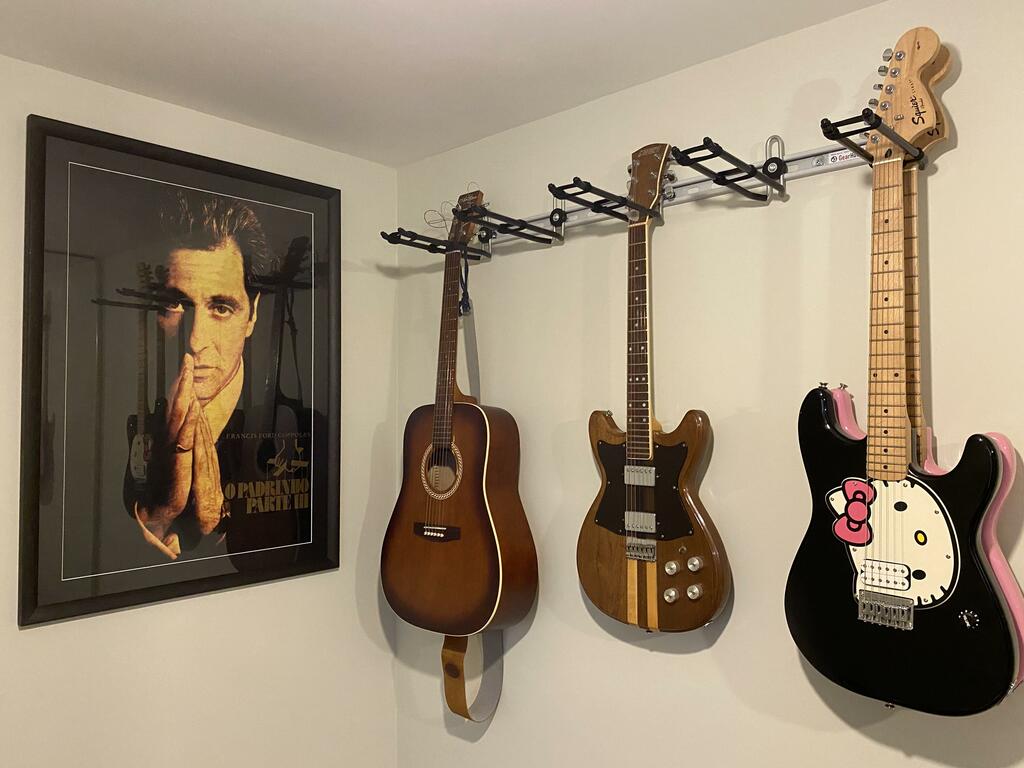
When hanging multiple guitars, plan the layout on paper first. Measure each instrument, mark the wall with painter’s tape, and leave room for your hands. A straight row is simple, while a staggered layout can fit different guitar sizes.
Mount each hanger into a stud when possible. If the spacing does not match the studs, attach a strong wood board to the studs and mount the hangers to that board. This approach is often more stable than using several separate drywall anchors.
Keep acoustic guitars away from amplifiers, heat-producing lights, and damp corners. Leave enough space to remove one instrument without touching the others. Labeling or arranging guitars by use can also make the display more practical.
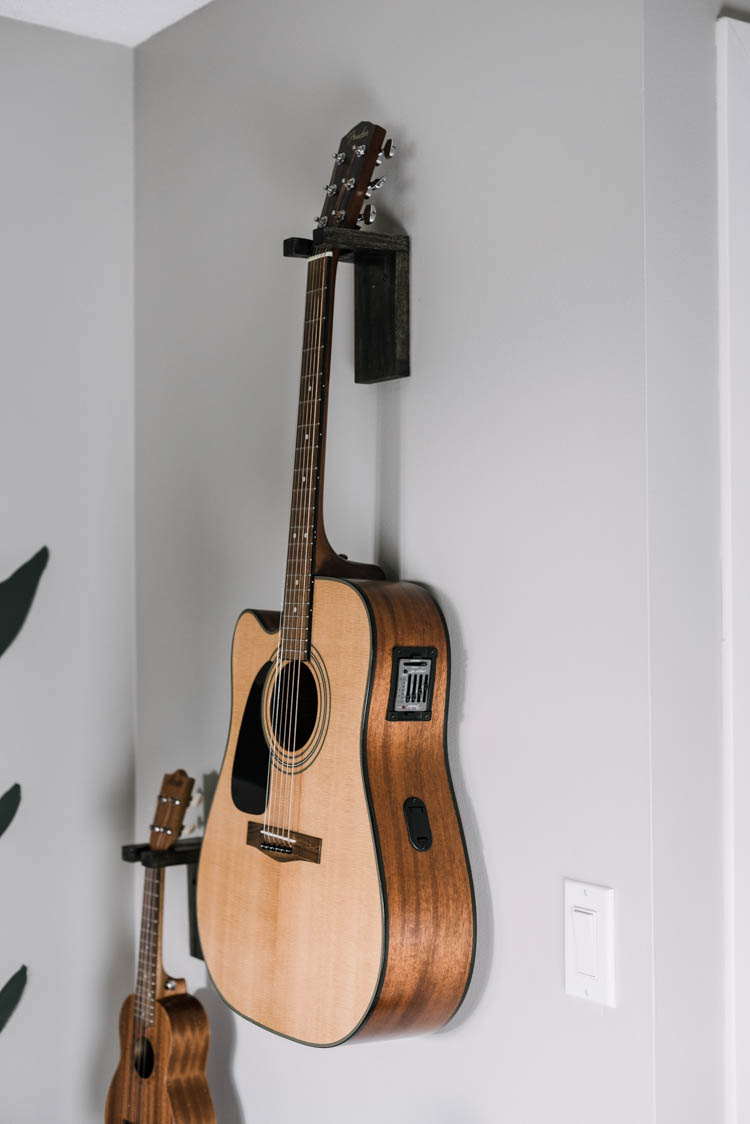
How Do You Hang a Guitar on the Wall Safely in a Home With Children or Pets?
Place the guitar higher than a child or pet can reach, but do not sacrifice secure wall support. A high hanger still needs a correctly installed screw or anchor. A child may pull on the guitar, so locking hangers provide extra protection.
Do not mount a guitar above a crib, bed, or play area. Even a secure hanger can fail because of damaged drywall, loose hardware, or accidental impact. A different wall is the safer choice.
For cats and dogs, consider climbing paths and furniture placement. A guitar that appears high may become reachable if a pet can jump from a shelf or cabinet nearby.
Should a Guitar Hang in Its Case?
A guitar usually hangs from a wall hanger outside its case. The case protects it from dust, knocks, and changes in the room, but it is not normally designed to be suspended from a guitar wall hook.
If the room has unstable humidity or temperature, store the guitar in a quality case instead. Display and protection involve a trade-off. A wall-mounted guitar is more visible and accessible, while a closed case offers a more controlled environment.
Valuable, rare, or vintage guitars deserve extra caution. When in doubt, ask a qualified guitar technician or luthier to inspect the instrument and recommend storage conditions.

Frequently Asked Questions About How Do You Hang a Guitar on the Wall
Is it safe to hang a guitar on the wall?
Yes, a guitar can be safely wall-mounted when you use a suitable hanger and secure it to a stud or properly rated anchor. Keep the instrument away from heat, sunlight, doors, and areas where a fall could injure someone.
Can I hang a guitar on drywall?
Yes, but the hanger must use anchors designed for the guitar’s weight and the drywall’s condition. A wood stud is usually the preferred support, especially for heavy guitars or multiple instruments.
Do wall hangers damage guitar necks?
A quality hanger with compatible padding should not damage the neck. Avoid unverified rubber or foam, and check whether the padding is safe for your guitar’s finish.
How far apart should guitar wall hangers be?
Leave enough space for each guitar to hang without touching another instrument, frame, shelf, or wall. Measure the widest part of each guitar and add extra room for your hands when lifting it.
Is a wall hanger better than a guitar stand?
A wall hanger saves floor space and can keep a guitar away from pets and foot traffic. A floor stand is easier to move and may be better for renters or temporary rooms.
Should I hang an acoustic guitar or store it in a case?
A stable, dry room can be suitable for a wall-mounted acoustic guitar. Store the instrument in a case when humidity, temperature, sunlight, or physical safety is difficult to control.
Can I use adhesive strips to hang a guitar?
Adhesive strips are not a reliable choice for most guitars. Their grip can weaken with time, heat, dust, and wall texture, creating a serious risk of the instrument falling.
Conclusion
Learning how do you hang a guitar on the wall is mostly about choosing the right hanger, finding strong wall support, and protecting the instrument from environmental risks. Use a stud whenever possible, select anchors carefully, test the mount before loading it, and leave enough space around the guitar.
A secure wall display can make your instrument easier to reach and safer from floor-level accidents. Take a few extra minutes to measure, level, and inspect the hardware. Then enjoy the view, pick up the guitar often, and share your setup or questions in the comments.

Senior Music Reviewer
Alex Carter is a seasoned music reviewer with over a decade of experience in the world of sound and instruments. Passionate about helping musicians and enthusiasts make informed choices, he brings sharp insights and in-depth knowledge to every review. From classical instruments to modern gear, Alex combines technical expertise with a love for music to deliver content that resonates with readers.
As a Senior Music Reviewer and expert author on Tuneluma.com, Alex is dedicated to sharing honest evaluations, practical advice, and thoughtful commentary to guide readers in their musical journey.