How To Make A Drum Beat: Easy Beat-Making Guide
To make a drum beat, choose a tempo, program a groove, then add human timing and dynamics.
Learning how to make a drum beat is part rhythm, part sound design, and part feel. A strong beat does more than mark time. It gives a song motion, emotion, and a place for every other instrument to sit. This guide explains the process from the first kick drum to the final mix, with simple steps you can use in any digital audio workstation or on a hardware drum machine.
What Makes a Drum Beat Work?
A drum beat is a repeated pattern of percussion sounds. It usually includes a kick, snare or clap, hi-hat, and other sounds such as toms, shakers, rides, or crashes.
The beat creates the foundation of a track. Bass, vocals, guitars, and synths often follow its pulse. If the drum beat is unclear, the whole song can feel weak, even when the other parts sound good.
A useful drum beat balances three main ideas:
• Time: The beat stays connected to the tempo.
• Groove: The notes have a natural push and pull.
• Contrast: Some hits are strong, while others are soft or quiet.
Think of a drum beat like a conversation. The kick makes a strong statement. The snare answers it. The hi-hat fills the spaces between them. When every sound speaks at the same volume, the conversation becomes dull.
A good beat also leaves room. You do not need to fill every step in the piano roll. Silence can make the next drum hit feel much bigger.

What You Need to Make a Drum Beat
You can make a drum beat with a full studio setup, a laptop, or even a phone. The tools matter less than your sense of timing and your willingness to test ideas.
At minimum, you need:
• A music production app or digital audio workstation
• A drum kit or collection of drum samples
• A grid, step sequencer, or MIDI editor
• Headphones or speakers
• A steady tempo
Popular software options include Ableton Live, FL Studio, Logic Pro, Pro Tools, GarageBand, Cubase, and Maschine. Most modern programs provide a piano roll, drum rack, or step sequencer.
A MIDI keyboard or pad controller can help you play a beat by hand. Still, it is not required. Many excellent producers start by clicking notes into a grid and then editing the pattern.
Choose drum sounds that fit the style. A deep kick may suit hip-hop or electronic music, while a short kick may work better for funk or pop. A bright clap can add energy, but a dry snare may feel more natural in a live-sounding track.
Keep your first drum kit simple. Too many samples can slow you down. Start with one kick, one snare, one closed hi-hat, one open hi-hat, and one percussion sound.

How to Make a Drum Beat Step by Step
The easiest way to learn how to make a drum beat is to build it in layers. Start with the pulse. Add the backbeat. Fill the spaces. Then shape the performance.
1. Choose the tempo
Set a tempo that matches the mood of your song.
Common starting points include:
• 70 to 90 BPM for slow hip-hop, R&B, and ballads
• 90 to 110 BPM for pop, funk, and mid-tempo rock
• 120 to 130 BPM for house, dance, and many electronic styles
• 140 to 180 BPM for drum and bass, jungle, and fast rock
Tempo is not a strict rule. A song at 80 BPM can feel like 160 BPM if you use double-time hi-hats or a fast vocal flow.
Start with a metronome. A clear pulse helps you hear whether your pattern is tight. You can turn the metronome down later if it distracts you.
2. Set the time signature
Most modern drum beats use 4/4 time. This means each bar contains four quarter-note beats.
Count it like this:
1, 2, 3, 4
Divide each beat into smaller parts:
1 and 2 and 3 and 4 and
You can divide it even further:
1 e and a, 2 e and a, 3 e and a, 4 e and a
These small divisions help you place quick hi-hats, ghost notes, and syncopated kicks.
3. Program the kick drum
Place the kick on beat 1 first. This gives the bar a clear starting point.
For a basic four-on-the-floor beat, place the kick on all four quarter notes:
1, 2, 3, 4
For a basic pop or hip-hop beat, try kicks on beat 1 and the “and” before beat 3. Then listen and add or remove hits based on the bass line.
The kick should support the low end. If it sounds long and boomy, shorten the sample or reduce its decay. If it feels thin, choose a sample with more body instead of adding excessive volume.
4. Add the snare or clap
Place the snare on beats 2 and 4. This is called the backbeat.
Count:
1, 2, 3, 4
Kick, snare, kick, snare
This simple pattern appears in pop, rock, funk, hip-hop, and many other styles. It gives listeners a familiar point of reference.
You can layer a clap with a snare for a wider sound. Keep the layers slightly different in tone. Two identical sounds played together may only create extra volume, not extra character.
5. Add the hi-hat
Begin with closed hi-hats on eighth notes:
1 and 2 and 3 and 4 and
Make the main beats slightly louder than the “and” notes. This creates motion without making the pattern busy.
For a more active drum beat, use sixteenth notes:
1 e and a, 2 e and a, 3 e and a, 4 e and a
You do not need to play every sixteenth note. Try removing a few notes. Small gaps can make the beat feel more lively.
6. Add percussion and fills
Once the core groove works, add one or two extra sounds. Try a shaker, rimshot, tambourine, tom, or woodblock.
Use percussion to answer the main beat. For example, place a shaker on the offbeats or add a rimshot just before the snare.
Drum fills usually work best at the end of a four-bar or eight-bar phrase. A short snare roll or tom pattern can lead into the next section.
7. Loop and listen
Loop four or eight bars. Listen at low volume and at normal volume. Ask yourself:
• Can I feel the pulse without thinking?
• Does the kick work with the bass?
• Does the snare sound too loud?
• Are the hi-hats tiring after several bars?
• Does the pattern leave room for vocals or other instruments?
This step matters more than adding more notes. A simple pattern that feels good will beat a complex pattern that feels crowded.
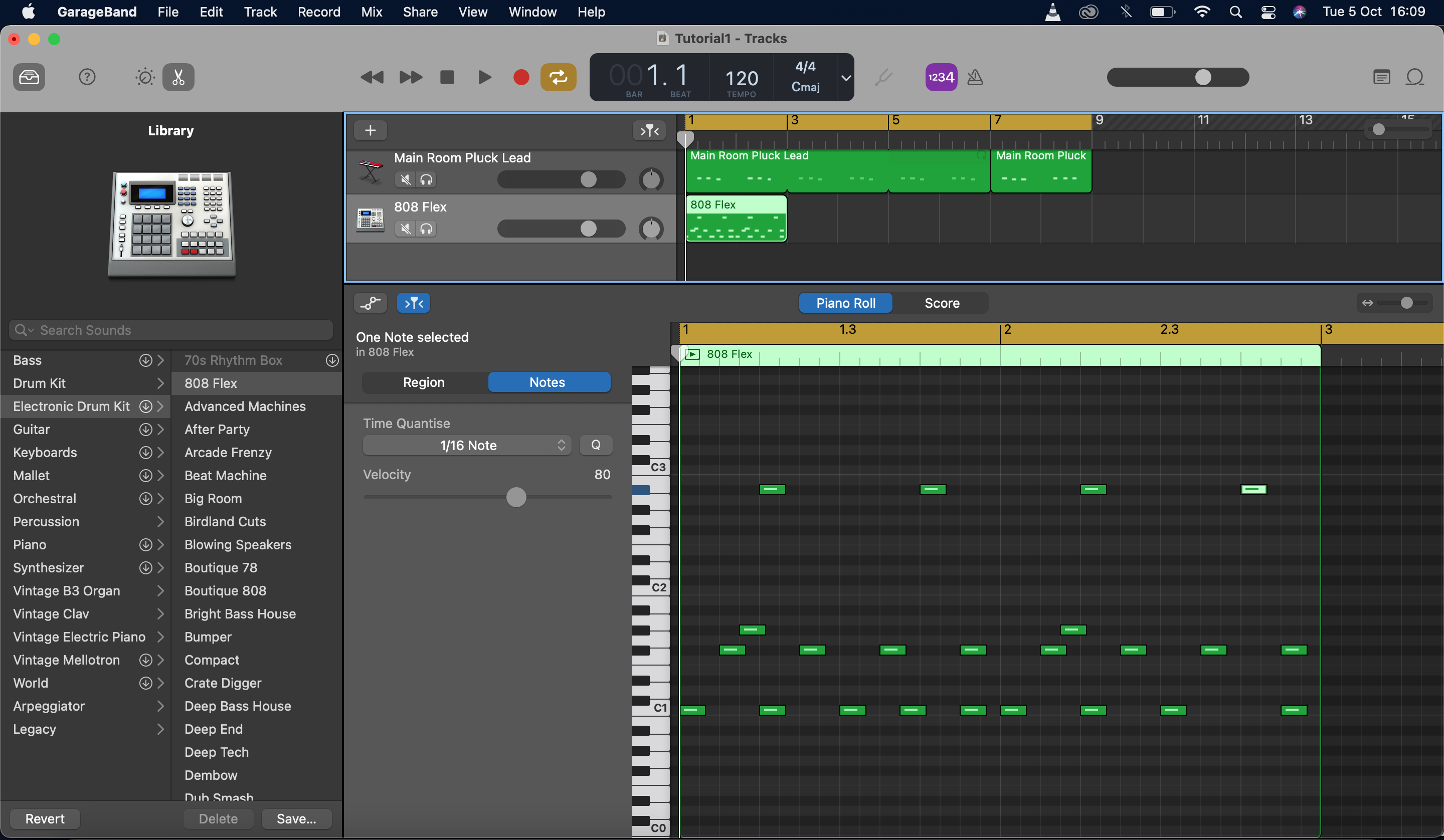
Basic Drum Patterns to Try
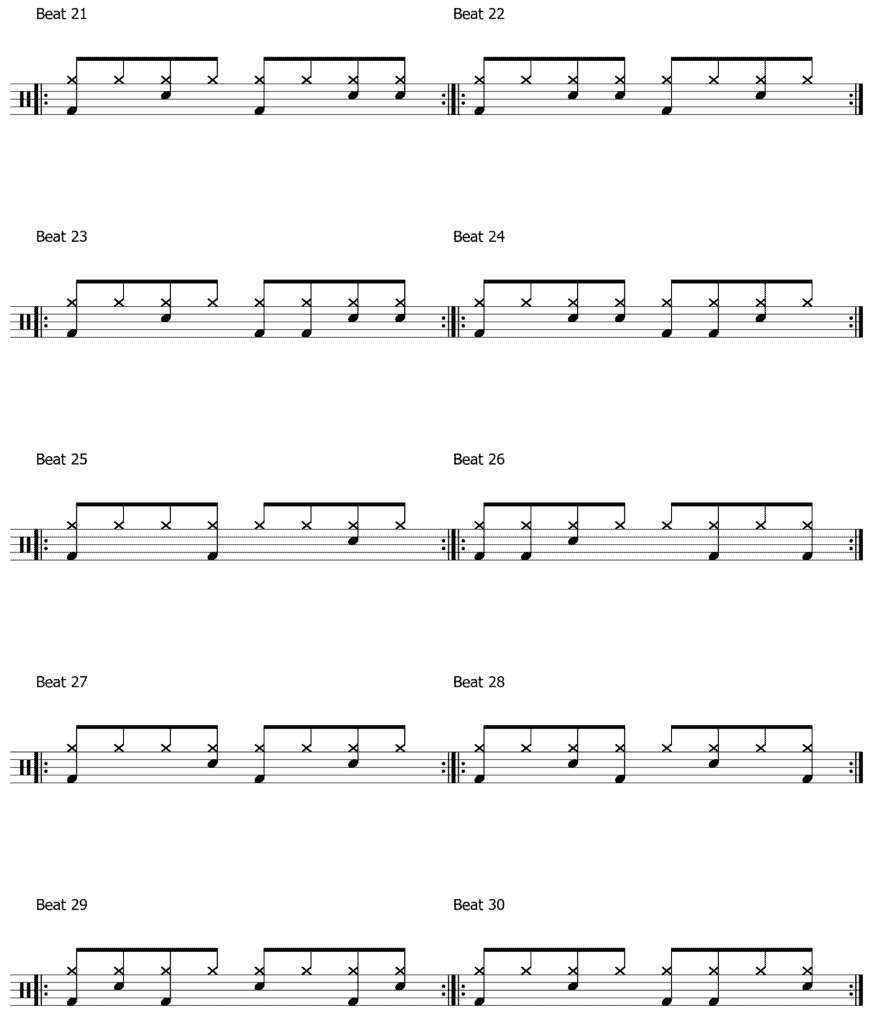
A few classic patterns can help you understand how drum parts fit together. Use them as starting points, not fixed rules.
Basic pop drum beat
Try this pattern in 4/4 time:
• Kick on beats 1 and 3
• Snare on beats 2 and 4
• Closed hi-hat on eighth notes
This pattern is easy to hear and supports a wide range of melodies. Add a second kick just before beat 3 if you want more movement.
Four-on-the-floor dance beat
Use:
• Kick on every quarter note
• Clap or snare on beats 2 and 4
• Closed hi-hat on the offbeats
• Open hi-hat near the end of each bar
This pattern creates a steady pulse for house, disco, and dance music. The bass line often follows the kick, so keep the low end clean.
Hip-hop drum beat
Try:
• Kick on beat 1
• Snare on beat 3
• Additional kick notes around the bass rhythm
• Hi-hats on eighth or sixteenth notes
Hip-hop often depends on space and variation. Change the velocity of the hi-hats and place a few kicks slightly away from the main grid.
Trap-inspired drum beat
A trap-style pattern may include:
• Deep kick and sub bass working together
• Snare or clap on beat 3 in a half-time feel
• Fast hi-hat rolls
• Occasional triplets
Hi-hat rolls should support the groove, not cover it. Automate the roll volume or use short bursts so the pattern does not sound constant.
Rock drum beat
A simple rock beat uses:
• Kick on beats 1 and 3
• Snare on beats 2 and 4
• Closed hi-hat or ride on eighth notes
• Crash cymbal at the start of a section
Rock often benefits from small timing differences. A perfectly quantized rock beat can sound less exciting than a performance with natural movement.

How to Add Groove and Human Feel
Quantization moves MIDI notes to a rhythmic grid. It can fix timing, but full quantization may make a drum beat sound stiff.
Human feel comes from small changes in timing, velocity, note length, and tone. These changes should be controlled. Random movement alone usually creates messy results.
Try these methods:
• Lower the velocity of some hi-hats.
• Make the first kick in a phrase slightly stronger.
• Vary repeated percussion hits.
• Move selected notes a few milliseconds early or late.
• Use swing to delay some offbeat notes.
• Remove notes that do not add useful energy.
Swing changes the spacing between straight subdivisions. A small amount can make a beat feel relaxed or funky. Too much swing can make a modern pop or dance pattern feel unstable.
One common mistake is humanizing every drum at once. Instead, keep the kick and main snare fairly stable. Add more movement to hi-hats, shakers, ghost notes, and small percussion.
When I refine a drum beat, I listen with the bass muted first. If the drums feel good alone, they are more likely to support the full song. Then I bring the bass back and remove any kick notes that fight its rhythm.

Drum Sound Selection and Layering
The pattern is important, but the sounds also shape the beat’s identity. A short, dry snare creates a different mood from a wide, reverberant snare.
Choose sounds based on their role:
• Kick: Provides low-end impact and supports the bass.
• Snare: Defines the backbeat and adds character.
• Clap: Adds width and a sharp upper-mid snap.
• Hi-hat: Supplies regular motion and rhythmic detail.
• Percussion: Adds texture and variation.
• Cymbal: Marks transitions and section changes.
Layering can make a drum beat sound larger, but it can also create phase and frequency problems. If two samples have similar low frequencies, they may become muddy or cancel each other when combined.
To layer a kick and a sub-heavy drum, check their waveforms and timing. A tiny delay between layers can soften the impact. Keep important low-frequency sounds centered unless you have a clear reason to pan them.
Use equalization with purpose. Remove unwanted rumble from sounds that do not need low frequencies. Do not boost every drum. Often, choosing a better sample solves the problem faster.
Compression can add control and punch. However, heavy compression may remove the natural attack of the drums. Adjust the attack and release so the compressor supports the groove instead of flattening it.

How to Arrange a Drum Beat in a Full Song
A drum beat should change as the song develops. A loop that works for four bars may become tiring when repeated for three minutes.
Build energy in stages:
• Intro: Use a filtered kick, shaker, or simple percussion.
• Verse: Keep the groove clear and leave space for the vocal.
• Pre-chorus: Add an open hat, extra kick, or rising fill.
• Chorus: Use the full kick, snare, hats, and crash.
• Bridge: Remove one or two major sounds to create contrast.
• Final chorus: Add a new fill, ride cymbal, or stronger percussion layer.
Variation does not always mean adding notes. You can mute the kick for one beat, change the snare sound, or leave a short pause before the chorus.
Use fills to guide the listener. A fill should point toward the next section. If it attracts more attention than the vocal or main melody, simplify it.
A useful production habit is to make a copy of the main loop before arranging. Keep one clean version for the verse and create variations from the copy. This prevents accidental changes to the original groove.

Mixing a Drum Beat for Clarity
A good mix lets every drum sound occupy a useful place. Start with balance before using complex effects.
Set the kick and snare first. Then add the hi-hat and percussion at lower levels. Keep turning the mix down as you work. If the groove disappears at low volume, check the balance and rhythm instead of simply raising the master level.
Use panning carefully:
• Keep the kick and bass near the center.
• Pan small percussion slightly left or right.
• Keep the snare mostly centered unless the style suggests otherwise.
• Use stereo effects on cymbals and room sounds with care.
Reverb can place drums in a space. A short room reverb may make a dry kit feel natural. A longer reverb can work for dramatic music, but it may blur fast hi-hats and weaken the groove.
Sidechain compression can reduce the bass volume when the kick hits. This may help the two sounds share the low end. Use only as much as the song needs. A strong pumping effect is a creative choice, not a requirement.
Check the beat in mono. If the kick loses power or percussion disappears, stereo phase may be causing a problem. Also test the mix on headphones, speakers, and small devices.
Common Mistakes When Making a Drum Beat
Many weak beats fail for simple reasons. Fixing these issues can improve your result quickly.
Adding too many sounds
More drums do not always create more energy. A crowded pattern can hide the main rhythm and leave no room for vocals.
Start with three or four core sounds. Add new parts only when they improve the groove.
Using the same velocity everywhere
If every hit has the same strength, the beat may sound like a machine. Vary softer notes while keeping the main accents clear.
Do not make every note random. Use velocity to show which hits matter most.
Quantizing everything
Perfect timing can remove character. Quantize the main pulse first, then keep small variations in selected notes.
If the timing feels wrong, move only the notes that cause the problem. Avoid changing the whole pattern without listening.
Ignoring the bass line
The kick and bass often compete for the same frequencies and rhythmic space. Play them together while writing the drum beat.
If the low end feels crowded, change the kick pattern, bass rhythm, or note length before reaching for more plugins.
Choosing poor samples
A weak sample may remain weak after processing. Spend time comparing samples at the same volume.
Loudness can trick your ears. Turn each sample down to a similar level before deciding which one sounds best.
Making long loops with no change
A four-bar loop can be useful, but a full song needs movement. Add small changes every four or eight bars.
Keep the main groove recognizable. Variation should support the song rather than make each section feel unrelated.
A Simple Drum Beat Practice Exercise
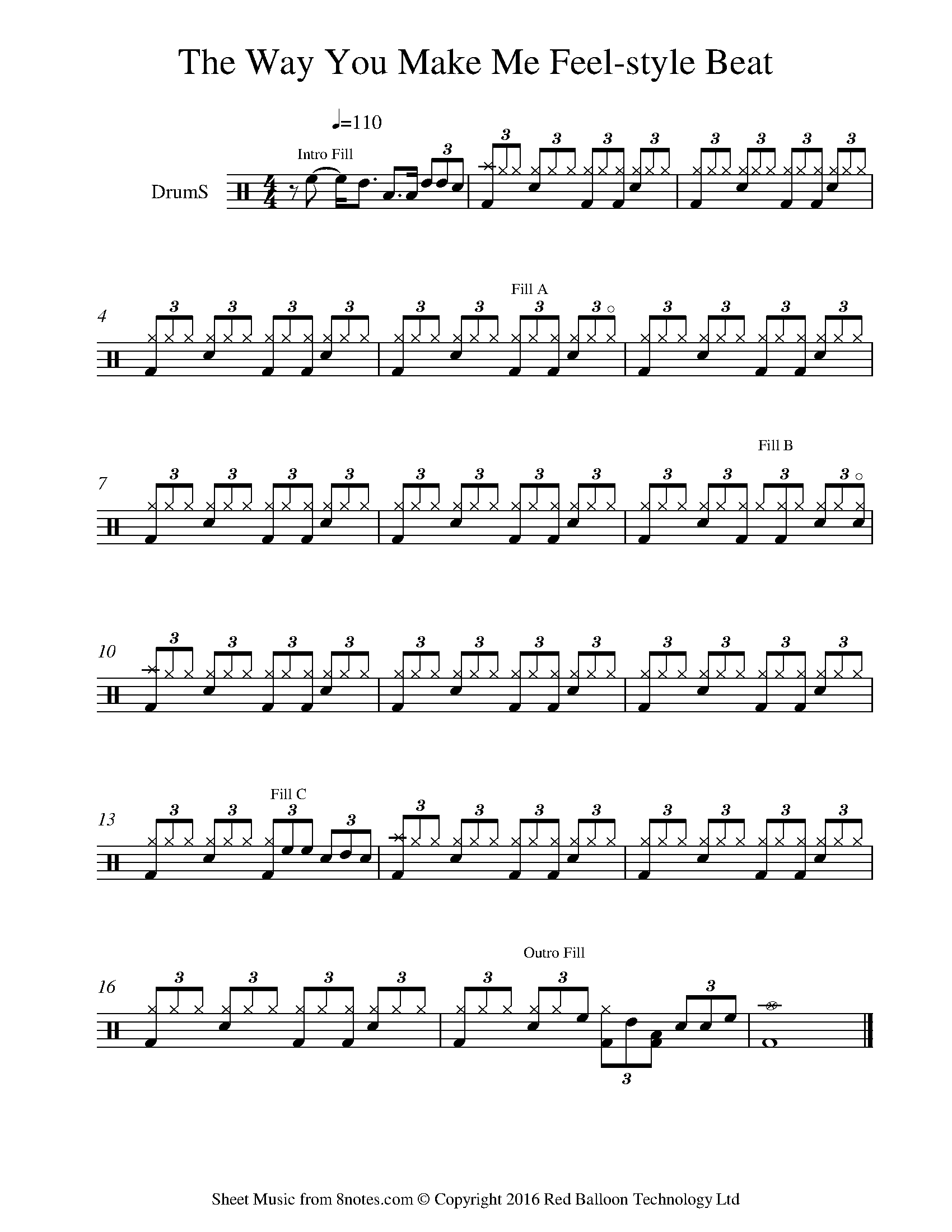
This exercise helps beginners understand rhythm without becoming overwhelmed.
-
Set the tempo to 100 BPM.
-
Create a four-bar loop in 4/4 time.
-
Add a kick on beats 1 and 3.
-
Add a snare on beats 2 and 4.
-
Add eighth-note hi-hats.
-
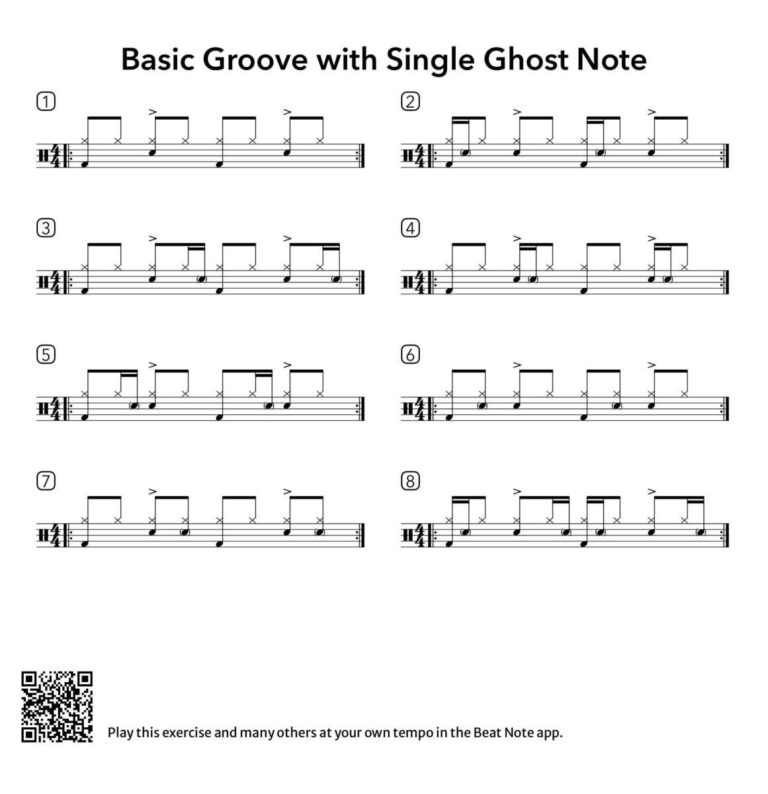
Lower the velocity of every second hi-hat.
-
Add one extra kick before beat 3 in bars two and four.
-
Remove the hi-hat on the last eighth note of bar four.
-
Add a short snare fill at the end of bar four.
-
Copy the loop into a verse and chorus arrangement.
Now compare three versions:
• Fully quantized
• Slightly swung
• Lightly humanized
Listen for the version that makes you want to move. That reaction is useful. Groove is not only a visual pattern on a grid. It is the physical feeling created by timing, accents, and space.
Save each version. Comparing them later can teach you more than staring at the piano roll. Over time, you will learn when a beat needs more notes and when it needs a pause.
Frequently Asked Questions About How to Make a Drum Beat
How do I make a drum beat for beginners?
Start with a kick on beats 1 and 3, a snare on beats 2 and 4, and eighth-note hi-hats. Keep the pattern short, then change velocity and add small variations after the main groove feels steady.
What tempo should I use to make a drum beat?
Choose a tempo based on the style and mood. Try 70 to 90 BPM for slower music, 90 to 110 BPM for pop or funk, and 120 to 130 BPM for many dance styles.
Do I need a MIDI controller to make a drum beat?
No. You can use a mouse, computer keyboard, step sequencer, or touchscreen. A MIDI controller can make live performance easier, but strong rhythm decisions matter more than the device.
How can I make a drum beat sound less robotic?
Vary the velocity of repeated notes, add a small amount of swing, and move selected hi-hats or percussion slightly off the grid. Keep the main kick and snare stable so the groove does not lose its foundation.
How many bars should a drum beat be?
Four or eight bars work well for a basic loop. A full song can use the same core pattern with small changes in fills, percussion, kick placement, and cymbals.
What is the easiest drum beat to make?
The basic backbeat is the easiest starting point. Place the kick on beats 1 and 3, the snare on beats 2 and 4, and closed hi-hats on eighth notes.
Should the kick and bass play at the same time?
They can play together, but they may compete in the low end. If the mix sounds muddy, adjust the bass rhythm, shorten one sound, use equalization, or apply gentle sidechain compression.
Conclusion
Learning how to make a drum beat starts with a clear pulse and grows through careful choices. Build the kick, snare, and hi-hat first. Then shape the groove with velocity, swing, space, sound selection, and small changes across the song.
Do not worry about making the most complex pattern. Focus on making a beat that feels good, supports the music, and gives listeners a reason to move. Open your DAW, create a four-bar loop, and test one new rhythm today. Share your results, explore more production guides, and keep practicing until your beats sound like your own.

Senior Music Reviewer
Alex Carter is a seasoned music reviewer with over a decade of experience in the world of sound and instruments. Passionate about helping musicians and enthusiasts make informed choices, he brings sharp insights and in-depth knowledge to every review. From classical instruments to modern gear, Alex combines technical expertise with a love for music to deliver content that resonates with readers.
As a Senior Music Reviewer and expert author on Tuneluma.com, Alex is dedicated to sharing honest evaluations, practical advice, and thoughtful commentary to guide readers in their musical journey.