How To Play Timpani Drums: Beginner Guide
Learn timpani by building steady strokes, clean tuning, musical phrasing, and careful listening.
Learning how to play timpani drums takes more than striking a large bowl with a mallet. You must control sound, pitch, rhythm, resonance, and silence at the same time. This guide explains the method used by trained percussionists, from choosing mallets and tuning notes to playing rolls, reading music, and blending with an orchestra or band.
What Are Timpani Drums?
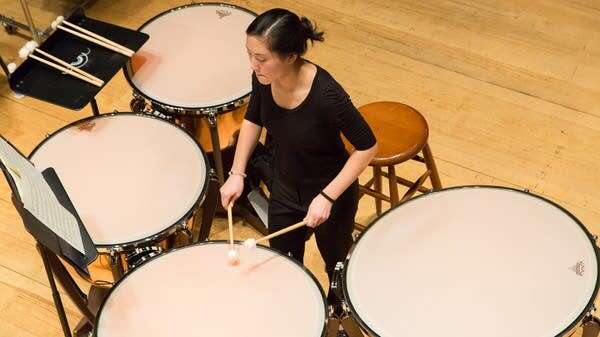
Timpani are pitched percussion instruments with large bowls made from copper or fiberglass. Each drum has a stretched head, often made from calfskin or plastic, and a foot pedal or tuning mechanism that changes the pitch.
Unlike a snare drum, a timpano can play a clear musical note. The drum’s pitch comes from the tension of the head. Tightening the head raises the pitch, while loosening it lowers the pitch.
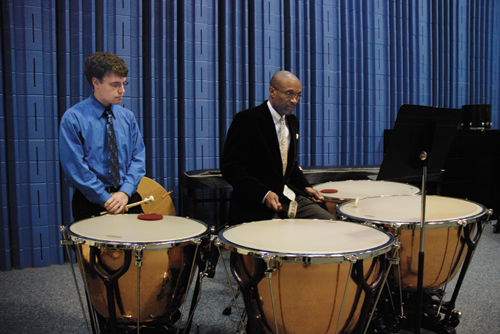
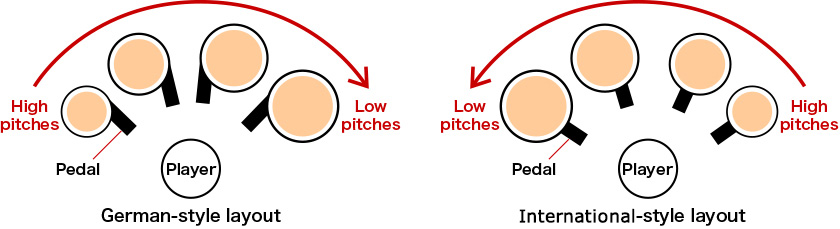
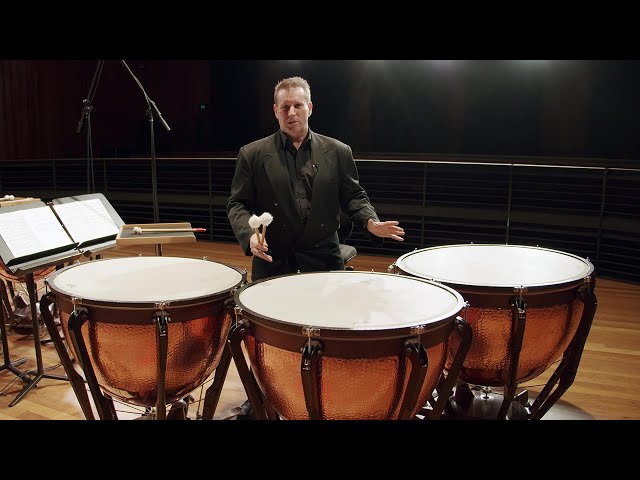
A typical timpani setup includes four drums:
- 32-inch timpano for low notes
- 29-inch timpano for medium-low notes
- 26-inch timpano for medium-high notes
- 23-inch timpano for high notes
Some players also use a 20-inch drum for very high passages. The exact setup depends on the music, the ensemble, and the player’s role.
When learning how to play timpani drums, remember that each drum has two jobs. It provides rhythm, and it supports harmony. A badly tuned note can clash with the entire group, even when the rhythm is correct.
How Timpani Produce Sound
A timpano produces sound when a mallet strikes the drumhead. The head vibrates, and that vibration moves through the bowl. The bowl helps shape the tone and gives the instrument its deep, focused voice.
Several factors affect the sound:
- The playing area changes the tone. The center gives a fuller sound, while a spot closer to the edge gives a brighter sound.
- The mallet head changes the attack and warmth.
- The force of the stroke controls volume.
- The angle of the mallet affects clarity.
- The condition and tension of the head affect pitch and response.
A good timpani sound is usually clear, round, and controlled. It should not sound like a dull thud or a harsh slap.
One useful image is to think of the drumhead as a trampoline. You do not need to crush it to make it respond. A relaxed stroke lets the head rebound and speak.
This idea is central to how to play timpani drums. Your goal is not to hit as hard as possible. Your goal is to transfer energy in a controlled way.
Choosing the Right Timpani Mallets
Timpani mallets have wooden or fiberglass shafts and heads wrapped in felt, flannel, or other materials. The mallet you choose changes the character of every note.
Hard mallets create a sharp attack and help fast notes speak clearly. Soft mallets create a warm tone and work well for gentle passages or sustained rolls. Medium mallets are useful for general playing.
A beginner should start with a matched pair of medium timpani mallets. Very soft mallets can make it hard to hear poor technique. Very hard mallets can produce a brittle sound and may encourage excessive force.
Consider these features:
- Shaft length affects reach and balance.
- Mallet weight affects speed and volume.
- Head size affects tone and attack.
- Covering affects warmth and clarity.
- Balance affects rebound and comfort.
Hold the mallet near the end of the shaft, but do not grip it tightly. Your thumb and first finger guide the mallet. The other fingers support it without squeezing.
In practical lessons, one common mistake is buying a large set of mallets before developing basic control. A small set of well-chosen mallets is more useful than a crowded bag full of tools you do not yet understand.

How to Hold Timpani Mallets
Most players use a French grip or a variation of the German grip. In a French grip, the palms face inward, and the thumb points upward along the mallet. This grip allows flexible wrist movement and works well for rolls.
Keep your wrists loose and your shoulders low. The motion should come from a mix of fingers, wrists, and forearms, depending on the speed and volume.
Follow these steps:
- Place the mallet in the space between your thumb and first finger.
- Let the handle rest across the middle fingers.
- Keep your thumb relaxed and pointed along the shaft.
- Hold both mallets at the same height.
- Raise and lower them with even motions.
- Allow the mallet to rebound after every stroke.
Avoid locking your wrists. A stiff wrist creates uneven sound and can cause pain during long rehearsals.
When practicing how to play timpani drums, watch your hands in a mirror. Your shoulders should remain level, and your mallets should travel the same distance. Small visual checks can reveal tension before it becomes a habit.
Where to Strike the Drumhead
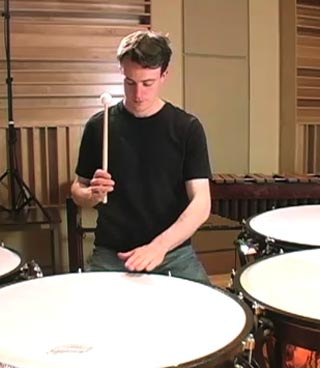
The best general playing spot is about 3 to 4 inches from the edge of the drumhead. This area usually gives a clear tone with enough depth.
Striking the exact center often produces a less focused sound. Striking too close to the rim can create a thin or hard tone. The ideal spot can change with the drum size, head type, mallet, and musical setting.
Use the same playing area for repeated notes. If one stroke lands near the center and the next lands near the edge, the notes may sound uneven even when the rhythm is correct.
Try this simple exercise:
- Play four slow quarter notes.
- Strike the same spot each time.
- Match the height of every stroke.
- Listen for equal tone and volume.
- Repeat at a slightly faster tempo.
Good timpani technique begins with consistency. Before working on speed, make each note sound like it belongs to the same family.

How to Tune Timpani
Tuning is one of the most important parts of how to play timpani drums. A timpano should be tuned before playing and checked whenever the temperature, room, or musical demands change.
Start by learning the written pitch. Then find that pitch with a piano, keyboard, pitch pipe, tuner, or another reliable reference. Use your ear as well as the tuner, because a timpani note can sound different depending on where you strike it.
For pedal timpani, follow this process:
- Move the pedal to the lowest position.
- Check the pedal indicator.
- Adjust the tension until the drum reaches its low range.
- Play the note near the playing spot.
- Move the pedal slowly toward the target pitch.
- Confirm the pitch with a reference.
- Make small adjustments with the tuning handle or mechanism.
Many timpani have a tuning gauge that shows the pedal position. Treat the gauge as a guide, not as absolute proof. The instrument may shift because of weather, head wear, or mechanical changes.
Understanding Tuning Range
Every drum has a useful range. A 32-inch timpano can usually play lower notes than a 23-inch drum. Do not force a drum beyond its healthy range. Extremely loose heads may produce a weak tone, while excessive tension can damage the head or strain the mechanism.
The pitch should sound stable after the stroke. If the note rises or falls sharply, the head may not have equal tension around the bowl.
Checking Head Tension
Tap gently around the head near the edge. The taps should produce similar pitches at each tension point. Uneven pitches suggest that the head needs adjustment.
Head tuning is technical work. If you are unsure, ask a qualified percussion teacher or repair professional. Incorrect adjustment can damage the instrument.
How to Play Basic Timpani Strokes
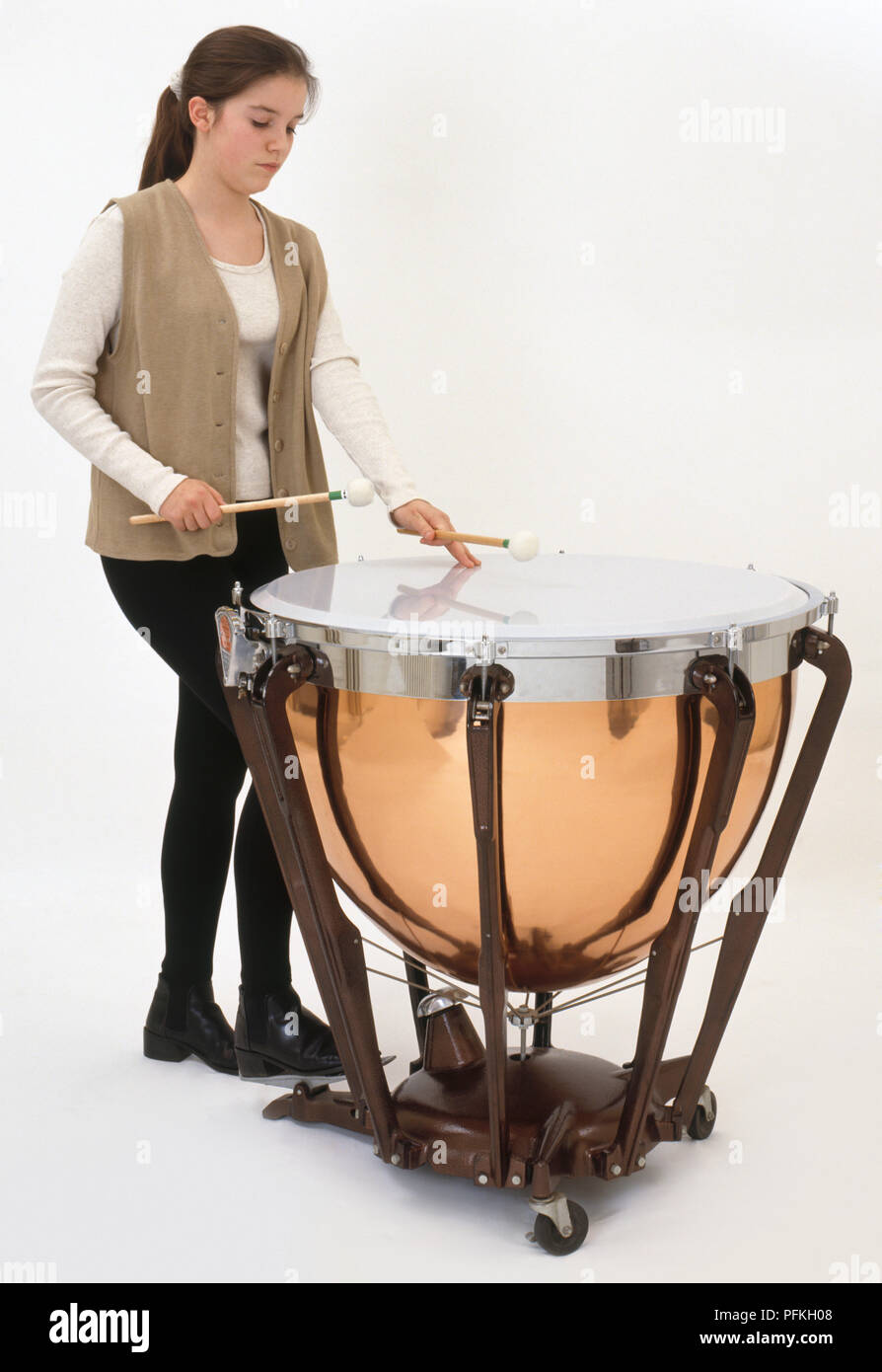
The basic stroke is a controlled downstroke followed by a natural rebound. Start with the mallet a few inches above the head. Drop it with a relaxed motion, then let it bounce away.
Use more height for louder notes and less height for softer notes. Do not press the mallet into the head after contact. That stops the vibration and creates a dull sound.
Practice these stroke types:
- Single strokes use one mallet at a time.
- Alternating strokes switch between the right and left mallets.
- Unison strokes use both mallets together.
- Double strokes use two notes from one hand.
- Damped strokes stop the sound soon after the attack.
Begin with quarter notes at a slow tempo. Then practice eighth notes and sixteenth notes with a metronome.
Count out loud at first. For example, say “one, two, three, four” while playing four even notes. This connects your physical motion to the pulse.
A frequent beginner mistake is moving the hands too far for quiet notes and not far enough for loud notes. Volume should come from controlled movement, not muscle tension.

How to Play Timpani Rolls
A timpani roll creates a sustained sound through rapid alternation between the two mallets. Unlike a snare drum roll, a timpani roll must fit the pitch and resonance of the drum.
Start slowly:
- Play one note with the right mallet.
- Play one note with the left mallet.
- Keep the spacing even.
- Gradually increase the speed.
- Reduce the height as the speed increases.
- Listen for a smooth, connected tone.
The mallets should stay close to the head. Large movements often create gaps between strokes. The best roll speed depends on the drum, mallets, volume, room, and musical style.
A soft roll may need a faster stroke rate than a loud roll. The goal is not simply to play as quickly as possible. The goal is to create a steady sound without audible bumps.
Try rolling for four beats, then stop cleanly on beat one. This teaches control at both the start and the end of the roll.
When learning how to play timpani drums, many students focus only on starting the roll. Experienced players also practice ending it. A clean release can make the difference between a polished performance and a messy one.

Muffling and Controlling Resonance
Muffling means stopping or reducing the vibration of the drumhead. Timpani often need muffling when the music changes quickly or when a note should not continue into the next phrase.
You can muffle with your fingers, hand, or part of your forearm. Use the lightest contact that produces the desired result. Heavy pressure may create an unwanted noise.
Common muffling methods include:
- Finger muffling for short notes
- Hand muffling for a fuller stop
- Natural muffling by choosing a soft mallet and controlled stroke
- Pedal changes that alter the pitch while the drum is still ringing
Read the music carefully. A rest does not always mean you must stop the sound immediately. Sometimes the composer wants resonance. At other times, a lingering note can cover an important chord change.
Practice playing a note, counting two beats, and stopping it exactly on beat three. Then repeat with different volumes.
Muffling is one of the clearest signs that timpani are musical instruments, not just large drums. Silence is part of the phrase.
Reading Timpani Music
Timpani music is written on a standard musical staff. The notes show pitch, rhythm, dynamics, articulation, and sometimes tuning changes.
Before playing, mark the music with useful information:
- Which drum plays each note
- The starting pitch of each drum
- Pedal changes
- Mallet changes
- Muffling points
- Dynamic levels
- Important entrances and rests
Modern timpani parts may include many pitch changes. Some pieces require pedal movement during a roll or between notes. Practice those changes slowly before adding full volume.
Look ahead while playing. Your eyes should not remain fixed on the current note. Timpani parts can change quickly, and the pedal may need preparation before the next pitch arrives.
A good approach is to speak the rhythm while moving the pedal silently. Then play the notes at a slow tempo. This separates the coordination problems and makes them easier to solve.
Dynamic Control and Musical Expression
Dynamics tell you how much energy to use, but they do not tell you to lose tone. A soft timpani note should still speak clearly. A loud note should still sound full rather than forced.
Use these ideas:
- Keep soft strokes close to the head.
- Use more mallet height for louder passages.
- Match your sound to the ensemble.
- Shape crescendos over time.
- Avoid sudden volume changes unless the music calls for them.
Timpani often reinforce bass lines, harmonic changes, and dramatic moments. Listen to the low strings, basses, cellos, trombones, and bass drum. Your part may look simple, but its effect can be powerful.
For example, a single timpani note before a major chord can create tension. If you play it too early, too loudly, or at the wrong pitch, the musical effect disappears.
The best players do not merely count rests. They hear the complete musical line in their minds.
How to Practice Timpani Effectively
A smart practice plan is more valuable than a long practice session. Start with sound quality, then add rhythm, pitch, speed, and musical expression.
Use this 30-minute plan:
- Spend five minutes checking posture, grip, and relaxed strokes.
- Spend five minutes tuning each drum to a reference pitch.
- Spend five minutes playing basic patterns with a metronome.
- Spend five minutes practicing rolls and releases.
- Spend five minutes working on pedal changes and muffling.
- Spend five minutes playing a short musical passage.
Record yourself when possible. A recording can reveal uneven rolls, late entrances, harsh attacks, and tuning problems that are hard to notice while playing.
Practice slowly enough to succeed. If a passage falls apart at a fast tempo, reduce the speed until the motion feels natural. Then increase the tempo in small steps.
One useful lesson from rehearsal work is that rushing usually begins before the actual note. Players often tense their hands while waiting, then strike too soon. Breathe through the rest and keep the pulse moving internally.
Common Mistakes to Avoid
Many problems in how to play timpani drums come from tension, poor preparation, or weak listening skills.
Avoid these mistakes:
- Hitting the center of the head for every note
- Gripping the mallets too tightly
- Using excessive force for loud passages
- Ignoring the written pitch
- Trusting the tuning gauge without listening
- Letting rolls become uneven
- Forgetting to muffle when required
- Changing pedal position without checking the result
- Playing louder than the ensemble
- Practicing only the notes and ignoring the rests
Another common mistake is tuning one drum without checking the full set. A drum may sound correct alone but clash with another instrument in the room.
Also, do not place timpani too close together. You need enough space to move freely and reach each pedal. Keep the playing area clear of music stands, bags, and loose equipment.
If your wrists, elbows, shoulders, or back hurt, stop and reset your technique. Pain is not a normal sign of progress.
Timpani Care and Safety
Proper care protects the instrument and improves its sound. Keep the heads clean and remove dust with a soft, dry cloth. Do not place heavy objects on the drumhead.
Use these care habits:
- Cover timpani when they are not in use.
- Keep them away from extreme heat and cold.
- Avoid sudden changes in humidity when possible.
- Check pedals and tuning mechanisms before playing.
- Move drums with care and use their proper casters.
- Never sit or lean heavily on a drum.
- Replace damaged heads with the correct size and type.
Temperature and humidity can affect drumhead tension. This is especially true for natural skin heads, though plastic heads also respond to environmental changes.
Do not attempt complex repairs without training. A professional technician can inspect the bearing edge, counterhoop, pedal system, and tension hardware.
Learning how to play timpani drums includes learning how to respect the instrument. Careless handling can create mechanical problems that affect tuning and performance.
Playing Timpani in an Ensemble
Timpani must blend with the group. Listen more than you think you need to. Your job may be to support the bass line, mark a cadence, build tension, or reinforce a rhythmic pattern.
Before rehearsal, study the score if it is available. Learn what the other sections are doing during your entrances. This helps you choose the right tone and dynamic.
During rehearsal:
- Watch the conductor’s beat and gestures.
- Listen for the bass line and harmony.
- Match the ensemble’s style.
- Adjust volume when the texture changes.
- Confirm tuning after long rests.
- Mark notes about balance and timing.
Do not assume that a forte marking means maximum volume. Forte in a thin texture may be much softer than forte during a full orchestral climax.
In a school band, the timpani may be the main low percussion voice. In an orchestra, the instrument may need to blend with strings, brass, and bass drum. Context controls your sound.
A Beginner Timpani Exercise
This exercise develops pitch, rhythm, rebound, and muffling.
Tune one drum to a comfortable pitch. Use a metronome at 60 beats per minute.
- Play four quarter notes.
- Rest for four beats.
- Play eight eighth notes.
- Rest for four beats.
- Play a soft four-beat roll.
- Stop the roll cleanly on beat one.
- Repeat the exercise at a medium dynamic.
- Repeat it with a gradual crescendo.
Listen after every set. Ask yourself:
- Did every note have the same tone?
- Did the roll sound connected?
- Did the final release happen on time?
- Did your shoulders stay relaxed?
- Did the pitch remain stable?
Once the exercise feels easy, move it to another drum. Then practice changing between two pitches with the pedal.
This simple routine teaches the foundation of how to play timpani drums without overwhelming a new player.
How Long Does It Take to Learn Timpani?
Most beginners can learn basic strokes and simple rhythms within a few practice sessions. Developing reliable tuning, smooth rolls, pedal control, and ensemble awareness takes much longer.
Progress depends on several factors:
- Practice frequency
- Quality of instruction
- Access to well-maintained timpani
- Music reading ability
- Listening skills
- Previous percussion experience
Practice for 20 to 30 focused minutes several times a week. Short sessions help you maintain good technique. Long sessions can lead to tired muscles and careless playing.
A private teacher or experienced percussion coach can correct problems early. Online lessons can also help, but they may not show every detail of posture, sound, and pedal control.
There is no single timeline for mastery. Timpani players continue refining tone, tuning, timing, and musical judgment throughout their careers.
Frequently Asked Questions About How to Play Timpani Drums
How do you play timpani drums for the first time?
Start by learning the correct grip, playing area, and basic rebound stroke. Tune one drum to a clear reference pitch, then practice slow quarter notes with relaxed wrists.
What part of the timpani should you hit?
Strike about 3 to 4 inches from the edge of the drumhead for a clear, balanced tone. Avoid the exact center and the area too close to the rim unless the music or teacher requires a special sound.
Are timpani drums hard to learn?
Basic strokes are accessible, but accurate tuning, rolls, pedal changes, and musical blending require steady practice. A teacher can help you develop good habits and avoid tension.
How do timpani players change pitch?
Most modern timpani use a foot pedal that changes the tension of the head. Moving the pedal raises or lowers the pitch, but the player must listen and confirm that the note is accurate.
How do you make a timpani roll?
Alternate the right and left mallets quickly with even spacing. Keep the mallets close to the head, use relaxed motion, and adjust the speed and volume so the roll sounds smooth.
What mallets should a beginner use?
A matched pair of medium timpani mallets is a practical starting choice. They provide enough clarity for technique work without being too harsh or too soft.
Should you muffle every timpani note?
No. Muffle only when the music requires a short sound or when resonance would interfere with the next phrase. The score, conductor, and musical context should guide the decision.
Conclusion
Learning how to play timpani drums means combining rhythm, pitch, tone, movement, and careful listening. Start with relaxed strokes, consistent playing areas, accurate tuning, smooth rolls, and controlled muffling. Then apply those skills to real music and ensemble playing.
Practice slowly, record your sound, and ask for feedback from a teacher or experienced percussionist. With steady work, your timpani playing can become clear, powerful, and musical. Explore trusted percussion resources, join a rehearsal, and share your progress with other players.

Senior Music Reviewer
Alex Carter is a seasoned music reviewer with over a decade of experience in the world of sound and instruments. Passionate about helping musicians and enthusiasts make informed choices, he brings sharp insights and in-depth knowledge to every review. From classical instruments to modern gear, Alex combines technical expertise with a love for music to deliver content that resonates with readers.
As a Senior Music Reviewer and expert author on Tuneluma.com, Alex is dedicated to sharing honest evaluations, practical advice, and thoughtful commentary to guide readers in their musical journey.