A Perfect Circle Rhythm Of The War Drums: Meaning And Sound
A Perfect Circle’s “rhythm of the war drums” evokes the pull between violence, power, fear, and human conscience.
A Perfect Circle’s rhythm of the war drums is best understood as a poetic idea rather than a confirmed song title. It captures the band’s gift for turning dark rhythms, sharp words, and uneasy silence into a warning about war, control, grief, and blind obedience. This guide explores that meaning through the band’s music, themes, sound, and cultural context.
What Does “A Perfect Circle Rhythm of the War Drums” Mean?
The phrase “a perfect circle rhythm of the war drums” suggests a steady beat that calls people toward conflict. War drums have long symbolized mobilization. Their sound can gather a crowd, raise fear, or make violence feel like duty.
When linked to A Perfect Circle, the phrase gains a deeper meaning. The band often presents conflict as more than a battle between armies. Its songs examine political power, public anger, religious certainty, media influence, and the emotional cost of war.
A perfect circle rhythm of the war drums can therefore describe three connected ideas:
• The physical beat of marching and combat
• The emotional pressure that pushes people toward violence
• The repeating cycle in which fear creates anger, and anger creates more fear
The word “circle” matters here. A circle has no clear beginning or end. It suggests that humanity may repeat the same mistakes, even after seeing the damage they cause.
This interpretation fits the band’s wider style. A Perfect Circle often uses dramatic tension instead of simple answers. The music may sound beautiful and controlled, yet the lyrics can reveal panic, cruelty, or moral collapse beneath the surface.

Is “Rhythm of the War Drums” an Official A Perfect Circle Song?
There is no widely verified A Perfect Circle song officially titled “Rhythm of the War Drums.” The phrase appears to function more like a search term, thematic description, or poetic summary of the band’s war-related sound.
That distinction is important. Music fans often describe a song through a memorable image, lyric fragment, or mood. Over time, that description can look like an official title, even when it is not part of the band’s discography.
A Perfect Circle’s catalog does contain songs that support this interpretation. Tracks such as “Judith,” “Passive,” “The Noose,” “The Outsider,” “Counting Bodies Like Sheep to the Rhythm of the War Drums,” “The Doomed,” and “TalkTalk” explore anger, control, social pressure, faith, and political frustration.
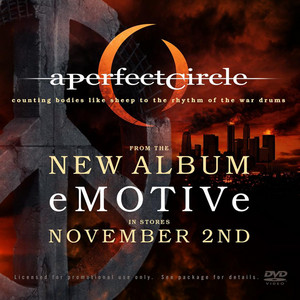
The closest direct connection is the title “Counting Bodies Like Sheep to the Rhythm of the War Drums.” That song appears on the 2004 album eMOTIVe, a collection built around reworked protest and antiwar songs. The title itself turns the sound of war into a grim counting exercise.
This is why many listeners connect the phrase with A Perfect Circle. It is not only about drums. It is about how repeated sounds can make terrible actions seem normal.

“Counting Bodies Like Sheep” and the Sound of War
“Counting Bodies Like Sheep to the Rhythm of the War Drums” is one of A Perfect Circle’s clearest statements on war. The title is disturbing because it joins two images that should never feel comfortable together.
Counting bodies suggests death reduced to numbers. Sheep suggest passive followers, while war drums suggest command and movement. Together, these images describe a society that marches forward while treating human lives as statistics.
The song is a reworking of “Pet,” which appeared on the band’s 2000 album Mer de Noms. The newer version changes the context and mood. It places the song inside the political and cultural anxiety surrounding the early 2000s.
Its sound is slow, heavy, and hypnotic. Instead of using a fast combat beat, A Perfect Circle creates a dragging pulse. The rhythm feels like a machine that keeps moving long after people have stopped asking where it is going.
That choice makes the song more unsettling. A perfect circle rhythm of the war drums does not need to sound heroic. It can sound calm, polished, and almost comforting. That contrast reveals how propaganda can hide violence behind order and routine.
The song also raises a difficult question: Who is responsible when people follow a destructive system without challenging it? The answer is not simple. Leaders make decisions, but institutions, media, voters, soldiers, and ordinary citizens can all play a role in sustaining harmful cycles.
How A Perfect Circle Uses Rhythm to Create Tension
A Perfect Circle rarely treats rhythm as a simple background element. The band uses rhythm to shape the listener’s emotional response.
In songs connected to war and social conflict, the beat may feel repetitive for a reason. Repetition can represent:
• Military training
• Political slogans
• News cycles
• Public fear
• Crowd behavior
• Emotional numbness
A drum pattern can act like a command. Once the listener accepts the pattern, the body begins to respond before the mind has time to question it. This is one reason marching music has been used by armies and political movements for centuries.
The rhythm in a perfect circle rhythm of the war drums can also suggest entrapment. The listener hears the same pulse again and again. There is movement, but there is no escape. The music advances while remaining emotionally trapped in one place.
This effect is common in dark alternative rock and industrial music. Bass, percussion, and electronic textures can create a sense of machinery. A Perfect Circle uses those tools with restraint, allowing silence and space to make the heavier moments feel even larger.
From a production standpoint, the band often favors atmosphere over speed. Maynard James Keenan’s vocal delivery can sound distant, controlled, or threatening. That vocal restraint creates a sharp contrast with the subject matter.
Instead of shouting every message, the band may whisper it. That choice forces the listener to lean in. The result can feel more personal than a direct political speech.

The Main Themes Behind the War Drum Image
Violence as a Repeating Cycle
War rarely ends when the final shot is fired. It can continue through trauma, revenge, displacement, poverty, and political fear. The circle image reflects this long aftermath.
A perfect circle rhythm of the war drums represents the way one conflict can prepare the ground for another. Loss creates anger. Anger creates punishment. Punishment creates new loss.
The cycle can appear in families, communities, nations, and online spaces. The scale changes, but the emotional pattern remains familiar.
Obedience and Control
The drumbeat can symbolize an external force telling people how to think and act. It may come from a government, a religious group, a media system, or a crowd.
A Perfect Circle often questions authority without offering an easy replacement. The music asks listeners to examine the voices they trust and the stories they repeat.
This does not mean every institution is corrupt. It means trust should include judgment. Healthy societies require people who can listen, check facts, and disagree without turning disagreement into hatred.
Dehumanization
The phrase “counting bodies” is powerful because it shows how language can hide pain. A number is easier to process than a name, a face, or a family story.
War reporting often depends on numbers. Numbers matter, but they do not tell the whole story. Behind every statistic is a person with memories, relationships, fears, and plans.
The war drum image warns us about the moment when repeated exposure to violence makes suffering feel ordinary.
Fear as a Political Tool
Fear can unite people quickly. It can also reduce careful thought. When a population feels threatened, leaders may gain support for actions that would otherwise face strong criticism.
The rhythm becomes a symbol of this pressure. Once the beat begins, silence can feel like weakness, and questioning can feel like betrayal.
A thoughtful listener should resist that trap. Concern for safety does not require blind obedience. Strong communities can protect themselves while still defending human dignity and lawful debate.
Why the Song Still Feels Relevant
The message remains relevant because modern audiences still face constant images of conflict. News alerts, social media posts, videos, and political speeches can create a nonstop stream of crisis.
This environment changes how people process information. A person may feel intense emotion for a few minutes, then move to another story. Over time, tragedy can become background noise.
That is where the idea of a perfect circle rhythm of the war drums becomes useful. It describes not only battlefield sound but also the endless digital pulse of outrage, fear, and reaction.
The phrase can apply to:
• Military conflict
• Political polarization
• Violent online rhetoric
• Nationalist propaganda
• Public fear after a crisis
• The business of war and security
• The emotional fatigue caused by constant bad news
A Perfect Circle’s music does not provide a complete political theory. Its value is more emotional and artistic. It creates a space where listeners can feel discomfort instead of escaping it.
That discomfort can be productive. It may encourage people to question simple slogans, study history, and consider the human cost behind political language.

A Personal Listening Approach That Deepens the Song
When I study a song with strong political themes, I try not to focus only on the lyrics. I listen to the shape of the track.
I ask four simple questions:
-
What does the rhythm make my body feel?
-
Does the vocal sound angry, afraid, calm, or detached?
-
Which words repeat, and why?
-
Does the music offer release, or does it leave me trapped in the same mood?
This approach works especially well with “Counting Bodies Like Sheep.” The repeated pulse feels less like a traditional rock groove and more like a ritual. It pulls the listener into a narrow emotional space.
One mistake is to treat the song as a slogan with one fixed meaning. That can flatten the art. The stronger approach is to hear the song as a warning about systems that make cruelty feel routine.
Another mistake is to assume that dark music always celebrates darkness. In many cases, the opposite is true. Artists use disturbing images to expose what society would rather ignore.
My practical advice is simple: listen once for the sound, once for the words, and once for the connection between them. Notice what changes between each listen. The rhythm may seem powerful at first, but its deeper effect may be one of exhaustion or grief.

How to Analyze A Perfect Circle’s War Themes
A clear analysis should connect the song’s sound, words, history, and audience response.
Start With the Title
The title “Counting Bodies Like Sheep to the Rhythm of the War Drums” immediately creates a conflict between innocence and violence. Sheep imply passivity, while bodies imply death.
Ask why the title uses “counting.” Counting can be practical, but it can also show emotional distance. The phrase suggests a world where death has become routine work.
Study the Arrangement
Listen for the bass, drum pattern, vocal layers, pauses, and changes in volume. A slow rhythm may suggest weight or inevitability. Repetition may suggest conditioning.
The arrangement can reveal an argument even when the lyrics remain abstract.
Consider the Historical Context
The song’s release on eMOTIVe placed it within a period of major public debate about war, government power, and military intervention. Understanding that context helps explain its urgency.
Still, the song should not be locked inside one historical moment. Its ideas can apply to later conflicts and new forms of mass persuasion.
Separate Fact From Interpretation
A reliable analysis should identify what is documented and what is personal opinion. The song title, album placement, and relation to “Pet” are factual points. Claims about symbolism are interpretations.
Being clear about that difference makes music criticism stronger, not weaker.

The Benefits and Limits of This Interpretation
The biggest benefit of this interpretation is that it connects music with real human behavior. Rhythm is not only an artistic device. It can shape attention, emotion, group identity, and memory.
The phrase also gives listeners a useful way to discuss political music without reducing it to a simple protest label. A Perfect Circle’s work often explores private pain and public systems at the same time.
However, there are limits. Not every listener will hear the song as a direct statement about one war or government. Music allows personal meaning, and the band’s layered style encourages different readings.
It is also important not to claim that a song can explain the full causes of war. Art can reveal emotion and moral tension, but serious political analysis requires history, evidence, and multiple perspectives.
A perfect circle rhythm of the war drums works best as a lens. It helps us notice patterns. It should not replace careful research or thoughtful civic action.
Frequently Asked Questions About A Perfect Circle Rhythm of the War Drums
Is “Rhythm of the War Drums” an official A Perfect Circle song?
No widely verified A Perfect Circle song carries that exact title. The phrase is usually connected to “Counting Bodies Like Sheep to the Rhythm of the War Drums,” a song from the album eMOTIVe.
What is “Counting Bodies Like Sheep” about?
The song explores war, obedience, dehumanization, and the way violence can become routine. Its title contrasts passive followers with the human cost of military conflict.
Is “Counting Bodies Like Sheep” related to “Pet”?
Yes. “Counting Bodies Like Sheep to the Rhythm of the War Drums” reworks “Pet,” which first appeared on Mer de Noms. The later version gives the earlier song a stronger antiwar and political context.
Why are drums important in war music?
Drums can coordinate movement, build courage, and create a shared group identity. In A Perfect Circle’s music, the drum-like pulse can also symbolize control, repetition, fear, and emotional conditioning.
What does the circle symbolize in this interpretation?
The circle suggests repetition and entrapment. It represents the way violence, fear, and obedience can create a cycle that continues across generations.
Is A Perfect Circle’s music political?
Some of the band’s music clearly addresses war, authority, religion, social anger, and political behavior. Yet the songs often use personal and symbolic language, so listeners may find both political and emotional meanings in them.
Conclusion
A perfect circle rhythm of the war drums is a powerful way to understand A Perfect Circle’s approach to conflict. The phrase points toward repetition, obedience, fear, and the painful habit of treating human lives as numbers.
The strongest musical connection is “Counting Bodies Like Sheep to the Rhythm of the War Drums,” a reworking of “Pet” that turns a steady pulse into a warning. Its dark sound does not glorify war. It shows how violence can become organized, normalized, and emotionally distant.
Listen to the song with attention to its rhythm, silence, voice, and historical setting. Then explore the wider themes across A Perfect Circle’s catalog, and share your own interpretation of the war drum image in the comments.

Senior Music Reviewer
Alex Carter is a seasoned music reviewer with over a decade of experience in the world of sound and instruments. Passionate about helping musicians and enthusiasts make informed choices, he brings sharp insights and in-depth knowledge to every review. From classical instruments to modern gear, Alex combines technical expertise with a love for music to deliver content that resonates with readers.
As a Senior Music Reviewer and expert author on Tuneluma.com, Alex is dedicated to sharing honest evaluations, practical advice, and thoughtful commentary to guide readers in their musical journey.