How Long Is A Grand Piano: Complete Size Guide
A grand piano is usually 4.5 to 10 feet long, depending on its type, model, and intended use.
Knowing how long is a grand piano matters before you buy one, move one, or plan a room around it. The size affects sound, cost, transport, tuning, and even how people move through your home. This guide explains grand piano lengths in simple terms, with practical room tips and clear size examples.
How Long Is a Grand Piano?
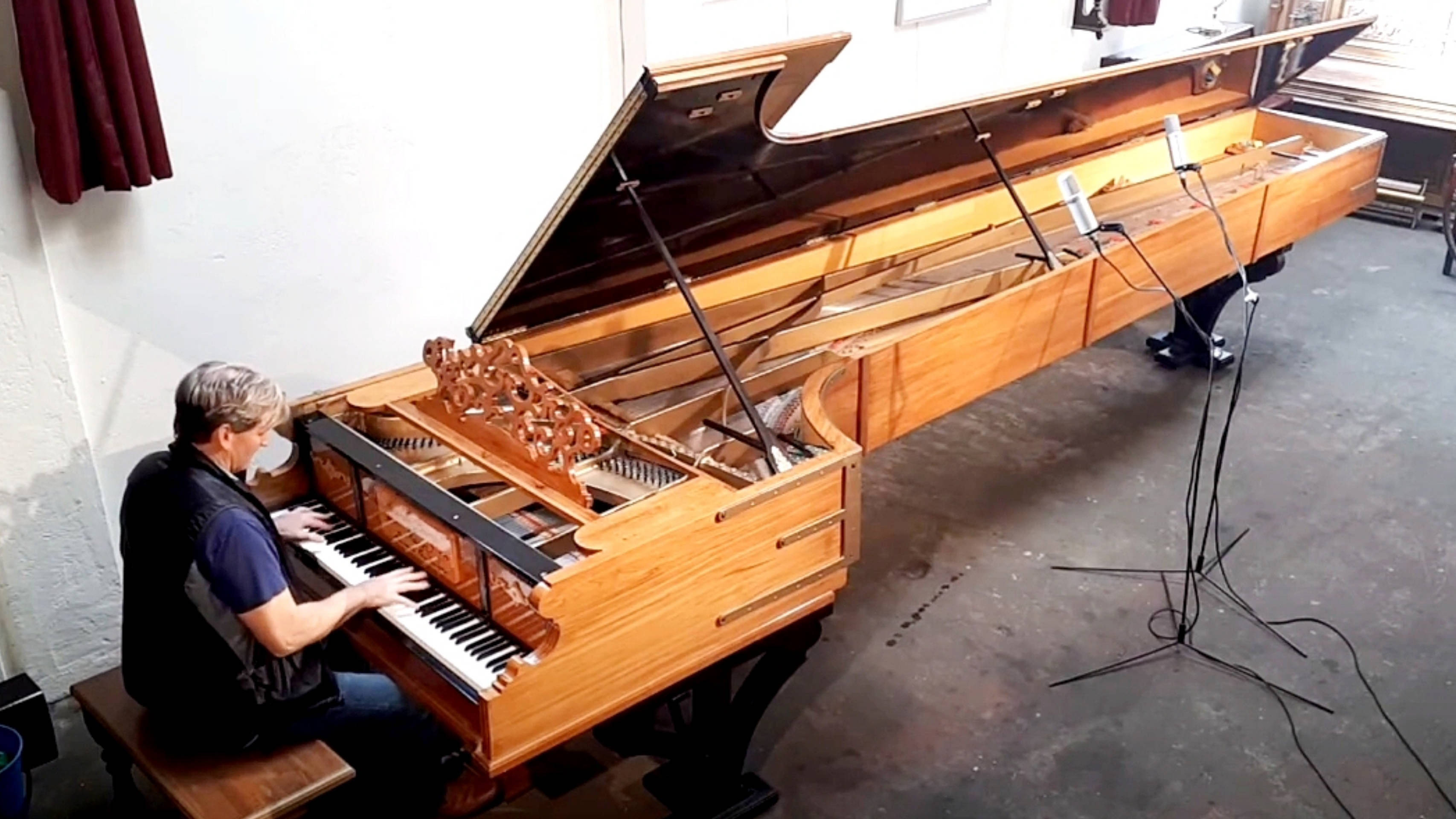
Most grand pianos measure between 4 feet 6 inches and 10 feet long. Small baby grand pianos sit at the lower end of that range, while full concert grand pianos can reach 9 feet or more.
The length is measured from the front of the keyboard to the far end of the curved tail. It does not refer to the piano’s height. A grand piano is low and wide, but its long soundboard gives it a rich, powerful voice.
Here is a simple size guide:
| Grand piano type | Typical length | Common use |
|---|---|---|
| Petite baby grand | 4 feet 6 inches to 5 feet | Small homes and apartments |
| Baby grand | 5 feet to 5 feet 8 inches | Homes, studios, teaching |
| Medium grand | 5 feet 9 inches to 6 feet 8 inches | Larger homes and schools |
| Parlor grand | 6 feet 8 inches to 7 feet 6 inches | Private rooms and halls |
| Semi-concert grand | 7 feet 6 inches to 8 feet 9 inches | Churches and performance spaces |
| Concert grand | 8 feet 9 inches to 10 feet | Concert stages and major venues |
So, how long is a grand piano in a typical home? In many cases, it is about 5 to 6 feet long. That range offers a good balance between sound quality and room size.
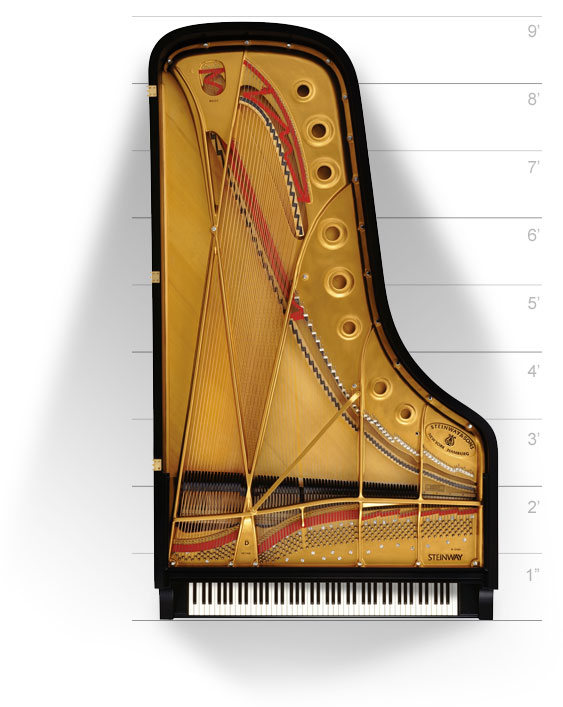
Grand Piano Length by Type
Grand pianos are grouped by length, but the names can vary by maker. One brand may call a 5-foot piano a baby grand, while another may use a different label. The actual measurement is more useful than the marketing name.
Petite baby grand pianos
A petite baby grand usually measures about 4 feet 6 inches to 5 feet long. It is the smallest standard grand piano style.
These pianos fit well in:
- Small living rooms
- Private music rooms
- Apartments with proper floor support
- Teaching studios
- Compact recording spaces
A short grand piano can still sound warm and clear. However, its bass strings and soundboard are smaller, so the bass may not have the depth of a larger instrument.
Baby grand pianos
A baby grand piano often measures from 5 feet to 5 feet 8 inches long. This is one of the most popular sizes for home use.
A 5-foot or 5-foot-4 piano can offer:
- A more open tone than many upright pianos
- Better visual balance in a home
- A responsive action for practice
- Enough volume for most family rooms
When people ask how long is a grand piano, they often mean this common baby grand size. It is large enough to provide the grand piano experience without requiring a concert-sized room.
Medium and parlor grand pianos
Medium grands range from about 5 feet 9 inches to 6 feet 8 inches. Parlor grands often begin around 6 feet 8 inches and may reach 7 feet 6 inches.
These instruments have longer strings and larger soundboards. That usually creates a deeper bass, a broader dynamic range, and more power. They work well in large homes, recital rooms, churches, and professional teaching studios.
Concert grand pianos
A concert grand commonly measures between 8 feet 9 inches and 10 feet long. Some models may be slightly shorter or longer.
Concert grands are made for large performance spaces. Their longer strings help produce strong bass and a wide, balanced tone that can carry across an orchestra. They can be too powerful and physically large for many homes.
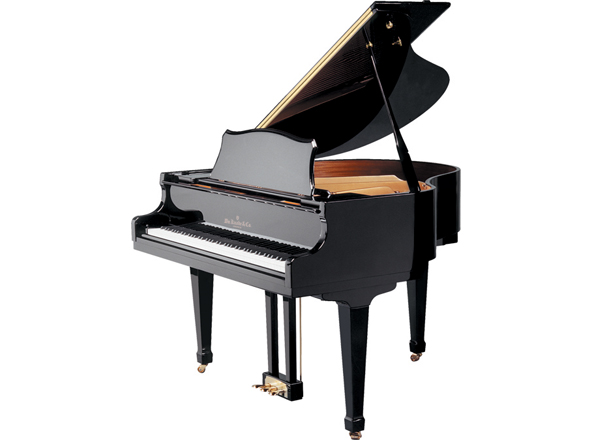
How Long Is a Grand Piano Compared With an Upright Piano?
An upright piano is usually about 4 feet 6 inches to 5 feet 2 inches tall. Its width often falls between 4 feet 8 inches and 5 feet. A grand piano may be similar in width, but it extends much farther into the room.
The main difference is direction:
- An upright piano stores its strings and soundboard vertically.
- A grand piano places its strings and soundboard horizontally.
- A grand piano needs more floor space.
- An upright piano usually needs more wall space.
For example, a 5-foot-2 baby grand may need a footprint of roughly 5 feet by 5 feet when you include the bench and playing area. A similar upright may need only about 2 feet of floor depth.
A grand piano also needs room for its lid, pedals, bench, and moving path. Measuring only the piano body can lead to a cramped layout.
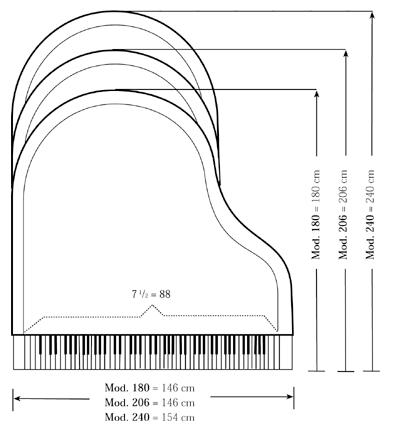
How Much Room Does a Grand Piano Need?
The piano’s length is only one part of the space plan. You also need to allow room for the keyboard, bench, lid, doors, walkways, and sound movement.
A practical room plan should include:
- The full length of the piano
- About 2 feet of space for the pianist and bench
- At least 2 to 3 feet for a comfortable walkway
- Extra room around the curved tail
- Enough clearance to open the lid safely
- A clear path for delivery and future service
A 5-foot grand piano may work well in a room that is about 12 feet by 14 feet, depending on furniture and acoustics. A larger 7-foot piano may feel more comfortable in a room around 14 feet by 18 feet or larger.
These are planning estimates, not strict rules. A room with hard floors and bare walls may sound loud with a small grand. A carpeted room with soft furniture may absorb sound and make a larger piano more suitable.
Before buying, mark the piano’s footprint on the floor with painter’s tape. Add the bench and a walking path. This simple test often reveals problems that a showroom visit hides.
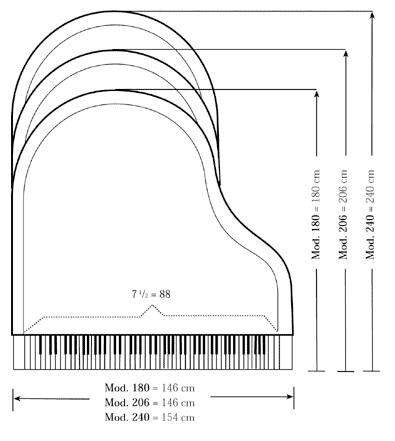
Does a Longer Grand Piano Sound Better?
A longer grand piano often has greater tonal power, but size alone does not guarantee better sound. Design, materials, scale length, action quality, regulation, and maintenance also matter.
Longer pianos generally offer:
- Longer bass strings
- A larger soundboard
- More powerful low notes
- Better sustain
- More room for tonal color
- Greater projection in large halls
A 7-foot grand may produce a deeper bass than a 5-foot grand. However, a well-built and well-maintained 5-foot piano can sound better than a neglected 7-foot instrument.
The room matters, too. A concert grand in a small, hard room may sound harsh or overwhelming. A smaller grand can sound more balanced and musical when matched to the space.
Think of piano size like speaker size. Bigger equipment can produce more sound, but the room must be able to handle it.

How to Measure a Grand Piano Correctly
If you need to know how long is a grand piano for delivery or room planning, measure it from the right points.
Follow these steps:
- Close the piano lid.
- Measure from the front edge of the keyboard area to the farthest point of the tail.
- Keep the tape straight along the piano’s center line.
- Record the width from the left side to the right side.
- Measure the height from the floor to the highest closed lid point.
- Add space for the bench and walking areas.
Do not measure along the curved outside edge. That method gives a longer number and does not match the standard specification.
Also check the manufacturer’s model information. Some pianos have unusual tail shapes, and the listed length may differ slightly from a quick home measurement.
When I have seen piano rooms planned poorly, the issue was rarely the piano body alone. The real problem was a narrow doorway, a sharp turn, or a staircase. Measure the delivery route as carefully as the room.
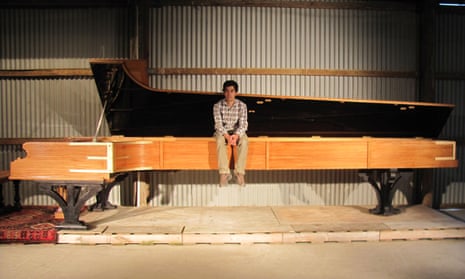
Grand Piano Dimensions Beyond Length
Length is important, but a grand piano has several dimensions that affect placement.
Width
Most grand pianos are about 4 feet 8 inches to 5 feet 2 inches wide. The keyboard end is usually wider than the tail.
A wider piano may need more side clearance, especially if it sits near a wall, window, or large cabinet.
Height
A grand piano’s height is measured with the lid closed. It is often around 3 feet to 3 feet 6 inches, depending on the model and leg design.
The open lid can rise much higher. Check the lid height if the piano will sit under a ceiling fan, light fixture, shelf, or artwork.
Weight
A small grand piano may weigh around 500 to 600 pounds. Larger concert grands can weigh more than 1,000 pounds.
Weight affects:
- Floor loading
- Moving equipment
- Stair access
- Delivery cost
- Placement on upper floors
A professional piano mover should assess tight turns, stairs, balconies, and flooring before delivery.
How Long Is a Grand Piano for Moving?
A grand piano’s length can make moving difficult, even when the instrument seems compact in a showroom. A 5-foot piano still needs a large doorway and enough turning space.
Before arranging delivery, measure:
- The front door
- Hallways
- Interior doors
- Stair width
- Ceiling height
- Elevator dimensions
- Sharp corners
- Driveway access
The piano may need to stand on its side during part of the move. Professional movers use a piano skid board, protective padding, straps, and specialized equipment.
Never lift a grand piano by its legs, music desk, or lid. Those parts are not designed to carry the instrument’s full weight. A mistake can damage the piano and cause serious injury.
One useful lesson is to measure every turn, not just every doorway. A piano can fit through a door and still fail to make the next corner.

How Long Is a Grand Piano Lid?
The lid length is close to the piano’s body length, but its exact size depends on the design. A large grand piano lid can extend several feet when fully open.
Most grand pianos have multiple lid positions:
- Closed for storage and moving
- Short stick for moderate projection
- Full stick for maximum sound projection
The full-stick position can make a room sound much louder. In a home, the short-stick position is often more comfortable, especially during practice.
Keep the lid away from ceiling fixtures and allow room for safe operation. Do not place objects on the lid, even when it is closed.
How to Choose the Right Grand Piano Length
The best piano size depends on your goals, room, budget, and neighbors. A longer piano may offer more tone, but it also costs more to buy, move, tune, and maintain.
Use these guidelines:
- Choose a 4-foot-6 to 5-foot grand for a compact room.
- Choose a 5-foot to 6-foot grand for many homes.
- Choose a 6-foot to 7-foot grand for advanced players and larger rooms.
- Choose an 8-foot or longer grand for halls and professional performance.
- Consider an upright if floor space is limited.
- Test the piano in person before making a final choice.
The player’s needs matter as much as the room. A beginner may enjoy a small grand for its touch and beauty. A professional may need the power and bass response of a longer model.
Set a complete budget. Include delivery, a first tuning after the move, regular tuning, humidity control, bench replacement, and possible regulation.
Common Mistakes When Measuring a Grand Piano
Many buyers focus on the listed length and forget the practical details. These mistakes can create stress after the purchase.
Avoid these errors:
- Measuring only the wall, not the piano’s full footprint
- Forgetting the bench and pianist’s space
- Ignoring the open lid
- Failing to measure stairways and turns
- Assuming all 5-foot grands have the same dimensions
- Placing the piano beside a heat vent or radiator
- Skipping a professional delivery survey
- Choosing a piano by size alone
Direct sunlight and rapid temperature changes can affect tuning and wood stability. Keep the piano away from heating vents, fireplaces, damp areas, and strong sunlight when possible.
A piano technician can also help judge room acoustics. Their advice is especially useful when choosing between two models of similar length.
Frequently Asked Questions About How Long Is a Grand Piano
How long is a baby grand piano?
A baby grand piano is usually 5 to 5 feet 8 inches long. Petite models may be as short as 4 feet 6 inches.
How long is a concert grand piano?
A concert grand piano commonly measures 8 feet 9 inches to 10 feet long. Some performance models may fall just outside this range.
Is a 5-foot grand piano too large for a home?
A 5-foot grand piano can fit well in many homes if the room has enough clearance. Measure the piano, bench, lid, walkways, and delivery route before buying.
What is the shortest grand piano?
The shortest grand pianos are usually petite baby grands, which can measure about 4 feet 6 inches long. Their tone may have less bass depth than that of larger grands.
How wide is a grand piano?
Most grand pianos are about 4 feet 8 inches to 5 feet 2 inches wide. The exact width depends on the brand and model.
Can a grand piano fit through a standard door?
Many grand pianos can pass through a standard door when handled by professional movers. The full route, including corners, stairs, and door angles, must be measured first.
Does grand piano length include the keyboard?
Yes. The listed grand piano length is measured from the front keyboard area to the far end of the tail. It does not include extra space for the bench or pianist.
Conclusion
A grand piano is usually 4 feet 6 inches to 10 feet long. Most home grand pianos fall between 5 and 6 feet, while concert grands may reach 9 or 10 feet. Length affects sound, room fit, moving needs, cost, and maintenance.
Measure the piano’s full footprint, check the delivery route, and match the instrument to the room. If you are comparing models, visit a showroom, speak with a piano technician, and test how each size sounds in person. A careful choice will help your piano feel like a natural part of your home for many years.

Senior Music Reviewer
Alex Carter is a seasoned music reviewer with over a decade of experience in the world of sound and instruments. Passionate about helping musicians and enthusiasts make informed choices, he brings sharp insights and in-depth knowledge to every review. From classical instruments to modern gear, Alex combines technical expertise with a love for music to deliver content that resonates with readers.
As a Senior Music Reviewer and expert author on Tuneluma.com, Alex is dedicated to sharing honest evaluations, practical advice, and thoughtful commentary to guide readers in their musical journey.