How Do The Drums Work: A Simple Guide To Drum Science
Drums work by turning a struck, stretched membrane into vibrations that move air and create sound.
The question “how do the drums work” reaches far beyond a simple hit-and-sound action. Drum tone depends on tension, shape, materials, air pressure, shell design, and the way a player strikes the head. This guide explains the science in plain language, with practical tips for tuning, playing, recording, and choosing drums.

How do the drums work?
A drum makes sound when a player strikes its drumhead. The impact causes the head to vibrate back and forth. Those vibrations push and pull the air around the drum, creating sound waves that travel to your ears.
The drumhead does not work alone. It transfers much of its energy to the shell and the air inside the drum. The shell helps shape the tone, while the air inside supports and strengthens certain vibrations.
A useful way to picture how do the drums work is to imagine a trampoline. If you tap a trampoline, it moves in several directions at once. A drumhead behaves in a similar way, but its fast movement creates audible pressure waves.
The main parts involved are:
• Drumhead: The stretched surface that receives the удар and vibrates.
• Shell: The round body that supports the heads and affects tone.
• Bearing edge: The smooth rim where the drumhead rests.
• Hoops and lugs: The hardware that holds and tightens the head.
• Air cavity: The space inside the drum that helps shape resonance.
• Vent hole: A small opening that balances air pressure in many drums.
The pitch, volume, and tone change when any of these parts change. A tight head usually produces a higher pitch. A loose head creates a lower, softer, or more relaxed sound.
What happens when you hit a drum?
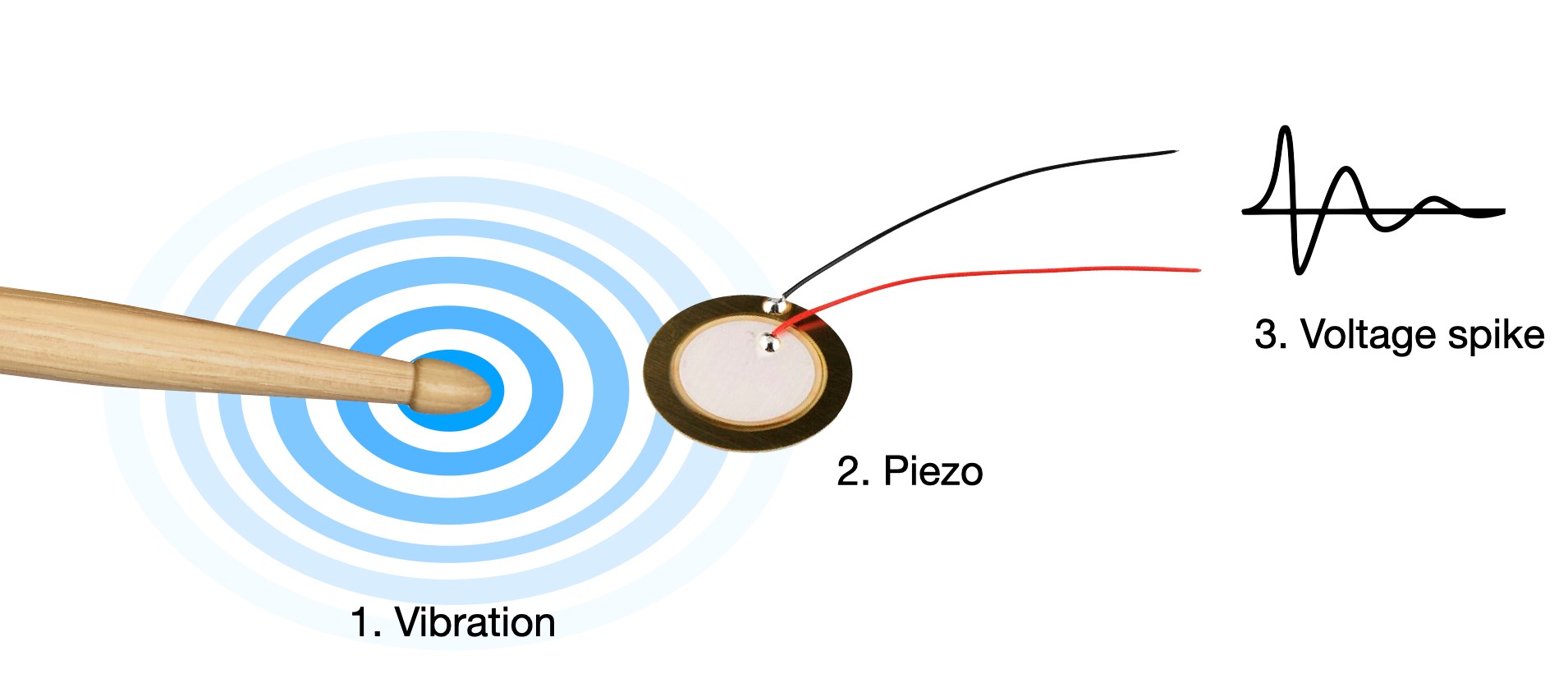
When a stick, hand, or mallet hits the head, it transfers energy into the membrane. The head bends down at the point of impact, then springs back. This motion creates a complex pattern of vibrations called modes.
Each vibration mode produces a different frequency. The lowest major vibration is often called the fundamental tone. Higher vibration modes add overtones, which give the drum its character.
This explains why two drums can play the same basic note but sound very different. One may sound warm and deep, while another sounds bright and sharp. The difference comes from the head, shell, tuning, damping, and playing position.
The impact also changes with the tool:
• A wooden stick creates a clear attack and strong high frequencies.
• A soft mallet produces a rounder and gentler sound.
• Bare hands add warmth and reduce sharp attack.
• Brushes create a soft sweep and a light texture.
• A hard beater creates a focused, powerful sound on a bass drum.
The location of the hit matters, too. Striking the center often creates a full, open tone. Hitting near the edge adds more high-frequency detail and less low-end depth. This is one reason skilled drummers move around the head during a performance.
How do drumheads create pitch?
Drumheads create pitch through tension, size, thickness, and vibration. Unlike a guitar string, a drumhead vibrates in many patterns at once. As a result, most drums do not produce one perfectly clear musical note.
Tension is one of the biggest factors. Tightening the head raises its pitch because the membrane resists movement more strongly. Loosening it lowers the pitch and lets the head move farther.
Diameter matters as well. A larger drumhead tends to produce a lower sound because it can vibrate in slower, broader patterns. A small drumhead vibrates faster and usually sounds higher.
Thickness affects both pitch and attack:
• Thin heads respond quickly and often sound bright.
• Thick heads create a stronger attack and more durability.
• Two-ply heads control overtones and provide a fuller sound.
• Coated heads produce a softer attack and a warmer tone.
• Clear heads often sound open, bright, and lively.
Temperature and humidity can also affect tuning. A drumhead may become tighter in some conditions and looser in others. That is why a drum can sound different before and after a long rehearsal.
The phrase how do the drums work becomes easier to understand when you see the head as a flexible acoustic system. It does not simply make one note. It produces a group of related vibrations that the ear blends into a single drum sound.
How does the drum shell affect sound?
The shell gives a drum its voice. It supports the head and reflects some of the sound energy produced inside the drum. Shell depth, diameter, wood type, thickness, and construction all influence the result.
A deeper shell often produces more low-end body and volume. A shallow shell can respond quickly and sound crisp. A wide drum usually has a lower voice than a narrow drum.
Common shell materials include:
• Maple: Often associated with balanced tone and strong projection.
• Birch: Known for clear attack and controlled high frequencies.
• Mahogany: Often produces warm low and mid tones.
• Poplar: Can offer a soft, affordable, and balanced sound.
• Steel: Common in snare drums because it gives bright attack and strong projection.
• Brass: Often produces a powerful, rich, and lively snare tone.
Material alone does not determine quality. Shell shape, bearing edges, thickness, glue joints, and hardware also matter. A well-made drum from one material may sound better for a specific purpose than a more expensive drum made from another.
When learning how do the drums work, it helps to think of the shell as a filter. It does not create every sound by itself, but it changes which frequencies become stronger or weaker.
How do snare drums, toms, and bass drums differ?
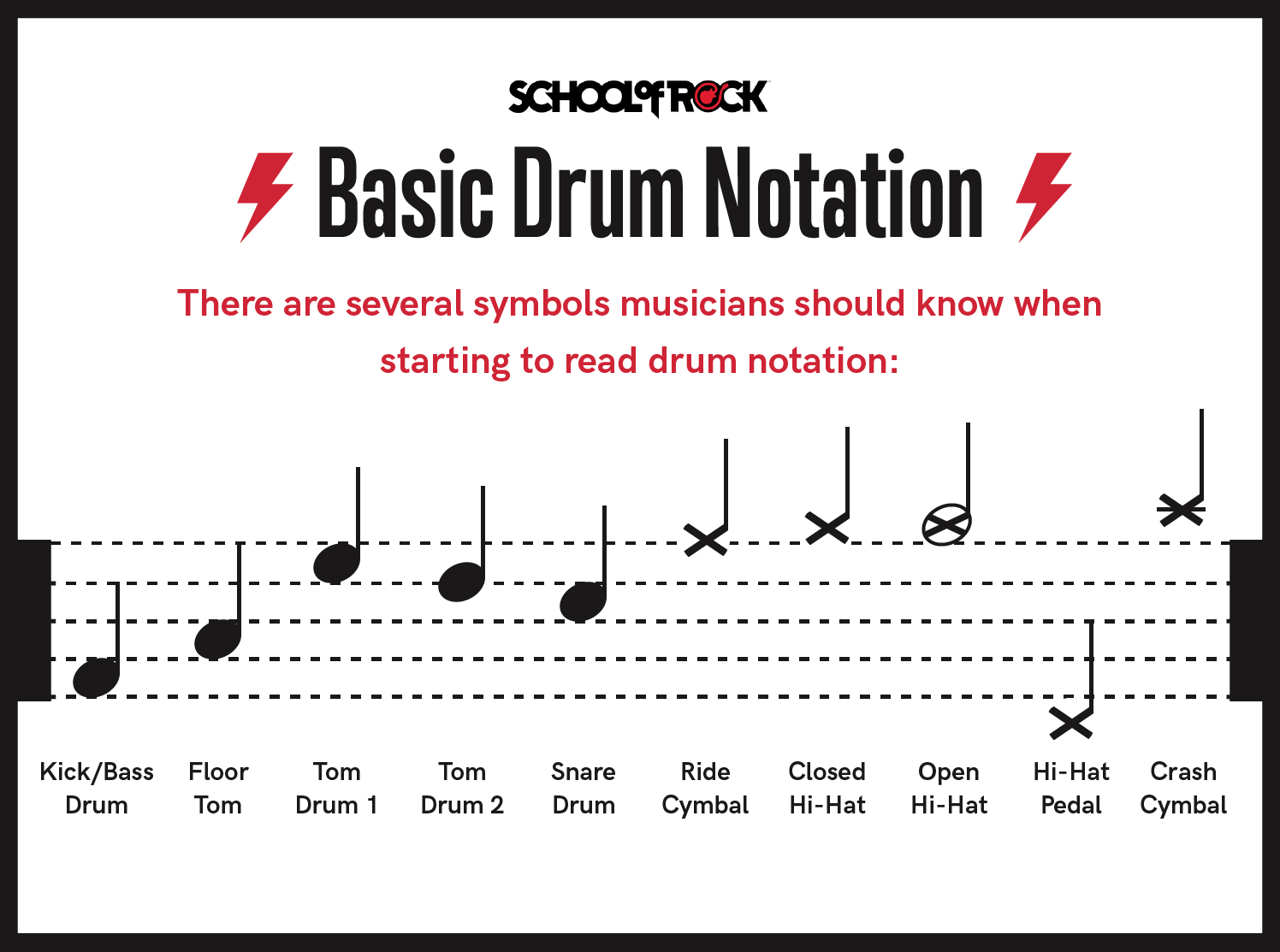
A drum kit includes several types of drums. Each one uses the same basic vibration process, but its size, head setup, and hardware create a different role.
Snare drum
A snare drum has wires stretched across the bottom head. When the top head vibrates, the wires rattle against the bottom head. This creates the sharp, buzzing sound that gives the snare its identity.
The snare wires respond to both direct hits and vibrations from nearby drums. This is why a loud bass drum or tom can make the snare buzz even when you do not hit it.
Toms
Toms usually have no snare wires. They create round, resonant tones that help build fills and musical movement. Their pitch rises as the drum size becomes smaller.
A floor tom has a large shell and often produces a deep, booming sound. Rack toms are smaller and usually offer higher pitches.
Bass drum
The bass drum has a large diameter and low tuning. A foot pedal pushes a beater into the batter head. The head moves a large amount of air, creating the deep pulse heard in many music styles.
A pillow, foam pad, or internal damping device can reduce unwanted ring inside a bass drum. However, too much damping can remove life and power from the sound.
Understanding how do the drums work across these examples shows that size and added parts are musical tools. They let one drum kit cover low, middle, high, sharp, soft, and sustained sounds.
How do drum tuning and tension work?
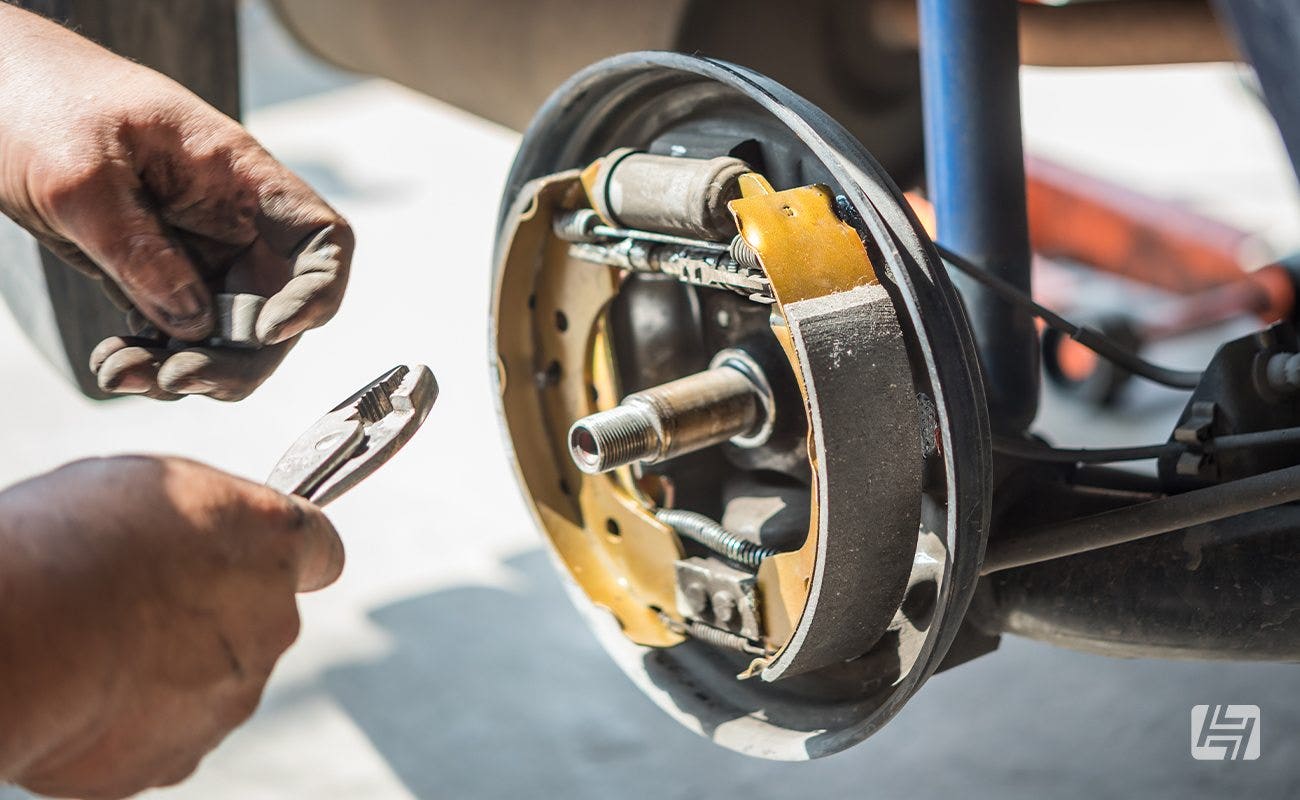
Drum tuning means adjusting the tension around the head. You do this by turning the tension rods connected to the lugs. Small, even changes usually produce better results than large turns on one lug.
A simple tuning process works well:
-
Place the head on the shell and fit the hoop.
-
Finger-tighten each tension rod.
-
Press gently in the center of the head to seat it.
-
Tighten each rod in a cross pattern.
-
Tap near each lug and compare the pitches.
-
Make small adjustments until the head sounds even.
The top and bottom heads affect each other. The batter head controls much of the attack and feel. The resonant head affects sustain, pitch, and openness.
Common tuning choices include:
• Higher top head and lower bottom head for a quick, controlled tone.
• Similar tension on both heads for a balanced and open sound.
• Lower tuning for deep rock, hip-hop, and modern styles.
• Higher tuning for jazz, funk, marching, and crisp studio sounds.
Do not force a tension rod. If one area sounds strange, inspect the head, bearing edge, and lug before applying more pressure. Uneven tension can make a drum sound dull, unstable, or difficult to record.
A practical lesson from many tuning sessions is that small changes matter. A quarter turn can change the response more than a beginner expects.
How do drums create loudness and dynamics?
Drum volume comes mainly from how much energy reaches the head and how quickly it moves. A harder hit usually moves the head farther and creates a stronger pressure wave.
Loudness also depends on:
• Stick size and weight.
• Striking speed.
• Hit location.
• Head type.
• Shell size.
• Room acoustics.
• Microphone placement.
A loud hit is not always a better hit. Great drumming uses control. A quiet ghost note can add feel between strong backbeats. A soft touch can make a groove breathe, while an overly hard hit can make the music feel tense.
This is another key part of how do the drums work: the player controls energy, not just motion. Two people can strike the same drum with the same stick, yet produce very different sounds because their timing, angle, speed, and contact point differ.
In a small room, reducing volume may improve the music. Mesh heads, practice pads, low-volume cymbals, and lighter sticks can help protect hearing and maintain good relationships with neighbors.

How do electronic drums work?
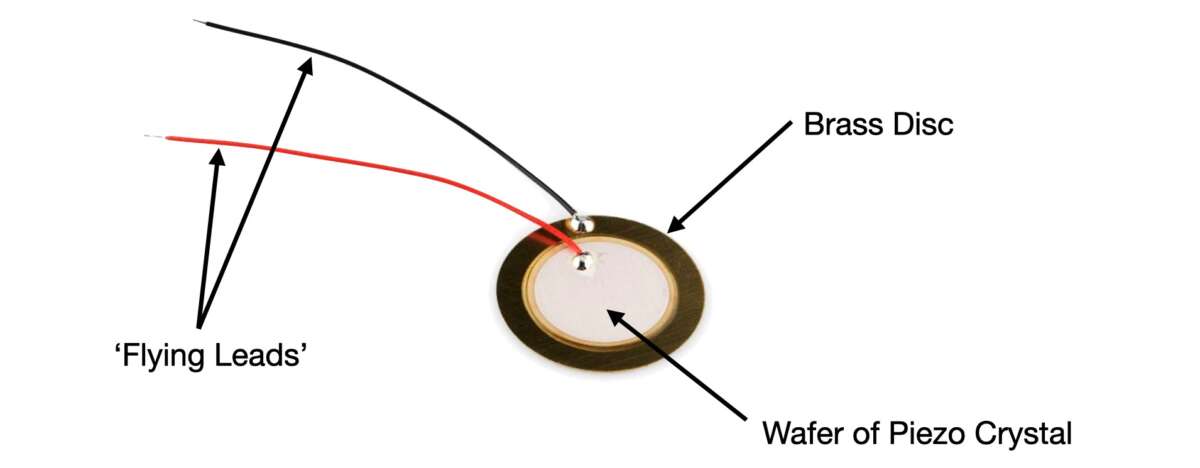
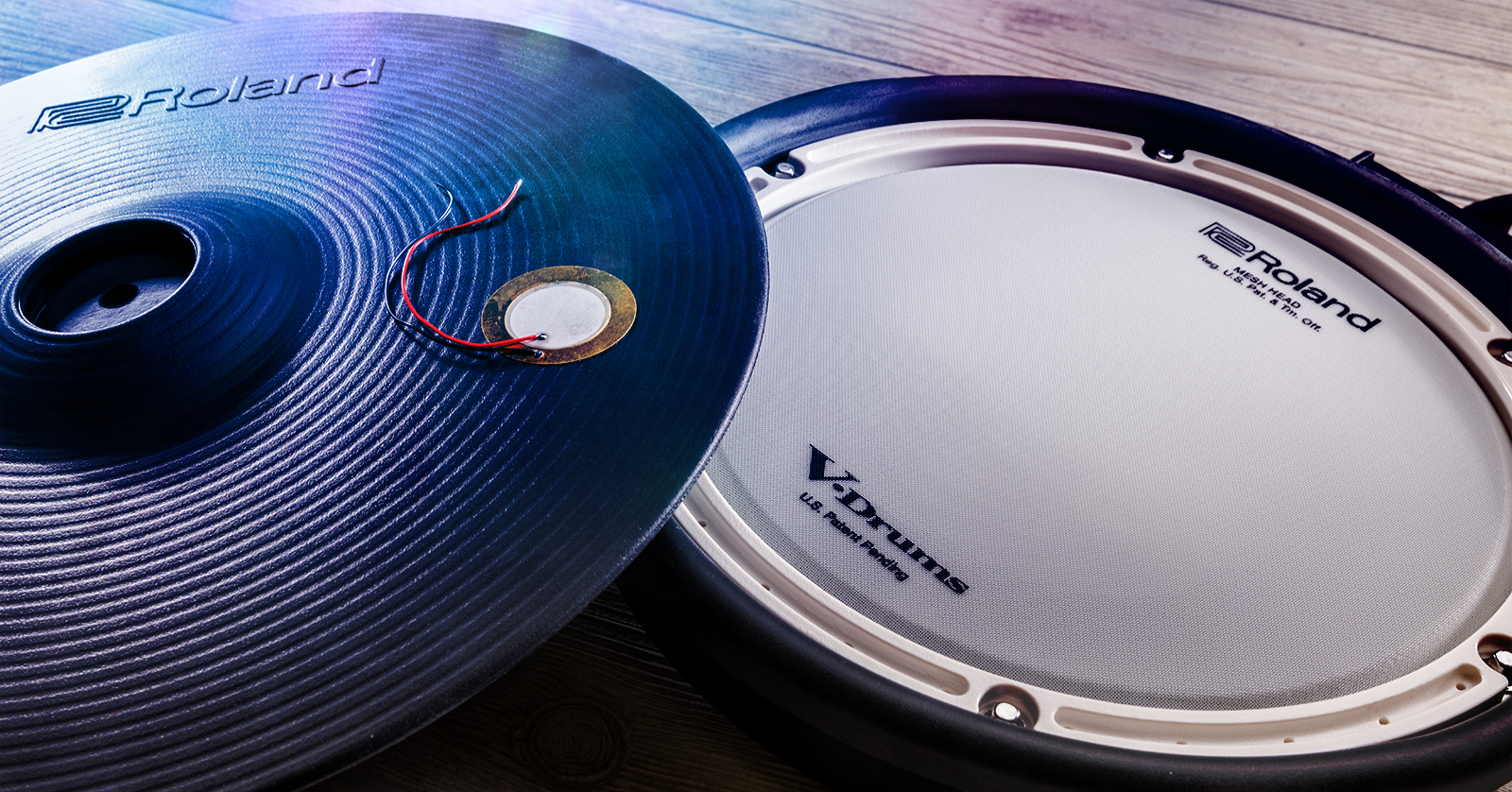
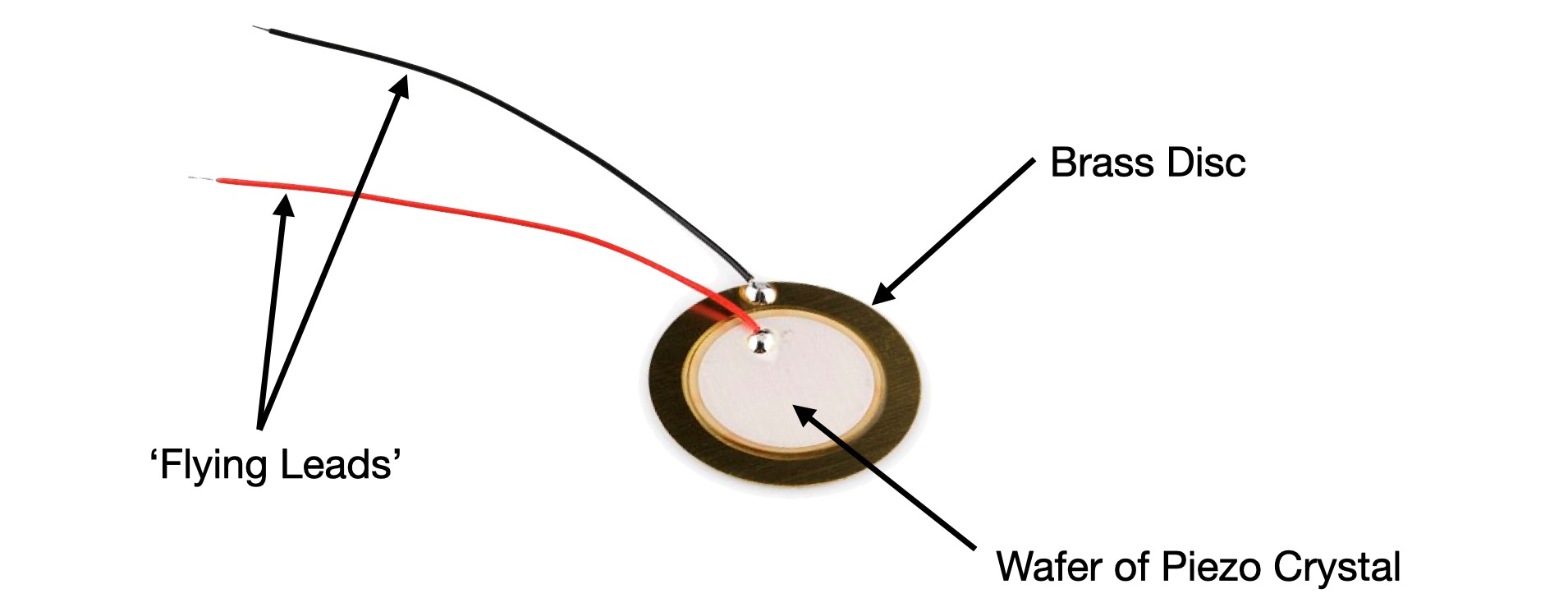
Electronic drums use sensors instead of relying only on acoustic vibration. When a player strikes a pad, a sensor detects the impact and sends an electrical signal to a drum module.
The module analyzes information such as:
• Which pad was hit.
• How hard it was hit.
• Where the pad was struck, on advanced systems.
• How long the sound should last.
The module then plays a recorded or digitally created drum sound. The result comes through headphones, speakers, or a recording system.
Electronic drums offer several benefits:
• Lower volume for home practice.
• Built-in metronomes and coaching tools.
• Easy recording through USB or audio connections.
• Many drum sounds in one kit.
• Simple control of pitch, effects, and room sound.
They also have limits. A rubber pad may not feel like an acoustic head. Cymbal response can differ, and electronic kits need power and signal processing. Still, modern systems can respond with impressive detail.
The basic answer to how do the drums work is different for electronic kits, but the player’s goal remains the same: create controlled rhythm through timing, force, and movement.
How do room acoustics change drum sound?
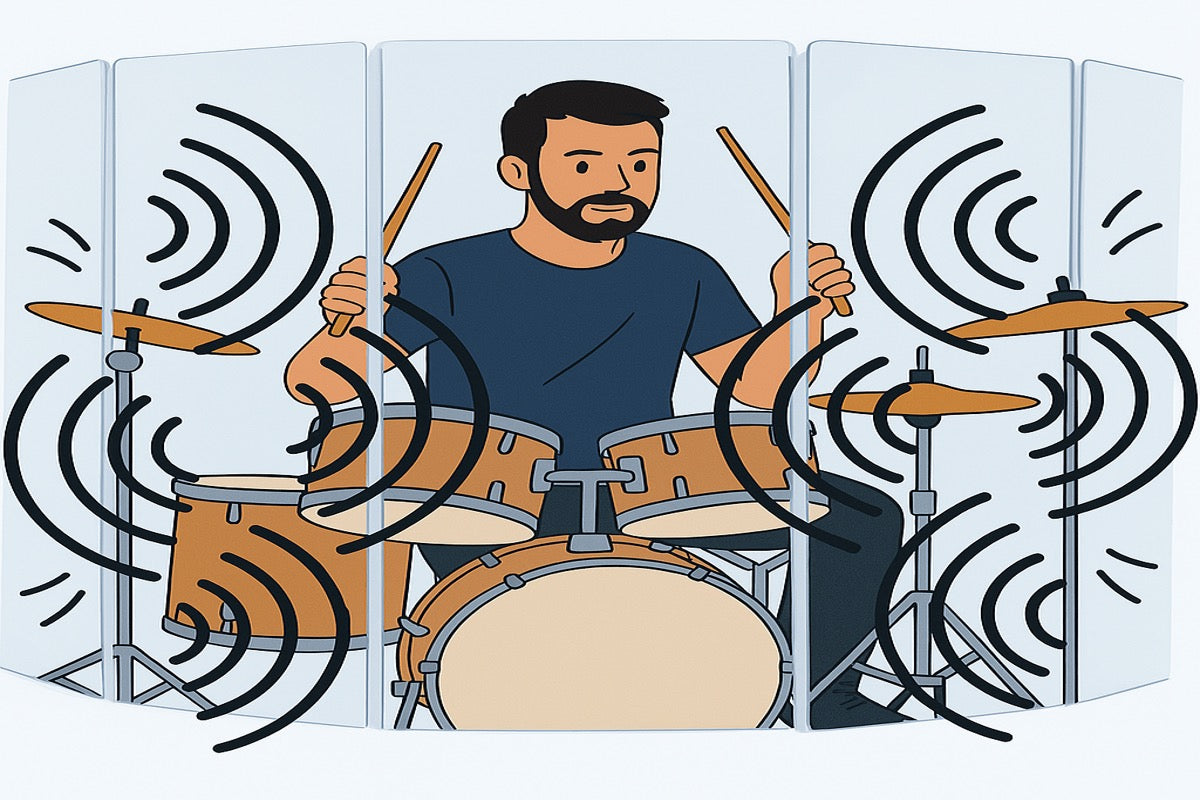
A drum does not sound the same in every room. Hard walls reflect sound and can make a kit seem louder and brighter. Soft furnishings absorb energy and may make the sound quieter and drier.
Room size also matters. A large room often produces longer reverberation. A small room may emphasize boxy or harsh frequencies. The drum itself stays the same, but the sound reaching your ears changes.
For a better practice or recording space:
• Place the kit away from corners when possible.
• Add soft furniture or acoustic panels to control reflections.
• Avoid covering every surface, since a completely dead room can feel lifeless.
• Listen from the audience position, not only from the drummer’s seat.
• Protect your hearing with properly fitted earplugs or earmuffs.
Hearing protection is especially important because repeated exposure to loud sound can damage hearing. Research in occupational and music settings shows that risk depends on both volume and exposure time.
This room effect is an important part of how do the drums work in real life. The same snare may sound perfect in one room and harsh in another, so always judge a drum in the space where it will be used.
How do drummers control unwanted overtones?
Overtones give drums color, but too many can make a drum sound messy. Players control them through tuning, head choice, playing technique, and damping.
Useful damping tools include:
• Small gel pads.
• Thin pieces of tape.
• Muffling rings.
• A light cloth.
• A controlled head design.
Start with a small amount. Heavy damping can remove sustain and make the drum sound flat. In many cases, better tuning solves the problem more effectively than adding material.
The playing area matters, too. Striking near the center usually creates a stronger fundamental tone. Playing near the rim brings out more high-frequency detail. Rimshots combine the head and rim for extra volume and attack.
A common beginner mistake is trying to fix every unwanted sound with tape. First check whether the head is seated correctly and whether the tension is even. Learning how do the drums work means learning to solve the cause, not just hide the symptom.
How do microphones capture drum sounds?
Microphones convert air movement into electrical signals. In a studio, engineers often use several microphones because each part of the kit produces a different sound.
A typical setup may include:
• Kick microphone for low-end impact.
• Snare microphone for attack and body.
• Tom microphones for focused drum tones.
• Overhead microphones for cymbals and the full kit.
• Room microphones for natural space and depth.
Microphone position changes the recorded sound. Moving a microphone closer to the center of a head can increase attack. Moving it toward the edge can produce a warmer tone. Small changes in angle can reduce harshness.
Phase is another concern. When multiple microphones capture the same drum, their waves can combine or cancel. Engineers check phase relationships to keep the kit powerful and clear.
This explains how do the drums work in a recording. The microphone does not capture “the drum” as one fixed object. It captures a particular balance of attack, tone, room sound, and vibration at a specific position.
Common mistakes when learning how drums work
New players often improve faster when they avoid a few simple errors.
• Tuning only one lug: Check the tension around the entire head.
• Using too much force: Speed and control matter more than hitting hard.
• Ignoring the resonant head: The bottom head strongly affects tone.
• Adding too much muffling: Begin with tuning before damping.
• Skipping hearing protection: Protect your ears from repeated loud practice.
• Practicing without a pulse: Use a metronome to build stable timing.
• Copying a favorite sound exactly: Room, microphones, heads, and hands all change the result.
When I analyze a drum sound, I start with the basics: head condition, tuning, striking point, room, and player technique. This order prevents expensive gear from becoming a substitute for good setup.
The best practical lesson is to change one thing at a time. If you replace the heads, move the microphone, and add damping all at once, you will not know which change helped.
Why understanding drum acoustics matters
Learning how do the drums work can make practice more focused and less frustrating. You begin to understand why a drum sounds flat, why a snare buzzes, or why a bass drum disappears in a mix.
It also helps with buying decisions. Instead of choosing a drum because it looks impressive, you can consider:
• The sound needed for your music.
• The room where you will play.
• The amount of volume you can manage.
• The cost of heads, hardware, and maintenance.
• Whether acoustic or electronic drums fit your routine.
Drum science is useful, but music remains the goal. Technical knowledge should help you express rhythm, not make playing feel like a laboratory test. Use the science as a map, then trust your ears and your musical judgment.
Frequently Asked Questions About How Do the Drums Work
How do drums make sound?
A drum makes sound when a stretched head vibrates after being struck. The vibration moves air, and the shell and internal air cavity shape the final tone.
Why do larger drums sound lower?
Larger drumheads vibrate in slower, broader patterns. This creates lower frequencies and gives large drums their deep sound.
Do drums have a definite musical pitch?
Some drums can be tuned to a noticeable pitch, but most produce several frequencies at once. Their sound includes a fundamental tone, overtones, attack, and resonance.
Why does a snare drum buzz?
A snare drum buzzes because metal wires rest against the bottom head. Vibrations from the top head or nearby drums make those wires rattle.
Does tightening a drumhead raise its pitch?
Yes. Increasing head tension usually raises the pitch and creates a firmer response. Uneven tension, however, can make the drum sound unstable.
Are electronic drums quieter than acoustic drums?
Electronic drums are usually quieter, especially with headphones, but the pads and pedal can still create impact noise. A mat and careful setup can reduce sound through floors and walls.
How often should drumheads be replaced?
Replacement depends on playing time, striking force, head type, and visible wear. Replace a head when it has dents, cracks, weak response, or trouble holding a stable tune.
Conclusion
Drums work through a simple but rich process: impact makes the head vibrate, vibration moves air, and the shell, tuning, room, and player shape the sound. Size, tension, materials, damping, and technique explain why every drum has its own voice.
Use this knowledge in small steps. Tune evenly, listen from outside the kit, protect your hearing, and change one setup detail at a time. Then explore more drum techniques, test different sounds, and share your experience with other players.

Senior Music Reviewer
Alex Carter is a seasoned music reviewer with over a decade of experience in the world of sound and instruments. Passionate about helping musicians and enthusiasts make informed choices, he brings sharp insights and in-depth knowledge to every review. From classical instruments to modern gear, Alex combines technical expertise with a love for music to deliver content that resonates with readers.
As a Senior Music Reviewer and expert author on Tuneluma.com, Alex is dedicated to sharing honest evaluations, practical advice, and thoughtful commentary to guide readers in their musical journey.