What Guitar Did Jimi Hendrix Play: Best Guitars
Jimi Hendrix mainly played Fender Stratocaster guitars, often flipped upside down and restrung for left-handed playing.
The answer to “what guitar did Jimi Hendrix play” sounds simple, but his gear history is much richer than one famous model. Hendrix made the Fender Stratocaster part of his voice, yet he also used Gibson Flying Vs, SGs, Les Pauls, and several acoustic guitars. This guide explains which guitars he played, why they mattered, and how his setup shaped his legendary sound.
The Main Answer: Jimi Hendrix Played Fender Stratocasters
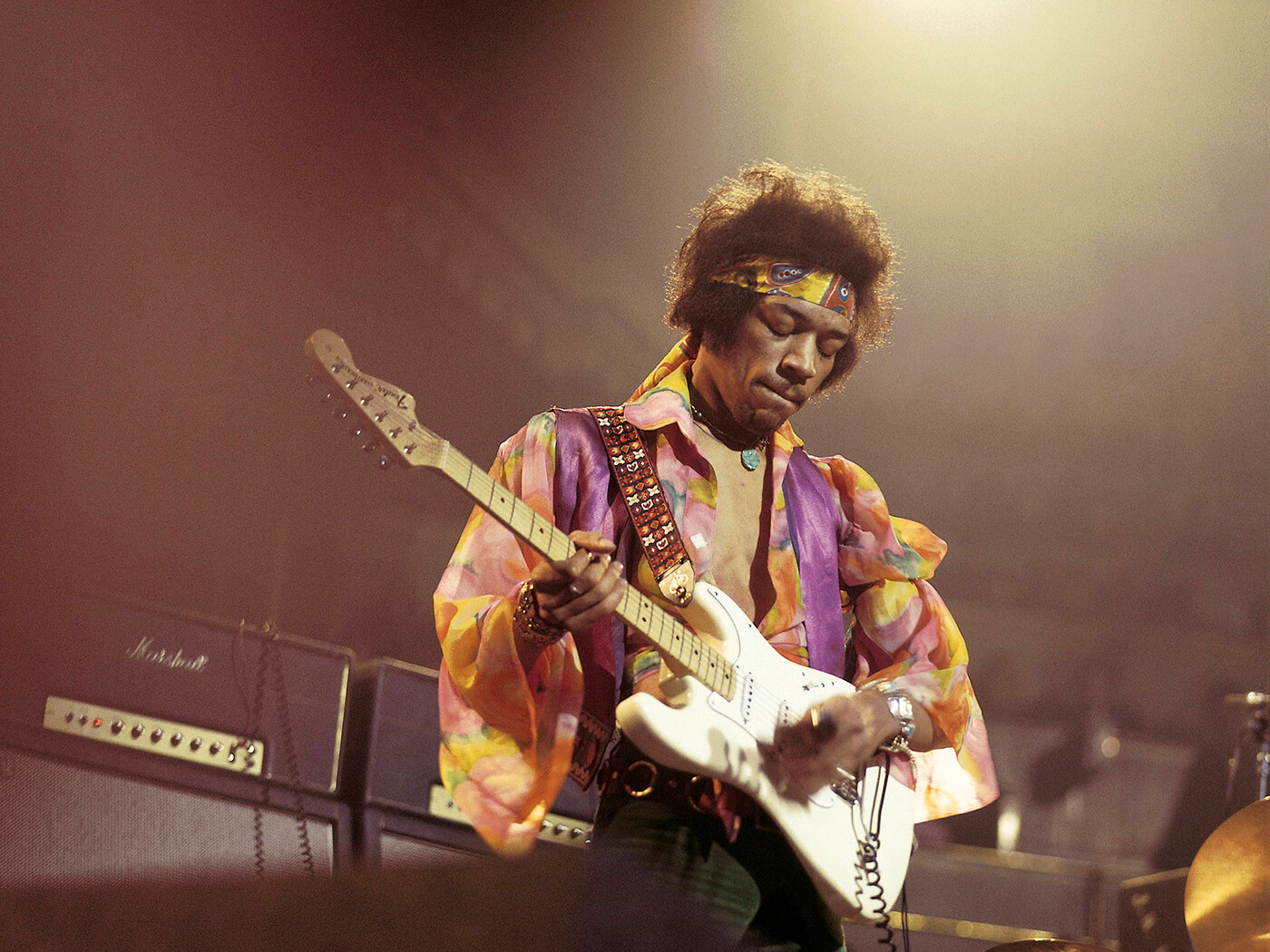
When people ask what guitar did Jimi Hendrix play, the Fender Stratocaster is the clearest answer. It was his main electric guitar during the most important years of his career, including his rise with the Jimi Hendrix Experience from 1966 to 1970.
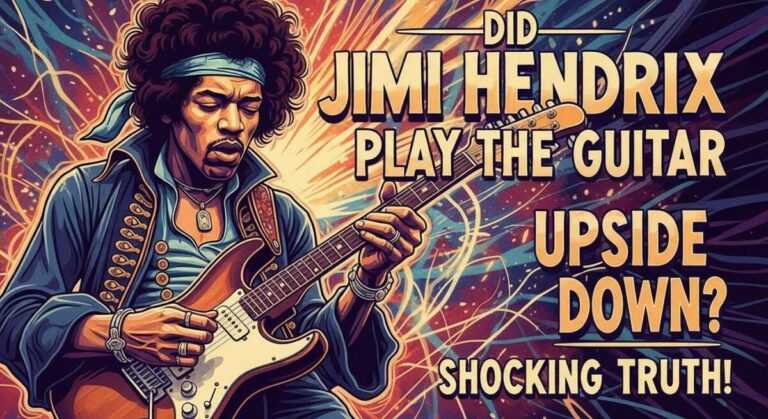
Hendrix usually played a right-handed Fender Stratocaster upside down. He was left-handed, so he flipped the guitar over and changed the string order. The thickest string still sat closest to the ceiling, as it would on a normal guitar, but the guitar’s body and controls were reversed.
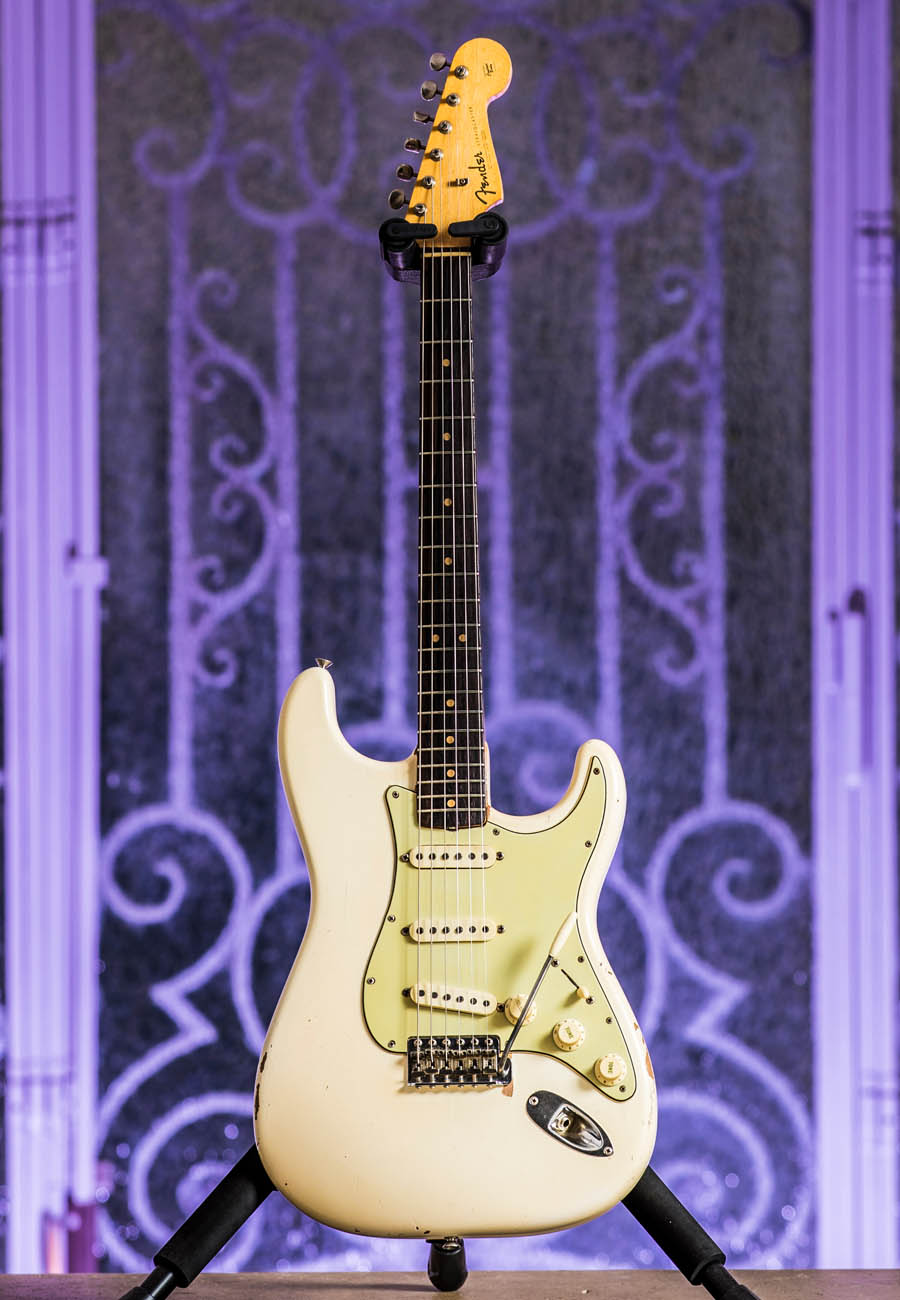
His most famous Stratocasters were often three-color sunburst models. Many had:
• Maple or rosewood fingerboards
• Three single-coil pickups
• A synchronized tremolo bridge
• A large offset body shape
• A reversed control layout when flipped
The Stratocaster gave Hendrix a bright, sharp tone. Its bridge pickup could cut through a loud band, while the neck pickup delivered a warmer and rounder sound. Hendrix used both clean tones and heavy distortion, often moving between them in the same song.
The guitar became closely linked with songs such as “Purple Haze,” “The Wind Cries Mary,” “Little Wing,” and “Voodoo Child (Slight Return).” Still, it is important to remember that Hendrix used more than one Stratocaster. Guitars were damaged, modified, retired, or lost over time, so no single Strat explains every recording or performance.

Why Jimi Hendrix Played a Right-Handed Stratocaster Upside Down
Hendrix was left-handed, but he often bought or used right-handed guitars. Flipping a right-handed Stratocaster gave him a practical way to play a familiar model without waiting for a custom left-handed version.
This setup changed more than the guitar’s appearance. It affected the way Hendrix reached the controls, used the tremolo arm, and attacked the strings. The bridge pickup also sat at a different angle under the strings than it would on a standard right-handed Stratocaster.
That angled pickup may have influenced the balance between the bass and treble strings. The effect was subtle, but Hendrix’s touch, amplifier settings, and effects mattered far more than the reversed pickup angle alone.
His upside-down setup also created a distinctive playing style. The volume and tone controls were placed above his picking hand rather than below it. This made quick volume changes less natural, but Hendrix learned to use the controls as part of his performance.
He often rolled the volume knob down for a softer sound and opened it up for a louder, more aggressive tone. That technique helped him move from clean, glassy phrases to roaring feedback without stepping on a pedal.
Did Jimi Hendrix Restring His Guitars?
Yes. Hendrix generally restrung flipped right-handed guitars so the strings followed the normal left-handed order. The low E string remained the thickest string, and the high E remained the thinnest.
Without restringing, the guitar would feel backward. Chords, scales, bends, and string tension would all behave differently. A flipped guitar with the strings left in place can also create problems with intonation and pickup balance.
Hendrix’s method was not simply a trick for appearance. It allowed him to use familiar left-handed fingering while taking advantage of widely available right-handed instruments.
Players who copy his setup should pay attention to the nut and bridge. A standard right-handed nut may not work well after the strings are reversed. A professional technician can install a left-handed nut, adjust the bridge, and set the instrument’s intonation correctly.
A practical Hendrix-inspired setup may include:
• A left-handed or flipped Stratocaster
• Light or medium-light strings
• A properly fitted nut
• A floating or lightly adjusted tremolo bridge
• A high-output tube amplifier
• Fuzz, wah, and octave effects
The exact string gauges Hendrix used are not fully consistent across every period. Claims about one exact gauge should be treated carefully because his guitars, tunings, and setup changed.
Other Electric Guitars Jimi Hendrix Played
The Fender Stratocaster was his signature guitar, but it was not his only electric instrument. His other guitars show that Hendrix cared about sound and feel more than brand loyalty.
Gibson Flying V
Hendrix played Gibson Flying V guitars during parts of his career. The Flying V had a sharper attack and a different feel from the Stratocaster. Its humbucking pickups produced a thicker, fuller sound.
He used a black Flying V and a notable white Flying V. The white guitar became especially associated with live performances and was sometimes used for slower songs and dramatic stage moments.
The Flying V also suited Hendrix’s visual style. Its angular shape looked bold under stage lights, but its sound was the real reason it remained useful. The humbuckers handled volume and distortion with more thickness than traditional Stratocaster single-coils.
Gibson SG Custom
Hendrix also played a white Gibson SG Custom. This model featured three humbucking pickups and a distinctive three-pickup layout. It could produce a powerful, smooth tone with more midrange weight than a typical Stratocaster.
The SG’s light body and easy upper-fret access made it comfortable for expressive lead playing. Hendrix was known to use it in studio and live settings, although it never replaced the Stratocaster as his main instrument.
Gibson Les Paul
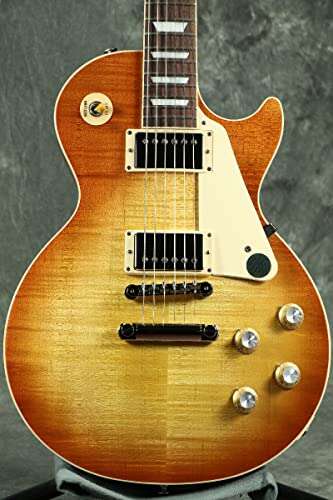
Hendrix used Gibson Les Paul guitars at different points in his career. The Les Paul offered a thick tone, strong sustain, and a solid mahogany body paired with a maple top on many models.
Compared with a Stratocaster, a Les Paul tends to feel heavier and produce a denser sound. That difference would have been useful when Hendrix wanted more sustain or a fuller rhythm tone.
Fender Jazzmaster and Other Models
Some accounts and photographs connect Hendrix with Fender Jazzmaster guitars and other less common instruments. However, not every photographed guitar was used for a major recording, and some images do not provide enough evidence to identify the exact model with certainty.
This is one reason the answer to what guitar did Jimi Hendrix play should not be reduced to a single catalog number. His equipment changed throughout his short career, and surviving evidence is not equally strong for every instrument.
The Acoustic Guitars Jimi Hendrix Used
Hendrix also played acoustic guitars. One famous example is the Epiphone FT79 acoustic, often identified as a Texan model. He used acoustic instruments for songwriting, rehearsal, and quieter musical settings.
An acoustic guitar helped Hendrix build songs before adding loud amplifiers and effects. Many players first imagine the finished electric performance, but songs such as “The Wind Cries Mary” also show the value of strong chord writing and melody.
He did not need a complex guitar rig to create the basic shape of a song. The acoustic guitar provided the frame. Effects and volume later added color, like paint added to a finished sketch.
Some photographs also show Hendrix with other acoustic guitars. Exact identification can be difficult because vintage instruments may have been modified, photographed from poor angles, or incorrectly labeled in later articles.
How Hendrix’s Stratocaster Created His Sound
The guitar itself was only one part of Hendrix’s tone. His sound came from the interaction of several elements:
• His fingers and pick attack
• A Fender Stratocaster’s single-coil pickups
• Loud tube amplifiers
• Fuzz and wah effects
• High volume and controlled feedback
• Tuning changes and chord voicings
Hendrix often used Fender amplifiers, especially the powerful Super Lead and Showman-style rigs associated with his live work. He pushed amplifiers hard, which produced natural compression, distortion, and sustain.
His effects included the Dallas-Arbiter Fuzz Face, Vox wah pedals, and the Octavia octave fuzz. These pedals did not create his style by themselves. They responded to the way he played, especially his strong bends, wide vibrato, muted rhythms, and aggressive pick attack.
The Stratocaster’s tremolo system also mattered. Hendrix used the tremolo arm to create dives, pitch movement, and unstable textures. He did not treat it as a small decoration on the bridge. He used it as a musical tool.
His tone can be compared to a human voice. The guitar could whisper, cry, shout, and scream because Hendrix controlled volume, touch, feedback, and pitch with unusual skill.
The Guitars Used on Hendrix’s Most Famous Songs
It is tempting to assign one exact guitar to every song, but the historical record is not always complete. Studio sessions often involved multiple instruments, and equipment lists from the late 1960s are sometimes based on photographs, eyewitness accounts, and later recollections.
Still, these general associations are useful:
“Purple Haze”
“Purple Haze” is strongly linked with Hendrix’s Stratocaster sound. The track combines a sharp guitar attack with fuzz, octave effects, and unusual chord colors.
The famous opening sound is not just the result of one guitar. It comes from Hendrix’s playing, studio production, effects, and amplifier settings working together.
“The Wind Cries Mary”
This song is commonly associated with a cleaner Stratocaster tone. Hendrix used a softer touch and expressive chord voicings, allowing the guitar’s natural clarity to stand out.
It shows why asking what guitar did Jimi Hendrix play is only the first step. The same Stratocaster could sound delicate in one song and violent in another.
“Little Wing”
“Little Wing” features clean and lightly processed guitar textures. Hendrix layered parts in the studio, so the final recording is better understood as a carefully built arrangement rather than one simple live guitar sound.
The Stratocaster’s neck pickup helped provide the warm, smooth character heard in many of his clean passages.
“Voodoo Child (Slight Return)”
This song is one of the strongest examples of Hendrix using a Stratocaster, wah, fuzz, and a loud amplifier as one complete system. His rhythm playing, chord grip, feedback control, and solo phrasing are all central to the track.
The guitar is important, but copying the model alone will not recreate the recording. The player’s touch remains the largest part of the sound.
What Made Hendrix’s Guitar Setup Different?
Hendrix’s setup differed from a normal Stratocaster in several ways. The most visible difference was the upside-down body. The most important differences were his string arrangement, control technique, and playing approach.
He also used high volume in a way that demanded control. Loud amplifiers can become harsh or unstable, especially with single-coil pickups. Hendrix learned how to stand in relation to the amplifier and guitar to manage feedback.
Feedback was not random noise in his performances. He treated it like another note. By changing his position, pitch, and volume, he could make the amplifier respond in musical ways.
His use of the wah pedal was also distinctive. Many players move the pedal quickly from heel to toe. Hendrix often used slower sweeps, held the pedal in expressive positions, and combined it with bends and sustained notes.
For modern players, the key lesson is simple: equipment creates possibilities, but technique turns those possibilities into music. Buying a replica Hendrix guitar will not automatically produce a Hendrix performance.
How to Choose a Hendrix-Style Guitar Today
If you want the closest practical starting point, choose a Stratocaster-style guitar. You do not need an expensive vintage instrument. A well-set-up modern model can capture the basic feel.
Look for:
• Three single-coil pickups
• A comfortable neck
• A working tremolo bridge
• A volume control that turns smoothly
• A reliable five-way pickup switch
• Good fret and intonation work
You can choose a left-handed Stratocaster for natural control placement. You can also flip a right-handed model, but it should be adjusted by a qualified repair shop.
For a simple Hendrix-style rig, start with a clean tube amplifier or a convincing digital model. Add a Fuzz Face-style pedal and a wah pedal. An octave fuzz can help produce the sharp, unusual lead sound heard in some recordings.
Avoid buying too many pedals at once. A common mistake is to chase the sound through equipment while ignoring timing, bends, vibrato, and dynamics. Practice those skills first.
A useful practice plan is:
-
Learn the minor pentatonic scale in several positions.
-
Practice wide bends with a tuner.
-
Work on slow, even vibrato.
-
Practice switching from soft to loud using the volume knob.
-
Study Hendrix’s chord embellishments.
-
Add fuzz only after the clean part sounds controlled.
This approach usually produces better results than copying a famous pedalboard without learning how Hendrix used his hands.
Common Myths About What Guitar Did Jimi Hendrix Play
Several myths make Hendrix’s equipment history more confusing than it needs to be.
One myth says he played only left-handed guitars. In reality, he often played right-handed Stratocasters flipped upside down and restrung. He also used other guitars, including Gibson models.
Another myth says his guitar alone created his sound. His instrument mattered, but his amplifier, effects, playing touch, recording methods, and stage volume were equally important.
A third myth claims that every upside-down Stratocaster sounds exactly like Hendrix. The reversed setup may create small tonal differences, but the player remains the main factor.
There is also confusion about famous surviving guitars. Some instruments have strong historical documentation, while others are identified through photographs or later accounts. Collectors should check provenance carefully before accepting claims about a guitar’s connection to Hendrix.

What Guitar Did Jimi Hendrix Play? Key Facts at a Glance
Here is the short version:
• His main guitar was the Fender Stratocaster.
• He often played right-handed Stratocasters upside down.
• He restrung the guitars for left-handed playing.
• He also played Gibson Flying V, Gibson SG Custom, and Gibson Les Paul models.
• He used acoustic guitars, including an Epiphone model.
• His sound depended on his hands, amplifiers, effects, volume, and feedback control.
• No single guitar explains every Hendrix recording or performance.
This summary answers what guitar did Jimi Hendrix play while leaving room for the variations found in his real equipment history.
Frequently Asked Questions About What Guitar Did Jimi Hendrix Play
What was Jimi Hendrix’s main guitar?
Jimi Hendrix’s main guitar was the Fender Stratocaster. He often used right-handed models flipped upside down and restrung for left-handed playing.
Did Jimi Hendrix play a left-handed guitar?
He sometimes used left-handed guitars, but many of his best-known instruments were right-handed Stratocasters turned upside down. He adapted his setup instead of limiting himself to left-handed models.
Why did Jimi Hendrix play his guitar upside down?
Hendrix was left-handed, and flipping a right-handed guitar gave him access to common instruments. He then restrung the guitar so the string order matched normal left-handed playing.
Did Jimi Hendrix play Gibson guitars?
Yes. Hendrix played Gibson Flying V, SG Custom, and Les Paul guitars at various times. However, the Fender Stratocaster remained the guitar most closely tied to his identity.
What guitar did Jimi Hendrix use for “Purple Haze”?
“Purple Haze” is widely associated with Hendrix’s Fender Stratocaster sound. The recording also depends heavily on fuzz, octave effects, amplifier volume, and studio production.
Did Jimi Hendrix use a Fender Stratocaster on “Voodoo Child”?
The famous “Voodoo Child (Slight Return)” sound is strongly linked to a Fender Stratocaster combined with wah, fuzz, and a loud amplifier. The exact studio setup should not be treated as a complete, universally verified equipment list.
Can a beginner sound like Jimi Hendrix with a Stratocaster?
A Stratocaster is a useful starting point, but the guitar alone will not recreate Hendrix’s sound. Focus on bends, vibrato, rhythm, volume control, and dynamics before adding many effects.
Conclusion
The clearest answer to what guitar did Jimi Hendrix play is the Fender Stratocaster. He made the instrument famous by playing right-handed models upside down, restringing them for left-handed use, and combining their bright single-coil tone with loud amplifiers, fuzz, wah, and fearless technique.
He also played Gibson Flying Vs, SGs, Les Pauls, and acoustic guitars. These instruments show his curiosity and flexibility, but the Stratocaster remains the heart of his sound and image.
If you want to explore his style, start with a well-set-up Stratocaster and practice his control of touch, volume, bends, vibrato, and feedback. Then listen closely to his recordings, compare different guitar tones, and share your favorite Hendrix setup or song in the comments.

Senior Music Reviewer
Alex Carter is a seasoned music reviewer with over a decade of experience in the world of sound and instruments. Passionate about helping musicians and enthusiasts make informed choices, he brings sharp insights and in-depth knowledge to every review. From classical instruments to modern gear, Alex combines technical expertise with a love for music to deliver content that resonates with readers.
As a Senior Music Reviewer and expert author on Tuneluma.com, Alex is dedicated to sharing honest evaluations, practical advice, and thoughtful commentary to guide readers in their musical journey.