Is Guitar Easy To Learn: A Beginner’s Guide
Yes, guitar is easy to start, but steady practice makes true skill and confidence grow.
Is guitar easy to learn? For most beginners, the answer is yes, especially when you use a clear plan and choose a comfortable instrument. You can learn simple chords, strumming patterns, and songs within weeks, but advanced skills take time. This guide explains what makes guitar easy or difficult, how long progress may take, and how to avoid common mistakes.
Is Guitar Easy to Learn for Beginners?
Guitar is easy to learn at a basic level. Many beginners play their first simple song after a few practice sessions. The first steps often include learning how to hold the guitar, tune the strings, read chord diagrams, and switch between two or three chords.
The harder part is building smooth technique. Your fingers may hurt at first. Chord changes may feel slow. Your rhythm may sound uneven. These problems are normal, not signs that you lack musical talent.
Learning guitar is much like learning to type. At first, you search for each key. With practice, your fingers begin to move without much thought. Guitar works the same way.
A beginner can often learn:
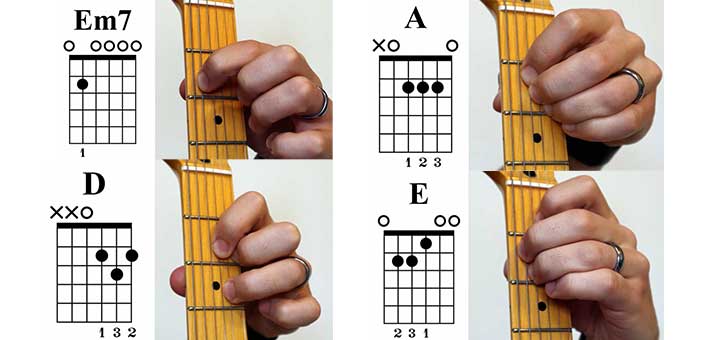
• Basic open chords such as G, C, D, E, A, and Em
• Simple downstroke and upstroke patterns
• Easy songs with three or four chords
• Basic guitar tabs
• How to tune a guitar
• Simple riffs and melodies
The answer to “is guitar easy to learn” depends on your goal. Playing a few songs is fairly easy. Playing fast solos, complex jazz chords, or professional-level music requires much more focused practice.

What Makes Guitar Easy to Learn?
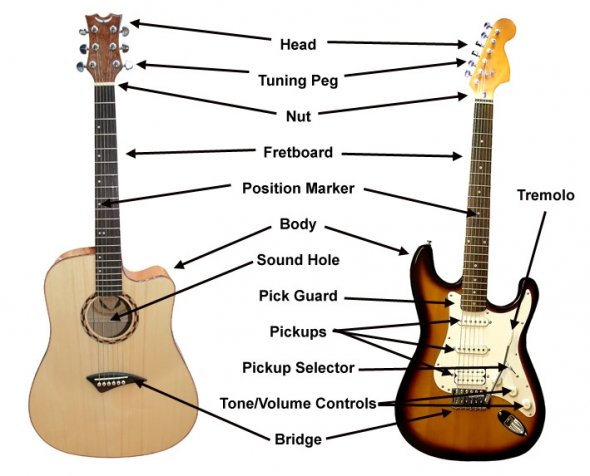
Several features make guitar a friendly instrument for new players. You do not need to read traditional music notation to begin. Chord charts and guitar tabs can show you where to place your fingers.
You can also make progress without owning expensive gear. A basic acoustic guitar or electric guitar, a tuner, and a few learning tools are enough. A quiet space and regular practice matter more than a costly setup.
Simple songs use repeated patterns
Many popular songs use the same small group of chords. Once you learn a few common chord shapes, you can play music from many styles, including pop, rock, country, folk, and blues.
For example, the chord pattern G, D, Em, and C appears in many beginner songs. You may not play every song in the original key, but the pattern helps you understand how songs are built.
Guitar offers quick rewards
You can play a recognizable melody after learning only a few notes. This quick reward can make practice feel fun instead of like homework.
That early success matters. Motivation grows when you can hear a real result from your effort.
Learning resources are widely available
Beginners now have access to video lessons, interactive apps, printable chord charts, online courses, and slow-playback tools. These resources can help you practice at your own speed.
Still, too many resources can create confusion. Choose one clear learning path rather than jumping between ten different teachers.

What Makes Guitar Difficult?
Guitar is easy to begin, but some parts take patience. The main challenge is coordination. Your fretting hand must press the strings while your picking hand keeps time.
Your fingers also need to develop strength and accuracy. This can cause mild soreness during the first week or two. Short practice sessions can help your hands adapt without unnecessary strain.
Stop if you feel sharp pain, numbness, or lasting discomfort. Mild fingertip tenderness is common, but pain in your wrist or joints may signal poor posture or too much practice.
Common challenges include:
• Switching chords without stopping
• Keeping a steady rhythm
• Pressing strings cleanly
• Building calluses
• Tuning the guitar correctly
• Reading tabs and chord diagrams
• Playing while singing
• Staying motivated during slow progress
Many beginners focus only on the fretting hand. Rhythm is just as important. A simple chord played in time often sounds better than a difficult chord played with uneven timing.
One lesson I have seen repeatedly in beginner practice is this: people often try to play too fast. Slow practice feels less exciting, but it builds cleaner muscle memory. Speed should be the result of accuracy, not a replacement for it.
How Long Does It Take to Learn Guitar?
The timeline varies based on practice quality, musical goals, and past experience. There is no single point at which someone has “finished” learning guitar.
With focused practice, many beginners can reach these milestones:
• First week: Learn how to hold the guitar, tune it, and play a few single notes
• First month: Play several basic chords and simple songs
• Three months: Change common chords more smoothly and use basic strumming patterns
• Six months: Play a larger song list, use tabs, and understand simple rhythm concepts
• One year: Build stronger technique and begin learning scales, riffs, barre chords, or fingerstyle
These time frames are estimates, not promises. Practicing for 15 minutes each day may produce better results than practicing for two hours once a week.
Your goal also matters. If you want to play campfire songs, you may feel successful within a few months. If you want to perform complex solos, write advanced music, or join a professional band, expect a longer journey.
Learning guitar is not a race. It is closer to planting a garden. Small care, repeated often, creates visible growth.

Acoustic Guitar vs. Electric Guitar for Beginners
Both acoustic and electric guitars can be good choices. The right option depends on your comfort, music taste, budget, and playing environment.
Acoustic guitar
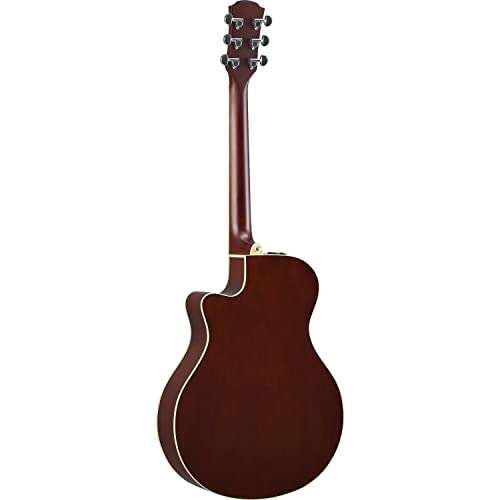
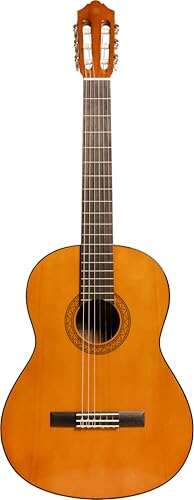
An acoustic guitar is simple to set up. You do not need an amplifier, cable, or effects pedals. This makes it convenient for beginners who want to pick up the instrument and play.
However, steel strings can feel firm on new fingertips. A poorly adjusted acoustic guitar may also have high action, which means the strings sit far from the fretboard. This can make playing harder than it needs to be.
Electric guitar
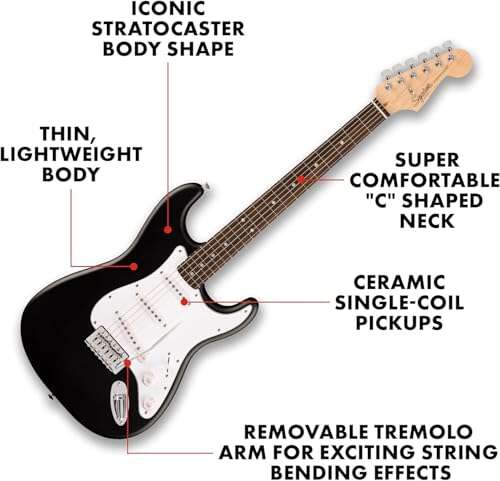
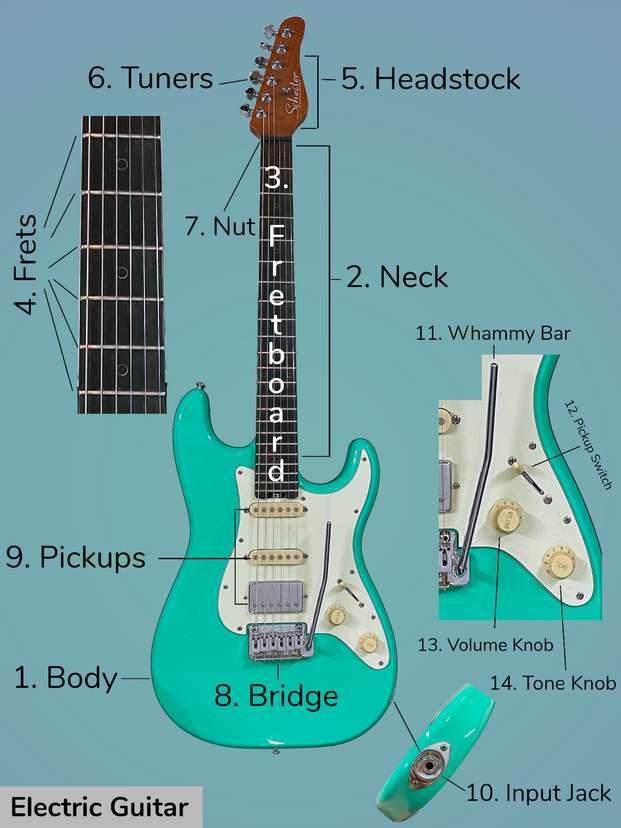
An electric guitar usually has lighter strings and may feel easier on the fingers. The neck can also be slimmer, depending on the model. You will need an amplifier or headphone setup, though.
Electric guitars are useful for rock, blues, metal, jazz, and many pop styles. They can also encourage practice because effects and tones make the instrument more exciting.
Which should you choose?
Choose the guitar that makes you want to practice. Comfort and interest are more important than rules about which guitar beginners “should” use.
Before buying, visit a music store if possible. Hold several guitars and ask a trained employee to check the setup. A comfortable, well-adjusted guitar can make guitar easy to learn and reduce unnecessary frustration.
A Simple Guitar Practice Plan
A short, focused routine is ideal for most beginners. Start with 15 to 25 minutes, four or five days per week. Increase your practice time only when your hands and attention feel ready.
Try this routine:
- Spend two minutes tuning the guitar.
- Warm up by playing open strings slowly.
- Practice two or three chord shapes.
- Switch between the chords for five minutes.
- Play one basic strumming pattern with a metronome.
- Practice a simple song.
- End by reviewing one skill that felt difficult.
Use a slow metronome setting. For example, start at 60 beats per minute and play one strum per beat. When your chord changes sound clean, increase the speed by a small amount.
Record yourself once a week. You may not notice daily progress, but recordings can reveal changes in timing, tone, and confidence.
Keep a small practice log. Write down:
• What you practiced
• How long you practiced
• What improved
• What felt difficult
• What you will practice next
This simple habit gives your learning structure. It also helps you avoid repeating the same unfocused routine.

The Best Skills to Learn First
Many beginners ask what to learn first on guitar. The answer is basic technique, rhythm, and a small set of useful chords.
Start with proper posture. Keep your back relaxed, support the guitar against your body, and avoid bending your wrist sharply. Your fretting thumb should support the neck without squeezing it tightly.
Next, learn how to tune. Standard tuning is E, A, D, G, B, and E from the thickest string to the thinnest. A digital tuner makes this process simple and helps your ear learn accurate pitch.
Then focus on:
• Open chords
• Downstrokes and alternate strumming
• Chord changes
• Simple guitar tabs
• Basic rhythm counting
• Muting unwanted string noise
• Playing with a metronome
Do not rush into advanced scales before your rhythm feels steady. Scales are useful, but beginners often gain more from learning songs and clean chord changes first.
A good teacher can also correct hand position early. This may prevent habits that become difficult to change later.
Common Beginner Mistakes to Avoid
The biggest mistake is practicing without a clear goal. Random playing can be enjoyable, but it may not solve the skill that is holding you back.
Another mistake is using too much pressure. Beginners often press the strings hard because they want a clean sound. In reality, excessive pressure can make your hand tired and slow your chord changes.
Avoid these habits:
• Practicing only when you feel motivated
• Playing too fast
• Ignoring rhythm
• Skipping tuning
• Using a guitar with difficult action
• Learning too many songs at once
• Comparing your progress with skilled players online
• Continuing through sharp hand or wrist pain
• Avoiding difficult chord changes
A common early problem is the buzzing sound caused by poor finger placement. Place your fingertip close to the fret, but not directly on top of it. Keep the finger curved so it does not touch nearby strings.
Another mistake is stopping whenever a chord change feels hard. Instead, isolate the change. Move between two chords slowly for one minute. This focused drill often works better than playing an entire song badly.
How to Stay Motivated While Learning Guitar
Motivation tends to rise and fall. That is normal. You do not need to feel inspired every day to make progress.
Set small goals that you can measure. “Become a better guitarist” is vague. “Play the chorus of one song at 70 beats per minute” is clear.
Use songs you genuinely enjoy. A beginner song may seem simple, but it can teach timing, chord changes, and endurance. Music that matters to you gives practice a purpose.
You can also vary your routine:
• Learn a new chord
• Practice a favorite riff
• Play along with a slow backing track
• Watch one focused lesson
• Write a four-chord song
• Practice without looking at your fretting hand
• Play for a friend
Progress is rarely a straight line. Some days your hands feel natural. Other days, basic chords seem difficult again. This does not mean you are going backward. Skill often develops beneath the surface before it becomes obvious.
Is Guitar Easy to Learn Without a Teacher?
Yes, many people learn guitar without private lessons. Online courses, books, apps, and video lessons can teach basic chords, tabs, songs, and technique.
Self-teaching works best when you follow a structured plan. Choose lessons that explain posture, tuning, rhythm, and safe technique instead of showing only songs.
A teacher offers benefits that videos cannot always provide. They can spot tension, correct posture, adjust exercises, and answer questions immediately.
Consider taking lessons if:
• You feel stuck for several weeks
• Your hands or wrists hurt
• You cannot keep time
• You want to learn advanced technique
• You plan to perform
• You need external accountability
A few lessons can be useful even if you plan to continue learning alone. Think of a teacher as a guide who helps you avoid long detours.
Frequently Asked Questions About Is Guitar Easy to Learn
Is guitar easy to learn for someone with no musical experience?
Yes, beginners can learn guitar without knowing how to read music. Start with chord diagrams, basic rhythm, and simple songs. Music experience may help, but it is not required.
How many minutes a day should I practice guitar?
Practice for 15 to 25 minutes a day when you are starting. Regular practice usually works better than one long session each week.
Is acoustic guitar easy to learn?
Acoustic guitar is easy to start because it needs little equipment. Some acoustic guitars feel harder because of thick strings or poor setup, so comfort and string height matter.
Is electric guitar easier than acoustic guitar?
Electric guitar may feel easier on the fingers because it often uses lighter strings and lower action. It also requires an amplifier or another way to produce sound.
Can I learn guitar in 30 days?
You can learn basic chords, simple strumming, and a few songs in 30 days with consistent practice. You will not master the instrument in one month, but you can build a strong foundation.
Is guitar easy to learn if my fingers are small?
Yes, hand size does not prevent you from learning guitar. A guitar with a comfortable neck, correct posture, and regular stretching can make playing easier.
Why do my guitar chords sound muted?
Muted chords often result from fingers touching nearby strings or not pressing close enough to the fret. Adjust one finger at a time and play each string slowly to find the problem.
Conclusion
So, is guitar easy to learn? The basics are accessible, but lasting skill comes from steady practice, good technique, and realistic goals. Most beginners can learn simple chords and songs within weeks, while advanced playing takes longer and requires deeper study.
Choose a comfortable guitar, practice a little each day, and focus on clean rhythm before speed. Start with one song you love and build from there. Explore structured lessons, track your progress, and share your first milestone with someone who can encourage you.

Senior Music Reviewer
Alex Carter is a seasoned music reviewer with over a decade of experience in the world of sound and instruments. Passionate about helping musicians and enthusiasts make informed choices, he brings sharp insights and in-depth knowledge to every review. From classical instruments to modern gear, Alex combines technical expertise with a love for music to deliver content that resonates with readers.
As a Senior Music Reviewer and expert author on Tuneluma.com, Alex is dedicated to sharing honest evaluations, practical advice, and thoughtful commentary to guide readers in their musical journey.