Is A Ukulele A Guitar: Key Differences Explained
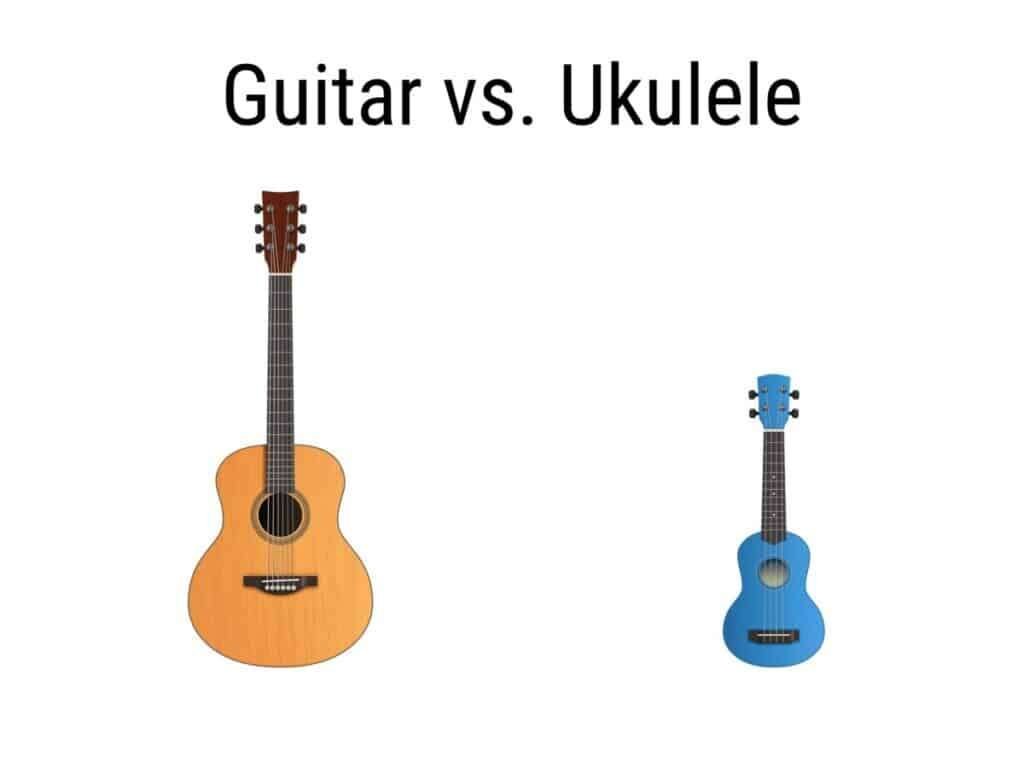
A ukulele is not a guitar, but both are fretted string instruments with similar shapes and playing methods.
The question “is a ukulele a guitar” sounds simple, but the answer involves more than counting strings. Both instruments share roots, chord ideas, and playing skills, yet their size, tuning, sound, and musical roles are different. This guide explains those differences clearly so you can choose the right instrument and understand how they relate.

What Is a Ukulele?
A ukulele is a small, four-stringed instrument from Hawaii. It developed in the late 19th century from Portuguese string instruments brought to the islands by immigrants. Its name is often linked with the idea of a “jumping flea,” describing the quick movement of a player’s fingers.
Most ukuleles have four strings, although some models have six or eight strings. The most common types are:
• Soprano ukulele: The smallest and brightest-sounding type.
• Concert ukulele: Slightly larger, with more room for the fingers.
• Tenor ukulele: Larger again, with a deeper and fuller tone.
• Baritone ukulele: The biggest common type, with a sound closer to a small guitar.
Ukuleles usually use nylon or fluorocarbon strings. These strings feel soft under the fingers and produce a warm, light sound. The standard ukulele tuning is G-C-E-A, while some players use a low-G setup for a wider range.
So, is a ukulele a guitar? No. It belongs to the same broad family of fretted string instruments, but it is a separate instrument with its own design and history.

Why Do People Confuse a Ukulele With a Guitar?
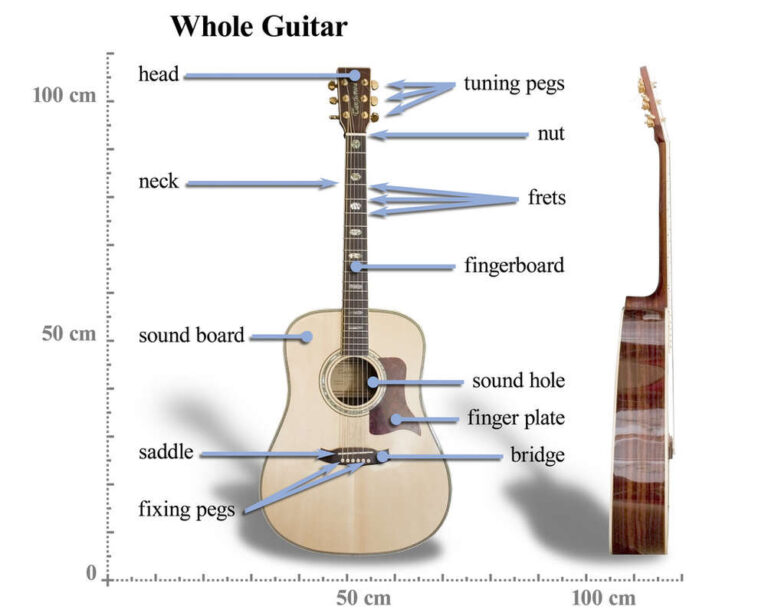
A ukulele and a guitar can look very similar at first glance. Both have a hollow body, a sound hole, a neck, frets, tuning pegs, and strings. Both can play chords, melodies, and songs.
The confusion also comes from the way people play them. You can strum a ukulele with your fingers or a pick, just as you can strum an acoustic guitar. Many basic chord shapes also have similar names, such as C, G, F, and A minor.
There is one important detail, though. Similar chord names do not always mean identical finger positions. A C chord on a ukulele uses a different shape and produces a different pitch relationship than a C chord on a guitar.
Think of the two instruments as close musical cousins. They share family traits, but they are not twins.

Is a Ukulele a Small Guitar?
A ukulele is not simply a small guitar. Its body may look like a compact guitar, but its tuning and construction are different.
A standard guitar has six strings. A standard ukulele has four. A guitar is also much longer, has a larger body, and uses a wider range of notes. These design choices affect the instrument’s tone, comfort, and musical possibilities.
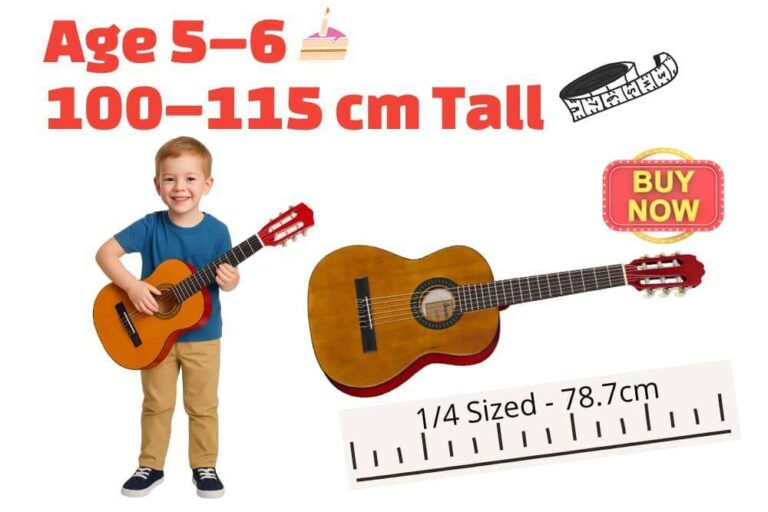
The ukulele’s short scale length makes it easy to hold. Its soft strings are often comfortable for beginners, children, and people with smaller hands. However, its smaller size does not make it a toy. Professional musicians use ukuleles for jazz, folk, pop, classical arrangements, and studio work.
A baritone ukulele can create even more confusion. It usually uses D-G-B-E tuning, which matches the highest four strings of a guitar. Even then, it is still a ukulele because of its construction, scale, body design, and traditional identity.

Ukulele vs. Guitar: Key Differences
The clearest way to answer “is a ukulele a guitar” is to compare the two instruments directly.
| Feature | Ukulele | Guitar |
|---|---|---|
| Common number of strings | Four | Six |
| Usual standard tuning | G-C-E-A | E-A-D-G-B-E |
| Body size | Small | Medium to large |
| String material | Nylon or fluorocarbon | Steel or nylon |
| Tone | Bright, soft, and cheerful | Broad, deep, and powerful |
| Typical scale length | About 13 to 17 inches, depending on type | About 24 to 26 inches |
| Chord range | More limited | Much wider |
| Portability | Very easy to carry | Less compact |
| String tension | Usually lower | Often higher, especially with steel strings |
These are general comparisons. Some guitars use nylon strings, and some ukuleles use special string sets. Custom instruments may also break from common designs.
Strings and Tuning
A standard guitar is tuned E-A-D-G-B-E from the lowest string to the highest. A standard ukulele is tuned G-C-E-A. The G string is often reentrant, meaning it may be tuned higher than the C and E strings next to it.
This unusual tuning gives the ukulele its distinctive sound. It also changes how chords and scales work. A guitarist cannot always transfer a familiar chord shape directly to a ukulele and expect the same result.
Size and Scale Length
Scale length means the vibrating distance from the nut to the bridge. A guitar’s longer scale creates more space between frets and supports lower notes. A ukulele’s shorter scale makes stretches easier but gives it less low-end power.
A concert or tenor ukulele may suit an adult beginner better than a tiny soprano. The extra space can make chord changes more comfortable without losing the classic ukulele sound.
Sound and Volume
A guitar can produce strong bass, clear mids, and bright treble. This makes it useful for rhythm, fingerstyle playing, songwriting, and accompaniment.
A ukulele has a lighter voice. It often sounds warm, playful, and direct. Its tone can fit a beach song, a folk tune, a pop cover, or a gentle fingerstyle arrangement.

What Do Ukuleles and Guitars Have in Common?
Although a ukulele is not a guitar, the instruments share many useful features.
• Both use frets to divide the neck into musical notes.
• Both can play chords and single-note melodies.
• Both use standard chord symbols in music.
• Both can be strummed or picked.
• Both come in acoustic and electric versions.
• Both benefit from proper tuning and regular practice.
• Both can support singing and songwriting.
The shared skills are helpful for players who want to learn both. Rhythm, timing, finger strength, chord reading, and ear training transfer well between the instruments.
However, the transfer is not automatic. A guitarist may understand rhythm quickly but need time to learn ukulele chord shapes. A ukulele player moving to guitar may know several songs but struggle with steel-string tension and wider stretches.

Can a Guitar Player Learn Ukulele Easily?
Yes, most guitar players can learn basic ukulele techniques fairly quickly. The smaller neck and lower string tension often make the first few sessions feel easy.
The main challenge is learning new chord shapes. Standard ukulele tuning is not the same as guitar tuning, so guitar muscle memory can cause mistakes. A player may place their fingers in a familiar guitar shape and create the wrong chord.
A useful learning plan is:
-
Learn the ukulele’s G-C-E-A tuning.
-
Practice C, Am, F, and G7 chords.
-
Strum slowly with a metronome.
-
Learn two or three complete songs.
-
Add chord changes before increasing speed.
-
Check each chord for clean notes.
In my own instrument practice, the most common mistake was relying too much on guitar habits. Once I stopped expecting the ukulele to respond like a small guitar, chord changes became much more natural.

Can a Ukulele Player Learn Guitar Easily?
A ukulele player can learn guitar, but the transition usually takes more physical effort. Guitar strings often have greater tension, and the neck requires wider finger stretches.
The biggest adjustments include:
• Building finger strength.
• Learning six-string chord shapes.
• Managing the wider neck.
• Developing accurate pressure behind each fret.
• Controlling unwanted string noise.
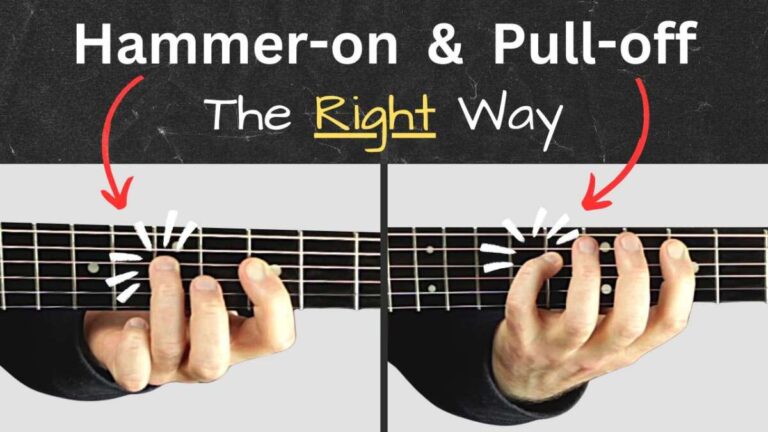
• Learning guitar-specific techniques such as palm muting and string bends.
A ukulele player already has useful skills. They may understand rhythm, chord progressions, strumming patterns, and song structure. Those skills create a strong base, even though the physical technique changes.
Starting with a nylon-string classical guitar can make the transition gentler. Its strings are usually softer than steel strings, though its neck may be wider.

Which Instrument Is Easier for Beginners?
For many beginners, the ukulele is easier to start. It is light, portable, and gentle on the fingers. Several popular chords use only one or two fingers, so new players can play simple songs within a short time.
The guitar offers more range but also asks more from the player. Beginners may deal with sore fingertips, difficult barre chords, and a wider neck.
Still, “easier” depends on the player. Choose a ukulele if you want:
• A small instrument for travel.
• A quick way to accompany singing.
• A gentle introduction to string instruments.
• Simple access to folk and pop songs.
Choose a guitar if you want:
• Deep bass and a larger sound.
• More chord and melody range.
• A path toward rock, blues, country, jazz, or classical music.
• A primary instrument for detailed arranging.
The best choice is the instrument you will actually pick up. A modest ukulele that you play every day can teach more than an expensive guitar that stays in its case.
Does Ukulele Music Sound Like Guitar Music?
Ukulele music can sound similar to guitar music when both instruments play the same song structure. A singer can use either instrument to support a verse, chorus, and bridge.
The tone remains different. A guitar often fills more space because it has a larger body, more strings, and stronger bass. A ukulele leaves more room in the mix and gives songs a lighter character.
You can make a ukulele sound fuller by:
• Using a low-G string.
• Choosing a tenor or baritone model.
• Playing fingerstyle arrangements.
• Adding a pickup and amplifier.
• Combining it with bass, percussion, or another guitar.
You can also make a guitar sound softer through fingerpicking, lighter strings, and gentle attack. Still, the natural voice of each instrument remains distinct.
The History Behind the Ukulele and Guitar Connection
The modern guitar has a long history connected to earlier European string instruments. Its development involved instruments such as the vihuela, lute, and several forms of early guitar.
The ukulele emerged in Hawaii in the 19th century. Portuguese immigrants brought small instruments such as the machete, braguinha, and rajão. Hawaiian makers and musicians adapted these designs into the ukulele recognized today.
This history explains why the ukulele and guitar feel related. They share design ideas from the wider family of chordophones, which are instruments that create sound through vibrating strings.
Historical details can vary because early instruments and names were not always recorded in the same way. The broad connection, however, is well established: the ukulele is a distinct Hawaiian instrument influenced by Portuguese string instruments, not a miniature version of the modern guitar.
Common Mistakes When Comparing a Ukulele and Guitar
Many beginners make the same errors when asking, “is a ukulele a guitar.” Avoiding them can save time and frustration.
Treating the Ukulele Like a Four-String Guitar
A ukulele has a different tuning system. Guitar chord shapes may not work as expected, even when both instruments use the same chord name.
Assuming a Bigger Instrument Is Better
A larger instrument is not automatically superior. A soprano ukulele may be perfect for travel, while a tenor may be better for fingerstyle playing.
Ignoring Intonation
Intonation is the instrument’s ability to stay in tune across the fretboard. A cheap instrument with poor intonation can make correct playing sound wrong. Test notes at the 12th fret before buying when possible.
Choosing the Wrong Strings
Use strings made for your instrument and tuning. Guitar strings are not a safe substitute for ukulele strings because tension and construction may differ.
Skipping Basic Setup
A new ukulele may need tuning, neck inspection, or small setup adjustments. If the strings feel unusually high or notes sound sharp in higher positions, ask a qualified repair technician for help.
How to Choose Between a Ukulele and Guitar
Start with your goals rather than brand names or appearance.
Ask yourself:
• Do I want to travel with the instrument?
• Do I want to sing while I play?
• Do I prefer a bright or deep sound?
• Can I practice in a small space?
• Do I plan to play bass lines and complex melodies?
• Do I have any hand pain or movement limits?
A ukulele is often the practical choice for casual playing, travel, classrooms, and quick song learning. A guitar may be the better choice for broad musical range, strong accompaniment, and advanced arranging.
Visit a music store if possible. Hold both instruments, tune them, and play a few simple chords. Comfort matters more than online opinions.
Frequently Asked Questions About Is a Ukulele a Guitar
Is a ukulele considered a guitar?
No, a ukulele is not considered a guitar. It is a separate fretted string instrument with its own history, tuning, size, and sound.
Is a ukulele easier to play than a guitar?
Many beginners find a ukulele easier because it has fewer strings, lower tension, and a smaller neck. Ease still depends on hand comfort, musical goals, and consistent practice.
Can you play guitar songs on a ukulele?
Yes, you can play many guitar songs on a ukulele. You may need to use different chord shapes or transpose the song to match the ukulele’s range.
Is a baritone ukulele a guitar?
No, a baritone ukulele is still a ukulele. It has a larger body and often uses D-G-B-E tuning, but its construction and instrument classification remain different from a guitar.
Do ukulele chords work on guitar?
Some musical chord concepts transfer, but the finger shapes usually do not match. Because the instruments use different tunings, you must learn guitar-specific shapes for accurate playing.
Which has more strings, a ukulele or guitar?
A standard guitar has six strings, while a standard ukulele has four. Some ukuleles have six or eight strings, but those are less common designs.
Can a ukulele replace a guitar?
A ukulele can replace a guitar for simple accompaniment, travel, and many songwriting tasks. It cannot fully replace the guitar’s lower range, wider note selection, or broad technical range.
Conclusion
A ukulele is not a guitar, but the two instruments share important skills, shapes, and musical ideas. The guitar has six strings, a wider range, and a deeper tone, while the ukulele usually has four strings, a smaller body, and a bright, gentle sound.
Choose a ukulele for portability and an easy start. Choose a guitar for greater range and a fuller sound. Whichever instrument you select, practice a little each day, learn songs you enjoy, and explore how the instrument responds in your own hands. Try both if you can, then share your experience or explore more beginner music guides.

Senior Music Reviewer
Alex Carter is a seasoned music reviewer with over a decade of experience in the world of sound and instruments. Passionate about helping musicians and enthusiasts make informed choices, he brings sharp insights and in-depth knowledge to every review. From classical instruments to modern gear, Alex combines technical expertise with a love for music to deliver content that resonates with readers.
As a Senior Music Reviewer and expert author on Tuneluma.com, Alex is dedicated to sharing honest evaluations, practical advice, and thoughtful commentary to guide readers in their musical journey.