Is A Guitar A String Instrument: Complete Guide
Yes, a guitar is a string instrument because vibrating strings create its sound.
The question “is a guitar a string instrument” has a simple answer, but the science behind it is worth exploring. A guitar also belongs to the chordophone family, which includes instruments that produce sound through stretched strings. Understanding how guitars work can help you choose the right instrument, improve your playing, and appreciate its design.
Is a Guitar a String Instrument?
Yes, a guitar is a string instrument. It makes music when one or more strings vibrate after being plucked, picked, or strummed.
Most modern guitars have six strings. These strings stretch from the bridge on the body to the tuning machines on the headstock. When you move a string, it vibrates at a certain frequency. That vibration creates the musical note you hear.
A guitar does not make a loud sound from the string alone. A loose string produces only a faint sound. The guitar body helps increase the sound by carrying and spreading the string’s vibration through the air.
This is why the guitar belongs to both of these groups:
• String instrument: Sound starts with vibrating strings.
• Chordophone: The strings are the main source of sound.
• Fretted instrument: Many guitars use frets to change the length of the vibrating string.
The answer to “is a guitar a string instrument” is therefore based on how the guitar produces sound, not on its shape or musical style.

How Does a Guitar Produce Sound?
A guitar produces sound through a chain of simple actions. You pluck or strum a string, the string vibrates, and the instrument turns that vibration into an audible tone.
Here is the basic process:
-
You pluck, pick, or strum a string.
-
The string vibrates at a set frequency.
-
The vibration moves through the bridge.
-
The bridge transfers energy to the guitar top.
-
The guitar body moves air and makes the sound louder.
-
The sound travels toward your ears.
On an acoustic guitar, the hollow body acts much like a sound chamber. The sound hole lets air move in and out, which helps project the tone. The top of the guitar also vibrates and adds warmth, volume, and color.
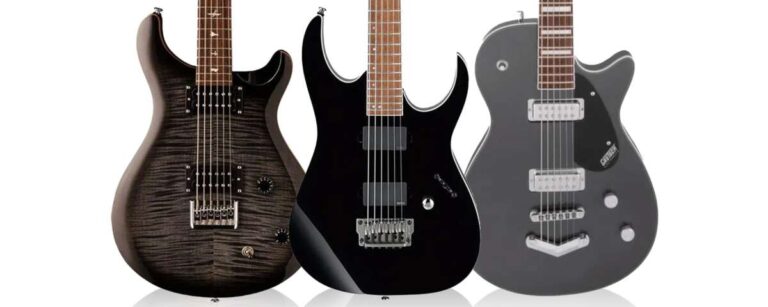
An electric guitar works in a different way. Its strings still vibrate, so it remains a string instrument. However, magnetic pickups sense the movement of metal strings and send an electrical signal to an amplifier.
This explains why the answer to “is a guitar a string instrument” applies to both acoustic and electric guitars. Their sound systems differ, but their first sound source is still a vibrating string.
What Parts Make a Guitar a String Instrument?
Each part of a guitar has a role in creating or controlling string vibration. Some parts produce sound, while others help the player change pitch and tone.
Strings
Guitar strings are usually made from steel, nickel, bronze, phosphor bronze, or nylon. Steel strings are common on electric and steel-string acoustic guitars. Nylon strings are standard on classical guitars.
Thicker strings tend to create lower notes. Thinner strings create higher notes. The string’s material, length, and tension also affect its tone.
Bridge
The bridge holds the strings in place on the guitar body. It transfers string energy to the top of an acoustic guitar or to the pickups and body of an electric guitar.
A well-fitted bridge helps the guitar stay in tune and play with good intonation.
Nut
The nut sits at the end of the fingerboard, near the headstock. It holds the strings at the correct height and spacing.
A poorly cut nut can make a guitar hard to tune or uncomfortable to play.
Frets and Fingerboard
Frets are thin metal strips set into the fingerboard. When you press a string behind a fret, you shorten its vibrating length. A shorter string vibrates faster and produces a higher note.
This is one reason the guitar is often called a fretted string instrument.
Soundboard or Pickups
The soundboard is the front of an acoustic guitar. It vibrates and helps project the sound.
Electric guitars use pickups instead. A pickup converts string movement into an electrical signal. An amplifier then makes that signal loud enough to hear.
These parts show why “is a guitar a string instrument” is more than a basic classification question. The guitar is a complete system built around string vibration.
Why Does String Length Change Pitch?
String length is one of the main factors that controls pitch. When you press a string against a fret, you reduce the part that can vibrate.
A shorter vibrating length creates a higher note. This follows the same basic principle used by other string instruments, including violins, cellos, banjos, and harps.
Pitch also changes with:
• Tension: A tighter string produces a higher pitch.
• Thickness: A thinner string usually produces a higher pitch.
• Length: A shorter vibrating section produces a higher pitch.
• Material: Different materials create different tones and levels of brightness.
For example, the open low E string on a standard guitar is much longer in its vibrating length than the same string pressed at the twelfth fret. At the twelfth fret, the vibrating length is about half as long, so the pitch rises by one octave.
This simple relationship helps explain why a guitar can play both melodies and chords. The player changes string length with the fretting hand while controlling vibration with the picking or strumming hand.
Is an Acoustic Guitar a String Instrument?
An acoustic guitar is a string instrument that uses a hollow body to amplify the sound of its strings. It does not need an amplifier to produce an audible tone.
The main acoustic guitar parts include:
• Sound hole: Allows air to move through the body.
• Soundboard: Vibrates in response to the strings.
• Bracing: Supports the top and helps shape the tone.
• Back and sides: Reflect and reinforce sound inside the body.
• Bridge: Transfers string energy to the soundboard.
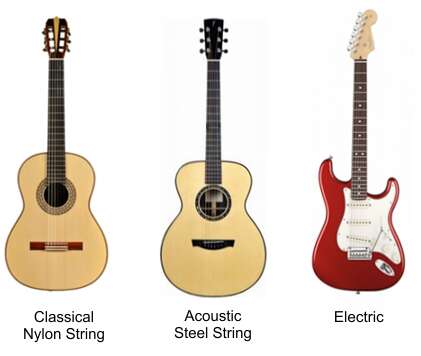
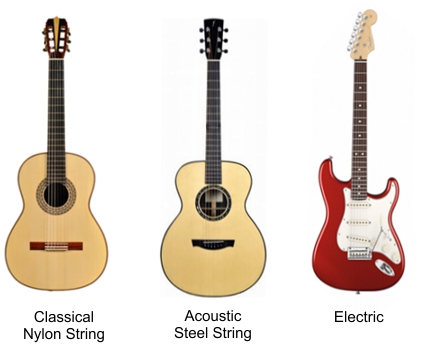
Acoustic guitars come in many forms. A steel-string acoustic is common in folk, country, rock, and pop music. A classical guitar uses nylon strings and has a wider neck. A 12-string acoustic guitar uses paired strings to create a rich, ringing sound.
Whether it has six strings, seven strings, or twelve strings, an acoustic guitar remains a string instrument because its sound begins with string vibration.
Is an Electric Guitar a String Instrument?
An electric guitar is also a string instrument. The main difference is that it uses pickups and amplification instead of relying mainly on a hollow body.
Most electric guitar pickups use magnets and coils of wire. When a metal string vibrates near the pickup, it changes the magnetic field. The pickup turns that change into an electrical signal.
The signal can then pass through:
• An amplifier
• Effects pedals
• A recording interface
• A mixing console
• Speakers or headphones
Electric guitars often have solid bodies, but a solid body does not change their classification. The body may reduce unwanted feedback and improve sustain, while the vibrating strings remain the source of the musical signal.
So, if someone asks, “is a guitar a string instrument even when it uses electricity,” the answer is still yes. Electricity increases and shapes the sound, but it does not replace the strings.
How Is a Guitar Different From Other String Instruments?
A guitar shares basic features with many string instruments, but its design gives it a special role in music.
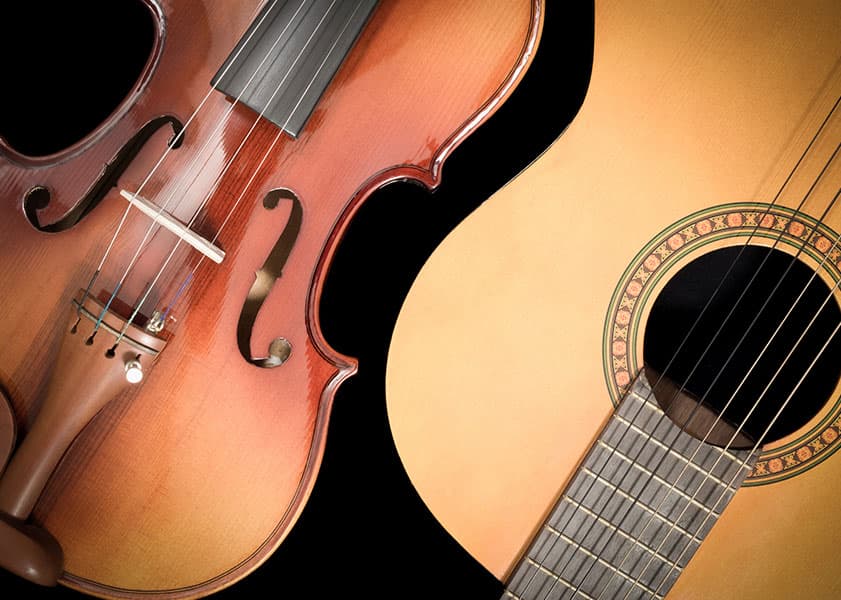
A violin is played with a bow or the fingers. It has no frets, so the player must place each note by hand. A piano has strings, but hammers strike them when the player presses keys. A banjo uses a drum-like head under the bridge to project string vibration.
A guitar is different because it usually combines:
• A fretted fingerboard
• Six or more strings
• A bridge and body system
• Plucking, picking, and strumming techniques
• The ability to play chords and single-note melodies
The guitar is also highly flexible. One player can use it for quiet fingerstyle music, while another can use distortion, delay, and a loud amplifier for rock.
This wide range of sounds does not change the answer to “is a guitar a string instrument.” It shows how many musical results can come from the same basic string system.

Common Types of Guitar String Instruments
Guitars come in many forms. Each type uses strings, but each has a different design and musical purpose.
Classical Guitar
A classical guitar uses nylon strings. It usually has a wider neck and a hollow wooden body. Players often use their fingers instead of a pick.
Steel-String Acoustic Guitar
This guitar uses steel-based strings and often has a louder, brighter sound. It is common in folk, country, blues, rock, and singer-songwriter music.
Electric Guitar
An electric guitar uses magnetic or piezoelectric pickups. It works with an amplifier and can produce clean, distorted, compressed, or heavily processed sounds.
Bass Guitar
A bass guitar is also a string instrument. Most bass guitars have four strings, although five-string and six-string models are common. Their strings are thicker and longer, which creates low musical notes.
12-String Guitar
A 12-string guitar has six pairs of strings. Each pair is tuned to create a full, shimmering sound. The extra tension can make the instrument feel harder to play.
Resonator Guitar
A resonator guitar uses a metal cone to project sound. It is often linked with blues, bluegrass, and slide guitar.
All of these instruments support the same central fact: a guitar is a string instrument because strings create the starting vibration.
Benefits and Limits of the Guitar’s String Design
The guitar’s string design gives it several advantages. It also creates a few challenges for new players.
Benefits
• Wide range: A guitar can cover bass notes, chords, and high melodies.
• Portability: Many guitars are easy to carry and play almost anywhere.
• Expressive control: Players can bend, slide, vibrate, mute, and hammer strings.
• Easy chord shapes: Frets make many common chords simple to learn.
• Many styles: Guitar works in jazz, blues, rock, classical, folk, country, metal, and pop.
Limitations
• Strings can break, especially when old or poorly fitted.
• Frets can wear down over time.
• Acoustic guitars may be affected by heat and humidity.
• Electric guitars need cables, amplification, or other equipment.
• Poor technique can cause buzzing, sharp notes, or tuning problems.
One lesson many beginners learn is that pressing harder does not always improve the sound. Pressing too hard can pull a note sharp and make the hand tired. A light, steady touch usually works better.

Tips for Caring for Guitar Strings
Good string care improves tone, tuning, and playability. It can also protect the guitar from avoidable damage.
Use these simple habits:
-
Wash and dry your hands before playing.
-
Wipe the strings with a clean, dry cloth after playing.
-
Replace strings when they sound dull, feel rough, or refuse to stay in tune.
-
Match the string type and gauge to the guitar.
-
Store the instrument away from extreme heat and rapid humidity changes.
-
Tune slowly when installing new strings.
String life depends on sweat, playing time, string material, and storage. There is no single replacement schedule for every player. A frequent performer may change strings every few weeks, while a casual player may wait several months.
When replacing strings, avoid changing all of them at once on some vintage or delicate instruments unless you know the instrument can handle the tension change. If you are unsure, ask a qualified guitar technician.
Is a Guitar a String Instrument or a Percussion Instrument?
A guitar is primarily a string instrument, not a percussion instrument. Its main sound comes from strings that vibrate after being plucked, picked, or strummed.
Some players tap the guitar body, slap the strings, or use percussive techniques. These actions can add rhythmic sounds, but they do not change the guitar’s main classification.
The same idea applies when a player uses effects such as distortion or reverb. Effects can reshape the sound, but they do not change the fact that the guitar begins as a string instrument.
Is a Guitar a String Instrument in Music Theory?
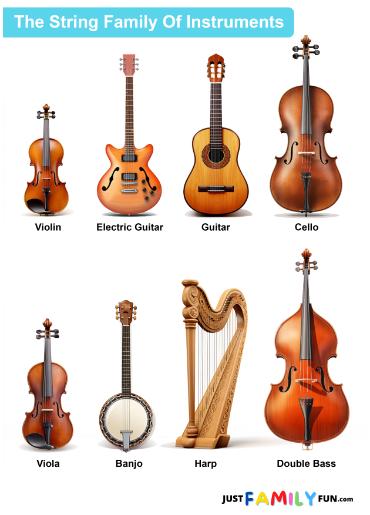
In music theory and instrument classification, a guitar belongs to the chordophone family. Chordophones are instruments that produce sound through vibrating strings held under tension.
This group includes:
• Guitars
• Violins
• Violas
• Cellos
• Harps
• Lutes
• Banjos
• Mandolins
The word “chordophone” comes from terms connected to strings and sound. The classification focuses on the physical source of the sound.
That is why the answer to “is a guitar a string instrument” remains the same across musical cultures and guitar designs. The instrument may change shape, use different materials, or include electronics, but its vibrating strings remain central.
Frequently Asked Questions About Is a Guitar a String Instrument
Is a guitar always made with six strings?
No. Many guitars have six strings, but some have four, seven, eight, or twelve strings. A guitar’s string count can change its range and tone without changing its classification as a string instrument.
Is a bass guitar a string instrument?
Yes, a bass guitar is a string instrument. It uses thicker, longer strings that create lower notes, and it may be acoustic or electric.
Does an electric guitar count as a string instrument?
Yes. An electric guitar uses pickups and an amplifier, but its signal begins when metal strings vibrate. Electricity makes the sound louder and helps shape its tone.
What type of instrument is a guitar?
A guitar is a chordophone, which is a type of string instrument. It is also commonly described as a fretted instrument because metal frets help players change the pitch.
Are nylon-string guitars still string instruments?
Yes. Nylon-string guitars are string instruments just like steel-string guitars. The material changes the feel and tone, but the sound still comes from vibrating strings.
Can a guitar make sound without strings?
A guitar body can make tapping or knocking sounds without strings, but it cannot create its normal musical tone. To function as a guitar, it needs properly fitted strings that can vibrate.
Conclusion
A guitar is a string instrument because its sound begins with vibrating strings. Acoustic guitars use a resonant body to project that vibration, while electric guitars use pickups and amplifiers to capture and shape it.
The guitar also belongs to the chordophone family and is often called a fretted instrument. Its strings, bridge, fingerboard, body, and electronics work together to create a wide range of musical sounds.
Now that you know the answer to “is a guitar a string instrument,” try listening for the parts of the sound: string vibration, body resonance, and amplification. Explore different guitar types, practice with a light touch, and share your favorite guitar facts or playing tips in the comments.

Senior Music Reviewer
Alex Carter is a seasoned music reviewer with over a decade of experience in the world of sound and instruments. Passionate about helping musicians and enthusiasts make informed choices, he brings sharp insights and in-depth knowledge to every review. From classical instruments to modern gear, Alex combines technical expertise with a love for music to deliver content that resonates with readers.
As a Senior Music Reviewer and expert author on Tuneluma.com, Alex is dedicated to sharing honest evaluations, practical advice, and thoughtful commentary to guide readers in their musical journey.