What Type Of Instrument Is A Guitar: Guitar Explained
A guitar is a plucked string instrument, a chordophone, and a member of the lute family.
Many people ask, “what type of instrument is a guitar?” The answer becomes clearer when you look at how it makes sound, how its strings are arranged, and how players control pitch. This guide explains the guitar’s musical family, main types, parts, history, strengths, and limits in simple terms.
What type of instrument is a guitar?
A guitar is a string instrument. More precisely, it is a chordophone because its sound comes from vibrating strings stretched between two fixed points. Players usually make those strings vibrate by plucking or strumming them with their fingers, a pick, or a thumb.
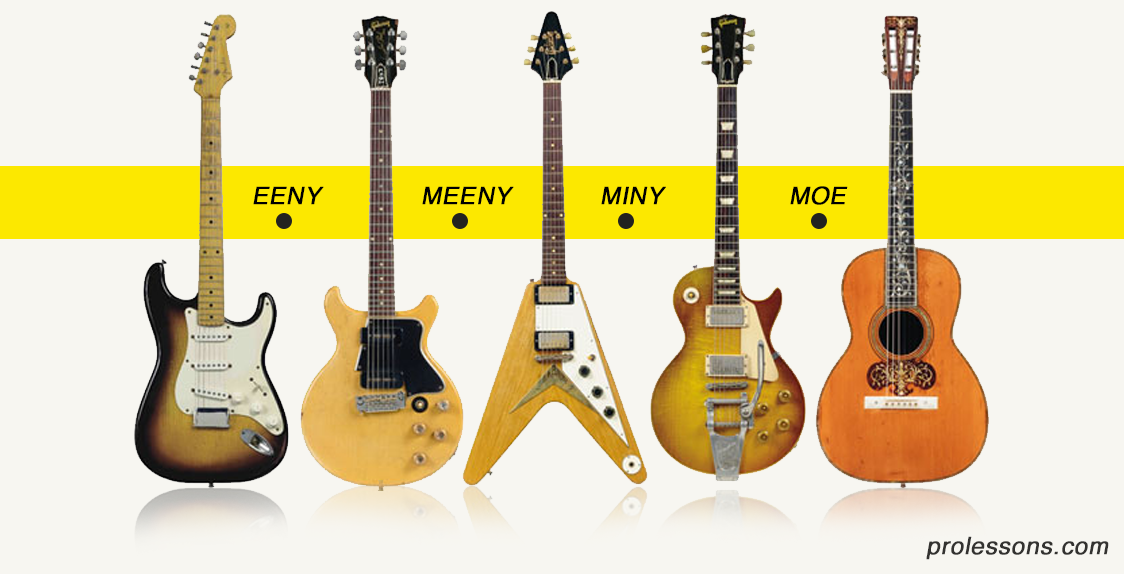
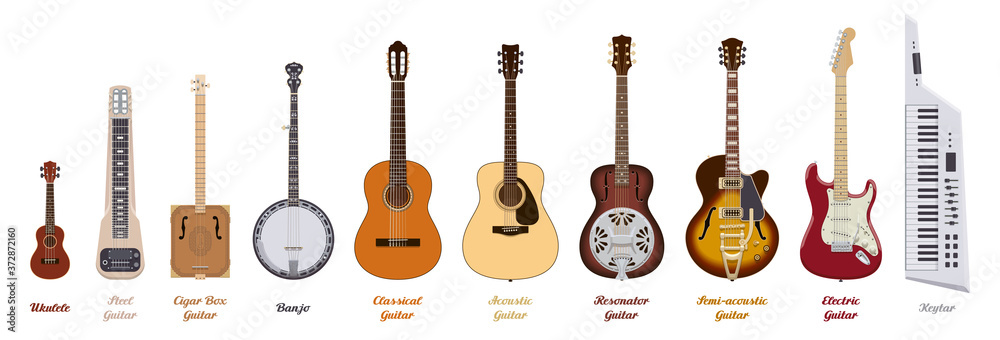
The guitar also belongs to the lute family. Lute-style instruments have a neck, a body, and strings that run from the bridge to the headstock. This family includes the ukulele, mandolin, banjo, and many older instruments.
In music classification, a guitar can be described in several ways:
- String instrument: Its sound comes from vibrating strings.
- Chordophone: This is the formal classification for instruments that produce sound through string vibration.
- Plucked instrument: Players normally pluck or strum the strings.
- Fretted instrument: Most guitars use raised metal frets to mark notes.
- Lute-family instrument: Its body and neck follow the basic design of the lute.
So, what type of instrument is a guitar? It is not limited to one label. It is a plucked, fretted chordophone within the larger string-instrument family.

How does a guitar produce sound?
A guitar string by itself makes a quiet sound. The vibrating string moves only a small amount of air, so the sound is weak. The guitar body or electronic pickup makes that vibration louder and more useful.
On an acoustic guitar, the process works like this:
- You pluck or strum a string.
- The string vibrates at a certain frequency.
- The vibration moves through the bridge.
- The bridge transfers energy to the soundboard.
- The soundboard moves the air inside and around the body.
- The guitar produces an audible musical tone.
The soundboard is the thin wooden top of an acoustic guitar. It acts like a speaker cone. The hollow body helps move air and adds volume, warmth, and resonance.
An electric guitar works in a different way. Its metal strings vibrate above magnetic pickups. The pickups turn the string movement into an electrical signal. An amplifier then makes that signal louder and can shape it with effects such as distortion, delay, or reverb.
This difference helps answer what type of instrument is a guitar in practical terms. An acoustic guitar is an acoustic string instrument, while an electric guitar is an amplified electric string instrument.
Why is a guitar called a chordophone?
The word chordophone comes from terms linked to strings and sound. In the Hornbostel–Sachs system, a widely used system for classifying musical instruments, chordophones create sound through one or more vibrating strings.
A guitar fits this classification because:
- Its strings are the main source of vibration.
- The strings are held under tension.
- Different string lengths and tensions create different pitches.
- The body or pickup transfers and amplifies the vibration.
The term “chordophone” does not mean the instrument can play only chords. A guitar can play single notes, melodies, chords, arpeggios, bass lines, and rhythmic patterns.
This point matters because many beginners think a guitar is mainly a chord instrument. It can play chords very well, but it is also a complete melodic and harmonic instrument. Classical guitarists, jazz players, rock musicians, and folk artists all use the same basic instrument in very different ways.
Is a guitar a percussion instrument?
A guitar is not mainly a percussion instrument. Its primary sound comes from vibrating strings, so its formal category is chordophone rather than percussion.
Still, guitarists sometimes use percussion techniques. They may tap the top, slap the strings, knock on the body, or use muted strums to create rhythmic sounds. These techniques add percussion-like effects, but they do not change the guitar’s main classification.
A useful comparison is the human voice. Singing uses the vocal cords as the main sound source, but singers can also clap or tap for rhythm. In the same way, a guitarist can use the instrument as a rhythm tool while still playing a string instrument.
The guitar may also seem similar to a percussion instrument because strumming creates a strong rhythmic pulse. However, rhythm and instrument classification are different ideas.

Is a guitar a woodwind or brass instrument?
No. A guitar is neither a woodwind nor a brass instrument.
Woodwind instruments make sound when air vibrates inside a tube. Examples include the flute, clarinet, saxophone, and oboe. Brass instruments use the vibration of the player’s lips inside a metal mouthpiece, as with the trumpet, trombone, and tuba.
A guitar does not need the player to blow air into it. The strings create the first vibration. The body or electronics then amplify and shape that sound.
This basic test can help identify what type of instrument is a guitar:
- If strings create the sound, it is a string instrument.
- If air inside a tube creates the sound, it is a wind instrument.
- If a stretched membrane creates the sound, it is usually a percussion instrument.

The main types of guitars
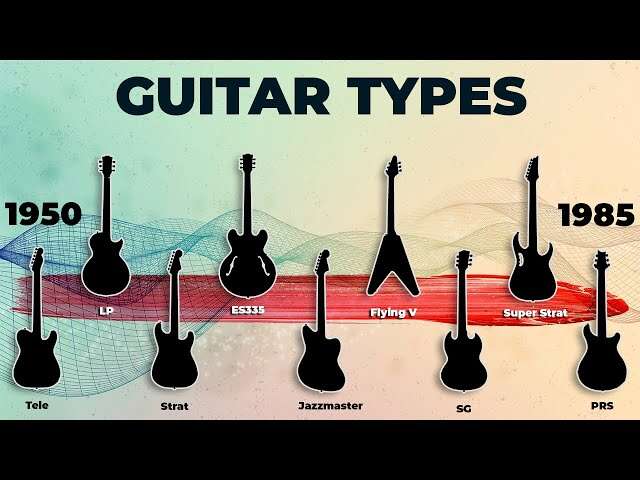
The word guitar covers several instruments. They share a common design, but their construction, sound, and musical roles can differ greatly.
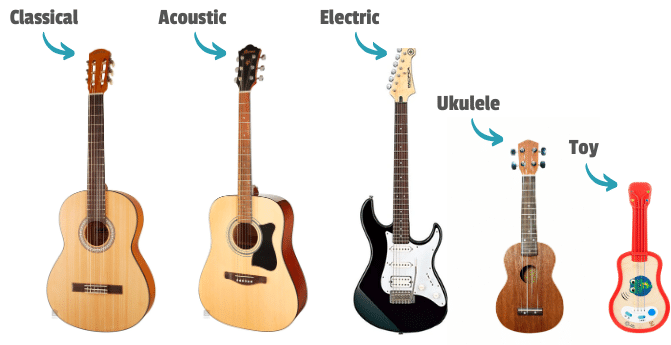
Acoustic guitar
An acoustic guitar uses a hollow body to amplify the strings naturally. It does not need an amplifier, although many acoustic guitars include a pickup for live performance.
Common acoustic guitar types include:
- Steel-string acoustic guitar: Popular in folk, country, pop, blues, and rock.
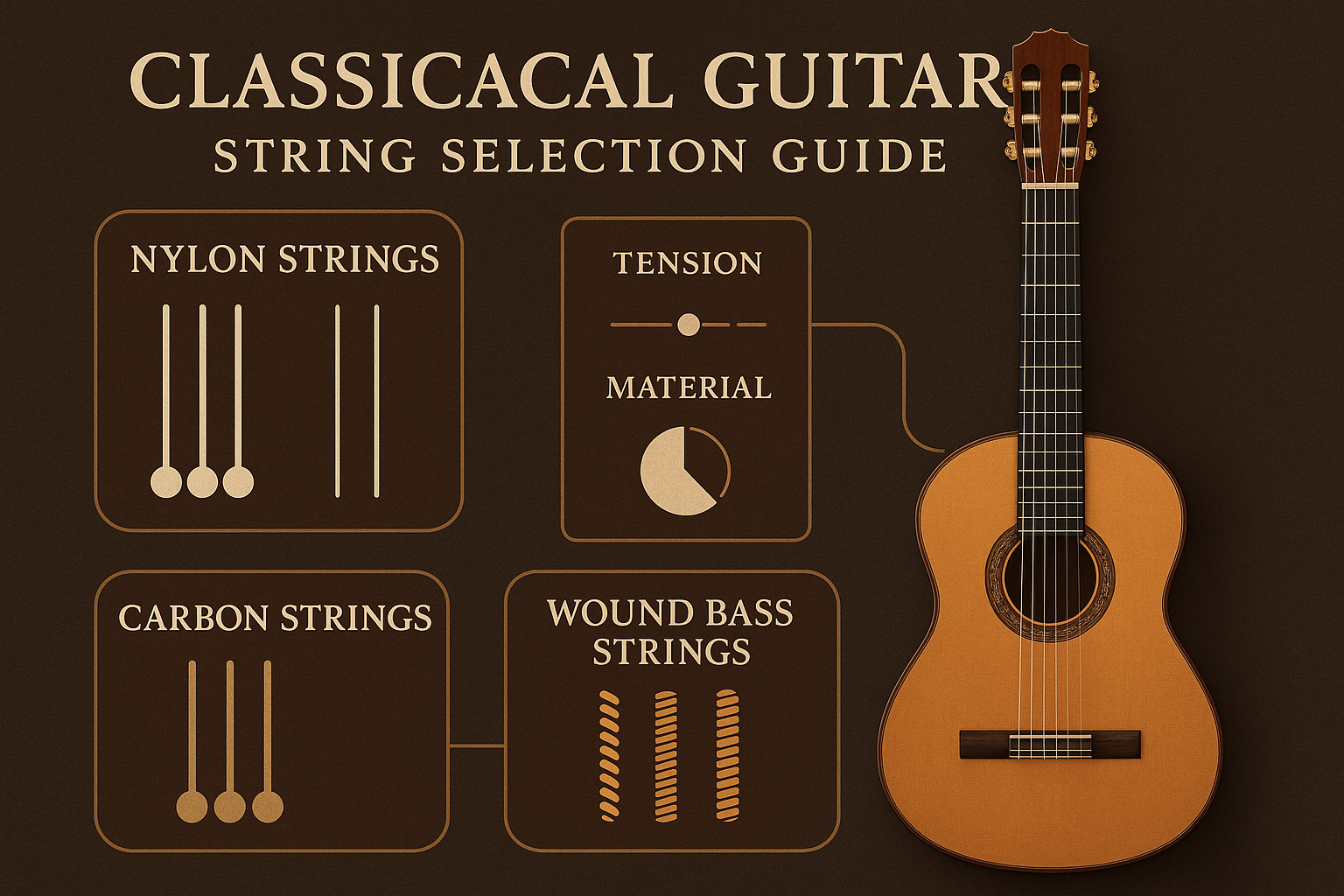
- Classical guitar: Uses nylon strings and a wider neck.
- Flamenco guitar: Designed for bright, quick tones and rhythmic playing.
- Twelve-string guitar: Uses six pairs of strings for a rich, chorus-like sound.
Steel-string acoustic guitars often have a sharper and louder tone than classical guitars. Classical guitars tend to sound softer, rounder, and more mellow.
Electric guitar
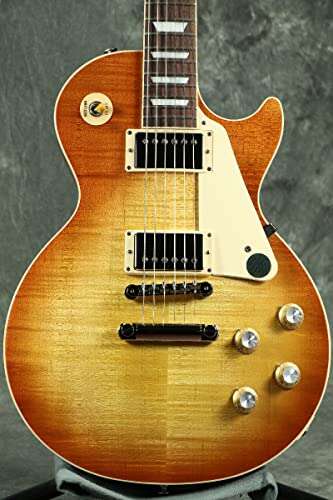
An electric guitar uses pickups and an amplifier. Its body may be solid, hollow, or semi-hollow.
Electric guitars are common in:
- Rock
- Blues
- Jazz
- Metal
- Pop
- Country
- Funk
A solid-body electric guitar usually produces less natural acoustic volume than a hollow guitar. However, it can handle high volume with less feedback. This makes it useful for loud stages.
Bass guitar
A bass guitar is closely related to the guitar but is built for lower notes. Most bass guitars have four strings, although five-string and six-string versions are also common.
Bass guitars usually have:
- Longer strings
- A longer neck
- Thicker strings
- Lower tuning
- A role that connects rhythm and harmony
A bass guitar is still a string instrument and chordophone. It is often considered part of the guitar family, although its musical role is different from that of a standard guitar.
Resonator guitar
A resonator guitar uses a metal cone to increase volume and shape tone. It is strongly linked with blues, bluegrass, country, and slide guitar.
Instead of relying only on a wooden soundboard, the resonator design uses a mechanical cone. This gives the instrument a sharp, metallic, and powerful voice.
The parts that define a guitar
Understanding the parts of a guitar makes its classification easier. Each part supports the strings, controls pitch, or shapes sound.
Body
The body provides support and helps amplify sound. On an acoustic guitar, its size and shape affect volume, bass response, comfort, and tone.
A larger body may produce more low-end power. A smaller body may feel easier to hold and may offer a focused, clear tone.
Neck
The neck supports the fingerboard and connects the body to the headstock. Players press strings against the neck to change their vibrating length.
Fingerboard and frets
The fingerboard is the surface under the strings. Frets divide it into measured sections. When a player presses a string behind a fret, the string becomes shorter and produces a higher note.
Frets make it easier to play accurate notes, but they also limit some pitch effects. Players can bend, slide, and vibrato notes, yet the fret layout still guides the standard pitch system.
Headstock and tuning machines
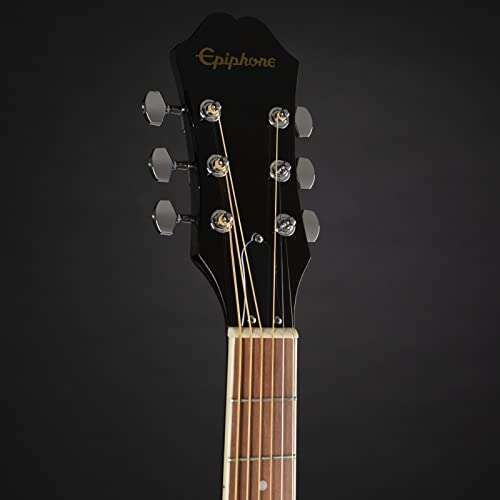
The headstock holds the tuning machines. Turning these machines changes string tension, which raises or lowers pitch.
Nut and bridge
The nut supports the strings near the headstock. The bridge anchors the strings near the body and transfers vibration into the soundboard or pickup system.
Pickups
Electric guitar pickups sense string movement and convert it into an electrical signal. Different pickup designs can create different levels of brightness, warmth, power, and noise.
How a guitar compares with other string instruments
The guitar shares features with many string instruments, but its design gives it a distinct role.
A violin is also a chordophone, but players usually use a bow rather than pluck the strings. A piano uses strings too, but felt-covered hammers strike them. A harp has strings arranged across an open frame, while a guitar places its strings along a neck and body.
The guitar is especially flexible because one player can create:
- Melody
- Harmony
- Bass
- Rhythm
- Chords
- Percussive patterns
This range explains why the guitar appears in so many musical styles. One guitarist can provide the full harmonic base for a singer, while another can play a single-note solo over a full band.
The history and development of the guitar
The modern guitar developed from older plucked instruments. Early relatives included the lute, vihuela, and other necked chordophones used in Europe and the Middle East.
The basic guitar shape became more familiar in Spain during the development of the classical guitar. Builders gradually refined the body, bracing, neck, tuning, and string arrangement.
The steel-string guitar later became central to American folk, blues, country, and popular music. In the twentieth century, the electric guitar changed performance by allowing players to perform with drums, large ensembles, and amplified venues.
Important developments included:
- Stronger internal bracing for steel strings
- Improved tuning systems
- Magnetic pickups
- Solid-body electric designs
- Effects pedals and digital modeling
- New materials and ergonomic body shapes
The guitar has changed over time, but its core idea remains the same: stretched strings create vibration, and the instrument turns that vibration into musical sound.
What are the advantages of learning guitar?
The guitar is popular for good reasons. It is portable, expressive, and useful in both solo and group settings.
Key benefits include:
- It supports many music styles.
- It can play rhythm and melody.
- Basic chords let beginners play songs quickly.
- An acoustic guitar needs little extra equipment.
- An electric guitar offers many sound options.
- Players can practice quietly with headphones and an amplifier.
- The instrument works well for songwriting and music theory.
A guitar can also build useful musical skills. Players learn rhythm, pitch, chord structure, ear training, coordination, and musical memory.
From a practical learning standpoint, the best first guitar is one that feels comfortable and stays in tune. A cheap guitar with high, stiff strings can make learning painful. A properly adjusted beginner instrument often helps more than an expensive model.
Common limits and challenges of the guitar
The guitar is flexible, but it is not perfect for every player or musical task.
Beginners may face these challenges:
- Fingertips can feel sore during the first weeks.
- Chord shapes may feel difficult at first.
- Poor tuning can make correct playing sound wrong.
- Acoustic guitars can be hard to hear in large groups.
- Electric guitars need an amplifier or other equipment.
- Frets can limit some pitch choices.
- Wide necks may be uncomfortable for smaller hands.
A common beginner mistake is pressing the strings too hard. This can cause pain and make notes sound sharp. Use only enough pressure to produce a clean note, and keep the thumb relaxed behind the neck.
Another mistake is practicing only chord shapes. Good guitar playing also needs steady rhythm, clean changes, listening skills, and simple single-note work.
How to choose the right guitar
Choose a guitar based on your body, goals, music taste, and budget. Do not choose only by appearance.
Use these steps:
- Decide whether you want acoustic, electric, classical, or bass guitar.
- Hold the instrument and check whether the neck feels comfortable.
- Make sure the strings are not extremely high above the fingerboard.
- Test the tuning machines and check that they turn smoothly.
- Play a few notes to listen for buzzing or dead sounds.
- Ask a music teacher or guitar technician to inspect the instrument.
- Buy basic accessories, such as a tuner, picks, strap, and case.
For children or players with small hands, a smaller guitar may be more comfortable. A full-size guitar is not always the best choice if it makes proper technique difficult.
The most important feature is playability. A guitar that feels good encourages practice, and regular practice matters more than brand names.
A simple way to understand guitar classification
Imagine three layers of classification:
- Broad family: The guitar is a string instrument.
- Scientific group: It is a chordophone.
- Playing method: It is usually a plucked, fretted, lute-style instrument.
This layered answer is more accurate than saying only “a string instrument.” It explains both the science and the way musicians use the guitar.
So, what type of instrument is a guitar? It is a fretted chordophone in the string family, usually played by plucking or strumming. Its acoustic or electric design then determines how the sound is amplified.
Frequently Asked Questions About What Type of Instrument Is a Guitar
Is a guitar a string instrument?
Yes. A guitar is a string instrument because vibrating strings create its sound. It is also more specifically classified as a chordophone.
Is a guitar a chordophone?
Yes. A chordophone is an instrument that produces sound through vibrating strings. The guitar fits this group, along with instruments such as the violin, harp, and lute.
Is an electric guitar still a string instrument?
Yes. An electric guitar remains a string instrument because its strings create the original vibration. Pickups and amplifiers simply convert and increase that sound.
Is a guitar a plucked instrument?
Yes. Guitarists usually pluck or strum the strings with their fingers, thumb, or a pick. Some players also use tapping, slapping, and other techniques.
Is a guitar part of the lute family?
Yes. The guitar shares the lute family’s basic design: a stringed body with a neck and strings running from the bridge to the headstock.
What is the difference between an acoustic and electric guitar?
An acoustic guitar uses its hollow body to amplify string vibration. An electric guitar uses pickups, an amplifier, and often effects to produce and shape its sound.
Is a bass guitar the same as a guitar?
A bass guitar is closely related to the guitar, but it is designed for lower notes and usually has thicker strings and a longer neck. Its main role is to support rhythm and harmony.
Conclusion
A guitar is a plucked string instrument, a chordophone, and a member of the lute family. Acoustic guitars use a resonant body, while electric guitars use pickups and amplification. Despite their differences, both rely on vibrating strings to create music.
Understanding what type of instrument is a guitar helps you choose the right model, learn proper technique, and appreciate its place in music history. Try a well-set-up guitar, learn a few simple chords, and listen closely to how each string responds. Explore more guitar guides, practice regularly, and share your questions or playing experience in the comments.

Senior Music Reviewer
Alex Carter is a seasoned music reviewer with over a decade of experience in the world of sound and instruments. Passionate about helping musicians and enthusiasts make informed choices, he brings sharp insights and in-depth knowledge to every review. From classical instruments to modern gear, Alex combines technical expertise with a love for music to deliver content that resonates with readers.
As a Senior Music Reviewer and expert author on Tuneluma.com, Alex is dedicated to sharing honest evaluations, practical advice, and thoughtful commentary to guide readers in their musical journey.