Don’t Stop Me Now Piano Sheet Music: Easy Guide
Licensed “Don’t Stop Me Now” piano sheet music helps you play Queen’s upbeat classic with the right notes, rhythm, and structure.
“Don’t Stop Me Now” is one of Queen’s most exciting songs to play on piano. Its bright chords, fast pulse, and rising energy make it a favorite for new players, skilled performers, and fans of Freddie Mercury. The best “Don’t Stop Me Now” piano sheet music does more than show the notes. It helps you understand the song’s form, dynamics, chord movement, and famous vocal lines. This guide explains how to choose the right arrangement, read it with confidence, avoid common mistakes, and practice the song in a practical way.
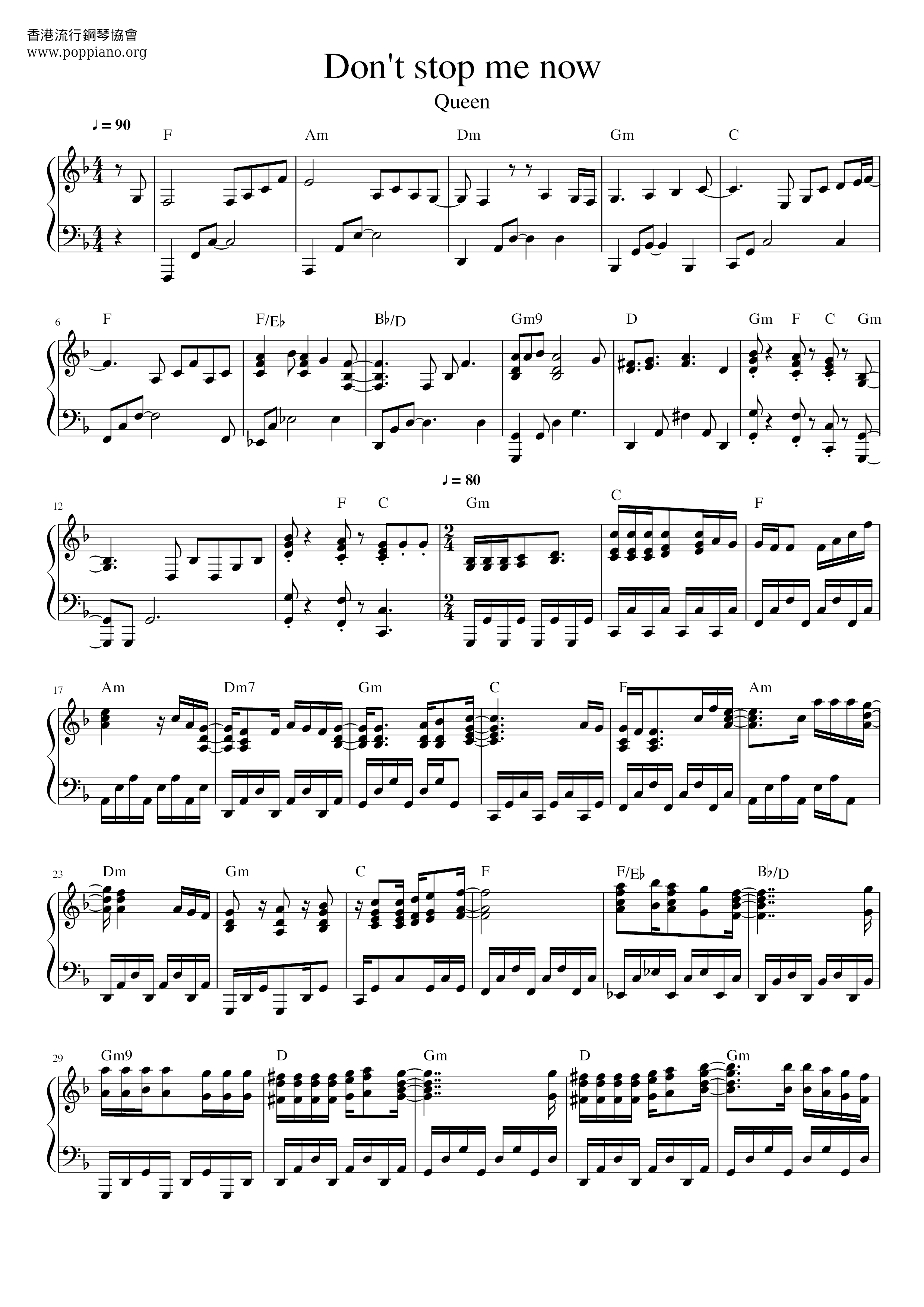
What makes “Don’t Stop Me Now” piano sheet music special?
“Don’t Stop Me Now” was written by Freddie Mercury and released by Queen in 1979 on the album Jazz. The song has a lively piano part, a strong bass foundation, layered vocals, and a fast rock feel. A good piano arrangement captures these features while making the music playable for one person.
The original recording is not just a simple piano song. It uses piano, bass, drums, guitar, and stacked vocal parts. For that reason, sheet music may be arranged in different ways:
• A basic solo version focuses on melody and simple chords.
• An intermediate version adds left-hand bass notes, fuller chords, and rhythmic detail.
• An advanced arrangement tries to recreate more of the recording with wide chords, quick movement, and layered textures.
The right “Don’t Stop Me Now” piano sheet music depends on your skill level and your goal. A beginner may need a simplified score, while an experienced player may want a fuller concert arrangement.
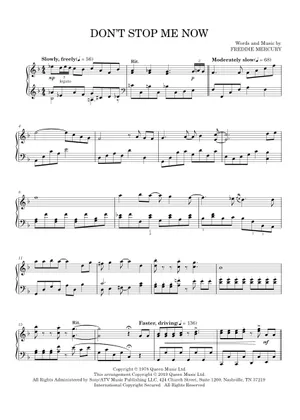
Choosing the right piano sheet music arrangement
Before buying or downloading music, check the arrangement details. Sheet music labeled only with the song title may still vary widely in difficulty, key, page count, and musical content.
Look for these details:
• Skill level: Choose beginner, easy, intermediate, or advanced based on your current ability.
• Instrument format: Confirm that the score is for solo piano rather than piano and vocal accompaniment only.
• Melody line: A clear melody helps you play the vocal tune with your right hand.
• Chord symbols: Chords make it easier to understand the harmony and adapt the piece.
• Key signature: Some versions stay close to the original key. Others transpose the song for easier playing or singing.
• Page layout: Clean spacing and clear notation reduce reading errors.
• Legal status: Use sheet music from a licensed publisher or an authorized music platform.
For most players, an intermediate arrangement offers the best balance. It can sound full without copying every part of the original recording. If you are still learning rhythm and chord changes, start with an easy version and move up later.
Do not judge a score by its page count alone. A short arrangement can be difficult if it uses large jumps, quick sixteenth notes, or complex chord voicings.

Is “Don’t Stop Me Now” difficult to play on piano?
The song is usually moderate to difficult for beginners because of its speed and energy. The notes may not look impossible, but the rhythm must stay steady. The left hand also needs to support the beat without becoming tense.
The main challenges include:
• Keeping a steady fast tempo
• Coordinating bass notes and right-hand chords
• Playing repeated patterns without rushing
• Managing large changes in volume
• Moving between chord shapes quickly
• Keeping the melody clear inside a busy texture
Many learners make the same mistake. They try to play at the original speed on the first day. This often causes uneven rhythm, missed notes, and stiff hands. Slow practice is not a lesser version of the song. It is the safest path to a strong performance.
Start at about half speed. Use a metronome and increase the tempo by small steps. If you can play a section three times in a row without an error, raise the speed slightly.

Understanding the key, tempo, and song structure
Many arrangements of “Don’t Stop Me Now” are written in F major, although some versions use a different key. The key may change to suit the arrangement or a singer’s range. Always check the key signature on your own copy instead of assuming every version is identical.
The recording has a quick, driving feel. Some published scores show a tempo near 156 beats per minute, but you do not need to begin there. The correct practice tempo is the fastest speed at which you can play evenly and comfortably.
The song follows a clear pop structure. Exact labels can vary by arrangement, but you will usually see sections such as:
• Intro
• Verse
• Pre-chorus or build-up
• Chorus
• Instrumental or transitional passage
• Return to the main sections
• Ending
Mark each section in pencil on your score. This turns a large piece into smaller tasks. It also helps you see where the energy rises and where the texture changes.
Think of the song as a roller coaster. The verse begins the ride, the build-up climbs, and the chorus reaches the peak. Your playing should show that shape through volume, attack, and timing.
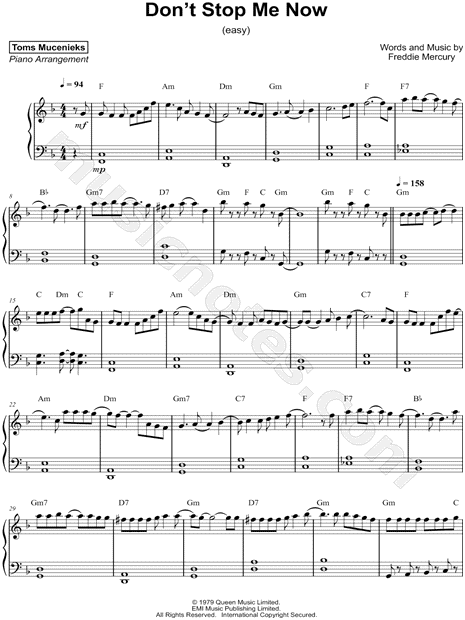
How to practice “Don’t Stop Me Now” piano sheet music
A structured practice plan is more useful than repeating the entire song without a goal. Use short sessions and focus on one skill at a time.
Step 1: Study the score
Look through the whole arrangement before playing. Find the key signature, time signature, repeated patterns, accidentals, dynamic marks, and difficult page turns.
Circle sections that repeat. Learning one pattern may help you learn several parts of the song.
Step 2: Practice each hand alone
Play the right hand slowly until the melody and chords feel familiar. Then practice the left hand on its own. The left hand must feel steady, almost like a drummer keeping time.
Do not move on just because you can play the notes once. Repeat each hand until the movement feels relaxed.
Step 3: Combine small sections
Join only two or four measures at first. When that feels easy, add the next small group. This method helps your memory and limits frustration.
If a transition causes trouble, practice the last measure before it and the first measure after it. Many mistakes happen at the joins between phrases.
Step 4: Add the correct rhythm
Use a metronome at a slow setting. Count aloud if needed. A simple count such as “one and two and” can help you place chords correctly.
The song should feel energetic, but energy does not mean rushing. A stable beat makes the performance sound confident.
Step 5: Add dynamics and style
Once the notes are secure, shape the music. Play softer in lighter sections and build toward the chorus. Use a firm attack, but keep your wrists loose.
Listen to the original recording for phrasing and mood. However, do not try to copy every studio detail. A solo piano arrangement needs its own balance.
Step 6: Increase the tempo
Raise the metronome by five beats per minute at a time. If your playing becomes tense or uneven, return to the previous setting.
This approach may feel slow, but it saves time. In my experience helping learners work through fast pop arrangements, the biggest improvement often comes from fixing rhythm before adding speed.

Common mistakes when learning the song
Fast songs can expose small weaknesses in technique. “Don’t Stop Me Now” piano sheet music is especially useful when you treat the difficult parts as skills to train, not problems to fear.
Starting too fast
Playing at full tempo too soon can create poor habits. Your fingers may learn the wrong rhythm, and those mistakes become harder to remove later.
Playing every note with the same force
The song needs contrast. If every chord is loud, the arrangement loses its sense of movement. Follow the dynamic markings, then make small changes based on the room and piano.
Ignoring fingering
Random fingering may work at a slow speed but fail when the tempo rises. Use consistent fingers for repeated patterns. If the printed fingering feels awkward, test another option slowly and write it into the score.
Overusing the sustain pedal
The sustain pedal can make the sound larger, but too much pedal blurs quick chord changes. Change the pedal with the harmony and clear it when the texture becomes muddy.
Neglecting the left hand
The left hand gives the song its drive. Practice it with a metronome and listen for even timing. A strong left hand can make a simple arrangement sound powerful.
Trying to imitate the full band
A piano solo cannot reproduce every guitar, drum, bass, and vocal layer at once. Choose the most important musical ideas: the pulse, harmony, melody, and dynamic shape.
How to make a simple arrangement sound full
You do not need an advanced score to create an exciting performance. Small choices can add depth to easy “Don’t Stop Me Now” piano sheet music.
Try these ideas:
• Keep the melody slightly louder than the supporting chords.
• Use the left hand to outline the bass movement.
• Play repeated chords with a steady, light touch.
• Add a small amount of pedal for sustained sections.
• Build volume gradually before the chorus.
• Let the final phrase breathe instead of stopping abruptly.
If the arrangement includes chord symbols, you can experiment with different voicings. A basic F major chord may sound plain in one position but richer when its notes are spread across both hands.
Do not add complexity just to show off. Every extra note should support the song. Clear rhythm and strong phrasing matter more than crowded chords.
Where to find legal “Don’t Stop Me Now” piano sheet music
Because Queen’s music is copyrighted, not every online copy is authorized. The safest option is to use sheet music from a recognized publisher, licensed digital store, or official music service.
Before using a score, check:
• Whether the seller identifies the publisher
• Whether the arrangement lists the arranger
• Whether the download includes a clear license or purchase record
• Whether the preview matches the product description
• Whether the format works with your device or printer
Free previews can be helpful, but a full song download should come from a legitimate source. Copyright rules differ by country, so readers outside the United States should check local regulations.
Avoid low-quality scans. They may contain missing pages, wrong notes, unclear symbols, or altered lyrics. A legal, readable score is usually worth the small cost because it saves practice time and supports composers, arrangers, and publishers.
Piano performance tips for singers and players
Some people use “Don’t Stop Me Now” piano sheet music to accompany a singer. In that case, the original key may not suit the vocalist. Transposing the piece can make the song more comfortable and protect the singer’s voice.
Ask the singer to test the highest and lowest notes before choosing a key. A digital keyboard can transpose the song, but printed sheet music may need a new arrangement.
For solo performance, consider the size of the room. A large hall may need stronger projection and wider dynamics. In a small living room, a lighter touch can sound more natural.
A useful performance plan is:
-
Begin with a clear and controlled introduction.
-
Keep the verse lighter than the chorus.
-
Build energy without speeding up.
-
Make the melody easy to hear.
-
Hold important final notes fully.
-
End with confidence and clean pedal control.
I have seen many players focus so heavily on correct notes that they forget the song’s joyful character. Accuracy matters, but this piece also needs freedom, lift, and a sense of fun.
Digital versus printed sheet music
Both digital and printed formats have benefits. Digital “Don’t Stop Me Now” piano sheet music is easy to store, enlarge, and annotate on a tablet. Printed music is often easier to view during a performance and does not depend on a charged device.
Digital scores may offer:
• Adjustable page size
• Instant downloads
• Searchable files
• Annotation tools
• Easy storage
Printed scores may offer:
• Better page awareness
• Less screen distraction
• Simple pencil markings
• A familiar feel for traditional practice
If you use a tablet, set it on a stable stand and turn off notifications. If you print the score, use a readable size and mark page turns before performance day.
A practical seven-day practice plan
A short plan can help you make steady progress with “Don’t Stop Me Now” piano sheet music.
Day one: Explore
Read the score and listen to the recording. Identify the key, form, repeated patterns, and hardest passages.
Day two: Learn the right hand
Practice the melody and chord shapes slowly. Focus on fingering and clean movement.
Day three: Learn the left hand
Work on the bass line and rhythm. Keep the beat steady and relaxed.
Day four: Combine sections
Join both hands in short groups. Stop and correct errors before they become habits.
Day five: Shape the music
Add dynamics, pedal, accents, and phrase direction. Keep the tempo comfortable.
Day six: Practice the full form
Play from start to finish without stopping. Mark any weak spots for later work.
Day seven: Perform and review
Record yourself or play for a friend. Listen for rushing, unclear melody, uneven chords, and excessive pedal.
One week may not be enough to master the song at full speed. That is normal. The plan is meant to build control, not create pressure.
Frequently Asked Questions About “Don’t Stop Me Now” Piano Sheet Music
Is “Don’t Stop Me Now” piano sheet music suitable for beginners?
Some simplified arrangements are suitable for beginners, but the original tempo and rhythmic drive can still be challenging. Start with an easy version that uses simple chords and a reduced left-hand part.
What key is “Don’t Stop Me Now” usually written in?
Many arrangements use F major, which is commonly associated with the original recording. However, publishers may transpose the song, so always check the key signature on the specific score.
How long does it take to learn the song on piano?
The time depends on your reading skills, hand coordination, and target tempo. A beginner may learn a simple version in several weeks, while a full arrangement may require months of regular practice.
Can I use free “Don’t Stop Me Now” piano sheet music?
You can use free music when it is offered legally by the copyright holder or an authorized provider. Be careful with unauthorized scans and uploads, as they may violate copyright and often contain errors.
Should I use the original tempo while practicing?
No. Begin slowly with a metronome and increase the speed in small steps. Move toward the original tempo only when your rhythm, fingering, and relaxation remain stable.
Is the song harder to play than it sounds?
For many learners, yes. The harmony may be manageable, but the fast tempo, repeated chords, coordination, and dynamic energy require control.
Can I sing while playing the piano arrangement?
Yes, but you may need a simpler accompaniment or a different key. Practice the piano part alone first, then add the vocal line at a slower tempo.
Conclusion
“Don’t Stop Me Now” piano sheet music gives you a clear path into one of Queen’s most joyful and energetic songs. The best arrangement matches your skill level, uses readable notation, and comes from a legal source. Start slowly, separate the hands, protect the beat, and add dynamics only after the notes feel secure.
With patient practice, even a simplified arrangement can sound bright, confident, and full of life. Choose a reliable score, set a realistic tempo, and enjoy the process. Explore licensed arrangements, record your progress, and share your performance with someone who loves great piano music.

Senior Music Reviewer
Alex Carter is a seasoned music reviewer with over a decade of experience in the world of sound and instruments. Passionate about helping musicians and enthusiasts make informed choices, he brings sharp insights and in-depth knowledge to every review. From classical instruments to modern gear, Alex combines technical expertise with a love for music to deliver content that resonates with readers.
As a Senior Music Reviewer and expert author on Tuneluma.com, Alex is dedicated to sharing honest evaluations, practical advice, and thoughtful commentary to guide readers in their musical journey.