Best Bach Pieces For Piano: Top Works To Learn
The best Bach pieces for piano blend clear counterpoint, rich emotion, and useful skill-building for every playing level.
You may love Bach’s music but still feel unsure where to begin. Some books move too fast, while others offer little help with fingering, style, or level. I tested these collections with those real needs in mind. I looked at piece variety, page quality, progression, musical value, and how well each book serves home practice. This guide covers beginner Bach, early intermediate keyboard works, famous favorites, inventions, suites, and advanced masterpieces. It also explains which collection makes the most sense for your goals, budget, and current piano level.
First Lessons in Bach: Complete Books I and II

First Lessons in Bach is a friendly starting point for students who want real music without an intimidating jump in difficulty. The book combines material from two volumes, so it gives learners a wider path than a short beginner collection. The pieces introduce Bach’s clear lines, simple dance rhythms, and careful phrase shapes. I especially like the way the book lets a student grow from easy pieces into early intermediate work.
This is not a book for someone seeking every famous Bach masterpiece. Instead, it works as a guided first step into Baroque piano style. The format suits private lessons, self-study with a teacher, and daily practice at home. For many players searching for the best Bach pieces for piano, this collection offers the most comfortable entry point.
Pros:
- Useful progression from beginner to early intermediate level
- Includes two complete lesson books in one volume
- Helps students learn independent hand movement
- Offers short pieces that fit daily practice sessions
- Works well with a piano teacher or structured study plan
- Introduces Baroque rhythm without a steep technical wall
Cons:
- May feel too easy for advanced players
- Does not focus on major concert works
- Some learners may want more fingering guidance
My Recommendation
I recommend this book for beginning pianists, young students, and adults who want a calm route into Bach. It is also a smart choice for teachers who need several levels in one affordable book. Choose it if you value steady progress more than famous titles. Among the best Bach pieces for piano books, this one gives beginners the least stressful start and strong long-term value.
J.S. Bach: Easiest Piano Pieces, Vol. 2141

J.S. Bach: Easiest Piano Pieces, Vol. 2141 gathers 38 selected works for early intermediate players. That number matters because students get many small goals instead of one long work that can wear down motivation. The pieces help develop balance, finger control, articulation, and a sense of pulse. I find this type of collection useful when a pianist needs variety during the week.
The book sits above the simplest beginner material but below demanding fugues and large suites. It can serve as a bridge between basic lesson books and more serious Bach study. Players can use the shorter works to polish clean attacks and even voices. If you want the best Bach pieces for piano at a manageable early intermediate level, this volume deserves close attention.
Pros:
- Provides 38 works for broad practice variety
- Fits early intermediate piano study
- Builds control of touch and clear articulation
- Gives players short pieces with quick progress
- Useful for lessons, auditions, and personal study
- Offers more musical depth than basic beginner books
Cons:
- Does not include all of Bach’s most famous works
- Some pieces still require careful hand independence
- Advanced players may outgrow it quickly
My Recommendation
I would choose this collection for an early intermediate pianist who wants many pieces at a similar level. It is a practical option for students who lose interest when a book feels repetitive. It also makes a good supplementary volume beside a method book. For value, range, and level control, it is one of the best Bach pieces for piano collections for developing players.
Bach: The Ultimate Piano Collection

Bach: The Ultimate Piano Collection is designed for players who want one broad volume rather than several narrow books. It brings together inventions, sinfonias, suites, variations, and other major keyboard material. That mix gives the pianist a clear view of Bach’s range, from compact studies to works with greater musical weight. I see it as a useful shelf book for a serious student or lifelong piano fan.
The word “ultimate” should not be read as “every Bach work ever written.” Large catalog collections cannot replace specialized scholarly editions for every piece. Still, this book gives strong coverage in a convenient format. It is especially useful when you want to compare forms, moods, and levels without changing books every few weeks.
Pros:
- Covers several important Bach keyboard forms
- Offers both study pieces and performance material
- Reduces the need to buy many separate volumes
- Supports long-term growth from intermediate to advanced work
- Helps players compare inventions, suites, and variations
- Creates a useful home reference collection
Cons:
- The large scope may overwhelm new players
- Not every work receives detailed editorial notes
- Players seeking only easy pieces may find it too broad
My Recommendation
This is best for intermediate and advanced pianists who want a wide Bach library in one purchase. It also suits teachers who need a flexible source for different students. I would not make it the first book for a new beginner, but I would gladly keep it near the piano for years. If your goal is to explore the best Bach pieces for piano across many forms, this collection offers excellent practical range.
Bach Piano Sheet Music Collection: Kempff Transcriptions

This collection presents ten large Bach works in piano transcriptions associated with Wilhelm Kempff. That detail changes the playing experience. These are not simply easy keyboard studies; they turn broad musical textures into rich piano writing with long phrases and dramatic shape. I recommend it to pianists who enjoy the sound of a modern piano and want to explore Bach beyond the smaller teaching pieces.
Transcriptions can be rewarding, but they also need thoughtful handling. The pianist must balance the original musical lines while using the piano’s sustain, color, and dynamic power with care. A player who treats every note as a romantic melody may blur Bach’s structure. Still, for advanced study and recital preparation, this book can open a beautiful door into some of the best Bach pieces for piano.
Pros:
- Offers substantial works for advanced piano study
- Shows how Bach’s music can live on the modern piano
- Provides expressive material for recitals
- Encourages work on voicing and long musical lines
- Introduces respected transcription practice
- Can expand a pianist’s tonal and interpretive range
Cons:
- Not suitable for beginners or most early intermediates
- Transcriptions differ from Bach’s original keyboard texts
- Some works demand advanced technique and stamina
My Recommendation
I recommend this volume for advanced pianists, teachers, and performers who want a more expansive Bach sound. It is not the right choice if you want strict original-text study or short daily pieces. Select it when you already understand basic counterpoint and can control tone with both hands. For mature players seeking dramatic best Bach pieces for piano, the Kempff approach offers strong artistic value.
Bach Favorite Piano Works, Volume 2100

Bach Favorite Piano Works gathers 48 familiar and useful pieces in a single collection. Its appeal comes from selection: a pianist can find a short prelude, a dance, a chorale setting, or another recognizable work without searching through a large scholarly set. The book works well for players who want music they can learn, enjoy, and share. It also gives teachers plenty of choices for different moods and lessons.
A favorite-works book is often more approachable than a complete catalog. It can help a returning pianist rebuild confidence because many pieces offer a clear sense of progress. The collection may not provide the deepest notes on historical performance practice, but it delivers playable repertoire. For shoppers comparing the best Bach pieces for piano, this is a strong all-purpose choice.
Pros:
- Includes 48 selected piano works
- Offers a broad mix of familiar Baroque pieces
- Useful for casual playing and formal study
- Gives teachers many repertoire choices
- Works well as a general Bach reference book
- Helps returning pianists regain regular practice habits
Cons:
- Difficulty levels may vary from piece to piece
- Selection-based books cannot cover every major cycle
- Some players may prefer a more focused edition
My Recommendation
This collection is best for the pianist who wants one approachable book with plenty of familiar material. It suits adult learners, intermediate players, teachers, and casual musicians. Check the table of contents before buying if you need a very specific level. In my view, it is one of the best Bach pieces for piano choices for broad use and easy browsing.
Best of Bach for Piano Duet
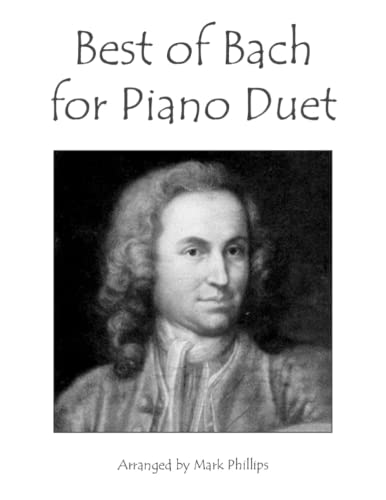
Best of Bach for Piano Duet changes Bach study from a solo task into a shared musical activity. Two players divide the music, listen across the keyboard, and learn to breathe together. That makes the collection useful for teacher and student, parent and child, or two friends at the same level. Duet playing can also make practice feel less lonely and more like a small concert.
The main challenge is coordination. Each player must keep a steady pulse and avoid covering the other part with too much force. This book is most rewarding when both players prepare their own lines before combining them. If you are looking for the best Bach pieces for piano but prefer social music making, this duet format is a refreshing option.
Pros:
- Makes Bach practice more social and engaging
- Builds rhythm, listening, and ensemble skills
- Works well for lessons and family playing
- Can improve confidence before solo performance
- Offers a fun way to introduce classical music
- Encourages careful balance between two players
Cons:
- Requires a second pianist for full use
- May not satisfy players seeking solo repertoire
- Different skill levels can make rehearsal uneven
My Recommendation
I recommend this book for families, teachers, and friends who want to play together. It is especially helpful for a student who avoids practice but enjoys performing with another person. Choose a partner who can keep time and listen well, even if the technical levels differ. Among the best Bach pieces for piano resources, this one stands out for connection and shared progress.
The Indispensable Bach Collection

The Indispensable Bach Collection includes 23 famous piano pieces in a compact format. It targets the pianist who wants a focused group of well-known works rather than a huge book with many unfamiliar selections. Famous pieces can give students a clear goal and a reason to keep practicing. They also provide useful material for informal playing, church settings, studio recitals, and personal enjoyment.
A famous title does not always mean an easy piece. Some works in this type of collection may require more control than a new player expects. I suggest reading the contents and checking the music level before choosing a first piece. For an intermediate pianist who wants recognizable examples of the best Bach pieces for piano, this collection has strong appeal.
Pros:
- Focuses on 23 well-known Bach piano pieces
- Gives players clear and motivating repertoire goals
- Offers a compact alternative to large collections
- Fits recital and personal performance use
- Helps learners explore standard Bach literature
- Easy to keep on the music rack for regular use
Cons:
- Limited number of pieces compared with larger books
- Several famous works may be technically demanding
- Beginners may need teacher guidance
My Recommendation
This is best for intermediate pianists who want famous music in a tidy, focused volume. It is also a good gift for an adult learner who knows Bach by sound but has not played much of his music. I would not choose it as a complete learning course. Still, it is a strong pick when recognizable best Bach pieces for piano matter most.
The Well-Tempered Clavier, Books 1 and 2

The Well-Tempered Clavier contains 48 pairs of preludes and fugues across Books 1 and 2. It is one of the central monuments of keyboard literature. Each pair shows a different way to shape harmony, rhythm, voice leading, and musical argument. This is not a quick songbook; it is a long study path that can serve an advanced pianist for many years.
Players should approach the set with patience. A fugue asks the ear to follow more than one voice, much like watching several conversations at once. The score may look clean, but musical clarity takes careful practice and thoughtful fingering. Among the best Bach pieces for piano, the Well-Tempered Clavier offers the deepest training in contrapuntal listening and mature interpretation.
Pros:
- Includes all 48 preludes and fugues from both books
- Provides unmatched study of counterpoint and harmony
- Supports advanced performance and long-term growth
- Offers many keys, moods, textures, and structures
- Builds strong inner hearing and voice control
- Creates a serious foundation for classical piano study
Cons:
- Too difficult for most beginners and early intermediates
- Requires a long and disciplined practice plan
- The complete volume may feel heavy and less portable
My Recommendation
I recommend this collection for advanced students, conservatory players, teachers, and serious adult pianists. Start with selected preludes before attempting demanding fugues. A teacher can help with fingering, tempo, articulation, and the order of study. If you want the best Bach pieces for piano as a lifelong musical project, this is the essential advanced choice.
Bach Two- and Three-Part Inventions

Bach’s Two- and Three-Part Inventions remain among the finest teaching works for piano. The two-part inventions train a player to make two voices clear, while the three-part sinfonias add a denser layer of sound. Each short work feels like a small machine made of musical ideas. When played well, the lines move with energy instead of sounding stiff or flat.
This collection rewards slow practice and careful listening. I suggest learning each hand alone, then joining the parts at a modest tempo. The goal is not only to hit the notes; it is to let each voice speak with its own shape. For pianists building the skills needed for the best Bach pieces for piano, this book is one of the most useful stepping stones available.
Pros:
- Builds clear two-hand independence
- Develops early contrapuntal thinking
- Includes both two-part and three-part works
- Uses short pieces with focused musical goals
- Supports strong technique without empty exercises
- Useful for lessons, exams, and serious home study
Cons:
- Small pieces can expose weak rhythm quickly
- Three-part works may challenge early intermediate players
- May feel dry to students who want lyrical melodies
My Recommendation
This is my top choice for early advanced players who want to improve real musical control. It is also excellent for teachers who need compact works with clear learning aims. Choose it when your main need is hand independence, not a book of easy favorites. In a search for the best Bach pieces for piano, the Inventions offer some of the highest skill value per page.
A First Book of Bach with MP3s

A First Book of Bach is made for the beginning pianist who wants a gentle introduction to the composer. The downloadable MP3s add useful support because a new player can hear the likely shape before working alone. Listening does not replace reading the score, but it can make rhythm and phrasing less mysterious. This makes the book friendly for children, adults, and students studying without a daily teacher.
The selected pieces are short, so they fit a busy practice routine. A learner can listen, clap the rhythm, practice each hand, and then play slowly with a clear target. I would still advise checking the exact difficulty of each work, since beginner ability varies widely. For an accessible first look at the best Bach pieces for piano, this Dover book offers a helpful mix of print and audio support.
Pros:
- Designed for beginning pianists
- Includes downloadable MP3 learning support
- Uses short works for manageable practice
- Helps students hear style before playing
- Works well for children and adult beginners
- Can supplement a standard piano method
Cons:
- Audio access depends on a working internet connection
- Some students may still need teacher feedback
- Advanced players will need a harder collection
My Recommendation
I recommend this book for a true beginner who wants Bach without a large technical burden. The MP3s make it a better choice for students who learn well by listening. Use the recordings as a guide, not as a shortcut around careful practice. It is one of the best Bach pieces for piano starting points when support and simplicity matter.
How to Choose the Best Bach Pieces for Piano
Choosing Bach sheet music is not only about finding the most famous title. The right book should match your technique, reading skill, practice time, and musical aim. A beautiful work can become frustrating if it sits far above your current level. A modest piece can become deeply rewarding when it fits your hands and invites careful listening.
Match the book to your playing level
Beginner pianists should look for short works with simple textures and a slow rise in difficulty. A first book should help the player coordinate both hands without demanding complex fugue entries. Early intermediate players can move toward easier preludes, dances, and selected pieces from teaching collections. Advanced pianists can explore inventions, sinfonias, suites, the Well-Tempered Clavier, and demanding transcriptions.
Do not judge a book only by its cover or by the word “famous.” Bach’s most famous pieces often require clean finger work, steady rhythm, and strong control of several voices. Ask whether you can play scales, read both clefs, and keep one hand soft while the other carries a line. Those skills matter more than age.
Decide whether you want original keyboard music
Bach wrote for several keyboard settings, and editors present his music in different ways. Some books focus on original keyboard pieces. Others include arrangements or transcriptions of orchestral, organ, or vocal works. Both types can be musical and useful, but they serve different goals.
If you want historical keyboard study, choose a reliable edition of original keyboard repertoire. If you want a full, colorful piano sound, a respected transcription may suit you. Always check the description before buying. A transcription can be excellent, but it should not be confused with the original source.
Look for clean notation
Good engraving makes practice easier. Clear note spacing, readable accidentals, sensible page turns, and helpful fingering can save hours of strain. For Bach, visual clarity matters even more because the pianist often follows several musical lines at once.
Urtext editions aim to present the notes with limited editorial additions. Teaching editions may add fingering, phrasing, dynamics, and performance tips. Neither style is always best. A newer player may benefit from guidance, while an advanced player may prefer a less marked page.
Consider page turns and binding
A cheap book can become expensive in time if it closes while you play. Check whether the collection lies flat or uses a strong binding. Large volumes can be useful, but they may be harder to place on a small music stand. A compact book can travel well, yet its pages may feel crowded.
I also suggest checking the print size. Older eyes and long practice sessions need comfortable notation. Clear print supports better accuracy and less fatigue. This small detail often separates a pleasant purchase from a frustrating one.
Think about how you practice
The best Bach pieces for piano reward small, focused practice. Start with one voice or hand. Mark the main subject or motive. Then add the other part and listen for balance. Avoid rushing to full tempo, since fast mistakes can hide weak control.
A metronome can help, but it should not flatten the music. Use it to build a stable pulse, then release it while shaping phrases. Record yourself from time to time. A recording can reveal blurred voices, uneven notes, or overuse of pedal that you may not notice while playing.
Understand Bach style at the piano
Bach’s keyboard music does not need to sound dry. It does need clarity. Most players should use less sustaining pedal than they might use for Chopin or Rachmaninoff. A clean finger legato, light release, and careful articulation often create enough connection.
Bach’s scores also do not always show the full range of modern dynamic marks. That does not mean the music has no contrast. Shape can come from texture, register, harmony, articulation, and the rise and fall of a phrase. A teacher or trusted recording can help, but your ears should lead.
Know what “piano” means in a Bach edition
Bach lived before the modern piano reached its present form. He wrote much keyboard music for harpsichord, clavichord, organ, or related instruments. Modern pianists still play this music because the notes, structure, and musical ideas transfer beautifully.
The piano changes the sound. It can sustain, swell, and produce larger dynamic contrast. That creates both freedom and risk. A pianist must avoid turning every phrase into a heavy romantic melody. Think of the sound as a clear conversation, not a wall of sound.
What Are the Best Bach Pieces for Piano by Level?
Beginner level
Beginners should start with short and clear works. Easy minuets, simple dances, little preludes, and selected teaching pieces can build confidence. The goal is to keep a steady pulse and show each note with care.
A beginner should not feel pressure to play a full fugue. Bach study works best as a staircase. Each step should challenge the player, but it should not block the path. Collections such as A First Book of Bach and First Lessons in Bach make sense here.
Early intermediate level
At this stage, players can study short preludes, easier dances, and selected pieces from broad anthologies. The hands begin to work more independently. The student can also explore contrast between melody and accompaniment, even when both hands share equal importance.
The 38-work easy collection is useful for this level because it offers choice. A teacher can select one piece to improve rhythm and another to improve touch. The pianist gains more than a single performance piece.
Intermediate level
Intermediate players can begin selected two-part inventions, easier suites, and famous short works. They should be able to read rhythms with care and maintain a steady tempo. The main task is to make the music sound alive while keeping the voices clean.
A famous-piece collection may motivate this player. However, the pianist should choose works by ability, not by popularity. A simple prelude played with care sounds better than a difficult work played with tension.
Early advanced level
Early advanced players can study the complete Two-Part Inventions and begin selected Three-Part Inventions. Some preludes and fugues may also fit, depending on the work. The pianist should focus on fingering that supports repeated patterns and clear voice entries.
This is the stage where Bach becomes more than note learning. The player starts to understand imitation, sequence, inversion, cadence, and musical architecture. These skills support nearly every later classical work.
Advanced level
Advanced players can approach the Well-Tempered Clavier, French Suites, English Suites, Partitas, and large transcriptions. These works demand endurance, memory, balance, and mature judgment. A full cycle may take years, and that is part of its value.
Do not rush the advanced level. A single prelude and fugue can offer months of study. The best Bach pieces for piano are not a race. They are a conversation that grows deeper each time you return.
What Makes Bach Different from Other Classical Piano Music?
Bach asks the pianist to think in lines. In much later piano music, one hand may carry a melody while the other provides support. In Bach, both hands often speak at once. A quiet inner voice can matter as much as the top note.
His rhythm also needs a firm center. The player must avoid random pauses and uneven note groups. At the same time, strict rhythm does not mean lifeless playing. Small changes in articulation and phrase direction can give the music warmth.
Bach’s harmony creates another challenge. A short prelude may travel through several keys before returning home. The player can show this path through tone and tension. If every bar sounds the same, the listener loses the journey.
That is why Bach remains such a powerful teacher. His works train the ear, mind, fingers, and sense of structure at the same time. The music may look spare, but it contains a full landscape.
Are Bach Collections Good for Self-Study?
They can be, if you use a clear plan. Begin with pieces below your maximum level. Learn the rhythm away from the piano. Mark fingerings only after testing them slowly. Then practice short sections and connect them one at a time.
A teacher still adds value. Bach’s notation may leave choices about articulation, ornaments, fingering, and tempo. Different editions may also show different editorial decisions. A skilled teacher can explain why one choice works better for your hand.
If lessons are not possible, use several tools. Listen to more than one respected performance. Compare the score with what you hear. Record yourself and ask whether every voice remains clear. These steps make self-study more honest and effective.
How I Evaluated These Bach Piano Books
I considered more than the number of pages. A useful piano collection should offer music that a player can truly use. I looked at level range, piece variety, musical importance, practice value, print usability, and the needs of different buyers.
I also separated beginner value from advanced value. A simple book can be excellent without containing major masterpieces. An advanced volume can be important without being friendly to new players. My recommendations reflect that difference.
The collections also vary in purpose. Some teach. Some provide famous favorites. Some offer a broad library. One supports duet playing, while another presents advanced transcription. Comparing them as if they served the same pianist would be unfair.
For factual background, I checked standard Bach catalog information, established keyboard references, and common performance-practice guidance used by professional teachers and classical editors. I also considered how each type of book fits modern piano study in 2026.
Best For Comparison
| Best for | Why |
|---|---|
| Beginners | First Lessons in Bach and A First Book of Bach offer short, guided entry points. |
| Skill building | Two- and Three-Part Inventions strengthen hand independence and voice control. |
| Advanced study | The Well-Tempered Clavier provides deep work in counterpoint, harmony, and form. |
Common Mistakes When Learning Bach on Piano
One common mistake is using too much pedal. Pedal can connect notes that should remain separate. Try playing without pedal first. Add only enough to support the sound, not enough to blur the lines.
Another mistake is practicing both hands together too soon. Bach often feels simple because the notes are not dense. Yet each hand may carry a complete idea. Practice each part until it feels secure, then combine them at a slow speed.
Many players also ignore fingering. A random finger choice may work once but fail in a repeated pattern. Look for fingerings that keep the hand calm and make the next phrase easy. Write them down and use them each time.
Some students play every note with the same weight. That approach removes the shape from the music. Give the subject, answer, cadence, and important turns a clear role. Even small works need a sense of direction.
Finally, do not confuse speed with success. A slow, clear performance shows more Bach skill than a fast, blurred one. Let tempo grow only after accuracy, balance, and rhythm feel stable.
How to Practice the Best Bach Pieces for Piano
Start by looking through the score. Find the key, time signature, repeated ideas, and sections that change. This first reading gives your hands a map. It also helps you plan the week.
Next, practice in small units. Four bars can be enough for one session. Play each hand alone, then together. Stop before tension builds, and repeat the part with a relaxed hand.
Use varied practice. Play one voice louder while the others stay soft. Then switch roles. This simple exercise helps you hear the structure and prevents one line from disappearing.
Practice starts and endings. Many players only work from the beginning, then struggle near the close. Begin at several points in the score. This improves memory and reduces fear during performance.
Take breaks. Bach rewards a fresh ear. A ten-minute pause can reveal more than another tired hour. Good practice is not punishment; it is careful listening with your hands.
FAQs Of best bach pieces for piano
What are the best Bach pieces for piano for beginners?
Beginners should start with short teaching pieces, simple minuets, little preludes, and selected easy dances. A First Book of Bach and First Lessons in Bach are suitable starting points. A teacher can help choose pieces that fit the student’s exact level.
Are Bach piano pieces hard to learn?
Some are easy, while others are very demanding. Difficulty depends on hand independence, rhythm, fingering, and the number of voices. Start below your limit and move up in small steps.
Should I use pedal when playing Bach?
Use little pedal at first. Clear finger control usually works better for Bach’s contrapuntal music. Add light pedal only when it improves warmth without hiding the separate lines.
Which Bach book is best for hand independence?
The Two- and Three-Part Inventions are among the best choices. They train the hands to play separate musical ideas at the same time. Practice slowly and listen to each voice.
Is the Well-Tempered Clavier good for a beginner?
Usually, no. It is an advanced collection that needs strong reading, finger control, and musical maturity. A beginner should first build skills with easier Bach teaching books and selected short pieces.
Final Verdict: Which Should You Buy?
For most new players, First Lessons in Bach is the best overall starting choice. Advanced pianists should choose The Well-Tempered Clavier, while early advanced students gain the most from the Inventions.
The best Bach pieces for piano become easier to enjoy when the book matches your level. Choose a clear edition, practice slowly, and let each voice speak.

Senior Music Reviewer
Alex Carter is a seasoned music reviewer with over a decade of experience in the world of sound and instruments. Passionate about helping musicians and enthusiasts make informed choices, he brings sharp insights and in-depth knowledge to every review. From classical instruments to modern gear, Alex combines technical expertise with a love for music to deliver content that resonates with readers.
As a Senior Music Reviewer and expert author on Tuneluma.com, Alex is dedicated to sharing honest evaluations, practical advice, and thoughtful commentary to guide readers in their musical journey.